
Jagged pink and grey peaks rising straight out of green meadows, turquoise lakes surrounded by forest, wooden huts serving apple strudel on sunny terraces and tiny chapels in front of towering rock walls: the Dolomites in northern Italy look like a fairytale come to life.
These mountains are a UNESCO World Heritage Site and one of the most beautiful hiking regions in the world. They’re also a cultural crossroads, where Italian, German and the ancient Ladin language are spoken side by side, and where you can eat pasta for lunch and dumplings for dinner.
The Dolomites aren’t the cheapest part of Italy, especially in summer. But with good planning, a few nights in mountain huts and some picnics with a view, you can see the very best of them without overspending. This guide shows you how.
The Dolomites at a Glance
- Where: northeastern Italy, in the regions of South Tyrol, Trentino and Veneto
- Main airports: Venice (VCE), Verona (VRN) and Innsbruck (INN) in Austria. Bolzano has a small airport with limited flights
- Currency: euro (EUR)
- Entry: Italy is part of the Schengen Area. Many non-EU visitors can stay up to 90 days without a visa, but will need to register online with ETIAS once it starts. Check the current rules before you travel
- Languages: Italian, German and Ladin. English is widely spoken in tourist areas
- Best time: late June to September for hiking, December to March for skiing
- Budget: around $90 to $130 a day for budget travellers, $150 to $250 for a comfortable mid-range trip
When to Go
Late June to mid-September is the main hiking season. The cable cars and mountain huts are open, the meadows are full of wildflowers in early summer and the weather is warm. July and August are the busiest months, especially in August, when Italians are on holiday.
September is our favourite month. The crowds thin out, the weather is often stable and clear, and the larch forests start to turn gold towards the end of the month. Note that many cable cars and huts close from mid to late September.
October and November are quiet and beautiful, but many lifts, huts and hotels are closed between seasons.
December to March is ski season. The Dolomiti Superski area is one of the largest ski areas in the world, with around 1,200 km of slopes on a single pass. The region also hosted events of the 2026 Winter Olympics in Cortina d’Ampezzo.
Our tip: travel in the first half of September for good weather, open huts and lifts and fewer crowds.
Where to Stay
The Dolomites are spread across several valleys, and driving between them takes time. If you have a week or more, split your stay between two bases.
Val Gardena
Val Gardena, with the villages of Ortisei, Santa Cristina and Selva, is the most popular base in the western Dolomites. It’s close to Seceda, the Alpe di Siusi and the Sella Pass, and has lots of cable cars and hotels.
Cortina d’Ampezzo and Alta Badia
Cortina d’Ampezzo is the most famous town in the eastern Dolomites, elegant and lively but expensive. Nearby Alta Badia is quieter and close to some of the best hikes. For the Tre Cime and Lago di Braies, consider staying in the smaller villages of the Puster Valley, which are often cheaper.
Getting Around
The best way to explore the Dolomites is with a rental car. The mountain roads are spectacular, but they’re narrow and winding, and parking at popular spots is limited and often expensive. Some roads are closed or restricted to private cars in summer, so check the latest rules before you go.
Public transport is surprisingly good. Buses connect most villages and trailheads, and in South Tyrol the Guest Pass offered by many hotels includes free public transport. A lift pass, such as the Dolomiti Supersummer card, can save money if you plan to use a lot of cable cars.
Things to Do in the Dolomites
Here are the experiences we think are worth your time and money.
1. Hike Around the Tre Cime di Lavaredo
The three giant rock towers of the Tre Cime di Lavaredo (Drei Zinnen in German) are the symbol of the Dolomites. The classic loop around them is about 10 km long and fairly easy, with little climbing, and it takes three to four hours.
The walk starts at the Rifugio Auronzo, reached by a toll road that is expensive for cars, or by bus in summer. Along the way, you’ll pass the Rifugio Lavaredo and the Rifugio Locatelli, where you’ll have the most famous view of the three peaks. Start early in the morning to avoid the crowds and find parking.

2. Walk Along the Seceda Ridgeline
Above Ortisei in Val Gardena, the Seceda ridgeline is one of the most photographed views in the Alps. The meadows rise gently on one side, then drop away in a dramatic wall of sharp peaks on the other.
Take the cable car from Ortisei up to Seceda, at around 2,500 metres, then walk along the ridge and down through the meadows past mountain huts. The cable car is on the pricier side, but the view is unforgettable. Because of the huge number of visitors, local landowners now charge a small fee on some paths.
3. Row a Boat on Lago di Braies
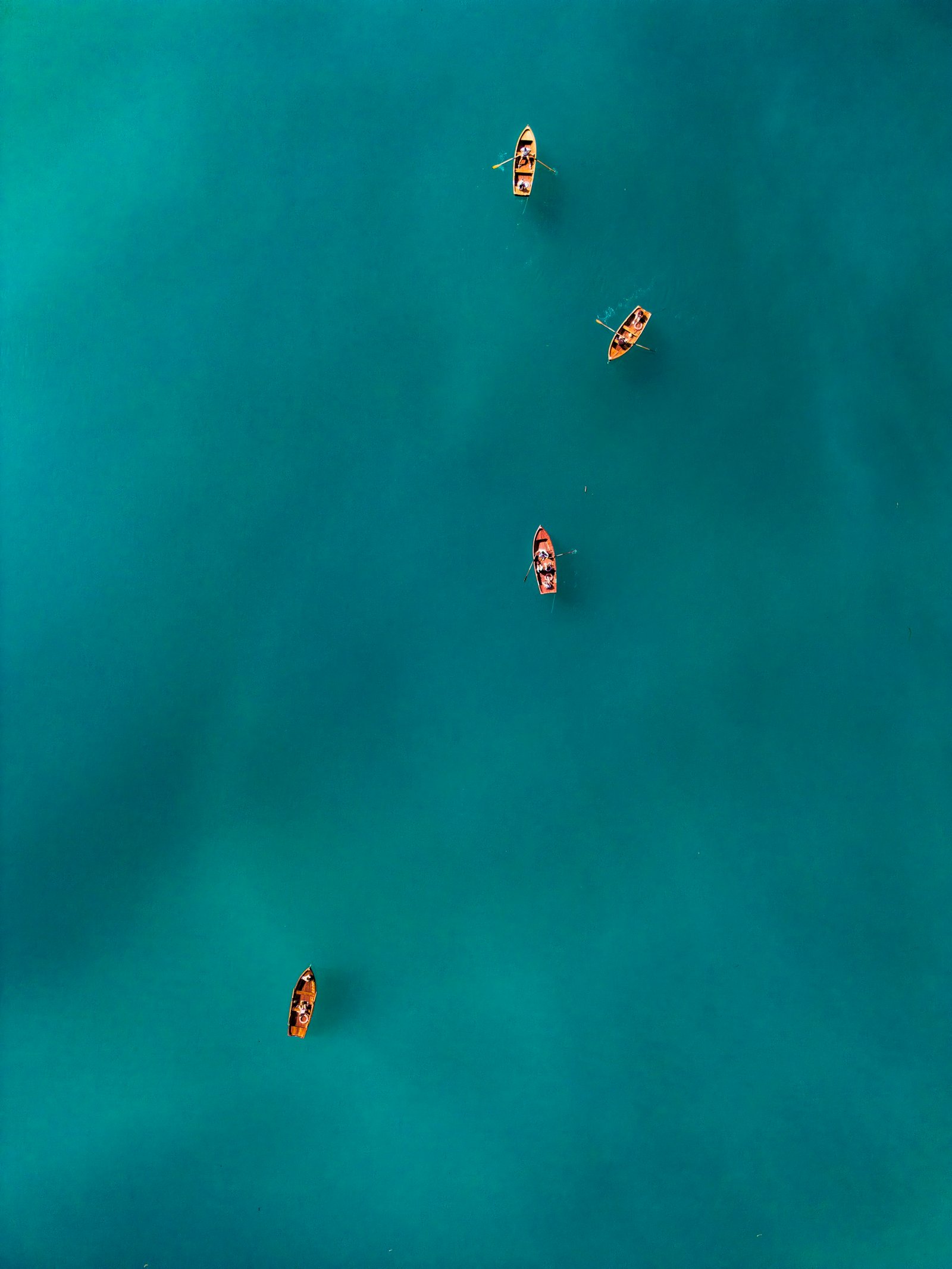
Lago di Braies (Pragser Wildsee) is often called the pearl of the Dolomites. Its emerald water is surrounded by forest and the steep walls of the Seekofel mountain. Wooden rowing boats moored at an old boathouse make it one of the most romantic places in the Alps.
Rent a rowing boat for half an hour, a small splurge, or walk the easy path around the lake in about an hour. The lake is extremely popular, and in summer access by car is restricted during the day and needs to be booked in advance. Come early in the morning, or take the bus.
4. Explore the Alpe di Siusi
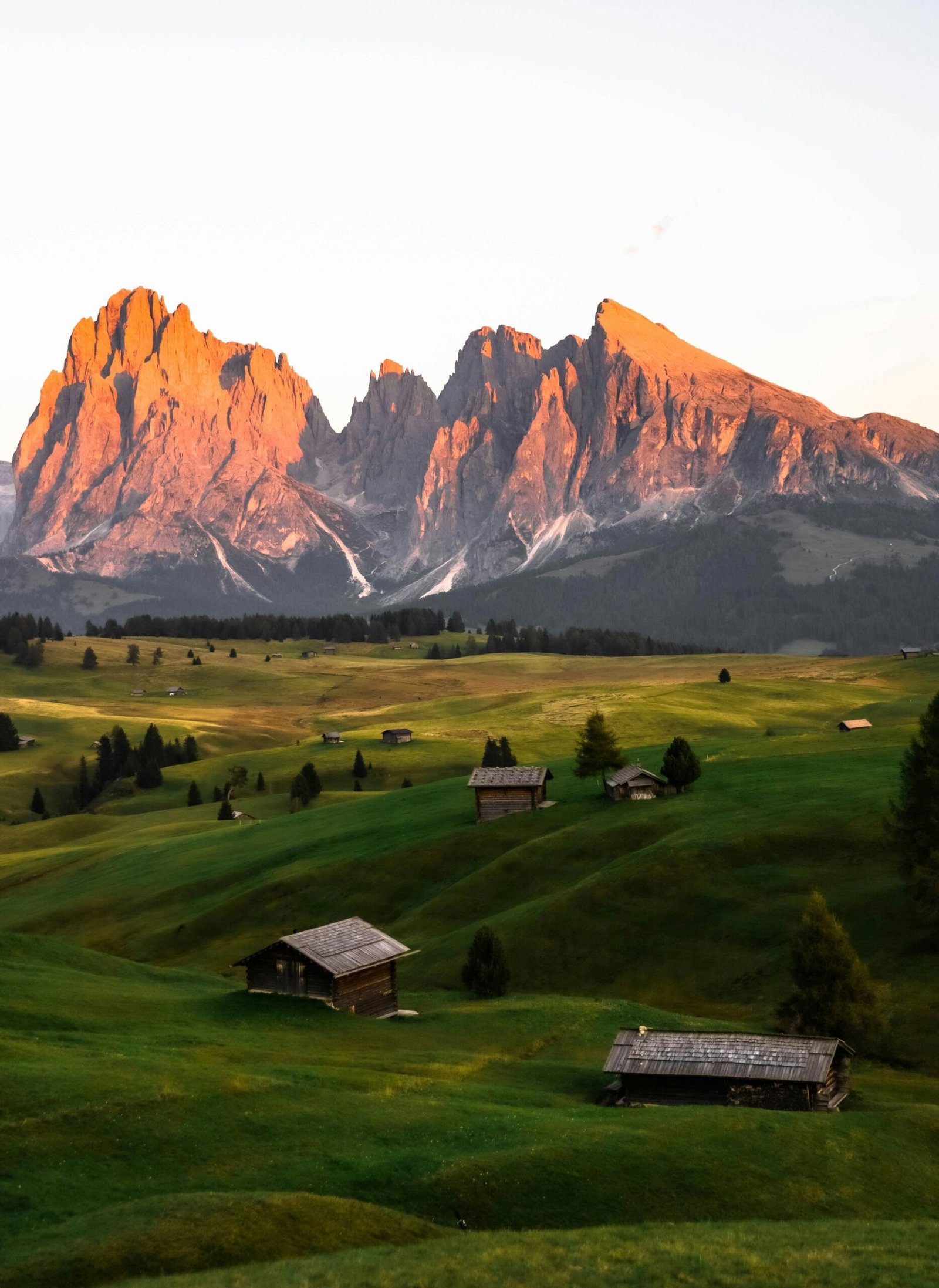
The Alpe di Siusi (Seiser Alm) is the largest high-altitude alpine meadow in Europe. Gentle green hills dotted with wooden huts stretch towards the jagged peaks of the Sassolungo and the Sciliar, especially beautiful at sunrise and sunset.
The meadow is perfect for easy walks and family hikes, and in winter for cross-country skiing. In summer, the road onto the plateau is closed to private cars during the day, so take the cable car from Siusi or Ortisei, or the bus. Stop for lunch on the terrace of one of the huts.

5. Spend a Night in a Mountain Hut
One of the best experiences in the Dolomites is a night in a rifugio, a mountain hut. Many are perched in spectacular locations, high above the valleys. You’ll sleep in a simple dorm or private room, enjoy a hearty dinner, and wake up to watch the sunrise over the peaks.
Most rifugios offer half board, which includes dinner and breakfast, at fair prices. Book well in advance for July and August. Experienced hikers can link several huts on a multi-day trek, like the famous Alta Via 1, which crosses the Dolomites from north to south.
6. Visit the Churches of Val di Funes
The quiet Val di Funes (Villnöss) is one of the most beautiful valleys in the Dolomites. Its famous view is the small church of St. Magdalena in front of the jagged Odle (Geisler) peaks, especially at sunset or in autumn.
A short walk away, the tiny chapel of St. John in Ranui stands alone in a meadow below the mountains. The best viewpoint is on private land, and a small fee is charged. For a longer hike, walk the Adolf Munkel Trail along the base of the Odle peaks.

7. Hike to Lago di Sorapis
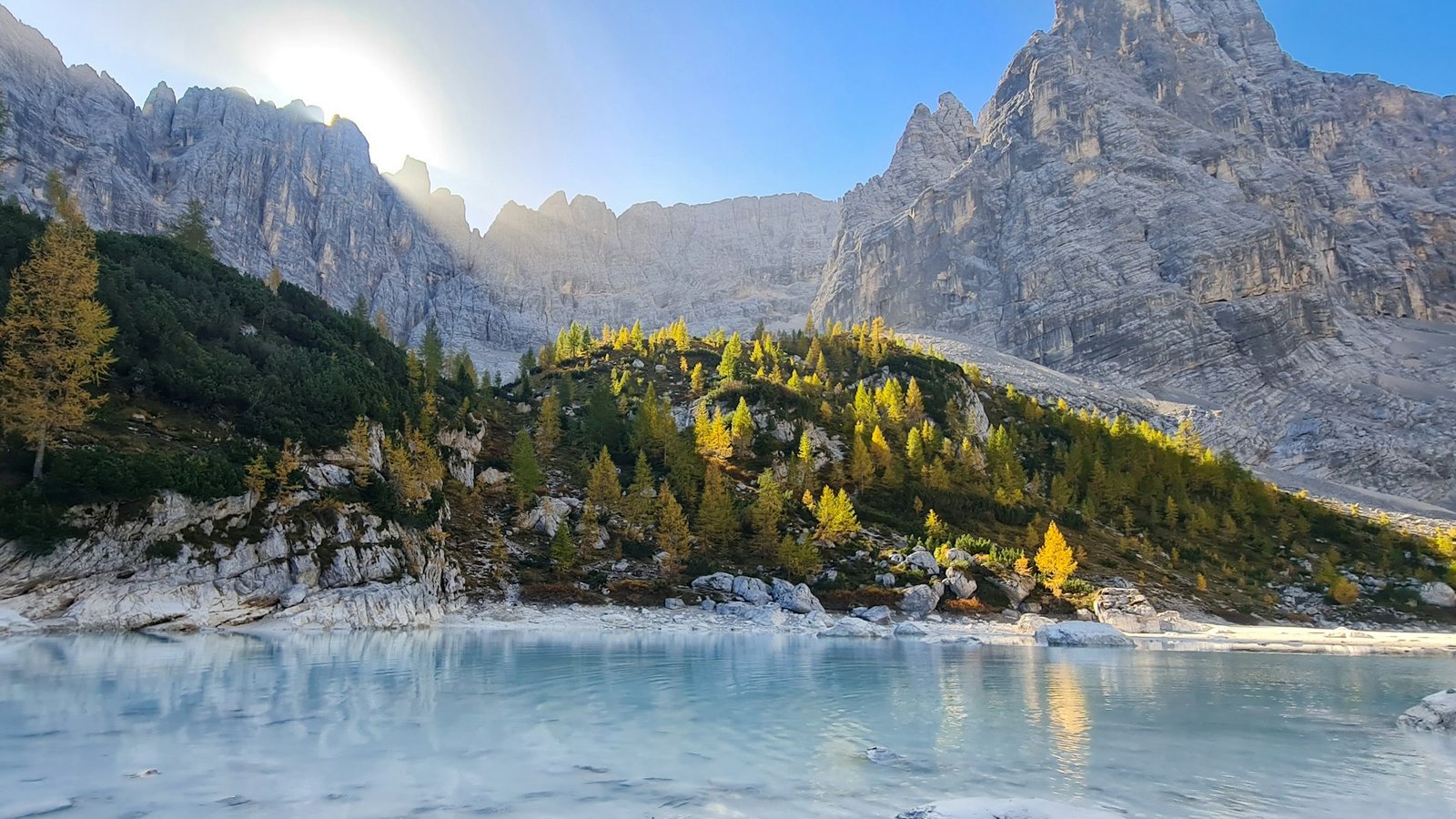
Lago di Sorapis is one of the most beautiful lakes in the Dolomites, with milky turquoise water below the towering cliffs of the Sorapis massif. The colour comes from fine rock dust carried in by glacial meltwater.
The hike from Passo Tre Croci near Cortina takes about two hours each way. It’s moderate, with a few exposed sections with metal cables, so it’s not ideal for people with a fear of heights. Start early, as parking at the pass fills up quickly.
8. Try a Via Ferrata
The Dolomites are the birthplace of the via ferrata, “iron paths” with steel cables, ladders and bridges fixed to the rock, which let non-climbers reach dramatic places safely. Many were first built during World War I.
There are routes for every level, from easy beginner routes to long, exposed climbs. You’ll need a helmet, a harness and a via ferrata set, which you can rent in most villages. If you’re new to it, hire a mountain guide for your first route. It’s a splurge, but a safe and unforgettable way to experience the mountains.
9. Drive the Great Dolomite Road and the Mountain Passes
The Great Dolomite Road connects Bolzano and Cortina d’Ampezzo over a series of spectacular mountain passes. Along the way, you’ll pass the Lago di Carezza, a small lake famous for its rainbow colours, and the Passo Pordoi.
Other passes worth driving are the Sella Pass, with views of the Sassolungo, and the Passo Giau, one of the most beautiful passes in the Alps. Stop at the top for a coffee and a short walk. Watch out for cyclists and motorcyclists on the bends.
10. Discover World War I History on Lagazuoi
During World War I, the front line between Italy and Austria-Hungary ran right through the Dolomites. Soldiers dug tunnels into the mountains and fought at altitudes of over 3,000 metres.
At Lagazuoi, near Cortina, you can take a cable car to the top and walk down through restored tunnels and trenches, part of a large open-air museum. Bring a head torch for the tunnels. Nearby, the strange rock towers of the Cinque Torri are also full of wartime trenches and make a great short hike.
Where to Stay on a Budget
Accommodation in the Dolomites can be expensive, but there are good-value options:
- Mountain huts (rifugios): simple but spectacular, often including dinner and breakfast
- Farm stays: called Roter Hahn farms in South Tyrol, these are family-run farms with rooms and apartments, often with fresh breakfast from the farm
- Guesthouses and B&Bs: found in every village, often cheaper than hotels
- Apartments: great value for families and longer stays, with a kitchen to save money on food
Book early for July, August and the ski season. Many hotels have a minimum stay in high season.
Eating on a Budget
The food in the Dolomites is a delicious mix of Italian and Austrian cooking:
- Canederli (Knödel): bread dumplings with speck, cheese or spinach, served in broth or with butter
- Speck: smoked ham from South Tyrol, perfect for a picnic
- Kaiserschmarrn: a fluffy shredded pancake with powdered sugar and jam, the classic hut dessert
- Apple strudel: a must with coffee on a sunny terrace
- Picnics: buy bread, cheese, speck and fruit in the village shops and eat with a view
Lunch at a mountain hut is usually cheaper than dinner in town, and the portions are big.
What It Really Costs
Here’s a realistic daily budget per person for a comfortable mid-range trip in summer, not counting flights.
- Accommodation: $60 to $120 per person, sharing a double room in a guesthouse or farm stay, with a night or two in a rifugio
- Food: $30 to $60 a day, mixing picnics, hut lunches and restaurant dinners
- Transport: $30 to $50 a day per person, including a rental car shared by two, fuel, tolls and parking
- Activities: budget for the highlights separately: cable cars, the Tre Cime toll road, a rowing boat on Lago di Braies and a via ferrata with a guide
That works out to around $150 to $250 per person per day. Travelling in September, staying on farms and buying a lift pass can bring that down noticeably.
A Sample 8-Day Itinerary
Day 1: Arrive in Venice or Innsbruck and drive to Val Gardena.
Day 2: Seceda in the morning, then a walk through the meadows down to Ortisei.
Day 3: The Alpe di Siusi, with lunch at a mountain hut and sunset on the meadow.
Day 4: Val di Funes and the churches of St. Magdalena and St. John.
Day 5: Drive the Sella Pass and the Passo Giau to Cortina d’Ampezzo.
Day 6: Hike to Lago di Sorapis, or Lagazuoi and the Cinque Torri.
Day 7: The Tre Cime di Lavaredo loop, with a night in a rifugio.
Day 8: Early morning at Lago di Braies, then drive back to the airport.
Practical Tips
- Start early: the best light, the emptiest trails and the easiest parking are all in the early morning
- Check the weather: afternoon thunderstorms are common in summer, so plan to be off exposed ridges by early afternoon
- Bring good hiking boots, layers, a rain jacket and sun protection
- Check lift opening times before you go, especially at the start and end of the season
- Carry cash for mountain huts, where cards aren’t always accepted
- Respect the mountains: stay on the marked trails, take your rubbish with you and never pick the wildflowers
Booking Tips
- Airport transfer: if you don’t rent a car, book an airport transfer with Kiwitaxi from Venice, Verona or Innsbruck airport straight to Val Gardena or Cortina, with a fixed price and no changing between trains and buses with your luggage
- eSIM: if you’re coming from outside the EU, install a Yesim eSIM before you fly, so you have data for maps, bus times and weather updates in the mountains from the moment you land
- Tours: popular options include a Dolomites day trip from Venice or Bolzano, a guided Tre Cime hike and a beginner via ferrata with a mountain guide. You can compare and book most of them on Klook
Final Thoughts
The Dolomites are one of the most beautiful mountain ranges on earth. Walk along the Seceda ridge, circle the Tre Cime, row a boat on Lago di Braies, watch the sun set over the Alpe di Siusi and fall asleep in a mountain hut high above the valleys.
Travel in early September, start your days early, eat in the huts and take your time. The Dolomites will reward you with views and memories that last a lifetime.
Prices checked in October 2026. Costs and opening times change, so always confirm before you book.
Leave a Reply