Dream destinations, real budgets

Author: miaroams_editor

  • Rwanda on a Budget: Gorillas, Lake Kivu and the Land of a Thousand Hills

    Rwanda on a Budget: Gorillas, Lake Kivu and the Land of a Thousand Hills

    A silverback gorilla looking you in the eye from just a few metres away, misty volcanoes rising above bamboo forests, emerald tea plantations rolling over the hills, a calm lake with sandy beaches and fishermen singing at dusk, and a clean, safe capital full of energy: Rwanda is one of the most rewarding countries in Africa.

    Known as the Land of a Thousand Hills, this small country in East Africa is green almost everywhere you look. In one trip, you can trek to see endangered mountain gorillas, walk above the rainforest canopy, spot lions and giraffes on safari and relax on the shores of Lake Kivu.

    Rwanda is also one of the safest and best-organised countries on the continent. The gorilla permit is a big splurge, there’s no way around it. But almost everything else, from local food and guesthouses to buses and boat trips, is very affordable. This guide shows you how to plan a trip that’s worth every cent.

    Rwanda at a Glance

    • Where: in East Africa, bordering Uganda, Tanzania, Burundi and the Democratic Republic of the Congo
    • Main airport: Kigali International Airport (KGL), about 20 minutes from the city centre
    • Currency: Rwandan franc (RWF). US dollars are used for permits and many tours
    • Entry: many nationalities can get a visa on arrival or apply online before they travel. Check the current rules for your passport
    • Languages: Kinyarwanda, English, French and Swahili
    • Best time: June to September, the long dry season
    • Budget: around $60 to $90 a day for budget travellers, $150 to $250 for a comfortable mid-range trip, not counting the gorilla permit

    When to Go

    June to September is the long dry season and the best time for gorilla trekking. The trails in the mountains are less muddy, the skies are often clear and wildlife is easier to see in Akagera, where animals gather around the water.

    December to February is a shorter dry season and another great time to visit, with green landscapes and fewer visitors.

    March to May and October to November are the rainy seasons. Showers are often heavy, and the forest trails become slippery, but the country is at its greenest and some lodges offer lower prices. Gorilla trekking runs all year.

    Our tip: visit in late June or early September for dry trails and fewer visitors than in July and August. Book your gorilla permit several months in advance.

    How Long Do You Need?

    Plan at least ten days. That gives you two days in Kigali, three days around Volcanoes National Park for the gorillas and golden monkeys, three days on Lake Kivu and two days in Nyungwe or Akagera. With two weeks, you can visit both parks and travel the whole country in a loop.

    Getting Around

    Rwanda is small, and the roads are good:

    • Buses: comfortable express buses connect Kigali with Musanze, Rubavu, Karongi and Huye. They’re cheap, safe and reliable
    • Moto taxis: the fastest way around towns. Drivers carry a spare helmet for passengers, and you should always wear it
    • Car with driver: the most popular choice for visiting the national parks, as many park roads are rough and public transport doesn’t reach them
    • Boats on Lake Kivu: boats connect the lake towns and take you to the islands

    Things to Do in Rwanda

    Here are the experiences we think are worth your time and money.

    1. Trek to the Mountain Gorillas

    Seeing mountain gorillas in the wild is one of the most moving wildlife experiences in the world. Only around a thousand remain on earth, and many of them live in the bamboo forests of Volcanoes National Park, about two to three hours’ drive from Kigali.

    Treks start early in the morning from park headquarters near Kinigi, where you’re assigned to a gorilla family. Depending on where the family is, the hike can take from one to several hours through steep, muddy forest. When you find them, you spend one magical hour watching the gorillas eat, play and rest.

    The permit is expensive, currently around $1,500 per person, but much of the money goes to conservation and local communities, and it’s the reason the gorilla population is growing again. Bring gloves, long sleeves and good boots.
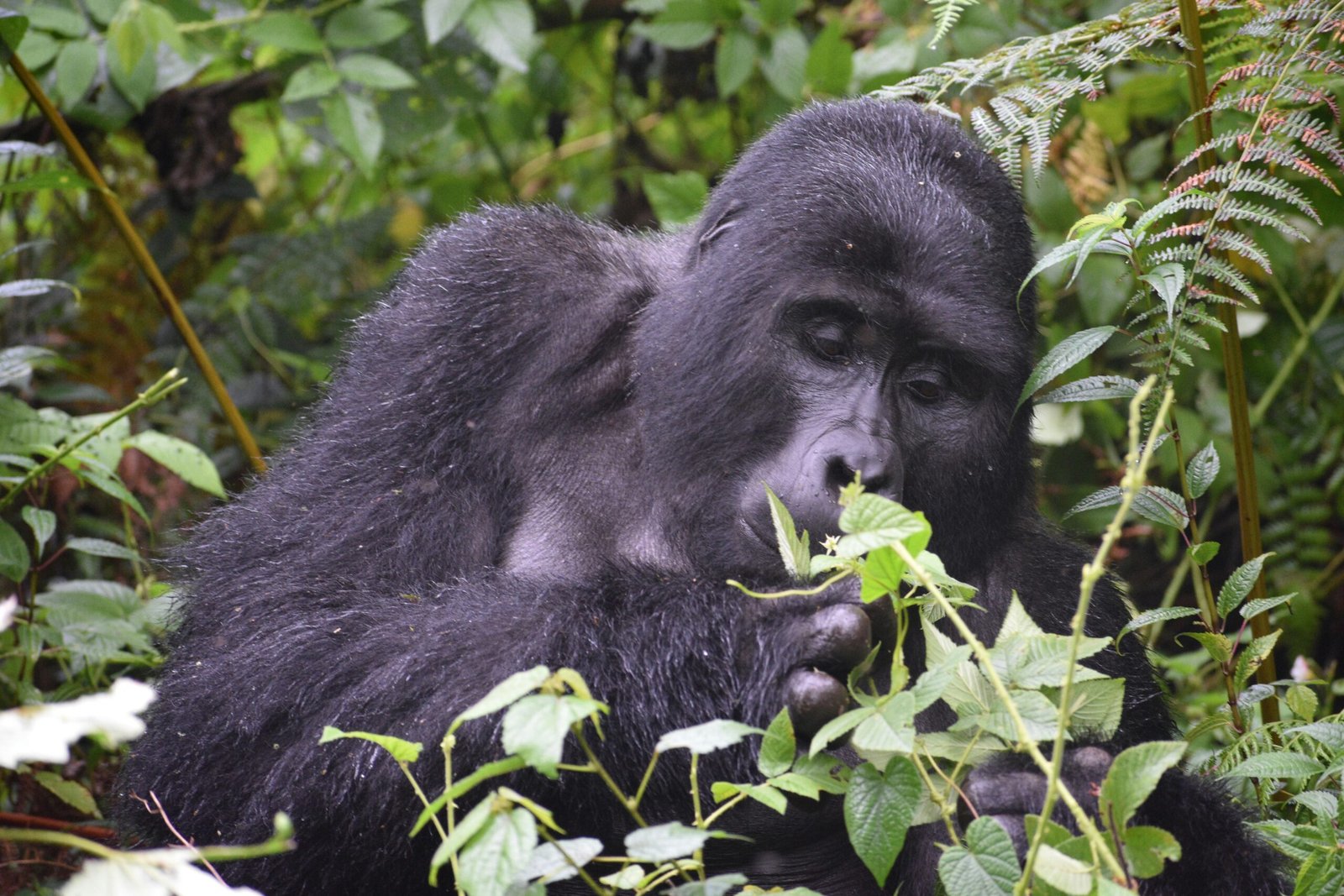
    A mountain gorilla eating leaves in Volcanoes National Park, Rwanda

    2. Track the Golden Monkeys

    In the same park, the playful golden monkeys live in the bamboo forest on the slopes of the volcanoes. Their bright orange fur makes them easy to spot as they jump between the branches.

    Golden monkey trekking costs a fraction of the gorilla permit and is usually shorter and easier. It’s a great option if your budget doesn’t allow gorillas, or a perfect second day in the park if it does.

    3. Hike to Dian Fossey’s Grave

    The American scientist Dian Fossey spent almost 20 years studying the mountain gorillas here, and her work helped save them. A demanding hike through the forest on the slopes of Mount Bisoke leads to her old research camp, Karisoke.

    Here, you’ll find her grave next to the graves of the gorillas she loved, including the famous Digit. It’s a quiet and emotional place, and a reminder of how close these animals came to disappearing.

    4. Relax on the Shores of Lake Kivu

    On the western border, Lake Kivu is one of the great lakes of Africa and the perfect place to relax after the mountains. Steep green hills drop into deep blue water, dotted with small islands.

    Stay in Rubavu, also called Gisenyi, which has sandy beaches and a lively waterfront, or in Karongi, also called Kibuye, which is quieter and has beautiful views. Take a boat trip to the islands, swim in the lake, which is free of crocodiles and hippos, and listen in the evening as the fishermen sing while paddling out in their canoes.
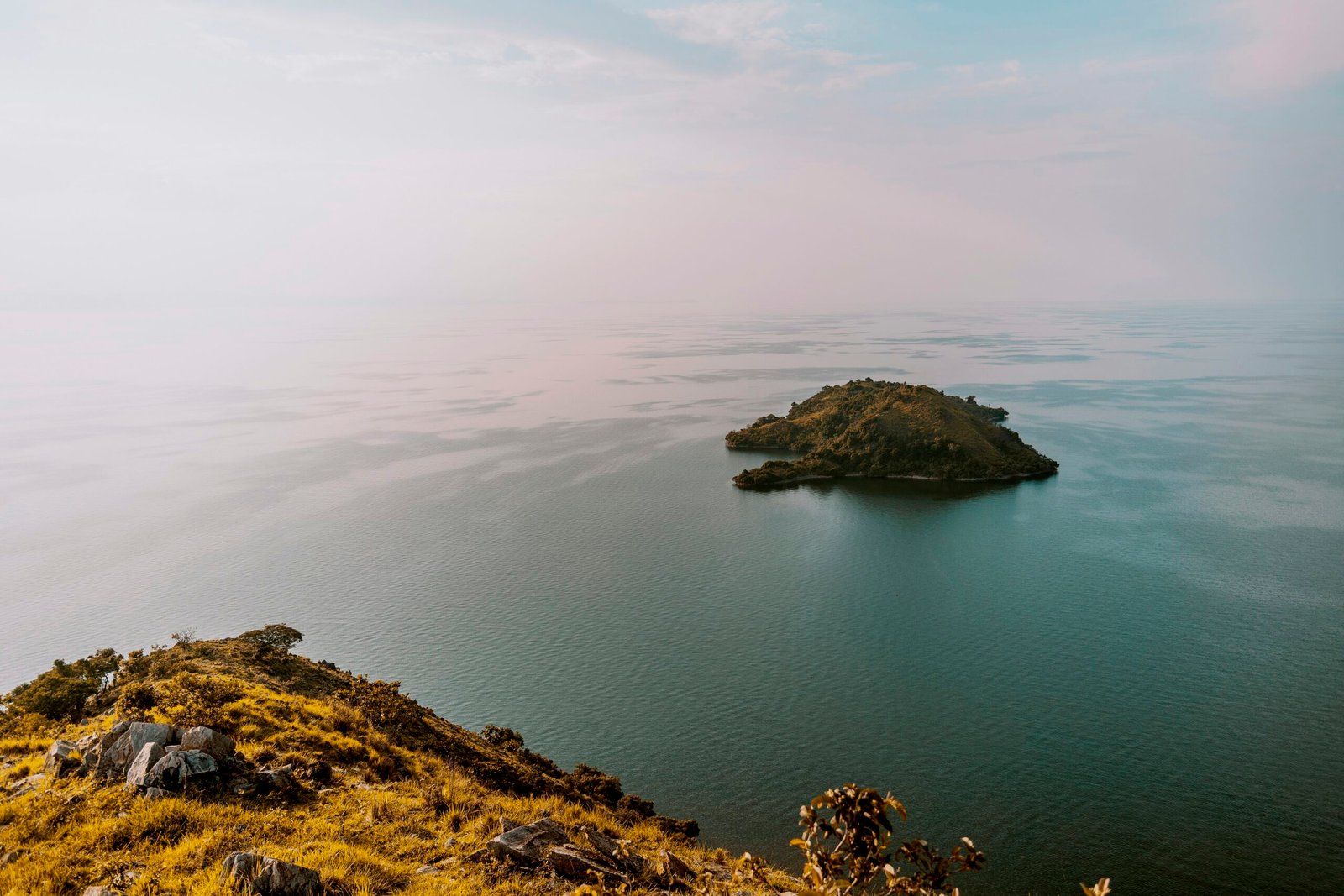
    A grassy island rising from the calm water of Lake Kivu, Rwanda

    5. Walk or Cycle the Congo Nile Trail

    The Congo Nile Trail follows the shore of Lake Kivu for over 200 km, from Rubavu in the north to Rusizi in the south. It winds through villages, banana plantations, coffee farms and tea fields, with constant views of the lake.

    You don’t have to do the whole trail. Many travellers hike or cycle a section of one to three days, staying in simple guesthouses along the way. Visit a coffee washing station to see how Rwanda’s famous coffee is made.

    6. Walk Above the Rainforest in Nyungwe

    In the southwest, Nyungwe National Park is one of the oldest rainforests in Africa. Its highlight is the canopy walkway, a suspension bridge hanging high above the treetops, with views over endless green hills.

    Nyungwe is home to 13 species of primates. Join an early morning trek to see chimpanzees, or look for large groups of black-and-white colobus monkeys. Just outside the park, the bright green Gisakura tea plantations are beautiful for a walk.
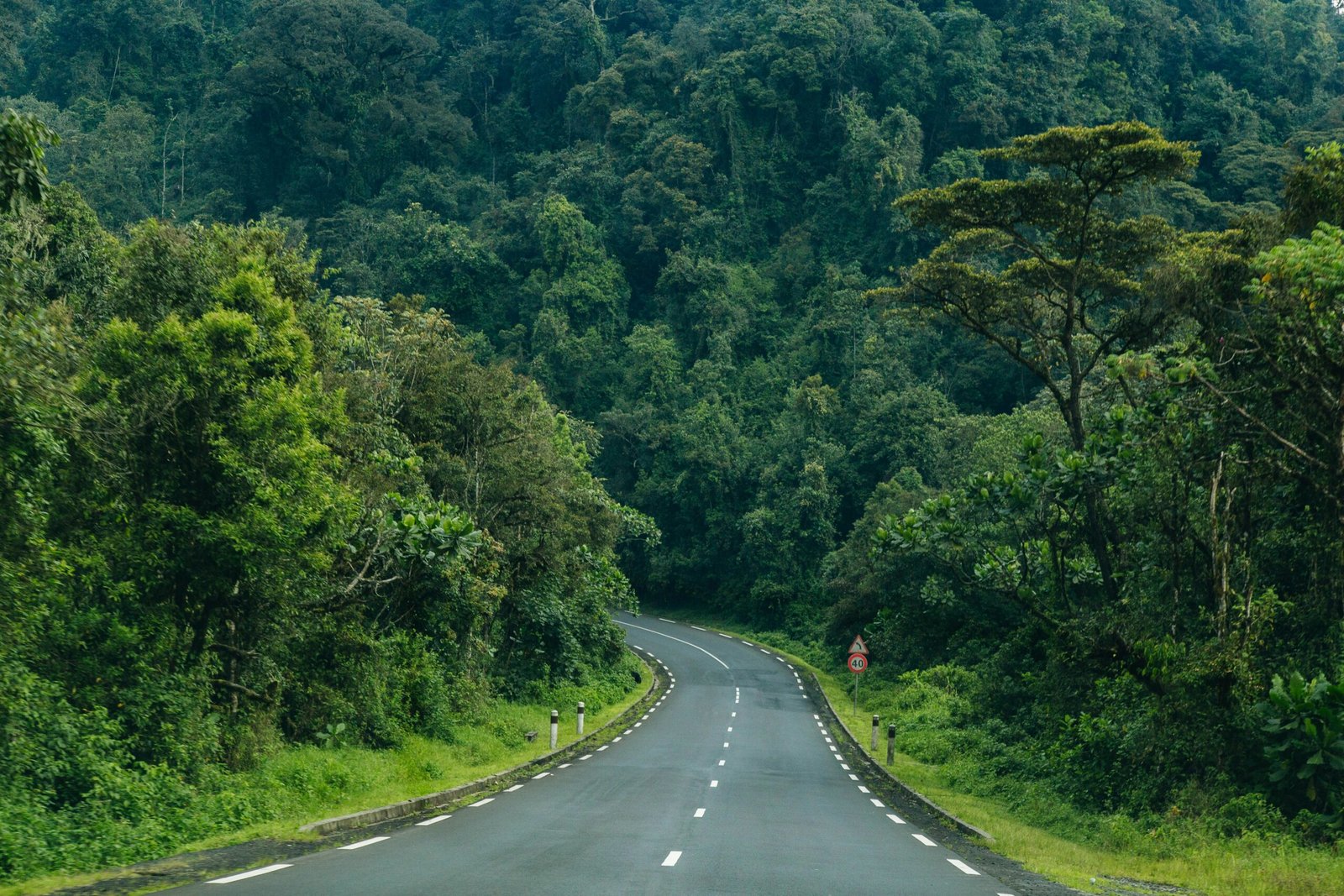
    A road winding through the green rainforest of Nyungwe National Park, Rwanda

    7. Go on Safari in Akagera National Park

    In the east, Akagera National Park is Rwanda’s savanna, with grassy plains, wetlands and lakes. Thanks to a successful conservation project, it’s now home to the Big Five: lions, leopards, elephants, buffalo and rhinos.

    Explore the park on a game drive in your own vehicle or with a guide, and don’t miss a boat trip on Lake Ihema, where you’ll see hippos, crocodiles and many water birds. Akagera is an easy day trip from Kigali, but staying overnight lets you enjoy the early mornings, when the animals are most active.
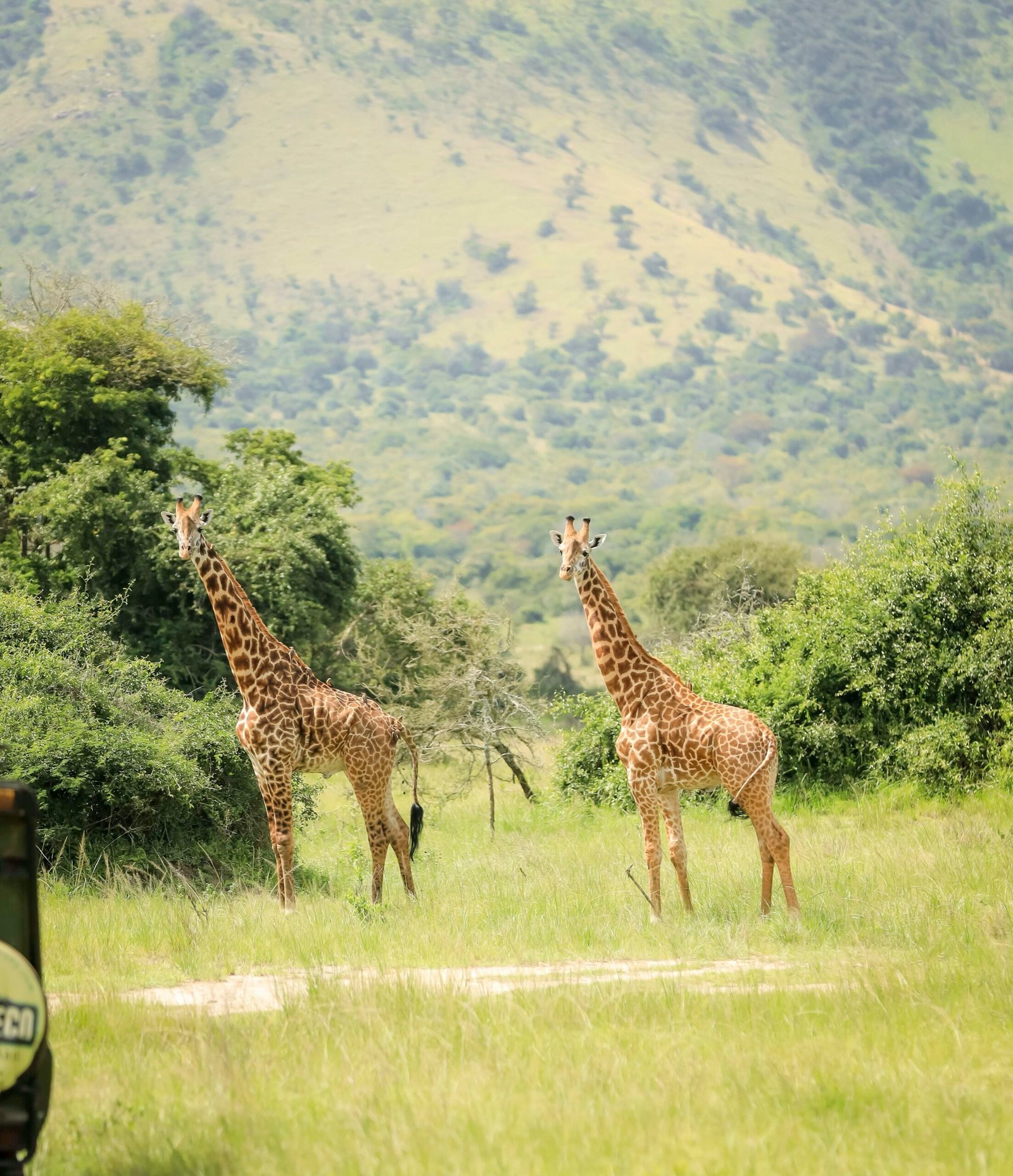
    Two giraffes standing in the grass in Akagera National Park, Rwanda

    8. Visit the Kigali Genocide Memorial

    To understand Rwanda today, you need to learn about its past. In 1994, around a million people were killed in about 100 days during the genocide against the Tutsi.

    The Kigali Genocide Memorial tells this story in a powerful and respectful way, and more than 250,000 victims are buried in its gardens. Entry is free, though donations are welcome. It’s an emotional visit, so plan a quiet afternoon afterwards.

    9. Explore Kigali

    Kigali is one of the cleanest and safest capitals in Africa, spread across green hills. Plastic bags are banned, and the streets are lined with flowers and trees.

    Walk through the colourful neighbourhood of Nyamirambo on a guided walking tour, shop for fabrics and baskets at Kimironko Market, and enjoy a cup of local coffee in one of the city’s many cafés. In the evening, head to a rooftop bar to watch the city lights spread across the hills.
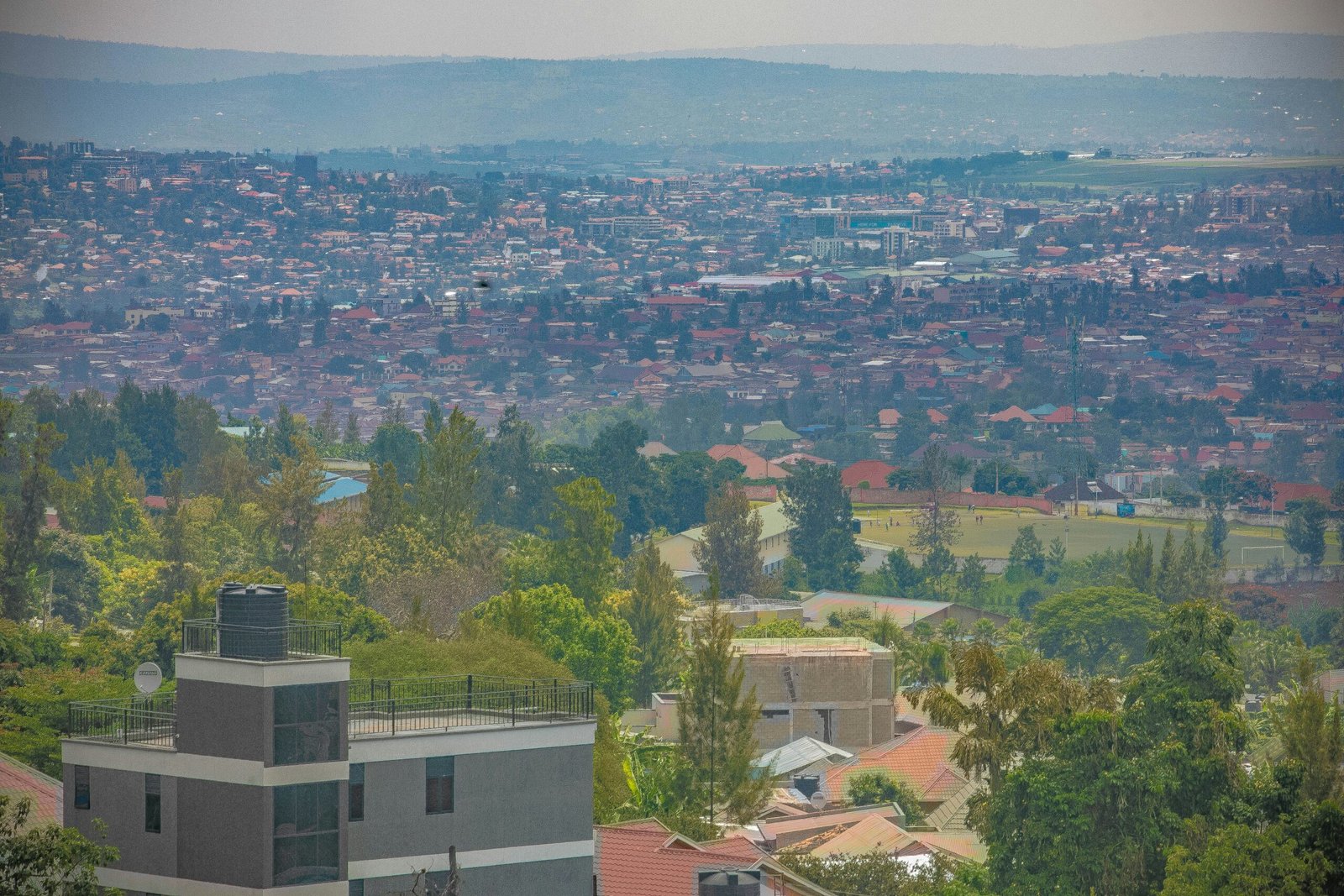
    View over the hills and houses of Kigali from Nyamirambo, Rwanda

    10. Discover the Twin Lakes

    Near Musanze, the twin lakes of Burera and Ruhondo lie between steep, terraced hills with the volcanoes in the background. They’re far from the tourist trail and incredibly peaceful.

    Take a canoe trip across the water, walk through the farming villages on the shore, or simply enjoy the views. It’s a perfect half-day trip on a rest day between treks.

    Where to Stay on a Budget

    Rwanda has options for every budget:

    • Guesthouses: simple, clean and affordable, found in every town
    • Hostels: a few good hostels in Kigali, Musanze and Rubavu
    • Lakeside lodges: good-value hotels on Lake Kivu, many with private beaches or gardens
    • Eco-lodges: for a splurge, beautiful lodges near the national parks with views over the volcanoes or forest

    Near Volcanoes National Park, staying in Musanze town is much cheaper than in the lodges close to the park entrance.

    Eating on a Budget

    Rwandan food is simple, fresh and filling:

    • Brochettes: grilled skewers of goat, beef or fish, served everywhere
    • Isombe: cassava leaves cooked with peanuts or palm oil
    • Matoke: cooked green bananas, a staple dish
    • Tilapia: fresh fish from the lakes, often grilled whole
    • Rwandan coffee and tea: some of the best in Africa

    Local restaurants serve a lunch buffet with many dishes at a low price. It’s the cheapest and best way to try Rwandan food.

    What It Really Costs

    Here’s a realistic daily budget per person for a comfortable mid-range trip, not counting international flights or the gorilla permit.

    • Accommodation: $40 to $100 per person, sharing a double room in a good guesthouse or lodge
    • Food: $15 to $35 a day, mixing local buffets and restaurants
    • Transport: $30 to $70 a day per person, including a car with driver shared by two on park days
    • Activities: budget for the highlights separately: the gorilla permit, golden monkey trekking, the Nyungwe canopy walk, chimpanzee tracking and park fees for Akagera

    That works out to around $150 to $250 per person per day, plus the gorilla permit. Taking buses, eating at local buffets and staying in guesthouses can bring that down to $60 to $90.

    A Sample 10-Day Itinerary

    Day 1: Arrive in Kigali and visit the Kigali Genocide Memorial.

    Day 2: Nyamirambo walking tour and Kimironko Market, then drive to Musanze.

    Day 3: Gorilla trekking in Volcanoes National Park.

    Day 4: Golden monkey trekking and a canoe trip on the twin lakes.

    Day 5: Drive to Rubavu and relax on Lake Kivu.

    Day 6: Boat trip to the islands, or a hike on the Congo Nile Trail.

    Day 7: Travel along the lake to Karongi.

    Day 8: Drive to Nyungwe and walk through the Gisakura tea plantations.

    Day 9: Chimpanzee trek and the canopy walkway.

    Day 10: Drive back to Kigali and fly home.

    With more time, add two days in Akagera for a safari.

    Practical Tips

    • Book your gorilla permit early, ideally several months before you travel
    • Don’t bring plastic bags, as they are banned and can be confiscated at the airport
    • Respect Umuganda: on the last Saturday morning of every month, the country takes part in community work, and many shops and buses stop until midday
    • Pack for cool mountains: it can be cold and wet in the parks, even when Kigali is warm
    • Carry cash in Rwandan francs for markets and small restaurants
    • Ask before taking photos of people, and be respectful at memorial sites

    Booking Tips

    • Airport transfer: book an airport transfer with Kiwitaxi from Kigali airport to your hotel, with a fixed price and a driver waiting for you
    • eSIM: install a Yesim eSIM before you fly, so you have data for maps, bus times and messages to your driver from the moment you land
    • Tours: popular options include a Kigali city tour, a day trip to Akagera National Park and a boat trip on Lake Kivu. You can compare and book many of them on Klook. Book your gorilla permit directly through the Rwanda Development Board or a licensed local tour operator

    Final Thoughts

    Rwanda is a country that changes the way you see Africa. Look into the eyes of a mountain gorilla, walk above the rainforest, spot lions in Akagera, relax on the shores of Lake Kivu and discover a capital that is clean, safe and full of hope.

    Travel in the dry season, book your permits early and give yourself time to explore beyond the gorillas. Rwanda will stay in your heart long after you leave.

    Prices checked in October 2026. Costs and opening times change, so always confirm before you book.
  • Lombok and the Gili Islands on a Budget: Turtles, Volcanoes and Quiet Beaches

    Lombok and the Gili Islands on a Budget: Turtles, Volcanoes and Quiet Beaches

    Sea turtles gliding past you in clear turquoise water, sandy island lanes without a single car, a volcano rising above green rice terraces, waterfalls hidden in the jungle and wild surf beaches framed by hills: Lombok and the Gili Islands are everything many people hope Bali will be, just quieter and cheaper.

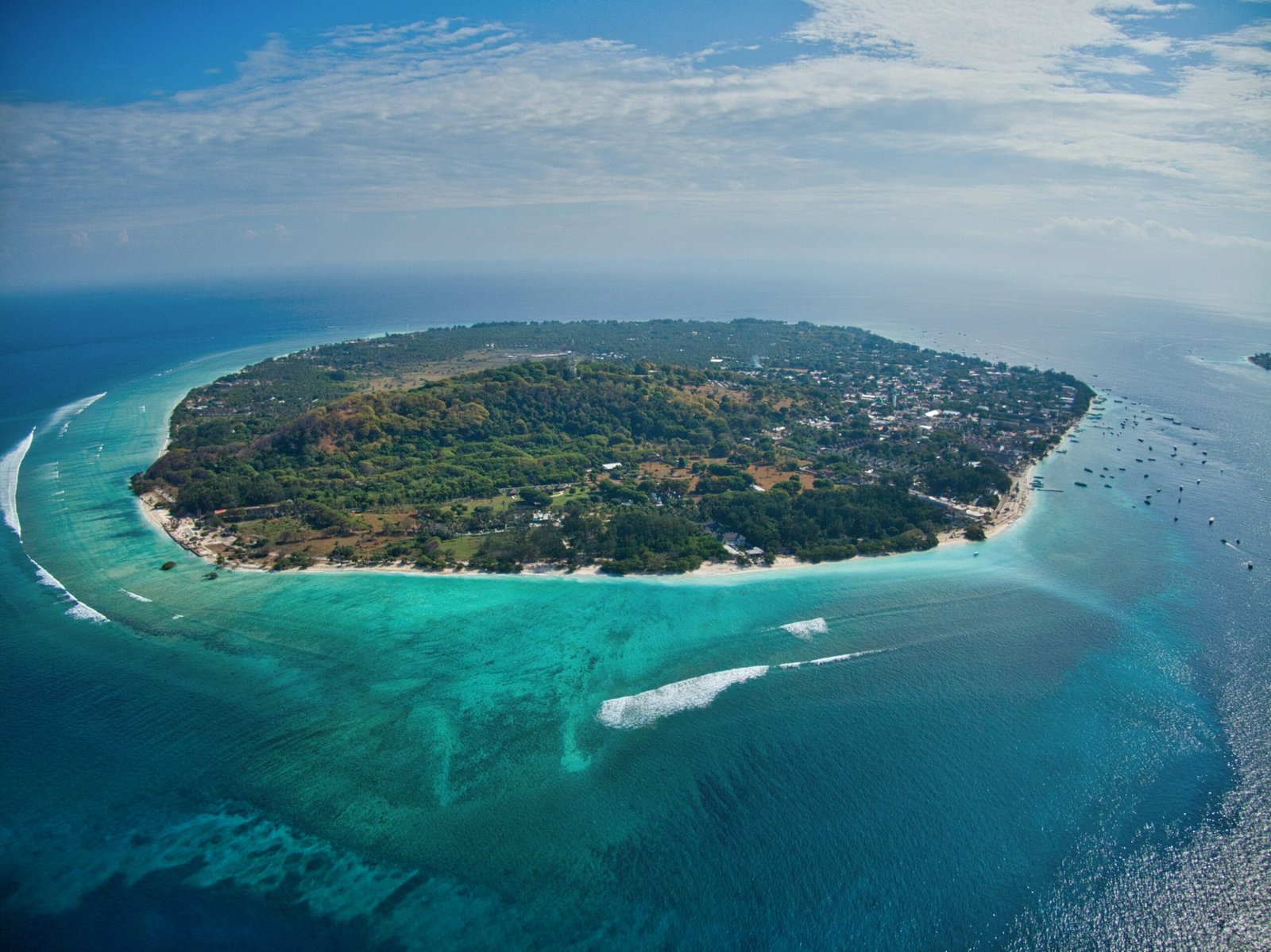
    Lombok sits right next to Bali, separated only by a narrow strait. It has the same tropical beauty, with beaches, mountains and rice fields, but far fewer crowds and a slower pace of life. Just off its northwest coast lie the three tiny Gili Islands, Gili Trawangan, Gili Meno and Gili Air, where there are no cars or motorbikes, only bicycles, footpaths and some of the easiest snorkelling with turtles in the world.

    Together they make a perfect trip: lazy island days on the Gilis, followed by adventure on Lombok, from climbing Mount Rinjani to surfing in Kuta. And it’s all very affordable. With simple guesthouses, local warungs and shared boats, you can enjoy this paradise on a real budget. This guide shows you how.

    Lombok and the Gili Islands at a Glance

    • Where: in Indonesia, directly east of Bali, in the province of West Nusa Tenggara
    • Main airport: Lombok International Airport (LOP) near Praya, in the south of the island, with flights from Bali, Jakarta, Singapore and Kuala Lumpur
    • Currency: Indonesian rupiah (IDR). Bring cash for the Gili Islands, where ATMs can run empty
    • Entry: many nationalities can get an e-Visa on Arrival online before they travel or a visa on arrival at the airport. Check the current rules for your passport
    • Languages: Indonesian and Sasak. English is spoken in tourist areas
    • Best time: May to October, the dry season
    • Budget: around $35 to $60 a day for budget travellers, $80 to $150 for a comfortable mid-range trip

    When to Go

    May to October is the dry season and the best time to visit. The skies are sunny, the sea is calm and clear for snorkelling, and the trails on Mount Rinjani are open. July and August are the busiest months, especially on Gili Trawangan, so book ahead.

    November to April is the rainy season. Showers are usually short and come in the afternoon, the landscape turns bright green and prices drop. However, the sea can be rougher, and the Rinjani National Park usually closes for trekking from around January to March.

    Lombok is mainly Muslim, so during the holy month of Ramadan some restaurants close during the day outside tourist areas. It’s a fascinating time to visit, but be respectful.

    Our tip: visit in May, June or September for dry weather, calm water and fewer crowds than in high summer.

    How Long Do You Need?

    Plan at least ten days. That gives you four days on the Gili Islands, two or three days for Rinjani and the waterfalls in the north, and three days around Kuta in the south. With a week, choose one Gili island and the south coast, and skip the Rinjani trek.

    Getting Around

    • To the Gili Islands: fast boats run from Bali, from Padang Bai and Serangan, in about two to three hours. From Lombok, take a public boat or a shared speedboat from Bangsal harbour or Teluk Nara in 15 to 45 minutes
    • On the Gilis: there are no cars or motorbikes. You walk, rent a bicycle or take a cidomo, a small horse cart. Many travellers prefer bikes, as the horses often work in harsh conditions
    • Between the islands: a cheap island-hopping boat connects Trawangan, Meno and Air several times a day
    • On Lombok: rent a scooter if you’re an experienced rider, or hire a driver for the day, which is affordable and much safer on the hilly roads. Grab and Bluebird taxis work in some areas

    Things to Do in Lombok and the Gili Islands

    Here are the experiences we think are worth your time and money.

    1. Snorkel with Sea Turtles

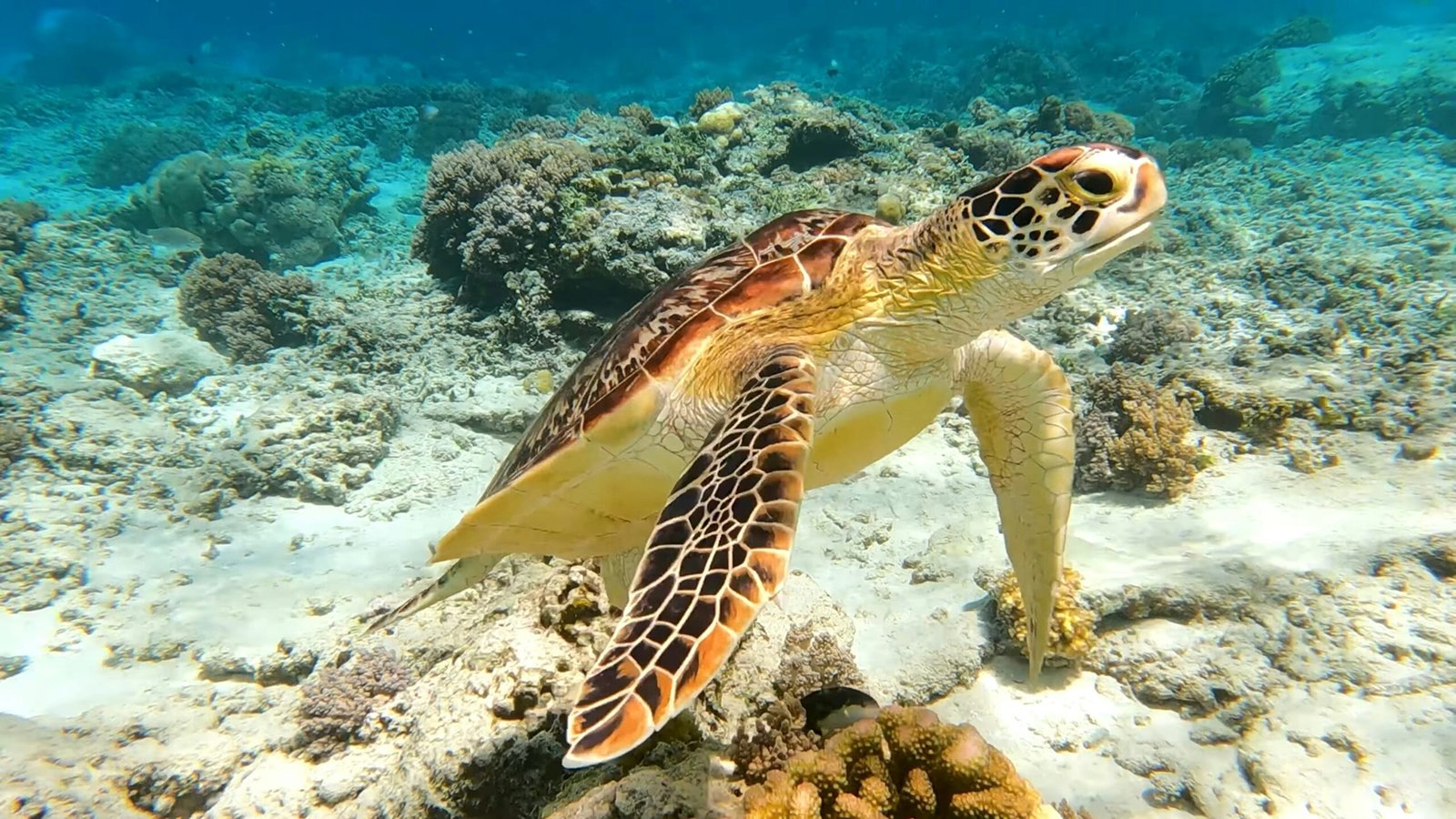
    The Gili Islands are one of the best places in the world to swim with sea turtles. Green and hawksbill turtles feed on the seagrass and coral just a few metres from the beach, and you’ll almost certainly see them on your first swim.

    The easiest spots are Turtle Point on the north side of Gili Meno and the east coast of Gili Trawangan. Rent a mask and snorkel from a beach shop, or join a cheap snorkelling boat trip that visits several reefs around all three islands. Always keep your distance from the turtles, never touch them and watch out for strong currents between the islands.

    A green sea turtle swimming over a coral reef off Gili Trawangan, Indonesia

    2. See the Underwater Statues of Gili Meno

    Off the west coast of Gili Meno, a ring of life-size human statues lies on the sea floor. Nest, created by the British artist Jason deCaires Taylor, is meant to become an artificial reef, and corals and fish are slowly making it their home.

    The statues sit in shallow water, so you can see them easily with a snorkel. Go early in the morning, before the snorkelling boats arrive, and you might have them almost to yourself.

    3. Watch the Sunset from the Swings of Gili Trawangan

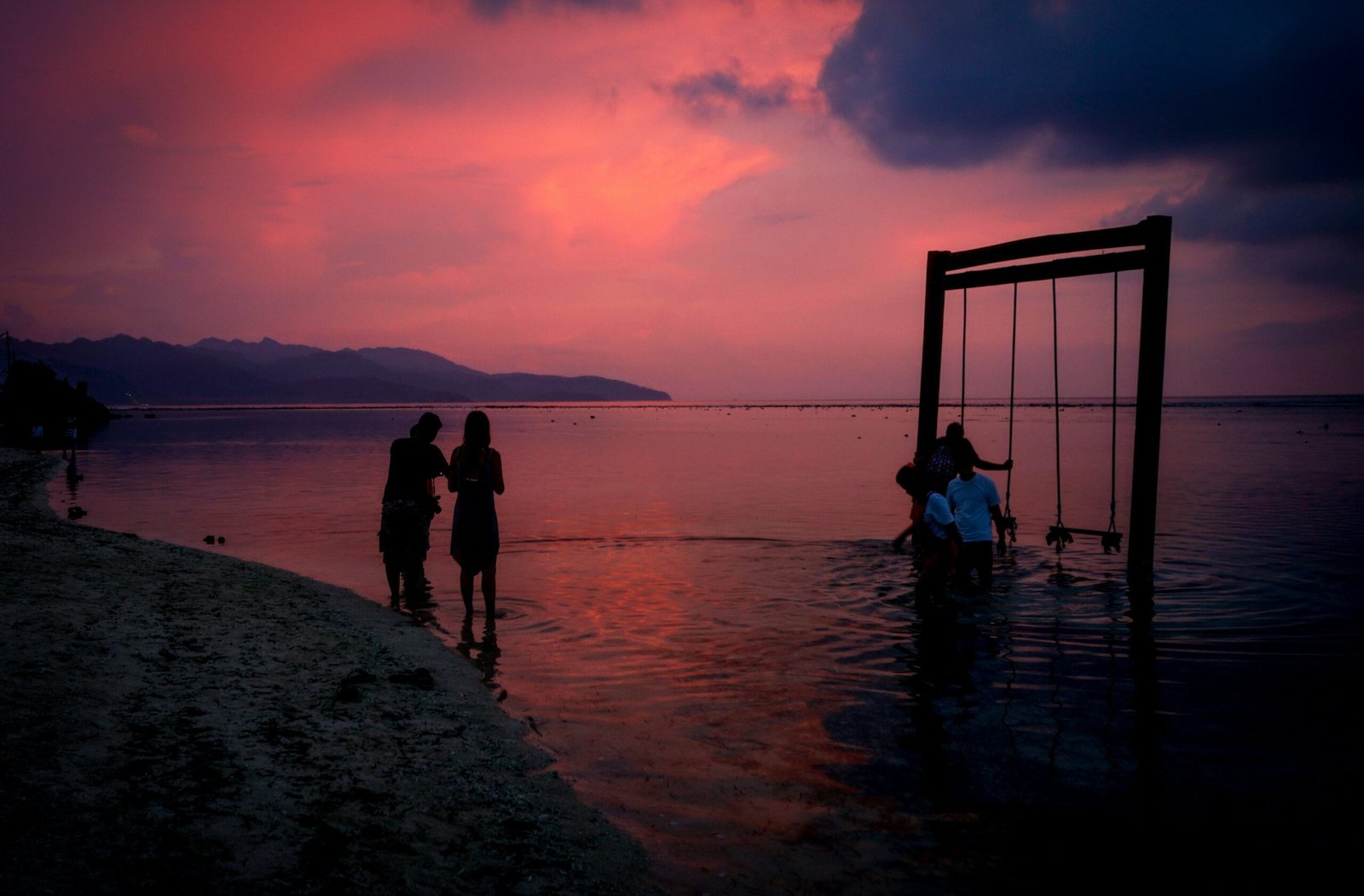
    Every evening, the west coast of Gili Trawangan turns into one long sunset party. Wooden swings stand in the shallow water, beanbags are spread across the sand, and the sun sinks behind the volcano of Mount Agung on Bali across the sea.

    Rent a bicycle and ride along the coastal path to find your favourite spot. Order a fresh coconut or a cold drink, and stay until the sky turns pink and orange. It’s one of the most beautiful sunsets in Indonesia.

    Two people watching the sunset on the beach on Gili Trawangan, Indonesia

    4. Choose Your Island

    Each of the three Gilis has its own character, so choose the one that suits you best, or visit all three:

    • Gili Trawangan: the largest and liveliest island, with lots of restaurants, bars, dive shops and a famous night market. Great for first-time visitors and anyone who wants a social atmosphere
    • Gili Meno: the smallest and quietest island, perfect for couples and anyone who wants peace, empty beaches and starry nights
    • Gili Air: the perfect middle ground, relaxed but with good cafés, yoga studios and beautiful beaches. It’s also the closest to Lombok

    5. Learn to Dive

    The Gili Islands are one of the cheapest and easiest places in Asia to learn to dive. The water is warm, the reefs are full of life, and there are dozens of professional dive schools, especially on Gili Trawangan and Gili Air.

    A beginner course takes three to four days and costs much less than in Europe or Australia. Already certified? Dive sites like Shark Point and Turtle Heaven offer reef sharks, turtles, rays and colourful coral.

    6. Hike to the Crater Rim of Mount Rinjani

    At 3,726 metres, Mount Rinjani is the second-highest volcano in Indonesia and the pride of Lombok. Inside its huge crater lies the turquoise lake Segara Anak, with a smaller, still-active volcano rising from the water.

    The most popular trek is two days and one night to the crater rim, starting in Sembalun or Senaru. You’ll camp on the rim and watch the sunrise over the clouds, with views all the way to Bali. Stronger hikers can continue to the summit or down to the lake. You must hike with a licensed guide and porters, which are usually included in the trek price. It’s tough and steep, so you need to be fit.

    Hikers standing on the summit of Mount Rinjani above the clouds, Lombok

    7. Swim Below the Waterfalls of Senaru

    At the foot of Rinjani, the village of Senaru is the gateway to two of Lombok’s most beautiful waterfalls. A short walk through the forest leads to Sendang Gile, a wide curtain of water tumbling down a green cliff.

    Continue for another half hour, partly through a river, to Tiu Kelep, where water pours from all sides into a natural pool. The water is cold and refreshing after the hike. Hiring a local guide at the entrance supports the village and helps on the slippery paths.

    8. Explore the Rice Fields of Tetebatu

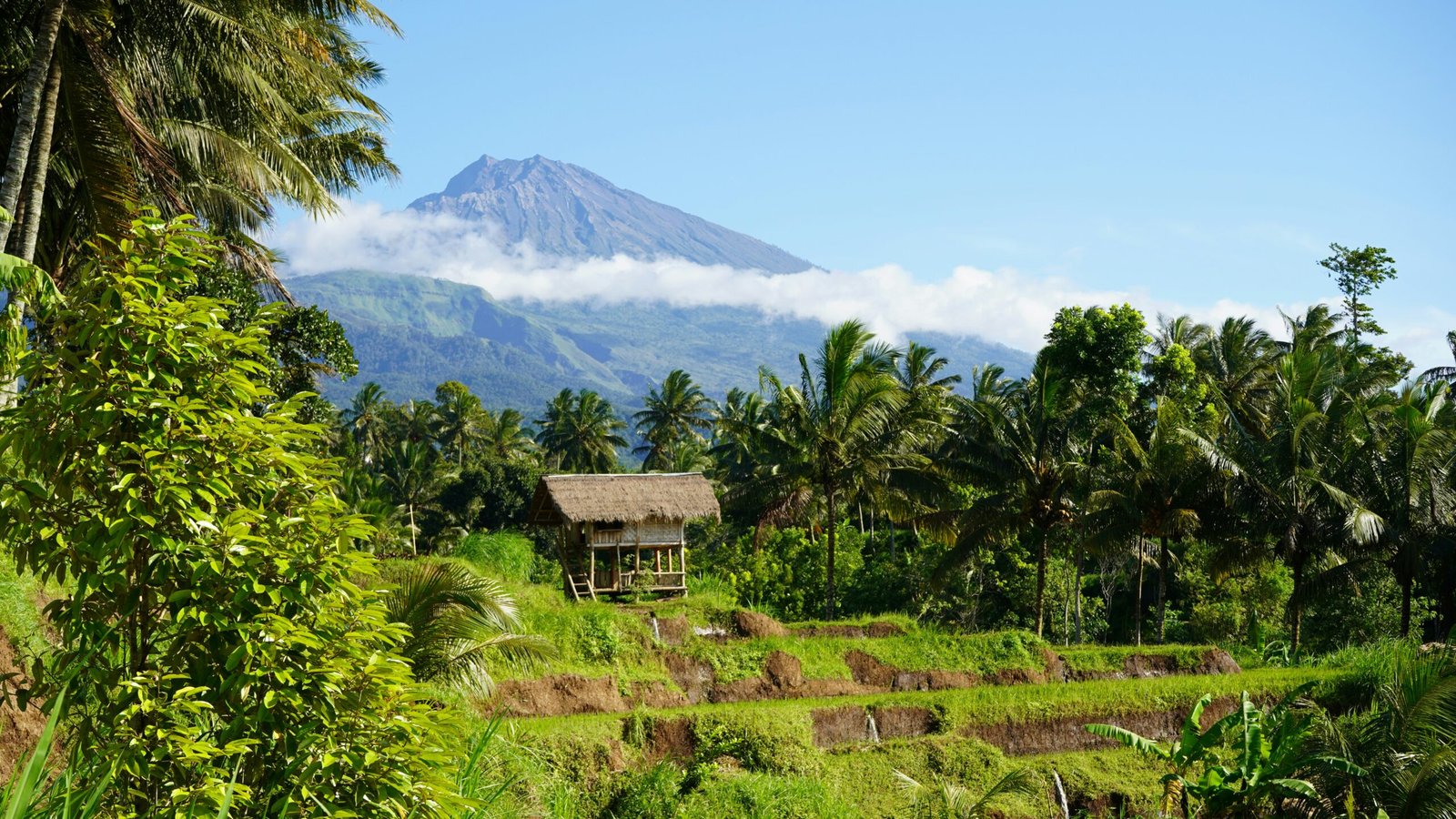
    In the green foothills of Rinjani, the village of Tetebatu feels a world away from the beaches. Walk through emerald rice terraces, tobacco fields and small villages, visit a monkey forest and swim under waterfalls hidden in the jungle.

    Local guides offer half-day walks that show you how rice and coffee are grown and how the Sasak people, Lombok’s indigenous community, live. Stay in a simple bamboo homestay and enjoy the cool, quiet evenings.

    Green rice fields with Mount Rinjani in the background near Tetebatu, Lombok

    9. Surf and Relax around Kuta

    On the south coast, Kuta Lombok is a laid-back surf town surrounded by some of the most beautiful beaches in Indonesia. Its beaches are framed by green hills, and the water shines in every shade of blue.

    Visit Tanjung Aan with its powdery sand, the calm bay of Mawun and the wide beach of Selong Belanak, which has gentle waves and is perfect for a beginner surf lesson. In the evening, climb Bukit Merese for a spectacular sunset over the coast.

    Waves rolling onto Kuta Beach with green hills behind, Lombok, Indonesia

    10. Discover Pink Beach and the Wild East

    In the far southeast, Pink Beach, also called Pantai Tangsi, gets its colour from tiny pieces of red coral mixed with the white sand. The road there is long and bumpy, so the best way to visit is on a boat trip.

    Most trips combine Pink Beach with snorkelling around the small islands nearby, called the Secret Gilis, which are quieter than the famous Gilis in the north. Bring lunch and plenty of water, as there are few facilities.

    Where to Stay on a Budget

    Lombok and the Gilis offer excellent value:

    • Homestays: simple, family-run rooms with breakfast, the cheapest way to stay and a great way to meet locals
    • Bungalows: wooden or bamboo bungalows close to the beach, often with a garden and a hammock
    • Hostels: found on Gili Trawangan, Gili Air and in Kuta, with dorms and private rooms
    • Boutique villas: for a splurge, stylish villas with private pools on the Gilis and around Kuta

    On the Gilis, staying a few minutes’ walk from the beach can save you a lot of money. Book early for July and August.

    Eating on a Budget

    The best food is found in small local restaurants called warungs:

    • Ayam taliwang: spicy grilled chicken, Lombok’s most famous dish
    • Plecing kangkung: water spinach with a fiery tomato and chilli sambal
    • Nasi campur: rice with a selection of small dishes, cheap and filling
    • Sate rembiga: sweet and spicy beef skewers from Lombok
    • Fresh seafood: grilled fish at the night market on Gili Trawangan

    A meal in a warung costs only a few dollars. Western cafés on the Gilis are more expensive but still good value.

    What It Really Costs

    Here’s a realistic daily budget per person for a comfortable mid-range trip, not counting international flights.

    • Accommodation: $25 to $70 per person, sharing a double room in a good bungalow or small hotel
    • Food: $15 to $30 a day, mixing warungs and cafés
    • Transport: $10 to $25 a day on average, including boats, bikes and a driver on Lombok
    • Activities: budget for the highlights separately: snorkelling trips, a diving course, the Rinjani trek, a surf lesson and a Pink Beach boat trip

    That works out to around $80 to $150 per person per day. Staying in homestays, eating in warungs and travelling on public boats can bring that down to $35 to $60.

    A Sample 10-Day Itinerary

    Day 1: Arrive in Lombok and take a boat to Gili Trawangan. Sunset at the swings.

    Day 2: Snorkelling trip around all three islands, with turtles and the Gili Meno statues.

    Day 3: Move to Gili Air and relax on the beach.

    Day 4: Gili Meno day trip, or a first dive.

    Day 5: Boat back to Lombok and drive to Senaru for the waterfalls.

    Day 6: Start the Rinjani crater rim trek.

    Day 7: Sunrise on the crater rim, then descend and rest.

    Day 8: Drive to Tetebatu for a walk through the rice fields.

    Day 9: Kuta Lombok, Tanjung Aan and sunset on Bukit Merese.

    Day 10: A surf lesson at Selong Belanak, then fly home.

    Practical Tips

    • Bring cash to the Gili Islands, as ATMs can run out of money
    • Dress modestly in villages and away from the beach, as Lombok is a Muslim island
    • Use reef-safe sunscreen and never touch coral or turtles
    • Watch the currents when snorkelling between the islands
    • Book Rinjani treks with a licensed operator and check that the park is open
    • Respect the island rules: the Gilis have strict laws against drugs, and penalties are severe

    Booking Tips

    • Airport transfer: Lombok airport is about 30 minutes from Kuta and around two hours from Bangsal harbour, so book an airport transfer with Kiwitaxi in advance, with a fixed price and a driver waiting for you
    • eSIM: install a Yesim eSIM before you fly, so you have data for maps, boat times and Grab rides from the moment you land
    • Tours and boats: popular options include a fast boat from Bali to the Gili Islands, a Gili snorkelling trip with turtles, a Rinjani crater rim trek and a Senaru waterfall tour. You can compare and book most of them on Klook

    Final Thoughts

    Lombok and the Gili Islands are a dream for anyone who loves the sea and nature. Swim with turtles, watch the sunset from a swing, climb a volcano, cool off below jungle waterfalls and surf on wild beaches framed by green hills.

    Travel in the dry season, take your time and slow down to island pace. Lombok will give you the Indonesia you imagined, without the crowds.

    Prices checked in October 2026. Costs and opening times change, so always confirm before you book.
  • Melbourne and the Great Ocean Road: The Ultimate Road Trip Guide

    Melbourne and the Great Ocean Road: The Ultimate Road Trip Guide

    The tallest palm trees in the world rising out of misty green hills, colourful colonial streets full of flowers and balconies, a giant rock towering over a lake dotted with islands, coffee farms on steep mountain slopes and wild Caribbean beaches framed by jungle: Colombia is one of the most exciting countries in South America.

    For years, many travellers stayed away. Today, Colombia is one of the most popular destinations on the continent, and it’s easy to see why. The country has two coastlines, the Andes, the Amazon, lively cities and some of the friendliest people you’ll meet anywhere.

    Colombia is also great value. A comfortable guesthouse room, a filling set lunch and a cup of the world’s best coffee cost very little, and domestic flights make it easy to cover long distances. This guide shows you the best places to visit, how to plan your route and what it really costs.

    Colombia at a Glance

    • Where: in the north of South America, with coasts on the Caribbean Sea and the Pacific Ocean
    • Main airports: Bogotá (BOG), Medellín (MDE) and Cartagena (CTG)
    • Currency: Colombian peso (COP)
    • Entry: many visitors can travel visa-free for up to 90 days, but must fill in the online Check-MIG form before arrival. Others need a visa. Check the current rules for your passport
    • Language: Spanish. English is spoken in tourist areas, but learning a few words of Spanish helps a lot
    • Best time: December to March and July to August, the drier months
    • Budget: around $40 to $60 a day for budget travellers, $80 to $150 for a comfortable mid-range trip

    When to Go

    Colombia is close to the equator, so the temperature depends more on altitude than on the season. The Caribbean coast is hot all year, Medellín has a mild spring-like climate, and Bogotá is cool.

    The best time to visit is during the drier months, December to March and July to August. Christmas, New Year and Easter are very busy, especially in Cartagena, so book early.

    April to May and October to November are wetter, with afternoon showers in the mountains. The landscape is greener, prices are lower and there are fewer tourists.

    Our tip: visit in late January to March for dry weather, fewer crowds than at Christmas and perfect beach days.

    How Long Do You Need?

    Plan at least two weeks for Colombia. That gives you time for Cartagena, the coffee region, Medellín and Guatapé, and a few days on the Caribbean coast around Tayrona. With three weeks, you can add Bogotá, the Rosario Islands or the mountain village of Minca.

    Getting Around

    Colombia is big and mountainous, so travel takes longer than you’d expect:

    • Domestic flights: cheap and fast, often the best way to cover long distances between Cartagena, Medellín, Bogotá and the coffee region
    • Buses: comfortable long-distance buses connect all major towns, but journeys through the mountains are slow
    • Local transport: use ride apps in the cities, and the jeeps called Willys in the coffee region
    • Medellín Metro: clean, safe and cheap, with cable cars climbing the hillsides

    Things to Do in Colombia

    Here are the experiences we think are worth your time and money.

    1. Wander the Walled City of Cartagena

    Cartagena is one of the most beautiful colonial cities in the Americas. Inside its old stone walls, a UNESCO World Heritage Site, narrow streets are lined with colourful houses, wooden balconies overflowing with flowers and grand churches and plazas.

    Walk the city walls at sunset, visit the huge Castillo San Felipe de Barajas fortress and explore the old town early in the morning before the heat and the crowds. In the evening, the plazas fill with street performers, food stalls and music.

    A narrow colonial street with a yellow church tower in Cartagena, Colombia

    2. Explore Getsemaní

    Just outside the walls, the neighbourhood of Getsemaní is Cartagena’s creative heart. Its streets are covered with colourful murals and umbrellas hanging above the lanes, and the plazas are full of life after dark.

    Plaza de la Trinidad is the place to be in the evening, with street food, music and locals and travellers mixing together. Getsemaní is also one of the best areas to stay in Cartagena, with good-value hostels and boutique hotels.

    Colourful houses with flowers on the balconies in Cartagena, Colombia

    3. Island-Hop to the Rosario Islands

    About an hour by boat from Cartagena, the Rosario Islands are a group of small coral islands with white sand beaches and turquoise water, protected as a national park.

    Join a boat trip to snorkel over the reefs, relax on the beach and enjoy fresh fish for lunch. For a quieter experience, stay overnight on one of the islands or visit the beaches of nearby Barú.

    4. Hike Among the Wax Palms of Cocora Valley

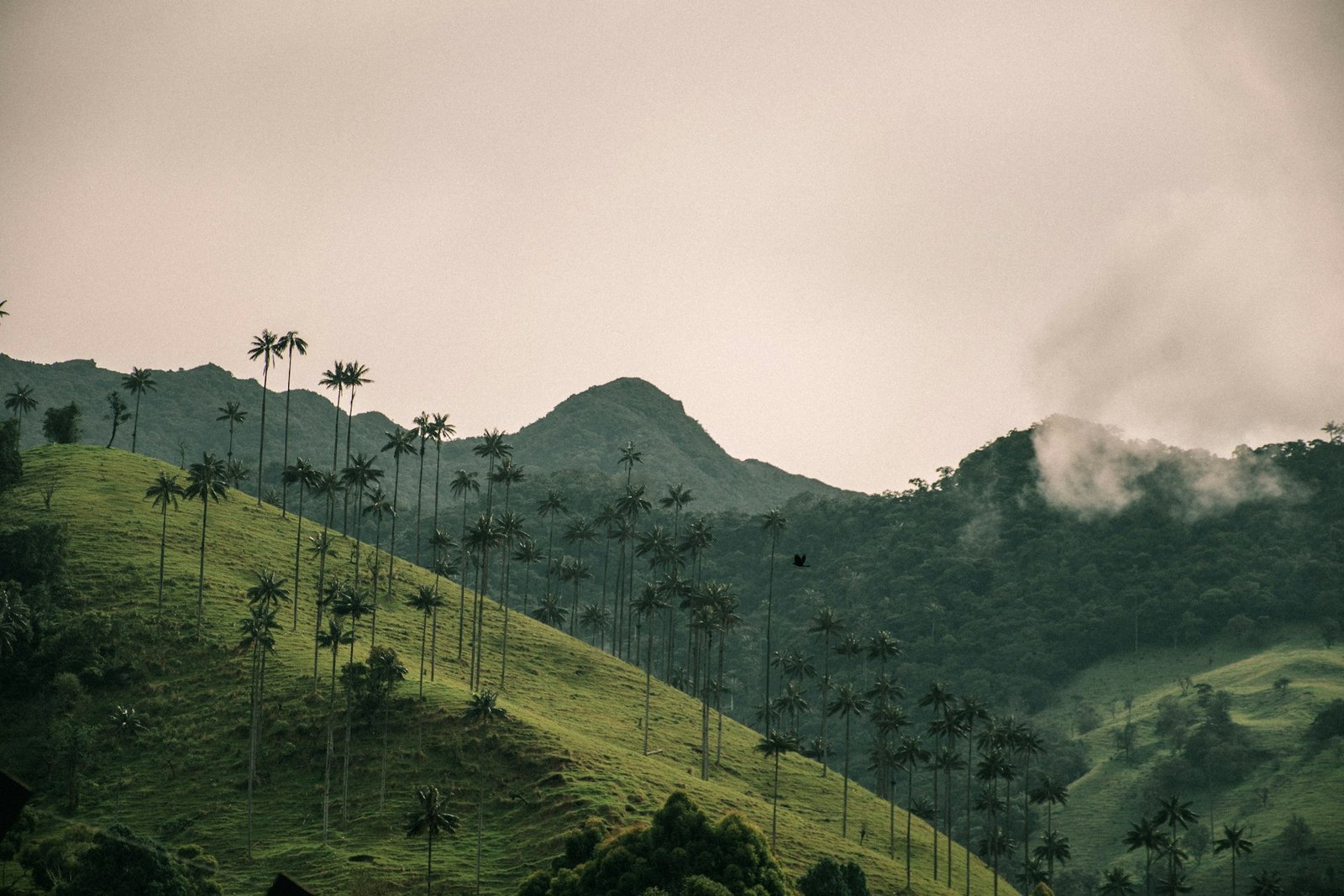
    The Cocora Valley near Salento is one of the most magical landscapes in South America. Here, the wax palm, Colombia’s national tree and the tallest palm in the world, grows up to 60 metres high, rising out of rolling green hills and cloud forest.

    The classic loop hike takes about five to six hours, crossing wobbly wooden bridges through the forest before reaching the famous palm-covered hills. If you’re short on time, you can walk straight to the palms and back in two hours. Go early in the morning, when the mist hangs between the palms.

    Tall wax palms rising above the green hills of the Cocora Valley, Salento, Colombia

    5. Tour a Coffee Farm in Salento

    Colombia is famous for its coffee, and the coffee region around Salento is the best place to learn about it. On a coffee farm tour, you’ll walk through the plantations, pick coffee cherries and learn how the beans are dried, roasted and brewed, before tasting a fresh cup.

    Salento itself is a charming little town with colourful houses, craft shops and a viewpoint over the valley. Nearby, the quieter town of Filandia is just as pretty and much less touristy.

    6. Discover Medellín and Comuna 13

    Once known as one of the most dangerous cities in the world, Medellín has transformed itself into a modern, friendly city with a perfect spring-like climate all year round.

    Join a guided tour of Comuna 13, a hillside neighbourhood with colourful street art, outdoor escalators and an inspiring story of change. Ride the Metrocable cable cars for great views over the city, and relax in the parks and cafés of El Poblado and Laureles.

    7. Climb El Peñol

    About two hours from Medellín, El Peñol is a giant granite rock rising more than 200 metres above the surrounding countryside. A staircase of around 700 steps zigzags up the side of the rock.

    The climb is steep, but the view from the top is unforgettable: a maze of blue lakes, green islands and peninsulas stretching to the horizon, created when the valley was flooded for a reservoir. Come in the morning, before the day-trip crowds arrive.

    Aerial view of the islands and lakes of the Guatapé reservoir, Colombia

    8. Stroll the Colourful Streets of Guatapé

    Next to El Peñol, the small town of Guatapé is one of the most colourful places in Colombia. Almost every house is decorated with zócalos, bright painted reliefs along the bottom of the walls showing animals, flowers and scenes from local life.

    Wander the cobbled streets, climb the colourful staircases, have lunch by the lake and take a boat trip on the reservoir. Guatapé is a popular day trip from Medellín, but staying overnight lets you enjoy it when the crowds have gone.

    Colourful buildings along a steep staircase in Guatapé, Colombia

    9. Hike to the Beaches of Tayrona

    On the Caribbean coast near Santa Marta, Tayrona National Park is where the jungle-covered mountains meet the sea. Hiking trails lead through the rainforest, where you might see monkeys, to beautiful beaches with giant boulders and golden sand.

    The most famous beach is Cabo San Juan, with a small hut on a rock overlooking two bays. Many beaches have strong currents, so only swim where it’s marked as safe. The park closes for a few weeks each year to let nature recover, so check the dates before you go.

    A sandy beach with large boulders in Tayrona National Park, Colombia

    10. Explore Bogotá

    Colombia’s capital, Bogotá, sits high in the Andes at 2,600 metres. Its historic centre, La Candelaria, is full of colonial buildings, street art and cosy cafés.

    Don’t miss the Gold Museum, with more than 50,000 pre-Columbian gold objects, and take the cable car or funicular up Monserrate for a view over the huge city. Join a street art tour or a bike tour to see a different side of the capital.

    Booking Tips

    A few things are worth sorting out before you arrive:

    • Airport transfer: book an airport transfer in advance with a service like Kiwitaxi, especially in Medellín, where the airport is about 45 minutes from the city
    • eSIM: install an eSIM from a provider like Yesim before you fly, so you can use maps and ride apps as soon as you land
    • Cartagena tours: popular options include a Cartagena Walled City Walking Tour, a Rosario Islands Boat Trip with Snorkelling and a Cartagena Street Food Tour. You can compare and book most of them on Klook
    • Medellín tours: look for a Comuna 13 Graffiti Tour, a Guatapé and El Peñol Day Trip from Medellín and a Medellín Coffee Farm Tour
    • Coffee region: book a Cocora Valley Hike with Guide or a Coffee Farm Tour in Salento in advance in the busy season

    Booking the big experiences online usually costs about the same as booking locally, and you’ll know exactly what’s included.

    Where to Stay on a Budget

    Colombia has excellent value accommodation:

    • Hostels: found everywhere, many with pools, rooftop bars and private rooms
    • Guesthouses and boutique hotels: stylish small hotels in colonial houses, especially in Cartagena and Salento
    • Coffee farm stays: sleep on a working coffee farm in the coffee region
    • Eco-lodges: simple lodges in the jungle near Tayrona and in Minca

    In Cartagena, stay in Getsemaní for value and atmosphere. In Medellín, El Poblado and Laureles are the most popular areas for travellers.

    Eating on a Budget

    Colombian food is hearty, fresh and full of flavour:

    • Arepas: corn flatbreads, grilled and filled with cheese, eggs or meat
    • Bandeja paisa: a huge plate of beans, rice, meat, sausage, egg, plantain and avocado from the Medellín region
    • Ajiaco: a creamy chicken and potato soup from Bogotá
    • Empanadas: fried pastries filled with meat or potatoes, sold everywhere
    • Fresh fruit juices: made with exotic fruits like lulo, maracuyá and guanábana

    Look for the menú del día, a set lunch with soup, a main course and a drink, served in local restaurants for very little money.

    What It Really Costs

    Here’s a realistic daily budget per person for a comfortable mid-range trip, not counting international flights.

    • Accommodation: $30 to $70 per person, sharing a guesthouse or boutique hotel room
    • Food: $20 to $40 a day, mixing set lunches, street food and restaurant dinners
    • Transport: $15 to $30 a day on average, including ride apps, buses and a few domestic flights
    • Activities: budget for the highlights separately: a Rosario Islands boat trip, Tayrona entry, a coffee farm tour, a Comuna 13 tour and the climb up El Peñol

    That works out to around $80 to $150 per person per day. Staying in hostels, eating set lunches and taking buses can bring that down to $40 to $60.

    A Sample 14-Day Itinerary

    Days 1 to 3: Cartagena’s walled city, Getsemaní and a boat trip to the Rosario Islands.

    Days 4 to 6: Travel to Santa Marta, then hike in Tayrona National Park and relax in Minca.

    Days 7 to 9: Fly to Medellín, take the Comuna 13 tour and ride the Metrocable.

    Day 10: Day trip to Guatapé and El Peñol.

    Days 11 to 13: Travel to Salento, hike in the Cocora Valley and visit a coffee farm.

    Day 14: Fly home via Bogotá, with time for the Gold Museum if your flight allows.

    Practical Tips

    • Fill in the Check-MIG form online before you arrive
    • Use ride apps in the cities instead of hailing taxis on the street
    • Stay alert: keep your phone out of sight in busy streets and don’t carry valuables at night
    • Pack layers: it’s hot on the coast, mild in Medellín and cool in Bogotá and the mountains
    • Carry some cash, as many small shops and buses don’t accept cards
    • Learn some Spanish: a few basic phrases will make your trip much easier

    Final Thoughts

    Colombia is a country full of colour, energy and warmth. Walk the walls of Cartagena at sunset, hike among the giant wax palms of Cocora, sip fresh coffee on a mountain farm, climb El Peñol for one of the best views in South America and finish on the wild beaches of Tayrona.

    Give yourself at least two weeks, fly between the regions and stay curious. Colombia will win your heart.

    Prices checked in October 2026. Costs and opening times change, so always confirm before you book.

  • Colombia Travel Guide: Cartagena, Coffee Country and Caribbean Beaches

    Colombia Travel Guide: Cartagena, Coffee Country and Caribbean Beaches

    The tallest palm trees in the world rising out of misty green hills, colourful colonial streets full of flowers and balconies, a giant rock towering over a lake dotted with islands, coffee farms on steep mountain slopes and wild Caribbean beaches framed by jungle: Colombia is one of the most exciting countries in South America.

    For years, many travellers stayed away. Today, Colombia is one of the most popular destinations on the continent, and it’s easy to see why. The country has two coastlines, the Andes, the Amazon, lively cities and some of the friendliest people you’ll meet anywhere.

    Colombia is also great value. A comfortable guesthouse room, a filling set lunch and a cup of the world’s best coffee cost very little, and domestic flights make it easy to cover long distances. This guide shows you the best places to visit, how to plan your route and what it really costs.

    Colombia at a Glance

    • Where: in the north of South America, with coasts on the Caribbean Sea and the Pacific Ocean
    • Main airports: Bogotá (BOG), Medellín (MDE) and Cartagena (CTG)
    • Currency: Colombian peso (COP)
    • Entry: many visitors can travel visa-free for up to 90 days, but must fill in the online Check-MIG form before arrival. Others need a visa. Check the current rules for your passport
    • Language: Spanish. English is spoken in tourist areas, but learning a few words of Spanish helps a lot
    • Best time: December to March and July to August, the drier months
    • Budget: around $40 to $60 a day for budget travellers, $80 to $150 for a comfortable mid-range trip

    When to Go

    Colombia is close to the equator, so the temperature depends more on altitude than on the season. The Caribbean coast is hot all year, Medellín has a mild spring-like climate, and Bogotá is cool.

    The best time to visit is during the drier months, December to March and July to August. Christmas, New Year and Easter are very busy, especially in Cartagena, so book early.

    April to May and October to November are wetter, with afternoon showers in the mountains. The landscape is greener, prices are lower and there are fewer tourists.

    Our tip: visit in late January to March for dry weather, fewer crowds than at Christmas and perfect beach days.

    How Long Do You Need?

    Plan at least two weeks for Colombia. That gives you time for Cartagena, the coffee region, Medellín and Guatapé, and a few days on the Caribbean coast around Tayrona. With three weeks, you can add Bogotá, the Rosario Islands or the mountain village of Minca.

    Getting Around

    Colombia is big and mountainous, so travel takes longer than you’d expect:

    • Domestic flights: cheap and fast, often the best way to cover long distances between Cartagena, Medellín, Bogotá and the coffee region
    • Buses: comfortable long-distance buses connect all major towns, but journeys through the mountains are slow
    • Local transport: use ride apps in the cities, and the jeeps called Willys in the coffee region
    • Medellín Metro: clean, safe and cheap, with cable cars climbing the hillsides

    Things to Do in Colombia

    Here are the experiences we think are worth your time and money.

    1. Wander the Walled City of Cartagena

    Cartagena is one of the most beautiful colonial cities in the Americas. Inside its old stone walls, a UNESCO World Heritage Site, narrow streets are lined with colourful houses, wooden balconies overflowing with flowers and grand churches and plazas.

    Walk the city walls at sunset, visit the huge Castillo San Felipe de Barajas fortress and explore the old town early in the morning before the heat and the crowds. In the evening, the plazas fill with street performers, food stalls and music.

    A narrow colonial street with a yellow church tower in Cartagena, Colombia

    2. Explore Getsemaní

    Just outside the walls, the neighbourhood of Getsemaní is Cartagena’s creative heart. Its streets are covered with colourful murals and umbrellas hanging above the lanes, and the plazas are full of life after dark.

    Plaza de la Trinidad is the place to be in the evening, with street food, music and locals and travellers mixing together. Getsemaní is also one of the best areas to stay in Cartagena, with good-value hostels and boutique hotels.

    Colourful houses with flowers on the balconies in Cartagena, Colombia

    3. Island-Hop to the Rosario Islands

    About an hour by boat from Cartagena, the Rosario Islands are a group of small coral islands with white sand beaches and turquoise water, protected as a national park.

    Join a boat trip to snorkel over the reefs, relax on the beach and enjoy fresh fish for lunch. For a quieter experience, stay overnight on one of the islands or visit the beaches of nearby Barú.

    4. Hike Among the Wax Palms of Cocora Valley

    The Cocora Valley near Salento is one of the most magical landscapes in South America. Here, the wax palm, Colombia’s national tree and the tallest palm in the world, grows up to 60 metres high, rising out of rolling green hills and cloud forest.

    The classic loop hike takes about five to six hours, crossing wobbly wooden bridges through the forest before reaching the famous palm-covered hills. If you’re short on time, you can walk straight to the palms and back in two hours. Go early in the morning, when the mist hangs between the palms.

    Tall wax palms rising above the green hills of the Cocora Valley, Salento, Colombia

    5. Tour a Coffee Farm in Salento

    Colombia is famous for its coffee, and the coffee region around Salento is the best place to learn about it. On a coffee farm tour, you’ll walk through the plantations, pick coffee cherries and learn how the beans are dried, roasted and brewed, before tasting a fresh cup.

    Salento itself is a charming little town with colourful houses, craft shops and a viewpoint over the valley. Nearby, the quieter town of Filandia is just as pretty and much less touristy.

    6. Discover Medellín and Comuna 13

    Once known as one of the most dangerous cities in the world, Medellín has transformed itself into a modern, friendly city with a perfect spring-like climate all year round.

    Join a guided tour of Comuna 13, a hillside neighbourhood with colourful street art, outdoor escalators and an inspiring story of change. Ride the Metrocable cable cars for great views over the city, and relax in the parks and cafés of El Poblado and Laureles.

    7. Climb El Peñol

    About two hours from Medellín, El Peñol is a giant granite rock rising more than 200 metres above the surrounding countryside. A staircase of around 700 steps zigzags up the side of the rock.

    The climb is steep, but the view from the top is unforgettable: a maze of blue lakes, green islands and peninsulas stretching to the horizon, created when the valley was flooded for a reservoir. Come in the morning, before the day-trip crowds arrive.

    Aerial view of the islands and lakes of the Guatapé reservoir, Colombia

    8. Stroll the Colourful Streets of Guatapé

    Next to El Peñol, the small town of Guatapé is one of the most colourful places in Colombia. Almost every house is decorated with zócalos, bright painted reliefs along the bottom of the walls showing animals, flowers and scenes from local life.

    Wander the cobbled streets, climb the colourful staircases, have lunch by the lake and take a boat trip on the reservoir. Guatapé is a popular day trip from Medellín, but staying overnight lets you enjoy it when the crowds have gone.

    Colourful buildings along a steep staircase in Guatapé, Colombia

    9. Hike to the Beaches of Tayrona

    On the Caribbean coast near Santa Marta, Tayrona National Park is where the jungle-covered mountains meet the sea. Hiking trails lead through the rainforest, where you might see monkeys, to beautiful beaches with giant boulders and golden sand.

    The most famous beach is Cabo San Juan, with a small hut on a rock overlooking two bays. Many beaches have strong currents, so only swim where it’s marked as safe. The park closes for a few weeks each year to let nature recover, so check the dates before you go.

    A sandy beach with large boulders in Tayrona National Park, Colombia

    10. Explore Bogotá

    Colombia’s capital, Bogotá, sits high in the Andes at 2,600 metres. Its historic centre, La Candelaria, is full of colonial buildings, street art and cosy cafés.

    Don’t miss the Gold Museum, with more than 50,000 pre-Columbian gold objects, and take the cable car or funicular up Monserrate for a view over the huge city. Join a street art tour or a bike tour to see a different side of the capital.

    Booking Tips

    A few things are worth sorting out before you arrive:

    • Airport transfer: book an airport transfer in advance with a service like Kiwitaxi, especially in Medellín, where the airport is about 45 minutes from the city
    • eSIM: install an eSIM from a provider like Yesim before you fly, so you can use maps and ride apps as soon as you land
    • Cartagena tours: popular options include a Cartagena Walled City Walking Tour, a Rosario Islands Boat Trip with Snorkelling and a Cartagena Street Food Tour. You can compare and book most of them on Klook
    • Medellín tours: look for a Comuna 13 Graffiti Tour, a Guatapé and El Peñol Day Trip from Medellín and a Medellín Coffee Farm Tour
    • Coffee region: book a Cocora Valley Hike with Guide or a Coffee Farm Tour in Salento in advance in the busy season

    Booking the big experiences online usually costs about the same as booking locally, and you’ll know exactly what’s included.

    Where to Stay on a Budget

    Colombia has excellent value accommodation:

    • Hostels: found everywhere, many with pools, rooftop bars and private rooms
    • Guesthouses and boutique hotels: stylish small hotels in colonial houses, especially in Cartagena and Salento
    • Coffee farm stays: sleep on a working coffee farm in the coffee region
    • Eco-lodges: simple lodges in the jungle near Tayrona and in Minca

    In Cartagena, stay in Getsemaní for value and atmosphere. In Medellín, El Poblado and Laureles are the most popular areas for travellers.

    Eating on a Budget

    Colombian food is hearty, fresh and full of flavour:

    • Arepas: corn flatbreads, grilled and filled with cheese, eggs or meat
    • Bandeja paisa: a huge plate of beans, rice, meat, sausage, egg, plantain and avocado from the Medellín region
    • Ajiaco: a creamy chicken and potato soup from Bogotá
    • Empanadas: fried pastries filled with meat or potatoes, sold everywhere
    • Fresh fruit juices: made with exotic fruits like lulo, maracuyá and guanábana

    Look for the menú del día, a set lunch with soup, a main course and a drink, served in local restaurants for very little money.

    What It Really Costs

    Here’s a realistic daily budget per person for a comfortable mid-range trip, not counting international flights.

    • Accommodation: $30 to $70 per person, sharing a guesthouse or boutique hotel room
    • Food: $20 to $40 a day, mixing set lunches, street food and restaurant dinners
    • Transport: $15 to $30 a day on average, including ride apps, buses and a few domestic flights
    • Activities: budget for the highlights separately: a Rosario Islands boat trip, Tayrona entry, a coffee farm tour, a Comuna 13 tour and the climb up El Peñol

    That works out to around $80 to $150 per person per day. Staying in hostels, eating set lunches and taking buses can bring that down to $40 to $60.

    A Sample 14-Day Itinerary

    Days 1 to 3: Cartagena’s walled city, Getsemaní and a boat trip to the Rosario Islands.

    Days 4 to 6: Travel to Santa Marta, then hike in Tayrona National Park and relax in Minca.

    Days 7 to 9: Fly to Medellín, take the Comuna 13 tour and ride the Metrocable.

    Day 10: Day trip to Guatapé and El Peñol.

    Days 11 to 13: Travel to Salento, hike in the Cocora Valley and visit a coffee farm.

    Day 14: Fly home via Bogotá, with time for the Gold Museum if your flight allows.

    Practical Tips

    • Fill in the Check-MIG form online before you arrive
    • Use ride apps in the cities instead of hailing taxis on the street
    • Stay alert: keep your phone out of sight in busy streets and don’t carry valuables at night
    • Pack layers: it’s hot on the coast, mild in Medellín and cool in Bogotá and the mountains
    • Carry some cash, as many small shops and buses don’t accept cards
    • Learn some Spanish: a few basic phrases will make your trip much easier

    Final Thoughts

    Colombia is a country full of colour, energy and warmth. Walk the walls of Cartagena at sunset, hike among the giant wax palms of Cocora, sip fresh coffee on a mountain farm, climb El Peñol for one of the best views in South America and finish on the wild beaches of Tayrona.

    Give yourself at least two weeks, fly between the regions and stay curious. Colombia will win your heart.

    Prices checked in October 2026. Costs and opening times change, so always confirm before you book.
  • Madeira Travel Guide: Levada Walks, Ocean Cliffs and the Best Things to Do

    Madeira Travel Guide: Levada Walks, Ocean Cliffs and the Best Things to Do

    Green cliffs dropping straight into a deep blue ocean, hiking trails high above a sea of clouds, narrow paths following old water channels through misty laurel forests, natural lava pools filled by the waves and a lively capital full of flowers and colourful doors: Madeira is one of the most beautiful islands in Europe.

    This small Portuguese island lies in the Atlantic Ocean, closer to Africa than to mainland Europe. Thanks to its mild climate, it’s often called the island of eternal spring, with pleasant temperatures all year round. That makes it a perfect escape when the rest of Europe is cold and grey.

    Madeira is also great value compared to many other European islands. Local restaurants are affordable, the best hikes are almost free, and with a rental car you can explore the whole island on your own. This guide shows you the best things to do, where to stay and what it really costs.

    Madeira at a Glance

    • Where: in the Atlantic Ocean, about 1,000 km southwest of Lisbon and 500 km off the coast of Morocco
    • Main airport: Cristiano Ronaldo International Airport (FNC), about 20 minutes from Funchal
    • Currency: euro (EUR)
    • Entry: Madeira is part of Portugal and the Schengen Area. Many visitors can travel visa-free, but check the current rules for your passport
    • Language: Portuguese. English is widely spoken in tourist areas
    • Best time: all year, with April to June and September to October our favourites
    • Budget: around €70 to €100 a day for budget travellers, €130 to €200 for a comfortable mid-range trip

    When to Go

    Madeira is a year-round destination. Temperatures on the coast usually stay between 17 and 26°C, so it’s never really cold or extremely hot.

    April to June is spring, when the island is full of flowers and the hiking weather is perfect. July and August are the warmest and busiest months, with the best conditions for swimming. September and October are still warm, with pleasant sea temperatures and fewer crowds.

    November to March is a great winter escape, with mild days around 18 to 21°C. It rains more often, especially in the north and the mountains, and some trails can close after storms. The famous New Year’s Eve fireworks in Funchal are among the biggest in the world.

    Our tip: visit in May or late September for flowers, warm days and the best hiking conditions.

    How Long Do You Need?

    Plan at least five to seven days for Madeira. That gives you time for Funchal, two or three of the best hikes, a drive around the island and a day on the north coast. With ten days, you can add more levada walks, a whale-watching trip and a day trip to the golden beach of Porto Santo.

    Getting Around

    The best way to explore Madeira is with a rental car. Roads are good, with many tunnels, but some mountain roads are steep and narrow, so choose a car with a strong engine.

    Buses connect Funchal with most towns, but they’re slow and less frequent in the north and west. Many of the best hikes start in the mountains, where public transport is limited. If you don’t want to drive, join guided hiking tours or jeep tours that include transport from Funchal.

    Where to Stay

    • Funchal: the best base for first-time visitors, with restaurants, the old town and easy access to the whole island
    • Calheta and the southwest: sunnier, quieter, with a sandy beach and beautiful sunsets
    • The north coast: green and wild, perfect for hikers who want to wake up close to the trails, in towns like Santana or Porto Moniz

    Things to Do in Madeira

    Here are the experiences we think are worth your time and money.

    1. Hike from Pico do Areeiro to Pico Ruivo

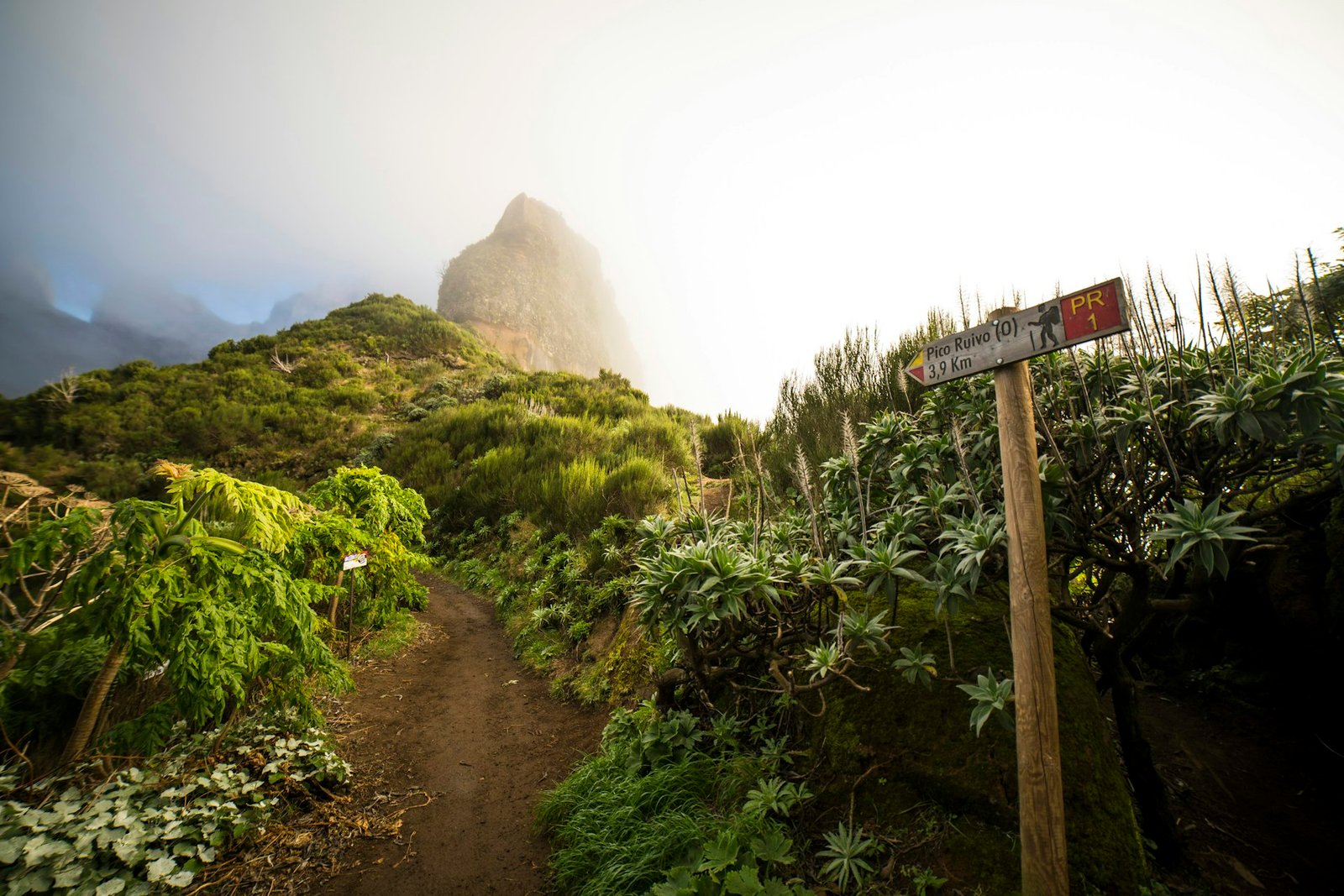
    The hike from Pico do Areeiro (1,818 m) to Pico Ruivo (1,862 m), the highest peak on the island, is one of the most spectacular day hikes in Europe. The trail follows a narrow ridge with steps carved into the rock, tunnels through the mountains and breathtaking views on both sides.

    The hike is about 11 km return and takes four to six hours. It’s steep in places and not for anyone afraid of heights. Sections of the trail sometimes close after storms or rockfalls, so check that it’s open before you go. Start early to beat the crowds and the clouds.

    The hiking trail from Pico do Areeiro through the mountains of Madeira, Portugal

    2. Watch the Sunrise Above the Clouds

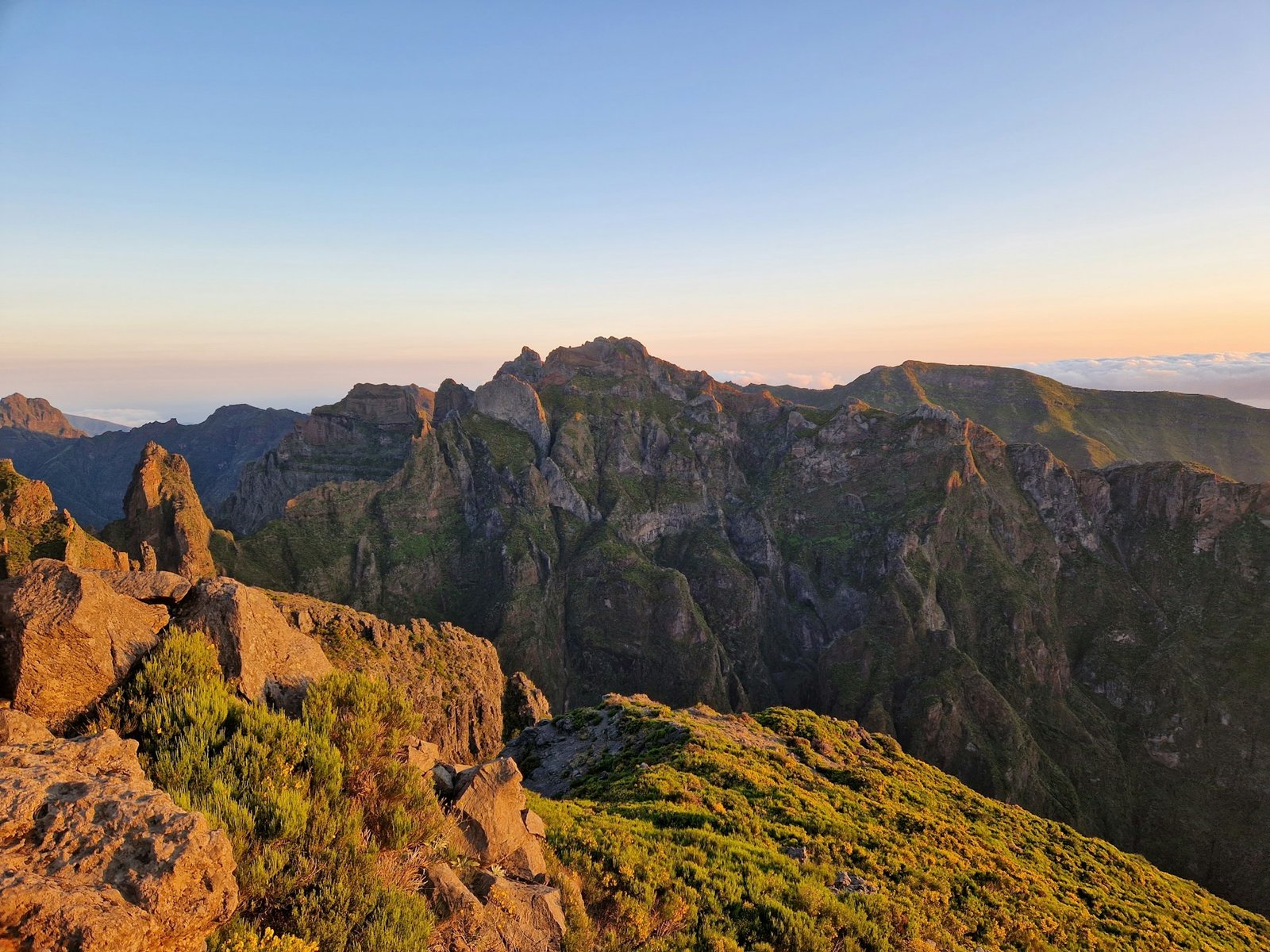
    On many mornings, the peaks of Madeira rise above a sea of clouds. Watching the sunrise from Pico do Areeiro, as the sky turns orange and the clouds glow below you, is one of the most magical experiences on the island.

    You can drive almost to the summit, so you don’t need to hike in the dark. Arrive about 45 minutes before sunrise, bring warm clothes, as it’s cold at the top, and check the weather forecast the night before.

    View over the green mountains of Madeira from a high viewpoint

    3. Walk the Levadas

    Madeira’s levadas are old irrigation channels that carry water from the rainy mountains to the farms in the south. Narrow paths follow them for hundreds of kilometres, through forests, along cliffs and past waterfalls, making them perfect for walking.

    Our favourites are the Levada do Caldeirão Verde, which leads through the green laurel forest, a UNESCO World Heritage Site, to a tall waterfall in a stone amphitheatre, and the Levada das 25 Fontes, which ends at a pool fed by dozens of small springs. Non-residents pay a small fee for the most popular trails, which you book online. Bring a torch for the tunnels.

    4. Explore Ponta de São Lourenço

    At the eastern tip of the island, the Ponta de São Lourenço peninsula looks completely different from the rest of Madeira. The landscape is dry and windswept, with red, ochre and black volcanic cliffs dropping into the turquoise sea.

    The trail is about 8 km return and takes two to three hours, with amazing views on both sides. There’s very little shade, so bring sun protection and plenty of water, and start early in summer.

    5. Discover Funchal’s Old Town and Market

    Funchal, Madeira’s capital, is a charming city of narrow streets, flower-filled gardens and black and white cobblestones, stretched out along a sunny bay.

    Walk through the Zona Velha, the old town, where the doors along Rua de Santa Maria are painted with colourful artworks. Visit the Mercado dos Lavradores, the farmers’ market, to see piles of exotic fruits, flowers and fresh fish, and stroll along the seafront promenade at sunset. Don’t miss a glass of Madeira wine at one of the historic wine lodges.

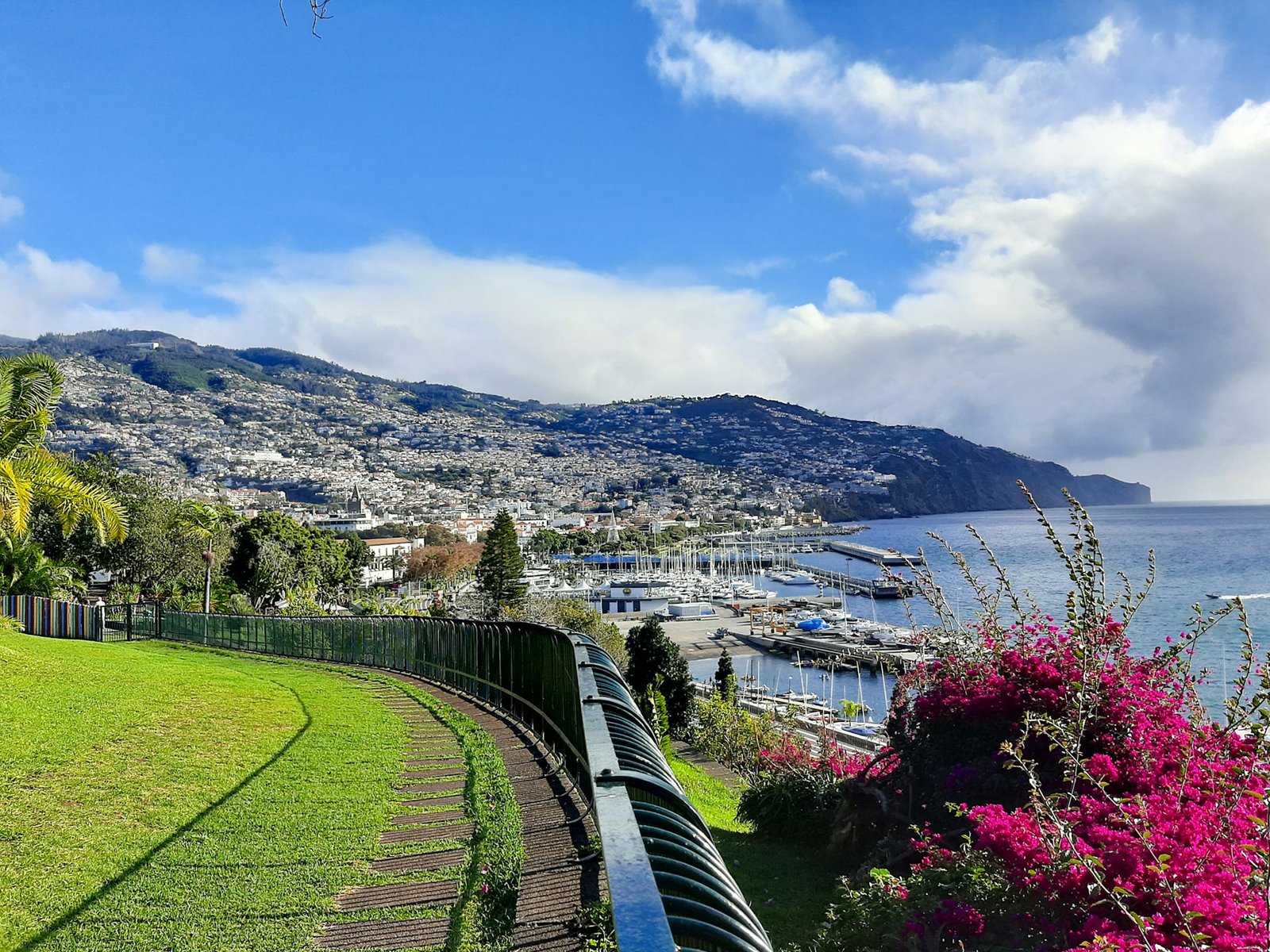
    View over Funchal and the ocean, Madeira, Portugal

    6. Ride the Cable Car to Monte

    The Funchal cable car carries you high above the city to the hillside village of Monte, with views over the rooftops and the bay. At the top, explore the beautiful Monte Palace Tropical Garden, with exotic plants, lakes and Japanese gardens.

    For the way down, try the famous toboggan ride: wicker sledges steered by two men in white clothes and straw hats, sliding down the steep streets towards Funchal. It’s short, fun and a Madeira tradition since the 19th century.

    7. Visit Câmara de Lobos and Cabo Girão

    Just west of Funchal, Câmara de Lobos is a picturesque fishing village with colourful boats bobbing in the harbour and houses stacked up the hillside. Winston Churchill painted here, and it’s the best place to try poncha, Madeira’s traditional drink made with sugarcane rum, honey and lemon.

    Nearby, the cliffs of Cabo Girão rise around 580 metres above the sea. Walk out onto the glass skywalk at the top and look straight down to the ocean and the tiny terraced fields at the foot of the cliffs.

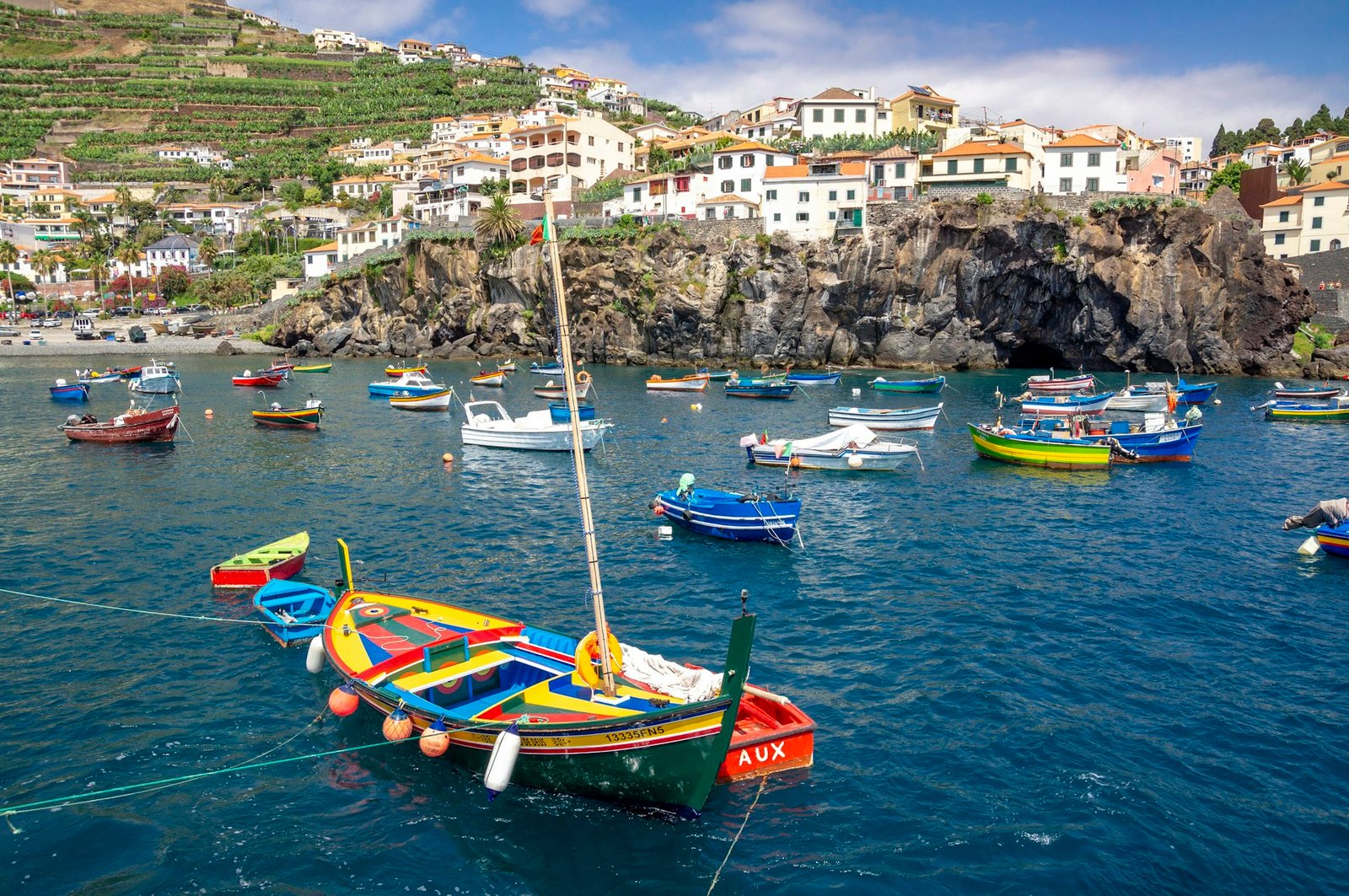
    A colourful fishing boat in the harbour of Câmara de Lobos, Madeira

    8. Drive the Wild West Coast

    The west of Madeira is perfect for a road trip. Drive through Arco da Calheta, with its terraced hillsides and banana plantations high above the ocean, and stop at the sandy beach of Calheta for a swim.

    Continue up to the Fanal Forest, a misty laurel forest with ancient, twisted trees that looks like a scene from a fairy tale, especially on foggy days. It’s one of the most photographed places on the island.

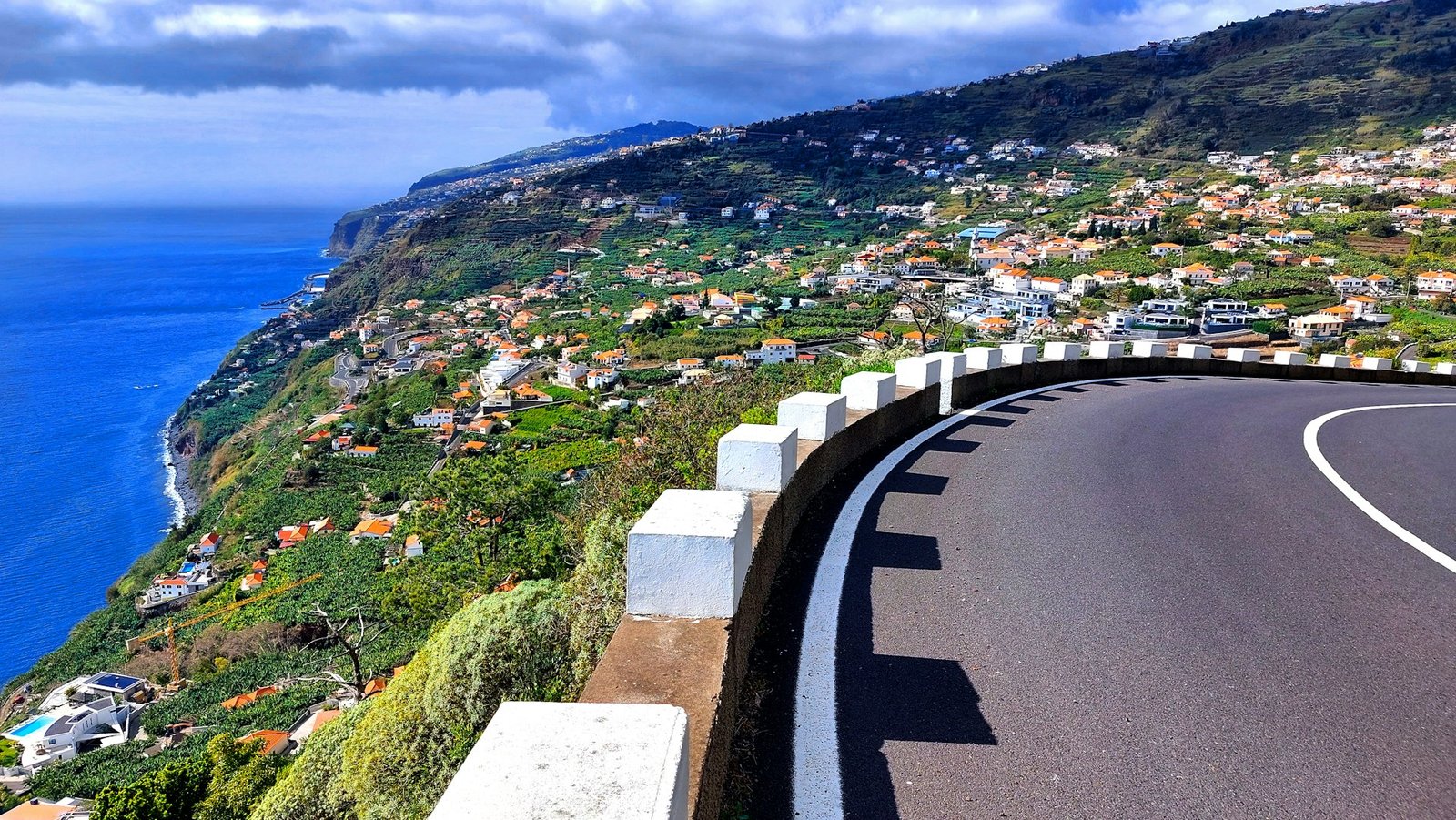
    Terraced hillsides and banana plantations above the ocean at Arco da Calheta, Madeira

    9. Swim in the Lava Pools of Porto Moniz

    In the far northwest, Porto Moniz is famous for its natural swimming pools, formed by volcanic lava rock and filled by the waves of the Atlantic. Swimming here while the ocean crashes against the rocks around you is an unforgettable experience.

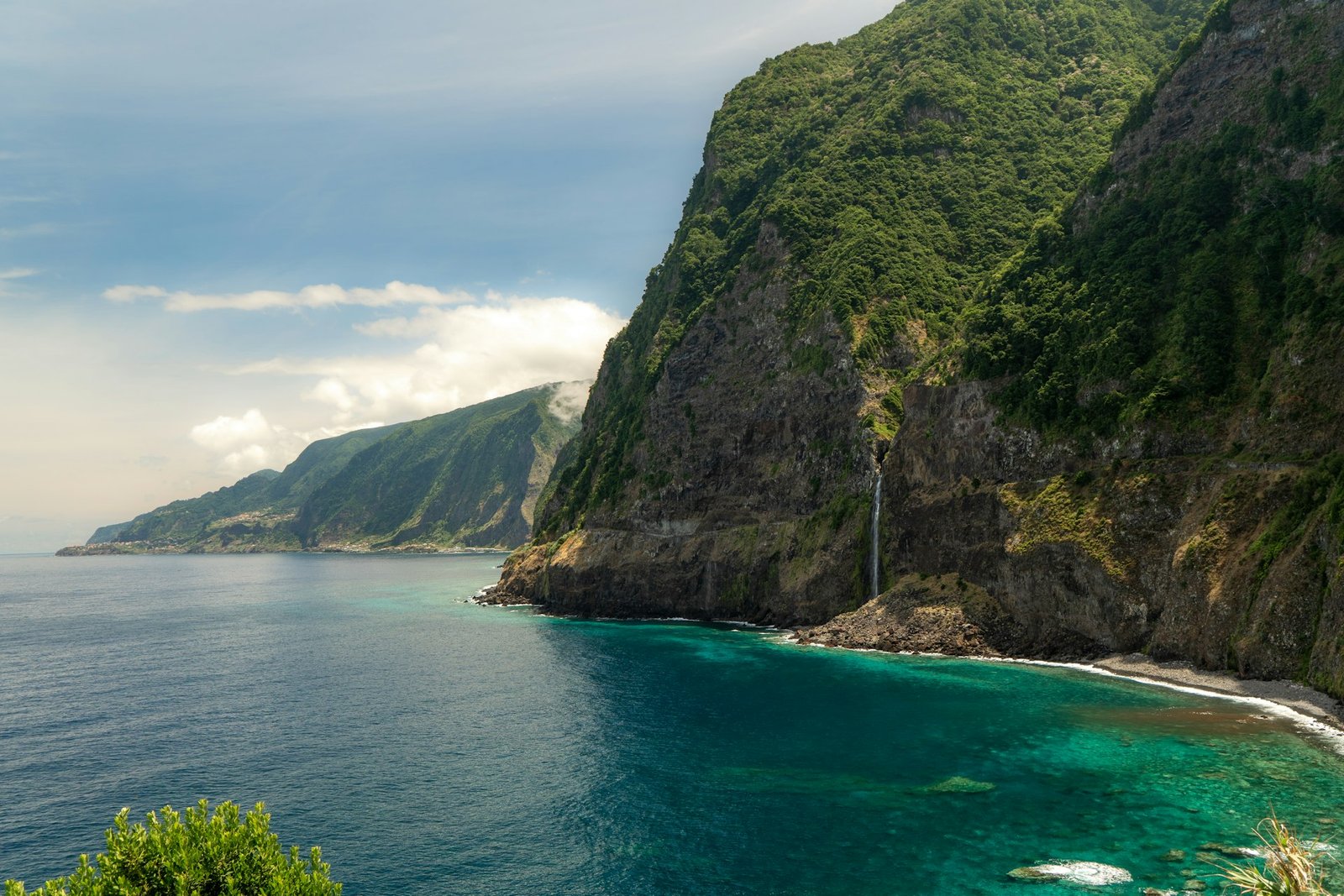
    On the way, stop at Seixal, with its black sand beach framed by green mountains, and at the Véu da Noiva viewpoint, where a waterfall drops from the cliffs straight into the sea.

    Green mountains rising above the Atlantic Ocean on the coast of Madeira

    10. Go Whale and Dolphin Watching

    The deep waters around Madeira are home to many species of dolphins and whales, including sperm whales, pilot whales and, in some seasons, blue whales. Sightings are possible all year.

    Join a whale-watching boat trip from Funchal or Calheta. Choose a responsible operator that keeps a safe distance and doesn’t chase the animals. Trips usually last two to three hours.

    Booking Tips

    A few things are worth sorting out before you arrive:

    • Airport transfer: if you’re not renting a car at the airport, book an airport transfer in advance with a service like Kiwitaxi, so a driver is waiting for you with a fixed price
    • eSIM: if you’re coming from outside the EU, install an eSIM from a provider like Yesim before you fly, so you can use maps, weather apps and trail information as soon as you land
    • Hiking tours: popular options include a Pico do Areeiro to Pico Ruivo Guided Hike, a Levada do Caldeirão Verde Walking Tour and a Sunrise Tour at Pico do Areeiro. You can compare and book most of them on Klook
    • Island tours: look for a West Madeira Jeep Tour with Porto Moniz and Fanal and an East Madeira Tour with Santana and Ponta de São Lourenço
    • On the water: book a Whale and Dolphin Watching Tour from Funchal in advance in the busy season

    Booking the big experiences online usually costs about the same as booking locally, and you’ll know exactly what’s included.

    Where to Stay on a Budget

    Madeira has good options for every budget:

    • Hostels: a few good hostels in Funchal, perfect for solo travellers
    • Guesthouses and apartments: great value, often with a kitchen and a sea view
    • Rural houses: traditional stone cottages in the countryside, perfect for hikers
    • Hotels: from simple city hotels to resorts with pools on the cliffs of Funchal

    Book early for Christmas, New Year’s Eve and the summer months, when prices rise.

    Eating on a Budget

    Madeiran food is simple, fresh and delicious:

    • Espetada: beef skewers grilled over an open fire, traditionally on bay leaf sticks
    • Bolo do caco: a round flatbread served warm with garlic butter
    • Espada with banana: black scabbard fish, a deep-sea fish, served with fried banana
    • Lapas: grilled limpets with garlic butter and lemon
    • Poncha and Madeira wine: the island’s famous drinks

    Local restaurants and snack bars offer good-value lunch menus. Buy fruit, bread and cheese at the market and supermarkets for picnic lunches on your hikes.

    What It Really Costs

    Here’s a realistic daily budget per person for a comfortable mid-range trip, not counting flights.

    • Accommodation: €40 to €90 per person, sharing an apartment or mid-range hotel room
    • Food: €30 to €50 a day, mixing picnic lunches, snack bars and restaurant dinners
    • Transport: €20 to €40 a day per person, including a rental car shared by two and fuel
    • Activities: budget for the highlights separately: the cable car and toboggan, trail fees, a whale-watching trip and a guided hike or jeep tour

    That works out to around €130 to €200 per person per day. Staying in a hostel, using buses and joining free hikes can bring that down noticeably.

    A Sample 7-Day Itinerary

    Day 1: Arrive in Funchal and explore the old town and the seafront.

    Day 2: The market, the cable car to Monte and the toboggan ride.

    Day 3: Sunrise at Pico do Areeiro and the hike to Pico Ruivo.

    Day 4: The Levada do Caldeirão Verde and the village of Santana.

    Day 5: Ponta de São Lourenço in the morning, whale watching in the afternoon.

    Day 6: The west coast, Fanal Forest, Seixal and the pools of Porto Moniz.

    Day 7: Câmara de Lobos and Cabo Girão, then fly home.

    Practical Tips

    • Pack for all weather: it can be sunny in Funchal and cold and rainy in the mountains on the same day
    • Wear good hiking shoes, as many trails are steep, rocky and slippery
    • Check trail conditions before you go, as some trails close after storms or rockfalls
    • Bring a torch for the tunnels on the levadas and mountain trails
    • Start early on the popular hikes to avoid the crowds and the clouds
    • Drive carefully on the steep mountain roads and use low gears going downhill

    Final Thoughts

    Madeira is a dream for nature lovers. Hike above the clouds from Pico do Areeiro, follow the levadas through ancient forests, swim in lava pools on the wild north coast, ride a toboggan down the streets of Funchal and toast the sunset with a glass of poncha.

    Rent a car, pack your hiking shoes and give yourself at least a week. Madeira will surprise you at every turn.

    Prices checked in October 2026. Costs and opening times change, so always confirm before you book.

  • Victoria Falls and Chobe Travel Guide: Waterfalls, Safaris and Real Costs

    Victoria Falls and Chobe Travel Guide: Waterfalls, Safaris and Real Costs

    A curtain of water almost two kilometres wide crashing into a deep gorge, a rainbow hanging in the spray, a swim at the very edge of the falls, a sunset cruise on the Zambezi with hippos snorting in the water and hundreds of elephants coming down to the river to drink: Victoria Falls and Chobe are one of the great travel combinations in Africa.

    The local name for the falls is Mosi-oa-Tunya, “the smoke that thunders”, and you’ll understand why long before you see them. The spray rises hundreds of metres into the sky and can be seen from far away. Victoria Falls sits on the border between Zimbabwe and Zambia, and just a short drive away lies Chobe National Park in Botswana, home to one of the largest elephant populations on earth.

    This isn’t the cheapest corner of Africa, but it’s far easier and more affordable than many people think. You don’t need a luxury lodge to see the falls or join a river safari in Chobe. This guide shows you how to plan the trip, which side of the falls to visit and what it really costs.

    Victoria Falls and Chobe at a Glance

    • Where: on the Zambezi River, on the border of Zimbabwe and Zambia, close to Botswana and Namibia
    • Main airports: Victoria Falls Airport (VFA) in Zimbabwe, Livingstone Airport (LVI) in Zambia and Kasane Airport (BBK) in Botswana
    • Currency: US dollars are widely used in Victoria Falls town. Zambia uses the kwacha and Botswana the pula, but dollars are accepted for most tours
    • Entry: rules differ for Zimbabwe, Zambia and Botswana. Some visitors can use the KAZA UniVisa, which covers Zimbabwe and Zambia, when it’s available. Check the current rules for your passport before you travel
    • Languages: English is widely spoken in all three countries
    • Best time: May to July for the most impressive falls, August to October for safari and Devil’s Pool
    • Budget: around $100 to $150 a day for budget travellers, $200 to $350 for a comfortable mid-range trip

    When to Go

    The falls change completely through the year, so the best time depends on what you want to see.

    February to June is the high-water season. The falls are at their most powerful, with huge clouds of spray and thundering noise. In April and May, the spray can be so heavy that it’s hard to see the falls at all, and you’ll get completely soaked. It’s still an incredible experience.

    June to August is often the best balance. The water is still high, the views are clearer, the weather is dry and pleasant, and it’s a great time for safari in Chobe.

    September to December is the low-water season. The falls are smaller, and parts of the Zambian side may run almost dry by November. This is the season for Devil’s Pool, white-water rafting and the best wildlife viewing in Chobe, when animals gather at the river.

    Our tip: visit in July or August for strong falls, dry weather and excellent safari in Chobe.

    How Long Do You Need?

    Plan at least four to five days. That gives you two days for the falls and activities, one day for a sunset cruise and the town, and a full day trip to Chobe. With a week, you can visit both sides of the falls, spend a night in Kasane for more safari time and add an adventure activity or two.

    Zimbabwe or Zambia: Which Side?

    You can see the falls from both countries, and both sides are worth visiting:

    • Zimbabwe side: the town of Victoria Falls is small, safe and walkable, and the falls are just a short walk from the centre. Around three quarters of the falls can be seen from here, with the most classic views
    • Zambia side: the town of Livingstone is about 10 km from the falls. The Zambian side offers closer views, the Knife-Edge Bridge and access to Devil’s Pool

    Most travellers stay on the Zimbabwe side and cross the Victoria Falls Bridge for a day trip to Zambia.

    Getting Around

    • On foot: Victoria Falls town is easy to explore on foot, and the entrance to the falls is a short walk from most hotels
    • Taxis and transfers: taxis are cheap, and most tours include pick-up from your hotel
    • Crossing the border: you can cross the Victoria Falls Bridge on foot or by taxi to reach the Zambian side
    • To Chobe: Kasane, the gateway to Chobe, is about 80 km from Victoria Falls town. Most travellers join a day trip that includes transport and the border crossing

    Things to Do at Victoria Falls and Chobe

    Here are the experiences we think are worth your time and money.

    1. Walk Through the Rainforest on the Zimbabwe Side

    The main path on the Zimbabwe side leads through a lush rainforest, kept green all year by the spray of the falls. Along the way, 16 viewpoints look out over the falls, from the statue of David Livingstone to the dramatic Main Falls and Danger Point.

    On sunny days, rainbows appear in the spray almost everywhere you look. Bring a raincoat or rent a poncho at the entrance in the high-water season, and keep your phone in a waterproof bag. Allow at least two hours.

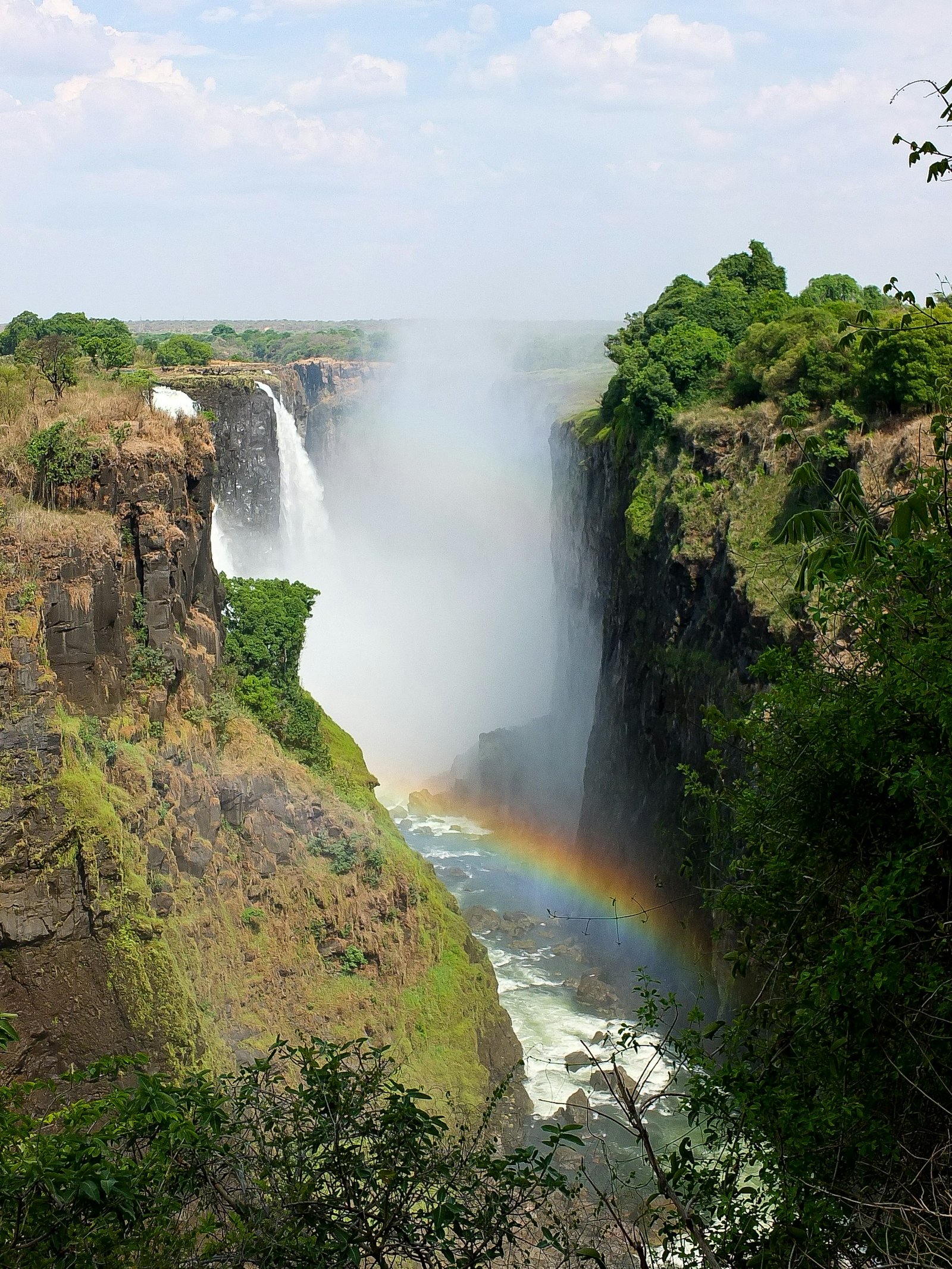
    A rainbow in the spray of Victoria Falls, Zimbabwe

    2. See the Falls from the Zambian Side

    Across the border, the Zambian side gets you even closer to the water. Walk across the Knife-Edge Bridge, which crosses a narrow gorge right in front of the Eastern Cataract. In the high-water season, the spray here is like walking through a rainstorm.

    Follow the path down to the Boiling Pot, where the Zambezi swirls at the bottom of the gorge after crashing over the falls. Entry to the Zambian side is cheaper than the Zimbabwe side, and it makes a great half-day trip.

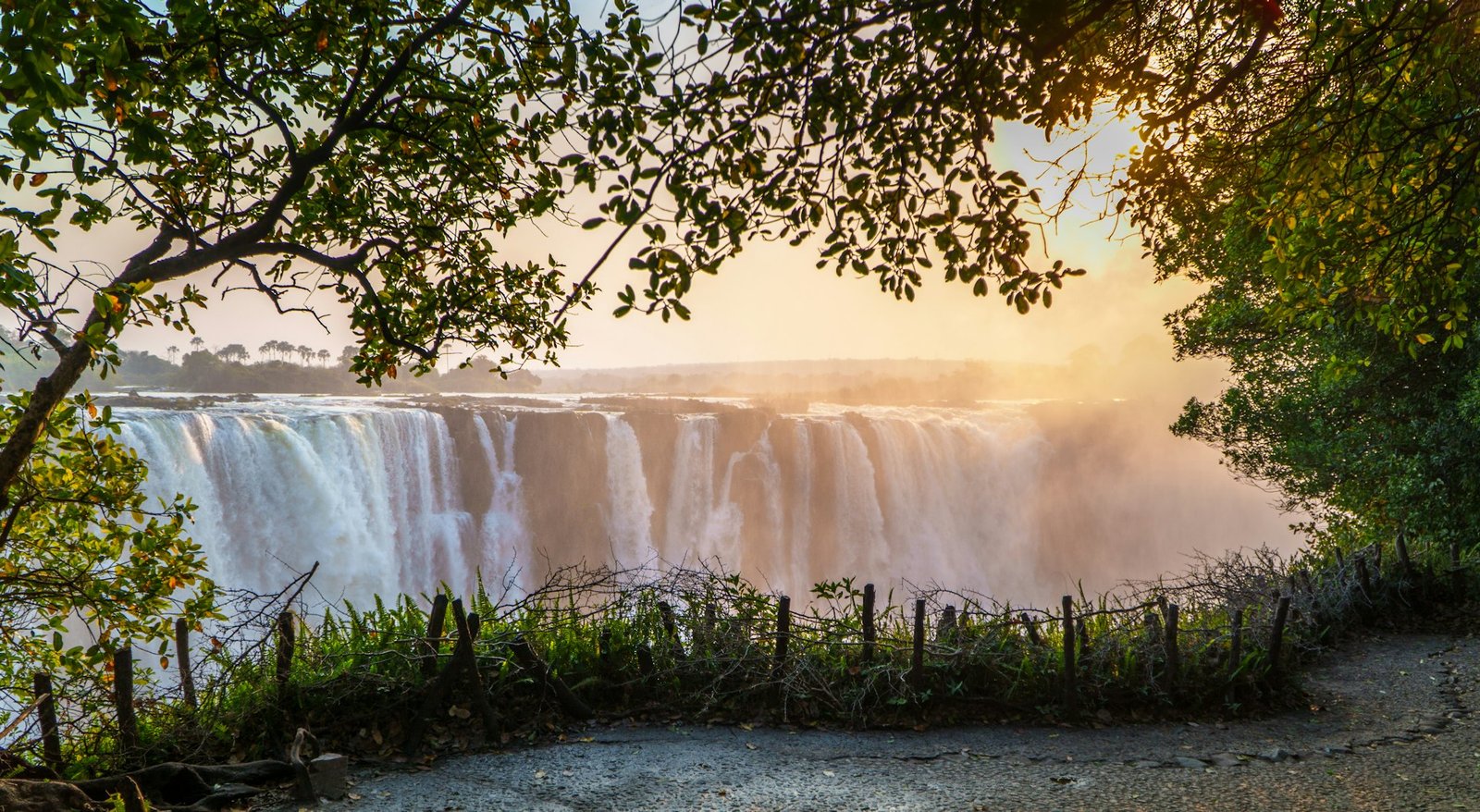
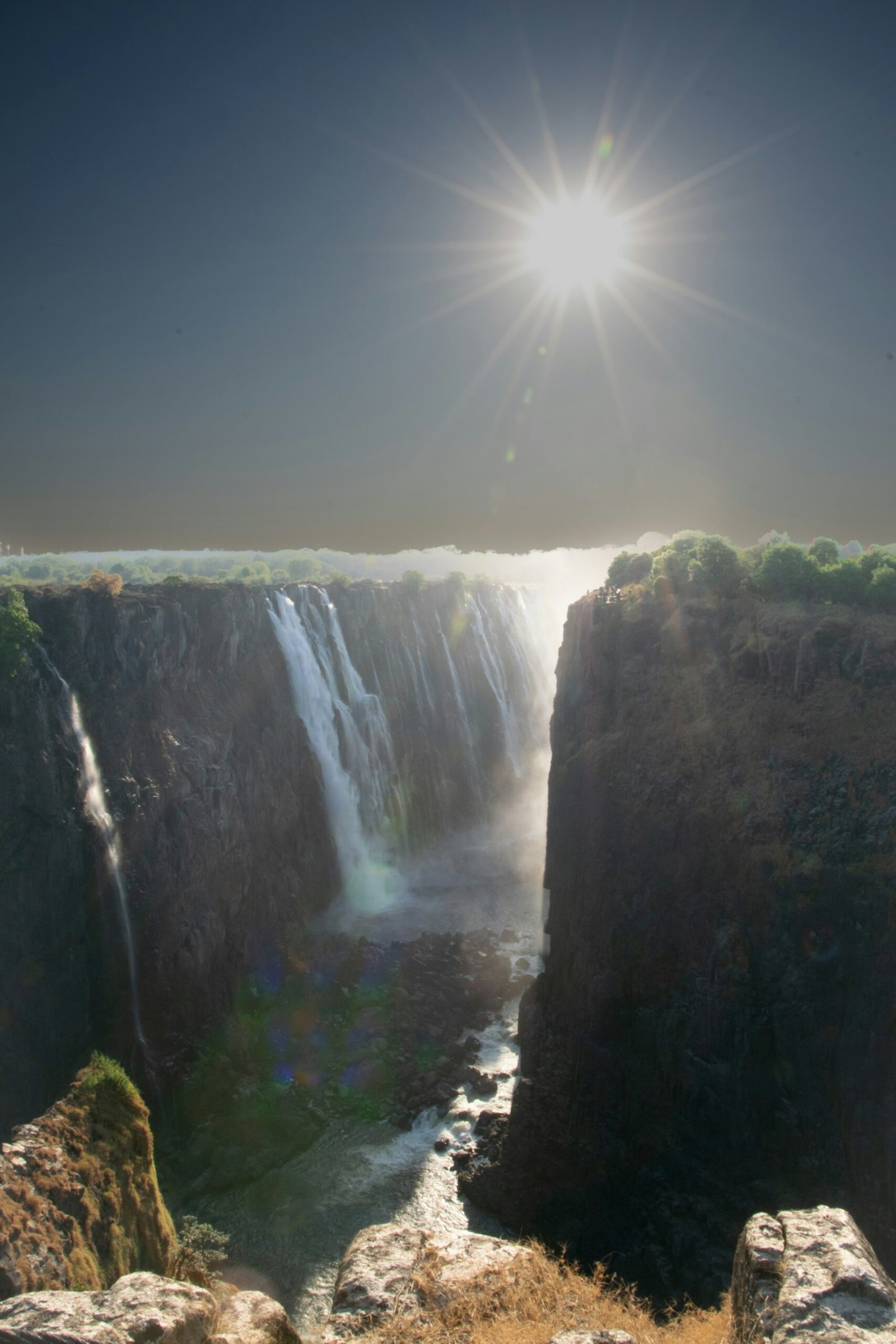
    Sunlight shining over the cliffs and water of Victoria Falls

    3. Swim in Devil’s Pool

    From around August to January, when the water is low, you can swim in Devil’s Pool, a natural rock pool right at the edge of the falls. A rock lip just below the surface stops you from going over, while the water drops more than 100 metres just in front of you.

    You can only visit on a guided tour from Livingstone Island on the Zambian side, which includes a boat ride and breakfast or lunch. Spaces are limited, so book well in advance. When the water is too high for the pool, the tour visits Angel’s Pool or the island itself.

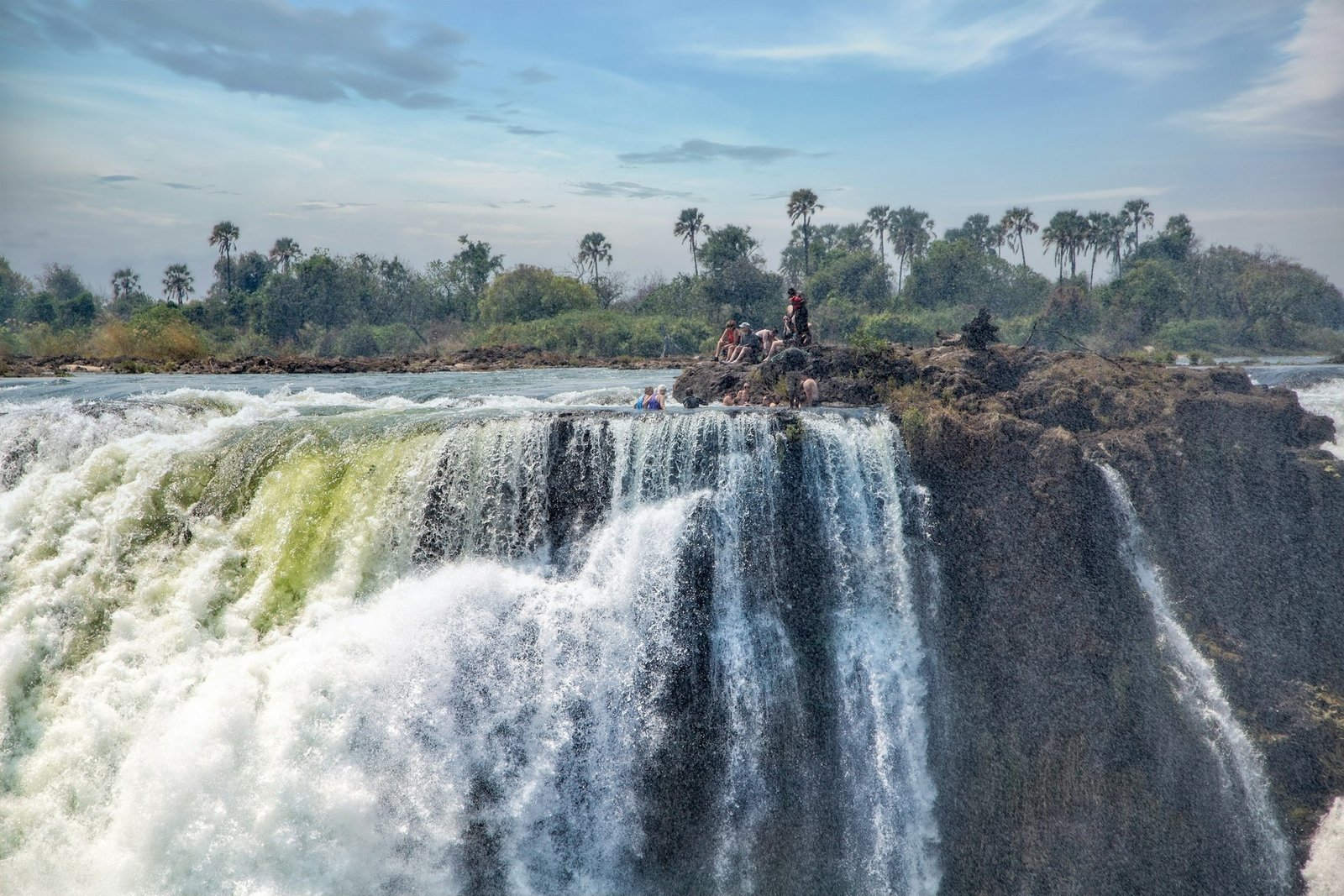
    Water spray at the edge of Victoria Falls near Devil's Pool

    4. Cross the Victoria Falls Bridge

    The Victoria Falls Bridge was completed in 1905 and connects Zimbabwe and Zambia high above the Zambezi. Walk across for great views of the falls and the gorge, and watch the old steam train cross on special trips.

    Adrenaline lovers can try the famous bungee jump from the middle of the bridge, more than 100 metres above the river, or the bridge swing and zip line across the gorge. For something calmer, the bridge tour takes you underneath the bridge on walkways to learn about its history.

    The Victoria Falls Bridge over the Zambezi River with the falls below

    5. Take a Sunset Cruise on the Zambezi

    Above the falls, the Zambezi River is wide, calm and full of wildlife. A sunset cruise is one of the most relaxing experiences in the area, as you watch hippos, crocodiles and elephants on the islands while the sky turns orange and red.

    Most cruises include drinks and snacks, and some offer dinner on board. Book a smaller boat for a more peaceful experience.

    6. Fly Over the Falls

    To really understand the size of Victoria Falls, you need to see them from above. A short helicopter flight, known as the Flight of Angels, circles over the falls and the zigzag gorges below.

    Flights take around 12 to 15 minutes and are not cheap, but many visitors call it the highlight of their trip. The best light is in the morning or late afternoon, when rainbows often appear in the spray.

    7. Raft the Batoka Gorge

    The Batoka Gorge below the falls has some of the most exciting white-water rafting in the world, with big rapids and towering cliffs on both sides. The best rafting is from August to December, when the water is low and the rapids are at their wildest.

    You don’t need any experience, as guides explain everything at the start, but you need to be fit enough to climb the steep path out of the gorge at the end of the day.

    8. Go on a River Safari in Chobe

    Chobe National Park in Botswana is famous for its huge herds of elephants, especially in the dry season, when tens of thousands come to the Chobe River to drink and swim.

    A boat safari on the river is the best way to see them up close. You’ll also see hippos, crocodiles, buffalo, antelope and hundreds of bird species. Many day trips from Victoria Falls combine a morning boat cruise with an afternoon game drive and lunch in Kasane.

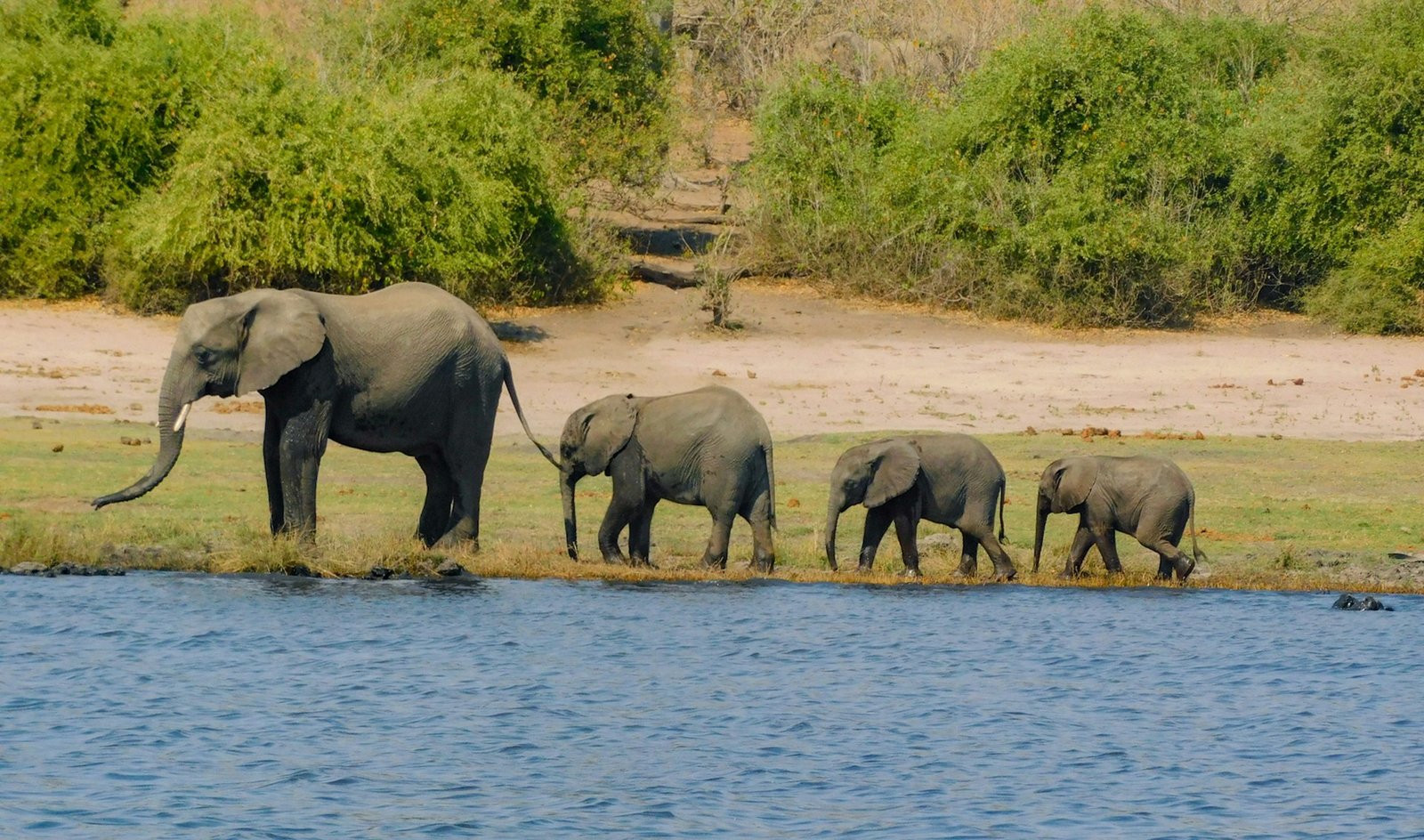
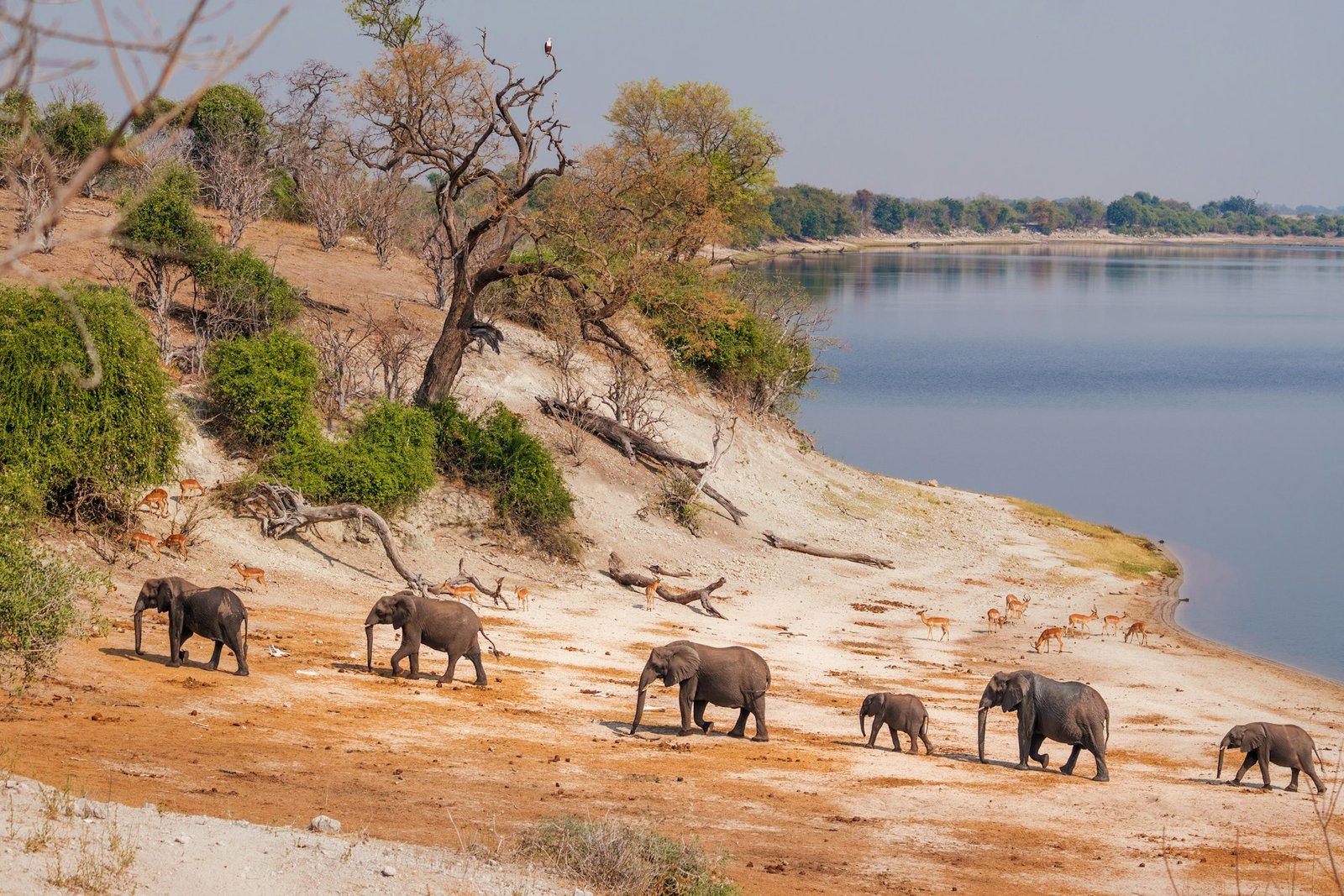
    A mother elephant and her young walking along the river in Chobe National Park, Botswana

    9. Head Out on a Game Drive in Chobe

    On a game drive through the Chobe Riverfront, you’ll follow sandy tracks along the river in an open safari vehicle. Look out for elephants, giraffes, zebras, lions and, with luck, a leopard resting in the trees.

    For more time with the animals, spend a night or two in Kasane and join an early morning or late afternoon drive, when the animals are most active and the light is beautiful.

    A herd of elephants walking along the riverbank in Chobe National Park, Botswana

    10. Watch the Lunar Rainbow

    On nights around the full moon in the high-water season, the moonlight creates a lunar rainbow in the spray of the falls, a rare sight you can see in only a few places in the world.

    Special evening entry tickets are sold for a few nights each month. Check the dates before you go and bring a camera that works well in low light.

    Booking Tips

    A few things are worth sorting out before you arrive:

    • Airport transfer: book an airport transfer in advance with a service like Kiwitaxi, so a driver is waiting for you at Victoria Falls, Livingstone or Kasane airport
    • eSIM: you’ll cross several borders on this trip, so a regional eSIM from a provider like Yesim saves you from buying a new SIM card in every country
    • Falls tours: popular options include a Guided Tour of Victoria Falls (Zimbabwe Side), a Livingstone Island and Devil’s Pool Tour and a Helicopter Flight of Angels over Victoria Falls. You can compare and book most of them on Klook
    • River and safari: look for a Zambezi River Sunset Cruise and a Chobe National Park Day Trip from Victoria Falls with boat cruise and game drive
    • Adventure: book White-Water Rafting in the Batoka Gorge or the Victoria Falls Bridge Bungee Jump in advance in the busy season

    Booking the big experiences online usually costs about the same as booking locally, and you’ll know exactly what’s included.

    Where to Stay on a Budget

    Victoria Falls town has good options for every budget:

    • Backpacker lodges: simple rooms and dorms with a pool and a bar, often with their own tour desk
    • Guesthouses and lodges: comfortable rooms in quiet gardens, many within walking distance of the falls
    • Self-catering apartments: great value for families and groups
    • Safari lodges: for a splurge, lodges along the Zambezi or in Kasane with river views and game drives included

    In Livingstone, you’ll find more lodges along the river, a short drive from the falls. In Kasane, staying one night lets you join early morning safaris.

    Eating on a Budget

    The food in the area is a mix of local African dishes and international favourites:

    • Sadza or nshima: a thick maize porridge served with stews, vegetables or grilled meat, the staple food in Zimbabwe and Zambia
    • Bream: fresh fish from the Zambezi, often grilled
    • Braai: a southern African barbecue with grilled meat and sausages
    • Game meat: try kudu or warthog at a restaurant offering local specialities
    • Boma dinner: a traditional buffet with drumming, dancing and local food, a fun evening out

    Local restaurants and supermarkets in Victoria Falls town and Kasane are the cheapest places to eat. Self-catering apartments can save you a lot of money.

    What It Really Costs

    Here’s a realistic daily budget per person for a comfortable mid-range trip, not counting flights.

    • Accommodation: $50 to $120 per person, sharing a guesthouse or lodge room
    • Food: $30 to $60 a day, mixing local restaurants, cafés and the odd special dinner
    • Transport: $10 to $30 a day, including taxis and transfers
    • Activities: budget for the highlights separately: entry to the falls on both sides, a sunset cruise, a Chobe day trip, Devil’s Pool and a helicopter flight if you can

    That works out to around $200 to $350 per person per day, including a few activities. Staying in a backpacker lodge, cooking your own meals and choosing your activities carefully can bring that down to around $100 to $150.

    A Sample 5-Day Itinerary

    Day 1: Arrive in Victoria Falls and take a sunset cruise on the Zambezi.

    Day 2: Walk through the rainforest on the Zimbabwe side, then cross the Victoria Falls Bridge.

    Day 3: Day trip to Zambia for the Knife-Edge Bridge and Devil’s Pool in season.

    Day 4: Full-day trip to Chobe National Park with a boat cruise and game drive.

    Day 5: Helicopter flight or rafting in the morning, then fly home.

    Add two days in Kasane for more time on safari if you can.

    Practical Tips

    • Bring small US dollar notes, as change can be hard to get
    • Pack a raincoat and a waterproof bag for your phone and camera in the high-water season
    • Use sunscreen and insect repellent, and ask your doctor about malaria prevention before you travel
    • Carry your passport when crossing to Zambia or Botswana, and check the visa rules in advance
    • Keep your distance from wildlife, including the baboons and warthogs that wander through town
    • Book popular activities early, especially Devil’s Pool and helicopter flights in the busy season

    Final Thoughts

    Victoria Falls and Chobe are a perfect introduction to southern Africa. Walk through the misty rainforest, see rainbows in the spray, swim at the edge of the falls, cruise the Zambezi at sunset and watch herds of elephants on the Chobe River.

    Choose the right season, stay on the Zimbabwe side and plan a day for Chobe. It’s a trip you’ll talk about for years.

    Prices checked in October 2026. Costs and opening times change, so always confirm before you book.
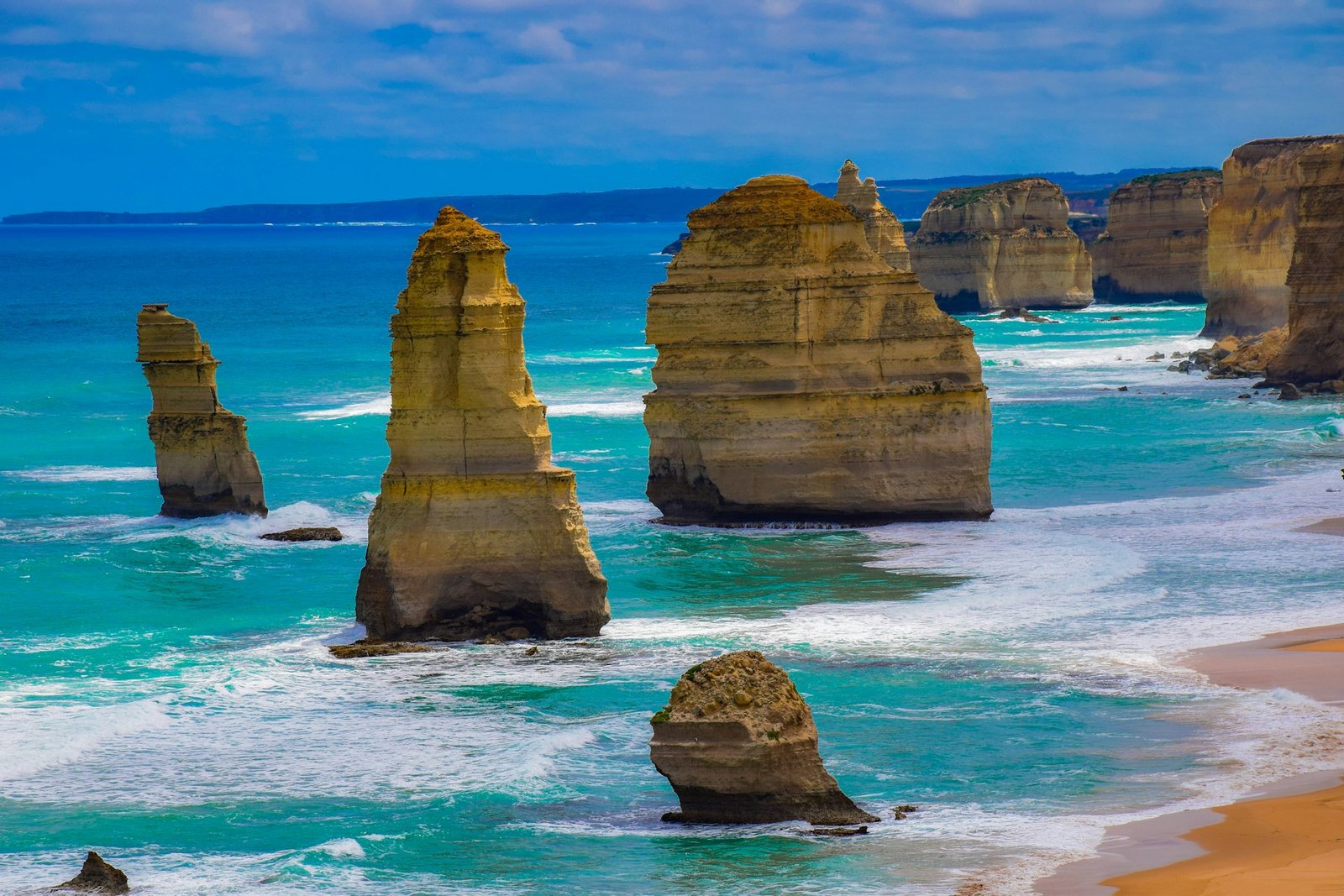
  • Cambodia Travel Guide: Angkor Wat, Island Beaches and Real Costs

    Cambodia Travel Guide: Angkor Wat, Island Beaches and Real Costs

    The sun rising behind the five towers of Angkor Wat, giant tree roots swallowing an ancient temple, two hundred stone faces smiling down at you from the Bayon, lazy river sunsets in Kampot and white sand beaches on islands without a single road: Cambodia packs an incredible amount into one small country.

    Most travellers come for Angkor, the largest religious monument in the world, and leave wishing they had stayed longer. Beyond the temples, Cambodia has a lively capital on the Mekong, sleepy riverside towns, pepper farms, floating villages and some of the most relaxed islands in Southeast Asia.

    Cambodia is also one of the best-value destinations in the region. A comfortable guesthouse room, a plate of fish amok and a tuk-tuk across town cost very little. Your biggest single expense will probably be the Angkor Pass, and it’s worth every cent. This guide shows you how to see the best of Cambodia on a real budget.

    Cambodia at a Glance

    • Where: in mainland Southeast Asia, between Thailand, Laos and Vietnam
    • Main airports: Siem Reap-Angkor International Airport (SAI), about 50 km from Siem Reap town, and Techo International Airport (KTI), which replaced the old Phnom Penh airport
    • Currency: Cambodian riel (KHR), but US dollars are used everywhere. Small change is often given in riel
    • Entry: most visitors need a visa. You can apply online for an e-Visa before you travel or get a visa on arrival at the main airports. Check the current rules for your passport
    • Language: Khmer. English is widely spoken in tourist areas
    • Best time: November to March, the cool and dry season
    • Budget: around $35 to $50 a day for budget travellers, $70 to $120 for a comfortable mid-range trip

    When to Go

    November to March is the best time to visit. The rains have stopped, the countryside is still green, and temperatures are pleasant, usually between 25 and 32°C. December and January are the busiest months at Angkor, so book your guesthouse early.

    April and May are the hottest months, with temperatures often above 35°C. Exploring the temples in this heat is tough, so start very early and rest in the middle of the day.

    June to October is the rainy season. Showers usually come in the afternoon, the landscape turns bright green and the moats of Angkor fill with water. Prices drop and the temples are much quieter. Some island boats run less often when the sea is rough.

    Our tip: visit in November or February for dry weather, green rice fields and fewer crowds than in the peak weeks.

    How Long Do You Need?

    Plan at least ten days for Cambodia. That gives you three days for the temples of Angkor, two days in Phnom Penh, two days in Kampot and Kep, and three days on the islands. With two weeks, you can slow down and add a floating village on the Tonle Sap or more time at the beach.

    Getting Around

    Cambodia is easy to travel on a budget:

    • Buses: comfortable buses connect Siem Reap, Phnom Penh, Kampot and Sihanoukville. Giant Ibis is one of the most reliable companies. Phnom Penh to Siem Reap takes about six hours
    • Tuk-tuks: the classic way to get around town. Use the Grab or PassApp apps for fixed prices instead of bargaining
    • Ferries: fast boats run from Sihanoukville to Koh Rong and Koh Rong Samloem in about 45 to 60 minutes
    • Flights: domestic flights link Siem Reap, Phnom Penh and Sihanoukville if you’re short on time

    Things to Do in Cambodia

    Here are the experiences we think are worth your time and money.

    1. Watch the Sunrise at Angkor Wat

    There are few sights in the world like Angkor Wat at dawn. As the sky turns pink and orange, the silhouette of the five lotus-shaped towers slowly appears, reflected in the lotus pond in front of the temple.

    Built in the 12th century, Angkor Wat is the largest religious monument on earth. After sunrise, explore the long galleries with their detailed stone carvings and climb to the upper level for a view over the jungle. You need an Angkor Pass, available for one, three or seven days. The three-day pass is the best value for most visitors. Wear clothes that cover your shoulders and knees, as you won’t be allowed into the upper temple otherwise.

    2. Explore the Jungle Temple of Ta Prohm

    Ta Prohm is the temple that nature took back. Giant silk-cotton and strangler fig trees grow straight out of the walls, their roots wrapping around doorways and toppled stones like enormous fingers.

    Unlike many other temples, Ta Prohm has been left largely as it was found, which gives it an incredible atmosphere. Come early in the morning or late in the afternoon, when the light filters through the trees and the tour groups have gone.

    Giant tree roots growing over the stone walls of Ta Prohm temple, Angkor, Cambodia

    3. Meet the Faces of the Bayon

    In the heart of the ancient city of Angkor Thom stands the Bayon, one of the most fascinating temples of all. Its towers are covered with around 200 giant stone faces, calm and smiling, looking out in every direction.

    Walk through the narrow passages and look closely at the walls, where carvings show scenes of battles, markets and everyday life in the Khmer Empire. Afterwards, walk along the Terrace of the Elephants and the Terrace of the Leper King nearby.

    A smiling stone face carved into a temple tower at Angkor, Cambodia

    4. Venture to Banteay Srei and the Outer Temples

    About 35 km from the main temples, Banteay Srei is small but beautiful. Its pink sandstone is covered with some of the finest carvings in all of Angkor, so detailed that they look almost like lace.

    Combine it with a visit to Kbal Spean, a short jungle hike to a river where Hindu gods are carved into the riverbed, and the peaceful temple of Banteay Samre. Hire a tuk-tuk for the day, or join a small-group tour that includes the outer temples.

    5. Enjoy Siem Reap After Dark

    After a long day at the temples, Siem Reap comes alive. Pub Street is the heart of the action, with neon lights, cheap drinks, street food and music spilling out of the bars.

    For something different, browse the Angkor Night Market for scarves, paintings and souvenirs, or book a show at Phare, The Cambodian Circus, where young Cambodian artists perform acrobatics, theatre and live music. It’s one of the best evenings out in the country, and the money supports a local arts school.

    Neon lights and crowds on Pub Street in Siem Reap at night, Cambodia

    6. Visit a Floating Village on the Tonle Sap

    The Tonle Sap is the largest freshwater lake in Southeast Asia. Every year in the rainy season, the lake grows to several times its size, and whole villages live on stilts or on floating houses.

    Visit Kampong Phluk, about an hour from Siem Reap, where houses stand on stilts up to ten metres high, and take a small boat through the flooded mangrove forest. Choose a responsible tour, as some floating village trips near Siem Reap are known for overpriced boat rides and donation scams.

    7. Discover Phnom Penh

    Cambodia’s capital, Phnom Penh, sits where the Mekong and Tonle Sap rivers meet. It’s busy, noisy and full of life, with French colonial buildings, golden temples and a fast-growing skyline.

    Start at the Royal Palace and the Silver Pagoda, whose floor is covered with more than 5,000 silver tiles. Walk along the riverside promenade in the evening, browse the art deco Central Market and watch the sunset from a rooftop bar or on a river cruise.

    City view of Phnom Penh, the capital of Cambodia

    8. Learn the History at Tuol Sleng and Choeung Ek

    To understand modern Cambodia, you need to learn about its tragic past. Between 1975 and 1979, the Khmer Rouge regime killed around a quarter of the population.

    The Tuol Sleng Genocide Museum, a former school that became a prison, and the Choeung Ek memorial, known as the Killing Fields, tell this story in a powerful and respectful way. The audio guide at Choeung Ek is excellent. It’s a heavy but important day, so plan something calm for the afternoon.

    9. Slow Down in Kampot and Kep

    Kampot is a sleepy riverside town at the foot of the Bokor Mountains, with crumbling colonial buildings, friendly cafés and beautiful sunsets over the river.

    Visit a pepper farm to taste the famous Kampot pepper, rent a scooter to explore the countryside and salt fields, or take a sunset boat trip on the river to see the fireflies. Just 30 minutes away, the seaside town of Kep is famous for its crab market, where you can eat fresh crab cooked with green Kampot pepper right by the sea.

    Boats on the river in Kampot with the Bokor Mountains in the background, Cambodia

    10. Relax on Koh Rong and Koh Rong Samloem

    Off the south coast, the islands of Koh Rong and Koh Rong Samloem are Cambodia’s tropical paradise. Think long white sand beaches, turquoise water and jungle-covered hills, with hardly any roads or cars.

    On Koh Rong, relax on Long Set Beach or the stunning Sok San Beach, and swim with glowing plankton at night. Koh Rong Samloem is even quieter, perfect for lazy days in a hammock at Saracen Bay or Lazy Beach. Join a snorkelling and island-hopping tour to see the nearby reefs and smaller islands.

    A white sand beach with palm trees and blue water on Koh Rong, Cambodia

    Booking Tips

    A few things are worth sorting out before you arrive:

    • Airport transfer: Siem Reap’s new airport is about an hour from town, and the new Phnom Penh airport is also outside the city. Book an airport transfer in advance with a service like Kiwitaxi, so a driver is waiting for you with a fixed price
    • eSIM: mobile data in Cambodia is cheap and fast. Install an eSIM from a provider like Yesim before you fly, so you can use maps, Grab and PassApp as soon as you land
    • Angkor tours: popular options include an Angkor Wat Sunrise Small-Group Tour, a Full-Day Angkor Temples Tour by Tuk-Tuk and an Angkor Grand Circuit Tour with Banteay Srei. A good guide brings the carvings and history to life. You can compare and book most of them on Klook
    • Day trips: look for a Kampong Phluk Floating Village Tour from Siem Reap, a Phnom Penh Killing Fields and S-21 Tour and a Kampot Pepper Farm and Kep Crab Market Day Trip
    • Islands: book a Koh Rong Island Hopping and Snorkelling Tour or your ferry tickets in advance in the high season

    Booking the big experiences online usually costs about the same as booking locally, and you’ll know exactly what’s included.

    Where to Stay on a Budget

    Cambodia has excellent value accommodation for every budget:

    • Hostels: found in Siem Reap, Phnom Penh, Kampot and on the islands, many with swimming pools
    • Guesthouses: simple, friendly and family-run, often with a private room for very little money
    • Boutique hotels: Siem Reap in particular has many stylish small hotels with pools at surprisingly low prices
    • Beach bungalows: wooden huts close to the sand on Koh Rong and Koh Rong Samloem

    In Siem Reap, stay near the Old Market or along the river so you can walk to restaurants in the evening. In Phnom Penh, the area around the riverside and the Royal Palace is the most convenient.

    Eating on a Budget

    Cambodian food is fresh, fragrant and less spicy than Thai food. Don’t miss these dishes:

    • Fish amok: a creamy fish curry with coconut milk, steamed in banana leaves, Cambodia’s national dish
    • Lok lak: stir-fried beef with a lime and pepper dipping sauce
    • Nom banh chok: fresh rice noodles with a green fish curry, a popular breakfast
    • Bai sach chrouk: grilled pork with rice, a cheap and filling breakfast sold at street stalls
    • Kampot pepper crab: the speciality of Kep

    Street food and local restaurants are very cheap. A meal at a market or a simple local restaurant costs just a few dollars, and a fresh fruit shake costs even less.

    What It Really Costs

    Here’s a realistic daily budget per person for a comfortable mid-range trip, not counting flights.

    • Accommodation: $20 to $50 per person, sharing a guesthouse room or boutique hotel
    • Food: $15 to $30 a day, mixing street food, local restaurants and the odd Western meal
    • Transport: $10 to $25 a day, including tuk-tuks, buses and ferries
    • Activities: budget for the highlights separately: the Angkor Pass, a tuk-tuk or guide for the temples, the Phare circus, a floating village trip and island boat tours

    That works out to around $70 to $120 per person per day. Staying in hostels, eating local food and taking buses can bring that down to $35 to $50.

    A Sample 10-Day Itinerary

    Day 1: Arrive in Siem Reap and enjoy your first evening on Pub Street.

    Day 2: Sunrise at Angkor Wat, then the Bayon and Ta Prohm.

    Day 3: Banteay Srei and the outer temples, then the Phare circus in the evening.

    Day 4: Morning trip to the floating village of Kampong Phluk, then travel to Phnom Penh.

    Day 5: The Royal Palace, the Silver Pagoda and a sunset river cruise.

    Day 6: Tuol Sleng and Choeung Ek, then a quiet evening by the river.

    Day 7: Travel to Kampot and watch the sunset on the river.

    Day 8: Pepper farm and crab lunch in Kep.

    Day 9: Travel to Koh Rong and relax on the beach.

    Day 10: Island hopping and snorkelling, then head back for your flight home.

    Add a few more days on the islands if you have time. You won’t regret it.

    Practical Tips

    • Bring small US dollar notes in good condition, as torn or damaged notes are often refused
    • Cover up at the temples: shoulders and knees must be covered at Angkor and the Royal Palace
    • Use Grab or PassApp for tuk-tuks to avoid bargaining
    • Drink bottled or filtered water, and use plenty of sunscreen and insect repellent
    • Be respectful at memorial sites: keep your voice down and dress modestly
    • Don’t give money to children begging at the temples. Support local social businesses and training restaurants instead

    Final Thoughts

    Cambodia is a country that stays with you. Watch the sun rise over Angkor Wat, wander through the jungle temple of Ta Prohm, meet the smiling faces of the Bayon, learn about the country’s past in Phnom Penh, taste pepper crab in Kep and fall asleep to the sound of the waves on Koh Rong.

    Travel in the cool season, take your time at the temples and leave room for the islands. Cambodia will give you far more than you expect, for far less than you’d think.

    Prices checked in October 2026. Costs and opening times change, so always confirm before you book.

  • New Zealand North Island Travel Guide: Beaches, Volcanoes and Hobbiton

    New Zealand North Island Travel Guide: Beaches, Volcanoes and Hobbiton

    A giant stone arch framing a white beach and turquoise sea, hot springs bubbling up through the sand, glowworms lighting up an underground river like a starry sky, geysers shooting steam into the air and emerald lakes in a volcanic landscape: New Zealand’s North Island is full of surprises.

    Many travellers rush through the North Island on their way to the mountains and fjords of the south. That’s a mistake. The north is warmer, with beautiful beaches, subtropical islands, active volcanoes and the strongest connection to Māori culture, the culture of New Zealand’s first people. And yes, it’s also home to the famous Hobbiton movie set.

    New Zealand isn’t a cheap destination, but the North Island is easy to explore on a budget. Distances are short, the landscapes are free to enjoy, and with a campervan or rental car, holiday parks and picnic lunches, you can see the highlights without overspending. This guide shows you how.

    The North Island at a Glance

    • Where: the northern of New Zealand’s two main islands, in the South Pacific
    • Main airport: Auckland (AKL), New Zealand’s largest international airport
    • Currency: New Zealand dollar (NZD)
    • Entry: many visitors can travel visa-free but must apply online for an NZeTA before they travel and pay a tourism levy. Others need a visa. Check the current rules for your passport
    • Languages: English and Māori. Learn to say “Kia ora”, the Māori greeting
    • Best time: December to March for summer, March to April and November for fewer crowds
    • Budget: around $100 to $150 a day for budget travellers, $180 to $300 for a comfortable mid-range trip

    When to Go

    December to March is summer, the best time for beaches, swimming and hiking. The days are long and warm, usually between 20 and 28°C. January is the busiest month, as New Zealanders take their summer holidays.

    March and April are autumn and our favourite time. The weather is often settled and warm, the sea is still pleasant, and the crowds are gone. November is also a good choice, with spring flowers and lower prices.

    June to August is winter. It’s cool and rainy, but the geothermal areas of Rotorua are perfect for a warm soak, and there’s skiing on the volcanoes.

    Our tip: visit in March for warm weather, calm seas and quiet trails.

    How Long Do You Need?

    Plan at least ten days for the North Island. That gives you time for Auckland, the Coromandel Peninsula, Rotorua, Hobbiton, Waitomo and the Tongariro Alpine Crossing. With two weeks, you can add the Bay of Islands in the far north.

    Getting Around

    The best way to explore the North Island is with a rental car or a campervan. Roads are good but often winding, and distances take longer than you’d expect. Driving is on the left.

    Campervans are especially popular in New Zealand. You can stay at holiday parks and campsites, cook your own meals and wake up in beautiful places. Only camp in places where it’s allowed.

    InterCity buses also connect the main towns, but you’ll need tours to reach many highlights.

    Things to Do on New Zealand’s North Island

    Here are the experiences we think are worth your time and money.

    1. Visit Cathedral Cove

    Cathedral Cove, near the village of Hahei on the Coromandel Peninsula, is one of the most famous sights in New Zealand. A huge natural stone arch connects two white sand beaches, with a striking rock pinnacle standing in the turquoise water.

    Access to the cove has been affected by storm damage in recent years, so check the latest information from the Department of Conservation before you go. One of the best ways to see it is from the water, on a kayak tour or a boat trip from Hahei, which also visits sea caves and the Te Whanganui-A-Hei Marine Reserve, great for snorkelling.

    Sandy beach and rock pinnacle in the water at Cathedral Cove, Coromandel, New Zealand

    2. Dig Your Own Hot Pool at Hot Water Beach

    Just a few minutes from Hahei, Hot Water Beach is one of the quirkiest places in the country. Hot water from underground springs bubbles up through the sand, and at low tide you can dig your own natural spa pool on the beach.

    Come about two hours before or after low tide, rent a spade from a local shop and join the crowds digging in the right spot. The water can be very hot, so be careful. Swimming in the sea here is dangerous because of strong currents, so stay out of the waves.

    People on a beach on the Coromandel Peninsula, New Zealand

    3. Sail the Bay of Islands

    In the far north, the Bay of Islands is a beautiful bay of more than 140 subtropical islands, golden beaches and clear blue water. It’s one of the best places in the country for sailing, kayaking and spotting dolphins.

    Join a boat trip to the famous Hole in the Rock, a natural arch at the edge of the bay, and stop on one of the islands for a walk and a swim. Base yourself in Paihia, and take the short ferry to the charming historic town of Russell. Don’t miss the Waitangi Treaty Grounds, where the treaty between the British Crown and Māori chiefs was signed in 1840.

    4. See the Glowworms of Waitomo

    The Waitomo Caves are home to thousands of tiny glowworms, which light up the ceilings of the caves with a blue-green glow. Floating through the dark on a boat, under what looks like a sky full of stars, is a truly magical experience.

    The classic tour of the Waitomo Glowworm Caves is easy and suitable for everyone. For more adventure, try black water rafting, floating through the caves on an inner tube. Tours are on the pricier side, but this is one of New Zealand’s most unique experiences.

    5. Step into Hobbiton

    Near the town of Matamata, set among rolling green farmland, is the Hobbiton Movie Set, used in the famous fantasy films. More than 40 colourful little houses with round doors are built into the hillsides, surrounded by gardens, a mill and a lake.

    Visits are only possible on a guided tour, which takes about two hours and ends with a drink at the village inn. Tickets are expensive, but fans and non-fans alike love the beautiful setting. Book well in advance, especially in summer.

    A hobbit house with a round door at the Hobbiton Movie Set, New Zealand

    6. Explore the Colourful Pools of Wai-O-Tapu

    South of Rotorua, Wai-O-Tapu is one of the most colourful geothermal areas in the world. A walking trail leads past boiling mud pools, steaming craters and bright yellow, orange and green lakes coloured by minerals.

    The highlight is the Champagne Pool, a hot spring with bright orange edges and bubbling green-blue water. Arrive in the morning to see the Lady Knox Geyser erupt, which happens once a day at a set time. The smell of sulphur is strong, but you’ll soon get used to it.

    The colourful Champagne Pool at Wai-O-Tapu near Rotorua, New Zealand

    7. Discover Rotorua’s Geysers and Māori Culture

    Rotorua is the heart of New Zealand’s geothermal region and of Māori culture. Steam rises from parks and gardens all over town, and the air smells of sulphur.

    At Te Puia, watch the Pōhutu Geyser, which erupts many times a day, sometimes up to 30 metres high. In the evening, join a Māori cultural experience, with a traditional welcome, songs, the famous haka and a hāngī dinner, cooked in an earth oven. Afterwards, relax in one of the town’s hot pools.

    Steam rising from a geothermal geyser in Rotorua, New Zealand

    8. Hike the Tongariro Alpine Crossing

    The Tongariro Alpine Crossing is often called the best one-day hike in New Zealand. The 19.4 km trail crosses a volcanic landscape of craters, lava flows and steaming vents, past the brilliant green Emerald Lakes and the deep Blue Lake.

    The hike takes six to eight hours and climbs steeply, so you need to be fit. The weather in the mountains changes quickly, so bring warm, waterproof clothes. Parking at the start is limited, so book a shuttle. The trail is in Tongariro National Park, a UNESCO World Heritage Site sacred to the Māori.

    A green crater lake in the volcanic landscape of Tongariro National Park, New Zealand

    9. Visit Lake Taupō and Huka Falls

    Lake Taupō, the largest lake in New Zealand, fills a huge volcanic crater in the centre of the North Island. Its clear water is perfect for swimming, kayaking and boat trips to see the giant Māori rock carvings at Mine Bay.

    Just north of the town, the Huka Falls are a powerful waterfall where the Waikato River squeezes through a narrow gorge and thunders into a turquoise pool. Walk the trails for free, or take a jet boat ride right up to the bottom of the falls.

    10. Explore Auckland and Waiheke Island

    Auckland, the country’s largest city, is built around two harbours and dozens of volcanic cones. Climb Mount Eden for a view over the city, walk along the waterfront and visit the Auckland Museum for a great introduction to Māori culture.

    Take the ferry to Waiheke Island, just 40 minutes away, with its beautiful beaches, vineyards and olive groves. Rent a bike or use the local bus to hop between beaches and wineries, and enjoy a glass of local wine with a view of the sea.

    Where to Stay on a Budget

    The North Island has great options for every budget:

    • Holiday parks: campsites with cabins, kitchens and hot showers, perfect for campervans and budget travellers
    • Hostels: found in all the main towns, with dorms and private rooms
    • Motels: simple, good-value rooms, often with a small kitchen
    • Bed and breakfasts: cosy guesthouses, often run by friendly local hosts

    Book early for January and the school holidays, especially in the Coromandel and the Bay of Islands.

    Eating on a Budget

    New Zealand food is fresh and hearty:

    • Fish and chips: a beach classic, best eaten on the sand
    • Meat pies: sold at every bakery, a cheap and filling lunch
    • Hāngī: meat and vegetables cooked in an earth oven, a traditional Māori meal
    • Green-lipped mussels: a local seafood speciality
    • Pavlova and hokey pokey ice cream: classic Kiwi desserts

    Supermarkets like Pak’nSave and Woolworths are the cheapest places to buy food. Cook your own meals in holiday park kitchens to save money.

    What It Really Costs

    Here’s a realistic daily budget per person for a comfortable mid-range trip, not counting flights.

    • Accommodation: $50 to $120 per person, sharing a motel room, cabin or campervan
    • Food: $35 to $60 a day, mixing self-catering, bakeries and restaurant dinners
    • Transport: $40 to $70 a day per person, including a rental car or campervan shared by two and fuel
    • Activities: budget for the highlights separately: Hobbiton, the Waitomo caves, Wai-O-Tapu, a Māori cultural evening, a Bay of Islands cruise and the Tongariro shuttle

    That works out to around $180 to $300 per person per day. Staying in holiday parks, cooking your own meals and enjoying the free hikes and beaches can bring that down noticeably.

    A Sample 10-Day Itinerary

    Day 1: Arrive in Auckland and climb Mount Eden.

    Day 2: Day trip to Waiheke Island.

    Day 3: Drive to the Coromandel and dig your own pool at Hot Water Beach.

    Day 4: Kayak tour to Cathedral Cove, then drive to Rotorua.

    Day 5: Wai-O-Tapu in the morning, Te Puia and a Māori cultural evening.

    Day 6: Hobbiton, then the Waitomo Glowworm Caves.

    Day 7: Drive to Taupō and visit Huka Falls.

    Day 8: Hike the Tongariro Alpine Crossing.

    Day 9: Relax at Lake Taupō, then drive back towards Auckland.

    Day 10: Fly home from Auckland.

    Add three or four days to visit the Bay of Islands if you have more time.

    Practical Tips

    • Apply for your NZeTA before you travel, if you need one
    • Book ahead for Hobbiton, the Tongariro shuttle and campervans in summer
    • Pack for four seasons, especially for hikes in the mountains
    • Use strong sunscreen: the sun in New Zealand is much stronger than in Europe
    • Swim at patrolled beaches, between the flags, as rip currents are common
    • Respect Māori culture and nature: follow local customs at cultural sites, stay on the tracks and take your rubbish with you

    Booking Tips

    • Airport transfer: if you don’t pick up a rental car at the airport, book an airport transfer with Kiwitaxi from Auckland airport to your hotel in the city, with a fixed price and a driver waiting for you
    • eSIM: install a Yesim eSIM before you fly, so you have data for maps, road trip planning and tour bookings on the North Island from the moment you land
    • Tours: popular options include a Hobbiton movie set tour, the Waitomo glowworm caves, a Bay of Islands cruise and a Māori cultural evening in Rotorua. You can compare and book most of them on Klook

    Final Thoughts

    New Zealand’s North Island is a land of beaches, volcanoes and living culture. Kayak to Cathedral Cove, dig a hot pool in the sand, float under glowworms, walk through Hobbiton, watch geysers in Rotorua and hike past the Emerald Lakes of Tongariro.

    Travel in late summer, rent a car or campervan and take your time. The North Island will show you a side of New Zealand that many travellers miss.

    Prices checked in October 2026. Costs and opening times change, so always confirm before you book.
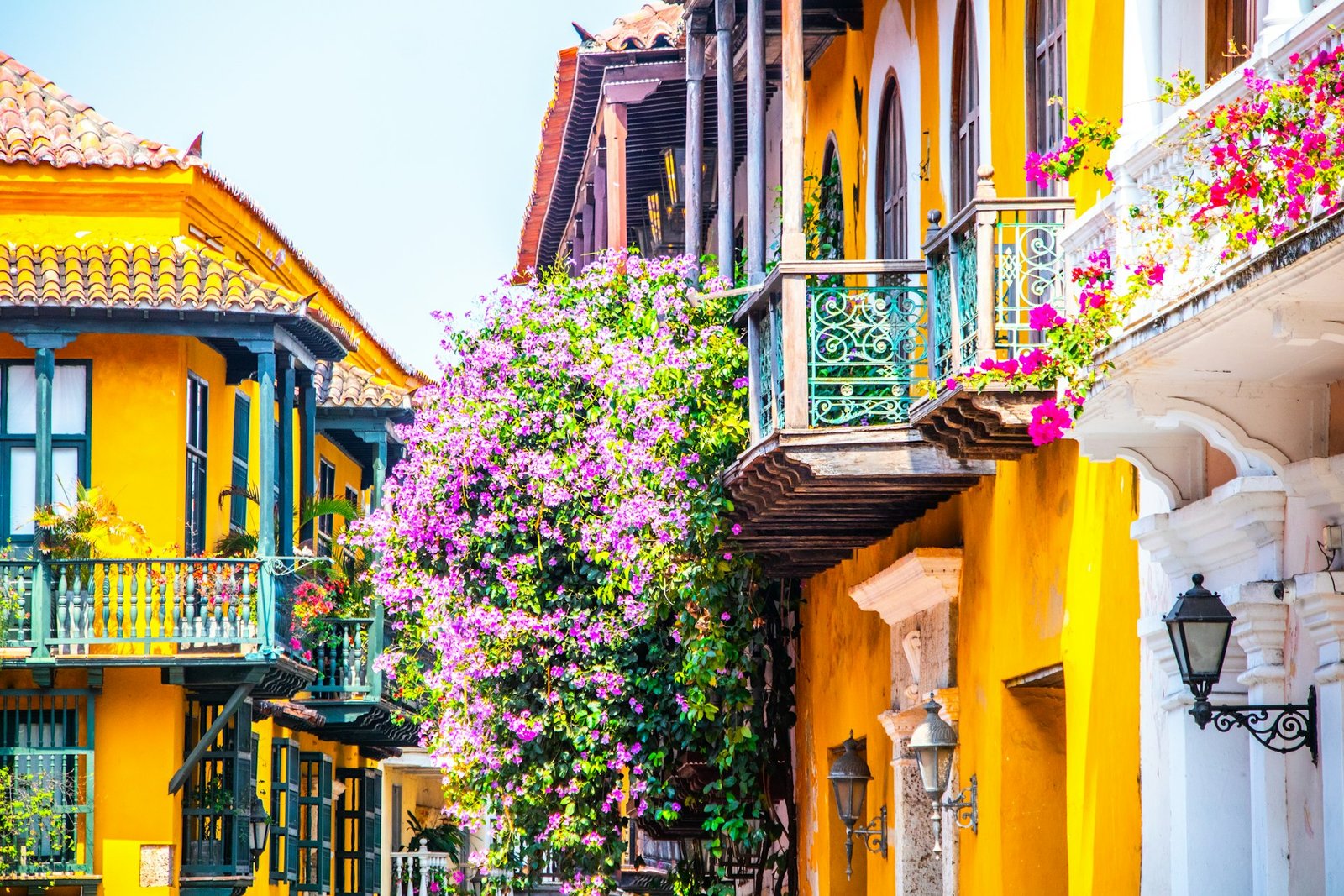
  • Maui Travel Guide: Road to Hana, Haleakalā and the Best Beaches

    Maui Travel Guide: Road to Hana, Haleakalā and the Best Beaches

    A winding road through the rainforest past dozens of waterfalls, a black sand beach framed by lava rock, a sunrise high above a sea of clouds, humpback whales splashing just offshore and golden beaches glowing at sunset: Maui is the Hawaiian island that seems to have it all.

    The second-largest island in Hawaii is famous for its variety. In a single day, you can stand on the summit of a dormant volcano, swim in a rainforest pool, snorkel with sea turtles and watch the sun sink into the Pacific. It’s no surprise that Maui is regularly voted one of the best islands in the world.

    Maui isn’t cheap, and Hawaii is one of the most expensive destinations in the United States. But many of the best experiences are free or cost very little, and with a condo with a kitchen, picnic lunches and some smart planning, you can enjoy the island without spending a fortune. This guide shows you how.

    Maui at a Glance

    • Where: in the Pacific Ocean, part of the US state of Hawaii, about 3,800 km from the US mainland
    • Main airport: Kahului (OGG), with direct flights from many US and Canadian cities and connections via Honolulu
    • Currency: US dollar (USD)
    • Entry: Hawaii is part of the United States. Many visitors can travel visa-free under the Visa Waiver Program but must apply online for an ESTA before they fly. Others need a visa. Check the current rules for your passport
    • Languages: English and Hawaiian
    • Best time: April to May and September to November
    • Budget: around $150 to $200 a day for budget travellers, $250 to $400 for a comfortable mid-range trip

    When to Go

    Maui is warm all year, with temperatures on the coast usually between 24 and 30°C. The best time to visit is in the shoulder seasons, April to May and September to November, when the weather is great, the crowds are smaller and prices for hotels and flights are lower.

    December to April is the season for humpback whales, which come to the warm waters around Maui to give birth. It’s also the rainiest time of year and the most expensive, especially around Christmas.

    June to August is sunny and dry, but busy with summer holidaymakers.

    Our tip: visit in late March or April for the last whales of the season, green landscapes and better prices.

    A Note on Lahaina

    In August 2023, a devastating wildfire destroyed the historic town of Lahaina on Maui’s west coast. Much of West Maui is open to visitors and depends on tourism, but the burn zone in Lahaina is not a tourist attraction. Please respect any closures, don’t take photos of the affected areas, and support local businesses that are rebuilding.

    Where to Stay

    South Maui

    Kihei and Wailea on the sunny south coast have beautiful beaches and calm water. Kihei is one of the best-value areas on the island, with many condos, while Wailea is home to luxury resorts.

    West Maui

    The resort areas of Kaanapali, Napili and Kapalua in West Maui have some of the island’s most beautiful beaches and great snorkelling, with options from condos to big resorts.

    Getting Around

    You’ll need a rental car to explore Maui. Public buses exist, but they don’t reach most of the island’s highlights. Book your car early, as prices rise sharply in the high season.

    Some sights require advance reservations, including the sunrise at Haleakalā and entry to Waiʻānapanapa State Park on the Road to Hana. Book them online before you go.

    Things to Do in Maui

    Here are the experiences we think are worth your time and money.

    1. Drive the Road to Hana

    The Road to Hana is one of the most famous drives in the world. The narrow road winds along Maui’s lush northeast coast for about 100 km, with more than 600 curves and dozens of one-lane bridges, past waterfalls, rainforest and dramatic ocean views.

    Start early in the morning and take your time. Stop at the Twin Falls, the Garden of Eden Arboretum, the Keʻanae Peninsula with its waves crashing on black lava rocks, and roadside stands selling banana bread and fresh coconuts. Drive carefully, let locals pass and only park in official spots.

    A road winding through green rainforest on the Road to Hana, Maui, Hawaii

    2. Visit the Black Sand Beach of Waiʻānapanapa

    Near the town of Hana, Waiʻānapanapa State Park is home to one of Maui’s most stunning sights: a beach of shiny black volcanic sand, framed by jet-black lava rock, green jungle and the deep blue ocean.

    Walk along the coastal trail to see sea arches, blowholes and lava tubes. Swimming is often dangerous here because of strong currents, so enjoy the view from the shore. You must book entry and parking online in advance, and the number of visitors is limited.

    Aerial view of the black sand beach and green forest near Hana, Maui, Hawaii

    3. Hike the Pīpīwai Trail

    Past Hana, the Kīpahulu District of Haleakalā National Park is one of the most beautiful areas on the island. Here, the ʻOheʻo Gulch, also known as the Seven Sacred Pools, is a series of waterfalls and pools flowing down to the sea.

    The Pīpīwai Trail climbs through the forest, past a giant banyan tree and through a magical bamboo forest, to the 120-metre Waimoku Falls. The hike is about 6.5 km return and takes two to three hours. Swimming in the pools is often closed for safety, so check with the rangers.

    Waterfall flowing through the forest at the Seven Sacred Pools, Maui, Hawaii

    4. Watch the Sunrise from Haleakalā

    The summit of Haleakalā, a huge dormant volcano, rises more than 3,000 metres above the sea. Watching the sunrise from the top, high above a sea of clouds, is one of the most unforgettable experiences in Hawaii.

    You need a sunrise reservation for your car, which you can book online up to 60 days in advance, plus the national park entry fee. It’s freezing cold at the top before dawn, so bring warm clothes. After sunrise, hike into the crater on the Sliding Sands Trail to see its colourful cinder cones.

    A sea of clouds seen from the summit of Haleakalā National Park, Maui, Hawaii

    5. Snorkel at Molokini Crater

    Just off the south coast, Molokini is a small, crescent-shaped volcanic crater, partly sunken in the sea. Its protected waters are crystal-clear, with visibility of up to 50 metres, and full of tropical fish and coral.

    Join a snorkelling tour from Kihei or Maalaea in the morning, when the sea is calmest. Many tours also stop at Turtle Town, where you’re almost guaranteed to see green sea turtles. Tours are on the pricier side, but it’s one of the best snorkelling trips in Hawaii.

    6. Go Whale Watching

    From December to April, thousands of humpback whales come to Maui’s warm, shallow waters to give birth and raise their calves. The channel between Maui, Lanaʻi and Molokaʻi is one of the best places in the world to see them.

    Join a whale watching boat trip from Maalaea Harbor or Kaanapali, or watch for spouts and jumps from the shore. The Papawai Point lookout on the road to Lahaina is a great free spot. Responsible operators follow the rules for keeping a safe distance.

    The tail of a humpback whale breaching the ocean off Maui, Hawaii

    7. Swim with Turtles in West Maui

    West Maui’s beaches are some of the most beautiful in Hawaii. Kaanapali Beach has golden sand and great snorkelling at Black Rock, while Napili Bay and Kapalua Bay are calm, sheltered coves perfect for swimming.

    These beaches are also great places to see green sea turtles, called honu in Hawaiian. Watch them feeding near the rocks, but always keep a distance of at least 3 metres, as they’re a protected species.

    8. Relax on the Beaches of South Maui

    South Maui has some of the best beaches on the island, with calm water and reliable sunshine. Wailea Beach and Keawakapu Beach are perfect for swimming, and the coastal walking path in Wailea passes beautiful gardens and lava rock coves.

    Further south, Makena Beach, also known as Big Beach, is a long, wide stretch of golden sand backed by green hills. The waves can be strong here, so be careful. Watch the sunset from one of the small coves nearby.

    A beach with palm trees and green mountains in the background, Maui, Hawaii

    9. Explore Upcountry Maui

    On the green slopes of Haleakalā, Upcountry Maui feels like a different world. Cool air, rolling pastures, cowboy towns and farms make it a perfect break from the beach.

    Visit the lavender farm in Kula, the wineries and goat dairy, and the old cowboy town of Makawao. On the way back, stop in the surf town of Paʻia for its colourful shops and cafés, and watch the windsurfers and kitesurfers at Hoʻokipa Beach, where turtles often rest on the sand.

    10. Enjoy a Sunset and a Luau

    Every evening, people gather on Maui’s west-facing beaches to watch the sun set over the ocean and the islands of Lanaʻi and Molokaʻi. It’s a daily ritual, and it’s free.

    For a special evening, book a traditional luau, a Hawaiian feast with music, hula dancing and a buffet of local food, often including kalua pig cooked in an underground oven. Luaus are expensive, but the best ones share real Hawaiian culture and history.

    Where to Stay on a Budget

    Accommodation is the biggest expense in Maui. Here’s how to save:

    • Condos: the best value for most travellers, with a kitchen to cook your own meals, especially in Kihei
    • Vacation rentals: great for families and groups who can share the cost
    • Hostels: a few simple hostels in Paʻia and Wailuku for budget travellers
    • Resorts: for a splurge, the big beach resorts of Wailea and Kaanapali

    Check for resort fees and parking fees, which are often added on top of the room price. Book early for the winter season.

    Eating on a Budget

    Eating out in Maui is expensive, but there are delicious and affordable options:

    • Plate lunch: rice, macaroni salad and a main dish like teriyaki chicken or kalua pork, filling and cheap
    • Poke: cubes of fresh raw fish with soy sauce and sesame, sold at supermarkets and poke shops
    • Shave ice: a colourful Hawaiian dessert of finely shaved ice with sweet syrups
    • Banana bread: freshly baked at roadside stands on the Road to Hana
    • Food trucks: found all over the island, with great local food at fair prices

    Buy groceries at the supermarkets in Kahului and Kihei, and pack picnic lunches for your beach days and road trips.

    What It Really Costs

    Here’s a realistic daily budget per person for a comfortable mid-range trip, not counting flights.

    • Accommodation: $120 to $220 per person, sharing a condo or mid-range hotel room
    • Food: $50 to $90 a day, mixing self-catering, food trucks and restaurant dinners
    • Transport: $40 to $70 a day per person, including a rental car shared by two, fuel and parking
    • Activities: budget for the highlights separately: the Haleakalā park fee and reservation, Waiʻānapanapa entry, a Molokini snorkel tour, whale watching and a luau

    That works out to around $250 to $400 per person per day. Staying in a condo, cooking your own meals and enjoying the free beaches and hikes can bring that down noticeably.

    A Sample 7-Day Itinerary

    Day 1: Arrive in Kahului and drive to Kihei for a sunset on the beach.

    Day 2: Morning snorkel tour to Molokini and Turtle Town.

    Day 3: Sunrise at Haleakalā, then explore Upcountry Maui and Paʻia.

    Day 4: Drive the Road to Hana, with Waiʻānapanapa and a night in Hana.

    Day 5: The Pīpīwai Trail, then drive back.

    Day 6: West Maui beaches, snorkelling and a whale watching trip in season.

    Day 7: Big Beach and the Wailea coastal walk, then fly home.

    Practical Tips

    • Book in advance: Haleakalā sunrise, Waiʻānapanapa and popular tours fill up early
    • Respect the ocean: check conditions, swim at lifeguarded beaches and never turn your back on the waves
    • Use reef-safe sunscreen: sunscreens with certain chemicals are banned in Hawaii to protect the reefs
    • Keep your distance from turtles, seals and other wildlife
    • Respect the land: don’t enter private property, stay on marked trails and don’t take lava rocks or sand
    • Drive with aloha: be patient, let locals pass and wave a thank you

    Booking Tips

    • Airport transfer: if you don’t rent a car at the airport, book an airport transfer with Kiwitaxi from Kahului airport to your hotel in Kihei, Wailea, Kaanapali or Napili, with a fixed price and a driver waiting for you
    • eSIM: if you’re coming from outside the US, install a Yesim eSIM before you fly, so you have data for maps, the Road to Hana and tour bookings in Maui from the moment you land
    • Tours: popular options include a Molokini snorkel trip, a whale watching cruise, a guided Road to Hana tour and a traditional luau. You can compare and book most of them on Klook

    Final Thoughts

    Maui is a dream island for nature lovers. Drive the Road to Hana, stand on a black sand beach, hike through a bamboo forest, watch the sun rise above the clouds on Haleakalā and see humpback whales leap from the ocean.

    Travel in the shoulder season, rent a car, book the big sights in advance and travel with respect for the island and its people. Maui will fill you with the spirit of aloha.

    Prices checked in October 2026. Costs and opening times change, so always confirm before you book.
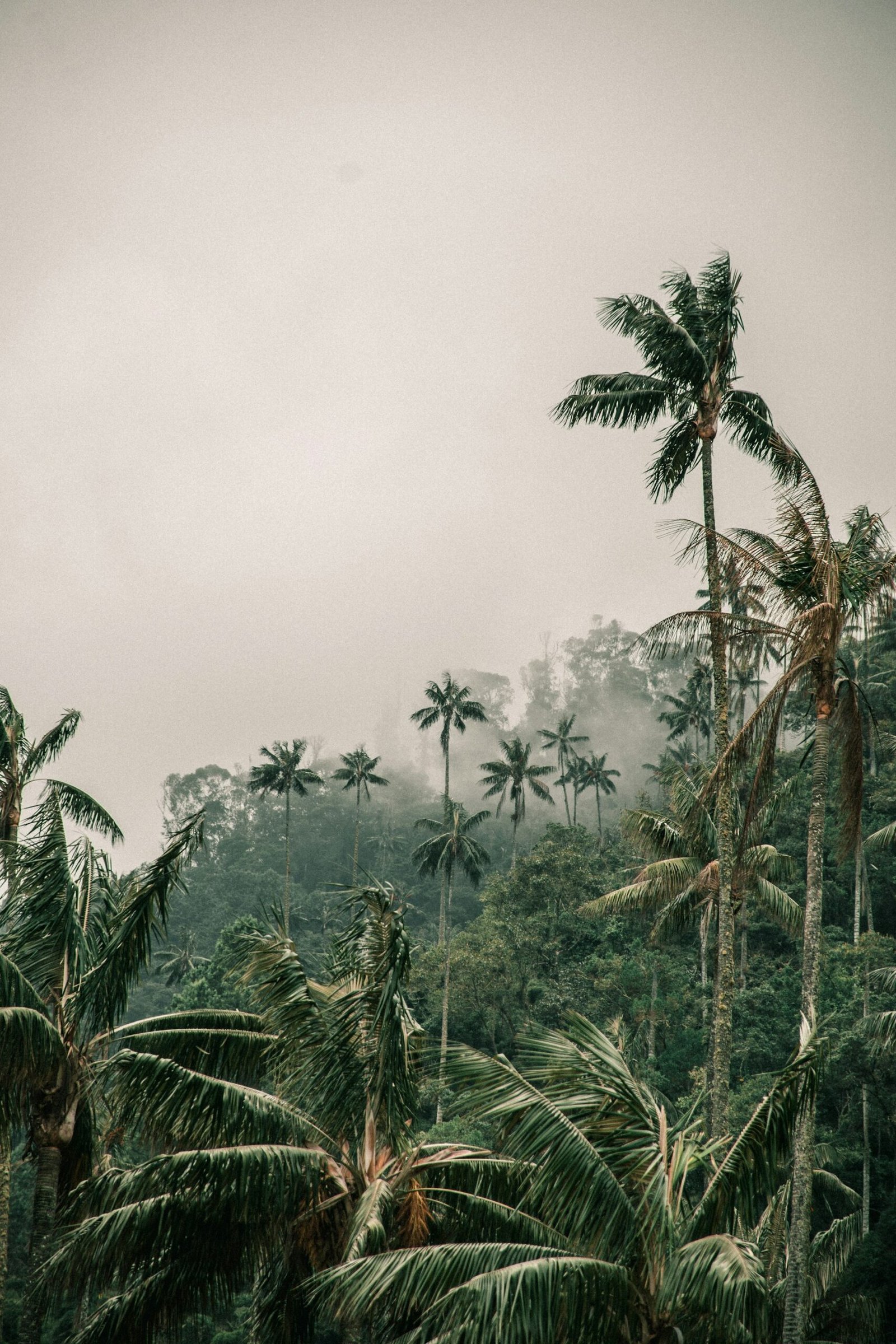
  • Mallorca Travel Guide: The Best Coves, Mountain Villages and Things to Do

    Mallorca Travel Guide: The Best Coves, Mountain Villages and Things to Do

    Tiny coves of turquoise water hidden between pine-covered cliffs, stone villages in the mountains, a vintage wooden train rattling through orange groves, a lighthouse at the end of a wild peninsula and a golden Gothic cathedral overlooking the sea: Mallorca is so much more than its party reputation.

    The largest of Spain’s Balearic Islands is one of the most visited places in the Mediterranean, and it’s easy to see why. Its coastline is lined with dozens of beautiful beaches and calas, small coves with clear water. Its mountain range, the Serra de Tramuntana, is a UNESCO World Heritage Site, and its capital, Palma, is one of the most stylish cities in Spain.

    Mallorca can be expensive in high summer, but it’s easy to visit on a budget. Flights from all over Europe are cheap, the best beaches are free, and with a rental car, a family-run guesthouse and lunch menus in village restaurants, you can enjoy the island without overspending. This guide shows you how.

    Mallorca at a Glance

    • Where: in the Mediterranean Sea, off the east coast of Spain
    • Main airport: Palma de Mallorca (PMI), with direct flights from all over Europe
    • Currency: euro (EUR)
    • Entry: Mallorca is part of Spain and the Schengen Area. Many non-EU visitors can stay up to 90 days without a visa, but will need to register online with ETIAS once it starts. Check the current rules for your passport
    • Languages: Spanish and Catalan. English and German are widely spoken in tourist areas
    • Best time: May to June and September to October
    • Budget: around $80 to $120 a day for budget travellers, $150 to $250 for a comfortable mid-range trip

    When to Go

    May, June, September and early October are the best months to visit. The weather is warm and sunny, the sea is pleasant for swimming from June, and the beaches and roads are much quieter than in high summer. Prices are also lower.

    July and August are hot and very busy. The most famous coves are packed by mid-morning, and hotel prices are at their highest.

    Spring, from March to May, is perfect for hiking, cycling and seeing the almond blossoms, which turn the countryside white and pink in February. Winter is mild and quiet, but many beach hotels close.

    Our tip: visit in September, when the sea is at its warmest and the summer crowds have gone.

    Where to Stay

    Mallorca is about 100 km wide, and you can reach most places within an hour or so by car. Many visitors split their stay between two bases.

    Palma and the West

    Palma is a great base for city life, culture and day trips into the mountains. The villages of the Serra de Tramuntana, like Sóller and Valldemossa, are perfect for a quieter, more traditional stay.

    The East and South

    The east coast, around Cala d’Or, Santanyí and Cala Ratjada, has the most beautiful coves. Small towns inland, such as Santanyí, are often cheaper and more charming than the beach resorts.

    Getting Around

    The best way to explore Mallorca is with a rental car. Book early for summer, choose a small car for the narrow mountain roads and village streets, and be prepared to pay for parking at popular beaches.

    There’s also a good bus network called TIB, which connects Palma with most towns and beaches, and the historic Sóller train. In summer, private cars are restricted on the road to Cap de Formentor during the day, so you’ll need to take the bus or go early in the morning.

    Things to Do in Mallorca

    Here are the experiences we think are worth your time and money.

    1. Swim in the Coves of the Southeast

    Mallorca’s southeast coast is famous for its calas, small, sheltered coves with white sand, turquoise water and pine trees growing right down to the rocks. They’re some of the most beautiful swimming spots in the Mediterranean.

    The most famous is Caló des Moro, a tiny cove reached by a short walk from the parking area. It’s very popular, so come early in the morning or late in the afternoon. Nearby, Cala s’Almunia, Cala Llombards and the protected beaches of Mondragó Natural Park are just as beautiful. Bring snorkelling gear to explore the rocks.

    A turquoise cove surrounded by pine trees on a sunny day, Mallorca, Spain

    2. Explore Palma

    Palma is a lively, elegant city with a beautiful old town. Its landmark is the huge Gothic Cathedral of Santa Maria, known as La Seu, which rises above the sea wall. Inside, look for the colourful light from its giant rose window and the works by Antoni Gaudí.

    Wander through the narrow streets of the old town, visit the Almudaina Palace and the circular Bellver Castle on a hill above the city, and eat tapas at the Mercat de l’Olivar food market. In the evening, the bars of the Santa Catalina neighbourhood are perfect for a drink.

    The Gothic Cathedral of Santa Maria in Palma de Mallorca, Spain

    3. Drive to Cap de Formentor

    The Formentor peninsula in the far north is Mallorca’s most dramatic coastline. A narrow road winds along steep cliffs to the Formentor Lighthouse at the very tip of the island, with spectacular views of the sea on both sides.

    Stop at the Mirador Es Colomer viewpoint and swim at the beautiful Formentor Beach, lined with pine trees. In summer, private cars are restricted during the day, so take the bus from Port de Pollença or drive early in the morning. The road is also popular with cyclists.

    The Formentor Lighthouse on the cliffs of Cap de Formentor, Mallorca

    4. Visit Valldemossa and the Mountain Villages

    The Serra de Tramuntana is a range of rugged mountains along the northwest coast, dotted with olive groves, stone terraces and pretty villages. It was named a UNESCO World Heritage Site in 2011.

    Valldemossa is the most famous village, with honey-coloured stone houses, flower-filled lanes and the Royal Carthusian Monastery, where the composer Frédéric Chopin spent a winter. Continue along the coast road to Deià, a beautiful village loved by artists, and the tiny harbour of Port de Valldemossa.

    The village of Valldemossa between green mountains in the Serra de Tramuntana, Mallorca

    5. Ride the Vintage Train to Sóller

    One of the most charming ways to see the mountains is on the Sóller train, a wooden vintage train that has run between Palma and Sóller since 1912. The journey takes about an hour, through tunnels, past orange and lemon groves, with views over the valley.

    In Sóller, take the old tram down to Port de Sóller, a sheltered bay with a promenade and seafood restaurants. Tickets are on the pricier side, but it’s a unique experience. Try a fresh orange juice from the local oranges.

    6. Hike in the Serra de Tramuntana

    The Tramuntana is a paradise for hikers. The long-distance GR221, also called the Dry Stone Route, crosses the mountains along old paths used by charcoal makers and farmers, with mountain refuges for overnight stays.

    For a day hike, try the walk from Deià to Sóller, along the coast and through olive groves, or the spectacular gorge of the Torrent de Pareis, which ends at the beach of Sa Calobra. The gorge is a demanding hike, so go with a guide if you’re not experienced, and never hike it after rain.

    7. Relax at Cala Agulla

    In the northeast, near the town of Cala Ratjada, Cala Agulla is one of Mallorca’s most beautiful beaches. Fine white sand, clear turquoise water and green hills behind it make it look almost tropical.

    The beach is part of a protected area, with pine forests and walking trails along the coast. Walk to the smaller, quieter coves of Cala Moltó and Cala Mesquida nearby. Arrive early in summer, as parking fills up fast.

    Turquoise water at Cala Agulla beach with mountains in the background, Mallorca

    8. Take a Boat Trip Along the Coast

    Many of Mallorca’s most beautiful coves can only be reached from the sea. A boat trip or a day on a sailing boat is a great way to discover hidden beaches, sea caves and clear water for snorkelling.

    Boat trips leave from most harbours, including Port de Sóller, Port de Pollença and Cala d’Or. For more freedom, rent a small motorboat, some of which don’t need a licence. A sunset sailing trip from Palma Bay is also a highlight.

    A sailboat floating in clear water near a rocky shore, Mallorca, Spain

    9. Explore the Caves of Drach

    Near Porto Cristo on the east coast, the Cuevas del Drach are a series of huge caves full of stalactites and stalagmites. At the end of the tour, you’ll sit beside Lake Martel, one of the largest underground lakes in the world.

    The highlight is a short classical music concert, played by musicians in illuminated boats floating across the lake. Tickets are reasonably priced, and it’s a great option for a cloudy day. Book in advance in summer.

    10. Discover Es Trenc Beach

    In the south, Es Trenc is one of the last long, wild beaches on the island. Its soft white sand and shallow turquoise water stretch for several kilometres, backed by dunes and salt flats where flamingos sometimes gather.

    There are no hotels on the beach, just a few simple beach bars. Bring water, food and an umbrella, as there’s little shade. Nearby, the Salines de Llevant salt flats produce the famous Flor de Sal, a good souvenir to take home.

    Where to Stay on a Budget

    Mallorca has options for every budget:

    • Fincas and agroturismos: country houses and farm stays, often with a pool and breakfast with local produce
    • Hostels and guesthouses: good value in Palma and some smaller towns
    • Apartments: a great choice for families and longer stays, with a kitchen to save money on food
    • Village hotels: charming small hotels in Sóller, Valldemossa and Santanyí

    Book early for July and August. Note that a small tourist tax is added per person and night.

    Eating on a Budget

    Mallorcan food is simple, rustic and delicious:

    • Pa amb oli: bread with olive oil, tomato, cheese and ham, a classic lunch
    • Ensaïmada: a light, spiral-shaped pastry dusted with sugar, perfect for breakfast
    • Sobrassada: a soft, spicy sausage spread on bread
    • Tumbet: layers of potato, aubergine and peppers baked in tomato sauce
    • Fresh seafood: grilled fish and rice dishes in the harbour towns

    Look for the menú del día, a fixed-price lunch menu offered by many restaurants on weekdays, and shop at local markets for picnic food.

    What It Really Costs

    Here’s a realistic daily budget per person for a comfortable mid-range trip in June or September, not counting flights.

    • Accommodation: $50 to $110 per person, sharing a double room in a guesthouse, finca or apartment
    • Food: $35 to $60 a day, mixing picnics, lunch menus and restaurant dinners
    • Transport: $20 to $40 a day per person, including a rental car shared by two, fuel and parking
    • Activities: budget for the highlights separately: the Sóller train, a boat trip, the Caves of Drach and entry to Palma Cathedral

    That works out to around $150 to $250 per person per day. Avoiding July and August, staying inland and eating lunch menus can bring that down noticeably.

    A Sample 7-Day Itinerary

    Day 1: Arrive in Palma and explore the cathedral and the old town.

    Day 2: Vintage train to Sóller and the tram to Port de Sóller.

    Day 3: Valldemossa and Deià, then a coastal hike in the Tramuntana.

    Day 4: Drive to Cap de Formentor early in the morning and swim at Formentor Beach.

    Day 5: Cala Agulla and the coves around Cala Ratjada.

    Day 6: The Caves of Drach, then Caló des Moro and the southeast coves.

    Day 7: A morning at Es Trenc, then fly home from Palma.

    Practical Tips

    • Arrive early at popular coves and viewpoints to find parking and space
    • Rent a small car, as roads in the mountains and villages are narrow
    • Check the Formentor road rules before you go in summer
    • Bring water shoes for rocky coves and snorkelling
    • Book the Sóller train and Caves of Drach in advance in high season
    • Respect the coves: take your rubbish with you and don’t leave anything on the beach

    Booking Tips

    • Airport transfer: if you don’t rent a car at the airport, book an airport transfer with Kiwitaxi from Palma airport to your hotel anywhere on the island, with a fixed price and a driver waiting for you
    • eSIM: if you’re coming from outside the EU, install a Yesim eSIM before you fly, so you have data for maps, bus times and tour bookings in Mallorca from the moment you land
    • Tours: popular options include tickets for the Caves of Drach, the vintage train to Sóller, a boat trip along the coast and a guided hike in the Serra de Tramuntana. You can compare and book most of them on Klook

    Final Thoughts

    Mallorca is one of the most beautiful islands in Europe. Swim in the turquoise coves of the southeast, explore the old streets of Palma, ride the vintage train to Sóller, wander through Valldemossa and watch the sunset from the cliffs of Formentor.

    Travel in spring or autumn, rent a car and take your time. Away from the crowds, Mallorca is a peaceful island of mountains, villages and hidden beaches waiting to be discovered.

    Prices checked in October 2026. Costs and opening times change, so always confirm before you book.
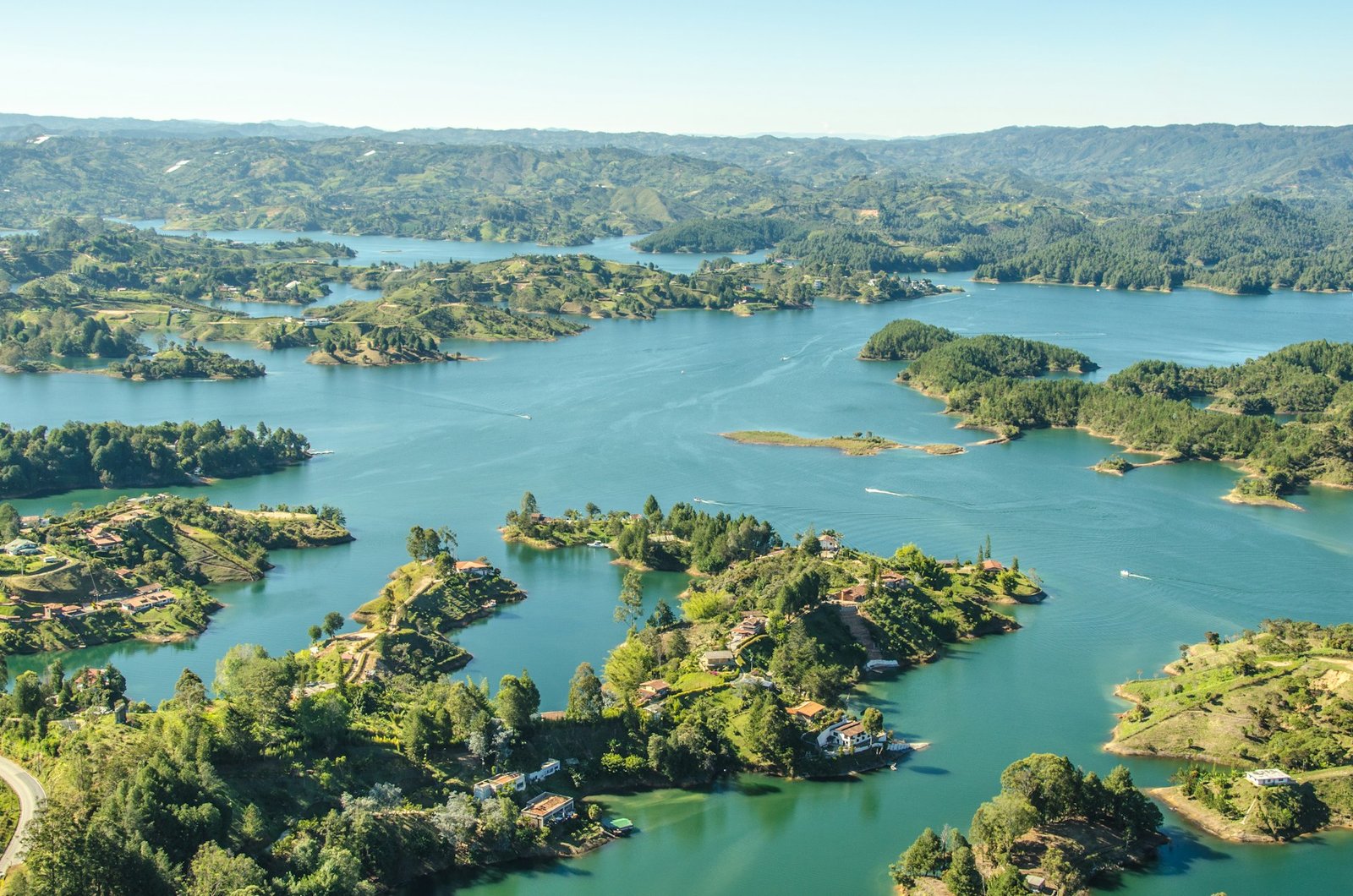
  • La Réunion Travel Guide: Waterfalls, Volcanoes and Lagoon Beaches

    La Réunion Travel Guide: Waterfalls, Volcanoes and Lagoon Beaches

    Waterfalls tumbling down sheer green cliffs, villages hidden in giant volcanic craters that no road can reach, an active volcano glowing under the stars, humpback whales leaping off the coast and a calm turquoise lagoon for a sunset swim: La Réunion is one of the most spectacular islands in the world.

    This small island in the Indian Ocean, just east of Madagascar and close to Mauritius, is a part of France. Two volcanoes formed it, and their eruptions created a dramatic landscape of jagged peaks, deep valleys and huge natural amphitheatres called cirques. Around 40 percent of the island is a UNESCO World Heritage Site, and it’s a paradise for hikers and nature lovers.

    Réunion isn’t a cheap destination, but it’s often better value than its neighbour Mauritius. You pay in euros, and the best experiences, from hikes and waterfalls to beaches and viewpoints, are free. With a rental car, simple guesthouses and Creole food from local snack bars, you can enjoy it on a real budget. This guide shows you how.

    La Réunion at a Glance

    • Where: in the Indian Ocean, about 700 km east of Madagascar and 200 km southwest of Mauritius
    • Main airport: Roland Garros Airport (RUN) near Saint-Denis, with flights from Paris, Mauritius and other islands in the region
    • Currency: euro (EUR)
    • Entry: Réunion is part of France and the EU, but not part of the Schengen Area, so entry rules are slightly different from mainland France. Many nationalities can visit visa-free. Check the current rules for your passport
    • Languages: French and Réunion Creole. English is not widely spoken, so a few French words help
    • Best time: May to November, the dry season
    • Budget: around $90 to $130 a day for budget travellers, $160 to $260 for a comfortable mid-range trip

    When to Go

    May to November is the dry, cooler season and the best time to visit, especially for hiking. The skies are clear, the trails are in good condition and temperatures on the coast are pleasant. In the mountains, nights can be cold, so pack warm clothes.

    June to October is also the season for humpback whales, which come to the waters around the island to give birth.

    December to April is the hot, humid and rainy season. It’s also cyclone season, especially from January to March. Heavy rain can close hiking trails and roads, but the waterfalls are at their most impressive.

    Our tip: visit in September or October for dry weather, good hiking conditions and the end of the whale season.

    How Long Do You Need?

    Plan at least ten days for Réunion. The island looks small on the map, but mountain roads are slow and winding, and you’ll want time for hikes. Split your stay between the west coast for beaches and one or two nights in the cirques of Cilaos, Salazie or Mafate.

    Getting Around

    The best way to explore Réunion is with a rental car. Roads are good, but many are narrow and winding, especially in the mountains. The road to Cilaos alone has around 400 bends. Driving is on the right, as in mainland France.

    There’s also a public bus network called Car Jaune, which connects the main towns and some mountain villages, but it’s slow. To reach the remote villages of Mafate, you have to walk, as no roads lead there.

    Things to Do in La Réunion

    Here are the experiences we think are worth your time and money.

    1. Hike into the Cirque of Mafate

    Mafate is the wildest of Réunion’s three cirques, a giant natural amphitheatre surrounded by towering green walls. There are no roads, so the few hundred people who live in its small villages are reached only on foot or by helicopter.

    Hike in on one of the many trails and spend a night or two in a gîte, a simple mountain guesthouse where you’ll eat a home-cooked Creole dinner. Popular routes start from the Col des Bœufs car park. Book your gîte in advance, and bring cash, warm clothes and good boots.

    Mountains of the Cirque de Mafate at sunset, La Réunion

    2. Explore the Cirques of Cilaos and Salazie

    The other two cirques can be reached by road. Cilaos, in the south, is a mountain town known for its hiking trails, hot springs, lentils and local wine. The drive up is an adventure in itself.

    Salazie, in the northeast, is the greenest cirque, with waterfalls pouring down the cliffs. Stop at the Voile de la Mariée, the “Bride’s Veil” waterfall, and explore Hell-Bourg, a village of colourful Creole houses that’s considered one of the most beautiful villages in France.

    Green valley with a river running between steep mountains, La Réunion

    3. Climb the Piton de la Fournaise Volcano

    The Piton de la Fournaise is one of the most active volcanoes in the world, erupting almost every year. When it’s quiet, you can hike right up to the rim of its main crater, a moonscape of black lava and red rock.

    The hike starts at the Pas de Bellecombe viewpoint and takes about five hours return. Start early, before the clouds roll in, and bring water, sun protection and warm layers. During eruptions, the trail is closed, but you may be able to see the glowing lava from safe viewpoints.

    4. Watch the Sunrise from Piton des Neiges

    At more than 3,000 metres, Piton des Neiges is the highest mountain in the Indian Ocean. Watching the sunrise from the top, with the clouds below you and the whole island at your feet, is an unforgettable experience.

    Most hikers walk up from Cilaos in the afternoon, spend the night in the mountain refuge and climb to the summit before dawn. It’s a demanding hike, so you’ll need to be fit. Book the refuge well in advance.

    5. Swim Beneath Waterfalls

    Réunion has more waterfalls than you can count, and many of them have natural pools where you can swim. Bassin des Aigrettes and Bassin Cormoran in the west are popular freshwater swimming spots.

    In the south, the Langevin River has beautiful pools and the Cascade Langevin, while Cascade Niagara near Sainte-Suzanne is easy to reach. Check the weather before you go, as rivers can rise quickly after heavy rain. For more adventure, try canyoning with a guide, abseiling and jumping down waterfalls.

    Waterfall in the middle of the rainforest on La Réunion

    6. Relax on the Lagoon Beaches

    The best beaches are on the west coast, around Saint-Gilles-les-Bains and L’Ermitage, where a coral reef creates a calm, shallow lagoon. The water is warm and clear, perfect for swimming and snorkelling among colourful fish.

    Swim only inside the lagoon or in supervised areas, as there is a risk of sharks along much of the coast and swimming is restricted in many places. In the evening, join the locals for a picnic and watch the sunset from the beach.

    Sunset behind trees on the beach at Saint-Gilles-les-Bains, La Réunion

    7. Go Whale Watching

    From June to October, humpback whales come to the warm waters around Réunion to give birth and raise their calves. You can often see them from the coast, especially from the west, as they jump, slap their tails and play near the surface.

    For a closer look, join a whale watching boat trip from Saint-Gilles. Choose an operator that follows the local code of conduct, keeping a safe distance and limiting the time spent with the whales.

    A humpback whale jumping out of the water off the coast of La Réunion

    8. Discover the Wild South

    The south of the island is known as the Sud Sauvage, the wild south. Here, black lava fields from the volcano reach the sea, waves crash against rocky cliffs, and the coast is lined with tropical forest.

    Drive the Route des Laves, where the road crosses lava flows from recent eruptions, and relax at Grand Anse, a beautiful beach with a natural seawater pool. Along the coast, you’ll also find dramatic viewpoints, waterfalls and the rusting wreck of an old ship on the rocks.

    Aerial view of the green coast and an old shipwreck on La Réunion

    9. Go Paragliding over Saint-Leu

    Saint-Leu, on the west coast, is one of the best places in the world for paragliding. Thanks to steady winds and good weather, flights run almost every day of the year.

    Fly tandem with an experienced pilot from the hills above the town and glide down over the green slopes and the turquoise lagoon, landing on the beach. It’s a splurge, but one of the best ways to see the island.

    10. Taste Creole Food and Visit the Markets

    Réunion’s food is a delicious mix of French, African, Indian and Chinese cooking. Visit the market in Saint-Paul on Friday and Saturday mornings for tropical fruit, spices, vanilla, snacks and local crafts.

    Visit a vanilla plantation in the east to learn how the island’s famous Bourbon vanilla is grown and harvested by hand. Afterwards, try a glass of rhum arrangé, rum infused with fruit and spices, a local speciality.

    Where to Stay on a Budget

    Réunion has good options for every budget:

    • Gîtes: simple mountain guesthouses in the cirques, often with dinner and breakfast included
    • Chambres d’hôtes: family-run B&Bs, a great way to meet locals and try home cooking
    • Holiday apartments: good value on the west coast, with a kitchen to save money on food
    • Hotels: comfortable beach hotels around Saint-Gilles for a splurge

    Book early for July, August and the French school holidays, when many visitors arrive from mainland France.

    Eating on a Budget

    Creole food is hearty, spicy and affordable:

    • Carri: a curry of chicken, fish or pork, served with rice, beans and spicy sauce, the island’s main dish
    • Rougail saucisse: sausages cooked in a tomato and chilli sauce
    • Samoussas and bouchons: cheap snacks sold at roadside stalls
    • Tropical fruit: pineapple, mango, lychees and passion fruit
    • Bourbon vanilla: some of the best vanilla in the world

    Eat at local snack bars and food trucks, where a takeaway carri costs much less than a restaurant meal.

    What It Really Costs

    Here’s a realistic daily budget per person for a comfortable mid-range trip, not counting flights.

    • Accommodation: $50 to $110 per person, sharing a double room in a guesthouse, gîte or apartment
    • Food: $30 to $55 a day, mixing snack bars, self-catering and restaurant dinners
    • Transport: $25 to $45 a day per person, including a rental car shared by two and fuel
    • Activities: budget for the highlights separately: canyoning, a whale watching trip, a paragliding flight and nights in the mountain gîtes

    That works out to around $160 to $260 per person per day. Hiking, swimming in free natural pools and eating at snack bars can bring that down noticeably.

    A Sample 10-Day Itinerary

    Day 1: Arrive in Saint-Denis and drive to Saint-Gilles for a sunset on the beach.

    Day 2: Swim and snorkel in the lagoon, or join a whale watching trip in season.

    Day 3: Paragliding over Saint-Leu, then the waterfall pools of the west.

    Day 4: Drive to the Col des Bœufs and hike into Mafate for a night in a gîte.

    Day 5: Hike out of Mafate and drive to Salazie and Hell-Bourg.

    Day 6: Waterfalls of Salazie, then drive south along the east coast with a stop at a vanilla plantation.

    Day 7: Hike to the crater of the Piton de la Fournaise.

    Day 8: The wild south: Route des Laves, Grand Anse and the Langevin River.

    Day 9: Drive to Cilaos and explore the town and its trails.

    Day 10: Drive back to the airport and fly home.

    Practical Tips

    • Swim only in the lagoon or supervised areas: shark attacks have happened outside protected zones
    • Start hikes early, as clouds often cover the mountains by late morning
    • Check trail conditions on the official website before hiking, especially after rain
    • Pack for all weather: it can be hot on the coast and cold in the mountains on the same day
    • Learn a few words of French, as English isn’t widely spoken
    • Respect nature: stay on the marked trails and take your rubbish with you

    Booking Tips

    • Airport transfer: if you don’t rent a car at the airport, book an airport transfer with Kiwitaxi from Roland Garros airport to your hotel in Saint-Denis, Saint-Gilles or anywhere on the island, with a fixed price and a driver waiting for you
    • eSIM: if you’re coming from outside the EU, install a Yesim eSIM before you fly, so you have data for maps, hiking trail updates and tour bookings in La Réunion from the moment you land
    • Tours: popular options include a guided hike in Mafate, a canyoning trip, a whale watching boat trip and a tandem paragliding flight over Saint-Leu. You can compare and book most of them on Klook

    Final Thoughts

    La Réunion is an island of adventure. Hike into the hidden world of Mafate, climb an active volcano, swim beneath waterfalls, watch whales leap off the coast and end the day with a sunset swim in the lagoon.

    Travel in the dry season, rent a car, pack your hiking boots and take your time. Réunion will surprise you at every turn of its winding roads.

    Prices checked in October 2026. Costs and opening times change, so always confirm before you book.
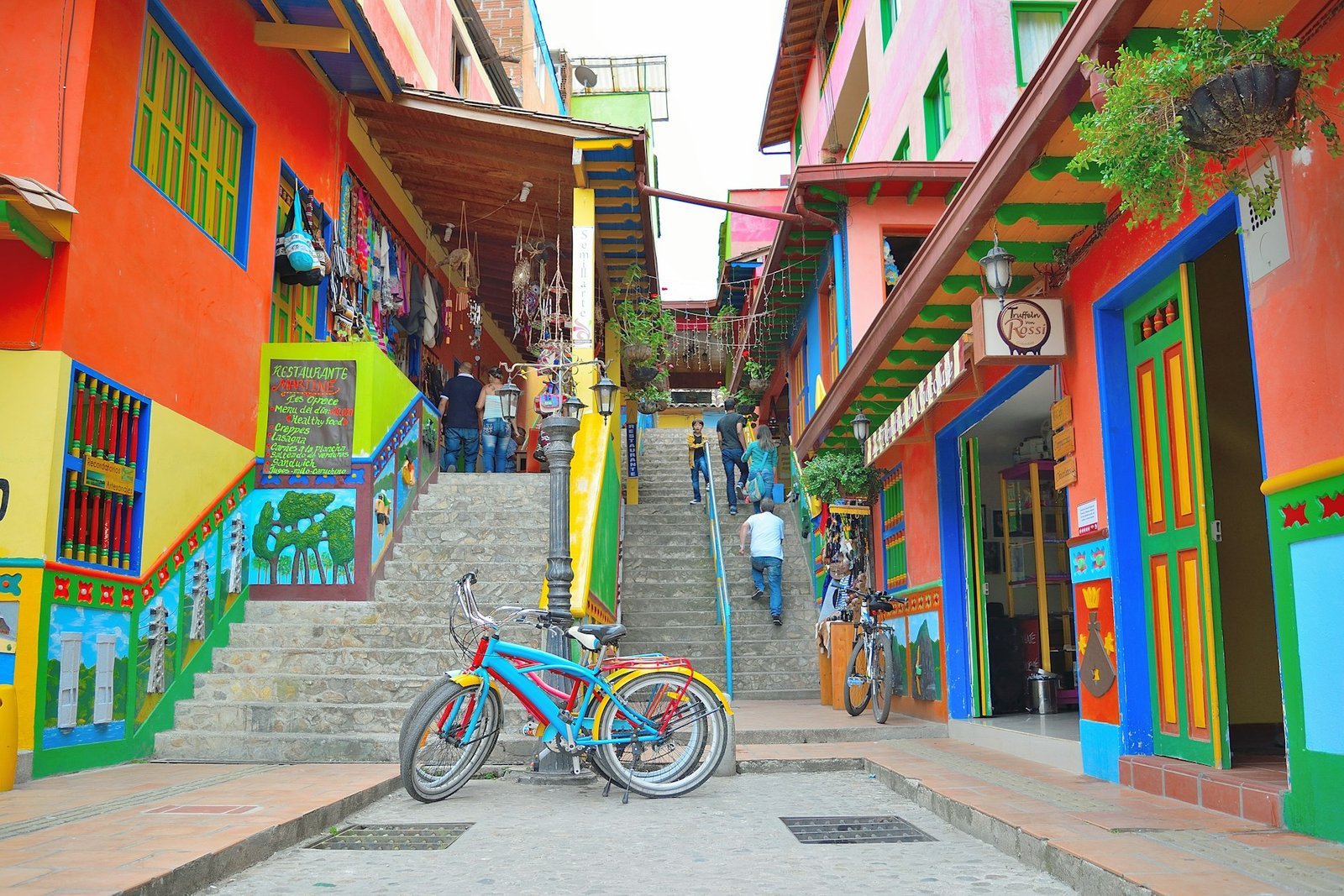
  • Langkawi Travel Guide: Beaches, Island Hopping and the Sky Bridge

    Langkawi Travel Guide: Beaches, Island Hopping and the Sky Bridge

    A curved bridge hanging high above the rainforest, a cable car gliding up a jungle mountain with the sea glittering below, quiet beaches lined with palm trees, mangrove forests full of eagles and monkeys, and a scattering of green islands glowing at sunset: Langkawi is Malaysia’s tropical playground.

    This archipelago of 99 islands lies in the Andaman Sea, just off the northwest coast of Malaysia and close to the border with Thailand. Its ancient rocks and rainforests are protected as a UNESCO Global Geopark, and the main island is big enough to explore for a week, yet small enough to drive around in a day.

    Langkawi is also one of the best-value beach destinations in Asia. It’s a duty-free island, so many things are cheaper than on the Malaysian mainland, and food, transport and accommodation are very affordable. With a rented car and a few nights in a simple beach hotel, you can enjoy paradise on a real budget. This guide shows you how.

    Langkawi at a Glance

    • Where: in the Andaman Sea, off the northwest coast of Malaysia, near the Thai border
    • Main airport: Langkawi International Airport (LGK), with flights from Kuala Lumpur, Penang and Singapore
    • Currency: Malaysian ringgit (MYR)
    • Entry: many nationalities can visit Malaysia visa-free. Most visitors must also complete the online Malaysia Digital Arrival Card before arrival. Check the current rules for your passport
    • Languages: Malay. English is widely spoken
    • Best time: November to April, the dry season
    • Budget: around $40 to $70 a day for budget travellers, $90 to $160 for a comfortable mid-range trip

    When to Go

    November to April is the dry season and the best time to visit. December to March is especially good, with sunny days, calm seas and little rain. It’s the busiest time, especially around Christmas, New Year and Chinese New Year.

    April is hot but still mostly dry, and a good-value month with fewer visitors.

    May to October is the rainy season, with tropical showers, usually in the afternoon. Many days are still sunny, the island is greener and prices are lower, but the sea can be rough and some boat trips may be cancelled.

    Our tip: visit in February or March for the best weather, calm water and fewer crowds than at Christmas.

    Where to Stay

    Most visitors stay on the west coast of the main island, where the best beaches are.

    Pantai Cenang

    Pantai Cenang is the liveliest area, with a long beach, lots of restaurants, bars and shops, and accommodation for every budget. It’s the best base for first-time visitors.

    Pantai Tengah and the North

    Next door, Pantai Tengah is quieter and more relaxed. If you want peace and nature, the beaches of Tanjung Rhu and Datai Bay in the north are home to beautiful but more expensive resorts.

    Getting Around

    There is almost no public transport on Langkawi, so the easiest way to get around is to rent a car. Car rental is cheap, roads are quiet and well-maintained, and driving is on the left. Scooters are also available, but only rent one if you’re an experienced rider.

    Grab, the app-based ride service, works well and is cheap. Taxis are available too, with fixed prices for common routes.

    To arrive by sea, ferries run to Langkawi from Kuala Perlis and Kuala Kedah on the mainland, and from Penang.

    Things to Do in Langkawi

    Here are the experiences we think are worth your time and money.

    1. Ride the Cable Car and Walk the Sky Bridge

    The SkyCab, one of the steepest cable cars in the world, takes you up to the top of Gunung Mat Cincang, more than 700 metres above the sea. The ride over ancient rainforest and waterfalls is spectacular, with the islands of the Andaman Sea spread out below.

    At the top, walk out onto the Sky Bridge, a curved pedestrian bridge suspended high above the jungle. Go early in the morning, before the clouds roll in and the queues grow. Tickets are on the pricier side by Langkawi standards, but this is the island’s most famous experience.

    Cable car going up a jungle mountain with the sea in the background, Langkawi, Malaysia

    2. Relax on Pantai Cenang

    Pantai Cenang is Langkawi’s most popular beach, a long stretch of soft white sand lined with palm trees and casual beach bars. The water is warm and calm, perfect for swimming, and you can rent kayaks, paddleboards and jet skis.

    In the evening, the beach comes alive. Watch the sunset with your feet in the sand, enjoy a cheap cocktail at one of the bars and join the crowd at the night market or along the main street.

    A white boat on Pantai Cenang beach at sunrise, Langkawi, Malaysia

    3. Go Island Hopping

    Langkawi’s island-hopping tour is one of the best-value trips on the island. In about four hours, a speedboat takes you to some of the smaller islands of the archipelago, past limestone cliffs, green jungle and hidden coves.

    Tours usually stop at Pulau Beras Basah, a small island with a white sand beach and clear water for swimming, and at Pulau Dayang Bunting with its famous freshwater lake. Some tours also stop to watch eagles. Choose an operator that doesn’t feed them, as feeding harms the birds.

    Aerial view of a small green island in the sea off Langkawi, Malaysia

    4. Swim in the Lake of the Pregnant Maiden

    Tasik Dayang Bunting, the Lake of the Pregnant Maiden, is the largest freshwater lake in Langkawi. It sits on the island of Pulau Dayang Bunting, just a short walk from the sea, surrounded by jungle-covered limestone hills.

    A legend says that women who swim in the lake will be blessed with children. Rent a pedal boat, swim in the calm water or just enjoy the view. Watch out for the cheeky monkeys on the path, and don’t carry food in your hands.

    Boats on the lake of Tasik Dayang Bunting surrounded by jungle, Langkawi, Malaysia

    5. Explore the Kilim Mangroves

    On the northeast coast, the Kilim Karst Geoforest Park is a maze of mangrove forests, limestone cliffs and narrow rivers. It’s one of the most beautiful natural areas in Langkawi and a key part of the UNESCO Geopark.

    Join a boat tour through the mangroves to see bats in a cave, monkeys on the riverbanks and fish farms floating on the water. For a quieter experience, choose a kayak tour, which lets you paddle silently through the narrow channels and spot more wildlife.

    6. Discover Tanjung Rhu Beach

    In the north of the island, Tanjung Rhu is one of Langkawi’s most beautiful and peaceful beaches. Its fine sand and calm, shallow water stretch out towards small limestone islands, and at low tide you can sometimes walk across a sandbar.

    It’s much quieter than Pantai Cenang, with only a few restaurants and resorts. Come for a lazy afternoon of swimming and reading in the shade of the trees, and stay for the sunset.

    People standing on a sandy beach next to the sea in Langkawi, Malaysia

    7. Hike to the Seven Wells Waterfall

    Telaga Tujuh, the Seven Wells Waterfall, is a series of seven natural pools connected by small waterfalls, high up in the jungle on the slopes of Gunung Mat Cincang. A legend says that fairies once bathed here.

    Climb the steps through the forest to the top pools, where you can swim in the cool, clear water and slide down smooth rocks. Bring good shoes, as the rocks are slippery, and come in the morning before the crowds. The waterfall is fullest after the rainy season.

    8. Take a Sunset Cruise

    A sunset cruise on a catamaran or yacht is one of the most popular experiences in Langkawi. Most trips sail along the west coast and around the small islands, with stops for swimming, a jacuzzi net at the back of the boat and a buffet dinner on board.

    As the sun goes down, the islands turn into dark silhouettes against a sky of orange and pink. It’s a splurge, but still good value compared with similar cruises in other parts of Asia.

    Green islands in the Andaman Sea at sunset, Langkawi, Malaysia

    9. Eat at the Night Markets

    Langkawi’s night markets move to a different town every evening. They’re full of stalls selling cheap and delicious Malaysian food, from grilled satay and fried noodles to fresh fruit, desserts and cold drinks.

    Ask your hotel where the market is on the day you want to go. Bring cash and an appetite, and try a little of everything. It’s one of the best ways to experience local life on the island.

    10. Snorkel at Pulau Payar Marine Park

    About an hour by boat from Langkawi, Pulau Payar Marine Park is the best place for snorkelling and diving in the area. The coral reefs around the small island are full of tropical fish, and you can often see baby blacktip reef sharks in the shallow water near the beach.

    Day trips usually include snorkelling gear, lunch and the marine park fee. The water is clearest in the dry season. Never touch the coral or the animals, and use reef-safe sunscreen.

    Where to Stay on a Budget

    Langkawi offers great value for every budget:

    • Guesthouses and hostels: simple, clean rooms near Pantai Cenang at low prices
    • Beach chalets: wooden or concrete chalets close to the sand, often with a small garden
    • Mid-range hotels: comfortable hotels with pools in Pantai Cenang and Pantai Tengah
    • Luxury resorts: for a splurge, world-class resorts in the rainforest of Datai Bay and Tanjung Rhu

    Book early for December to February. Outside the high season, you can often find good deals on the spot.

    Eating on a Budget

    Malaysian food is some of the best in Asia, and it’s very cheap:

    • Nasi lemak: coconut rice with sambal, peanuts, egg and anchovies, the national dish
    • Roti canai: flaky flatbread served with curry, perfect for breakfast
    • Satay: grilled meat skewers with peanut sauce
    • Laksa: spicy noodle soup, with a special local version called laksa Langkawi
    • Cendol: a sweet dessert of shaved ice, coconut milk and palm sugar

    Eat at local food stalls and the night markets for the cheapest meals. Thanks to the duty-free status, drinks are also cheaper here than on the mainland.

    What It Really Costs

    Here’s a realistic daily budget per person for a comfortable mid-range trip, not counting flights.

    • Accommodation: $30 to $70 per person, sharing a double room in a good hotel with a pool
    • Food: $15 to $30 a day, mixing local food stalls and restaurants
    • Transport: $10 to $20 a day per person, including a rental car shared by two and fuel
    • Activities: budget for the highlights separately: the cable car, island hopping, a mangrove tour, a sunset cruise and Pulau Payar

    That works out to around $90 to $160 per person per day. Eating at night markets, renting a car to explore on your own and travelling outside the high season can bring that down noticeably.

    A Sample 7-Day Itinerary

    Day 1: Arrive in Langkawi and watch the sunset on Pantai Cenang.

    Day 2: The cable car and Sky Bridge in the morning, then the Seven Wells Waterfall.

    Day 3: Island-hopping tour with Pulau Beras Basah and the Lake of the Pregnant Maiden.

    Day 4: Kayak or boat tour through the Kilim mangroves.

    Day 5: Day trip to Pulau Payar Marine Park for snorkelling.

    Day 6: Tanjung Rhu beach, then the night market.

    Day 7: A last swim, then a sunset cruise before flying home the next day.

    Practical Tips

    • Rent a car: it’s the cheapest and easiest way to explore the island
    • Carry cash for night markets, small restaurants and market stalls
    • Dress modestly away from the beach, as Malaysia is a Muslim country, and cover your shoulders and knees in mosques
    • Watch out for monkeys: keep food and bags closed and never feed them
    • Swim where the locals swim and ask about jellyfish, which can appear at certain times of year
    • Respect nature: don’t feed eagles or fish, don’t touch coral and take your rubbish with you

    Booking Tips

    • Airport transfer: book an airport transfer with Kiwitaxi from Langkawi airport to your hotel in Pantai Cenang or anywhere on the island, with a fixed price and a driver waiting for you
    • eSIM: install a Yesim eSIM before you fly, so you have data for maps, Grab rides and tour bookings in Langkawi from the moment you land
    • Tours: popular options include SkyCab cable car tickets, an island hopping trip, a Kilim mangrove boat tour and a sunset cruise. You can compare and book most of them on Klook

    Final Thoughts

    Langkawi is the perfect mix of beaches, jungle and island adventures. Ride the cable car to the Sky Bridge, hop between islands, swim in the Lake of the Pregnant Maiden, paddle through the mangroves and watch the sun set over the Andaman Sea.

    Travel in the dry season, rent a car and eat at the night markets. Langkawi offers paradise at a price that will make you want to come back again and again.

    Prices checked in October 2026. Costs and opening times change, so always confirm before you book.