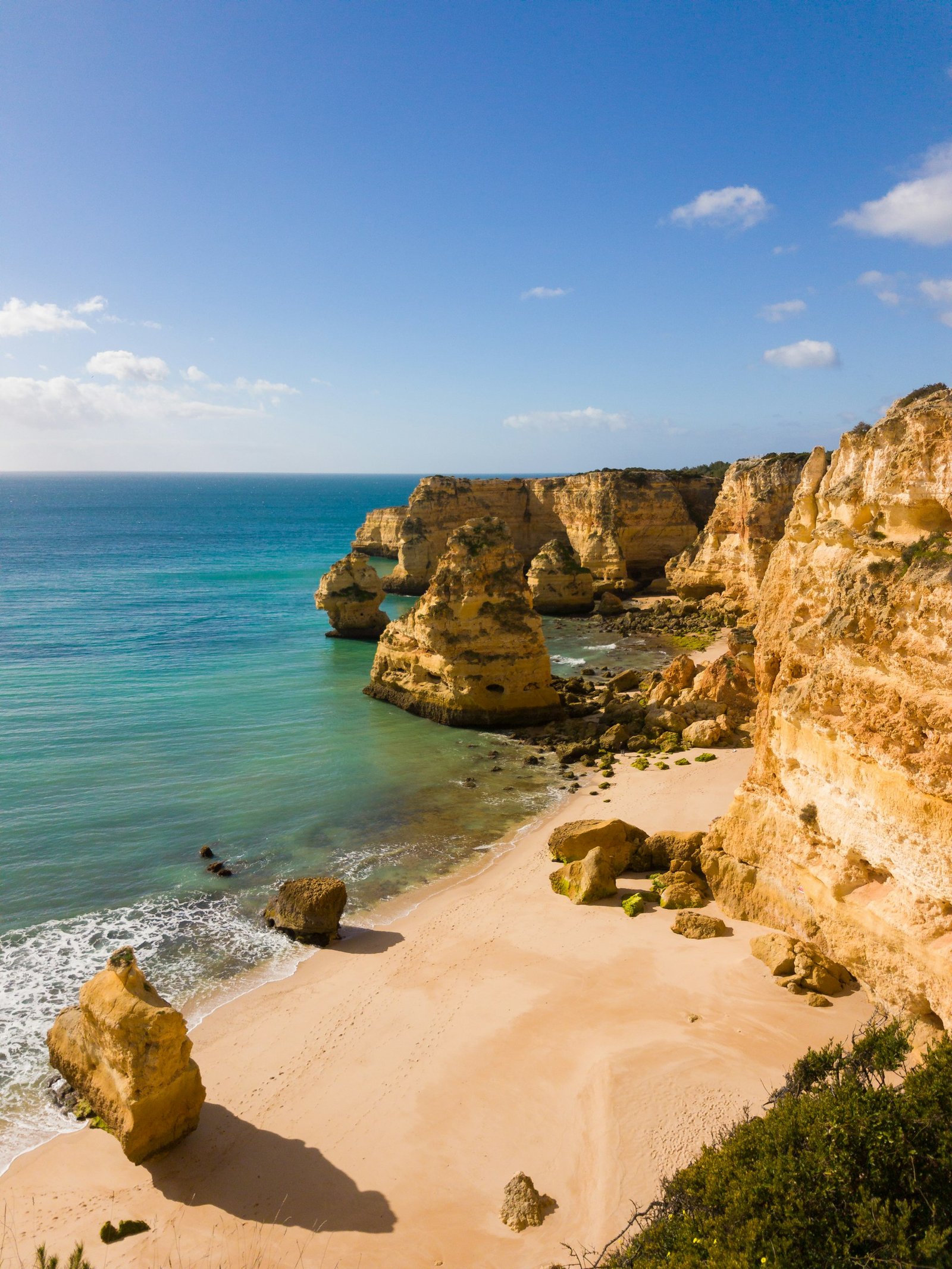
The Algarve, Portugal’s southern coast, looks like someone painted it. Golden cliffs drop into turquoise water, wind and waves have carved arches and sea caves into the rock, and hidden coves appear at the bottom of wooden staircases. Behind the coast lie whitewashed villages, orange groves and quiet hills.
It’s one of the sunniest corners of Europe, with more than 300 days of sunshine a year, and it’s still good value compared to the Mediterranean hotspots of Spain, France or Italy. You can eat grilled fish by the sea for the price of a sandwich in Paris, and outside of July and August you’ll often have whole beaches almost to yourself.
This guide shows you where to stay, which experiences are really worth your time, and how to enjoy the Algarve without overspending.
The Algarve at a Glance
- Where: the southern coast of Portugal, stretching about 150 km from the Spanish border to Cape St. Vincent
- Airport: Faro (FAO), with direct flights from all over Europe. Lisbon is about two and a half to three hours away by car or train
- Currency: euro (EUR)
- Entry: Portugal is part of the Schengen Area. Many non-EU visitors can stay up to 90 days without a visa, but will need to register online with ETIAS once it starts. Check the current rules before you travel
- Language: Portuguese. English is widely spoken in tourist areas
- Best time: May, June, September and October
- Budget: around $60 to $90 a day for budget travellers, $100 to $170 for a comfortable mid-range trip
When to Go
July and August are hot, sunny and very busy. Prices are at their highest, the famous beaches are packed and you’ll need to book everything well in advance.
May, June, September and October are the sweet spot. It’s warm enough for the beach, the sea is at its warmest in September, and there are far fewer people. Accommodation is noticeably cheaper.
November to March is mild, with daytime temperatures of around 15 to 18 degrees Celsius. It’s too cold for most people to swim, but perfect for hiking, golf and exploring the villages, and prices are very low. Late January and February bring the almond blossom.
Our tip: go in late May or late September. You’ll get beach weather, calm seas for boat trips and fair prices.
Where to Base Yourself
The Algarve is easy to explore, but it’s long enough that it’s worth choosing your base carefully. If you have a week or more, split your stay between two places.
Lagos: The Best All-Rounder
Lagos in the west has a charming old town with cobbled streets, lively restaurants and bars, and some of the most beautiful beaches and cliffs in the region right on its doorstep. It’s the best base for first-time visitors and for anyone who wants to explore the wild west coast.
Carvoeiro and Ferragudo: For the Famous Cliffs
In the central Algarve, the small fishing villages of Carvoeiro and Ferragudo are close to Benagil Cave, Praia da Marinha and the Seven Hanging Valleys Trail. They’re quieter than nearby Albufeira, which is known for its nightlife and big resorts.
Tavira: Authentic and Relaxed
In the east, Tavira is the most beautiful town in the Algarve, with historic churches, a Roman-style bridge and a calm, local atmosphere. The beaches here are long and sandy, on islands reached by boat.
Getting Around
To see the best of the Algarve, you’ll want a rental car. Many of the most beautiful beaches, viewpoints and villages are hard to reach by public transport. Car hire is affordable, especially outside the summer holidays.
The main motorway, the A22, has electronic tolls with no toll booths. Ask your rental company for a transponder so the tolls are charged automatically. The parallel N125 road is free but slower.
Without a car, regional trains and buses connect the main towns along the coast, but you’ll need taxis or tours to reach many of the beaches.
Things to Do in the Algarve
Here are the experiences we think are worth your time and money.
1. Kayak or Paddle to Benagil Cave
Benagil Cave is the most famous sight in the Algarve: a huge sea cave with a round hole in its roof, through which sunlight falls onto a small golden beach. It’s one of the most photographed places in Portugal.
You can only reach it from the water, on a boat tour, by kayak or on a stand-up paddleboard. Kayak and SUP tours from Benagil beach are the best way to see it, because they also explore the smaller caves and arches along the coast. Tours are budget to mid-range in price and last around one and a half to two hours.
To protect the cave and keep visitors safe, the rules for Benagil have become stricter in recent years, and landing on the beach inside the cave is no longer allowed. Check the latest rules when you book, choose a licensed operator and go early in the morning, when the sea is calm and the crowds are smaller.

2. Hike the Seven Hanging Valleys Trail
The Seven Hanging Valleys Trail is one of the most beautiful coastal walks in Europe. It runs for about 6 km along the clifftops between Praia da Marinha and Praia do Vale Centeanes, passing Benagil and dramatic viewpoints over sea arches, sinkholes and tiny beaches far below.
The path is well marked and mostly easy, with a few short climbs. Walk it one way and take a taxi back, or turn around halfway. Start early to avoid the midday heat, wear proper shoes and stay well away from the cliff edges, which can be unstable.
Make sure to spend some time on Praia da Marinha itself. With its golden cliffs and clear water, it’s often named one of the most beautiful beaches in Europe.
3. Explore the Rock Formations of Ponta da Piedade
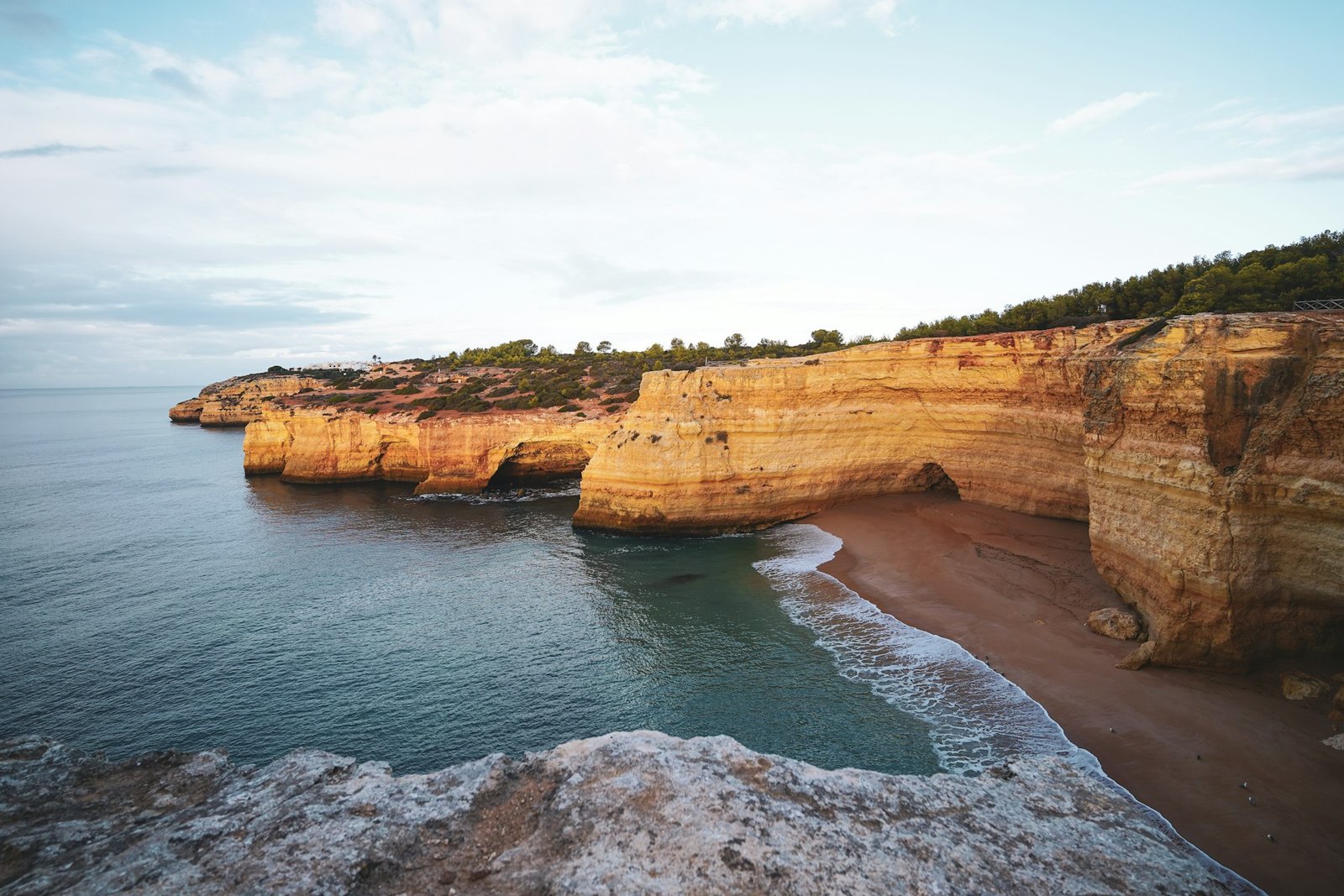
Just south of Lagos, Ponta da Piedade is a headland of golden cliffs, sea stacks, arches and grottoes rising from emerald water. Walk the clifftop paths and climb down the 182 steps to the water’s edge for a closer look.
The best way to see it, though, is from the water. Small boats from Lagos marina take you into the grottoes, and kayak tours let you paddle through the arches yourself. Both are budget-friendly. Afterwards, relax on Praia do Camilo or Praia Dona Ana, two of the prettiest beaches in Lagos.

4. Surf the Wild West Coast
The west coast of the Algarve, the Costa Vicentina, is completely different from the south. It’s part of a natural park, with almost no development, huge empty beaches and powerful Atlantic waves.
It’s one of the best surfing regions in Europe. Beaches like Praia da Bordeira, Praia do Amado and Arrifana have surf schools that offer lessons and board rental for beginners at fair prices. Even if you don’t surf, the wide sandy beaches backed by dunes and cliffs are spectacular, especially at sunset.
Hikers can walk sections of the Rota Vicentina, a long-distance network of trails along the coast. The Fishermen’s Trail follows the clifftops above the sea.

5. Watch the Sunset at Cape St. Vincent
At the south-western tip of Europe, Cabo de São Vicente was once believed to be the end of the world. Today, its lighthouse and wild cliffs are one of the best places in Portugal to watch the sunset.
Arrive about an hour before sunset, bring a jacket because it’s often windy, and buy a bratwurst from the famous “last sausage before America” stand. On the way, visit the town of Sagres and its clifftop fortress.
6. Go Island Hopping in the Ria Formosa
In the eastern Algarve, the Ria Formosa is a protected lagoon of canals, salt marshes and sandy barrier islands. It’s a paradise for birdwatchers, with flamingos, spoonbills and herons.
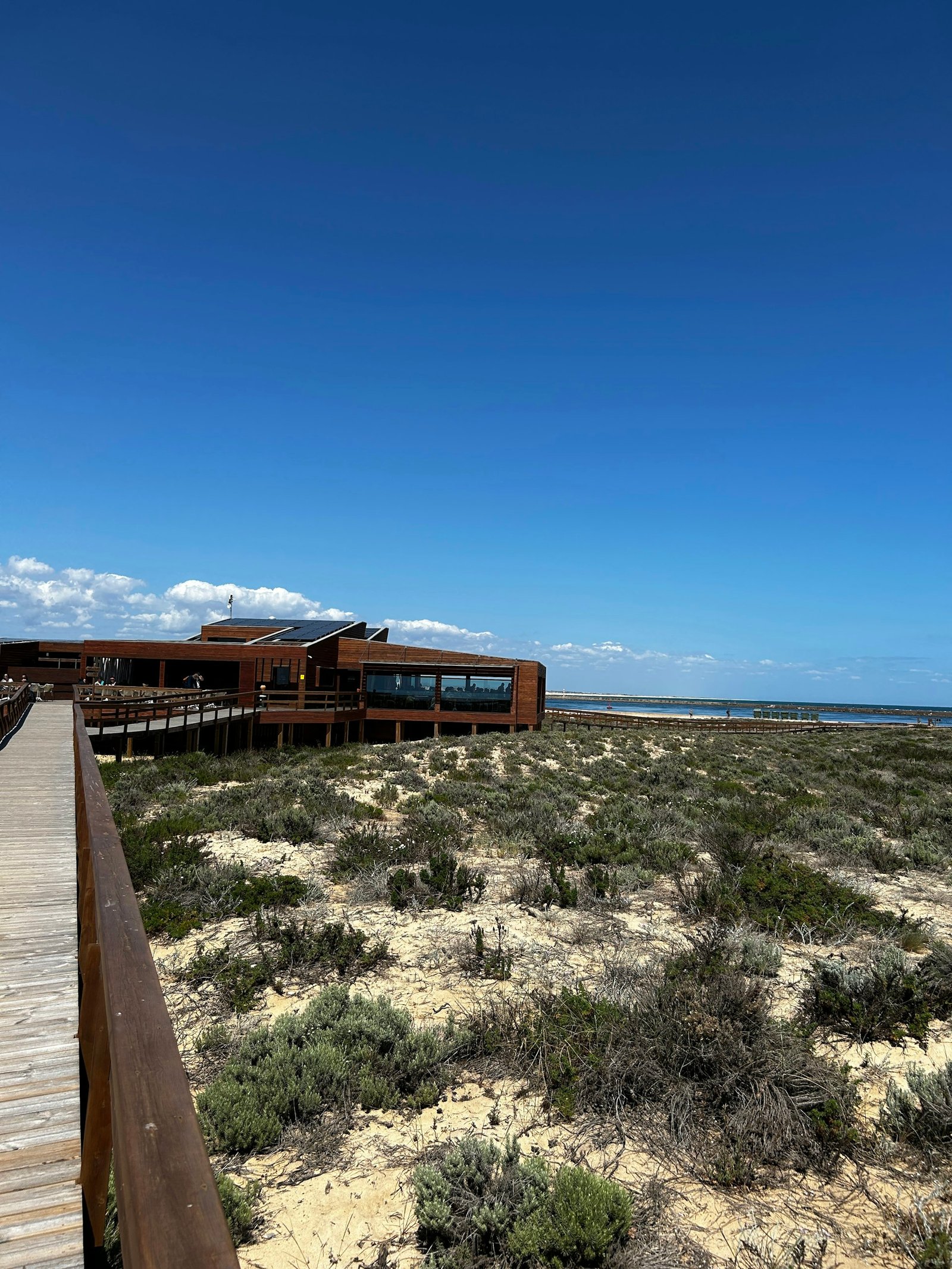
Boats from Faro and Olhão take you to car-free islands such as Culatra, Farol and Ilha Deserta, where wooden boardwalks lead across the dunes to long, empty beaches. On Ilha Deserta, there’s just one restaurant and miles of sand. Ferries are budget-friendly, and guided boat tours are mid-range.
7. Wander Through Tavira
Tavira is the most charming town in the Algarve. Its old bridge crosses the Gilão River, whitewashed houses with tiled facades line the streets, and more than 20 churches rise above the rooftops. Climb up to the castle for a view over the town.
From Tavira, a short boat ride takes you to Ilha de Tavira, with a long sandy beach. Nearby, at Praia do Barril, a little train runs across the lagoon to the beach, where you’ll find the unusual Anchor Cemetery, a row of rusty old fishing anchors in the sand.

8. Spot Dolphins on a Boat Trip
The waters off the Algarve are home to common and bottlenose dolphins, and dolphin-watching trips from Lagos, Portimão, Albufeira and Vilamoura have a high chance of sightings. Most trips also cruise along the coast and past the caves.
Choose a company that follows responsible wildlife guidelines and keeps a respectful distance from the animals. Trips are mid-range in price and usually last around two hours.
9. Escape to the Monchique Mountains
When the coast gets too hot or crowded, head inland to the green Serra de Monchique. Drive up to Fóia, the highest point in the Algarve at about 900 metres, for views stretching to the ocean on a clear day.
The small spa village of Caldas de Monchique has natural thermal springs, shady paths and old buildings. Try a glass of medronho, a strong local brandy made from the fruit of the strawberry tree.
10. Eat Piri-Piri Chicken and Visit Silves
The Algarve is famous for piri-piri chicken, grilled over charcoal and brushed with a spicy chilli sauce. The small town of Guia near Albufeira is known as its home, with several simple restaurants that serve nothing else.
Combine it with a visit to nearby Silves, once the Moorish capital of the region. Its red sandstone castle is one of the best preserved in Portugal and looks over orange groves and the river valley.
Where to Stay on a Budget
The Algarve has plenty of affordable accommodation, especially outside July and August:
- Guesthouses and small hotels: often family-run, with breakfast included and a personal touch
- Holiday apartments: very popular and great value, especially for families or longer stays. Many have a kitchen and a shared pool
- Hostels: Lagos has some of the best hostels in Portugal, with pools, rooftop terraces and private rooms
- Rural houses: in the hills behind the coast, restored farmhouses with pools offer peace and quiet at fair prices
Book early for summer, especially if you want to stay in Lagos or Carvoeiro.
Eating on a Budget
Portuguese food is simple, fresh and affordable:
- Order the prato do dia: the dish of the day at local restaurants is usually great value, especially at lunch
- Eat grilled fish: sardines in summer, sea bream and sea bass all year, simply grilled with potatoes and salad
- Try cataplana: a seafood stew cooked in a copper pot, perfect for sharing
- Buy a pastel de nata: Portugal’s famous custard tart is sold in every bakery for very little
- Shop at the markets: the fish and fruit markets in Olhão, Loulé and Lagos are full of local produce
Be careful with the small dishes of bread, olives and butter placed on your table when you sit down. They’re not free, so send them back if you don’t want them.
What It Really Costs
Here’s a realistic daily budget per person for a comfortable mid-range trip in spring or autumn, not counting flights.
- Accommodation: $40 to $80 per person, sharing a double room or apartment
- Food and drink: $30 to $50 a day, eating in local restaurants and cafés
- Transport: $15 to $35 a day per person, including a small rental car shared by two, fuel and tolls
- Activities: budget for the highlights separately: a Benagil kayak or boat tour, a Ponta da Piedade boat trip, a surf lesson and a dolphin-watching trip
That works out to around $100 to $170 per person per day. In July and August, expect higher prices for accommodation and car hire.
A Sample 7-Day Itinerary
Day 1: Arrive in Faro and drive to Lagos. Evening walk through the old town.
Day 2: Ponta da Piedade by boat or kayak, then Praia do Camilo and Praia Dona Ana.
Day 3: West coast day: Sagres, a surf lesson at Praia da Bordeira or Amado, and sunset at Cape St. Vincent.
Day 4: Move to Carvoeiro. Kayak to Benagil Cave in the morning, Praia da Marinha in the afternoon.
Day 5: Hike the Seven Hanging Valleys Trail, then piri-piri chicken in Guia and the castle of Silves.
Day 6: Move to Tavira. Explore the old town and take the little train to Praia do Barril.
Day 7: Ria Formosa island hopping from Olhão or Faro, then fly home from Faro.
Practical Tips
- Book Benagil tours early in summer, and go in the morning when the sea is calmer
- The Atlantic is cool: even in summer, the water is around 20 to 22 degrees Celsius
- Respect the cliffs: stay away from the edges and don’t sit directly below them on the beach
- Use sun protection: the sun is strong, even when the wind makes it feel cool
- Many shops close at lunchtime in smaller towns, and restaurants often serve dinner from around 7 p.m.
- Tipping isn’t expected, but rounding up or leaving 5 to 10 percent for good service is appreciated
Booking Tips
- Airport transfer: if you don’t pick up a rental car at the airport, book an airport transfer with Kiwitaxi from Faro to Lagos, Carvoeiro or Tavira, with a fixed price and a driver waiting for you
- eSIM: if you’re coming from outside the EU, install a Yesim eSIM before you fly, so you have data for maps and beach directions in Portugal from the moment you land
- Tours: popular options include a Benagil Cave boat or kayak tour, a Ponta da Piedade grotto trip, a dolphin-watching cruise and a Ria Formosa island tour. You can compare and book most of them on Klook
Final Thoughts
The Algarve is far more than a beach holiday. Paddle into sea caves at sunrise, walk along golden clifftops, surf the wild Atlantic coast, watch the sun sink into the ocean at the end of Europe and finish the day with grilled fish and a glass of local wine.
Travel in late spring or early autumn, rent a car and split your stay between the west and the east. You’ll see the Algarve at its best, without the crowds and without the summer prices.
Prices checked in October 2026. Costs and opening times change, so always confirm before you book.
Leave a Reply