Dream destinations, real budgets

Category: Europe

Europe’s most beautiful places, from Greek islands and the Italian coast to Iceland’s waterfalls and Norway’s fjords, with tips to travel them for less.

  • Madeira Travel Guide: Levada Walks, Ocean Cliffs and the Best Things to Do

    Madeira Travel Guide: Levada Walks, Ocean Cliffs and the Best Things to Do

    Green cliffs dropping straight into a deep blue ocean, hiking trails high above a sea of clouds, narrow paths following old water channels through misty laurel forests, natural lava pools filled by the waves and a lively capital full of flowers and colourful doors: Madeira is one of the most beautiful islands in Europe.

    This small Portuguese island lies in the Atlantic Ocean, closer to Africa than to mainland Europe. Thanks to its mild climate, it’s often called the island of eternal spring, with pleasant temperatures all year round. That makes it a perfect escape when the rest of Europe is cold and grey.

    Madeira is also great value compared to many other European islands. Local restaurants are affordable, the best hikes are almost free, and with a rental car you can explore the whole island on your own. This guide shows you the best things to do, where to stay and what it really costs.

    Madeira at a Glance

    • Where: in the Atlantic Ocean, about 1,000 km southwest of Lisbon and 500 km off the coast of Morocco
    • Main airport: Cristiano Ronaldo International Airport (FNC), about 20 minutes from Funchal
    • Currency: euro (EUR)
    • Entry: Madeira is part of Portugal and the Schengen Area. Many visitors can travel visa-free, but check the current rules for your passport
    • Language: Portuguese. English is widely spoken in tourist areas
    • Best time: all year, with April to June and September to October our favourites
    • Budget: around €70 to €100 a day for budget travellers, €130 to €200 for a comfortable mid-range trip

    When to Go

    Madeira is a year-round destination. Temperatures on the coast usually stay between 17 and 26°C, so it’s never really cold or extremely hot.

    April to June is spring, when the island is full of flowers and the hiking weather is perfect. July and August are the warmest and busiest months, with the best conditions for swimming. September and October are still warm, with pleasant sea temperatures and fewer crowds.

    November to March is a great winter escape, with mild days around 18 to 21°C. It rains more often, especially in the north and the mountains, and some trails can close after storms. The famous New Year’s Eve fireworks in Funchal are among the biggest in the world.

    Our tip: visit in May or late September for flowers, warm days and the best hiking conditions.

    How Long Do You Need?

    Plan at least five to seven days for Madeira. That gives you time for Funchal, two or three of the best hikes, a drive around the island and a day on the north coast. With ten days, you can add more levada walks, a whale-watching trip and a day trip to the golden beach of Porto Santo.

    Getting Around

    The best way to explore Madeira is with a rental car. Roads are good, with many tunnels, but some mountain roads are steep and narrow, so choose a car with a strong engine.

    Buses connect Funchal with most towns, but they’re slow and less frequent in the north and west. Many of the best hikes start in the mountains, where public transport is limited. If you don’t want to drive, join guided hiking tours or jeep tours that include transport from Funchal.

    Where to Stay

    • Funchal: the best base for first-time visitors, with restaurants, the old town and easy access to the whole island
    • Calheta and the southwest: sunnier, quieter, with a sandy beach and beautiful sunsets
    • The north coast: green and wild, perfect for hikers who want to wake up close to the trails, in towns like Santana or Porto Moniz

    Things to Do in Madeira

    Here are the experiences we think are worth your time and money.

    1. Hike from Pico do Areeiro to Pico Ruivo

    The hike from Pico do Areeiro (1,818 m) to Pico Ruivo (1,862 m), the highest peak on the island, is one of the most spectacular day hikes in Europe. The trail follows a narrow ridge with steps carved into the rock, tunnels through the mountains and breathtaking views on both sides.

    The hike is about 11 km return and takes four to six hours. It’s steep in places and not for anyone afraid of heights. Sections of the trail sometimes close after storms or rockfalls, so check that it’s open before you go. Start early to beat the crowds and the clouds.
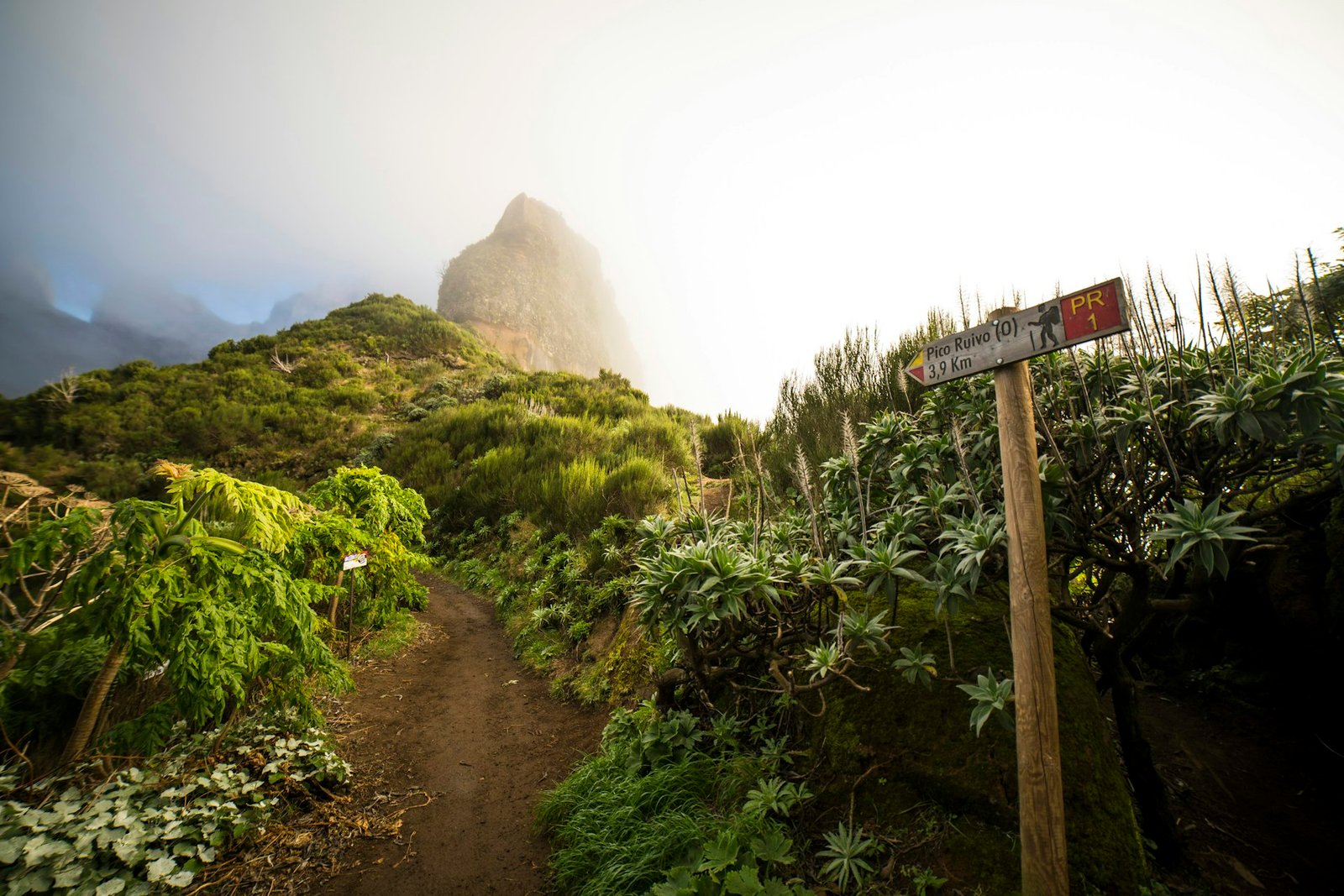
    The hiking trail from Pico do Areeiro through the mountains of Madeira, Portugal

    2. Watch the Sunrise Above the Clouds

    On many mornings, the peaks of Madeira rise above a sea of clouds. Watching the sunrise from Pico do Areeiro, as the sky turns orange and the clouds glow below you, is one of the most magical experiences on the island.

    You can drive almost to the summit, so you don’t need to hike in the dark. Arrive about 45 minutes before sunrise, bring warm clothes, as it’s cold at the top, and check the weather forecast the night before.
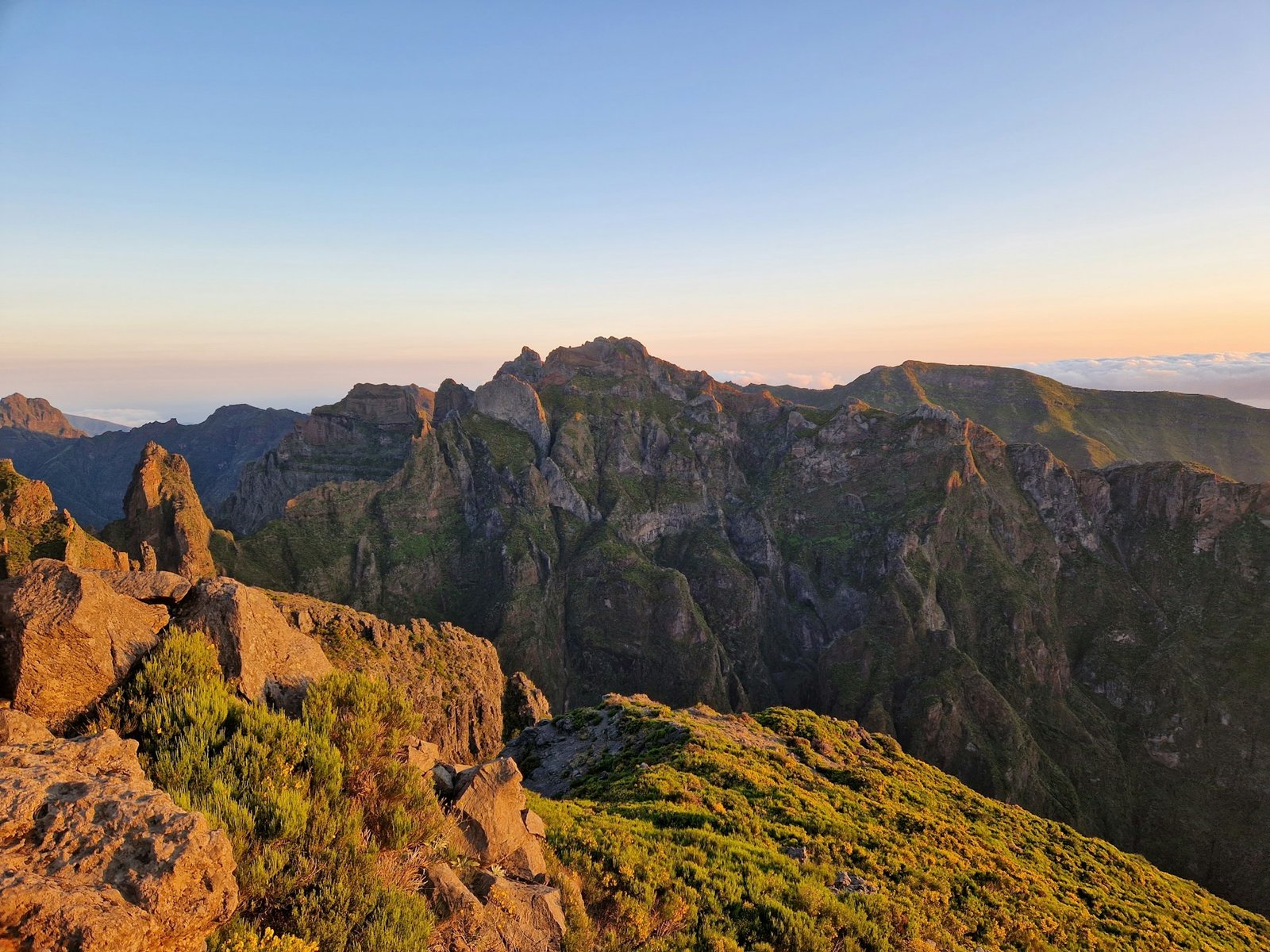
    View over the green mountains of Madeira from a high viewpoint

    3. Walk the Levadas

    Madeira’s levadas are old irrigation channels that carry water from the rainy mountains to the farms in the south. Narrow paths follow them for hundreds of kilometres, through forests, along cliffs and past waterfalls, making them perfect for walking.

    Our favourites are the Levada do Caldeirão Verde, which leads through the green laurel forest, a UNESCO World Heritage Site, to a tall waterfall in a stone amphitheatre, and the Levada das 25 Fontes, which ends at a pool fed by dozens of small springs. Non-residents pay a small fee for the most popular trails, which you book online. Bring a torch for the tunnels.

    4. Explore Ponta de São Lourenço

    At the eastern tip of the island, the Ponta de São Lourenço peninsula looks completely different from the rest of Madeira. The landscape is dry and windswept, with red, ochre and black volcanic cliffs dropping into the turquoise sea.

    The trail is about 8 km return and takes two to three hours, with amazing views on both sides. There’s very little shade, so bring sun protection and plenty of water, and start early in summer.

    5. Discover Funchal’s Old Town and Market

    Funchal, Madeira’s capital, is a charming city of narrow streets, flower-filled gardens and black and white cobblestones, stretched out along a sunny bay.

    Walk through the Zona Velha, the old town, where the doors along Rua de Santa Maria are painted with colourful artworks. Visit the Mercado dos Lavradores, the farmers’ market, to see piles of exotic fruits, flowers and fresh fish, and stroll along the seafront promenade at sunset. Don’t miss a glass of Madeira wine at one of the historic wine lodges.
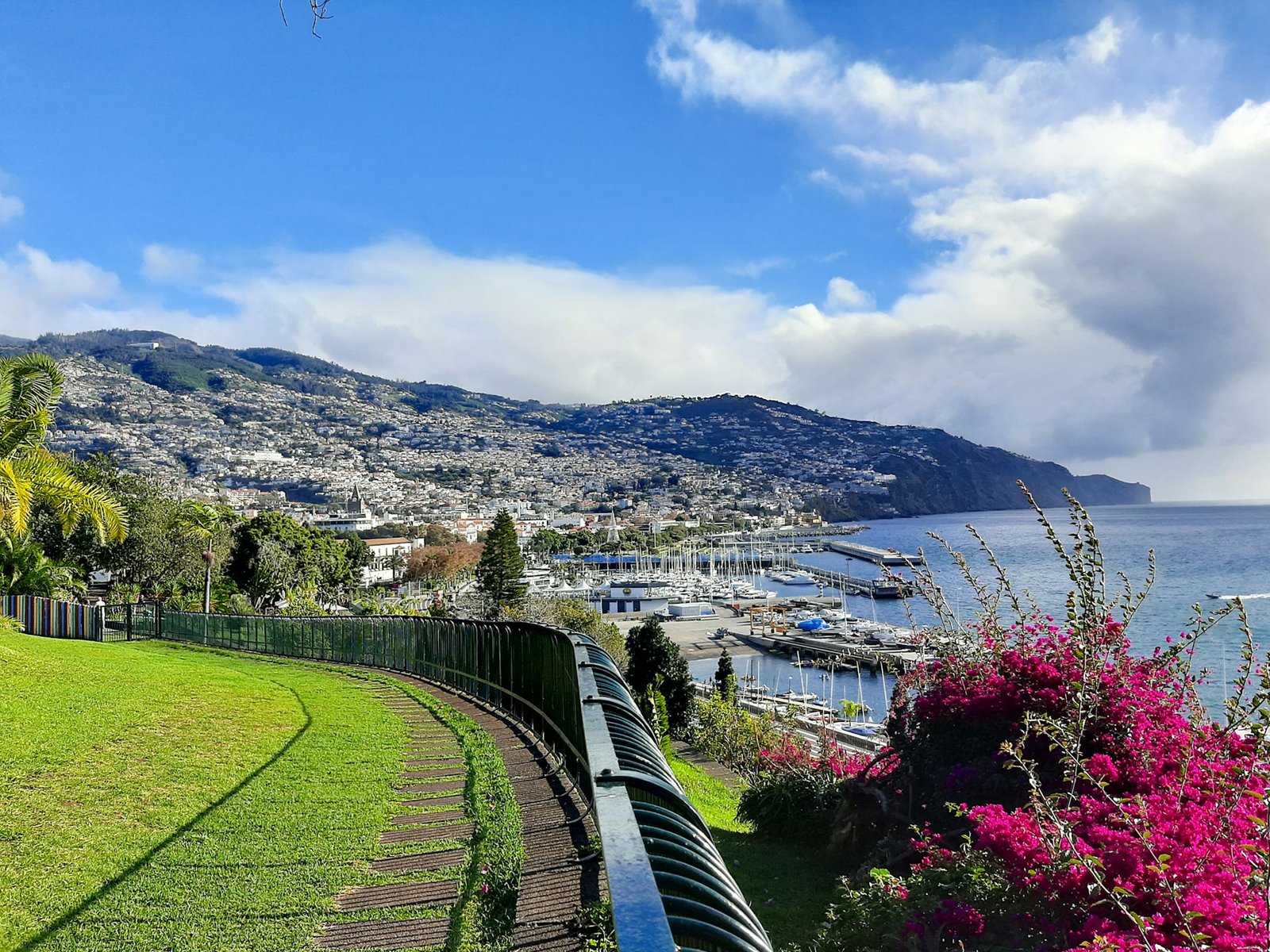
    View over Funchal and the ocean, Madeira, Portugal

    6. Ride the Cable Car to Monte

    The Funchal cable car carries you high above the city to the hillside village of Monte, with views over the rooftops and the bay. At the top, explore the beautiful Monte Palace Tropical Garden, with exotic plants, lakes and Japanese gardens.

    For the way down, try the famous toboggan ride: wicker sledges steered by two men in white clothes and straw hats, sliding down the steep streets towards Funchal. It’s short, fun and a Madeira tradition since the 19th century.

    7. Visit Câmara de Lobos and Cabo Girão

    Just west of Funchal, Câmara de Lobos is a picturesque fishing village with colourful boats bobbing in the harbour and houses stacked up the hillside. Winston Churchill painted here, and it’s the best place to try poncha, Madeira’s traditional drink made with sugarcane rum, honey and lemon.

    Nearby, the cliffs of Cabo Girão rise around 580 metres above the sea. Walk out onto the glass skywalk at the top and look straight down to the ocean and the tiny terraced fields at the foot of the cliffs.
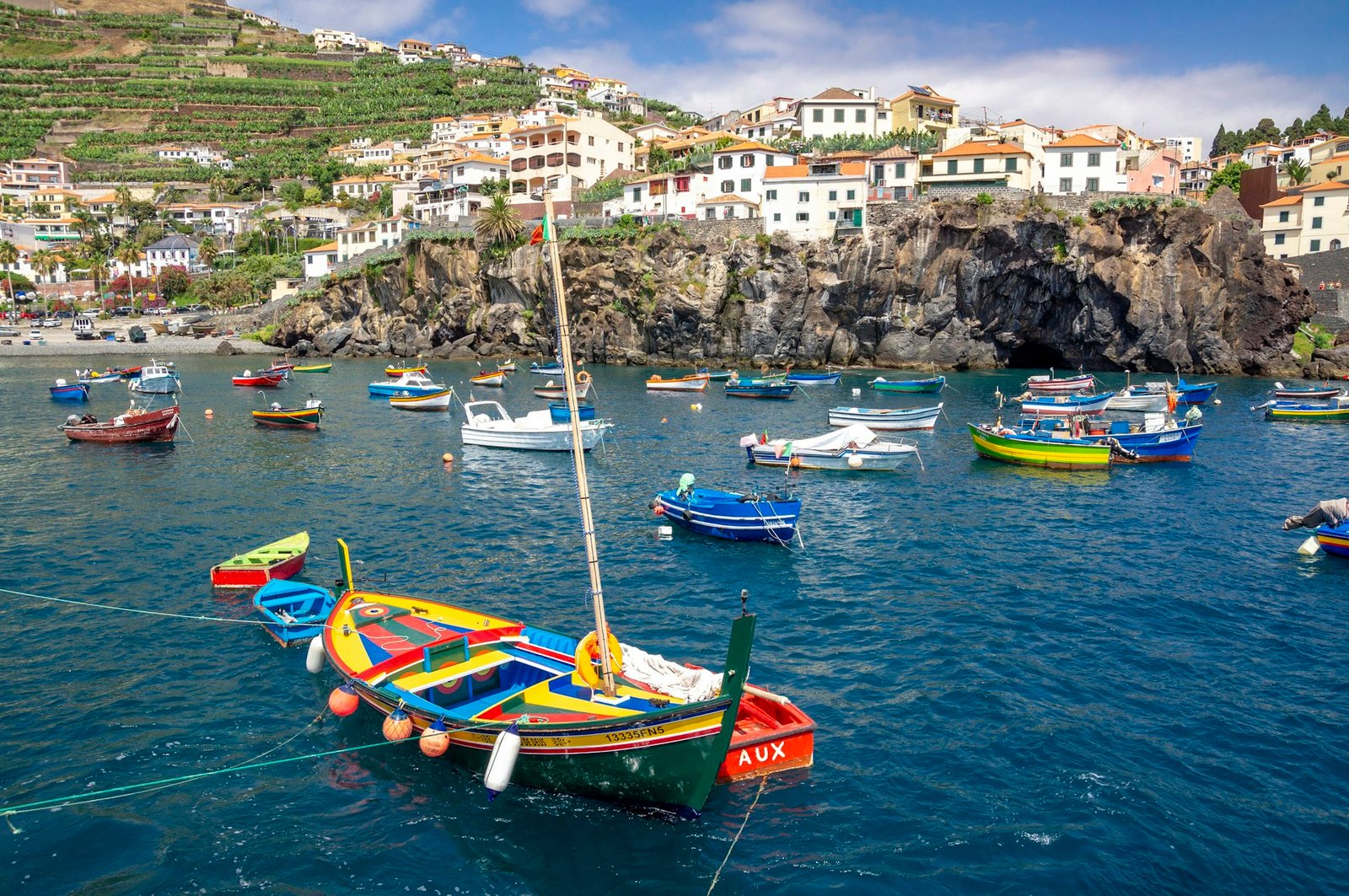
    A colourful fishing boat in the harbour of Câmara de Lobos, Madeira

    8. Drive the Wild West Coast

    The west of Madeira is perfect for a road trip. Drive through Arco da Calheta, with its terraced hillsides and banana plantations high above the ocean, and stop at the sandy beach of Calheta for a swim.

    Continue up to the Fanal Forest, a misty laurel forest with ancient, twisted trees that looks like a scene from a fairy tale, especially on foggy days. It’s one of the most photographed places on the island.
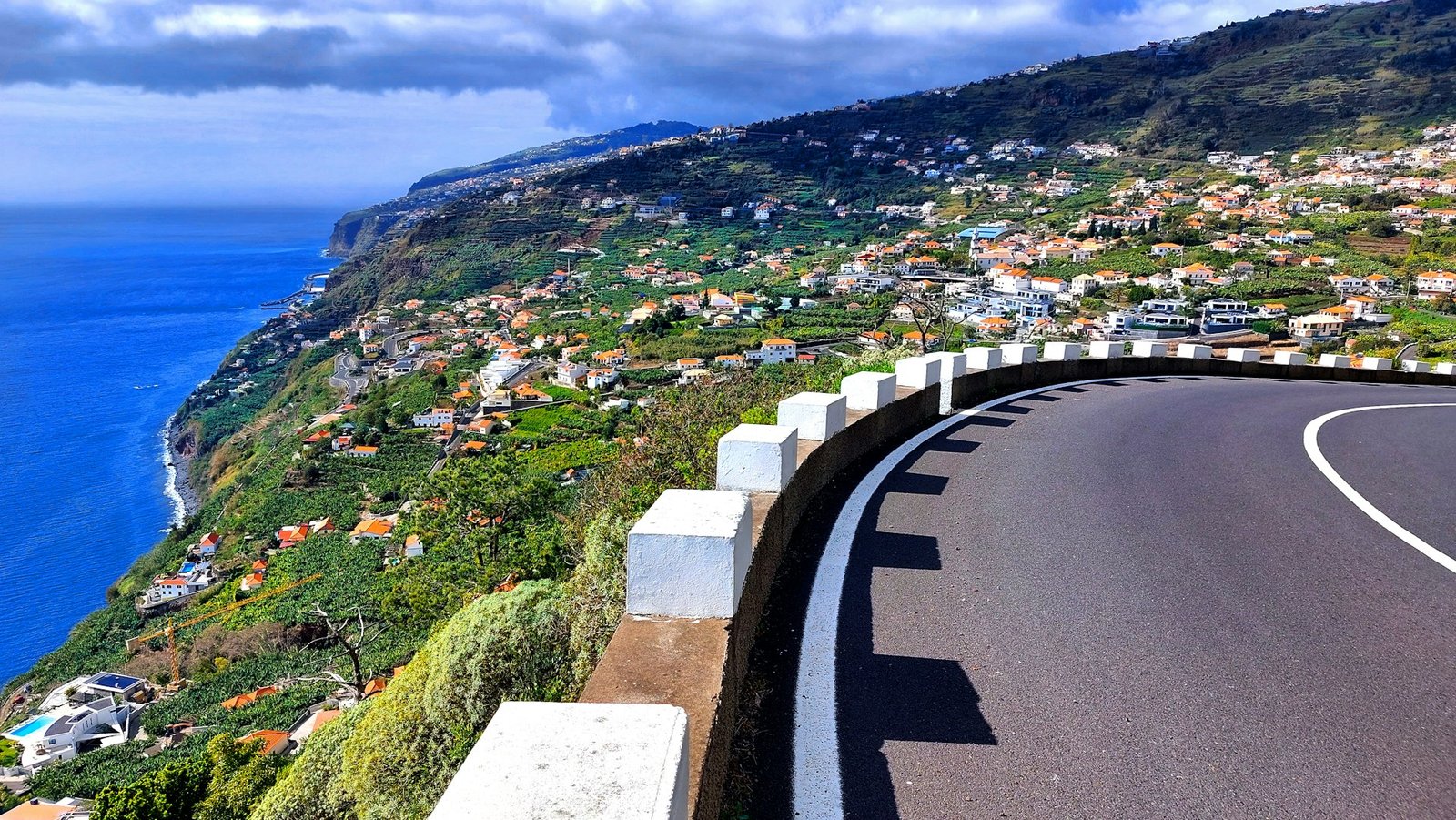
    Terraced hillsides and banana plantations above the ocean at Arco da Calheta, Madeira

    9. Swim in the Lava Pools of Porto Moniz

    In the far northwest, Porto Moniz is famous for its natural swimming pools, formed by volcanic lava rock and filled by the waves of the Atlantic. Swimming here while the ocean crashes against the rocks around you is an unforgettable experience.

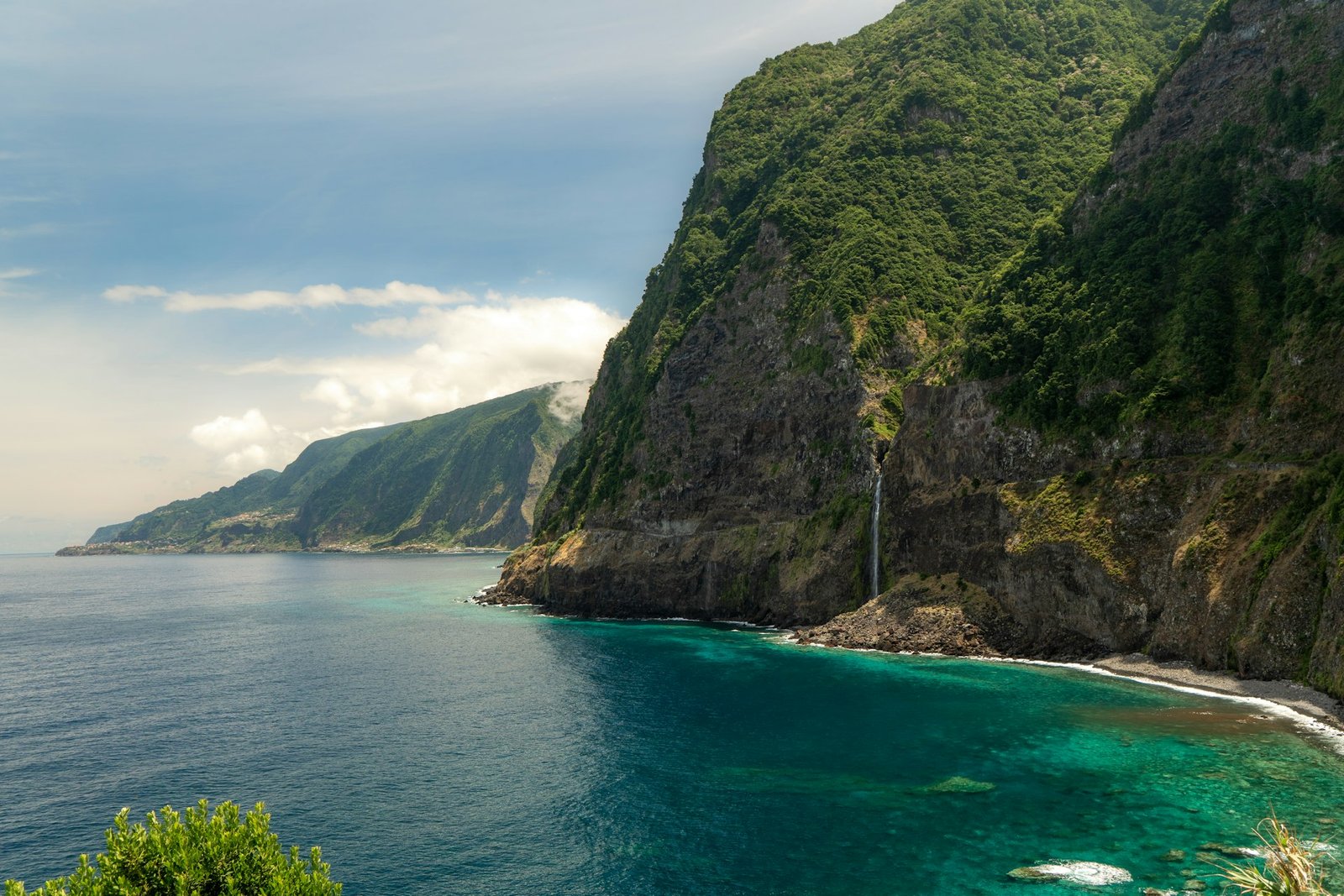
    On the way, stop at Seixal, with its black sand beach framed by green mountains, and at the Véu da Noiva viewpoint, where a waterfall drops from the cliffs straight into the sea.

    Green mountains rising above the Atlantic Ocean on the coast of Madeira

    10. Go Whale and Dolphin Watching

    The deep waters around Madeira are home to many species of dolphins and whales, including sperm whales, pilot whales and, in some seasons, blue whales. Sightings are possible all year.

    Join a whale-watching boat trip from Funchal or Calheta. Choose a responsible operator that keeps a safe distance and doesn’t chase the animals. Trips usually last two to three hours.

    Booking Tips

    A few things are worth sorting out before you arrive:

    • Airport transfer: if you’re not renting a car at the airport, book an airport transfer in advance with a service like Kiwitaxi, so a driver is waiting for you with a fixed price
    • eSIM: if you’re coming from outside the EU, install an eSIM from a provider like Yesim before you fly, so you can use maps, weather apps and trail information as soon as you land
    • Hiking tours: popular options include a Pico do Areeiro to Pico Ruivo Guided Hike, a Levada do Caldeirão Verde Walking Tour and a Sunrise Tour at Pico do Areeiro. You can compare and book most of them on Klook
    • Island tours: look for a West Madeira Jeep Tour with Porto Moniz and Fanal and an East Madeira Tour with Santana and Ponta de São Lourenço
    • On the water: book a Whale and Dolphin Watching Tour from Funchal in advance in the busy season

    Booking the big experiences online usually costs about the same as booking locally, and you’ll know exactly what’s included.

    Where to Stay on a Budget

    Madeira has good options for every budget:

    • Hostels: a few good hostels in Funchal, perfect for solo travellers
    • Guesthouses and apartments: great value, often with a kitchen and a sea view
    • Rural houses: traditional stone cottages in the countryside, perfect for hikers
    • Hotels: from simple city hotels to resorts with pools on the cliffs of Funchal

    Book early for Christmas, New Year’s Eve and the summer months, when prices rise.

    Eating on a Budget

    Madeiran food is simple, fresh and delicious:

    • Espetada: beef skewers grilled over an open fire, traditionally on bay leaf sticks
    • Bolo do caco: a round flatbread served warm with garlic butter
    • Espada with banana: black scabbard fish, a deep-sea fish, served with fried banana
    • Lapas: grilled limpets with garlic butter and lemon
    • Poncha and Madeira wine: the island’s famous drinks

    Local restaurants and snack bars offer good-value lunch menus. Buy fruit, bread and cheese at the market and supermarkets for picnic lunches on your hikes.

    What It Really Costs

    Here’s a realistic daily budget per person for a comfortable mid-range trip, not counting flights.

    • Accommodation: €40 to €90 per person, sharing an apartment or mid-range hotel room
    • Food: €30 to €50 a day, mixing picnic lunches, snack bars and restaurant dinners
    • Transport: €20 to €40 a day per person, including a rental car shared by two and fuel
    • Activities: budget for the highlights separately: the cable car and toboggan, trail fees, a whale-watching trip and a guided hike or jeep tour

    That works out to around €130 to €200 per person per day. Staying in a hostel, using buses and joining free hikes can bring that down noticeably.

    A Sample 7-Day Itinerary

    Day 1: Arrive in Funchal and explore the old town and the seafront.

    Day 2: The market, the cable car to Monte and the toboggan ride.

    Day 3: Sunrise at Pico do Areeiro and the hike to Pico Ruivo.

    Day 4: The Levada do Caldeirão Verde and the village of Santana.

    Day 5: Ponta de São Lourenço in the morning, whale watching in the afternoon.

    Day 6: The west coast, Fanal Forest, Seixal and the pools of Porto Moniz.

    Day 7: Câmara de Lobos and Cabo Girão, then fly home.

    Practical Tips

    • Pack for all weather: it can be sunny in Funchal and cold and rainy in the mountains on the same day
    • Wear good hiking shoes, as many trails are steep, rocky and slippery
    • Check trail conditions before you go, as some trails close after storms or rockfalls
    • Bring a torch for the tunnels on the levadas and mountain trails
    • Start early on the popular hikes to avoid the crowds and the clouds
    • Drive carefully on the steep mountain roads and use low gears going downhill

    Final Thoughts

    Madeira is a dream for nature lovers. Hike above the clouds from Pico do Areeiro, follow the levadas through ancient forests, swim in lava pools on the wild north coast, ride a toboggan down the streets of Funchal and toast the sunset with a glass of poncha.

    Rent a car, pack your hiking shoes and give yourself at least a week. Madeira will surprise you at every turn.

    Prices checked in October 2026. Costs and opening times change, so always confirm before you book.
  • Mallorca Travel Guide: The Best Coves, Mountain Villages and Things to Do

    Mallorca Travel Guide: The Best Coves, Mountain Villages and Things to Do

    Tiny coves of turquoise water hidden between pine-covered cliffs, stone villages in the mountains, a vintage wooden train rattling through orange groves, a lighthouse at the end of a wild peninsula and a golden Gothic cathedral overlooking the sea: Mallorca is so much more than its party reputation.

    The largest of Spain’s Balearic Islands is one of the most visited places in the Mediterranean, and it’s easy to see why. Its coastline is lined with dozens of beautiful beaches and calas, small coves with clear water. Its mountain range, the Serra de Tramuntana, is a UNESCO World Heritage Site, and its capital, Palma, is one of the most stylish cities in Spain.

    Mallorca can be expensive in high summer, but it’s easy to visit on a budget. Flights from all over Europe are cheap, the best beaches are free, and with a rental car, a family-run guesthouse and lunch menus in village restaurants, you can enjoy the island without overspending. This guide shows you how.

    Mallorca at a Glance

    • Where: in the Mediterranean Sea, off the east coast of Spain
    • Main airport: Palma de Mallorca (PMI), with direct flights from all over Europe
    • Currency: euro (EUR)
    • Entry: Mallorca is part of Spain and the Schengen Area. Many non-EU visitors can stay up to 90 days without a visa, but will need to register online with ETIAS once it starts. Check the current rules for your passport
    • Languages: Spanish and Catalan. English and German are widely spoken in tourist areas
    • Best time: May to June and September to October
    • Budget: around $80 to $120 a day for budget travellers, $150 to $250 for a comfortable mid-range trip

    When to Go

    May, June, September and early October are the best months to visit. The weather is warm and sunny, the sea is pleasant for swimming from June, and the beaches and roads are much quieter than in high summer. Prices are also lower.

    July and August are hot and very busy. The most famous coves are packed by mid-morning, and hotel prices are at their highest.

    Spring, from March to May, is perfect for hiking, cycling and seeing the almond blossoms, which turn the countryside white and pink in February. Winter is mild and quiet, but many beach hotels close.

    Our tip: visit in September, when the sea is at its warmest and the summer crowds have gone.

    Where to Stay

    Mallorca is about 100 km wide, and you can reach most places within an hour or so by car. Many visitors split their stay between two bases.

    Palma and the West

    Palma is a great base for city life, culture and day trips into the mountains. The villages of the Serra de Tramuntana, like Sóller and Valldemossa, are perfect for a quieter, more traditional stay.

    The East and South

    The east coast, around Cala d’Or, Santanyí and Cala Ratjada, has the most beautiful coves. Small towns inland, such as Santanyí, are often cheaper and more charming than the beach resorts.

    Getting Around

    The best way to explore Mallorca is with a rental car. Book early for summer, choose a small car for the narrow mountain roads and village streets, and be prepared to pay for parking at popular beaches.

    There’s also a good bus network called TIB, which connects Palma with most towns and beaches, and the historic Sóller train. In summer, private cars are restricted on the road to Cap de Formentor during the day, so you’ll need to take the bus or go early in the morning.

    Things to Do in Mallorca

    Here are the experiences we think are worth your time and money.

    1. Swim in the Coves of the Southeast

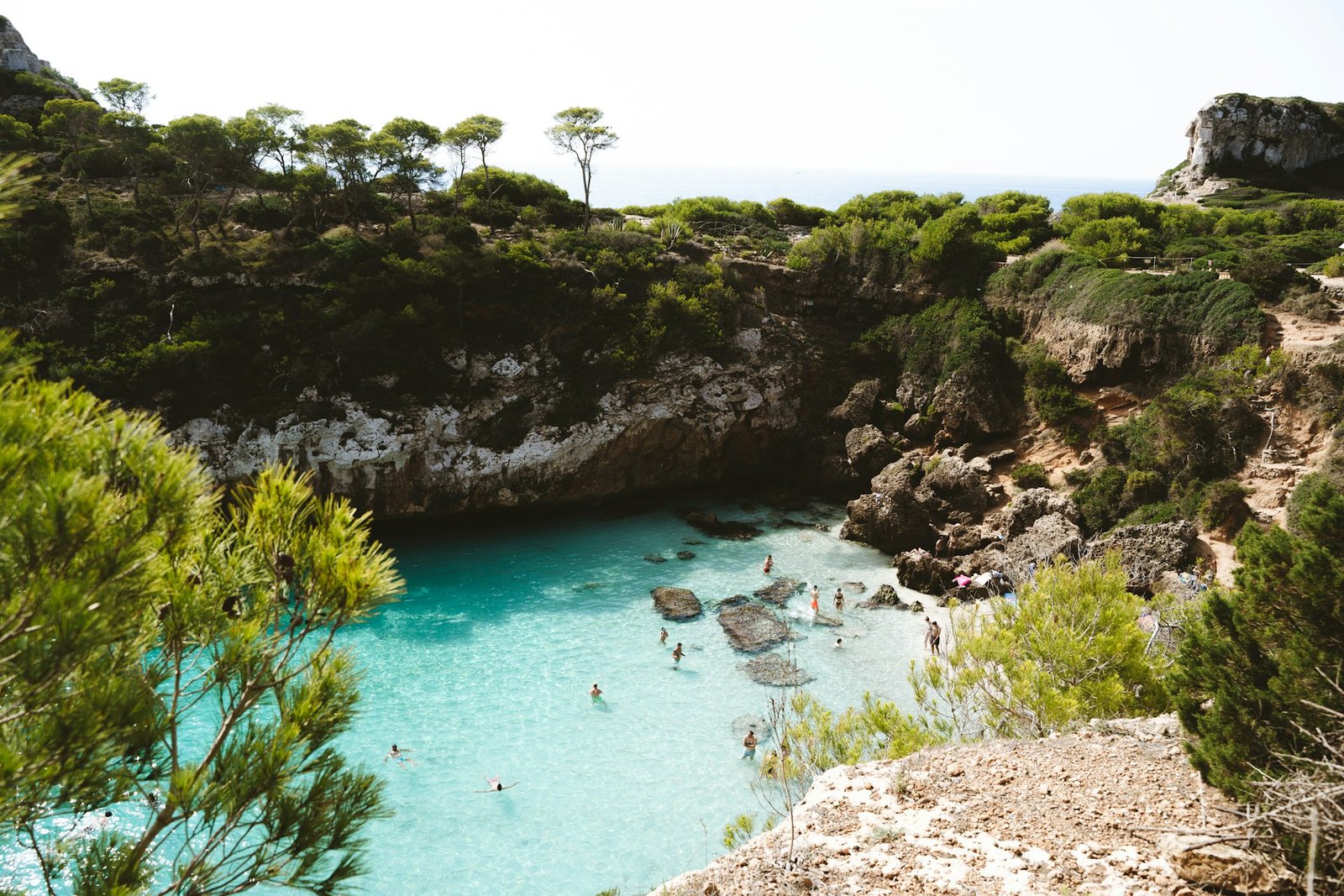
    Mallorca’s southeast coast is famous for its calas, small, sheltered coves with white sand, turquoise water and pine trees growing right down to the rocks. They’re some of the most beautiful swimming spots in the Mediterranean.

    The most famous is Caló des Moro, a tiny cove reached by a short walk from the parking area. It’s very popular, so come early in the morning or late in the afternoon. Nearby, Cala s’Almunia, Cala Llombards and the protected beaches of Mondragó Natural Park are just as beautiful. Bring snorkelling gear to explore the rocks.

    A turquoise cove surrounded by pine trees on a sunny day, Mallorca, Spain

    2. Explore Palma

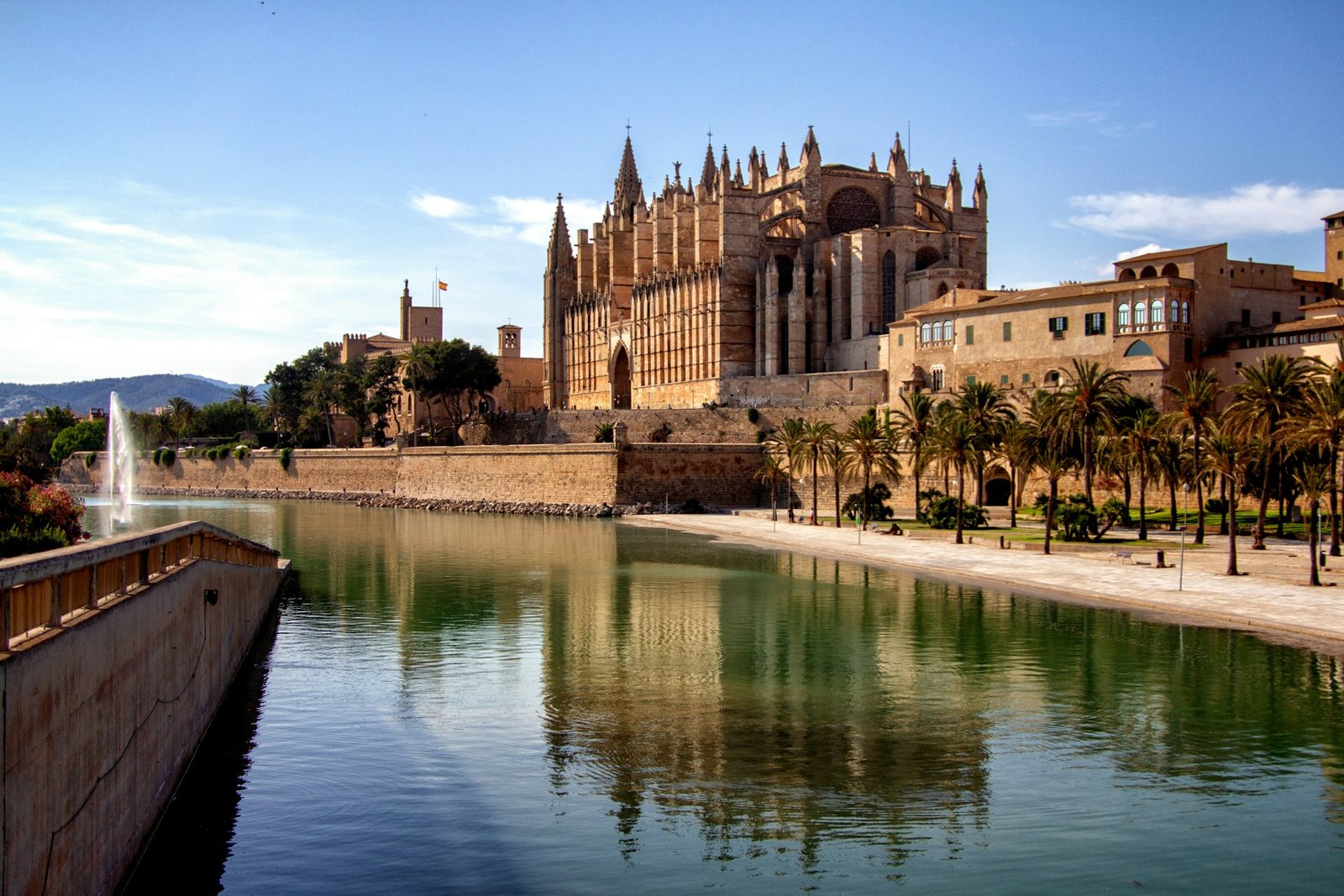
    Palma is a lively, elegant city with a beautiful old town. Its landmark is the huge Gothic Cathedral of Santa Maria, known as La Seu, which rises above the sea wall. Inside, look for the colourful light from its giant rose window and the works by Antoni Gaudí.

    Wander through the narrow streets of the old town, visit the Almudaina Palace and the circular Bellver Castle on a hill above the city, and eat tapas at the Mercat de l’Olivar food market. In the evening, the bars of the Santa Catalina neighbourhood are perfect for a drink.

    The Gothic Cathedral of Santa Maria in Palma de Mallorca, Spain

    3. Drive to Cap de Formentor

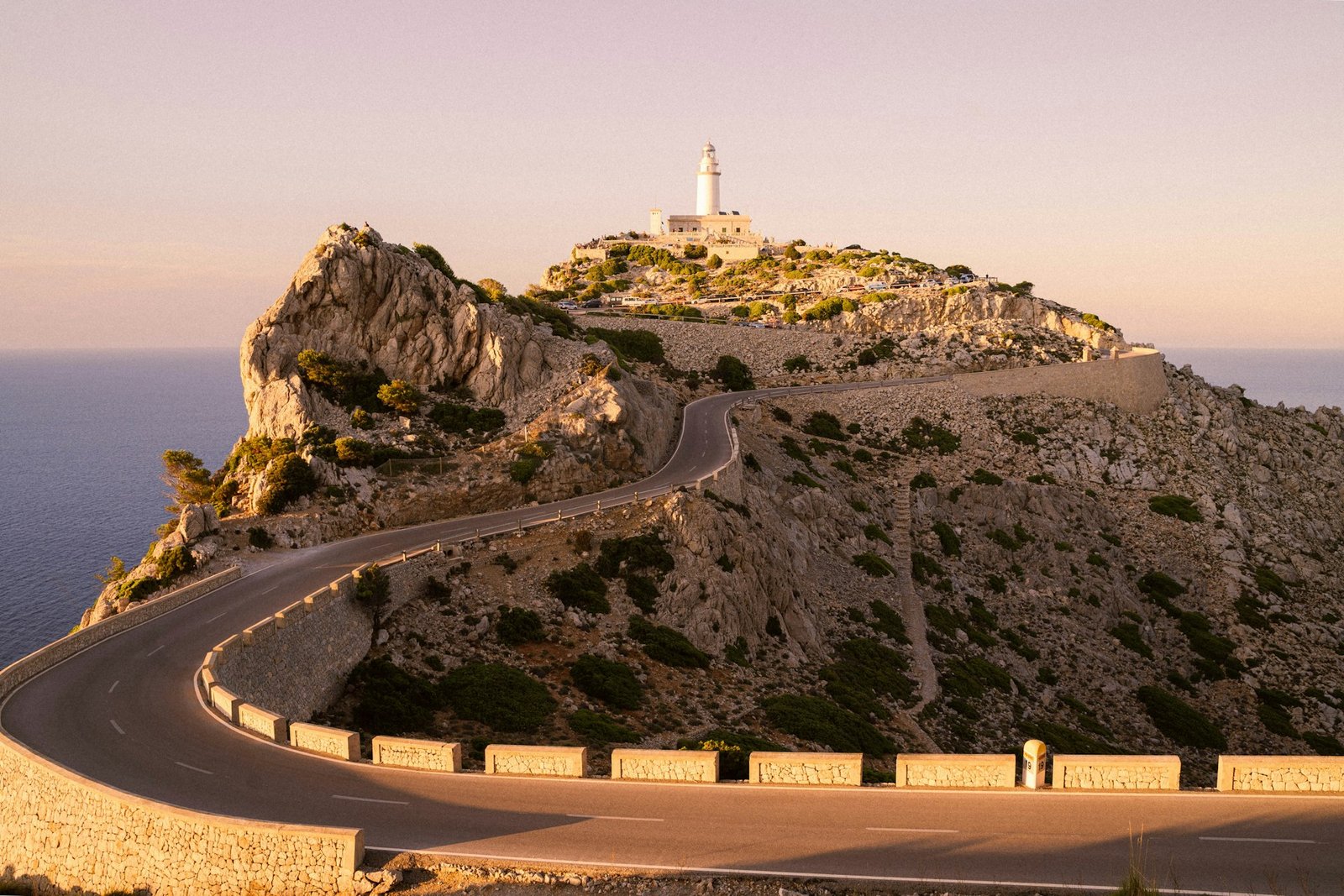
    The Formentor peninsula in the far north is Mallorca’s most dramatic coastline. A narrow road winds along steep cliffs to the Formentor Lighthouse at the very tip of the island, with spectacular views of the sea on both sides.

    Stop at the Mirador Es Colomer viewpoint and swim at the beautiful Formentor Beach, lined with pine trees. In summer, private cars are restricted during the day, so take the bus from Port de Pollença or drive early in the morning. The road is also popular with cyclists.

    The Formentor Lighthouse on the cliffs of Cap de Formentor, Mallorca

    4. Visit Valldemossa and the Mountain Villages

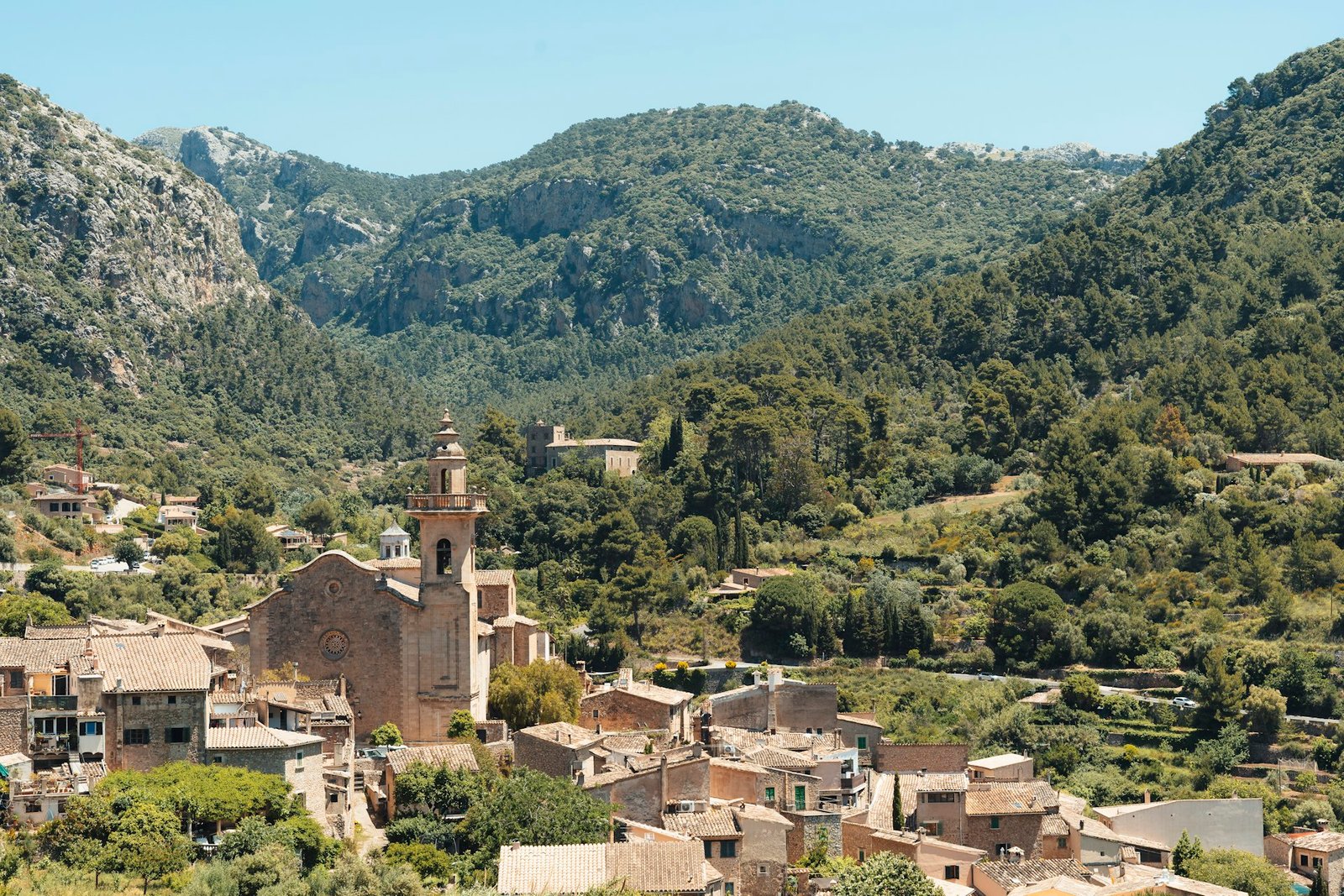
    The Serra de Tramuntana is a range of rugged mountains along the northwest coast, dotted with olive groves, stone terraces and pretty villages. It was named a UNESCO World Heritage Site in 2011.

    Valldemossa is the most famous village, with honey-coloured stone houses, flower-filled lanes and the Royal Carthusian Monastery, where the composer Frédéric Chopin spent a winter. Continue along the coast road to Deià, a beautiful village loved by artists, and the tiny harbour of Port de Valldemossa.

    The village of Valldemossa between green mountains in the Serra de Tramuntana, Mallorca

    5. Ride the Vintage Train to Sóller

    One of the most charming ways to see the mountains is on the Sóller train, a wooden vintage train that has run between Palma and Sóller since 1912. The journey takes about an hour, through tunnels, past orange and lemon groves, with views over the valley.

    In Sóller, take the old tram down to Port de Sóller, a sheltered bay with a promenade and seafood restaurants. Tickets are on the pricier side, but it’s a unique experience. Try a fresh orange juice from the local oranges.

    6. Hike in the Serra de Tramuntana

    The Tramuntana is a paradise for hikers. The long-distance GR221, also called the Dry Stone Route, crosses the mountains along old paths used by charcoal makers and farmers, with mountain refuges for overnight stays.

    For a day hike, try the walk from Deià to Sóller, along the coast and through olive groves, or the spectacular gorge of the Torrent de Pareis, which ends at the beach of Sa Calobra. The gorge is a demanding hike, so go with a guide if you’re not experienced, and never hike it after rain.

    7. Relax at Cala Agulla

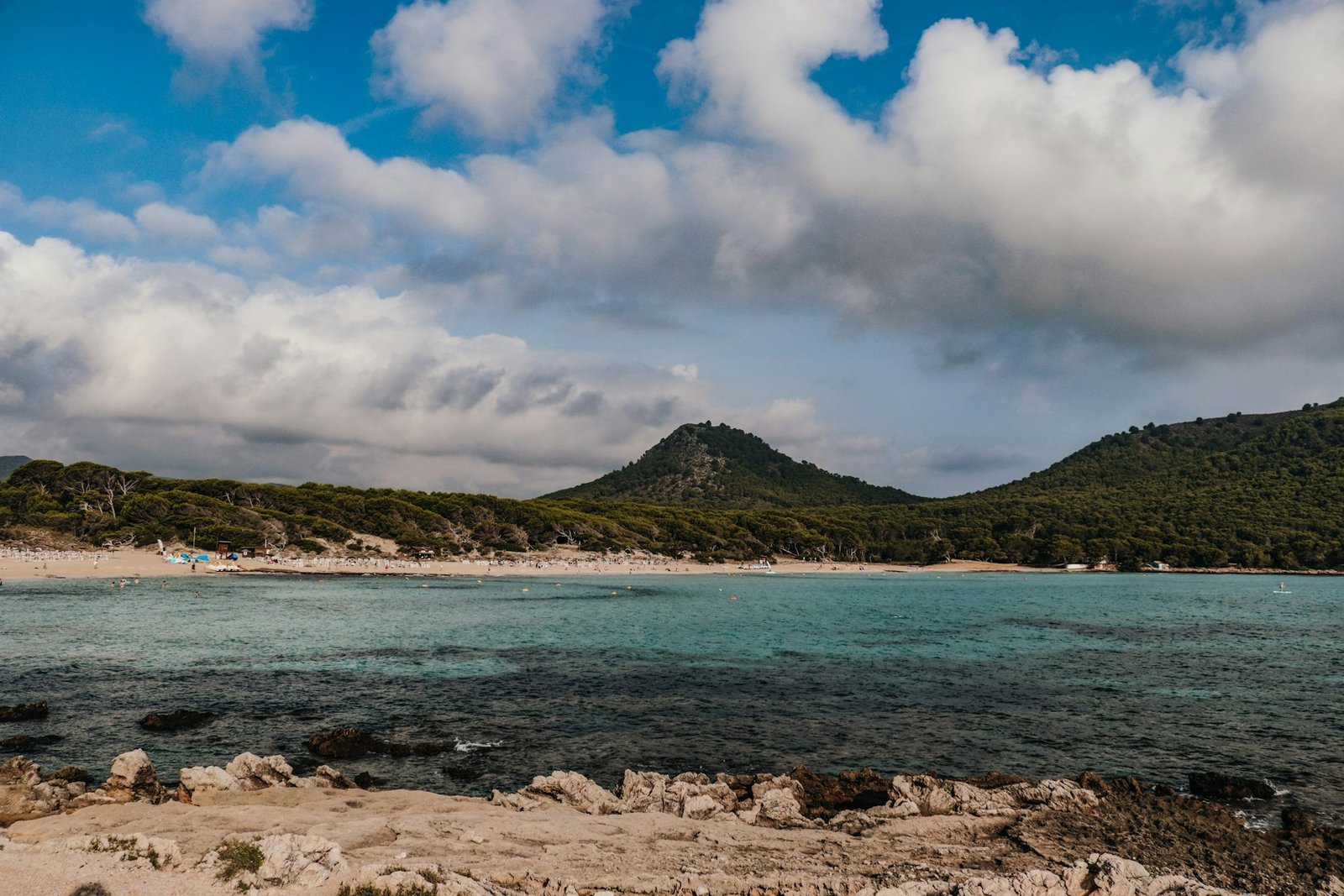
    In the northeast, near the town of Cala Ratjada, Cala Agulla is one of Mallorca’s most beautiful beaches. Fine white sand, clear turquoise water and green hills behind it make it look almost tropical.

    The beach is part of a protected area, with pine forests and walking trails along the coast. Walk to the smaller, quieter coves of Cala Moltó and Cala Mesquida nearby. Arrive early in summer, as parking fills up fast.

    Turquoise water at Cala Agulla beach with mountains in the background, Mallorca

    8. Take a Boat Trip Along the Coast

    Many of Mallorca’s most beautiful coves can only be reached from the sea. A boat trip or a day on a sailing boat is a great way to discover hidden beaches, sea caves and clear water for snorkelling.

    Boat trips leave from most harbours, including Port de Sóller, Port de Pollença and Cala d’Or. For more freedom, rent a small motorboat, some of which don’t need a licence. A sunset sailing trip from Palma Bay is also a highlight.

    A sailboat floating in clear water near a rocky shore, Mallorca, Spain

    9. Explore the Caves of Drach

    Near Porto Cristo on the east coast, the Cuevas del Drach are a series of huge caves full of stalactites and stalagmites. At the end of the tour, you’ll sit beside Lake Martel, one of the largest underground lakes in the world.

    The highlight is a short classical music concert, played by musicians in illuminated boats floating across the lake. Tickets are reasonably priced, and it’s a great option for a cloudy day. Book in advance in summer.

    10. Discover Es Trenc Beach

    In the south, Es Trenc is one of the last long, wild beaches on the island. Its soft white sand and shallow turquoise water stretch for several kilometres, backed by dunes and salt flats where flamingos sometimes gather.

    There are no hotels on the beach, just a few simple beach bars. Bring water, food and an umbrella, as there’s little shade. Nearby, the Salines de Llevant salt flats produce the famous Flor de Sal, a good souvenir to take home.

    Where to Stay on a Budget

    Mallorca has options for every budget:

    • Fincas and agroturismos: country houses and farm stays, often with a pool and breakfast with local produce
    • Hostels and guesthouses: good value in Palma and some smaller towns
    • Apartments: a great choice for families and longer stays, with a kitchen to save money on food
    • Village hotels: charming small hotels in Sóller, Valldemossa and Santanyí

    Book early for July and August. Note that a small tourist tax is added per person and night.

    Eating on a Budget

    Mallorcan food is simple, rustic and delicious:

    • Pa amb oli: bread with olive oil, tomato, cheese and ham, a classic lunch
    • Ensaïmada: a light, spiral-shaped pastry dusted with sugar, perfect for breakfast
    • Sobrassada: a soft, spicy sausage spread on bread
    • Tumbet: layers of potato, aubergine and peppers baked in tomato sauce
    • Fresh seafood: grilled fish and rice dishes in the harbour towns

    Look for the menú del día, a fixed-price lunch menu offered by many restaurants on weekdays, and shop at local markets for picnic food.

    What It Really Costs

    Here’s a realistic daily budget per person for a comfortable mid-range trip in June or September, not counting flights.

    • Accommodation: $50 to $110 per person, sharing a double room in a guesthouse, finca or apartment
    • Food: $35 to $60 a day, mixing picnics, lunch menus and restaurant dinners
    • Transport: $20 to $40 a day per person, including a rental car shared by two, fuel and parking
    • Activities: budget for the highlights separately: the Sóller train, a boat trip, the Caves of Drach and entry to Palma Cathedral

    That works out to around $150 to $250 per person per day. Avoiding July and August, staying inland and eating lunch menus can bring that down noticeably.

    A Sample 7-Day Itinerary

    Day 1: Arrive in Palma and explore the cathedral and the old town.

    Day 2: Vintage train to Sóller and the tram to Port de Sóller.

    Day 3: Valldemossa and Deià, then a coastal hike in the Tramuntana.

    Day 4: Drive to Cap de Formentor early in the morning and swim at Formentor Beach.

    Day 5: Cala Agulla and the coves around Cala Ratjada.

    Day 6: The Caves of Drach, then Caló des Moro and the southeast coves.

    Day 7: A morning at Es Trenc, then fly home from Palma.

    Practical Tips

    • Arrive early at popular coves and viewpoints to find parking and space
    • Rent a small car, as roads in the mountains and villages are narrow
    • Check the Formentor road rules before you go in summer
    • Bring water shoes for rocky coves and snorkelling
    • Book the Sóller train and Caves of Drach in advance in high season
    • Respect the coves: take your rubbish with you and don’t leave anything on the beach

    Booking Tips

    • Airport transfer: if you don’t rent a car at the airport, book an airport transfer with Kiwitaxi from Palma airport to your hotel anywhere on the island, with a fixed price and a driver waiting for you
    • eSIM: if you’re coming from outside the EU, install a Yesim eSIM before you fly, so you have data for maps, bus times and tour bookings in Mallorca from the moment you land
    • Tours: popular options include tickets for the Caves of Drach, the vintage train to Sóller, a boat trip along the coast and a guided hike in the Serra de Tramuntana. You can compare and book most of them on Klook

    Final Thoughts

    Mallorca is one of the most beautiful islands in Europe. Swim in the turquoise coves of the southeast, explore the old streets of Palma, ride the vintage train to Sóller, wander through Valldemossa and watch the sunset from the cliffs of Formentor.

    Travel in spring or autumn, rent a car and take your time. Away from the crowds, Mallorca is a peaceful island of mountains, villages and hidden beaches waiting to be discovered.

    Prices checked in October 2026. Costs and opening times change, so always confirm before you book.
  • Sardinia Travel Guide: The Best Beaches, Boat Trips and Things to Do

    Sardinia Travel Guide: The Best Beaches, Boat Trips and Things to Do

    Water so clear that boats seem to float in the air, white pebble coves hidden below limestone cliffs, pink granite rocks, colourful fishing towns and long lunches of fresh pasta and local wine: Sardinia is Italy’s island paradise.

    The second-largest island in the Mediterranean has some of the most beautiful beaches in Europe, many of them looking more like the Caribbean than Italy. But Sardinia is much more than beaches. Its wild interior is full of mountains, gorges and mysterious stone towers built more than 3,000 years ago, and its culture, language and food are proudly its own.

    Sardinia has a reputation for luxury, thanks to the yachts and celebrity villas of the Costa Smeralda. But away from that small corner, it’s surprisingly affordable. With a rental car, a few nights in family-run B&Bs and picnics on the beach, you can enjoy the island on a real budget. This guide shows you how.

    Sardinia at a Glance

    • Where: in the Mediterranean Sea, west of mainland Italy and south of Corsica
    • Main airports: Cagliari (CAG) in the south, Olbia (OLB) in the northeast and Alghero (AHO) in the northwest
    • Currency: euro (EUR)
    • Entry: Sardinia is part of Italy and the Schengen Area. Many non-EU visitors can stay up to 90 days without a visa, but will need to register online with ETIAS once it starts. Check the current rules for your passport
    • Languages: Italian and Sardinian. English is spoken in tourist areas
    • Best time: June and September
    • Budget: around $80 to $120 a day for budget travellers, $150 to $250 for a comfortable mid-range trip

    When to Go

    June and September are the best months to visit. The sea is warm, the weather is sunny and stable, and the beaches are much quieter than in high summer. Prices for hotels and ferries are also lower.

    July and August are hot and very busy, especially in August, when many Italians are on holiday. Prices are at their highest, and the most famous beaches fill up early in the morning.

    May and October are great for hiking and sightseeing. The sea is cooler, but on sunny days swimming is still possible. From November to April, many beach hotels, restaurants and boat trips close.

    Our tip: visit in the first half of September for warm water, sunny days and fewer crowds.

    Where to Stay

    Sardinia is big, and driving from one end to the other takes about four hours. For a one-week trip, choose one or two bases.

    The East Coast

    The Gulf of Orosei on the east coast has the most spectacular coves, many of them reachable only by boat or on foot. Cala Gonone and Santa Maria Navarrese are the best bases for boat trips, with plenty of mid-range hotels and B&Bs.

    The North and South

    In the northeast, Olbia and the small town of Porto San Paolo are good value bases for the Costa Smeralda and the island of Tavolara. In the south, Cagliari, the capital, combines city life with nearby beaches and easy flights.

    Getting Around

    The best way to explore Sardinia is with a rental car. Public transport is limited, and many beaches and sights are only reachable by car. The roads are generally good, but mountain roads can be narrow and winding.

    You can also bring your own car on an overnight ferry from Genoa, Livorno or Civitavecchia on the Italian mainland. In summer, parking at popular beaches is often paid, and some beaches limit the number of daily visitors, so check in advance.

    Things to Do in Sardinia

    Here are the experiences we think are worth your time and money.

    1. Take a Boat Trip Along the Gulf of Orosei

    The Gulf of Orosei is one of the most beautiful stretches of coast in the Mediterranean. For about 40 km, white limestone cliffs drop into the sea, with tiny coves, sea caves and natural arches along the way. Most of the coast has no roads, so the best way to see it is from the water.

    Boat trips leave from Cala Gonone and Santa Maria Navarrese every morning in summer and stop at famous beaches like Cala Mariolu, with its white pebbles and impossibly blue water, and Cala Biriola. For more freedom, rent a small motorboat, no licence needed for the smaller ones, and explore the coves at your own pace.

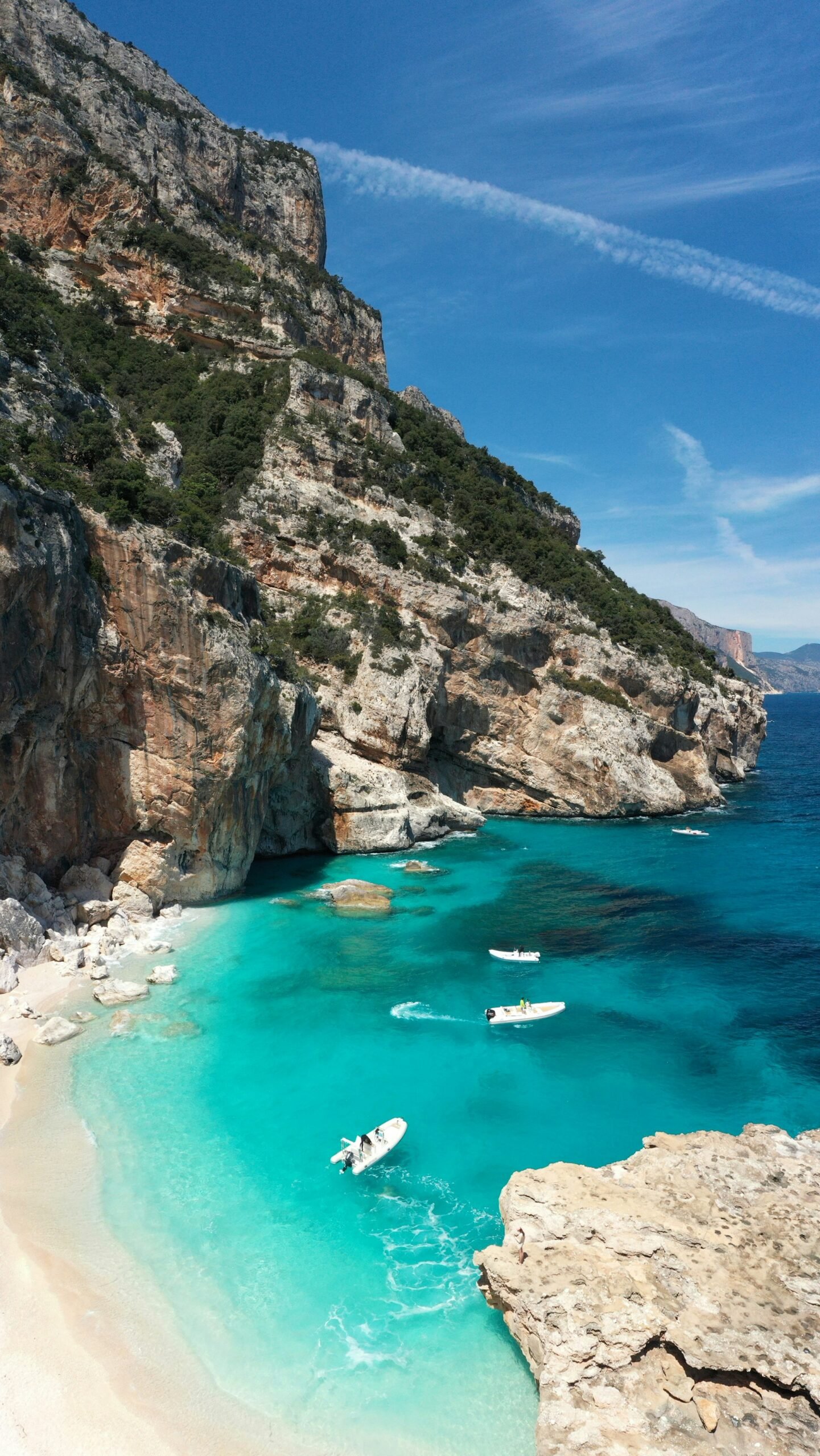
    Boats anchored in turquoise water at Cala Luna in the Gulf of Orosei, Sardinia

    2. Hike to Cala Goloritzé

    Cala Goloritzé is one of the most famous beaches in Italy, a small cove of white pebbles below a 140-metre limestone spire, with water in every shade of turquoise. It has been named one of the most beautiful beaches in the world.

    Boats aren’t allowed to land here, so the only way in is a hike of about one and a half hours each way from the Golgo plateau near Baunei. In summer, there’s a small entry fee and the number of daily visitors is limited, so book online in advance. Bring plenty of water and good shoes, as the walk back up is hot and steep.

    3. Explore the Caves of Cala Luna

    Cala Luna is a crescent of soft sand between two cliffs, backed by a small river and pink oleander bushes. At the northern end of the beach, huge caves open into the rock, offering shade on hot afternoons and a magical light at sunset.

    Reach it on a boat trip from Cala Gonone or on a hiking trail along the coast, about two hours each way. If you arrive by boat, stay until the last departure in the afternoon, when the day crowds have gone.

    Sunset seen from a cave on the beach of Cala Luna, Sardinia

    4. Swim at Cala dei Gabbiani

    Further south on the same coast, Cala dei Gabbiani is one of the most beautiful and quiet beaches in Sardinia. Green cliffs covered in Mediterranean scrub rise steeply behind a pebble beach, and the water is so clear you can see every stone on the bottom.

    You can reach it by boat from Santa Maria Navarrese or on a challenging hike. Experienced hikers can also tackle sections of the Selvaggio Blu, often called the toughest trek in Italy, which follows this wild coastline over several days.

    Green cliffs above the clear water of Cala dei Gabbiani, Sardinia, Italy

    5. Visit La Pelosa Beach

    In the far northwest, near the village of Stintino, La Pelosa is often compared to the Caribbean. Shallow turquoise water stretches far out over white sand, with an old watchtower on a small island just offshore.

    To protect the beach, visitors in summer need to book online and pay a small fee, and the number of people is limited. Towels must be placed on a mat, not directly on the sand. Come early in the morning or late in the afternoon for the best light and fewer people.

    6. Sail the Maddalena Archipelago

    Off the northeast coast, the Maddalena Archipelago is a national park of granite islands with pink rocks, white beaches and crystal-clear water. Highlights include the Cala Coticcio beach and the famous pink sand of Spiaggia Rosa on Budelli, which you can admire from the water but not walk on.

    Full-day boat trips leave from Palau and La Maddalena and are one of the best-value activities in the north. Nearby, drive along the Costa Smeralda to see the glamorous resort of Porto Cervo and the beautiful beaches around it.

    7. Boat Trip to Tavolara

    Rising almost straight out of the sea near Olbia, Isola di Tavolara is a huge limestone island with sheer cliffs and beaches of white sand. The waters around it are a protected marine area, perfect for snorkelling.

    Small boats leave from Porto San Paolo for the short ride to the island’s beach, Spalmatore di Terra. Spend the day swimming, then have lunch at one of the two simple restaurants on the island. The view of the island from the mainland at sunset is unforgettable.

    Turquoise water and trees near the island of Tavolara, Sardinia

    8. Discover Cagliari

    Cagliari, Sardinia’s capital, is a lively city built on hills above a large bay. Climb up to the old Castello district, with its narrow lanes, cathedral and views over the city, and walk along the grand terrace of the Bastione di Saint Remy.

    Spend an afternoon at Poetto, the city’s long sandy beach, or watch the pink flamingos in the lagoons of the Molentargius park on the edge of the city. In the evening, join the locals for an aperitivo in the Marina district.

    People walking under the arch of the Bastione di Saint Remy in Cagliari, Sardinia

    9. Wander Through Carloforte

    On the small island of San Pietro, off the southwest coast, the fishing town of Carloforte is one of the prettiest towns in Sardinia. Its colourful houses, palm-lined waterfront and lanes full of flowers have a charm all their own.

    Carloforte was founded by settlers from Liguria in the 18th century, and people here still speak an old Genoese dialect. Take the short ferry from Portovesme or Calasetta, rent a scooter to explore the island’s cliffs and coves, and try the local tuna, the speciality of the island.

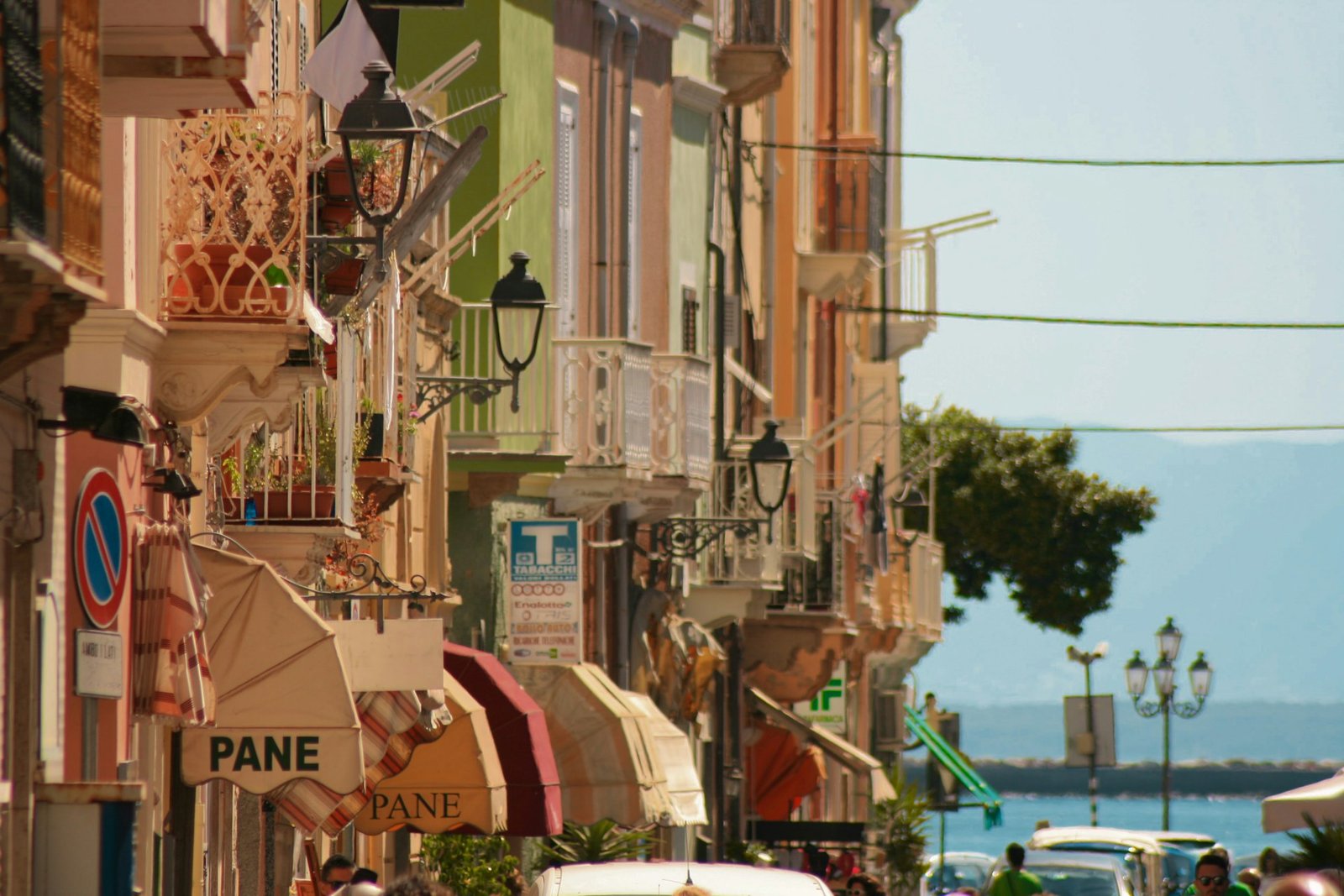
    Colourful houses along a street in Carloforte on San Pietro island, Sardinia

    10. See the Ancient Nuraghi

    Sardinia is dotted with more than 7,000 nuraghi, mysterious stone towers built by the island’s Bronze Age people more than 3,000 years ago. Nobody knows exactly what they were used for, but they’re unique to Sardinia.

    The most impressive is Su Nuraxi in Barumini, a UNESCO World Heritage Site with a central tower and the remains of a whole village around it. Guided tours take you inside the tower through narrow stone passages. It’s about an hour’s drive from Cagliari and makes a great day trip combined with the green hills of the interior.

    Where to Stay on a Budget

    Sardinia has good-value options away from the luxury resorts:

    • B&Bs: family-run B&Bs offer clean rooms, a warm welcome and often a homemade breakfast
    • Agriturismi: farm stays in the countryside, with rooms and delicious dinners made from their own produce
    • Apartments: a great choice for families and longer stays, with a kitchen to save money on food
    • Campsites: found near many beaches, some with bungalows and mobile homes

    Book early for July and August. Staying a little inland, rather than right on the beach, is often much cheaper.

    Eating on a Budget

    Sardinian food is hearty, simple and delicious:

    • Culurgiones: handmade pasta parcels filled with potato, pecorino and mint
    • Malloreddus: small ridged pasta, often served with sausage and tomato sauce
    • Pane carasau: thin, crispy flatbread, perfect for picnics
    • Seadas: fried pastry filled with cheese and covered in honey, the classic dessert
    • Local wine and mirto: try a glass of Cannonau red wine and a shot of mirto, a myrtle-berry liqueur

    Shop at local supermarkets and bakeries for picnic food, and eat your main meal at lunchtime, when many restaurants offer a fixed-price menu.

    What It Really Costs

    Here’s a realistic daily budget per person for a comfortable mid-range trip in June or September, not counting flights.

    • Accommodation: $50 to $110 per person, sharing a double room in a B&B or agriturismo
    • Food: $35 to $60 a day, mixing picnics, pizza and restaurant dinners
    • Transport: $30 to $50 a day per person, including a rental car shared by two, fuel and parking
    • Activities: budget for the highlights separately: boat trips, beach fees and bookings, a rented motorboat and entry to Su Nuraxi

    That works out to around $150 to $250 per person per day. Avoiding August, staying in agriturismi and eating lunch menus can bring that down noticeably.

    A Sample 8-Day Itinerary

    Day 1: Arrive in Olbia and watch the sunset over Tavolara from Porto San Paolo.

    Day 2: Boat trip to Tavolara for swimming and snorkelling.

    Day 3: Full-day boat trip to the Maddalena Archipelago.

    Day 4: Drive south to Cala Gonone.

    Day 5: Boat trip along the Gulf of Orosei, with Cala Mariolu and Cala Luna.

    Day 6: Hike to Cala Goloritzé.

    Day 7: Drive to Cagliari, with a stop at Su Nuraxi in Barumini.

    Day 8: Explore Cagliari and Poetto beach, then fly home.

    Add two days for Carloforte and the southwest coast if you have more time.

    Practical Tips

    • Book beach access for La Pelosa and Cala Goloritzé in advance in summer
    • Don’t take sand, pebbles or shells from the beaches: it’s illegal in Sardinia and can bring heavy fines
    • Arrive early at popular beaches for parking and space
    • Bring water shoes for pebble beaches and rocky coves
    • Check the wind: when the strong mistral blows from the northwest, choose beaches on the east coast
    • Respect the coast: take your rubbish with you and don’t anchor on the sea grass

    Booking Tips

    • Airport transfer: if you don’t rent a car at the airport, book an airport transfer with Kiwitaxi from Olbia, Cagliari or Alghero airport to your hotel or the ferry port, with a fixed price and a driver waiting for you
    • eSIM: if you’re coming from outside the EU, install a Yesim eSIM before you fly, so you have data for maps, boat tickets and beach bookings in Sardinia from the moment you land
    • Tours: popular options include a Gulf of Orosei boat trip, a Maddalena Archipelago cruise from Palau, a Tavolara boat tour and a Cagliari walking tour. You can compare and book most of them on Klook

    Final Thoughts

    Sardinia is one of the most beautiful islands in the Mediterranean. Sail along the cliffs of the Gulf of Orosei, hike down to Cala Goloritzé, swim in the turquoise water of Tavolara, explore the old streets of Cagliari and discover the mysterious nuraghi.

    Travel in June or September, rent a car and take your time. Sardinia rewards those who slow down and leave room to explore.

    Prices checked in October 2026. Costs and opening times change, so always confirm before you book.
  • The Dolomites on a Budget: Italy’s Most Spectacular Mountains

    The Dolomites on a Budget: Italy’s Most Spectacular Mountains

    Jagged pink and grey peaks rising straight out of green meadows, turquoise lakes surrounded by forest, wooden huts serving apple strudel on sunny terraces and tiny chapels in front of towering rock walls: the Dolomites in northern Italy look like a fairytale come to life.

    These mountains are a UNESCO World Heritage Site and one of the most beautiful hiking regions in the world. They’re also a cultural crossroads, where Italian, German and the ancient Ladin language are spoken side by side, and where you can eat pasta for lunch and dumplings for dinner.

    The Dolomites aren’t the cheapest part of Italy, especially in summer. But with good planning, a few nights in mountain huts and some picnics with a view, you can see the very best of them without overspending. This guide shows you how.

    The Dolomites at a Glance

    • Where: northeastern Italy, in the regions of South Tyrol, Trentino and Veneto
    • Main airports: Venice (VCE), Verona (VRN) and Innsbruck (INN) in Austria. Bolzano has a small airport with limited flights
    • Currency: euro (EUR)
    • Entry: Italy is part of the Schengen Area. Many non-EU visitors can stay up to 90 days without a visa, but will need to register online with ETIAS once it starts. Check the current rules before you travel
    • Languages: Italian, German and Ladin. English is widely spoken in tourist areas
    • Best time: late June to September for hiking, December to March for skiing
    • Budget: around $90 to $130 a day for budget travellers, $150 to $250 for a comfortable mid-range trip

    When to Go

    Late June to mid-September is the main hiking season. The cable cars and mountain huts are open, the meadows are full of wildflowers in early summer and the weather is warm. July and August are the busiest months, especially in August, when Italians are on holiday.

    September is our favourite month. The crowds thin out, the weather is often stable and clear, and the larch forests start to turn gold towards the end of the month. Note that many cable cars and huts close from mid to late September.

    October and November are quiet and beautiful, but many lifts, huts and hotels are closed between seasons.

    December to March is ski season. The Dolomiti Superski area is one of the largest ski areas in the world, with around 1,200 km of slopes on a single pass. The region also hosted events of the 2026 Winter Olympics in Cortina d’Ampezzo.

    Our tip: travel in the first half of September for good weather, open huts and lifts and fewer crowds.

    Where to Stay

    The Dolomites are spread across several valleys, and driving between them takes time. If you have a week or more, split your stay between two bases.

    Val Gardena

    Val Gardena, with the villages of Ortisei, Santa Cristina and Selva, is the most popular base in the western Dolomites. It’s close to Seceda, the Alpe di Siusi and the Sella Pass, and has lots of cable cars and hotels.

    Cortina d’Ampezzo and Alta Badia

    Cortina d’Ampezzo is the most famous town in the eastern Dolomites, elegant and lively but expensive. Nearby Alta Badia is quieter and close to some of the best hikes. For the Tre Cime and Lago di Braies, consider staying in the smaller villages of the Puster Valley, which are often cheaper.

    Getting Around

    The best way to explore the Dolomites is with a rental car. The mountain roads are spectacular, but they’re narrow and winding, and parking at popular spots is limited and often expensive. Some roads are closed or restricted to private cars in summer, so check the latest rules before you go.

    Public transport is surprisingly good. Buses connect most villages and trailheads, and in South Tyrol the Guest Pass offered by many hotels includes free public transport. A lift pass, such as the Dolomiti Supersummer card, can save money if you plan to use a lot of cable cars.

    Things to Do in the Dolomites

    Here are the experiences we think are worth your time and money.

    1. Hike Around the Tre Cime di Lavaredo

    The three giant rock towers of the Tre Cime di Lavaredo (Drei Zinnen in German) are the symbol of the Dolomites. The classic loop around them is about 10 km long and fairly easy, with little climbing, and it takes three to four hours.

    The walk starts at the Rifugio Auronzo, reached by a toll road that is expensive for cars, or by bus in summer. Along the way, you’ll pass the Rifugio Lavaredo and the Rifugio Locatelli, where you’ll have the most famous view of the three peaks. Start early in the morning to avoid the crowds and find parking.

    The three peaks of the Tre Cime di Lavaredo in the Dolomites, Italy

    2. Walk Along the Seceda Ridgeline

    Above Ortisei in Val Gardena, the Seceda ridgeline is one of the most photographed views in the Alps. The meadows rise gently on one side, then drop away in a dramatic wall of sharp peaks on the other.

    Take the cable car from Ortisei up to Seceda, at around 2,500 metres, then walk along the ridge and down through the meadows past mountain huts. The cable car is on the pricier side, but the view is unforgettable. Because of the huge number of visitors, local landowners now charge a small fee on some paths.

    3. Row a Boat on Lago di Braies

    Lago di Braies (Pragser Wildsee) is often called the pearl of the Dolomites. Its emerald water is surrounded by forest and the steep walls of the Seekofel mountain. Wooden rowing boats moored at an old boathouse make it one of the most romantic places in the Alps.

    Rent a rowing boat for half an hour, a small splurge, or walk the easy path around the lake in about an hour. The lake is extremely popular, and in summer access by car is restricted during the day and needs to be booked in advance. Come early in the morning, or take the bus.

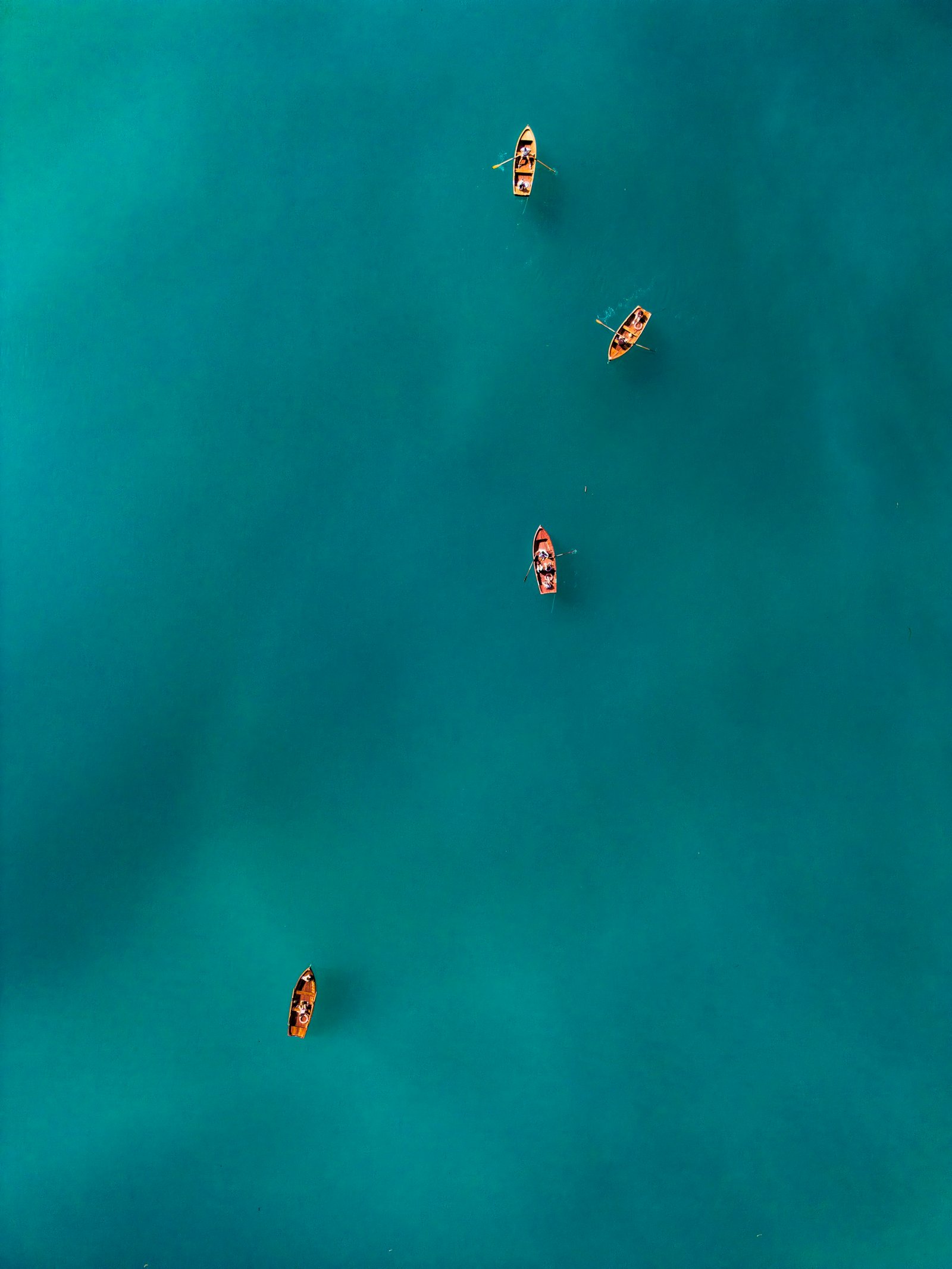
    Wooden rowing boats on the turquoise water of Lago di Braies, Dolomites, Italy

    4. Explore the Alpe di Siusi

    The Alpe di Siusi (Seiser Alm) is the largest high-altitude alpine meadow in Europe. Gentle green hills dotted with wooden huts stretch towards the jagged peaks of the Sassolungo and the Sciliar, especially beautiful at sunrise and sunset.

    The meadow is perfect for easy walks and family hikes, and in winter for cross-country skiing. In summer, the road onto the plateau is closed to private cars during the day, so take the cable car from Siusi or Ortisei, or the bus. Stop for lunch on the terrace of one of the huts.

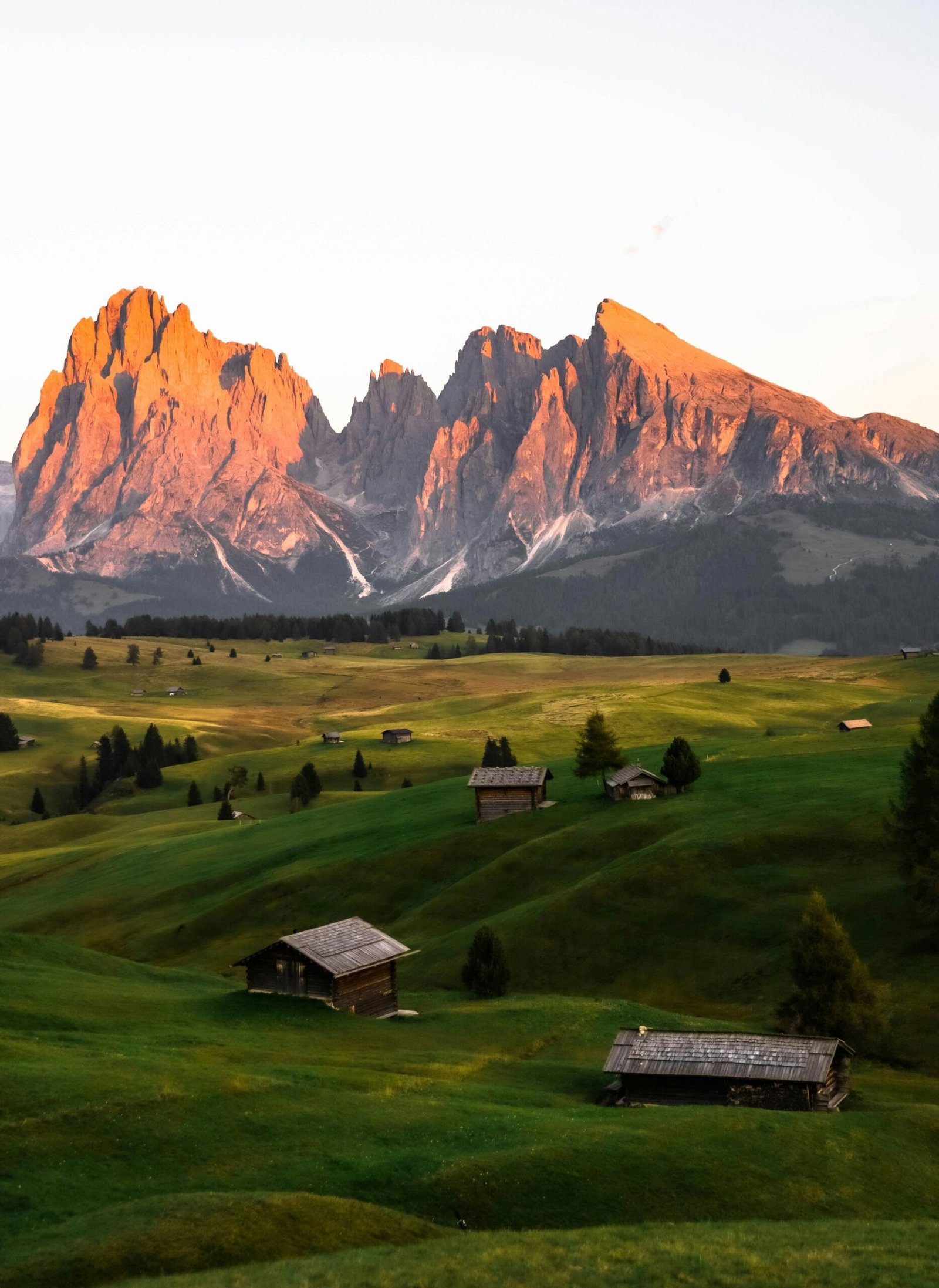
    Sunset over the mountains with wildflowers on the Alpe di Siusi, Dolomites, Italy

    5. Spend a Night in a Mountain Hut

    One of the best experiences in the Dolomites is a night in a rifugio, a mountain hut. Many are perched in spectacular locations, high above the valleys. You’ll sleep in a simple dorm or private room, enjoy a hearty dinner, and wake up to watch the sunrise over the peaks.

    Most rifugios offer half board, which includes dinner and breakfast, at fair prices. Book well in advance for July and August. Experienced hikers can link several huts on a multi-day trek, like the famous Alta Via 1, which crosses the Dolomites from north to south.

    Wooden mountain hut on a green meadow below rocky peaks on the Seiser Alm, Dolomites

    6. Visit the Churches of Val di Funes

    The quiet Val di Funes (Villnöss) is one of the most beautiful valleys in the Dolomites. Its famous view is the small church of St. Magdalena in front of the jagged Odle (Geisler) peaks, especially at sunset or in autumn.

    A short walk away, the tiny chapel of St. John in Ranui stands alone in a meadow below the mountains. The best viewpoint is on private land, and a small fee is charged. For a longer hike, walk the Adolf Munkel Trail along the base of the Odle peaks.

    The village of St. Magdalena in Val di Funes below the Dolomite peaks at dusk, Italy

    7. Hike to Lago di Sorapis

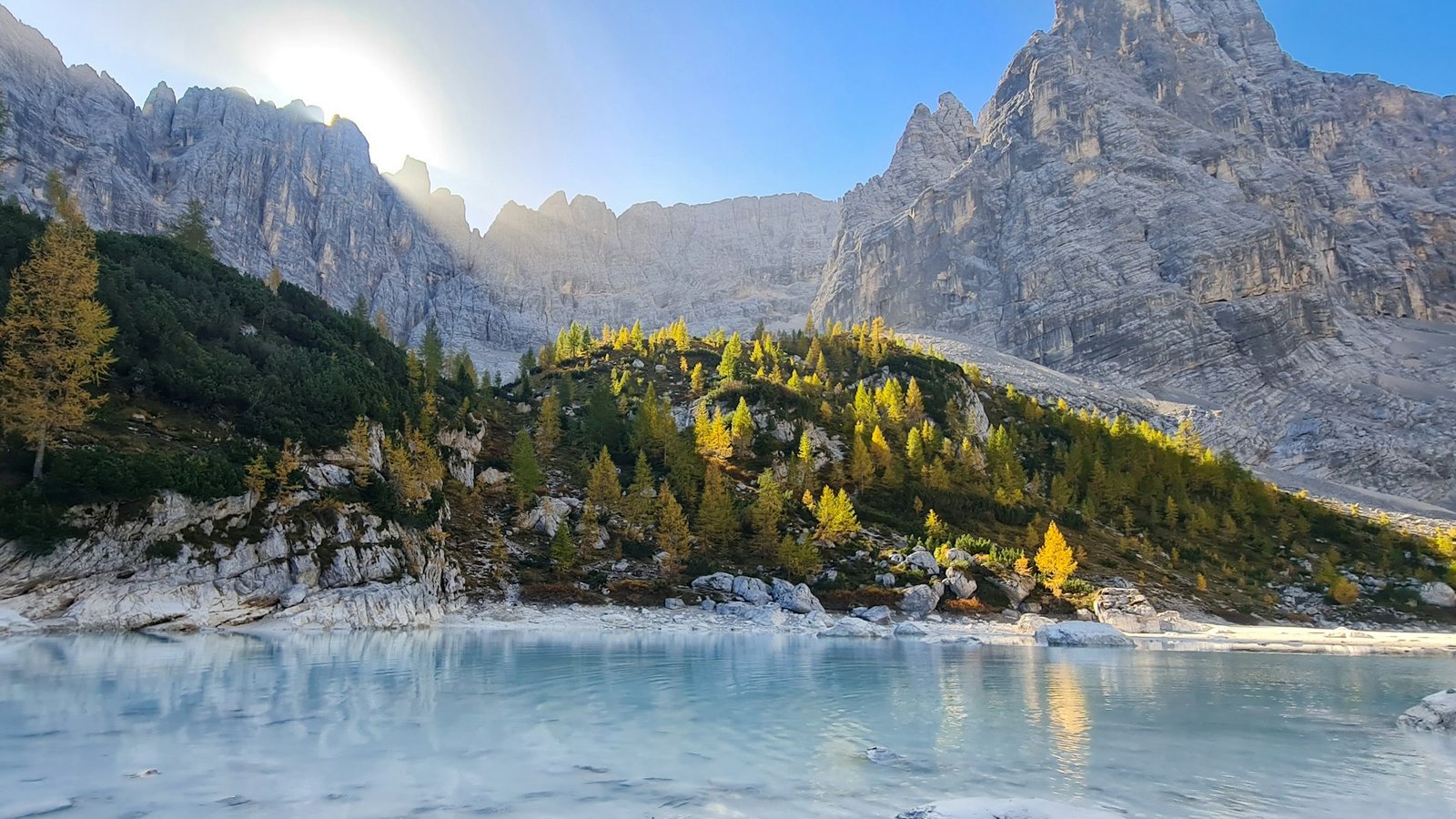
    Lago di Sorapis is one of the most beautiful lakes in the Dolomites, with milky turquoise water below the towering cliffs of the Sorapis massif. The colour comes from fine rock dust carried in by glacial meltwater.

    The hike from Passo Tre Croci near Cortina takes about two hours each way. It’s moderate, with a few exposed sections with metal cables, so it’s not ideal for people with a fear of heights. Start early, as parking at the pass fills up quickly.

    Turquoise water of Lago di Sorapis below rocky cliffs near Cortina d'Ampezzo, Italy

    8. Try a Via Ferrata

    The Dolomites are the birthplace of the via ferrata, “iron paths” with steel cables, ladders and bridges fixed to the rock, which let non-climbers reach dramatic places safely. Many were first built during World War I.

    There are routes for every level, from easy beginner routes to long, exposed climbs. You’ll need a helmet, a harness and a via ferrata set, which you can rent in most villages. If you’re new to it, hire a mountain guide for your first route. It’s a splurge, but a safe and unforgettable way to experience the mountains.

    9. Drive the Great Dolomite Road and the Mountain Passes

    The Great Dolomite Road connects Bolzano and Cortina d’Ampezzo over a series of spectacular mountain passes. Along the way, you’ll pass the Lago di Carezza, a small lake famous for its rainbow colours, and the Passo Pordoi.

    Other passes worth driving are the Sella Pass, with views of the Sassolungo, and the Passo Giau, one of the most beautiful passes in the Alps. Stop at the top for a coffee and a short walk. Watch out for cyclists and motorcyclists on the bends.

    10. Discover World War I History on Lagazuoi

    During World War I, the front line between Italy and Austria-Hungary ran right through the Dolomites. Soldiers dug tunnels into the mountains and fought at altitudes of over 3,000 metres.

    At Lagazuoi, near Cortina, you can take a cable car to the top and walk down through restored tunnels and trenches, part of a large open-air museum. Bring a head torch for the tunnels. Nearby, the strange rock towers of the Cinque Torri are also full of wartime trenches and make a great short hike.

    Where to Stay on a Budget

    Accommodation in the Dolomites can be expensive, but there are good-value options:

    • Mountain huts (rifugios): simple but spectacular, often including dinner and breakfast
    • Farm stays: called Roter Hahn farms in South Tyrol, these are family-run farms with rooms and apartments, often with fresh breakfast from the farm
    • Guesthouses and B&Bs: found in every village, often cheaper than hotels
    • Apartments: great value for families and longer stays, with a kitchen to save money on food

    Book early for July, August and the ski season. Many hotels have a minimum stay in high season.

    Eating on a Budget

    The food in the Dolomites is a delicious mix of Italian and Austrian cooking:

    • Canederli (Knödel): bread dumplings with speck, cheese or spinach, served in broth or with butter
    • Speck: smoked ham from South Tyrol, perfect for a picnic
    • Kaiserschmarrn: a fluffy shredded pancake with powdered sugar and jam, the classic hut dessert
    • Apple strudel: a must with coffee on a sunny terrace
    • Picnics: buy bread, cheese, speck and fruit in the village shops and eat with a view

    Lunch at a mountain hut is usually cheaper than dinner in town, and the portions are big.

    What It Really Costs

    Here’s a realistic daily budget per person for a comfortable mid-range trip in summer, not counting flights.

    • Accommodation: $60 to $120 per person, sharing a double room in a guesthouse or farm stay, with a night or two in a rifugio
    • Food: $30 to $60 a day, mixing picnics, hut lunches and restaurant dinners
    • Transport: $30 to $50 a day per person, including a rental car shared by two, fuel, tolls and parking
    • Activities: budget for the highlights separately: cable cars, the Tre Cime toll road, a rowing boat on Lago di Braies and a via ferrata with a guide

    That works out to around $150 to $250 per person per day. Travelling in September, staying on farms and buying a lift pass can bring that down noticeably.

    A Sample 8-Day Itinerary

    Day 1: Arrive in Venice or Innsbruck and drive to Val Gardena.

    Day 2: Seceda in the morning, then a walk through the meadows down to Ortisei.

    Day 3: The Alpe di Siusi, with lunch at a mountain hut and sunset on the meadow.

    Day 4: Val di Funes and the churches of St. Magdalena and St. John.

    Day 5: Drive the Sella Pass and the Passo Giau to Cortina d’Ampezzo.

    Day 6: Hike to Lago di Sorapis, or Lagazuoi and the Cinque Torri.

    Day 7: The Tre Cime di Lavaredo loop, with a night in a rifugio.

    Day 8: Early morning at Lago di Braies, then drive back to the airport.

    Practical Tips

    • Start early: the best light, the emptiest trails and the easiest parking are all in the early morning
    • Check the weather: afternoon thunderstorms are common in summer, so plan to be off exposed ridges by early afternoon
    • Bring good hiking boots, layers, a rain jacket and sun protection
    • Check lift opening times before you go, especially at the start and end of the season
    • Carry cash for mountain huts, where cards aren’t always accepted
    • Respect the mountains: stay on the marked trails, take your rubbish with you and never pick the wildflowers

    Booking Tips

    • Airport transfer: if you don’t rent a car, book an airport transfer with Kiwitaxi from Venice, Verona or Innsbruck airport straight to Val Gardena or Cortina, with a fixed price and no changing between trains and buses with your luggage
    • eSIM: if you’re coming from outside the EU, install a Yesim eSIM before you fly, so you have data for maps, bus times and weather updates in the mountains from the moment you land
    • Tours: popular options include a Dolomites day trip from Venice or Bolzano, a guided Tre Cime hike and a beginner via ferrata with a mountain guide. You can compare and book most of them on Klook

    Final Thoughts

    The Dolomites are one of the most beautiful mountain ranges on earth. Walk along the Seceda ridge, circle the Tre Cime, row a boat on Lago di Braies, watch the sun set over the Alpe di Siusi and fall asleep in a mountain hut high above the valleys.

    Travel in early September, start your days early, eat in the huts and take your time. The Dolomites will reward you with views and memories that last a lifetime.

    Prices checked in October 2026. Costs and opening times change, so always confirm before you book.
  • Croatia on a Budget: Dubrovnik, Plitvice and the Dalmatian Islands

    Croatia on a Budget: Dubrovnik, Plitvice and the Dalmatian Islands

    Croatia has it all in one compact country: medieval walled towns on the sea, more than a thousand islands, turquoise lakes connected by waterfalls, Roman palaces, pine-covered hills and some of the clearest water in the Mediterranean. No wonder it has become one of Europe’s favourite summer destinations.

    The secret is out, and in July and August the most famous places are packed and pricey. But travel at the right time, stay in local apartments and use the ferries like the locals do, and Croatia is still one of the best-value coastal destinations in Europe.

    This guide shows you the best route along the coast, the experiences that are really worth it and what a trip will actually cost.

    Croatia at a Glance

    • Where: southeastern Europe, along the eastern coast of the Adriatic Sea, opposite Italy
    • Main airports: Dubrovnik (DBV), Split (SPU), Zadar (ZAD) and Zagreb (ZAG)
    • Currency: euro (EUR)
    • Entry: Croatia is part of the EU and the Schengen Area. Many non-EU visitors can stay up to 90 days without a visa, but will need to register online with ETIAS once it starts. Check the current rules before you travel
    • Language: Croatian. English is widely spoken, especially by younger people and in tourist areas
    • Best time: May, June and September
    • Budget: around $60 to $90 a day for budget travellers, $120 to $200 for a comfortable mid-range trip

    When to Go

    July and August are hot, sunny and very crowded, especially in Dubrovnik, Split and Hvar. Prices for accommodation and ferries are at their highest, and you’ll need to book well ahead.

    May, June and September are the best months. The sea is warm enough for swimming from June, the weather is sunny and pleasant, and there are far fewer people. September is especially lovely, with the warmest water of the year and lower prices.

    October to April is quiet. Many island hotels and restaurants close, and ferries run less often, but the cities and Plitvice Lakes are peaceful and beautiful. Plitvice in winter, covered in snow and ice, is magical.

    Our tip: travel in early June or mid-September for warm weather, warm water and fair prices.

    Getting Around

    Most travellers explore the Dalmatian coast between Dubrovnik, Split and Zadar, with trips inland to the national parks and out to the islands.

    • Buses: the cheapest and easiest way to travel along the coast. They’re frequent, comfortable and air-conditioned
    • Ferries and catamarans: the state ferry company Jadrolinija and private catamarans connect the mainland with the islands. Book catamaran tickets online in summer, as they often sell out
    • Rental car: useful for Plitvice, Krka and exploring the islands, but parking in Dubrovnik and Split is difficult and expensive
    • Sailing: chartering a yacht with a skipper, or joining a group sailing trip, is a popular way to island-hop

    Things to Do in Croatia

    Here are the experiences we think are worth your time and money.

    1. Walk the City Walls of Dubrovnik

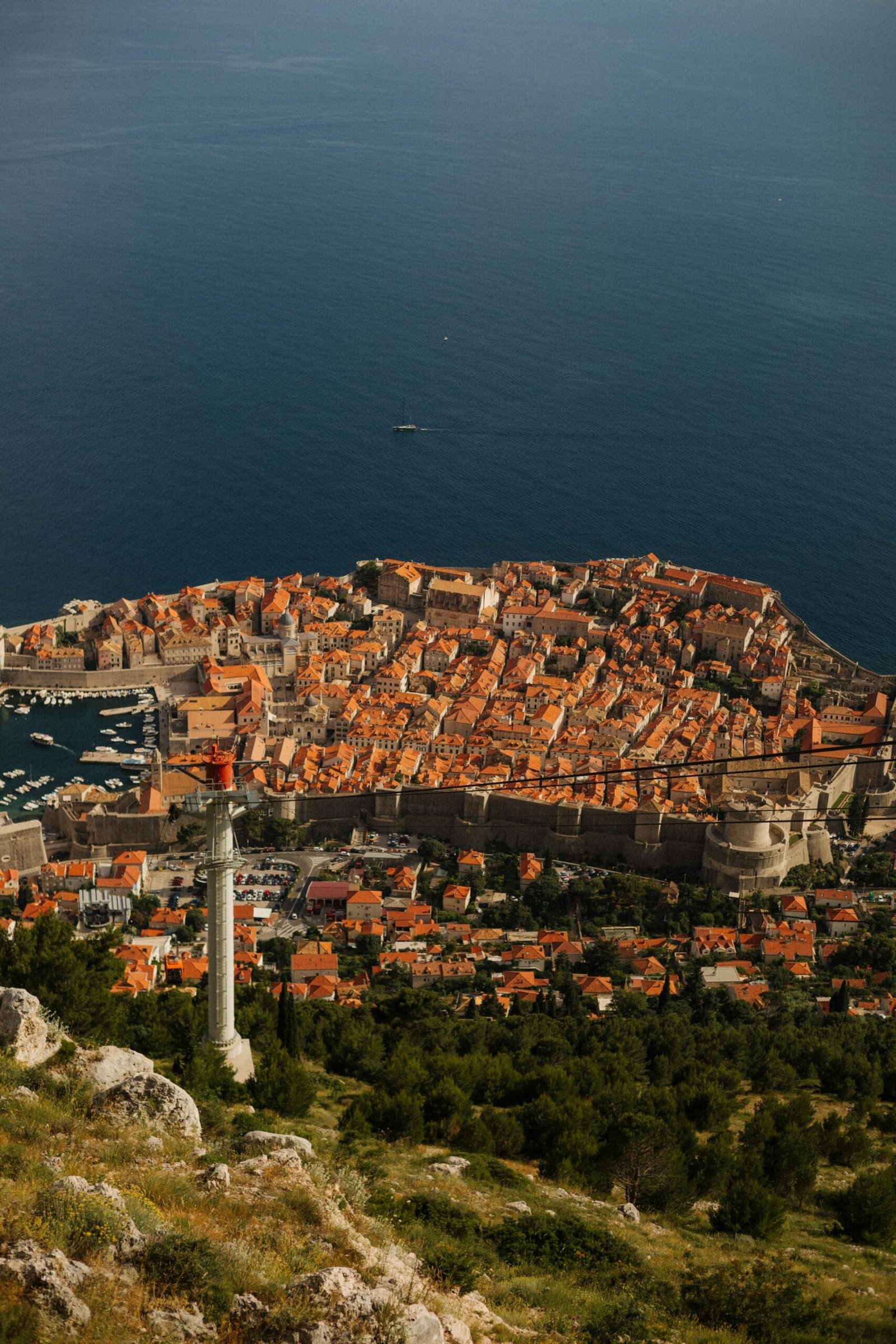
    Dubrovnik, the “Pearl of the Adriatic”, is one of the most beautiful walled cities in the world and a UNESCO World Heritage Site. Its marble streets, baroque churches and red rooftops are surrounded by massive stone walls, almost 2 km long.

    Walking the city walls is the highlight of any visit. The full circuit takes about two hours, with endless views over the rooftops and the sea. Tickets are on the expensive side, but they’re worth it. Go right at opening time or late in the afternoon, when it’s cooler and the cruise ship crowds have left.

    Afterwards, take the cable car up Mount Srđ for a sunset view over the old town and the islands. Fans of the TV series “Game of Thrones” will recognise many of the streets and staircases.

    Medieval city walls of Dubrovnik above the Adriatic Sea, Croatia

    2. Sea Kayak Around Dubrovnik and Lokrum

    One of the best ways to see Dubrovnik is from the water. Sea kayaking tours paddle around the base of the city walls, past hidden caves and over to the small island of Lokrum. Many tours include a stop for snorkelling in clear water. Tours are budget to mid-range in price, and sunset tours are especially beautiful.

    You can also take a short ferry to Lokrum, a green island nature reserve just off the coast, with peacocks, a botanical garden, rocky swimming spots and a small salt lake called the Dead Sea.

    3. Explore Plitvice Lakes National Park

    Plitvice Lakes National Park is Croatia’s most famous natural wonder and a UNESCO World Heritage Site. Sixteen terraced lakes in shades of turquoise, emerald and blue are connected by dozens of waterfalls, all surrounded by beech and pine forest.

    Wooden boardwalks lead right over the water, and electric boats and panoramic trains connect the different parts of the park. Plan at least four to six hours, or stay overnight nearby and arrive at opening time to have the boardwalks almost to yourself.

    Tickets must be booked online for a specific time slot, and they’re more expensive in summer. Swimming is not allowed. Plitvice is about two hours by car from Zadar and two and a half hours from Split.

    Wooden boardwalk over the turquoise water of Plitvice Lakes National Park, Croatia

    4. Visit the Krka Waterfalls

    Krka National Park, near the town of Šibenik, is famous for its waterfalls, especially Skradinski Buk, a series of cascades tumbling into a wide pool. A boardwalk loop leads through the forest and over the river.

    Swimming at the waterfalls is no longer allowed, to protect the nature, but the park is still one of the most beautiful places in Croatia. It’s an easy day trip from Split or Zadar, and it’s usually less crowded than Plitvice. Arrive by boat from the small town of Skradin for the most scenic approach.

    5. Get Lost in Diocletian’s Palace in Split

    Split is Croatia’s second-largest city and the gateway to the Dalmatian islands. Its heart is the remarkable Diocletian’s Palace, built by a Roman emperor around 1,700 years ago. Unlike most Roman ruins, it’s still alive: people live, work and eat inside its old walls, and its narrow streets are full of shops, bars and restaurants.

    Walk along the palm-lined Riva promenade, climb the bell tower of the Cathedral of St. Domnius for the view, and hike up Marjan Hill, a forested park with viewpoints and small beaches. At Bačvice Beach, watch locals play picigin, a traditional ball game played in shallow water.

    Aerial view of the old town and waterfront of Split, Croatia

    6. Island-Hop to Hvar

    Hvar is one of the sunniest islands in Europe and the most glamorous of the Dalmatian islands. Hvar Town has a beautiful main square, a lively harbour full of yachts and a hilltop fortress with a great view over the rooftops and the Pakleni Islands.

    Take a water taxi to the Pakleni Islands for swimming in clear coves, and explore the quieter side of Hvar, with lavender fields, vineyards and small villages like Stari Grad, one of the oldest towns in Europe. Hvar Town is famous for its nightlife and can be expensive in summer, so stay outside the centre to save money.

    Aerial view of Hvar Town and its harbour on the island of Hvar, Croatia

    7. Take a Boat Trip from Split or Trogir

    From Split and the nearby town of Trogir, boat trips take you to the islands, hidden bays and swimming spots of the central Dalmatian coast. The most popular full-day trip visits the Blue Cave on the island of Biševo, where sunlight turns the water inside a glowing blue, along with the islands of Vis and Hvar.

    Trogir itself is worth a visit. Its tiny medieval old town sits on an island between the mainland and Čiovo and is a UNESCO World Heritage Site. If you want to explore the islands at your own pace, consider a few days on a skippered sailing yacht or a group sailing trip.

    White boat on clear turquoise water near Trogir on the Dalmatian coast, Croatia

    8. Relax on Zlatni Rat Beach

    On the island of Brač, a short ferry ride from Split, Zlatni Rat near the town of Bol is Croatia’s most famous beach. This long spit of fine pebbles reaches out into the sea, and its tip changes shape with the wind and the currents.

    It’s a top spot for windsurfing and kitesurfing, especially in the afternoon. For the best view of the beach from above, hike or drive up to Vidova Gora, the highest peak of all the Adriatic islands.

    Aerial view of Zlatni Rat beach near Bol on the island of Brač, Croatia

    9. Watch the Sunset in Zadar

    Zadar is a relaxed city with Roman ruins, churches and one of the best sunsets in Europe. On the waterfront, the Sea Organ plays music as the waves push air through pipes hidden under marble steps. Next to it, the Greeting to the Sun is a large solar-powered circle that lights up in colourful patterns after dark.

    Zadar is also a good base for Plitvice and Krka, and for boat trips to the Kornati National Park, a wild group of almost 150 islands.

    10. Explore Korčula and the Pelješac Peninsula

    Between Split and Dubrovnik, the island of Korčula is often called a smaller, quieter version of Dubrovnik. Its old town sits on a small peninsula, surrounded by walls, with streets laid out like a fishbone to protect it from the wind.

    Nearby, the Pelješac Peninsula is known for its red wines, especially Dingač and Postup, and for the oyster farms of Ston, where you can also walk the long medieval Walls of Ston. It’s a perfect stop on the way from Split to Dubrovnik.

    Where to Stay on a Budget

    Croatia has plenty of affordable places to stay, especially outside July and August:

    • Private apartments and rooms: called sobe or apartmani, these are the best value in Croatia. They’re often run by local families and include a kitchen
    • Hostels: Split, Dubrovnik, Zadar and Hvar have good hostels with private rooms
    • Guesthouses: small, friendly places near the national parks and on the islands
    • Hotels: comfortable mid-range options are available everywhere, but they’re more expensive than apartments

    In Dubrovnik, staying in the areas of Lapad or Gruž is much cheaper than in the old town, with easy bus connections.

    Eating on a Budget

    Croatian food is simple, fresh and Mediterranean:

    • Eat at a konoba: a traditional family-run tavern, often with homemade wine and local dishes
    • Try peka: meat or octopus slow-cooked with vegetables under a bell-shaped lid covered in embers. It usually needs to be ordered in advance
    • Order black risotto: made with cuttlefish ink, it’s a Dalmatian speciality
    • Buy burek: a flaky pastry filled with cheese or meat, sold cheaply at bakeries for breakfast
    • Shop at the markets: the green markets in Split, Zadar and Dubrovnik sell fruit, vegetables and cheese at local prices

    Restaurants in Dubrovnik’s old town are some of the most expensive in Croatia, so eat outside the walls when you can.

    What It Really Costs

    Here’s a realistic daily budget per person for a comfortable mid-range trip in June or September, not counting flights.

    • Accommodation: $40 to $80 per person, sharing a private apartment or double room
    • Food and drink: $30 to $55 a day, mixing konobas, bakeries and self-catering
    • Transport: $15 to $35 a day on average, including buses, ferries and catamarans
    • Activities: budget for the highlights separately: the Dubrovnik city walls, Plitvice and Krka entrance fees, a kayak tour and a boat trip to the islands

    That works out to around $120 to $200 per person per day. In July and August, expect higher prices, especially in Dubrovnik and Hvar.

    A Sample 10-Day Itinerary

    Day 1: Arrive in Zadar. Evening at the Sea Organ and the Greeting to the Sun.

    Day 2: Day trip to Plitvice Lakes National Park, or stay overnight nearby.

    Day 3: Krka National Park, then continue to Split.

    Days 4 to 5: Split. Diocletian’s Palace, Marjan Hill and a day trip to Trogir or the Blue Cave.

    Day 6: Ferry to Brač. Zlatni Rat and Vidova Gora.

    Day 7: Catamaran to Hvar. Hvar Town and the fortress.

    Day 8: Pakleni Islands, then catamaran to Korčula.

    Days 9 to 10: Dubrovnik. The city walls, a sea kayak tour, Lokrum and the cable car at sunset.

    Practical Tips

    • Book Plitvice tickets and catamarans online in summer
    • Bring water shoes: many Croatian beaches are pebbly or rocky, and sea urchins are common
    • Avoid the cruise ship crowds in Dubrovnik by visiting early in the morning or late in the afternoon
    • Respect the dress code in old towns: walking around in swimwear away from the beach can lead to fines in Split, Dubrovnik and Hvar
    • Carry some cash for small konobas, markets and apartments
    • Tipping around 10 percent in restaurants is appreciated but not required

    Booking Tips

    • Airport transfer: book an airport transfer with Kiwitaxi from Dubrovnik or Split airport to your old town apartment or the ferry port, with a fixed price and a driver waiting for you
    • eSIM: if you’re coming from outside the EU, install a Yesim eSIM before you fly, so you have data for maps, ferry times and bus tickets in Croatia from the moment you land
    • Tours: popular options include a Plitvice Lakes day trip, a Dubrovnik city walls tour, a Hvar and Pakleni Islands boat trip and sea kayaking in Dubrovnik. You can compare and book most of them on Klook

    Final Thoughts

    Croatia is a country that rewards slow travel. Walk the walls of Dubrovnik at sunrise, wander through a Roman palace in Split, hop between sunny islands and swim in water so clear you can see the bottom many metres below. Then head inland to the turquoise lakes and waterfalls of Plitvice and Krka.

    Travel in June or September, stay in local apartments and take the ferries and buses. You’ll see the best of Croatia, without the summer crowds and without breaking your budget.

    Prices checked in October 2026. Costs and opening times change, so always confirm before you book.
  • The Algarve: Golden Cliffs, Sea Caves and Hidden Beaches on a Real Budget

    The Algarve: Golden Cliffs, Sea Caves and Hidden Beaches on a Real Budget

    The Algarve, Portugal’s southern coast, looks like someone painted it. Golden cliffs drop into turquoise water, wind and waves have carved arches and sea caves into the rock, and hidden coves appear at the bottom of wooden staircases. Behind the coast lie whitewashed villages, orange groves and quiet hills.

    It’s one of the sunniest corners of Europe, with more than 300 days of sunshine a year, and it’s still good value compared to the Mediterranean hotspots of Spain, France or Italy. You can eat grilled fish by the sea for the price of a sandwich in Paris, and outside of July and August you’ll often have whole beaches almost to yourself.

    This guide shows you where to stay, which experiences are really worth your time, and how to enjoy the Algarve without overspending.

    The Algarve at a Glance

    • Where: the southern coast of Portugal, stretching about 150 km from the Spanish border to Cape St. Vincent
    • Airport: Faro (FAO), with direct flights from all over Europe. Lisbon is about two and a half to three hours away by car or train
    • Currency: euro (EUR)
    • Entry: Portugal is part of the Schengen Area. Many non-EU visitors can stay up to 90 days without a visa, but will need to register online with ETIAS once it starts. Check the current rules before you travel
    • Language: Portuguese. English is widely spoken in tourist areas
    • Best time: May, June, September and October
    • Budget: around $60 to $90 a day for budget travellers, $100 to $170 for a comfortable mid-range trip

    When to Go

    July and August are hot, sunny and very busy. Prices are at their highest, the famous beaches are packed and you’ll need to book everything well in advance.

    May, June, September and October are the sweet spot. It’s warm enough for the beach, the sea is at its warmest in September, and there are far fewer people. Accommodation is noticeably cheaper.

    November to March is mild, with daytime temperatures of around 15 to 18 degrees Celsius. It’s too cold for most people to swim, but perfect for hiking, golf and exploring the villages, and prices are very low. Late January and February bring the almond blossom.

    Our tip: go in late May or late September. You’ll get beach weather, calm seas for boat trips and fair prices.

    Where to Base Yourself

    The Algarve is easy to explore, but it’s long enough that it’s worth choosing your base carefully. If you have a week or more, split your stay between two places.

    Lagos: The Best All-Rounder

    Lagos in the west has a charming old town with cobbled streets, lively restaurants and bars, and some of the most beautiful beaches and cliffs in the region right on its doorstep. It’s the best base for first-time visitors and for anyone who wants to explore the wild west coast.

    Carvoeiro and Ferragudo: For the Famous Cliffs

    In the central Algarve, the small fishing villages of Carvoeiro and Ferragudo are close to Benagil Cave, Praia da Marinha and the Seven Hanging Valleys Trail. They’re quieter than nearby Albufeira, which is known for its nightlife and big resorts.

    Tavira: Authentic and Relaxed

    In the east, Tavira is the most beautiful town in the Algarve, with historic churches, a Roman-style bridge and a calm, local atmosphere. The beaches here are long and sandy, on islands reached by boat.

    Getting Around

    To see the best of the Algarve, you’ll want a rental car. Many of the most beautiful beaches, viewpoints and villages are hard to reach by public transport. Car hire is affordable, especially outside the summer holidays.

    The main motorway, the A22, has electronic tolls with no toll booths. Ask your rental company for a transponder so the tolls are charged automatically. The parallel N125 road is free but slower.

    Without a car, regional trains and buses connect the main towns along the coast, but you’ll need taxis or tours to reach many of the beaches.

    Things to Do in the Algarve

    Here are the experiences we think are worth your time and money.

    1. Kayak or Paddle to Benagil Cave

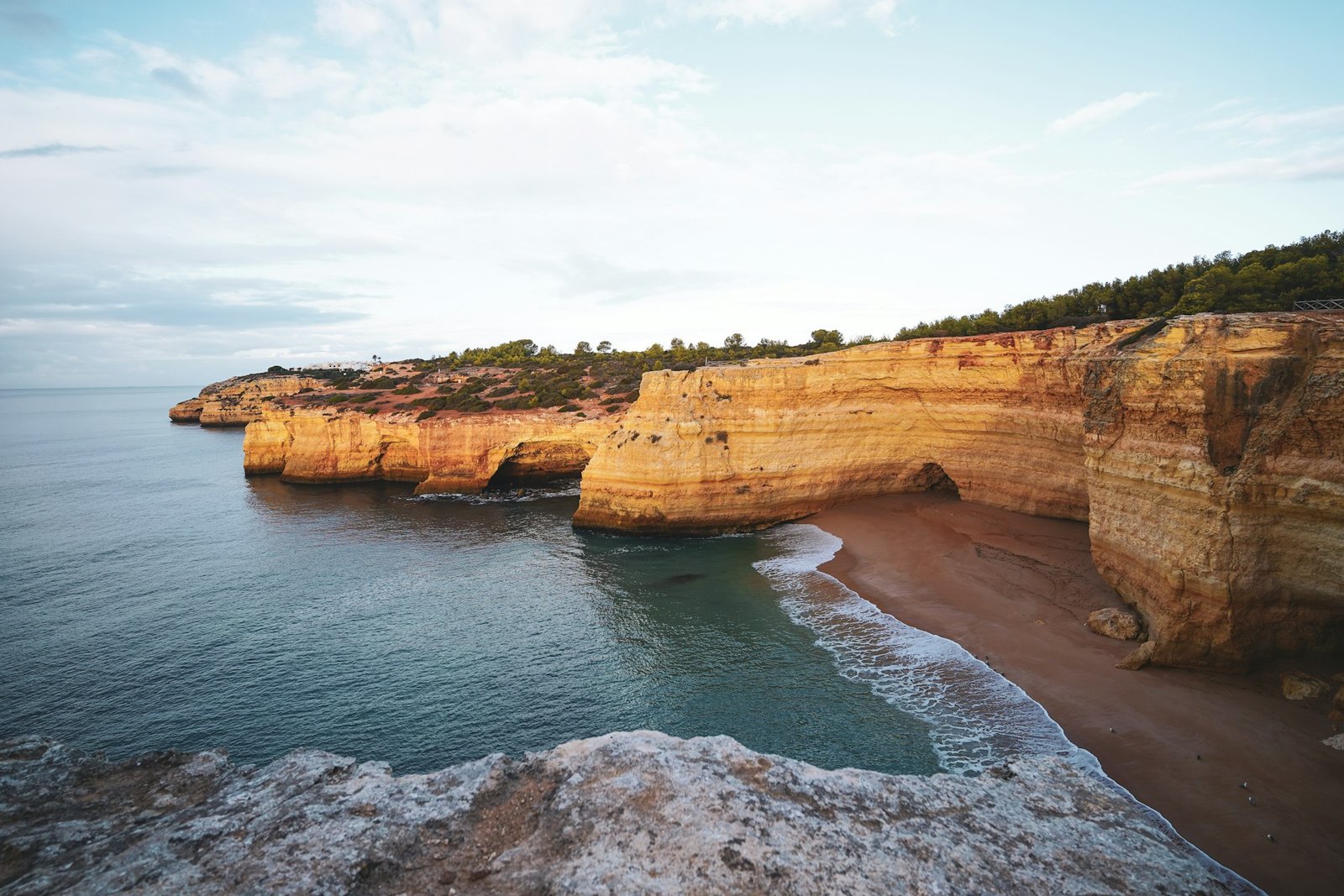
    Benagil Cave is the most famous sight in the Algarve: a huge sea cave with a round hole in its roof, through which sunlight falls onto a small golden beach. It’s one of the most photographed places in Portugal.

    You can only reach it from the water, on a boat tour, by kayak or on a stand-up paddleboard. Kayak and SUP tours from Benagil beach are the best way to see it, because they also explore the smaller caves and arches along the coast. Tours are budget to mid-range in price and last around one and a half to two hours.

    To protect the cave and keep visitors safe, the rules for Benagil have become stricter in recent years, and landing on the beach inside the cave is no longer allowed. Check the latest rules when you book, choose a licensed operator and go early in the morning, when the sea is calm and the crowds are smaller.

    Inside Benagil Cave with sunlight falling through the hole in its roof, Algarve, Portugal

    2. Hike the Seven Hanging Valleys Trail

    The Seven Hanging Valleys Trail is one of the most beautiful coastal walks in Europe. It runs for about 6 km along the clifftops between Praia da Marinha and Praia do Vale Centeanes, passing Benagil and dramatic viewpoints over sea arches, sinkholes and tiny beaches far below.

    The path is well marked and mostly easy, with a few short climbs. Walk it one way and take a taxi back, or turn around halfway. Start early to avoid the midday heat, wear proper shoes and stay well away from the cliff edges, which can be unstable.

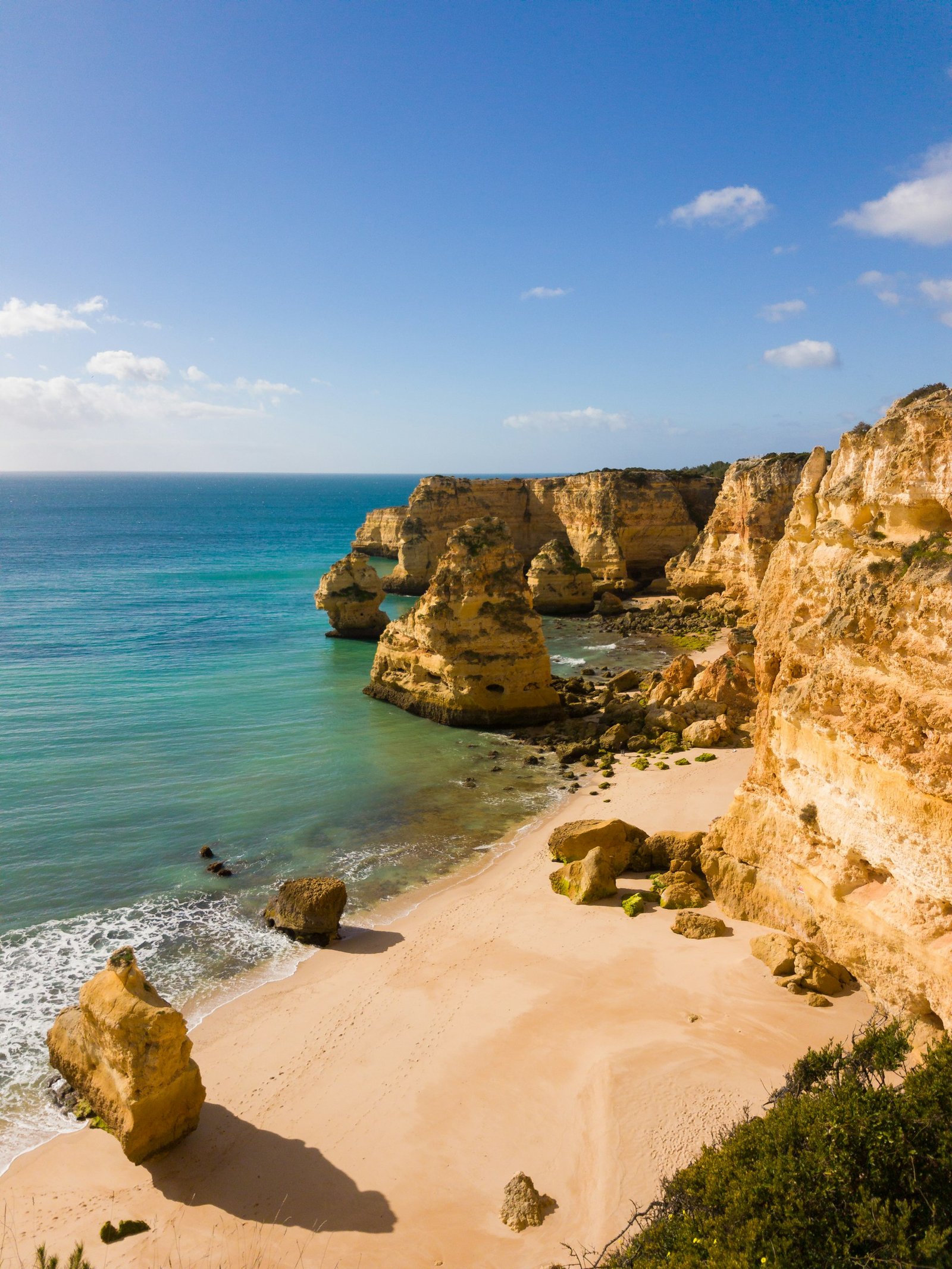
    Make sure to spend some time on Praia da Marinha itself. With its golden cliffs and clear water, it’s often named one of the most beautiful beaches in Europe.

    Red cliffs above the Atlantic Ocean near Benagil on the Seven Hanging Valleys Trail, Algarve

    3. Explore the Rock Formations of Ponta da Piedade

    Just south of Lagos, Ponta da Piedade is a headland of golden cliffs, sea stacks, arches and grottoes rising from emerald water. Walk the clifftop paths and climb down the 182 steps to the water’s edge for a closer look.

    The best way to see it, though, is from the water. Small boats from Lagos marina take you into the grottoes, and kayak tours let you paddle through the arches yourself. Both are budget-friendly. Afterwards, relax on Praia do Camilo or Praia Dona Ana, two of the prettiest beaches in Lagos.

    Golden cliffs and rock formations at Ponta da Piedade near Lagos, Algarve

    4. Surf the Wild West Coast

    The west coast of the Algarve, the Costa Vicentina, is completely different from the south. It’s part of a natural park, with almost no development, huge empty beaches and powerful Atlantic waves.

    It’s one of the best surfing regions in Europe. Beaches like Praia da Bordeira, Praia do Amado and Arrifana have surf schools that offer lessons and board rental for beginners at fair prices. Even if you don’t surf, the wide sandy beaches backed by dunes and cliffs are spectacular, especially at sunset.

    Hikers can walk sections of the Rota Vicentina, a long-distance network of trails along the coast. The Fishermen’s Trail follows the clifftops above the sea.

    Wide sandy beach and cliffs at Praia da Bordeira on the west coast of the Algarve

    5. Watch the Sunset at Cape St. Vincent

    At the south-western tip of Europe, Cabo de São Vicente was once believed to be the end of the world. Today, its lighthouse and wild cliffs are one of the best places in Portugal to watch the sunset.

    Arrive about an hour before sunset, bring a jacket because it’s often windy, and buy a bratwurst from the famous “last sausage before America” stand. On the way, visit the town of Sagres and its clifftop fortress.

    6. Go Island Hopping in the Ria Formosa

    In the eastern Algarve, the Ria Formosa is a protected lagoon of canals, salt marshes and sandy barrier islands. It’s a paradise for birdwatchers, with flamingos, spoonbills and herons.

    Boats from Faro and Olhão take you to car-free islands such as Culatra, Farol and Ilha Deserta, where wooden boardwalks lead across the dunes to long, empty beaches. On Ilha Deserta, there’s just one restaurant and miles of sand. Ferries are budget-friendly, and guided boat tours are mid-range.

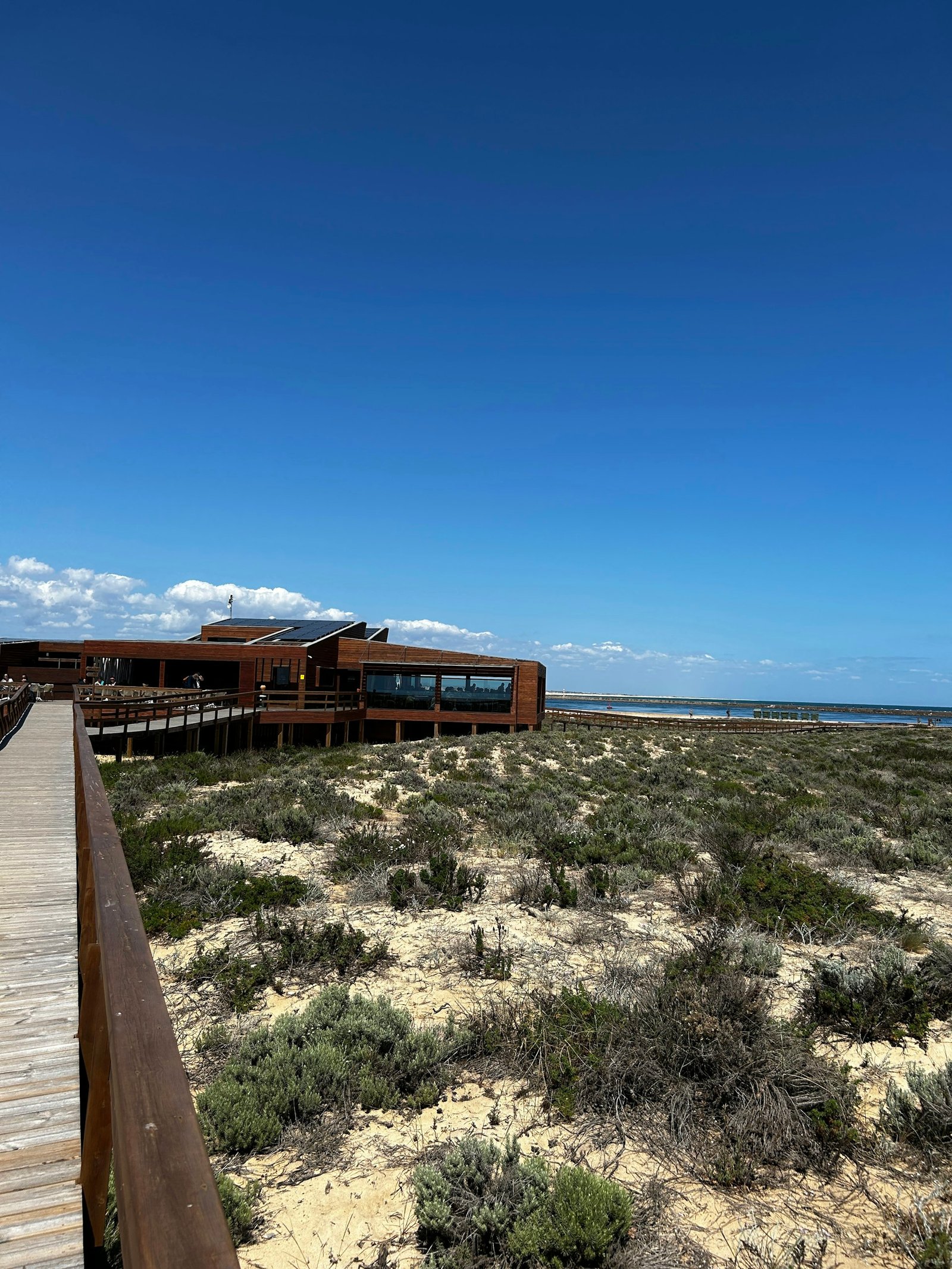
    Wooden boardwalk across the dunes on Ilha Deserta in the Ria Formosa, Algarve

    7. Wander Through Tavira

    Tavira is the most charming town in the Algarve. Its old bridge crosses the Gilão River, whitewashed houses with tiled facades line the streets, and more than 20 churches rise above the rooftops. Climb up to the castle for a view over the town.

    From Tavira, a short boat ride takes you to Ilha de Tavira, with a long sandy beach. Nearby, at Praia do Barril, a little train runs across the lagoon to the beach, where you’ll find the unusual Anchor Cemetery, a row of rusty old fishing anchors in the sand.

    Old bridge over the Gilão River in Tavira, Algarve, Portugal

    8. Spot Dolphins on a Boat Trip

    The waters off the Algarve are home to common and bottlenose dolphins, and dolphin-watching trips from Lagos, Portimão, Albufeira and Vilamoura have a high chance of sightings. Most trips also cruise along the coast and past the caves.

    Choose a company that follows responsible wildlife guidelines and keeps a respectful distance from the animals. Trips are mid-range in price and usually last around two hours.

    9. Escape to the Monchique Mountains

    When the coast gets too hot or crowded, head inland to the green Serra de Monchique. Drive up to Fóia, the highest point in the Algarve at about 900 metres, for views stretching to the ocean on a clear day.

    The small spa village of Caldas de Monchique has natural thermal springs, shady paths and old buildings. Try a glass of medronho, a strong local brandy made from the fruit of the strawberry tree.

    10. Eat Piri-Piri Chicken and Visit Silves

    The Algarve is famous for piri-piri chicken, grilled over charcoal and brushed with a spicy chilli sauce. The small town of Guia near Albufeira is known as its home, with several simple restaurants that serve nothing else.

    Combine it with a visit to nearby Silves, once the Moorish capital of the region. Its red sandstone castle is one of the best preserved in Portugal and looks over orange groves and the river valley.

    Where to Stay on a Budget

    The Algarve has plenty of affordable accommodation, especially outside July and August:

    • Guesthouses and small hotels: often family-run, with breakfast included and a personal touch
    • Holiday apartments: very popular and great value, especially for families or longer stays. Many have a kitchen and a shared pool
    • Hostels: Lagos has some of the best hostels in Portugal, with pools, rooftop terraces and private rooms
    • Rural houses: in the hills behind the coast, restored farmhouses with pools offer peace and quiet at fair prices

    Book early for summer, especially if you want to stay in Lagos or Carvoeiro.

    Eating on a Budget

    Portuguese food is simple, fresh and affordable:

    • Order the prato do dia: the dish of the day at local restaurants is usually great value, especially at lunch
    • Eat grilled fish: sardines in summer, sea bream and sea bass all year, simply grilled with potatoes and salad
    • Try cataplana: a seafood stew cooked in a copper pot, perfect for sharing
    • Buy a pastel de nata: Portugal’s famous custard tart is sold in every bakery for very little
    • Shop at the markets: the fish and fruit markets in Olhão, Loulé and Lagos are full of local produce

    Be careful with the small dishes of bread, olives and butter placed on your table when you sit down. They’re not free, so send them back if you don’t want them.

    What It Really Costs

    Here’s a realistic daily budget per person for a comfortable mid-range trip in spring or autumn, not counting flights.

    • Accommodation: $40 to $80 per person, sharing a double room or apartment
    • Food and drink: $30 to $50 a day, eating in local restaurants and cafés
    • Transport: $15 to $35 a day per person, including a small rental car shared by two, fuel and tolls
    • Activities: budget for the highlights separately: a Benagil kayak or boat tour, a Ponta da Piedade boat trip, a surf lesson and a dolphin-watching trip

    That works out to around $100 to $170 per person per day. In July and August, expect higher prices for accommodation and car hire.

    A Sample 7-Day Itinerary

    Day 1: Arrive in Faro and drive to Lagos. Evening walk through the old town.

    Day 2: Ponta da Piedade by boat or kayak, then Praia do Camilo and Praia Dona Ana.

    Day 3: West coast day: Sagres, a surf lesson at Praia da Bordeira or Amado, and sunset at Cape St. Vincent.

    Day 4: Move to Carvoeiro. Kayak to Benagil Cave in the morning, Praia da Marinha in the afternoon.

    Day 5: Hike the Seven Hanging Valleys Trail, then piri-piri chicken in Guia and the castle of Silves.

    Day 6: Move to Tavira. Explore the old town and take the little train to Praia do Barril.

    Day 7: Ria Formosa island hopping from Olhão or Faro, then fly home from Faro.

    Practical Tips

    • Book Benagil tours early in summer, and go in the morning when the sea is calmer
    • The Atlantic is cool: even in summer, the water is around 20 to 22 degrees Celsius
    • Respect the cliffs: stay away from the edges and don’t sit directly below them on the beach
    • Use sun protection: the sun is strong, even when the wind makes it feel cool
    • Many shops close at lunchtime in smaller towns, and restaurants often serve dinner from around 7 p.m.
    • Tipping isn’t expected, but rounding up or leaving 5 to 10 percent for good service is appreciated

    Booking Tips

    • Airport transfer: if you don’t pick up a rental car at the airport, book an airport transfer with Kiwitaxi from Faro to Lagos, Carvoeiro or Tavira, with a fixed price and a driver waiting for you
    • eSIM: if you’re coming from outside the EU, install a Yesim eSIM before you fly, so you have data for maps and beach directions in Portugal from the moment you land
    • Tours: popular options include a Benagil Cave boat or kayak tour, a Ponta da Piedade grotto trip, a dolphin-watching cruise and a Ria Formosa island tour. You can compare and book most of them on Klook

    Final Thoughts

    The Algarve is far more than a beach holiday. Paddle into sea caves at sunrise, walk along golden clifftops, surf the wild Atlantic coast, watch the sun sink into the ocean at the end of Europe and finish the day with grilled fish and a glass of local wine.

    Travel in late spring or early autumn, rent a car and split your stay between the west and the east. You’ll see the Algarve at its best, without the crowds and without the summer prices.

    Prices checked in October 2026. Costs and opening times change, so always confirm before you book.
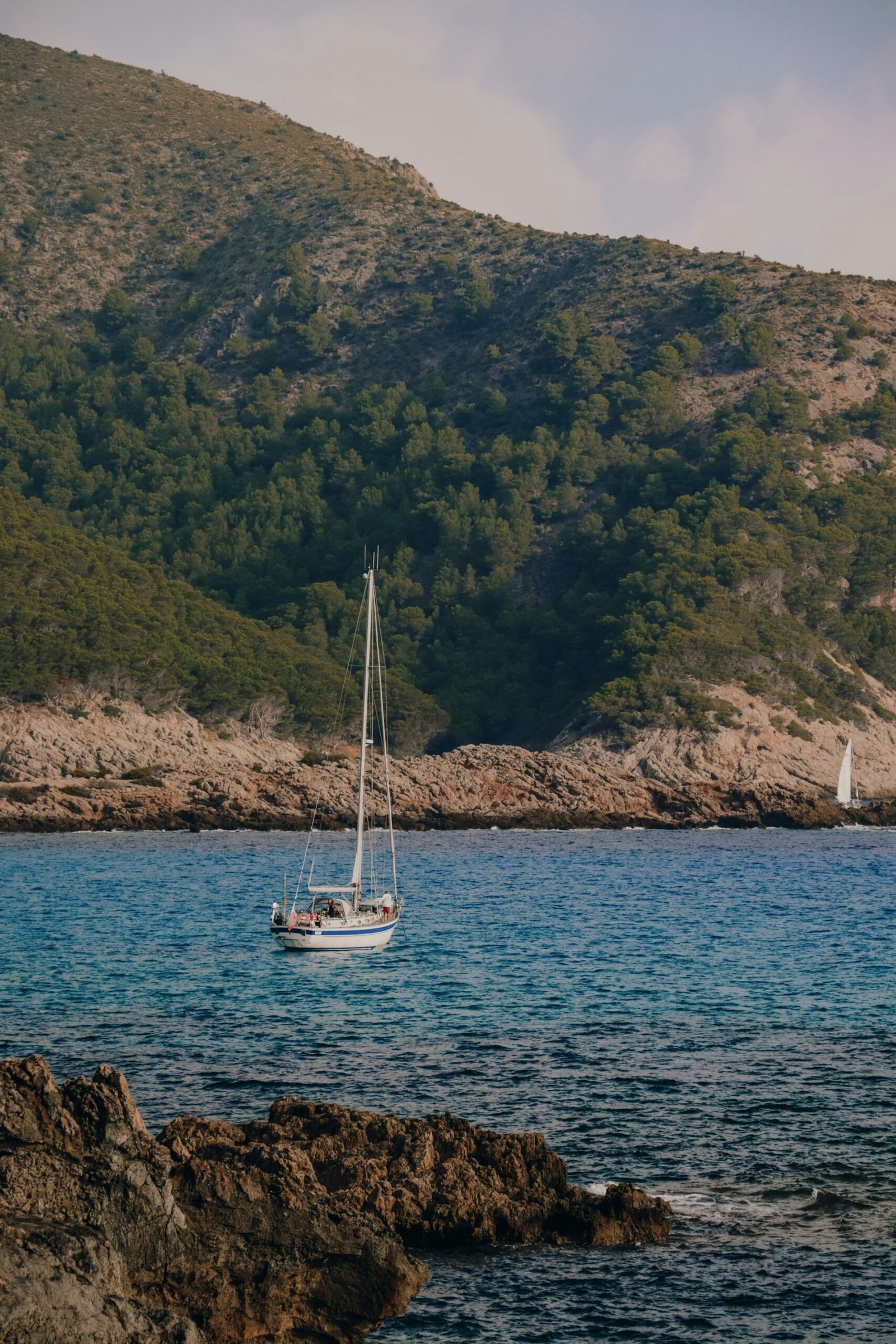
  • Iceland Ring Road: 10-Day Itinerary and the Best Things to Do

    Iceland Ring Road: 10-Day Itinerary and the Best Things to Do

    There’s a road in Iceland that makes a full loop around the country, and on it you’ll pass more waterfalls than you can count, black sand beaches, glaciers flowing down to the sea, steaming lava fields and tiny fishing villages at the end of deep fjords. It’s called Route 1, or simply the Ring Road, and driving it is one of the great road trips of the world.

    Iceland has a reputation for being expensive, and it is. A beer can cost more than a meal in many other countries. But the landscapes, which are the reason everyone comes, are free. With a rental car or a small campervan, a supermarket bag full of picnic food and a good plan, the Ring Road is a trip you can do without spending a fortune.

    This guide gives you a 10-day itinerary around the island, the best things to do along the way, from glacier hikes and whale watching to hot springs, and an honest look at what it all costs.

    The Ring Road at a Glance

    • Length: about 1,330 km, almost all of it paved
    • Ideal trip length: 7 to 10 days for the loop, 12 to 14 days if you add the Snæfellsnes Peninsula and the Westfjords
    • Currency: Icelandic króna (ISK). One US dollar is roughly 135 to 140 krónur. Cards are accepted almost everywhere, even for tiny amounts
    • Airport: Keflavík International (KEF), about 45 minutes from Reykjavík
    • Entry: Iceland is part of the Schengen Area, so the usual Schengen rules apply
    • Best time: June to August for long days and open roads, or September and early spring for the northern lights
    • Budget: around $120 to $180 a day for budget travellers, $200 to $350 for a comfortable mid-range trip

    When to Go

    Summer (June to August) is the best time for a first Ring Road trip. All roads are open, the weather is mild, and around midsummer it barely gets dark at all. You can drive and hike until late in the evening. It’s also the busiest and most expensive season.

    Shoulder season (May and September) is a great compromise. There are fewer people, prices are a bit lower, and in September you have your first chance to see the northern lights.

    Winter (October to April) is magical, with snow-covered landscapes, the northern lights and the famous ice caves. But days are short, storms can close roads for days, and driving the full Ring Road requires experience on ice and snow. If you go in winter, stick to the south coast or join guided tours.

    Getting Around

    Rental Car or Campervan

    You need your own vehicle for the Ring Road. A small two-wheel-drive car is fine for the Ring Road itself in summer. If you want to drive the mountain roads into the highlands, called F-roads, you need a 4×4. Driving a normal car on an F-road isn’t allowed and won’t be covered by your insurance.

    A campervan saves money on accommodation and gives you freedom, but you must sleep at official campsites. Wild camping in vehicles is not allowed.

    Driving Tips

    • Never stop on the road to take photos. Use lay-bys and parking areas. Tourists stopping in the middle of the road cause many accidents
    • Off-road driving is illegal and damages the fragile moss and soil for decades. The fines are very high
    • Single-lane bridges are common, especially in the east and south. The car closest to the bridge has right of way
    • Check the weather and road conditions every morning on the official websites, especially outside summer
    • Get gravel insurance. Stones thrown up by other cars often damage windscreens and paintwork
    • Fill up regularly. In the east and north, petrol stations can be far apart

    A 10-Day Ring Road Itinerary

    This route goes anticlockwise, starting with the south coast, which has the most famous sights.

    Day 1: Reykjavík and the Golden Circle. Pick up your car and drive the Golden Circle: Þingvellir National Park, where you can walk between two tectonic plates, the Geysir area, where Strokkur erupts every few minutes, and the mighty Gullfoss waterfall.

    Day 2: The South Coast. Visit Seljalandsfoss, where you can walk behind the falling water, and Skógafoss, a huge curtain of water with a rainbow on sunny days. End the day in Vík.

    Day 3: Vík and the Black Beaches. Walk on the black sand of Reynisfjara, see the basalt columns and the sea stacks of Reynisdrangar, and drive to Skaftafell.

    Day 4: Glaciers. Go on a guided glacier hike in Skaftafell, then drive to Jökulsárlón, the glacier lagoon, and Diamond Beach, where icebergs wash up on the black sand.

    Day 5: The East Fjords. A long, beautiful drive along the fjords, through small fishing villages like Djúpivogur and Seyðisfjörður, with its famous rainbow street.

    Day 6: Mývatn. Drive north to Lake Mývatn, with its volcanic craters, lava formations and bubbling mud pools. Relax in the Mývatn Nature Baths in the evening.

    Day 7: Dettifoss and Húsavík. Visit Dettifoss, one of the most powerful waterfalls in Europe, then go whale watching in Húsavík.

    Day 8: Akureyri. Explore Iceland’s charming second city, and stop at Goðafoss, the “waterfall of the gods”, on the way.

    Day 9: The North and West. Drive west through the north. If you have time, take a detour to the Snæfellsnes Peninsula to see Kirkjufell, the most photographed mountain in Iceland.

    Day 10: Back to Reykjavík. Relax in a hot spring, explore Reykjavík and head to the airport.

    Things to Do on the Ring Road

    Here are the experiences we think are worth your time and money.

    1. Walk Behind a Waterfall

    Iceland has thousands of waterfalls, and every one is different. Seljalandsfoss is special, because a path leads around the back of the waterfall, so you can stand behind the falling water. Bring a rain jacket, because you will get wet. A short walk further, the hidden Gljúfrabúi waterfall is tucked away inside a narrow canyon.

    Other must-sees: Skógafoss on the south coast, Svartifoss in Skaftafell, surrounded by black basalt columns, the thundering Dettifoss in the north and the beautiful horseshoe of Goðafoss. All of them are free to visit, though some have parking fees.

    Seljalandsfoss waterfall on the south coast of Iceland

    2. Visit the Black Sand Beach at Reynisfjara

    Reynisfjara, near the village of Vík, is one of the most famous beaches in the world. It has black volcanic sand, huge basalt columns that look like organ pipes, a cave and the Reynisdrangar sea stacks rising out of the ocean.

    It’s also one of the most dangerous beaches in Iceland. Unpredictable “sneaker waves” can suddenly rush far up the beach and pull people into the freezing, powerful sea. Every year there are serious accidents. Always keep a safe distance from the water, never turn your back on the ocean, and follow the warning lights at the entrance.

    Black sand beach and sea stacks at Reynisfjara, Iceland

    3. Go on a Glacier Hike

    Walking on a glacier is one of the most unforgettable experiences in Iceland. With crampons on your feet and an ice axe in your hand, you follow a guide across blue ice, past deep crevasses and strange ice formations.

    The most popular places are Sólheimajökull on the south coast, which is easy to reach from Reykjavík, and the glaciers around Skaftafell. Never walk onto a glacier without a certified guide. Glaciers move and change constantly, and hidden crevasses can be deadly.

    Glacier hikes are mid-range in price for Iceland and include all the equipment. In winter, from around November to March, you can also visit natural ice caves inside the glaciers. These tours are more expensive but absolutely magical, with walls of bright blue ice.

    Hiker standing next to a glacier in Iceland

    4. See the Icebergs at Jökulsárlón

    Jökulsárlón is a glacier lagoon at the foot of Vatnajökull, Europe’s largest glacier. Huge blocks of ice break off the glacier and float slowly across the lagoon towards the sea. Some are white, some are deep blue, and some have black stripes of volcanic ash. Seals often swim between the icebergs.

    You can walk along the shore for free, or take a boat tour on the lagoon. Amphibian boats are cheaper and calmer, while zodiac tours take you closer to the glacier. Across the road, on Diamond Beach, chunks of ice wash up on the black sand and sparkle like diamonds in the sun.

    Icebergs floating in the Jokulsarlon glacier lagoon, Iceland

    5. Go Whale Watching in Húsavík

    Húsavík in the north is often called the whale-watching capital of Europe. From around April to October, boats head out into Skjálfandi Bay, where humpback whales, minke whales, dolphins and sometimes blue whales come to feed. The chance of seeing whales in summer is very high.

    Standard tours last around three hours and are mid-range in price. For a more exciting ride, choose a small, fast RIB boat. In summer, many tours also pass the puffin island Lundey. Dress warmly, even in July. It’s always cold out on the water.

    Whale surfacing during a whale watching tour off Husavik, Iceland

    6. Soak in a Hot Spring

    Hot springs are part of everyday life in Iceland, and soaking in warm water surrounded by snow or mountains is one of the best parts of any trip.

    The Blue Lagoon near the airport is the most famous, with milky blue water and silica mud masks. It’s beautiful but expensive and busy, and you need to book in advance. Many travellers prefer cheaper and calmer alternatives:

    • Sky Lagoon in Reykjavík, with an infinity edge overlooking the ocean
    • Mývatn Nature Baths in the north, often called the “Blue Lagoon of the north”, but quieter and cheaper
    • Secret Lagoon in Flúðir, near the Golden Circle, one of the oldest swimming pools in Iceland
    • Local swimming pools in almost every town, where Icelanders meet in the hot pots. A cheap and very authentic experience

    Before entering any pool in Iceland, you must shower without a swimsuit. It’s a strict rule, and the locals take it seriously.

    Milky blue water of the Blue Lagoon hot spring in Iceland

    7. Explore Lake Mývatn

    The area around Lake Mývatn looks like another planet. Walk around the Hverfjall crater, through the lava labyrinth of Dimmuborgir, and along the bubbling mud pools and steaming vents of Hverir, which smell strongly of sulphur. The landscape is a reminder that Iceland sits right on top of active volcanoes. Most sights here are free.

    8. See the Puffins

    From around May to August, millions of Atlantic puffins nest on Iceland’s coast. These small, colourful seabirds are a favourite with almost every visitor. Good places to see them include Dyrhólaey near Vík, the Borgarfjörður Eystri harbour in the east and, on boat tours, the islands off Húsavík and Reykjavík. Watch them from a distance, and never walk close to the cliff edges.

    9. Chase the Northern Lights

    From around September to April, you have a chance of seeing the northern lights dance across the sky. You need dark, clear skies and some solar activity. Get away from town lights, check the official aurora forecast and be patient. It’s free to watch, but guided tours can take you to the best spots on cloudy nights.

    10. Discover Kirkjufell and the Snæfellsnes Peninsula

    The Snæfellsnes Peninsula, a two-hour drive from Reykjavík, is often called “Iceland in miniature”, because it has a bit of everything: a glacier, lava fields, black beaches, fishing villages and the most photographed mountain in the country, Kirkjufell, with the small waterfall Kirkjufellsfoss in front of it. If you have an extra day or two, it’s absolutely worth the detour.

    Where to Stay on a Budget

    Accommodation is one of the biggest costs in Iceland, and the best places fill up months ahead in summer.

    • Campsites: the cheapest option, from around $15 to $25 per person per night, with showers and kitchens at many sites
    • Hostels and guesthouses: a bed in a dorm or a simple private room, often with a shared kitchen
    • Guesthouses and farm stays: private rooms in the countryside, often with breakfast, from around $120 to $200 a night for two
    • Cabins: small wooden cabins, sometimes with a hot tub, are a lovely mid-range option

    Book early for summer, especially on the south coast and around Mývatn, where options are limited.

    Eating on a Budget

    Eating out in Iceland is expensive. A simple main course in a restaurant often costs $30 or more. Here’s how to save money:

    • Shop at budget supermarkets like Bónus and Krónan. Make breakfast and lunch yourself
    • Cook dinner at your campsite or guesthouse kitchen
    • Try the Icelandic hot dog (pylsa), sold at petrol stations and the famous stand in Reykjavík. It’s one of the cheapest and tastiest meals in the country
    • Drink tap water. Icelandic tap water is some of the cleanest in the world, so there’s no need to buy bottles
    • Buy alcohol at the duty-free shop at Keflavík airport on arrival. It’s far cheaper than in bars and the state-run liquor stores

    Do treat yourself to one or two local specialities: Icelandic lamb soup, fresh fish in a harbour restaurant, and skyr, the thick Icelandic yoghurt.

    What It Really Costs

    Here’s a realistic daily budget per person for a comfortable mid-range trip in summer, not counting flights.

    • Accommodation: $60 to $120 per person, sharing a room in a guesthouse
    • Car and fuel: $50 to $100 per person per day, sharing a small rental car between two people
    • Food: $30 to $60 a day if you shop at supermarkets and eat out sometimes
    • Activities: most waterfalls, beaches and viewpoints are free. Budget for a few highlights, such as a glacier hike, a whale-watching tour and a hot spring

    That works out to around $150 to $300 per person per day. Travelling with a campervan, cooking all your meals and going in the shoulder season can bring it down a lot.

    Practical Tips

    • Pack layers. The weather can change from sunshine to rain, wind and snow in an hour, even in summer. A waterproof jacket, warm layers, a hat and good shoes are essential
    • Respect nature. Stay on marked paths, don’t walk on the moss, and never stack stones or leave anything behind
    • Download offline maps and the official safety app before you go
    • Book popular activities ahead in summer, especially glacier hikes, ice caves and the Blue Lagoon
    • Don’t underestimate distances. With photo stops and short hikes, the drive always takes longer than the map says

    Booking Tips

    • Airport transfer: if you spend a night in Reykjavík before picking up your car, book an airport transfer with Kiwitaxi from Keflavík straight to your hotel
    • eSIM: install a Yesim eSIM before you fly, so you have data for maps, road conditions and weather warnings in Iceland from the moment you land
    • Tours: popular options include a Sólheimajökull glacier hike, a Jökulsárlón boat tour, whale watching in Húsavík and a winter ice cave tour. You can compare and book most of them on Klook

    Final Thoughts

    Driving the Ring Road is one of those trips that stays with you forever. One day you’re walking behind a waterfall, the next you’re watching icebergs drift out to sea, and the day after that you’re bobbing on a boat while a humpback whale surfaces right next to you.

    Yes, Iceland is expensive. But the best things here, the waterfalls, the black beaches, the glaciers and the endless light of a summer night, don’t cost a thing. Rent a small car, shop at Bónus, sleep in guesthouses or campsites and spend your money on one or two unforgettable experiences. It’s a trip you’ll never regret.

    Prices checked in October 2026. Costs and opening times change, so always confirm before you book.

  • Amalfi Coast on a Budget: Best Villages, Boat Trips and Things to Do

    Amalfi Coast on a Budget: Best Villages, Boat Trips and Things to Do

    There’s a moment on the Amalfi Coast that almost everybody remembers. You come around one of the hundreds of bends on the coastal road, the bus leans a little too far toward the edge, someone gasps, and then there it is: Positano, a cascade of pink, yellow and white houses tumbling down the cliff into a sea so blue it looks painted.

    The Amalfi Coast has that effect on people. It’s dramatic, romantic, a bit chaotic and completely unforgettable. It’s also famous for being expensive, and in July and August it can feel like half of Europe has had the same idea as you.

    The good news: with the right timing, the right base and a few local tricks, you can enjoy the Amalfi Coast without spending a fortune and without fighting crowds at every corner. This guide shows you the villages worth your time, how to get around without a car, the best things to do on land and on the water, and what a trip really costs.

    The Amalfi Coast at a Glance

    • Where: a 50 km stretch of coastline on the Sorrento Peninsula in Campania, southern Italy, south of Naples
    • Main villages: Positano, Amalfi, Ravello, Praiano, Atrani, Minori and Maiori
    • Nearest airport: Naples (NAP), about 1.5 to 2 hours by road
    • Getting around: SITA buses, ferries and your own two feet. A car is more trouble than it’s worth
    • Best time: May, June, September and early October
    • Budget: around €100 to €150 a day for budget travellers, €200 to €350 for a comfortable mid-range trip
    • UNESCO: the whole coast has been a World Heritage Site since 1997

    When to Go

    Timing is everything here, more than almost anywhere else in Europe.

    July and August are the busiest and most expensive months. Hotels are fully booked months ahead, buses are packed, and the narrow streets of Positano can feel like a theme park at midday. If you can avoid these two months, do.

    May, June and September are perfect. The sea is warm enough for swimming, the boats and beach clubs are open, the lemon trees are full of fruit, and prices are noticeably lower than in high summer. Early October is also lovely, with fewer people and still pleasant temperatures.

    November to March is quiet season. Many hotels, restaurants and ferries close, the weather is mixed, and some villages feel almost empty. It’s cheap and very peaceful, but not the Amalfi Coast you’ve seen in pictures.

    Getting There

    The easiest way to reach the coast is to fly into Naples. From there, you have several options:

    • Bus or shuttle: direct buses run from Naples airport to Sorrento and on to the Amalfi Coast in season. It’s the cheapest option.
    • Train and bus: take the Circumvesuviana train from Naples to Sorrento, then the SITA bus along the coast. Cheap, but the Circumvesuviana is crowded and not the most comfortable train in Italy. Watch your bags.
    • Ferry: from Naples, fast ferries go to Positano and Amalfi in season. The trip is beautiful and avoids the coastal road completely. Expect around €30 for Naples to Positano.
    • Private transfer: the most comfortable option. A car with driver from Naples to Positano or Amalfi usually costs €150 to €220. Split between four people, it’s not a bad deal.

    You can also come from the other side via Salerno, which has good train connections and frequent ferries to Amalfi and Positano.

    Where to Stay

    Choosing your base is the biggest decision you’ll make. Each village has its own character, and the price difference between them is huge.

    Positano

    The most famous and the most photographed. Positano is stunning, glamorous and lively, with boutiques, beach clubs and restaurants with views you’ll never forget. It’s also the most expensive village on the coast, with mid-range hotels often starting at €300 a night and going much higher in summer. And it’s built almost vertically, so be ready for lots of steps.

    Stay here if it’s a special trip and you want the postcard view from your balcony.

    Beach with boats in Positano on the Amalfi Coast

    Amalfi

    The town that gave the coast its name was once the capital of a powerful sea republic. Today it’s the practical heart of the coast: the main bus and ferry hub, with a beautiful cathedral, a lively piazza and plenty of shops and restaurants. Hotels are cheaper than in Positano, and from here you can reach almost everything easily.

    Stay here if you want convenience and plan to explore a lot.

    Ravello

    Perched high above the sea, Ravello is quieter, greener and more elegant. It’s famous for its villas, gardens and a summer music festival. No beach, but views that many people say are the best on the whole coast. Evenings here are peaceful once the day-trippers leave.

    Stay here if you want romance and calm.

    Minori, Maiori and Praiano: The Smart Budget Choice

    This is the real insider tip. Minori and Maiori, east of Amalfi, are real Italian seaside towns with long beaches, good restaurants and much lower prices. You can often find a good room for €100 to €180 a night. Praiano, between Positano and Amalfi, is calm, spread out and has some of the best sunset views on the coast.

    All three are well connected by bus and boat, so you’re never more than a short ride from the famous spots.

    Getting Around Without a Car

    Driving the Amalfi Coast road (the SS163) looks romantic in films. In reality, it’s narrow, winding and packed with buses, scooters and tourists. Parking is rare and very expensive, often €5 to €10 an hour in summer. On some busy days in spring, there are also alternate license plate rules for non-residents, and rental cars aren’t automatically exempt. Our advice: leave the car at home.

    SITA Buses

    The blue SITA buses are the backbone of public transport on the coast. They connect Sorrento, Positano, Praiano, Amalfi, Ravello, Maiori and Salerno. Single tickets cost around €1.50 to €3.40 depending on the distance, and there’s a 24-hour pass for about €10.

    Two important tips: buy your ticket before you board, at tobacco shops, bars or newsstands with the SITA sign, because they’re not sold on the bus. And in summer, buses are often full. If you want a seat, take an early bus or be prepared to wait.

    Ferries

    Ferries are the most relaxing way to travel, and the view of the villages from the sea is worth the ticket alone. Positano to Amalfi costs about €10, Salerno to Amalfi around €12. Most ferries run from around April to October. Book ahead in summer, or buy your ticket at the pier about 20 minutes before departure.

    Things to Do on the Amalfi Coast

    This is where the Amalfi Coast really shines. You can spend your days hiking high above the sea, swimming in hidden coves, sailing to Capri or simply sitting in a piazza with a glass of limoncello. Here are the experiences we think are worth your time and money.

    1. Hike the Path of the Gods

    The Sentiero degli Dei (Path of the Gods) is one of the most beautiful hikes in Europe, and it’s free. The trail runs high above the sea from Bomerano (in the town of Agerola) to Nocelle, a tiny village above Positano. It’s about 7 to 8 km long and takes around three hours at a relaxed pace.

    The path isn’t technically difficult, but it’s rocky in places, with some uneven steps and no shade on long stretches. Wear proper shoes, start early in the morning and take plenty of water. Along the way, you’ll walk past terraced vineyards, lemon groves and wild herbs, with Positano and the island of Capri spread out below you.

    From Nocelle, you can either take a local bus down to Positano or walk down around 1,700 steps. Your legs will remember the steps for days.

    Good to know:

    • Getting to the start: take the SITA bus from Amalfi to Bomerano (about 50 minutes)
    • Best time: spring and autumn. Summer afternoons are very hot
    • Guided hikes: if you’d rather go with a guide and transport, small group tours are mid-range in price and take care of the logistics
    View of Positano from the Path of the Gods hiking trail on the Amalfi Coast

    2. Take a Boat Trip Along the Coast

    If you only book one activity, make it a boat trip. From the water, you see the coast as it was meant to be seen: the villages stacked on the cliffs, hidden coves, sea caves and watchtowers that you can’t reach by road.

    Shared boat tours leave from Positano and Amalfi and usually last half a day or a full day. They stop for swimming in turquoise bays, pass the Fiordo di Furore, a narrow fjord with a tiny beach and a bridge high above it, and often visit the Emerald Grotto (Grotta dello Smeraldo) near Conca dei Marini, where light filtering through the water turns everything a bright green.

    A shared tour is a good-value way to spend a day on the water. Many include drinks, snacks and snorkelling gear.

    Private boat tours are a splurge, but if you’re travelling as a group of four to eight people and split the cost, they can be surprisingly reasonable. You decide where to stop, how long to swim and where to have lunch.

    Boats in the harbour of Amalfi with green mountains behind

    3. Rent Your Own Boat

    Here’s a tip many visitors don’t know: in Italy, you can rent small boats with engines up to 40 horsepower without a boating licence. Several rental companies in Positano, Praiano and Amalfi offer these little “gozzo” style boats by the hour, half day or full day. You get a short briefing, a map of the best swimming spots and a cool box, and off you go.

    It’s one of the most fun things you can do on the coast. Just make sure the sea is calm, stay close to the coast and listen carefully to the briefing about rocks and restricted areas.

    4. Sail to Capri

    The island of Capri lies just off the tip of the Sorrento Peninsula, and a day trip there is a highlight of almost every Amalfi Coast holiday.

    The most beautiful way to visit is by boat. Organised boat tours from Positano or Amalfi usually sail around the island, stop at the famous Faraglioni rocks (and pass through the arch in the middle one), visit the White Grotto and the Green Grotto, and give you a few hours of free time in Capri town or Anacapri. Shared tours are mid-range in price, private ones a real splurge.

    If you’d rather do it yourself, take the ferry and explore on foot. Ride the funicular up to the famous Piazzetta, walk to the Gardens of Augustus for the view of the Faraglioni, and take the chairlift up Monte Solaro in Anacapri, the highest point of the island.

    And the Blue Grotto? It’s beautiful, but be prepared: in summer you can wait more than an hour in a boat outside the cave for a visit of about two minutes inside, and it’s closed when the sea is rough. You pay for the small rowing boat and the entrance on top of your tour. Go only if it’s a big dream of yours, and try to be there early in the morning.

    White yacht sailing past the Faraglioni rocks of Capri

    5. Kayak or Paddleboard

    Kayaking is one of the best ways to discover the hidden side of the coast. You can paddle into sea caves, reach tiny beaches you can’t get to on foot and swim off quiet rocks away from the crowds.

    Guided kayak tours leave from Positano, Praiano and Amalfi, and also from Capri, where you can paddle right up to the Faraglioni and into small grottos along the cliffs. Most tours last two to four hours and include snorkelling stops. No experience is needed. Prices are in the mid-range, and many travellers say it was the most memorable thing they did.

    Stand-up paddleboards can also be rented by the hour at several beaches, which is a cheap way to get out on the water on your own.

    Group of kayakers in front of the rocky cliffs of Capri

    6. Snorkel and Dive

    The waters around the Amalfi Coast are clear, and the coastline is full of rocks, caves and underwater cliffs. Pack a snorkel mask and you can explore right from the beach in many places, especially in the quieter coves around Praiano and Conca dei Marini.

    For scuba diving, there are several dive centres along the coast, especially in Praiano and Positano. Dives explore underwater caves, walls covered with colourful sponges and the protected Punta Campanella Marine Reserve at the tip of the peninsula, where you’ll see octopus, moray eels, groupers and schools of fish. Beginners can do a “try dive” with an instructor, while certified divers can join guided dives. Expect mid-range to higher prices, as with diving almost anywhere in Europe.

    7. Visit Ravello’s Gardens

    Even if you don’t stay in Ravello, give it at least half a day. Take the bus up from Amalfi (about 25 minutes) and visit its two famous gardens.

    Villa Rufolo has terraced gardens full of flowers, an old tower and a view so beautiful that it inspired the composer Richard Wagner. In summer, concerts are held on a stage that seems to float above the sea.

    Villa Cimbrone is a little further, a short walk through quiet lanes. Its gardens end at the Terrace of Infinity, a balcony lined with marble busts, hanging high over the coast. It’s one of the most breathtaking viewpoints in all of Italy.

    Entry to each villa costs around €10. Go in the morning or late afternoon when it’s quieter.

    View over the Amalfi Coast from Ravello

    8. Lemons, Limoncello and a Cooking Class

    The Amalfi Coast is famous for its huge, fragrant sfusato amalfitano lemons, grown on terraces held up by old stone walls. You’ll find them everywhere: in limoncello, lemon cakes, lemon granita and lemon-scented soaps.

    Several family farms around Amalfi, Minori and Maiori offer lemon tours, where you walk through the groves, learn how the terraces are built and taste homemade limoncello. Some combine this with a cooking class, where you make fresh pasta, a sauce with local tomatoes and a lemon dessert, then eat everything together on a terrace with a view. It’s a fun, hands-on experience and a great break from sightseeing.

    Don’t miss the Lemon Path (Sentiero dei Limoni), an easy walk between Minori and Maiori through the lemon groves. It’s free and takes about an hour.

    9. Beaches and Swimming

    The beaches on the Amalfi Coast are mostly small and pebbly, not sandy. Many are divided between beach clubs, where you rent a sunbed and umbrella (in Positano, often around €35 per person per day or more in summer), and free public sections, where you can lay down your towel for nothing.

    Some favourites:

    • Spiaggia Grande, Positano: the main beach, lively and right below the village. Busy, but iconic
    • Fornillo, Positano: a short walk from the main beach, smaller and more relaxed
    • Atrani: a tiny beach in one of the prettiest villages on the coast, just a ten-minute walk from Amalfi
    • Marina di Praia, Praiano: a small cove with fishing boats and a couple of good restaurants
    • Maiori: the longest beach on the coast, with more space and lower prices

    10. Explore the Villages on Foot

    Some of the best moments on the Amalfi Coast cost nothing. Get lost in the alleys of Atrani, climb the steps of Amalfi’s cathedral and visit its peaceful Cloister of Paradise, watch the fishermen mend their nets in Praiano, or walk the Valle delle Ferriere above Amalfi, a shady trail through a green valley with waterfalls and old paper mills.

    Eating on the Amalfi Coast

    Food is one of the great joys of this part of Italy. Look out for:

    • Scialatielli ai frutti di mare: thick, fresh pasta with mixed seafood, a local speciality
    • Fresh fish of the day, often simply grilled with lemon and olive oil
    • Pizza: you’re close to Naples, so the pizza is excellent and cheap
    • Delizia al limone: a soft sponge cake filled and covered with lemon cream
    • Colatura di alici: an anchovy sauce from the fishing village of Cetara, delicious with spaghetti

    To save money, eat your main meal at lunch, when many restaurants offer cheaper menus, and look for places a few streets back from the seafront or in the less famous villages. A pizza and a drink at a simple pizzeria costs around €12 to €20. A dinner with a view in Positano can easily be three or four times that.

    For a cheap and delicious lunch, buy a sandwich from a local deli (look for “salumeria”), add some fruit and enjoy it on the beach or a bench with a view.

    What It Really Costs

    Here’s a realistic daily budget per person for a mid-range trip in shoulder season, not counting flights.

    • Accommodation: €60 to €150 per person, sharing a double room. Lower in Minori, Maiori or Praiano, higher in Positano
    • Food: €40 to €70 a day if you mix pizzerias, delis and one nicer dinner
    • Transport: €10 to €25 a day for buses and the occasional ferry
    • Activities: budget for one or two paid highlights, such as a boat tour, a Capri trip or a cooking class, and fill the other days with free hikes and beaches

    That adds up to roughly €150 to €300 per person per day. Travelling in summer and staying in Positano can easily double that. Staying in a smaller village and travelling in May or September can bring it down a lot.

    A Sample 5-Day Itinerary

    Day 1: Arrive and settle in. Walk around your village, have dinner with a sea view and an early night.

    Day 2: Hike the Path of the Gods in the morning, walk down to Positano and spend the afternoon on Fornillo beach.

    Day 3: Boat day. Take a shared boat tour along the coast with swimming stops, the Fiordo di Furore and the Emerald Grotto. Or rent your own small boat.

    Day 4: Morning in Amalfi and Atrani, afternoon in Ravello with Villa Rufolo and Villa Cimbrone. Stay for the sunset.

    Day 5: Day trip to Capri by boat, with the Faraglioni, a kayak tour or a ride up Monte Solaro.

    If you have more time, add a lemon tour and cooking class, a lazy beach day in Maiori and a day trip to Pompeii.

    Practical Tips

    • Bring good shoes. The Amalfi Coast is all steps, slopes and stone paths. Sandals are fine for the beach, not for exploring.
    • Book early for summer. The best-value places fill up months ahead.
    • Carry some cash. Most places take cards, but small shops, buses and beach kiosks sometimes don’t.
    • Tourist tax: most villages charge a small city tax per person per night, usually paid at your hotel.
    • Avoid midday in Positano. Come in the morning or evening, when the day-trippers and cruise groups are gone.
    • Water shoes are a good idea for the pebbly beaches.

    Booking Tips

    • Airport transfer: the easiest start is a private airport transfer with Kiwitaxi from Naples straight to Positano, Amalfi or your village, with no luggage on crowded buses
    • eSIM: install a Yesim eSIM before you fly, so you have data for maps, bus and ferry times in Italy from the moment you land
    • Tours: popular options include a boat tour along the coast, a Capri boat trip, a guided Path of the Gods hike and a lemon tour with cooking class. You can compare and book most of them on Klook

    Final Thoughts

    The Amalfi Coast is one of those places that really does look as good as the photos. But the best moments here aren’t always the famous ones. It’s the quiet morning on the Path of the Gods, the swim in a cove you reached by kayak, the lemon cake on a terrace in Minori or the sunset from a bench in Ravello.

    Come in spring or autumn, stay somewhere a little less famous, leave the car behind and spend your money on one or two great experiences on the water. You’ll go home with the same memories as the people in the €800 hotel rooms, and a lot more money left for your next trip.

    Prices checked in October 2026. Costs and opening times change, so always confirm before you book.
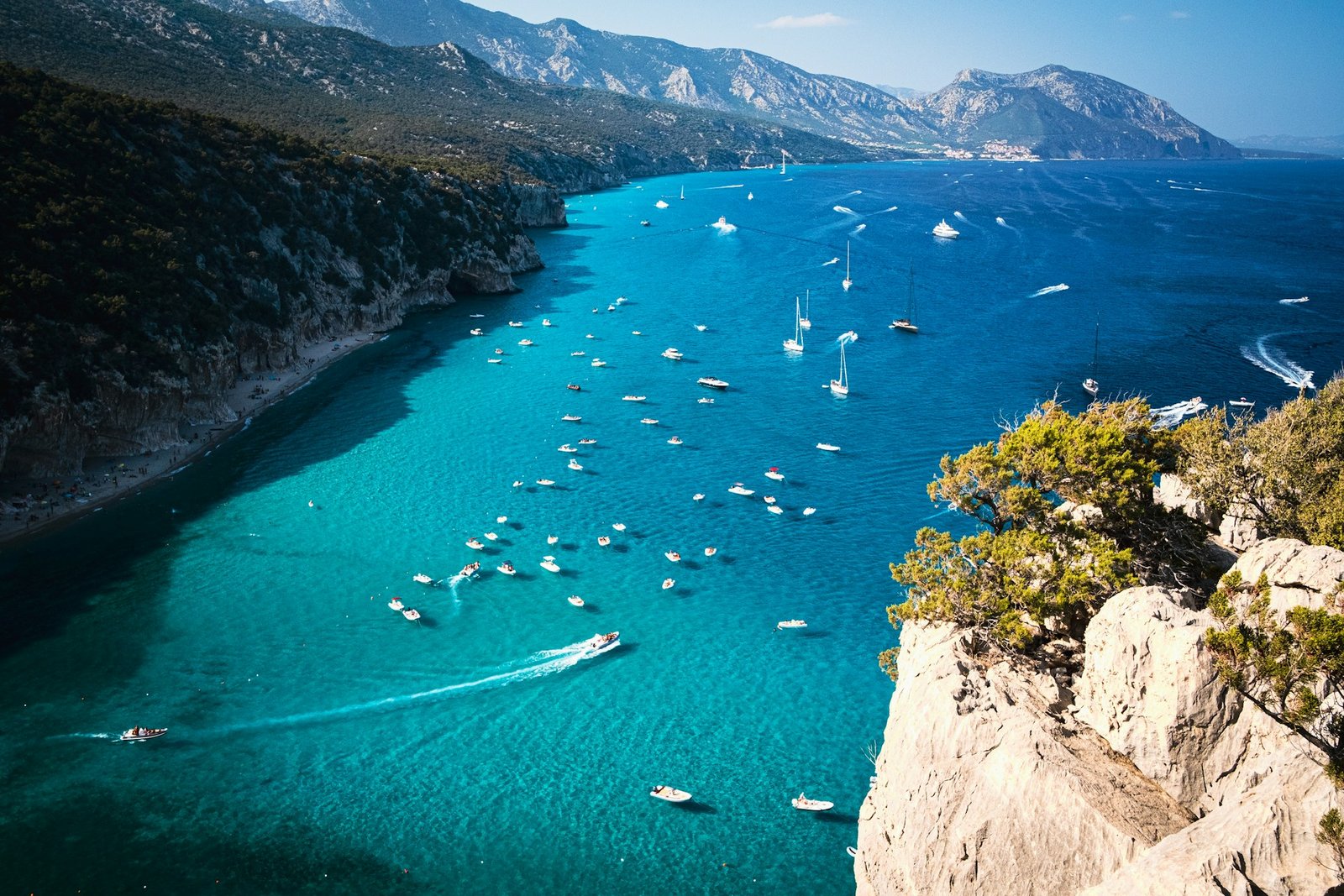
  • Greek Islands: Santorini, Milos or Naxos?

    Greek Islands: Santorini, Milos or Naxos?

    White houses stacked on a cliff, blue domes against an even bluer sea, and a sunset that makes whole crowds start clapping. That’s the picture most people have of the Greek islands, and it’s real. But the Cyclades are more than one postcard. There are more than 200 islands in this group alone, and they can feel completely different from one another.

    Three names come up again and again when people plan their first trip: Santorini, the famous one; Milos, the one everyone is suddenly talking about; and Naxos, the big, relaxed one that quietly wins over almost everyone who goes. This guide compares all three honestly, so you can pick the island that suits your trip and your budget. Or, even better, combine two of them.

    Santorini, Milos or Naxos at a Glance

    • Santorini: for the views, the sunsets and the wow factor. The most expensive and the most crowded.
    • Milos: for wild coastline, swimming spots and boat trips. Quieter, but you need a car.
    • Naxos: for long sandy beaches, mountain villages and great food. The best value of the three.
    • Getting there: all three have small airports and daily ferries from Athens (Piraeus).
    • Best time: late May to June and September to early October.

    Santorini: The Island Everyone Dreams Of

    Sunset over the village of Oia on Santorini, Greece

    Santorini is what’s left of a huge volcano that erupted around 3,600 years ago. The eruption created the caldera, a giant flooded crater, and the villages of Fira, Imerovigli and Oia sit right on its edge, around 300 metres above the sea. Standing on one of those terraces for the first time is genuinely breathtaking. There’s no other way to put it.

    The downside is just as real. Santorini is small, very popular and a stop for large cruise ships. In summer, the narrow lanes of Oia can be so packed around sunset that it’s hard to move. Prices for caldera-view rooms are among the highest in Greece, often several hundred euros a night in high season.

    How to enjoy Santorini without the stress:

    • Stay away from the caldera edge. Kamari and Perissa on the east coast have black-sand beaches, lots of restaurants and much lower prices. The caldera is only a short bus or taxi ride away.
    • Watch the sunset somewhere else. Oia is beautiful, but Imerovigli, the lighthouse at Akrotiri or a spot along the Fira to Oia hiking trail are far less crowded.
    • Walk the caldera path. The trail from Fira to Oia is around 10 kilometres and takes three to four hours. Go early in the morning, bring water and you’ll have some of the best views on the island almost to yourself.
    • Check cruise schedules. Days with several ships in port are noticeably busier. Plan your visit to Oia and Fira for days with fewer ships.

    Milos: Wild Coastline and Hidden Coves

    Boat anchored in clear turquoise water below a rocky coastline in the Greek islands

    Milos is also volcanic, but instead of one big crater it’s the coastline that makes it special. Over time, the volcanic rock has been shaped into white moon-like cliffs, colourful caves and sheltered coves with water so clear that boats look like they’re floating in the air.

    The island has around 70 beaches, and many of them are only reachable by boat or via bumpy dirt roads. That’s part of the appeal. It still feels a little wild, even though it has become much more popular in recent years.

    Highlights you shouldn’t miss:

    • Sarakiniko: the famous white rock landscape on the north coast. Come early in the morning or late in the afternoon, when the light is softer and the crowds are smaller.
    • Kleftiko: former pirate hideout with rock arches and sea caves. It can only be reached by boat, and a full-day boat trip around the island is the best thing you can do on Milos.
    • Plaka: the main village, perched on a hill, with small lanes and one of the best sunset views in the Cyclades.
    • Klima: a tiny fishing village with colourful boat garages built right into the water.

    The best bases are Adamas, the port town with the most restaurants, and Pollonia, a quieter fishing village in the north-east. Plan to rent a car or an ATV. Public buses exist, but they don’t reach many of the best spots.

    Naxos: Big, Green and Great Value

    The Portara, the ancient temple gateway of Apollo on Naxos, Greece

    Naxos is the largest island in the Cyclades, and it doesn’t rely on tourism alone. Farming is still important here, which gives the island a more authentic feel, much better food and noticeably lower prices than its famous neighbours.

    When the ferry pulls into the harbour, the first thing you’ll see is the Portara, a huge marble gateway from an unfinished temple of Apollo, standing alone on a small islet. It’s one of the most photographed spots on the island, especially at sunset.

    What makes Naxos special:

    • Beaches: the west coast has long sandy beaches like Agios Prokopios, Agia Anna and Plaka. The water is shallow, clear and perfect for families.
    • Mountain villages: inland you’ll find traditional villages like Halki, Filoti and Apeiranthos, with marble lanes, old churches and tavernas where locals still gather in the evening.
    • Food: Naxos is known for its cheese, its potatoes and its local citron liqueur, kitron. Many tavernas cook with ingredients from their own farms.
    • Prices: accommodation and restaurants are often clearly cheaper than on Santorini or Milos.

    Naxos is also perfectly located for island hopping. Santorini is only around 45 minutes away by fast ferry, and Paros, Mykonos and the small, quiet islands of the Lesser Cyclades are all within easy reach.

    Which Island Is Right for You?

    • Choose Santorini if it’s your first time in Greece, you’re celebrating something special or you simply want to see those famous views with your own eyes. Two or three nights are enough.
    • Choose Milos if you love swimming, exploring and boat trips, and you don’t mind driving on dirt roads.
    • Choose Naxos if you want beaches, good food and a relaxed pace at a fair price, or if you’re travelling with kids.

    Many travellers find that the perfect trip combines two islands: Naxos or Milos for most of the stay, and a short visit to Santorini for the views.

    Where to Stay on Each Island

    • Santorini: Imerovigli for quieter caldera views, Fira if you want restaurants and bus connections on your doorstep, and Kamari or Perissa for the beach and the best prices.
    • Milos: Adamas for convenience and ferry access, Pollonia for a calm fishing-village feel, and Plaka for sunsets and character.
    • Naxos: Naxos Town (Chora) for evenings out and the Portara, Agios Prokopios or Agia Anna for beach holidays, and a village like Halki if you want to experience the island away from the coast.

    Wherever you stay, look for places with a small pool or a sea view terrace. On the islands, those details make a bigger difference to your holiday than the star rating.

    Island Hopping: How the Ferries Work

    Boats in the old port of a Greek island harbour

    Ferries are the heart of every Greek island trip. They connect Athens and the islands every day, and in summer there are several connections between most of the Cyclades.

    • Athens (Piraeus) to Milos: from around 2.5 hours by fast ferry, with tickets starting at about €33.
    • Athens (Piraeus) to Naxos: from around 3 hours 20 minutes, with tickets starting at about €42.
    • Naxos to Santorini: from around 45 minutes, with tickets starting at about €31.
    • Milos to Santorini or Naxos: a few times a week, mostly from spring to autumn.

    There are two types of boat. Fast ferries are quicker but more expensive and can be bumpy on windy days. Large conventional ferries take longer but are cheaper, more stable and have open decks where you can sit in the sun. In July and August, book your tickets one to two months in advance, especially if you want to take a car.

    All three islands also have small airports with flights from Athens. Flying saves time, but luggage allowances are small and ferries are usually part of the experience.

    Best Time to Visit the Greek Islands

    • Late May to June: warm, long days and the sea is starting to warm up. Prices are still reasonable.
    • July and August: hot, busy and expensive. The strong northern wind, the meltemi, can make ferry trips rough and some beaches very windy.
    • September to early October: the sea is at its warmest, the crowds thin out and prices drop again. Many people consider this the best time of all.
    • November to April: quiet and cool. Many hotels and restaurants on Milos and in parts of Santorini close for the winter.

    What It Costs and the Tourist Tax

    Greece charges a climate resilience fee on accommodation. It’s paid per room and per night, and it’s usually not included in the price you see on booking platforms. From April to October it’s:

    • €15 per night for 5-star hotels and large holiday homes
    • €10 per night for 4-star hotels
    • €8 per night for smaller holiday rentals
    • €5 per night for 3-star hotels
    • €2 per night for 1- and 2-star hotels

    In the winter months the fee is much lower. It’s not a huge amount, but on a longer trip it adds up, so factor it in when you compare prices.

    A 10-Day Island-Hopping Itinerary

    • Day 1: Arrive in Athens. See the Acropolis in the late afternoon when it’s cooler.
    • Day 2: Early ferry to Milos. Afternoon at Sarakiniko, sunset in Plaka.
    • Day 3: Full-day boat trip around Milos to Kleftiko.
    • Day 4: Drive to Firiplaka and Tsigrado beaches, dinner in Pollonia.
    • Day 5: Ferry to Naxos. Evening at the Portara.
    • Day 6: Beach day at Agios Prokopios or Plaka.
    • Day 7: Drive to the mountain villages of Halki and Apeiranthos.
    • Day 8: Fast ferry to Santorini. Stay in Kamari or Perissa.
    • Day 9: Hike from Fira to Oia in the morning, sunset from Imerovigli.
    • Day 10: Ferry or flight back to Athens.

    How to Save Money on the Greek Islands

    • Travel in June or September. You get great weather at much lower prices than in July and August.
    • Take the slower ferry. Conventional ferries are often much cheaper than fast boats.
    • Stay away from the famous views. On Santorini, a room in Kamari can cost a fraction of one with a caldera view.
    • Eat where the locals eat. A gyros or a plate of grilled fish in a family taverna costs far less than dinner with a sunset view.
    • Rent a small car only where you need it. On Milos a car is essential; on Naxos you can get quite far by bus.

    Booking Tips

    • Airport transfer: Athens airport is about 40 minutes from the port of Piraeus, so book an airport transfer with Kiwitaxi in advance if you’re catching a ferry on the day you land
    • eSIM: install a Yesim eSIM before you fly, so you can check ferry times, maps and beach directions on every island
    • Tours and tickets: the Milos boat trip to Kleftiko, a Santorini caldera sailing cruise and Acropolis tickets in Athens sell out in summer, so compare options and book early on Klook

    Frequently Asked Questions

    Which Greek island is best for a first visit?

    For many first-timers, Santorini is a must-see for its views. For a longer and more relaxed stay, combine it with Naxos, which is only 45 minutes away by fast ferry and much better value.

    Is Milos better than Santorini?

    It depends on what you want. Santorini has the famous caldera views and sunsets. Milos has more beaches, better swimming and a quieter atmosphere.

    How many days do you need on each island?

    Two or three nights are enough for Santorini. Plan at least three nights for Milos and three to five for Naxos.

    Do I need to book ferries in advance?

    In July and August, yes, ideally one to two months ahead. In spring and autumn you can often book a few days before.

    What is the Greek tourist tax?

    It’s a climate resilience fee charged per room and per night. In summer it ranges from €2 for simple hotels to €15 for 5-star hotels and large holiday homes.

    So, Which One Will It Be?

    There’s no wrong choice in the Cyclades. Santorini will give you the views you’ve seen in a thousand photos, Milos will surprise you with its wild beauty, and Naxos will make you feel at home. If you can, don’t choose at all: hop on a ferry, visit two of them, and let the islands decide which one you’ll come back to.