
Ten days sounds like a lot until you land in Bali. Then you realise the island is bigger than it looks, the traffic is slower than you’d think, and there are about fifty things on your list. Most first-timers try to see all of them. They spend half their holiday in the back of a car and fly home tired.
This route does the opposite. It picks three bases, keeps the driving short and leaves enough space for the things that make Bali special: a morning walk through the rice fields, a temple ceremony you stumble into by accident, a sunset on the cliffs with a cold Bintang in your hand.
You’ll spend four nights in Ubud, two on Nusa Penida and three in Uluwatu, with a first night near the airport if you arrive late. Below you’ll find the day-by-day plan, where to stay in each place, what things really cost in 2026 and the mistakes almost everyone makes on their first trip.
Bali at a Glance
- Best for: rice terraces, temples, culture, surfing, beaches and great food on a small budget
- Currency: Indonesian rupiah (IDR). One US dollar is roughly 16,000 to 17,000 rupiah
- Airport: Ngurah Rai International (DPS), in the south near Kuta
- Entry: Visa on Arrival or e-VOA for many nationalities, 500,000 IDR for 30 days, plus the Bali tourist levy of 150,000 IDR
- Best time: April to October for dry weather, with April, May, June and September as the sweet spot
- Budget: around $25 to $40 a day for backpackers, $70 to $130 for a comfortable mid-range trip
Before You Fly: Visa and Tourist Levy
Two fees catch a lot of people off guard, so sort them out before you land.
The Visa on Arrival costs 500,000 IDR (around $30 to $35) and is valid for 30 days. Travellers from around 97 countries can get it, including most of Europe, the US, the UK, Canada and Australia. You can pay at the airport, but applying online for the e-VOA first saves you a queue after a long flight.
The Bali tourist levy is 150,000 IDR (about $10) per person, paid once per trip. The only official place to pay it is the Love Bali website, lovebali.baliprov.go.id, or its app. You get a QR code to show on arrival. Ignore any other website, ad or person offering to take this payment for you. They’re scams.
Also check how many months your passport still has left. Indonesia wants at least six months of validity from the day you arrive.
Why Three Bases Work Best
Bali looks small on a map. In reality, the drive from the airport to Ubud can take more than an hour and a half, and the drive from Ubud to Uluwatu can easily take two hours in the afternoon traffic. If you change hotels every night, you’ll spend your holiday in traffic jams.
With three bases, every move takes half a day at most, and each part of the trip has its own feeling. Ubud is green, cultural and a bit spiritual. Nusa Penida is wild, raw and dramatic. Uluwatu is all cliffs, surf beaches and sunsets. Together they give you a very complete picture of the island.
Days 1 to 4: Ubud, the Green Heart of Bali
Day 1: Arrival and Your First Evening
Take a private driver or a Grab from the airport to Ubud. A car for the whole ride usually costs somewhere around 300,000 to 400,000 IDR, depending on the time of day and how well you negotiate. If your flight lands late at night, sleep near the airport in Sanur and drive up the next morning. Arriving in Ubud exhausted at midnight is no fun.
Once you’re there, keep the first evening easy. Walk along Jalan Hanoman or Jalan Goutama, find a warung (a small local restaurant) and order a plate of nasi campur: rice with a little bit of everything. It costs around 25,000 to 45,000 IDR and it’s the best introduction to Balinese food you could ask for.
Day 2: Rice Terraces and a Water Temple
Get up early. And we mean early. The Tegallalang rice terraces north of Ubud are beautiful at any time, but by 10 a.m. the paths are full and it gets hot. If you’re there at 7 a.m., you’ll share the views with farmers rather than tour groups. Entry is around 25,000 IDR, and some farmers ask for a small donation to cross their land. Pay it. It’s their work that keeps the terraces looking like this.
From there, continue to Tirta Empul, the holy spring temple where Balinese Hindus come to purify themselves in the water pools. Visitors can join the ritual too, as long as you’re respectful and follow the order of the fountains the locals use. Sarongs are provided at the entrance.
In the afternoon, come back to Ubud and walk the Campuhan Ridge Walk. It’s a short, easy path along a grassy ridge between two river valleys, and it’s free. Go around 4 or 5 p.m. when the light turns soft and golden.
Day 3: Mount Batur Sunrise or a Slow Day
This is the day for the big choice. The Mount Batur sunrise trek starts in the middle of the night (pick-up is usually around 2 a.m.), and you hike up an active volcano in the dark to watch the sun rise over the crater and Lake Batur. Tours with a guide, breakfast and hotel pick-up cost around 500,000 to 800,000 IDR. It’s tiring, but most people say it was the highlight of their trip.
If you’re not a hiker, stay in Ubud instead. Visit the Sacred Monkey Forest, where hundreds of long-tailed macaques live among old temples and huge banyan trees. Hold on to your sunglasses and don’t carry food. The monkeys are cute, but they’re also very professional thieves. In the evening, watch a traditional Legong or Kecak dance at one of the temples in the centre. Tickets are cheap and the performances are wonderful.
Day 4: A Day Trip to the North
Hire a driver for the day (usually 600,000 to 850,000 IDR for the whole car, not per person) and head up into the cooler mountains.
The first stop is Pura Ulun Danu Bratan, the famous temple that seems to float on Lake Bratan. Mornings are often misty up here, which makes it look even more magical. On the way, stop at the Jatiluwih rice terraces, a UNESCO World Heritage Site that is bigger, quieter and more authentic than Tegallalang. If you have time, add one of the waterfalls in the area, like Banyumala or Sekumpul.

The driving is long, but the roads are beautiful, and you’ll see a side of Bali most beach tourists never do.
End the Day at Tanah Lot
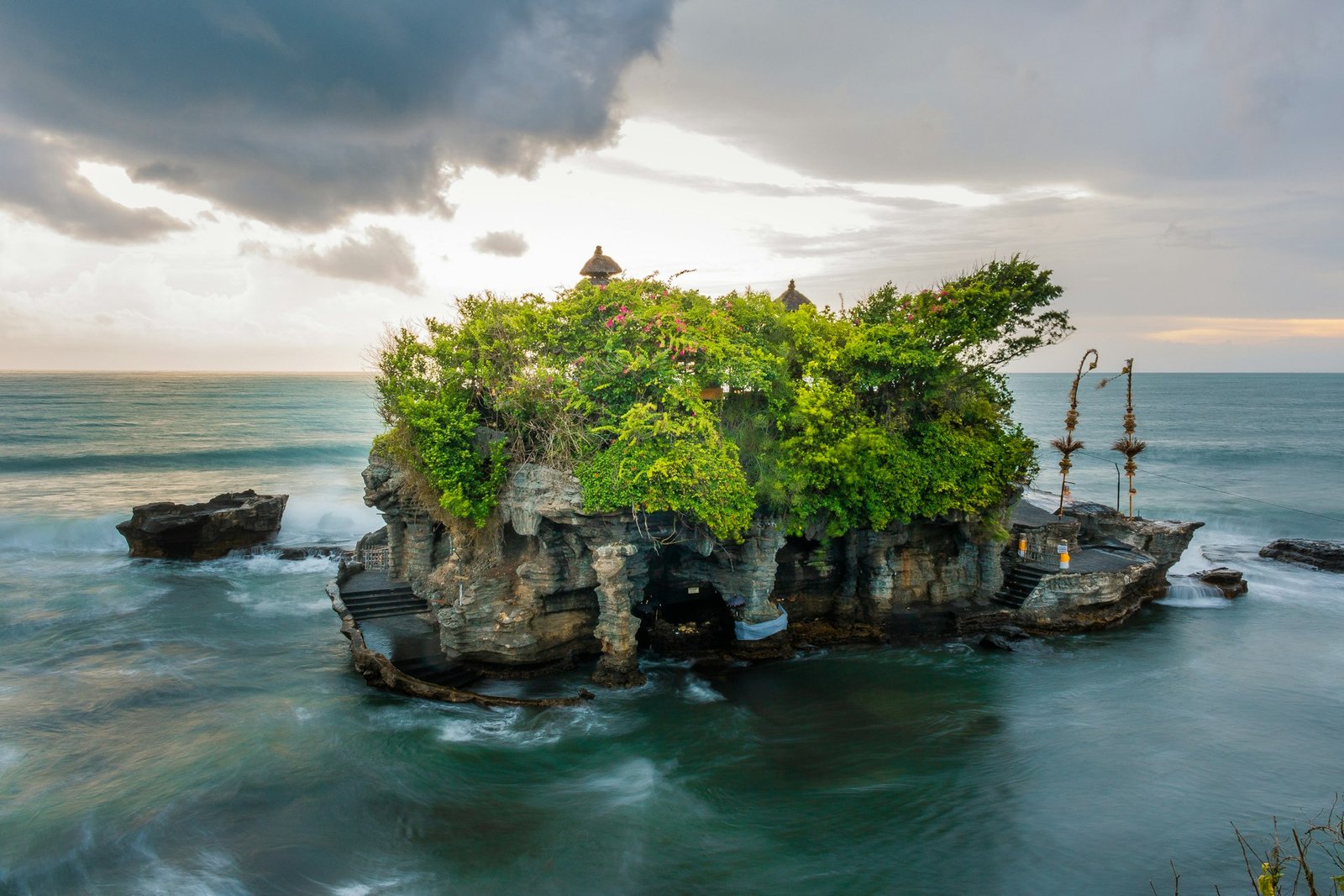
On the way back, head down to the southwest coast for sunset at Tanah Lot, the most famous temple in Bali and one of the most photographed places in all of Indonesia. The temple sits on a rock in the sea, and at high tide the waves cut it off from the land completely, so it looks as if it’s floating on the ocean.
Tanah Lot was founded in the 16th century by the Hindu priest Dang Hyang Nirartha, who is said to have rested on the rock during his travels along the coast. It’s one of the seven sea temples that were built to protect Bali from evil spirits, and each one can be seen from the next along the coast. Local legend says sea snakes living in the rocks below guard the temple from intruders.
Only Balinese Hindus are allowed to enter the temple itself, but you can walk out to the base of the rock at low tide, receive a blessing with holy water from the spring beneath it and watch the waves crash against the cliffs. Entry to the temple grounds costs around 75,000 IDR.
Here’s the honest part: at sunset, Tanah Lot is busy. Very busy. Skip the crowded viewpoint right in front of the temple and walk up to the clifftop cafés on the left. You’ll get the classic silhouette of the temple against the orange sky, a cold drink and a seat, all for the price of a coconut. From there, it’s about an hour and a half back to Ubud.
Where to Stay in Ubud
Stay within walking distance of the centre but not right on the main road. The small lanes off Jalan Bisma, Jalan Hanoman and Penestanan are perfect. Budget homestays and guesthouses cost from around $8 to $18 a night, often with breakfast and a pool. For $35 to $70 you’ll find lovely boutique places with views of the jungle or the rice fields.
A homestay in a traditional Balinese family compound is worth it for at least a couple of nights. You’ll see the family make their daily offerings, hear the gamelan practice in the evening, and often get the best banana pancakes of your life for breakfast.
Days 5 and 6: Nusa Penida, the Wild Island
Getting There
Fast boats to Nusa Penida leave from Sanur, about 45 minutes to an hour by car from Ubud. The crossing takes around 30 to 45 minutes. Tickets are cheap, but prices change often, so check them when you book. Book a day ahead in high season and be at the harbour early. Boarding in Sanur happens straight from the beach, so wear shorts and keep your shoes in your hand.
Many people visit Nusa Penida as a day trip from Bali. We think that’s a mistake. The day trips start at dawn, rush through three or four viewpoints and leave you stuck on bumpy roads for hours. Two nights on the island give you time to see the highlights calmly and enjoy them when the crowds are gone.
Day 5: The West Coast
The west coast is where you’ll find the famous views. Kelingking Beach, with its cliff shaped like a T-Rex, is the one on every Instagram feed, and it really does look like that. The path down to the beach is extremely steep and only for fit, sure-footed people with proper shoes. Most visitors just enjoy the view from the top, and there’s no shame in that.
Nearby, Broken Beach is a natural stone arch with the sea flowing in underneath it, and Angel’s Billabong is a rock pool right on the edge of the ocean. Look but don’t swim there unless the sea is completely calm. Waves can crash into the pool without warning.
Day 6: The East Coast and Snorkelling
The east side of the island is quieter. Diamond Beach and Atuh Beach are two of the prettiest beaches in the whole region, with white sand, turquoise water and dramatic cliffs. The steps down to Diamond Beach are carved into the rock and a lot easier than Kelingking.
Alternatively, book a snorkelling trip. The waters around Nusa Penida are famous for manta rays, which gather at Manta Point almost all year. Seeing a manta glide under you with a wingspan of three or four metres is something you’ll never forget. Half-day boat trips including gear are good value and can often be booked through your guesthouse.
A warning about the roads: Nusa Penida’s roads are narrow, steep and in places very rough. Unless you’re an experienced scooter rider, hire a car with a driver for the day. It’s not expensive, and it’s much safer.

Days 7 to 10: Uluwatu, Cliffs, Surf and Sunsets
Getting There
Take the fast boat back to Sanur, then a car or Grab to Uluwatu on the Bukit Peninsula in the far south. The drive takes about an hour, depending on traffic.
Days 7 and 8: Beaches and the Kecak Dance
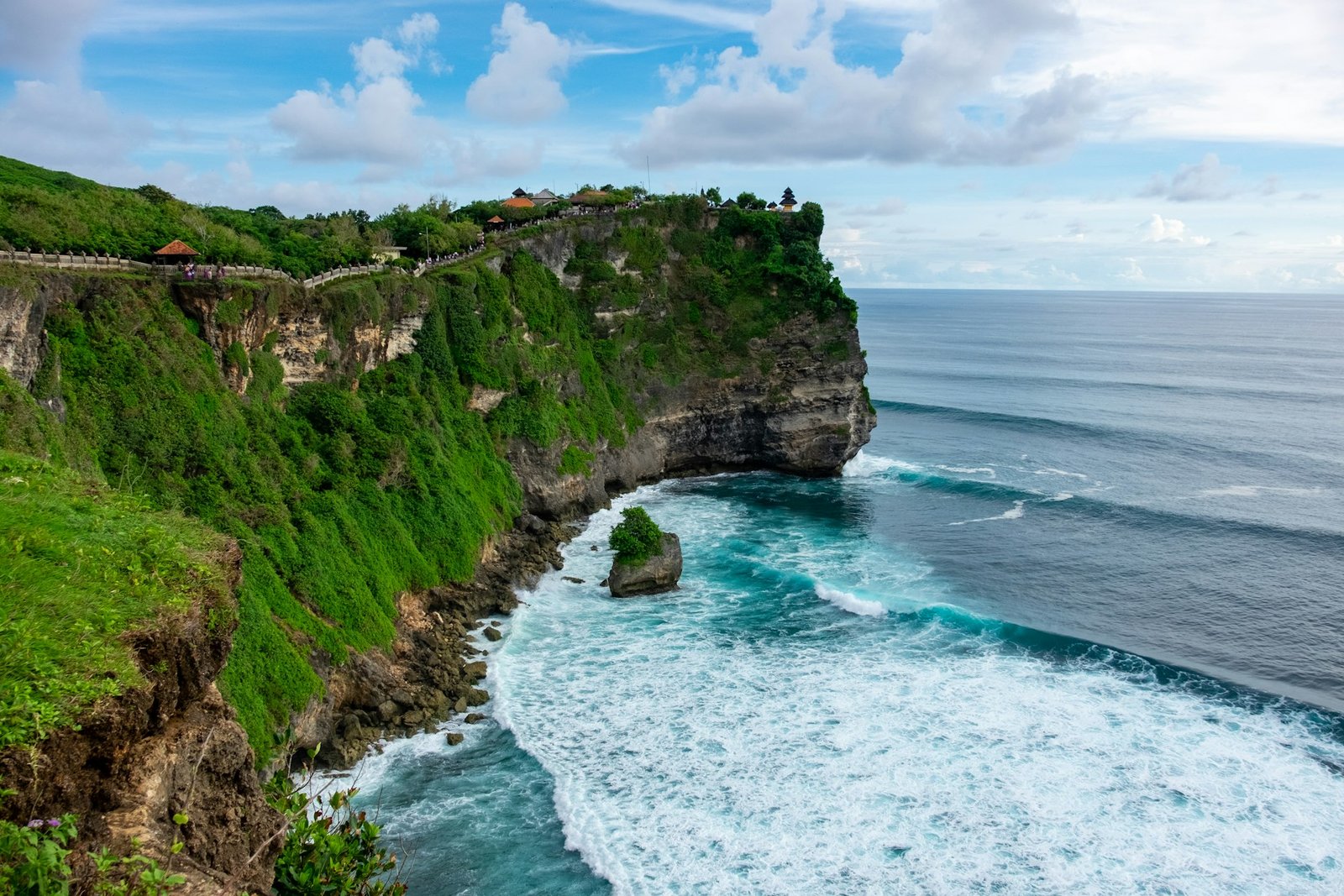
Uluwatu is built on high limestone cliffs, and most of its beaches sit at the bottom of long staircases. That’s part of the charm. Padang Padang, Bingin, Suluban and Melasti are all different: small and busy, surf-focused and bohemian, hidden in a cave, or wide with bright white sand.
For sunset, go to Uluwatu Temple, which sits on the edge of a cliff 70 metres above the Indian Ocean. Every evening there’s a Kecak fire dance in the open-air amphitheatre next to the temple, with a chorus of dozens of men chanting as the sun goes down behind them. Tickets and temple entry together come to around $8 to $15. Arrive early to get a seat with a view of the sea. The monkeys here are even bolder than in Ubud, so keep your glasses and phone well secured.
Day 9: Surf Lesson or Beach Club
Uluwatu is one of the best surf regions in the world. The big breaks are for experts, but there are gentle beginner spots nearby and plenty of surf schools that will get you standing on a board within a couple of hours.
If surfing isn’t your thing, spend the day at one of the cliff-top beach clubs or simply at your guesthouse pool. On a 10-day trip, you need at least one day that isn’t planned at all.
Day 10: Last Swim and Departure
Uluwatu is about 40 minutes to an hour from the airport, which makes it the perfect last stop. Have a final swim, a final coconut (around 15,000 to 25,000 IDR) and give yourself plenty of time for the drive. The traffic around the airport can be unpredictable.
Where to Stay in Uluwatu
The area is spread out, so choose a base close to the beach you like most. Bingin and Padang Padang are great for a relaxed surf vibe. Guesthouses start at around $15 to $25, while $50 to $90 gets you a beautiful room with a pool, often with a view of the ocean.
You will need a scooter or a driver to get around, as there’s almost nothing within walking distance and the roads have no footpaths.
Getting Around Bali
- Private driver: the most comfortable way to do day trips. Around 600,000 to 850,000 IDR per car for a full day, and most drivers speak good English.
- Grab and Gojek: these ride-hailing apps work well in the south and are cheap. In some areas, including parts of Ubud and around the harbours, local drivers don’t allow them to pick up passengers.
- Scooter: around 60,000 to 90,000 IDR a day. Only rent one if you already ride confidently, carry an international driving permit with a motorcycle licence, and always wear a helmet. Police checks are common, and your travel insurance may not cover you otherwise.
What It Really Costs
Here’s a realistic 10-day budget per person for a comfortable mid-range trip, not counting international flights.
- Accommodation: $20 to $45 per person per night, sharing a double room in nice guesthouses
- Food: $12 to $25 a day if you mix warungs with a few cafés and restaurants
- Transport: around $150 to $250 for the whole trip, including drivers for transfers and day trips, and the boats to Nusa Penida
- Activities: around $150 to $250, including the Batur trek, a snorkelling trip, temple entries and the Kecak dance
- Visa and levy: about $45
That adds up to roughly $800 to $1,400 per person for ten days on the ground. Backpackers who stay in simple homestays, eat only at warungs and ride scooters can do it for much less. Couples save a lot too, since rooms and drivers are paid per room or per car, not per person.
Temple Etiquette
Bali’s temples are working places of worship, not just sights, and a few simple rules make a big difference.
- Cover your shoulders and knees. Most temples lend or rent a sarong and a sash at the entrance.
- Don’t climb on shrines or walls, and never stand higher than a priest.
- Women who are menstruating are traditionally asked not to enter temples. It’s a local belief, and visitors are expected to respect it.
- Don’t step on the small woven offerings (canang sari) you’ll see on the ground everywhere.
- If you come across a ceremony, stay quiet, keep your distance and ask before taking photos.
Common First-Timer Mistakes
Trying to see everything. Bali rewards slow travel. Three bases, as in this route, are plenty for ten days.
Underestimating traffic. A 30 km drive can take an hour and a half. Plan your days around that.
Staying only in the south. Kuta and Seminyak are fine for a night, but the real magic of Bali is in the rice fields, the mountains and the villages.
Doing Nusa Penida as a day trip. Stay at least one night. You’ll see more and spend less time in a minivan.
Drinking tap water. Don’t. Buy bottled water or, better, refill your own bottle at one of the many water stations around the island.
Forgetting about Nyepi. On the Balinese New Year, usually in March, the entire island shuts down for 24 hours, including the airport. Nobody is allowed outside, not even tourists. It’s a fascinating experience, but check the date before you book your flights.
When to Go
The dry season runs from April to October. July and August are the busiest months, with higher prices and more crowds at every viewpoint. April, May, June and September are the best months for most travellers: great weather, fewer people and better deals on accommodation.
The rainy season runs from November to March. It rarely rains all day. Usually there’s a heavy downpour in the afternoon and clear skies again afterwards. The rice fields are at their greenest, prices are lower and the island is quieter, but the sea around Nusa Penida can be rough and some boat trips get cancelled.
Booking Tips
- Airport transfer: traffic around Denpasar airport is heavy, so book an airport transfer with Kiwitaxi in advance and a driver will wait for you with a fixed price
- eSIM: install a Yesim eSIM before you fly, so you can use maps and ride apps as soon as you land
- Tours and tickets: book the Mount Batur sunrise hike, a Nusa Penida day trip or a Bali swing and rice terrace tour on Klook, often cheaper than booking on the spot
Final Thoughts
Bali has been famous for so long that some people think it’s been “ruined” by tourism. Parts of the south are busy, it’s true. But get up early in Ubud, watch the mist lift off Lake Bratan, stand on the cliffs of Nusa Penida or sit through a Kecak dance while the sun sinks into the ocean, and you’ll understand why people keep coming back.
Ten days is the perfect amount of time for a first visit. Enough to see the island’s many faces, not so much that you run out of things to do. Just don’t be surprised if you start planning your second trip before the first one is over.
Leave a Reply