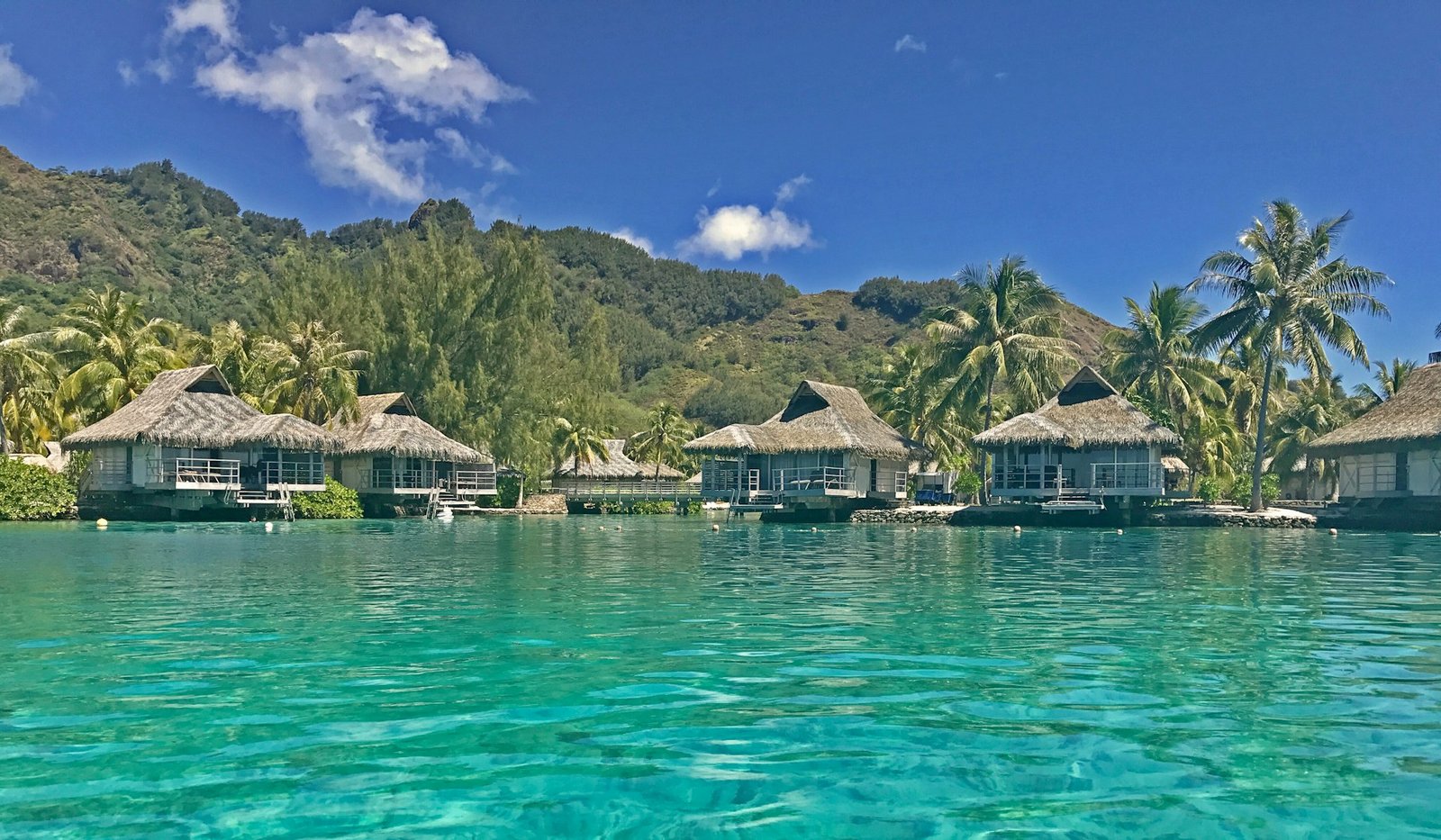
Say “Bora Bora” to anyone and watch their face. First comes the dreamy look, then the wince. Everyone has seen the photos of overwater bungalows on a lagoon so blue it looks edited, and everyone has heard the prices that go with them. A thousand euros a night is normal at the big resorts. Two or three thousand is not unusual.
Here’s what most people don’t know: Bora Bora is not only a resort island. About ten thousand people live here. They shop at supermarkets, eat at food trucks and swim at a public beach that is every bit as beautiful as the one outside a five-star hotel. Once you step off the resort path, the island becomes a very different place, and a far cheaper one.
This guide shows you how to see Bora Bora on a real budget in 2026: where to sleep, how to get there without paying for a private boat transfer, what to eat, which lagoon tour is worth the money, and what a week really costs.
Bora Bora at a Glance
- Where: Leeward Islands of the Society Islands, French Polynesia, about 260 km northwest of Tahiti
- Currency: CFP franc (XPF), pegged to the euro. 1 euro is always 119.33 XPF, and one US dollar is roughly 100 francs
- Getting there: international flight to Papeete (Tahiti), then a 50-minute Air Tahiti flight or a ferry
- Main village: Vaitape, on the west coast of the main island
- Best time: May to October for dry weather, with May, June, September and October as the sweet spot
- Budget stay: family guesthouses (pensions) from about €50 to €130 a night
Why Bora Bora Doesn’t Have to Ruin You
The trick is simple. Almost all of the famous overwater resorts sit on the motus, the small flat islands on the reef that ring the lagoon. You can only reach them by boat, so once you’re there you pay resort prices for every meal, every drink and every ride back to the main island.
The main island is different. It has a 32 km coastal road, a couple of small supermarkets, snack bars, a handful of food trucks and a growing number of family-run guesthouses. Stay here and you get the same lagoon, the same mountain and the same sunsets. You just wake up in a garden bungalow instead of hovering over the water.
And you don’t have to give up the overwater dream completely. Many travellers spend most of their trip in a guesthouse and then book one or two nights in an overwater bungalow at the end. That single splurge often costs less than a “cheap” week at a big resort, and it feels far more special when it’s the grand finale.
Getting to Bora Bora
Flying to Tahiti
Every trip starts at Faa’a International Airport in Papeete on Tahiti. Air Tahiti Nui, Air France, French bee, United and a few others fly in from Los Angeles, San Francisco, Paris, Tokyo, Auckland and Seattle, depending on the season.
This is where most of your money goes. Return flights from Europe usually run between about $1,200 and $2,800, depending on the month. From the US West Coast you can sometimes find fares well under $1,000 if you book early and stay flexible. French bee is often the cheapest option from Paris and San Francisco, but check what baggage is included before you celebrate.
A tip that saves real money: fly on a weekday outside school holidays and set price alerts at least four to six months ahead. The difference between a good and a bad fare to Tahiti can easily pay for your entire accommodation.
From Tahiti to Bora Bora
You have two options.
Air Tahiti flies from Papeete to Bora Bora several times a day. The flight takes about 50 minutes, and if you sit on the left side of the plane on the way in, you’ll often get a stunning view of the lagoon before landing. A single return ticket usually costs somewhere around $200 to $350.
If you want to see more than one island (and you should), look at Air Tahiti’s multi-island passes. The Maeva Pass covers Moorea, Huahine, Raiatea and Bora Bora and starts at around €416 for two islands. The Maupiti Pass adds tiny Maupiti, which many people fall in love with even more than Bora Bora. The passes have strict rules (each island only once, a fixed circuit, no refunds), so plan your route before you buy.
The Apetahi Express ferry is the slower, cheaper way. It sails from Papeete to Huahine, Raiatea, Taha’a and Bora Bora three times a week, and the trip to Bora Bora takes almost seven hours. A single ticket costs around 7,000 XPF. There’s also the Tuatea Pass for 24,000 XPF, which gives you 30 days of unlimited travel between Tahiti, Moorea, Huahine, Raiatea, Taha’a, Bora Bora and Maupiti. If you’re island-hopping for a few weeks and don’t mind a long day at sea, it’s excellent value.
From the Airport to Your Guesthouse
Bora Bora’s airport isn’t on the main island. It sits on Motu Mute, a small islet on the northern reef. The luxury resorts pick up their guests with private boats, and they charge for it.
If you’re staying on the main island, you take the regular airport shuttle boat across the lagoon to Vaitape. From there, most guesthouses will collect you if you let them know your flight in advance. Ask about this when you book. It’s one of those small things that makes a big difference to your first hour on the island.
Where to Stay on a Budget
Family Guesthouses (Pensions)
This is the heart of budget Bora Bora. A pension is a small, often family-run guesthouse with a few rooms or bungalows. Many include breakfast, some have a shared kitchen, and quite a few lend out kayaks or snorkel gear for free. Expect to pay roughly €50 to €130 a night for two.
You won’t get a butler or an infinity pool. What you get is a host who knows which food truck grills the best fish tonight, where the rays are feeding this week and which neighbour rents out scooters for less. That local knowledge is worth a lot.
Where on the Island
Matira Point in the south is the best area for most visitors. It has the island’s most famous public beach, a few snack bars and supermarkets, and calm, shallow water right in front of you. Several guesthouses sit within walking distance of the sand.
Vaitape and the west coast are handy if you want to be close to the ferry, the shops and the boat to the airport. The sunsets over the lagoon here are some of the best on the island.
The east coast is quieter and greener, with fewer tourists and fewer places to eat. It’s lovely if you have a scooter and want peace, less ideal if you want to walk everywhere.
Mid-Range and the One-Night Splurge
Between guesthouses and the top resorts sits a small middle ground. Some of the older hotels on the main island offer garden bungalows from around €300 a night and overwater units that are cheaper than on the motus, especially outside peak season.
If you want to tick off the overwater bungalow, here’s how to keep it sane: choose one night, not five. Pick shoulder season. Book directly and compare with the big booking platforms. And eat your big meal in Vaitape before you check in, not at the resort restaurant.
Getting Around the Island
The coastal road around the main island is about 32 km long, flat most of the way and easy to navigate. There’s no need to rent a car.
- Bicycle: the cheapest option and perfectly doable in a day if you start early. The only real climb is the short hill near Faanui Bay.
- Scooter: around 5,000 to 7,000 XPF a day. This is the most popular choice and lets you stop at every viewpoint.
- Small electric cars: fun, but more expensive than a scooter. Worth it for families or if it rains.
- Taxis: there are no meters and prices for visitors are high. Use them only when you have to, and agree on the fare before you get in.
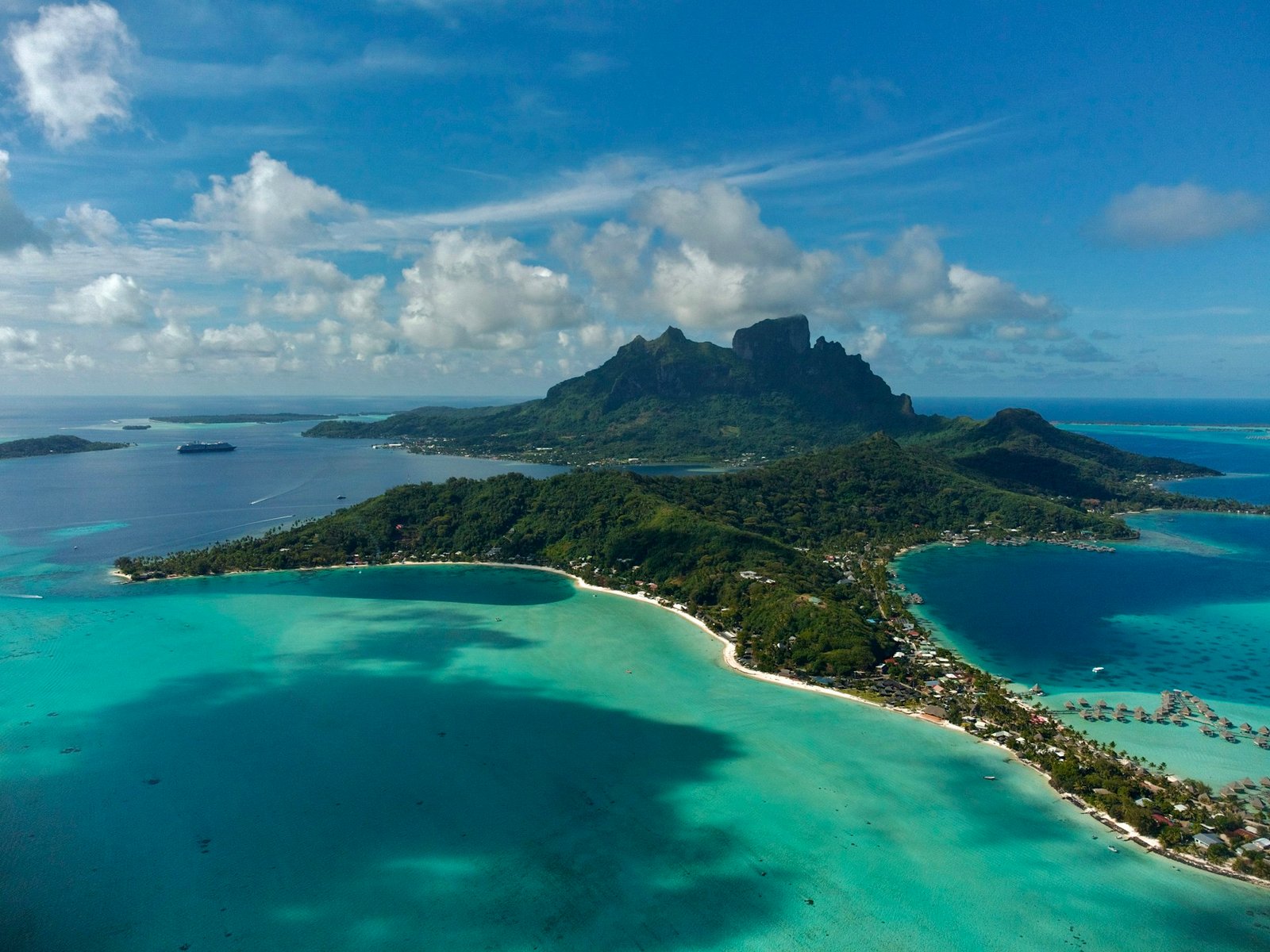
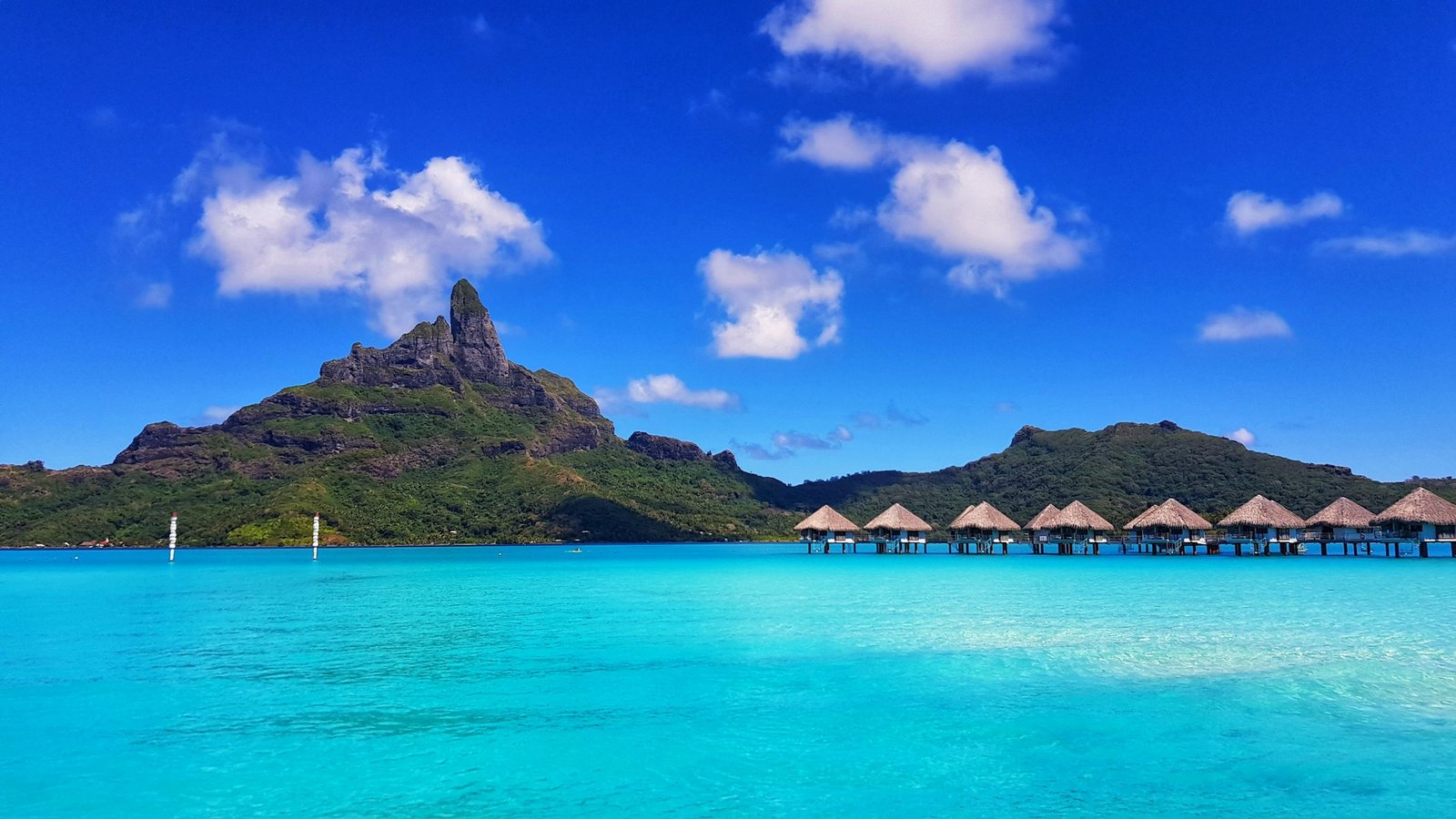
Plan at least one day to ride all the way around. You’ll pass old WWII cannons left by the American troops stationed here during the war, quiet churches, fruit stands, and view after view of Mount Otemanu, the jagged black peak that makes Bora Bora look like no other island on earth.
The Best Free and Cheap Things to Do
Matira Beach
Matira is a public beach, and it’s free. The sand is soft and white, the water is shallow for a long way out, and the colour goes from pale turquoise to deep blue as you look toward the reef. Come early in the morning when it’s almost empty, or late in the afternoon for the sunset. Bring your own snorkel mask. Small fish and the occasional ray pass right by the shore.

Kayak or Paddle the Lagoon
Many guesthouses have free kayaks or paddleboards. Paddling out across the lagoon in the morning, when the water is glassy and the mountain is still clear of clouds, is one of the best experiences on the island. It costs you nothing but a bit of sunscreen.
Hike Toward the Mountain
Mount Otemanu itself is too steep and crumbly to climb safely, and the summit is off limits. There are, however, trails on the lower slopes with wonderful views across the lagoon. The paths can be muddy, badly marked and slippery after rain, so a local guide is a good idea. Guided hikes usually cost around €40 to €60 per person.
Sunset Over the Lagoon
The west coast between Vaitape and Matira is the place for sunsets. Sit on the sea wall, grab a cold drink from the supermarket and watch the sky turn orange behind Taha’a and Raiatea. It’s the same view the bar at the resort sells for €25 a cocktail.
The Lagoon Tour: The One Thing You Shouldn’t Skip
If you only spend money on one activity, make it a shared lagoon tour. These half-day or full-day boat trips are the best way to see the part of Bora Bora that made it famous, and they are far cheaper than you’d think. Expect around €60 to €90 per person.
A typical tour includes:
- Snorkelling in a coral garden full of colourful fish
- Swimming with stingrays in waist-deep water over white sand
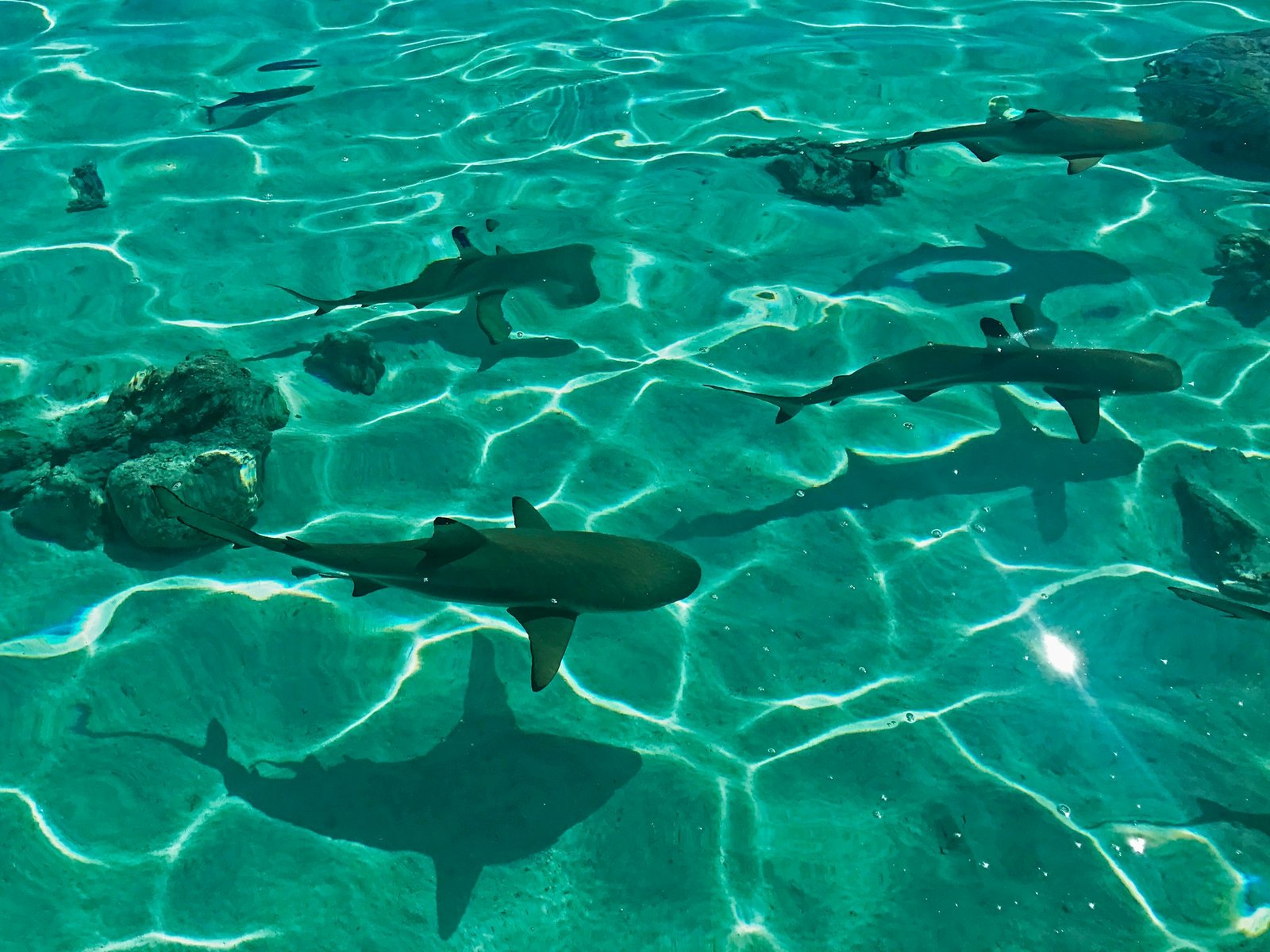
- Snorkelling with blacktip reef sharks, which are small, shy and not dangerous to people
- A stop at a motu for lunch, often a traditional Polynesian picnic
- Photo stops with Mount Otemanu in the background
The sharks sound scary, but most people end up loving this part. The blacktips circle calmly around the group, and in a few minutes the nerves turn into pure excitement. Listen to your guide, keep your hands to yourself, and don’t touch or feed anything.
Some operators still offer shark and ray feeding. Many travellers now prefer tours that watch the animals without feeding them, and it’s worth asking before you book.
A private boat tour for two runs about €300 to €500. It’s lovely but not necessary. On a small shared tour you often end up with just a handful of other guests anyway, and the price difference buys you your whole accommodation for two or three nights.
What to Eat Without Paying Resort Prices
Food is where resort guests spend a fortune and guesthouse guests save the most. A dinner for two at a resort restaurant can easily reach €150. Here’s how locals eat.
Roulottes (Food Trucks)
Roulottes are food trucks, and they’re one of the great pleasures of French Polynesia. You’ll find them in Vaitape and around Matira. A big plate of grilled fish, chicken or steak frites costs around 1,200 to 2,000 XPF (about €10 to €17).
Order the poisson cru at least once. It’s the national dish: raw tuna marinated in lime juice and mixed with coconut milk, cucumber, tomato and onion. Fresh, cold and perfect after a long, hot day in the sun.
Snack Bars
“Snack” is what locals call the small cafés that serve simple, filling food. Think sandwiches on fresh baguette, chow mein, fried fish and cold drinks. Prices are fair, portions are big, and you’ll share the tables with people who live on the island.
Supermarkets
Groceries are expensive because almost everything is shipped in, but they’re still far cheaper than eating out every meal. A baguette costs around 100 to 150 XPF because the price is regulated. Fresh tropical fruit is great value, especially pineapples, papayas and bananas from local growers at the roadside stands.
If your guesthouse has a kitchen, make breakfast and lunch yourself and eat out for dinner. That alone can cut your food budget in half.
Drinks
Alcohol is heavily taxed and expensive, even in supermarkets. A local Hinano beer at a bar costs far more than you’d pay at home. If you like a drink at sunset, buy it at the supermarket and enjoy it on the beach.
When to Go
Bora Bora is warm all year, with air temperatures mostly between 25 and 30 degrees Celsius. The big difference is the rain.
Dry season (May to October): less rain, lower humidity and the most reliable weather. July and August are the busiest months because of European summer holidays, and prices are at their highest.
Shoulder season (May, June, September, October): the best time for a budget trip. The weather is just as good as in peak season, but international flights are often a few hundred dollars cheaper and accommodation rates can drop by 20 to 30 percent.
Wet season (November to April): hotter and more humid, with heavy tropical showers that usually pass quickly. December to March is also cyclone season, although direct hits on Bora Bora are rare. You’ll find the lowest prices now, especially in November and April.
A Sample 7-Day Budget Itinerary
Here’s a relaxed week that shows the island without draining your bank account.
Day 1: Fly from Papeete, take the shuttle boat to Vaitape and check into your guesthouse near Matira. Swim, rest and watch the sunset from the beach.
Day 2: Rent a scooter or bicycle and ride all the way around the island. Stop at the WWII cannons, the viewpoints over Faanui Bay and a roulotte in Vaitape for lunch.
Day 3: Full-day shared lagoon tour with coral gardens, stingrays, reef sharks and a motu picnic. This is the highlight of the week.
Day 4: Slow day. Kayak on the lagoon in the morning, snorkel off Matira in the afternoon, eat at a snack bar in the evening.
Day 5: Guided hike on the slopes of Mount Otemanu for the views over the lagoon. Evening at the food trucks.
Day 6: Free day or a day trip. Some travellers take the ferry to Taha’a, the “vanilla island”, or combine Bora Bora with a few days on Maupiti.
Day 7: If you’ve saved enough, move to an overwater bungalow for your last night. If not, one more lazy morning at Matira before your flight.
What Does It Really Cost?
Here’s a realistic daily budget per person, not counting international flights.
- Accommodation: €25 to €65 per person in a guesthouse (sharing a double room)
- Food: €15 to €30 if you cook breakfast and lunch and eat at roulottes in the evening
- Transport: €8 to €15 a day, averaging a scooter day and a few bike days
- Activities: €20 to €50 a day on average, with one lagoon tour and one guided hike across the week
That adds up to roughly €130 to €200 per person per day. For a couple spending a week on the island, that’s around €1,800 to €2,800 for everything on the ground, plus the domestic flight or ferry from Tahiti.
Compare that with a single night at a luxury resort on a motu, and you understand why so many travellers are rethinking Bora Bora.
Practical Tips Before You Go
- Entry: French Polynesia is part of France but not part of the Schengen Area. EU citizens can travel freely, and many other nationalities, including travellers from the US, UK, Canada and Australia, can visit visa-free for short stays. Check the current rules for your passport before you book.
- Money: cards are accepted at most guesthouses, supermarkets and tour operators, but carry some cash for roulottes and roadside fruit stands. There are ATMs in Vaitape.
- Tourist tax: a small tourist tax is charged per person per night on top of your room rate. Ask your guesthouse how much it is, as it’s often paid on the spot.
- Book early: the best-value guesthouses on Bora Bora have only a few rooms, and they fill up months ahead for the dry season.
- Reef-safe sunscreen: the lagoon’s corals are fragile. Use mineral sunscreen and a rash guard for long snorkel sessions.
- Language: French and Tahitian are the official languages. English is widely spoken in tourism, but a friendly “ia ora na” (hello) and “mauruuru” (thank you) go a long way.
Booking Tips
- Airport transfer in Tahiti: if you stay a night in Papeete before or after Bora Bora, book an airport transfer with Kiwitaxi so you don’t have to deal with taxis after a long flight
- eSIM: install a Yesim eSIM before you fly, so you have data for maps and messages in French Polynesia without expensive roaming
- Lagoon tours: a shared lagoon tour with snorkelling among stingrays and blacktip reef sharks is the best-value way to see Bora Bora from the water. You can compare and book tours on Klook
Final Thoughts
Bora Bora will never be a cheap destination. The flights alone make sure of that. But it doesn’t have to be a once-in-a-lifetime fantasy reserved for honeymooners with unlimited budgets.
Stay with a local family, eat where the locals eat, ride a scooter around the island and spend your money on one great lagoon tour. You’ll see the same turquoise water and the same dramatic mountain as the people in the thousand-euro bungalows. And if you still want that overwater night at the end, you’ll have earned it, and probably saved enough to pay for it.
Leave a Reply