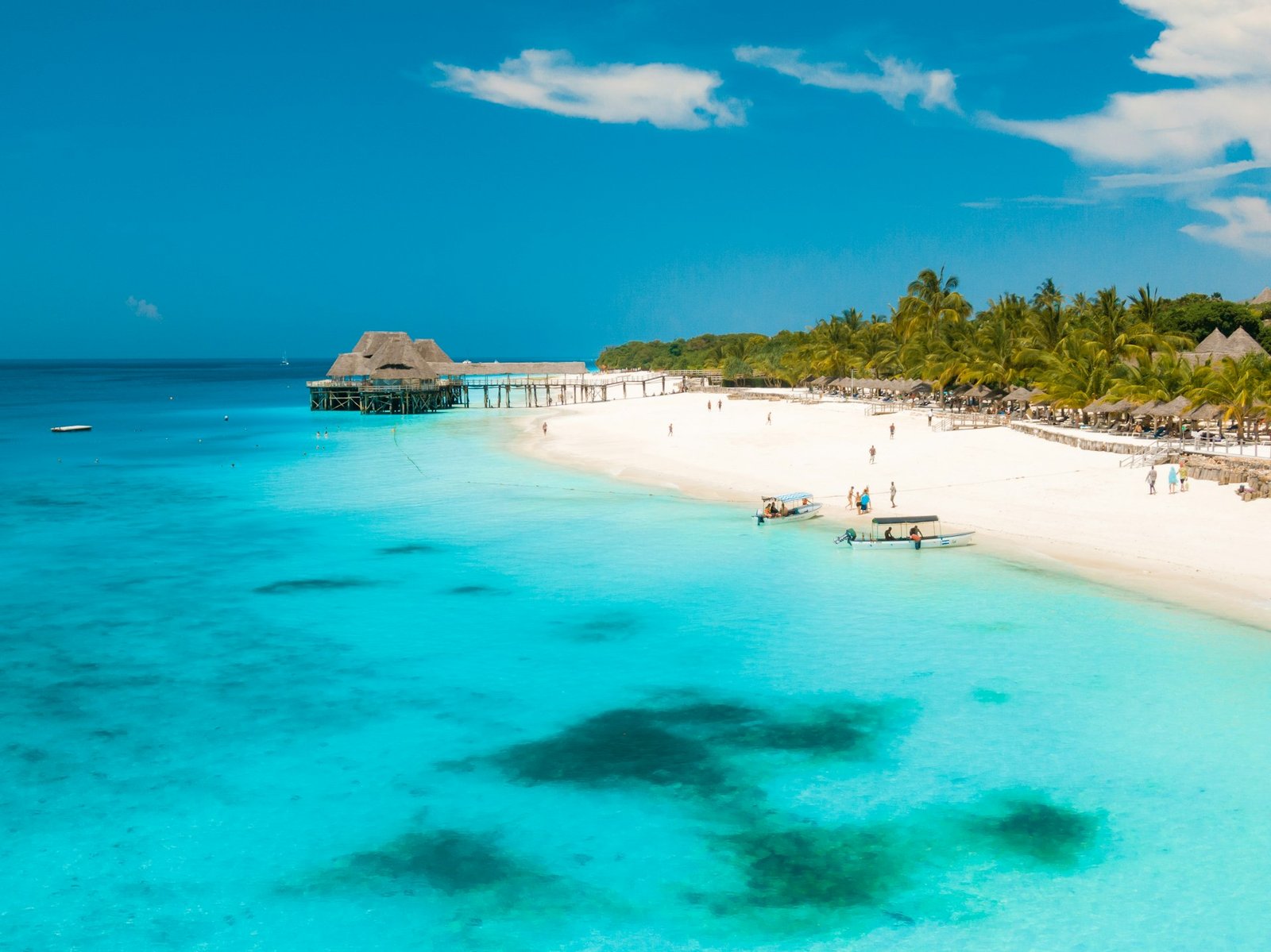
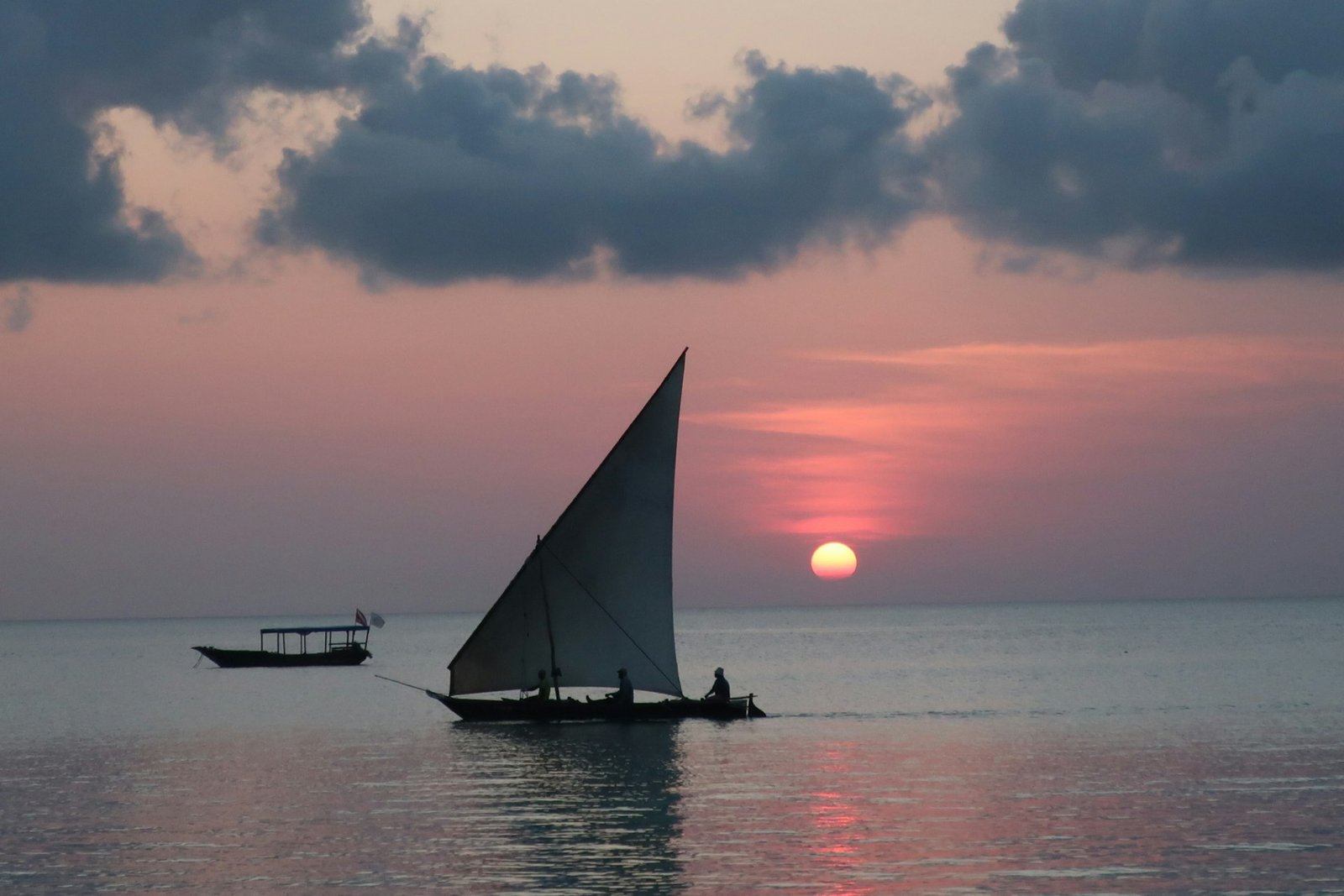
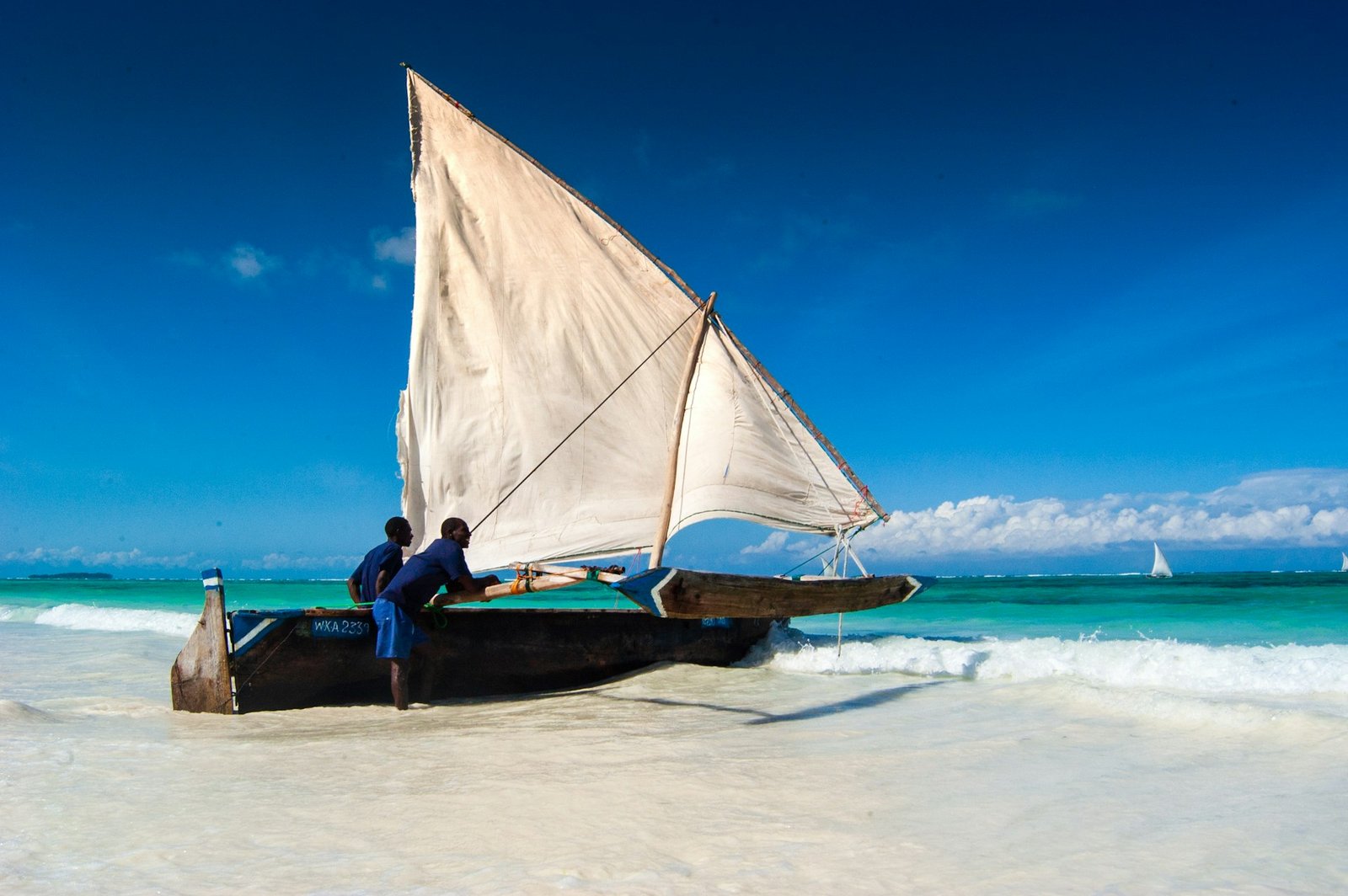
Zanzibar has a name that sounds like a fairy tale, and for once the place lives up to it. Carved wooden doors in a maze of old alleys. The smell of cloves and cinnamon drifting over a spice farm. Wooden dhows with patched sails gliding past a beach so white it hurts your eyes. And at the end of every day, a sunset that turns the Indian Ocean pink.
The best part is that Zanzibar doesn’t have to be expensive. Yes, there are luxury resorts here that cost as much as anywhere in the Maldives. But there are also small guesthouses, street food markets and local minibuses, and with a bit of planning a week on the island costs far less than most people think.
This guide covers everything you need for a first trip: Stone Town, the spice farms, the forest with monkeys you won’t find anywhere else on earth, the best beaches for your style, and what it all really costs in 2026.
Zanzibar at a Glance
- Where: an archipelago in the Indian Ocean, about 35 km off the coast of mainland Tanzania. The main island is called Unguja, but almost everyone just says Zanzibar
- Currency: Tanzanian shilling (TZS), but US dollars are widely accepted for hotels and tours
- Airport: Abeid Amani Karume International (ZNZ), just outside Stone Town
- Entry: Tanzanian visa (USD 50 for most nationalities, USD 100 for US citizens) plus mandatory Zanzibar travel insurance (USD 44)
- Best time: June to October and December to February
- Budget: around $50 to $80 a day for budget travellers, $120 to $200 for a comfortable mid-range trip
Before You Fly: Visa and Mandatory Insurance
Zanzibar is part of Tanzania, so you need a Tanzanian visa. For most nationalities, including travellers from the UK and the EU, a single-entry tourist visa costs USD 50 and is valid for 90 days. US citizens pay USD 100 for a multiple-entry visa and must apply online before they travel. The safest option for everyone is to apply online through the official Tanzanian immigration website at least two weeks before your trip.
Since October 2024, every foreign visitor also needs the Zanzibar inbound travel insurance. It costs USD 44 for adults, USD 22 for children aged 3 to 17 and is free for children under 3. It covers you for up to 92 days. Buy it before you leave on the official website, visitzanzibar.go.tz. Some airlines check for it at check-in, so don’t leave it until the last minute.
This insurance only covers the basics. It doesn’t replace your own travel insurance, so keep that too.
Getting to Zanzibar
By Plane
Several airlines fly directly or with one stop to Zanzibar. From Europe, there are seasonal direct flights from cities like Frankfurt, Zurich, Milan, Amsterdam and Warsaw, and year-round connections via Doha, Dubai, Istanbul, Addis Ababa and Nairobi. From the US, you’ll usually connect in Doha, Dubai, Istanbul or Amsterdam.
Prices vary a lot by season. Book early for the European summer holidays and around Christmas, when fares jump.
From Dar es Salaam by Ferry
If you’re combining Zanzibar with a safari on the Tanzanian mainland (and this is one of the best safari-and-beach combinations in the world), you can also take the fast ferry from Dar es Salaam. The trip takes about two hours, and economy tickets cost around $35 to $40. Buy them at the official ferry terminal or online, not from the touts who will approach you outside. The sea can be rough, so take seasickness tablets if you’re sensitive.
Stone Town: Where Every Trip Should Begin
Spend at least two nights in Stone Town, the old heart of Zanzibar City and a UNESCO World Heritage Site. Many visitors drive straight from the airport to the beach and only come back for a rushed half-day tour. That’s a shame, because Stone Town is one of the most fascinating places in East Africa.
For centuries, this was one of the most important trading ports of the Indian Ocean. Arab, Persian, Indian, Portuguese, British and African influences all left their marks, and you’ll see them everywhere: in the food, the language, the architecture and especially the doors.

Get Lost in the Alleys
The best way to see Stone Town is to put your map away and just walk. The alleys are so narrow that cars can’t get through, only bicycles, scooters and the occasional handcart. Look out for the famous Zanzibar doors: heavy carved wooden doors, some with brass spikes, that once showed the wealth and status of the family behind them. There are hundreds of them, and no two are the same.
Things to see:
- The Old Fort, built by the Omani Arabs in the late 17th century, today home to small shops and a cultural venue
- The Former Slave Market and the Anglican Cathedral, built on the site of the last open slave market in East Africa. The memorial and the small museum are moving and important. Give yourself time here
- Freddie Mercury’s birthplace: the Queen singer was born in Stone Town in 1946, and there’s a small museum dedicated to him
- Darajani Market, the busy main market, full of spices, fruit, fish and everyday life
Forodhani Night Market
Every evening, the waterfront park of Forodhani Gardens turns into a big open-air food market. Grills are lit, tables fill up with seafood skewers, sugarcane juice is pressed fresh, and the smell is irresistible.
Try a Zanzibar pizza, which is nothing like an Italian pizza: a thin dough filled with egg, vegetables and meat or cheese, folded and fried on a hot plate. There’s a sweet version with banana and Nutella too. It costs around $2 to $3. Octopus skewers run about $4 to $6.
A tip: always agree on the price before your food goes on the grill, and check that seafood is cooked through. Choose the busiest stalls, where the turnover is fast.
Sunset on the Water
At sunset, join the locals on the seafront, watch the boys jump off the sea wall into the water, or take a short dhow sunset cruise from the beach in front of the Old Fort. It’s one of the most relaxing ways to end a day in Stone Town.
Day Trips from Stone Town
Prison Island
A 20 to 30 minute boat ride from Stone Town brings you to Changuu, better known as Prison Island. The prison was built but never used as one. Today the island is famous for its giant Aldabra tortoises, some of them more than 100 years old. You can feed and walk among them. Add some snorkelling off the island and a beach stop, and it’s a perfect half-day trip.
A Spice Tour
Zanzibar is called the Spice Island for a reason. Cloves, nutmeg, cinnamon, black pepper, vanilla and cardamom all grow here. On a spice tour you walk through a farm with a local guide who lets you smell, taste and guess every plant. Somebody will climb a coconut palm barefoot, and at the end you’ll often get a lunch of rice cooked with the spices you’ve just seen growing.
Shared tours start at around $20 per person, while private ones with transport cost more. It sounds touristy, but most people find it one of the most memorable parts of the trip.
Jozani Forest
Jozani Chwaka Bay National Park, about an hour from Stone Town, is the only national park on the island. It’s home to the Zanzibar red colobus monkey, a species that lives nowhere else on earth. Only a few thousand of them are left.
With a guide, you walk through the forest and almost always find a group of colobus monkeys feeding in the trees, often just a few metres away. They’re surprisingly relaxed around people, and the young ones are hilarious to watch. The visit also includes a boardwalk through the mangroves. Entry, including a guide, costs around $10 to $15 per person.
Please don’t touch or feed the monkeys, and keep a distance of a few metres. Human illnesses can be dangerous for them.

Choosing Your Beach
After Stone Town, it’s time for the beach. Zanzibar has beaches on all sides, but they’re very different, and choosing the right one makes or breaks your trip.
North: Nungwi and Kendwa
The north coast is the best choice if you want to swim at any time of day. The tides here are much smaller than on the east coast, so the water stays deep enough to swim even at low tide. The sand is white, the water is turquoise, and the sunsets over the ocean are spectacular.
Nungwi is lively, with plenty of restaurants, bars and a traditional dhow-building yard where you can watch boats being made by hand. Kendwa, just a short walk south, is calmer and has one of the best beaches on the island.
The downside: this is the busiest part of the island. If you want peace and quiet, look elsewhere.
East: Paje, Jambiani and Matemwe
The east coast is wilder and more relaxed. Long white beaches, small villages and lots of palm trees. But here the tides are strong. At low tide, the ocean pulls back hundreds of metres, leaving behind rock pools, seaweed farms and sandbanks. At high tide, the water comes right back to the beach.
Don’t let this put you off. Low tide is the perfect time to walk out to the reef, watch the women tending their seaweed farms and see starfish in the shallow pools. Just check the tide times every day so you know when you can swim.
Paje is the island’s kitesurfing capital and has a young, sociable vibe. Jambiani is a quiet, authentic village with lovely small guesthouses. Matemwe in the northeast is beautiful and calm, with views over Mnemba Island and traditional dhows lined up on the sand.
Near Michamvi, you’ll also find The Rock, the famous restaurant on a rock in the sea that you’ve probably seen on Instagram. At high tide, you need a small boat to get there. It’s expensive (expect $60 to $80 per person for lunch), but it’s a fun once-in-a-lifetime treat. Book well ahead.
Island Trips: Mnemba and the Sandbanks
From the north and northeast, boats go out to the coral reefs around Mnemba Atoll, the best snorkelling spot on the island. You’ll see colourful fish, starfish, sometimes turtles, and with luck dolphins on the way. Expect to pay around $60 to $100 per person.
From Stone Town, half-day trips go to Nakupenda sandbank, a strip of white sand in the middle of the turquoise ocean that appears at low tide. A seafood lunch on the sand is usually included.
A word about dolphin tours from Kizimkazi in the south: they’re cheap and popular, but many boats chase the dolphins aggressively. If you go, choose a responsible operator that keeps its distance.
Getting Around the Island
- Dala dala: the local minibuses, often converted pick-up trucks. They’re very cheap, from about $0.20 to $0.80 for short trips and around $2 for longer ones. They’re crowded and slow, but it’s a real local experience.
- Taxi and private transfer: the most common way for visitors to get between Stone Town and the beaches. Agree on the price beforehand. Your guesthouse can usually organise a reliable driver.
- Shared shuttles: some companies offer shared minibuses between Stone Town and the main beach areas, which are much cheaper than a private taxi.
- Scooter: possible, but the roads are busy and police checks are frequent. Only for confident riders with the right licence.
Where to Stay on a Budget
Zanzibar has accommodation at every price level. Simple guesthouses start at around $10 to $50 a night. For $50 to $100 you’ll find lovely small hotels with a pool or a beachfront location, especially on the east coast.
In Stone Town, stay in a restored traditional house with a rooftop terrace. Many have views over the old town and the ocean, and breakfast on the roof is a highlight in itself.
On the beaches, the east coast generally offers better value than the north. In Jambiani and Paje you’ll find many small, family-run bungalows right on the sand for a fraction of the price of the big resorts.
Eating Well for Little Money
Zanzibari food is a delicious mix of African, Arab and Indian cooking. Look out for:
- Pilau: rice cooked with spices, often served with meat or fish
- Urojo (Zanzibar mix): a tangy, spicy soup with bhajias and potatoes, a Stone Town favourite
- Fresh seafood: octopus curry, grilled fish and prawns, often caught the same morning
- Mishkaki: marinated meat skewers grilled over charcoal
- Fresh juices: passion fruit, mango and sugarcane
Local restaurants like Lukmaan in Stone Town serve full meals for around $5 to $8. A good seafood dinner at a mid-range restaurant costs around $15 to $25. Beach restaurants in the touristy areas are more expensive, so walk a little into the villages to find better prices.
What It Really Costs
Here’s a realistic daily budget per person for a comfortable trip, not counting international flights.
- Accommodation: $20 to $50 per person in good guesthouses or small hotels, sharing a double room
- Food: $15 to $30 a day, mixing local restaurants with a few nicer dinners
- Transport: $10 to $20 a day on average, including transfers between Stone Town and the beach
- Activities: $20 to $40 a day on average, including a spice tour, Jozani Forest, Prison Island and one snorkelling trip
That works out to about $65 to $140 per person per day. Add the visa ($50 or $100) and the mandatory insurance ($44) once per trip. Backpackers who stay in simple guesthouses, eat at markets and take dala dalas can spend considerably less.
Respect the Local Culture
Zanzibar is a mainly Muslim island, and the people are warm, welcoming and proud of their culture. A few simple things are appreciated.
- In Stone Town and the villages, cover your shoulders and knees. Swimwear is fine on the beach and at your hotel, but not in the streets.
- Always ask before you photograph people. Some will happily say yes, others won’t.
- During Ramadan, avoid eating, drinking or smoking in public during the day. Many local restaurants close until sunset, but tourist places stay open.
- Learn a few words of Swahili. “Jambo” or “Mambo” (hello), “Asante” (thank you) and “Pole pole” (slowly, slowly) will make people smile. You’ll hear “pole pole” a lot. It’s the island’s unofficial motto.
- Plastic bags are banned in Tanzania, so don’t pack any in your luggage.
When to Go
The best time to visit Zanzibar is during the dry seasons: June to October, when it’s sunny and pleasantly warm, and December to February, when it’s hotter and the sea is very calm.
The long rains come in April and May. It can rain heavily for days, and some hotels close. Prices are at their lowest, though. November brings the short rains, which usually mean short showers and plenty of sun in between.
A Sample 7-Day Itinerary
Days 1 and 2: Stone Town. Explore the alleys, the Old Fort and the slave market memorial. Eat at Forodhani Night Market and end the second day with a sunset dhow cruise.
Day 3: Morning trip to Prison Island, afternoon spice tour, then transfer to the north coast.
Day 4: Beach day in Nungwi or Kendwa. Watch the dhow builders at work and the sunset from the beach.
Day 5: Snorkelling trip to Mnemba Atoll, then move to the east coast.
Day 6: Visit Jozani Forest in the morning, then relax in Paje or Jambiani. Walk out to the seaweed farms at low tide.
Day 7: Lunch at The Rock if your budget allows, a last swim, and transfer to the airport.
Booking Tips
- Airport transfer: book an airport transfer with Kiwitaxi in advance, so a driver is waiting for you and you don’t have to haggle with taxis after a long flight
- eSIM: install a Yesim eSIM before you fly, so you have data for maps, tide times and messages in Tanzania without expensive roaming
- Tours: popular options include a spice tour, a Prison Island trip, a Jozani Forest visit and a snorkelling trip to Mnemba Atoll. You can compare and book most of them on Klook
Final Thoughts
Zanzibar is often sold as the beach add-on after a safari. It deserves more than that. Few places combine such a rich history, such a warm culture and such beautiful beaches on one small island.
Take your time in Stone Town, taste your way through the night market, say hello to the colobus monkeys and find your own perfect beach. And don’t forget to slow down. On Zanzibar, everything happens pole pole, and after a few days you’ll understand why.
Leave a Reply