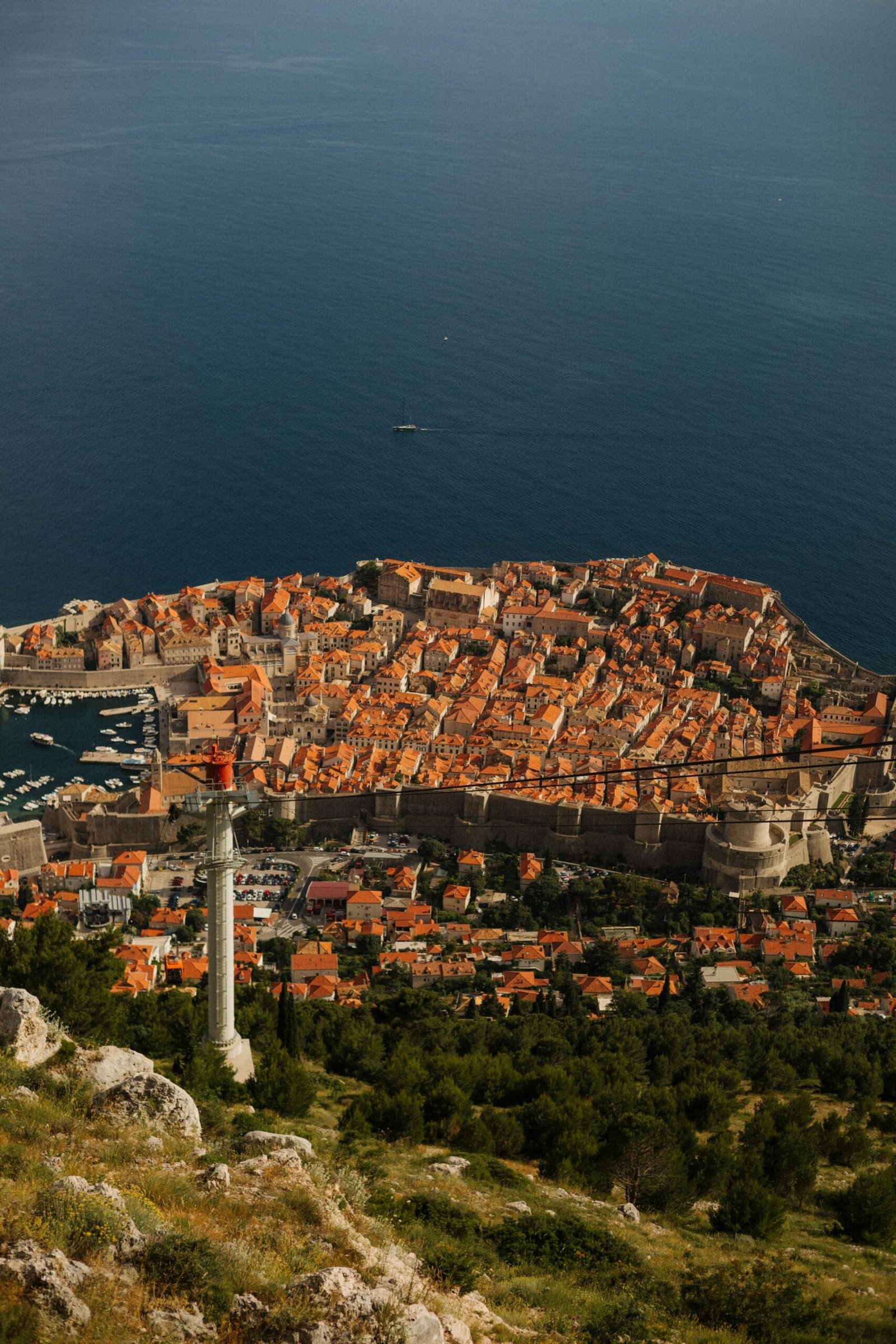
Croatia has it all in one compact country: medieval walled towns on the sea, more than a thousand islands, turquoise lakes connected by waterfalls, Roman palaces, pine-covered hills and some of the clearest water in the Mediterranean. No wonder it has become one of Europe’s favourite summer destinations.
The secret is out, and in July and August the most famous places are packed and pricey. But travel at the right time, stay in local apartments and use the ferries like the locals do, and Croatia is still one of the best-value coastal destinations in Europe.
This guide shows you the best route along the coast, the experiences that are really worth it and what a trip will actually cost.
Croatia at a Glance
- Where: southeastern Europe, along the eastern coast of the Adriatic Sea, opposite Italy
- Main airports: Dubrovnik (DBV), Split (SPU), Zadar (ZAD) and Zagreb (ZAG)
- Currency: euro (EUR)
- Entry: Croatia is part of the EU and the Schengen Area. Many non-EU visitors can stay up to 90 days without a visa, but will need to register online with ETIAS once it starts. Check the current rules before you travel
- Language: Croatian. English is widely spoken, especially by younger people and in tourist areas
- Best time: May, June and September
- Budget: around $60 to $90 a day for budget travellers, $120 to $200 for a comfortable mid-range trip
When to Go
July and August are hot, sunny and very crowded, especially in Dubrovnik, Split and Hvar. Prices for accommodation and ferries are at their highest, and you’ll need to book well ahead.
May, June and September are the best months. The sea is warm enough for swimming from June, the weather is sunny and pleasant, and there are far fewer people. September is especially lovely, with the warmest water of the year and lower prices.
October to April is quiet. Many island hotels and restaurants close, and ferries run less often, but the cities and Plitvice Lakes are peaceful and beautiful. Plitvice in winter, covered in snow and ice, is magical.
Our tip: travel in early June or mid-September for warm weather, warm water and fair prices.
Getting Around
Most travellers explore the Dalmatian coast between Dubrovnik, Split and Zadar, with trips inland to the national parks and out to the islands.
- Buses: the cheapest and easiest way to travel along the coast. They’re frequent, comfortable and air-conditioned
- Ferries and catamarans: the state ferry company Jadrolinija and private catamarans connect the mainland with the islands. Book catamaran tickets online in summer, as they often sell out
- Rental car: useful for Plitvice, Krka and exploring the islands, but parking in Dubrovnik and Split is difficult and expensive
- Sailing: chartering a yacht with a skipper, or joining a group sailing trip, is a popular way to island-hop
Things to Do in Croatia
Here are the experiences we think are worth your time and money.
1. Walk the City Walls of Dubrovnik
Dubrovnik, the “Pearl of the Adriatic”, is one of the most beautiful walled cities in the world and a UNESCO World Heritage Site. Its marble streets, baroque churches and red rooftops are surrounded by massive stone walls, almost 2 km long.
Walking the city walls is the highlight of any visit. The full circuit takes about two hours, with endless views over the rooftops and the sea. Tickets are on the expensive side, but they’re worth it. Go right at opening time or late in the afternoon, when it’s cooler and the cruise ship crowds have left.
Afterwards, take the cable car up Mount Srđ for a sunset view over the old town and the islands. Fans of the TV series “Game of Thrones” will recognise many of the streets and staircases.

2. Sea Kayak Around Dubrovnik and Lokrum
One of the best ways to see Dubrovnik is from the water. Sea kayaking tours paddle around the base of the city walls, past hidden caves and over to the small island of Lokrum. Many tours include a stop for snorkelling in clear water. Tours are budget to mid-range in price, and sunset tours are especially beautiful.
You can also take a short ferry to Lokrum, a green island nature reserve just off the coast, with peacocks, a botanical garden, rocky swimming spots and a small salt lake called the Dead Sea.
3. Explore Plitvice Lakes National Park
Plitvice Lakes National Park is Croatia’s most famous natural wonder and a UNESCO World Heritage Site. Sixteen terraced lakes in shades of turquoise, emerald and blue are connected by dozens of waterfalls, all surrounded by beech and pine forest.
Wooden boardwalks lead right over the water, and electric boats and panoramic trains connect the different parts of the park. Plan at least four to six hours, or stay overnight nearby and arrive at opening time to have the boardwalks almost to yourself.
Tickets must be booked online for a specific time slot, and they’re more expensive in summer. Swimming is not allowed. Plitvice is about two hours by car from Zadar and two and a half hours from Split.

4. Visit the Krka Waterfalls
Krka National Park, near the town of Šibenik, is famous for its waterfalls, especially Skradinski Buk, a series of cascades tumbling into a wide pool. A boardwalk loop leads through the forest and over the river.
Swimming at the waterfalls is no longer allowed, to protect the nature, but the park is still one of the most beautiful places in Croatia. It’s an easy day trip from Split or Zadar, and it’s usually less crowded than Plitvice. Arrive by boat from the small town of Skradin for the most scenic approach.
5. Get Lost in Diocletian’s Palace in Split
Split is Croatia’s second-largest city and the gateway to the Dalmatian islands. Its heart is the remarkable Diocletian’s Palace, built by a Roman emperor around 1,700 years ago. Unlike most Roman ruins, it’s still alive: people live, work and eat inside its old walls, and its narrow streets are full of shops, bars and restaurants.
Walk along the palm-lined Riva promenade, climb the bell tower of the Cathedral of St. Domnius for the view, and hike up Marjan Hill, a forested park with viewpoints and small beaches. At Bačvice Beach, watch locals play picigin, a traditional ball game played in shallow water.

6. Island-Hop to Hvar
Hvar is one of the sunniest islands in Europe and the most glamorous of the Dalmatian islands. Hvar Town has a beautiful main square, a lively harbour full of yachts and a hilltop fortress with a great view over the rooftops and the Pakleni Islands.
Take a water taxi to the Pakleni Islands for swimming in clear coves, and explore the quieter side of Hvar, with lavender fields, vineyards and small villages like Stari Grad, one of the oldest towns in Europe. Hvar Town is famous for its nightlife and can be expensive in summer, so stay outside the centre to save money.

7. Take a Boat Trip from Split or Trogir
From Split and the nearby town of Trogir, boat trips take you to the islands, hidden bays and swimming spots of the central Dalmatian coast. The most popular full-day trip visits the Blue Cave on the island of Biševo, where sunlight turns the water inside a glowing blue, along with the islands of Vis and Hvar.
Trogir itself is worth a visit. Its tiny medieval old town sits on an island between the mainland and Čiovo and is a UNESCO World Heritage Site. If you want to explore the islands at your own pace, consider a few days on a skippered sailing yacht or a group sailing trip.

8. Relax on Zlatni Rat Beach
On the island of Brač, a short ferry ride from Split, Zlatni Rat near the town of Bol is Croatia’s most famous beach. This long spit of fine pebbles reaches out into the sea, and its tip changes shape with the wind and the currents.
It’s a top spot for windsurfing and kitesurfing, especially in the afternoon. For the best view of the beach from above, hike or drive up to Vidova Gora, the highest peak of all the Adriatic islands.

9. Watch the Sunset in Zadar
Zadar is a relaxed city with Roman ruins, churches and one of the best sunsets in Europe. On the waterfront, the Sea Organ plays music as the waves push air through pipes hidden under marble steps. Next to it, the Greeting to the Sun is a large solar-powered circle that lights up in colourful patterns after dark.
Zadar is also a good base for Plitvice and Krka, and for boat trips to the Kornati National Park, a wild group of almost 150 islands.
10. Explore Korčula and the Pelješac Peninsula
Between Split and Dubrovnik, the island of Korčula is often called a smaller, quieter version of Dubrovnik. Its old town sits on a small peninsula, surrounded by walls, with streets laid out like a fishbone to protect it from the wind.
Nearby, the Pelješac Peninsula is known for its red wines, especially Dingač and Postup, and for the oyster farms of Ston, where you can also walk the long medieval Walls of Ston. It’s a perfect stop on the way from Split to Dubrovnik.
Where to Stay on a Budget
Croatia has plenty of affordable places to stay, especially outside July and August:
- Private apartments and rooms: called sobe or apartmani, these are the best value in Croatia. They’re often run by local families and include a kitchen
- Hostels: Split, Dubrovnik, Zadar and Hvar have good hostels with private rooms
- Guesthouses: small, friendly places near the national parks and on the islands
- Hotels: comfortable mid-range options are available everywhere, but they’re more expensive than apartments
In Dubrovnik, staying in the areas of Lapad or Gruž is much cheaper than in the old town, with easy bus connections.
Eating on a Budget
Croatian food is simple, fresh and Mediterranean:
- Eat at a konoba: a traditional family-run tavern, often with homemade wine and local dishes
- Try peka: meat or octopus slow-cooked with vegetables under a bell-shaped lid covered in embers. It usually needs to be ordered in advance
- Order black risotto: made with cuttlefish ink, it’s a Dalmatian speciality
- Buy burek: a flaky pastry filled with cheese or meat, sold cheaply at bakeries for breakfast
- Shop at the markets: the green markets in Split, Zadar and Dubrovnik sell fruit, vegetables and cheese at local prices
Restaurants in Dubrovnik’s old town are some of the most expensive in Croatia, so eat outside the walls when you can.
What It Really Costs
Here’s a realistic daily budget per person for a comfortable mid-range trip in June or September, not counting flights.
- Accommodation: $40 to $80 per person, sharing a private apartment or double room
- Food and drink: $30 to $55 a day, mixing konobas, bakeries and self-catering
- Transport: $15 to $35 a day on average, including buses, ferries and catamarans
- Activities: budget for the highlights separately: the Dubrovnik city walls, Plitvice and Krka entrance fees, a kayak tour and a boat trip to the islands
That works out to around $120 to $200 per person per day. In July and August, expect higher prices, especially in Dubrovnik and Hvar.
A Sample 10-Day Itinerary
Day 1: Arrive in Zadar. Evening at the Sea Organ and the Greeting to the Sun.
Day 2: Day trip to Plitvice Lakes National Park, or stay overnight nearby.
Day 3: Krka National Park, then continue to Split.
Days 4 to 5: Split. Diocletian’s Palace, Marjan Hill and a day trip to Trogir or the Blue Cave.
Day 6: Ferry to Brač. Zlatni Rat and Vidova Gora.
Day 7: Catamaran to Hvar. Hvar Town and the fortress.
Day 8: Pakleni Islands, then catamaran to Korčula.
Days 9 to 10: Dubrovnik. The city walls, a sea kayak tour, Lokrum and the cable car at sunset.
Practical Tips
- Book Plitvice tickets and catamarans online in summer
- Bring water shoes: many Croatian beaches are pebbly or rocky, and sea urchins are common
- Avoid the cruise ship crowds in Dubrovnik by visiting early in the morning or late in the afternoon
- Respect the dress code in old towns: walking around in swimwear away from the beach can lead to fines in Split, Dubrovnik and Hvar
- Carry some cash for small konobas, markets and apartments
- Tipping around 10 percent in restaurants is appreciated but not required
Booking Tips
- Airport transfer: book an airport transfer with Kiwitaxi from Dubrovnik or Split airport to your old town apartment or the ferry port, with a fixed price and a driver waiting for you
- eSIM: if you’re coming from outside the EU, install a Yesim eSIM before you fly, so you have data for maps, ferry times and bus tickets in Croatia from the moment you land
- Tours: popular options include a Plitvice Lakes day trip, a Dubrovnik city walls tour, a Hvar and Pakleni Islands boat trip and sea kayaking in Dubrovnik. You can compare and book most of them on Klook
Final Thoughts
Croatia is a country that rewards slow travel. Walk the walls of Dubrovnik at sunrise, wander through a Roman palace in Split, hop between sunny islands and swim in water so clear you can see the bottom many metres below. Then head inland to the turquoise lakes and waterfalls of Plitvice and Krka.
Travel in June or September, stay in local apartments and take the ferries and buses. You’ll see the best of Croatia, without the summer crowds and without breaking your budget.
Prices checked in October 2026. Costs and opening times change, so always confirm before you book.
Leave a Reply