
There’s no place quite like Japan. In the morning, you can cross the busiest intersection in the world under a sea of neon screens. By lunchtime, a bullet train has carried you to a quiet temple garden where monks rake the gravel. In the evening, you’re soaking in a hot spring with a view of Mount Fuji, before a dinner of a dozen tiny, perfect dishes.
Japan is a country of contrasts: ultra-modern and deeply traditional, crowded and peaceful, efficient and wonderfully strange. It’s also one of the safest and cleanest countries on earth, and easier to travel than most first-time visitors expect.
Japan has a reputation for being expensive, but that’s no longer really true. With a favourable exchange rate, cheap and delicious food everywhere and excellent public transport, it’s now one of the best-value destinations in Asia for what you get. This guide shows you the classic two-week route, the experiences that are really worth it and what the trip will actually cost.
Japan at a Glance
- Where: an island country in East Asia, off the coast of China and Korea
- Main airports: Tokyo Narita (NRT) and Haneda (HND), and Osaka Kansai (KIX)
- Currency: Japanese yen (JPY). One US dollar is roughly 145 to 155 yen
- Entry: citizens of the EU, the UK, the US, Canada, Australia and many other countries can visit without a visa for up to 90 days. Japan is planning to introduce an online travel authorisation, so check the current rules before you go
- Language: Japanese. English signs are common in cities and train stations, but English is less widely spoken than you might expect
- Best time: late March to early April for cherry blossoms, October to November for autumn colours
- Budget: around $70 to $100 a day for budget travellers, $120 to $200 for a comfortable mid-range trip
When to Go
Spring (March to May) is the most famous season. The cherry blossoms usually bloom from late March to early April in Tokyo and Kyoto, and the whole country celebrates with picnics under the trees. It’s beautiful, but also the busiest and most expensive time of year. Avoid Golden Week in early May, when the whole country is on holiday.
Summer (June to August) starts with the rainy season in June, followed by hot and very humid weather. It’s festival season, with fireworks and street parties, and the only time to climb Mount Fuji.
Autumn (October and November) is our favourite. The weather is mild and dry, the skies are clear, and the maple trees turn the temples and mountains red and gold.
Winter (December to February) is cold, but sunny in Tokyo and Kyoto, with fewer crowds and the clearest views of Mount Fuji. It’s also the season for skiing and snow festivals in the north.
Our tip: travel in late October or November for great weather, autumn colours and fewer crowds than in cherry blossom season.
Getting Around
Japan’s public transport is fast, punctual and spotlessly clean.
- Shinkansen (bullet train): connects Tokyo, Kyoto, Osaka and Hiroshima at speeds of up to 300 km/h. Tokyo to Kyoto takes just over two hours
- Japan Rail Pass: gives unlimited travel on most JR trains, including most bullet trains. After a big price increase, it’s no longer worth it for every trip, so compare the cost of the pass with individual tickets for your route
- IC cards: get a Suica or Pasmo card, or add one to your phone, and simply tap in and out on local trains, subways and buses. You can also use it in convenience stores
- Luggage forwarding: send your big suitcase ahead to your next hotel for a small fee and travel light on the trains
Things to Do in Japan
Here are the experiences we think are worth your time and money.
1. Explore Tokyo’s Neighbourhoods
Tokyo is not one city but dozens of neighbourhoods, each with its own personality. Start at the Shibuya Crossing, where up to 3,000 people cross the street at once when the lights turn green. Watch it from above at the Shibuya Sky observation deck, a splurge with a spectacular view, especially at sunset.
Then explore the narrow lanes of Harajuku and the peaceful forest around Meiji Shrine, the neon-lit bars of Shinjuku’s Golden Gai, and Asakusa, home to Senso-ji, Tokyo’s oldest temple. For a night out, eat and drink with the locals in a tiny izakaya, a Japanese pub, under the railway tracks of Yurakucho.

2. See Mount Fuji from the Chureito Pagoda
Mount Fuji, Japan’s highest mountain at 3,776 metres, is the symbol of the country. On a clear day, you can see it from Tokyo, but the best views are from the Fuji Five Lakes area, about two hours away by bus or train.
The most famous viewpoint is the Chureito Pagoda in Fujiyoshida, where a red five-storey pagoda stands on a hillside with Fuji rising behind it. It’s about 400 steps up from the station. Nearby, Lake Kawaguchiko has lovely lakeside walks and views of the mountain. Fuji is often hidden by clouds, so go early in the morning and keep your plans flexible.
From July to early September, you can climb Mount Fuji. Climbers on the popular Yoshida Trail now need to book in advance and pay a fee.
3. Stay in a Ryokan and Soak in an Onsen
A night in a ryokan, a traditional Japanese inn, is one of the most memorable experiences of any trip to Japan. You’ll sleep on a futon on tatami mats, wear a cotton yukata robe, and enjoy a kaiseki dinner of many beautiful small dishes.
Many ryokan have their own onsen, natural hot spring baths. Hakone, near Mount Fuji, is the most popular onsen town close to Tokyo. A ryokan night is a splurge, but even one night is worth it. Remember to wash thoroughly before getting into the bath, and note that some onsen don’t allow tattoos.
4. Walk Through the Torii Gates of Fushimi Inari
In Kyoto, the Fushimi Inari Shrine is famous for its thousands of bright orange torii gates, which form tunnels that wind up the forested mountain behind the shrine. Each gate was donated by a person or company hoping for good luck in business.
The full walk to the top takes about two to three hours, but most visitors only walk the first section. Go early in the morning or in the evening, when the gates are lit and the crowds are gone. Best of all, it’s free and open 24 hours.

5. Visit the Arashiyama Bamboo Grove
On the western edge of Kyoto, Arashiyama is famous for its bamboo grove, where a path leads through towering green stalks that sway and creak in the wind. It’s one of the most photographed places in Japan, so go right at sunrise for a quieter experience.
Nearby, visit the Tenryu-ji temple and its beautiful garden, walk across the Togetsukyo Bridge, and take the short hike up to the Iwatayama Monkey Park for a view over the city with wild macaques all around you.

6. Discover the Temples and Teahouses of Kyoto
Kyoto was Japan’s capital for more than 1,000 years, and it’s home to around 1,600 temples and 17 UNESCO World Heritage Sites. Don’t miss Kinkaku-ji, the Golden Pavilion, shining over its pond, and Kiyomizu-dera, a wooden temple on a hillside with views over the city.
In the evening, walk through Gion, Kyoto’s historic geisha district, with its wooden teahouses and lantern-lit streets. You might see a geiko or maiko hurrying to an appointment. Be respectful: don’t block their way or take photos without permission, and note that some private lanes in Gion are now closed to tourists. For a deeper look at Japanese culture, join a tea ceremony, which is budget to mid-range in price.
7. Meet the Bowing Deer of Nara
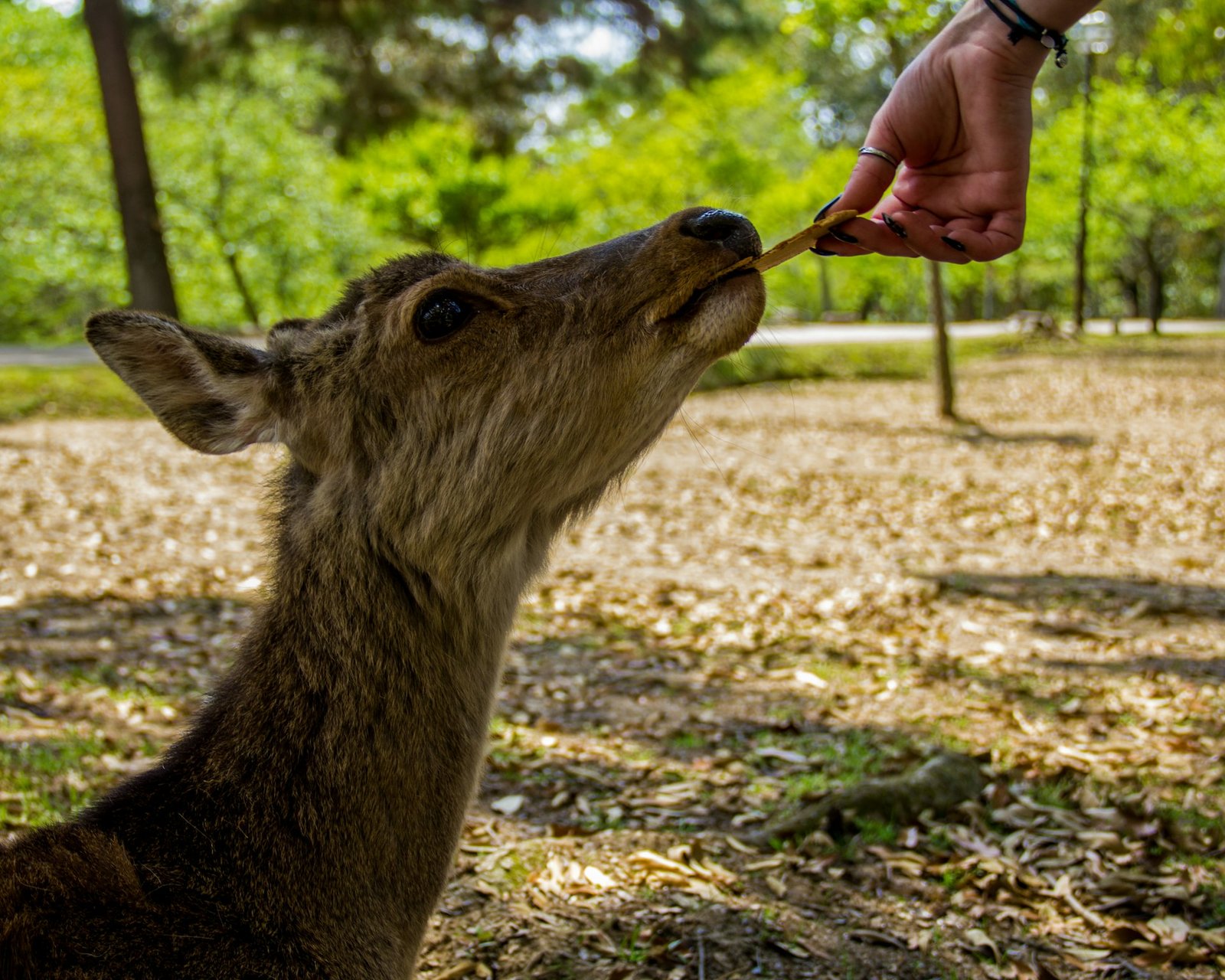
Less than an hour from Kyoto, Nara was Japan’s first permanent capital. Today, it’s famous for the more than 1,000 wild deer that roam freely in Nara Park. You can buy special deer crackers, and some deer will even bow to you before taking one. Be careful, as they can get pushy when they know you have food.
Nara is also home to Todai-ji, a huge wooden temple that houses one of the largest bronze Buddha statues in Japan. Nara is an easy and budget-friendly half-day or day trip from Kyoto or Osaka.
8. Eat Your Way Through Osaka
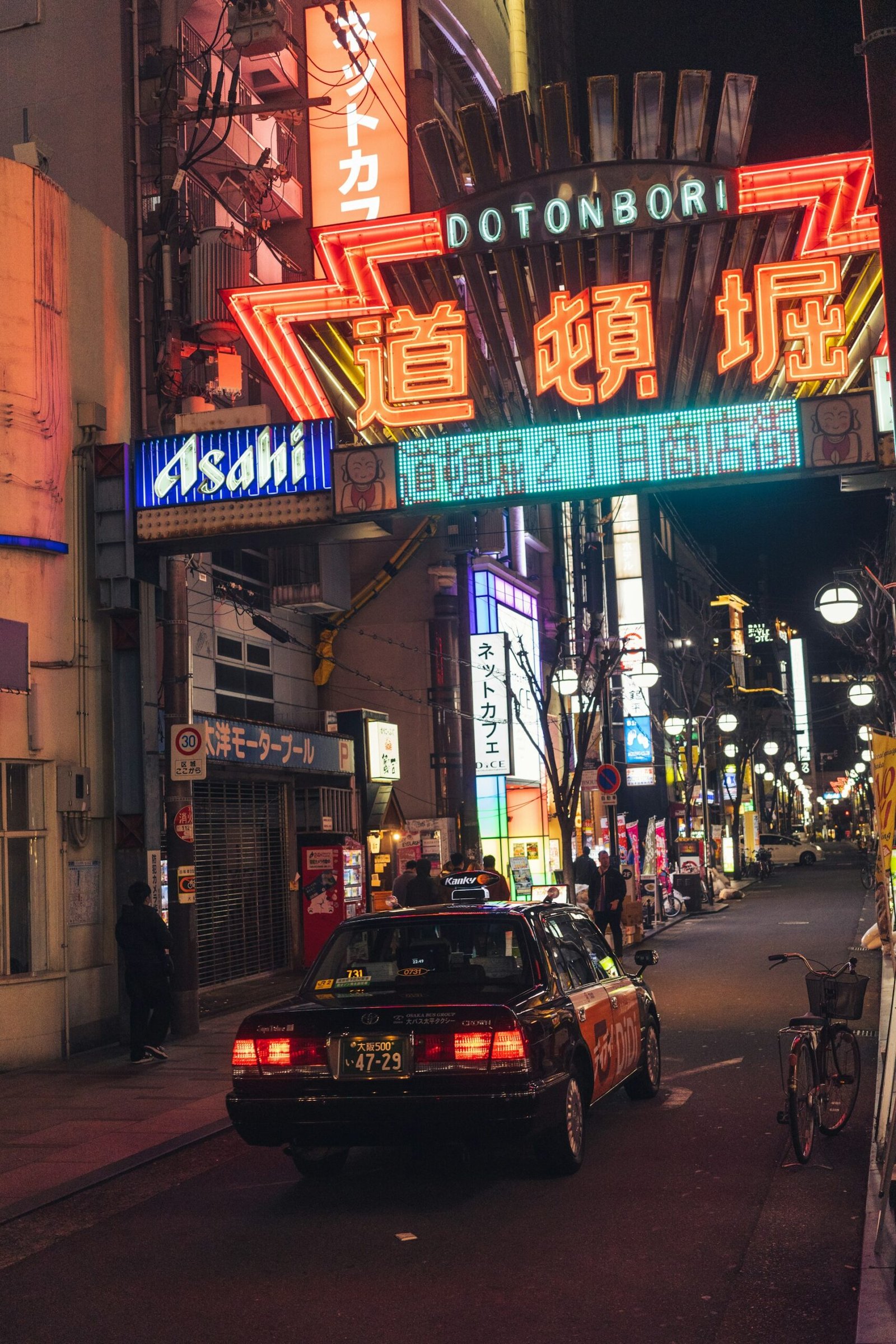
Osaka is Japan’s kitchen, and its motto is kuidaore, which means to eat until you drop. The best place to do it is Dotonbori, a canal-side street lit up by giant neon signs, mechanical crabs and the famous running man of Glico.
Try takoyaki, crispy balls of batter filled with octopus, and okonomiyaki, a savoury pancake cooked in front of you on a hot plate. Kuromon Market is great for fresh seafood and snacks. Street food in Osaka is cheap, delicious and one of the highlights of a trip to Japan.
9. Visit Hiroshima and Miyajima
Hiroshima is one of the most moving places you’ll ever visit. The Peace Memorial Park and Museum tell the story of the atomic bomb that destroyed the city in 1945, and the ruined Atomic Bomb Dome still stands as a reminder. Today, Hiroshima is a lively, friendly city, famous for its own style of okonomiyaki.
A short train and ferry ride away, the island of Miyajima is home to the Itsukushima Shrine and its famous floating torii gate, which seems to rise out of the sea at high tide. At low tide, you can walk right up to it. A small visitor tax is charged on arrival. Wild deer roam the streets here too, and you can hike or take the ropeway up Mount Misen for great views.

10. Ride the Shinkansen
Riding the Shinkansen, Japan’s famous bullet train, is an experience in itself. The trains are fast, quiet and incredibly punctual, and the seats are spacious and comfortable.
Buy an ekiben, a beautifully packed lunch box sold at stations, and enjoy it on the way. Between Tokyo and Kyoto, sit on the right-hand side of the train (seat E on most trains) for a chance to see Mount Fuji out of the window on a clear day.
Where to Stay on a Budget
Japan has accommodation for every budget:
- Business hotels: small but spotless rooms with everything you need, often surprisingly cheap. Chains like Toyoko Inn, Dormy Inn and APA are found everywhere
- Hostels and capsule hotels: modern, clean and social. Sleeping in a capsule is a fun experience for a night or two
- Ryokan and minshuku: traditional inns. Minshuku are family-run and cheaper than ryokan
- Apartments: a good choice for families and longer stays
Book early for cherry blossom season, Golden Week and the autumn colours in Kyoto.
Eating on a Budget
Eating in Japan is one of the great pleasures of travel, and it doesn’t have to be expensive:
- Convenience stores: 7-Eleven, Lawson and FamilyMart sell surprisingly good food, from rice balls (onigiri) to sandwiches and hot meals
- Ramen, udon and soba shops: a filling bowl of noodles costs very little, and many shops have ticket machines, so you don’t need to speak Japanese
- Conveyor-belt sushi: fresh, fun and cheap
- Set lunches: many restaurants offer a set lunch called teishoku at a much lower price than dinner
- Department store food halls: the basements, called depachika, are full of amazing food, and prices drop in the evening
Tipping is not part of Japanese culture and can even cause confusion, so don’t tip.
What It Really Costs
Here’s a realistic daily budget per person for a comfortable mid-range trip, not counting international flights.
- Accommodation: $50 to $100 per person, sharing a double room in a business hotel, plus one or two ryokan nights
- Food: $30 to $50 a day, mixing convenience stores, noodle shops and restaurant meals
- Transport: $20 to $45 a day on average, including the Shinkansen between cities and local trains
- Activities: budget for the highlights separately: Shibuya Sky, temple entrance fees, a tea ceremony and a ryokan night with dinner
That works out to around $120 to $200 per person per day. Backpackers who stay in hostels and eat at convenience stores and noodle shops can travel for much less.
A Sample 14-Day Itinerary
Days 1 to 4: Tokyo. Shibuya, Harajuku and Meiji Shrine, Shinjuku, Asakusa and a day trip to the Fuji Five Lakes and the Chureito Pagoda.
Day 5: Hakone. A ryokan night with an onsen.
Days 6 to 9: Kyoto. Fushimi Inari, Arashiyama, Kinkaku-ji, Kiyomizu-dera and an evening in Gion.
Day 10: Day trip to Nara.
Days 11 to 12: Osaka. Dotonbori, street food and Osaka Castle.
Day 13: Hiroshima and Miyajima.
Day 14: Back to Osaka and fly home from Kansai Airport, or take the Shinkansen back to Tokyo.
Practical Tips
- Carry cash: cards are now widely accepted, but many small restaurants, temples and shops still prefer cash
- Get a pocket Wi-Fi or eSIM for maps and train timetables
- Learn a few words: “arigatou gozaimasu” (thank you) and “sumimasen” (excuse me) go a long way
- Take your shoes off when entering homes, ryokan, some restaurants and temple halls
- Keep quiet on trains and don’t talk on your phone
- Carry your rubbish: public bins are rare, so take a small bag for your rubbish
Booking Tips
- Airport transfer: after a long flight, book an airport transfer with Kiwitaxi from Narita, Haneda or Kansai airport straight to your hotel, with a fixed price and no need to find your way through the train system with luggage
- eSIM: install a Yesim eSIM before you fly, so you have data for maps, train times and translation apps in Japan from the moment you land
- Tours: popular options include a Mount Fuji day trip, a Tokyo food tour, a Kyoto and Nara guided tour and a Hiroshima and Miyajima day trip. You can compare and book most of them on Klook
Final Thoughts
Japan is one of those rare countries that feels like nowhere else on earth. Cross the Shibuya Crossing, walk through a tunnel of torii gates, sleep on a futon in a ryokan, bow to the deer of Nara and eat your way through the neon streets of Osaka.
Travel in autumn or spring, use the trains, eat where the locals eat and leave room for surprises. Japan will win your heart, and you’ll start planning your next trip before you’ve even left.
Prices checked in October 2026. Costs and opening times change, so always confirm before you book.
Leave a Reply