
There’s a moment on almost every first safari that people never forget. The engine goes quiet, the guide points into the long grass, and suddenly you realise you’re looking straight at a lion. No fence, no glass, just a few metres of savannah between you and the animal you’ve seen a thousand times on TV.
If that’s the trip you’ve been dreaming about, you’ll quickly run into the big question: Kenya or Tanzania? Both countries share the same ecosystem, the same animals and even the same Great Migration. Yet the experience, the cost and the planning are surprisingly different.
This guide compares the two honestly, explains what a safari really costs in 2026, and helps you decide which one fits your first trip.
Kenya vs. Tanzania at a Glance
- Best-known park: Masai Mara (Kenya) vs. Serengeti and Ngorongoro (Tanzania)
- Main airport: Nairobi (NBO) vs. Kilimanjaro (JRO) near Arusha
- Park fees: Masai Mara from $100 to $200 per day, Serengeti around $83 per day plus extras
- Entry: Kenya eTA for about $30, Tanzania eVisa from $50
- Beach add-on: Diani on the Kenyan coast vs. Zanzibar
- Best for: shorter trips and value (Kenya), bigger wilderness and variety (Tanzania)
The Short Answer
If you have a week or less and want the most wildlife for your money, Kenya is usually the easier choice. The Masai Mara is compact, close to Nairobi and packed with animals, and you can combine it with a few days on the beach without long journeys.
If you have ten days or more and want the feeling of endless space, Tanzania is hard to beat. The Serengeti is enormous, the Ngorongoro Crater is unlike anywhere else on earth, and Zanzibar is only a short flight away.
Both are excellent. It really comes down to time, budget and the kind of trip you want.
Kenya: The Masai Mara

The Masai Mara is the northern tip of the same ecosystem as the Serengeti, and it’s one of the best places in Africa to see big cats. Lions, leopards and cheetahs are seen here so often that guides can sometimes afford to be picky about which sighting to show you first.
What makes the Mara so good for a first safari is its size. It’s relatively small, so you spend less time driving between sightings and more time actually watching animals. From Nairobi it’s about a 45-minute flight or a long day’s drive of five to six hours.
The biggest change for 2026 is the park fee. Since July 2026, non-residents pay $200 per person per day in peak season (July to October and December to January) and $100 in the low season (February to June and November). Tickets are valid from 6 am to 6 pm, so a game drive that starts earlier or ends later can count as an extra day.
Private conservancies: the Mara’s best-kept secret

Around the national reserve lie private conservancies such as Naboisho, Olare Motorogi and Mara North. They’re leased from Maasai landowners, and the number of vehicles is strictly limited. That means no crowd of twenty jeeps around one lion.
Conservancies also allow things the main reserve doesn’t, like walking safaris and night drives. The conservancy fee is usually included in the price of your camp. They’re rarely the cheapest option, but for many travellers they’re the difference between a good safari and a great one.
Tanzania: Serengeti and Ngorongoro
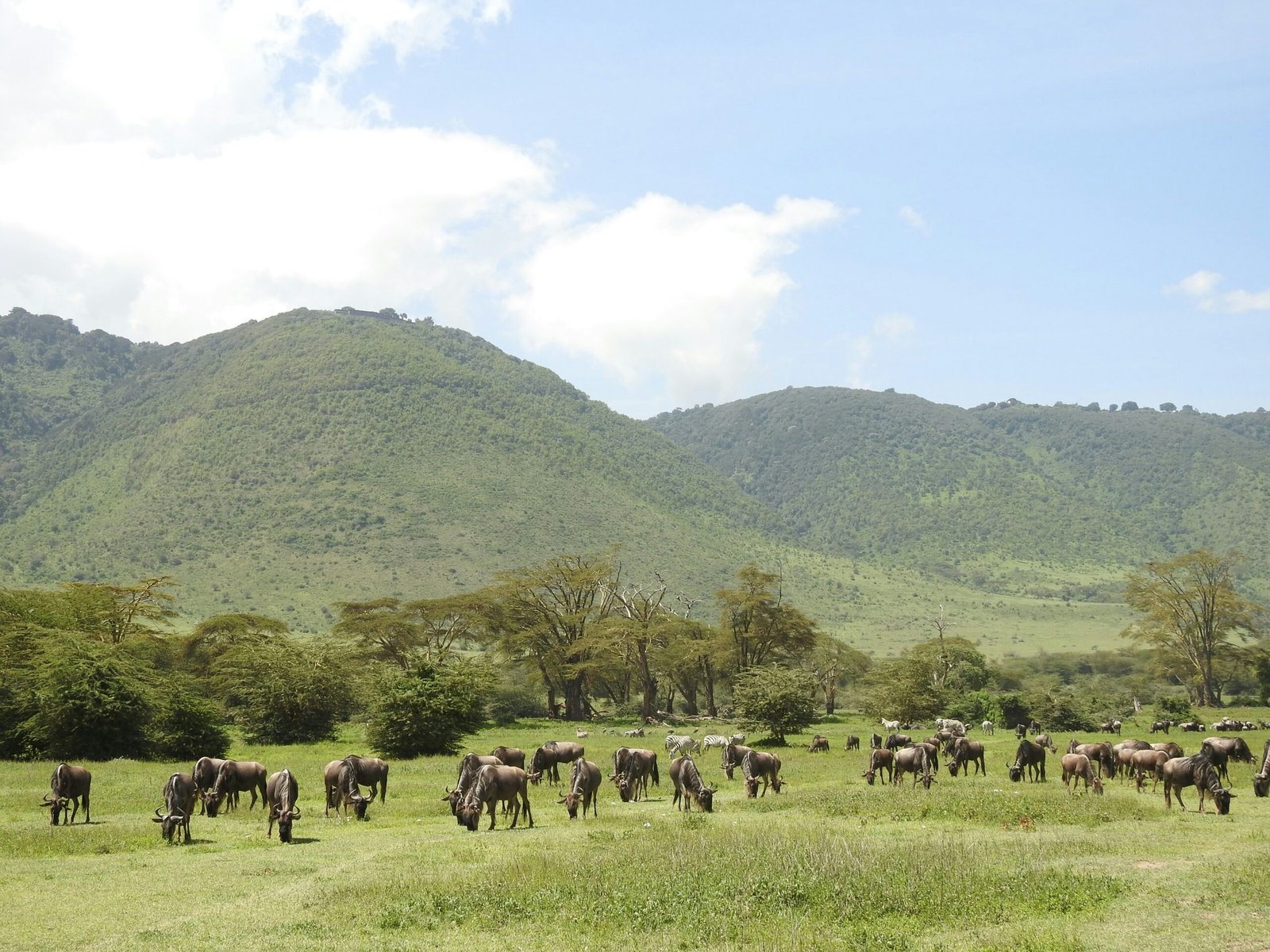
The Serengeti is the name everyone knows, and it lives up to it. Its southern plains alone are bigger than some European countries, and in the right season you can drive for hours through herds of wildebeest and zebra that stretch to the horizon.
Most safaris in Tanzania follow the so-called Northern Circuit. It starts in Arusha and usually includes Tarangire (famous for its elephants and baobab trees), Lake Manyara, the Ngorongoro Crater and the Serengeti. Distances are longer than in Kenya, so plan for at least six days to see the highlights without rushing.
Park fees work differently here. The Serengeti costs about $82.60 per person per day, VAT included. If you sleep inside the park, a concession fee of around $59 per person per night is added. These fees are usually built into your safari price, but they explain why Tanzania safaris often cost more than Kenyan ones.
The Ngorongoro Crater

The Ngorongoro Crater is a collapsed volcano, around 20 kilometres wide, with its own small world of lions, elephants, buffalo, hippos and one of the last populations of black rhino in the region. You drive down the crater wall in the morning and spend the day on the crater floor, surrounded by walls that rise 600 metres around you.
It’s not cheap. On top of the daily conservation fee of about $82.60 per person, every vehicle pays a crater service fee of about $295 per descent. Sharing a vehicle with other travellers is the easiest way to split that cost. Even so, most people who go say it was the highlight of their trip.
The Big Five and What Else You’ll See
The “Big Five” are lion, leopard, elephant, buffalo and rhino. The term comes from old hunting days, but today it’s simply a checklist most first-timers secretly want to complete.
- Lions, elephants and buffalo are seen on almost every safari in both countries.
- Leopards are shy and mostly active at night. The Masai Mara and the central Serengeti give you good chances, but it always takes some luck.
- Rhinos are the hardest. The Ngorongoro Crater is one of the best places in East Africa to see black rhino. In Kenya, private sanctuaries like Ol Pejeta are your best bet.
Don’t fixate on the list, though. Some of the best moments come from animals nobody talks about: a family of warthogs trotting past with their tails in the air, hippos grunting in the river at sunset, or a secretary bird stalking snakes through the grass. Giraffes, zebras and countless antelopes are almost everywhere, and the birdlife in both countries is spectacular.
The Great Migration, Month by Month
Every year, around 1.5 million wildebeest, along with zebras and gazelles, move in a huge loop through the Serengeti and the Masai Mara, following the rain and fresh grass. Where they are depends on the month:
- January to March: calving season in the southern Serengeti around Ndutu. Thousands of calves are born every day, which attracts lots of predators.
- April and May: the long rains. The herds move north through the central Serengeti. Fewer tourists and lower prices.
- June and July: the herds reach the western corridor and the Grumeti River, with the first river crossings.
- July to October: the famous Mara River crossings in the northern Serengeti and the Masai Mara. This is peak season in Kenya.
- November and December: the short rains. The herds head south again.
Nature doesn’t follow a timetable, so these are rough guides. If river crossings are your dream, August and September give you the best chances. If you’d rather see newborn calves and fewer crowds, go to Tanzania in February.
What Does a Safari Really Cost?
This is where most people get a shock, so let’s be honest about the numbers. A safari price almost always includes accommodation, meals, a vehicle with a driver-guide and park fees. That’s why it looks expensive, but it’s also why you rarely pay much extra once you’re there.
Roughly, per person per day:
- Budget camping safari: from around $150 to $250 in Kenya, and a bit more in Tanzania because of higher park fees. You sleep in simple tents and share the vehicle.
- Mid-range lodge safari: around $300 to $500. Comfortable lodges or tented camps with en-suite bathrooms.
- Luxury safari: $800 and far beyond. Small camps, private vehicles, conservancies and fly-in transfers.
Remember that park fees alone can make up a large part of the cost, especially in the Masai Mara peak season. A three-night stay in the Mara in August means $600 per person in fees before you’ve paid for a bed.
Getting There and Entry Rules
Kenya: most travellers fly into Nairobi. Kenya no longer issues regular visas; instead, most visitors need an Electronic Travel Authorisation (eTA), which costs about $30 and should be applied for online before you fly.
Tanzania: the nearest airport for the Northern Circuit is Kilimanjaro International Airport near Arusha. Most nationalities need an eVisa for $50, while US citizens pay $100 for a multiple-entry visa. Apply online well in advance.
If you want to see both countries, keep in mind that the East Africa Tourist Visa covers Kenya, Uganda and Rwanda, but not Tanzania.
Two Sample Itineraries
Kenya in 7 days (Mara + beach):
- Day 1: Arrive in Nairobi, overnight near the airport.
- Days 2 to 4: Fly or drive to the Masai Mara. Morning and afternoon game drives, and a night in a conservancy if your budget allows.
- Day 5: Fly to Diani Beach on the south coast.
- Days 6 and 7: Beach, snorkelling and rest before flying home.
Tanzania in 9 days (Northern Circuit + Zanzibar):
- Day 1: Arrive at Kilimanjaro Airport, overnight in Arusha.
- Day 2: Tarangire National Park for elephants and baobabs.
- Days 3 and 4: Drive to the Serengeti, full days of game drives.
- Day 5: Ngorongoro Crater.
- Day 6: Back to Arusha and fly to Zanzibar.
- Days 7 to 9: Zanzibar beaches and Stone Town.
Tips for Your First Safari
- Pack neutral colours. Khaki, beige and olive. Bright colours can disturb animals, and dark blue and black attract tsetse flies.
- Bring layers. Early mornings on open vehicles can be surprisingly cold, even on the equator.
- Use soft bags. Small planes and safari vehicles don’t have room for hard suitcases, and bush flights often have a weight limit of around 15 kg.
- Take binoculars. One pair per person makes a huge difference.
- Plan for tips. Guides, drivers and camp staff rely on them. Ask your operator for the usual amounts before you travel.
- Be patient. The best sightings often come after an hour of seeing almost nothing.
How to Save Money on a Safari
- Travel in the shoulder or low season. April to June and November often bring lower lodge prices, and in the Mara the park fee is half the peak price.
- Join a group safari. Sharing a vehicle cuts the cost of the car, the guide and the Ngorongoro crater fee.
- Stay just outside the park. Camps on the edge of the reserve are often much cheaper, and you only lose a few minutes of driving.
- Skip the extras you don’t need. A hot air balloon safari is magical, but at several hundred dollars per person it’s a treat, not a must.
- Book the beach part separately. Zanzibar and Diani have plenty of good-value guesthouses.
Booking Tips
- Airport transfer: after a long flight into Nairobi or Kilimanjaro, book an airport transfer with Kiwitaxi in advance, so a driver is waiting for you with a fixed price
- eSIM: install a Yesim eSIM before you fly. One eSIM can cover both Kenya and Tanzania, so you stay connected between the safari and the beach
- Day tours: for short add-ons like a Nairobi National Park game drive, the Giraffe Centre or a Stone Town tour in Zanzibar, compare options and prices on Klook
Frequently Asked Questions
Is Kenya or Tanzania better for a first safari?
For a short first safari, Kenya is often easier and better value, mainly because the Masai Mara is compact and close to Nairobi. Tanzania is better if you have more time and want to see the Serengeti and the Ngorongoro Crater.
When is the best time to see the Great Migration?
The Mara River crossings usually happen between July and October. For calving season in the southern Serengeti, go from January to March.
How much does a budget safari cost?
A budget camping safari starts at around $150 to $250 per person per day in Kenya, including park fees, meals and transport. Tanzania is usually slightly more expensive.
Do I need a visa for Kenya and Tanzania?
Kenya requires an Electronic Travel Authorisation for most visitors, which costs about $30. Tanzania requires an eVisa, which costs $50 for most nationalities and $100 for US citizens.
Is a safari safe?
Safaris with licensed operators are very safe. Always follow your guide’s instructions, stay in the vehicle unless you’re told otherwise and never walk around camp alone at night.
So, Kenya or Tanzania?
There’s no wrong answer here. If you want a compact, great-value first safari with a few days on the beach, go to Kenya and the Masai Mara. If you want wide open spaces, the Ngorongoro Crater and a longer adventure, choose Tanzania. Either way, the first time a lion walks past your vehicle, you’ll know exactly why people come back to Africa again and again.
Leave a Reply