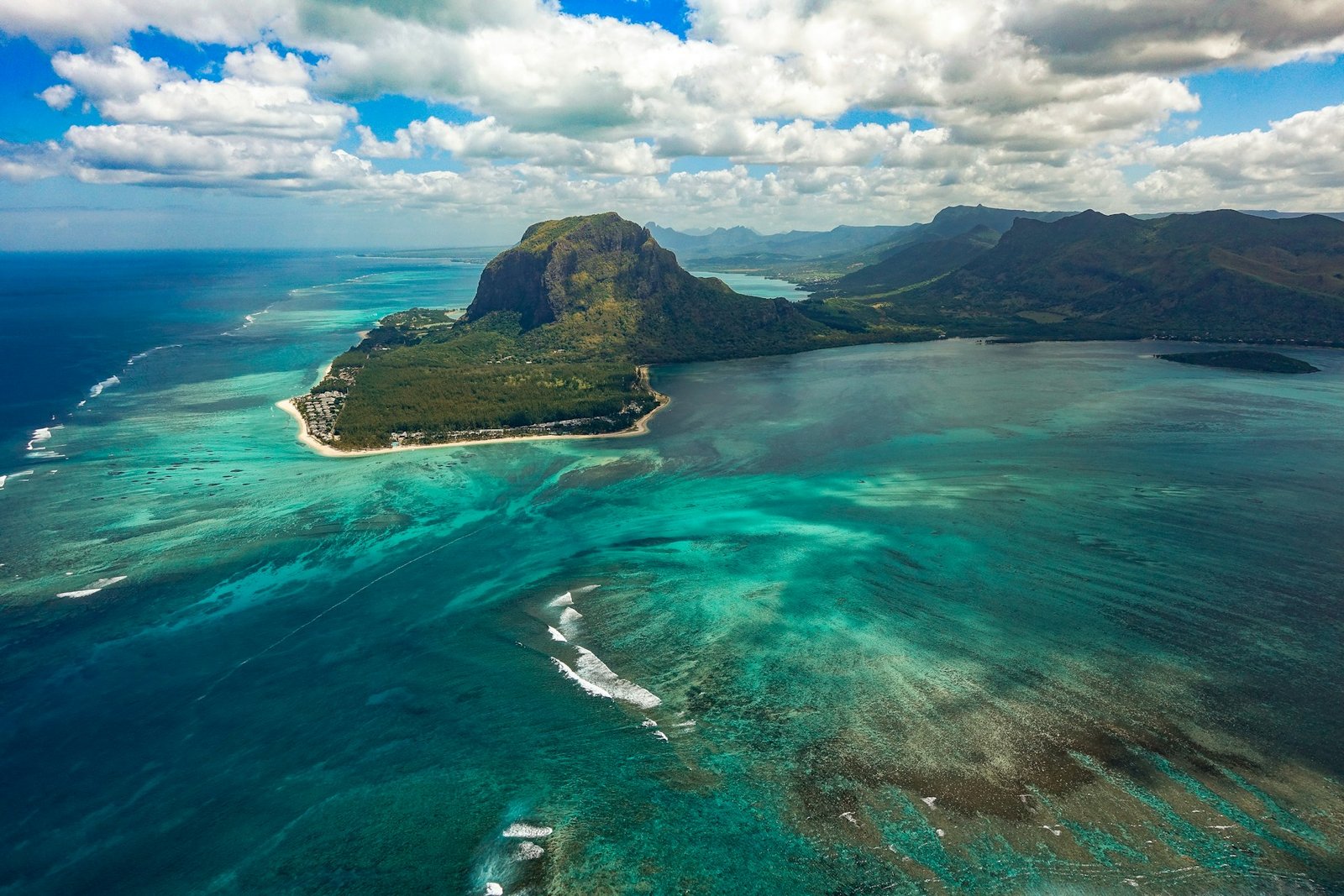
Mark Twain supposedly once wrote that Mauritius was made first and heaven was copied from it. Whether he really meant it or not, it’s hard to argue with the idea once you see the island from above: a green volcanic heart, surrounded by a turquoise lagoon and a ring of coral reef, with a dramatic mountain rising straight out of the sea in the southwest.
Most people know Mauritius as a honeymoon destination full of five-star resorts. Those exist, and some are wonderful. But Mauritius is also a real country with a fascinating mix of cultures, cheap and delicious street food, public beaches that anyone can use, and a surprising amount of adventure: hiking, waterfalls, kitesurfing, diving and sailing.
This guide shows you how to see the best of Mauritius on a realistic budget: where to stay, how to get around, the best things to do on land and in the water, and what a trip really costs.
Mauritius at a Glance
- Where: an island in the Indian Ocean, about 2,000 km off the southeast coast of Africa, east of Madagascar
- Currency: Mauritian rupee (MUR). One US dollar is roughly 45 to 47 rupees
- Airport: Sir Seewoosagur Ramgoolam International Airport (MRU) in the southeast
- Languages: English and French are widely spoken, while most locals speak Mauritian Creole among themselves
- Entry: many nationalities, including travellers from the EU, the UK, the US, Canada and Australia, can visit visa-free for short stays
- Best time: May to December for dry, sunny weather
- Budget: around $60 to $90 a day for budget travellers, $120 to $220 for a comfortable mid-range trip
A Fascinating Mix of Cultures
Mauritius had no native population. The Dutch, the French and the British each controlled the island at different times, and over the centuries enslaved people from Africa and Madagascar, indentured workers from India and traders from China all came here. Today their descendants live side by side, and the result is one of the most diverse and peaceful societies in the world.
You’ll see it everywhere: in the Hindu temples, mosques, churches and Chinese pagodas, in the festivals throughout the year and above all in the food. A plate of street food in Mauritius can combine Indian spices, French technique and Chinese noodles in one bite.
When to Go
Mauritius has two main seasons.
Winter (May to October) is dry, sunny and pleasantly warm, with daytime temperatures of around 24 to 27 degrees Celsius. It’s perfect for hiking and sightseeing. The east coast can be windy, which kitesurfers love.
Summer (November to April) is hotter and more humid, with temperatures above 30 degrees. The sea is warmest and calmest for diving and snorkelling. January to March is the rainy season and also brings the risk of cyclones.
The best months for most travellers are May, June, September, October and November: great weather, fewer crowds and better prices than around Christmas and in the European summer holidays.
Entry Rules and Tourist Fee
Many nationalities can enter Mauritius visa-free for short stays. You’ll need a return ticket, proof of accommodation and a passport valid for at least six months. Check the current rules for your nationality before you travel.
Since October 2025, visitors aged 12 and over pay a tourist fee of €3 per person per night. It’s collected by your hotel, guesthouse or villa, so you don’t need to arrange anything in advance.
Where to Stay
Each coast of Mauritius has its own character.
West Coast: Flic en Flac and Tamarin
The west coast is the sunniest and driest part of the island, with calm water and the best sunsets. Flic en Flac has one of the longest beaches on the island, a relaxed atmosphere and plenty of affordable apartments and guesthouses. Tamarin and Black River are quieter and perfect for dolphin trips and hikes.
North: Grand Baie and Pereybère
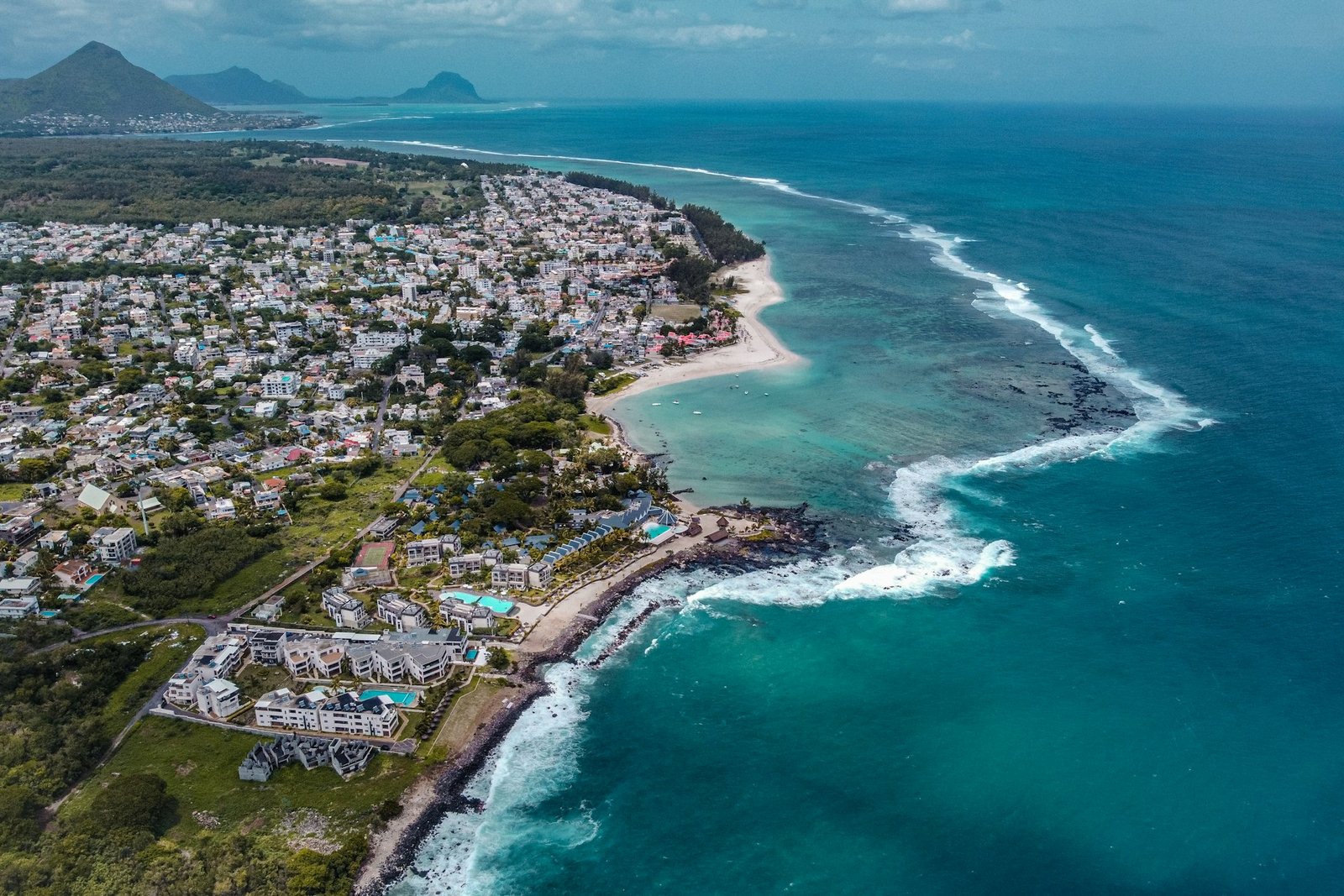
The north is lively, with restaurants, bars, shopping and lots of boat trips. Grand Baie is the busiest town for tourists, while Pereybère next door has a lovely small public beach and good-value guesthouses. It’s a great base if this is your first visit.
East Coast: Belle Mare and Trou d’Eau Douce
The east coast has long white beaches, many of the big resorts and the famous Île aux Cerfs. It’s breezier in winter, which keeps the heat down. Trou d’Eau Douce is a small fishing village with boats to the islands and a more local feel.
South: Le Morne and Blue Bay
The south is the wildest part of the island. Le Morne has a stunning peninsula with a mountain, a world-famous kitesurfing lagoon and some of the most beautiful beaches. Blue Bay near the airport has a protected marine park with excellent snorkelling.
Our tip: stay in two different areas, for example the west and the south, to see more of the island without spending hours in the car every day.
Getting Around
- Rental car: the easiest way to explore. Mauritius drives on the left. Roads are good but narrow in places, and traffic around the capital Port Louis can be heavy
- Buses: cheap and cover the whole island, but they’re slow and stop running in the early evening
- Taxis: agree on the price before you get in. Many guesthouses can arrange a driver for a full-day tour of the island
- Scooters: possible, but the roads aren’t always easy for beginners
Things to Do in Mauritius
Here are the experiences we think are worth your time and money.
1. Hike Le Morne Brabant
Le Morne Brabant is the iconic mountain on the southwest tip of the island, rising 556 metres above the lagoon. It’s a UNESCO World Heritage Site, because in the 18th and 19th centuries, escaped enslaved people hid in its caves and on its summit. It’s a powerful symbol of the fight for freedom.
The hike to the viewpoint takes around three to four hours return. The first part is an easy walk through the forest, while the last section is a steep scramble over rocks, sometimes using your hands. The view over the lagoon and the famous “underwater waterfall” (an optical illusion created by sand and silt flowing off the edge of the reef) is breathtaking. Start early to avoid the heat, and consider a local guide for the upper part.

2. Explore Chamarel and the Seven Coloured Earth
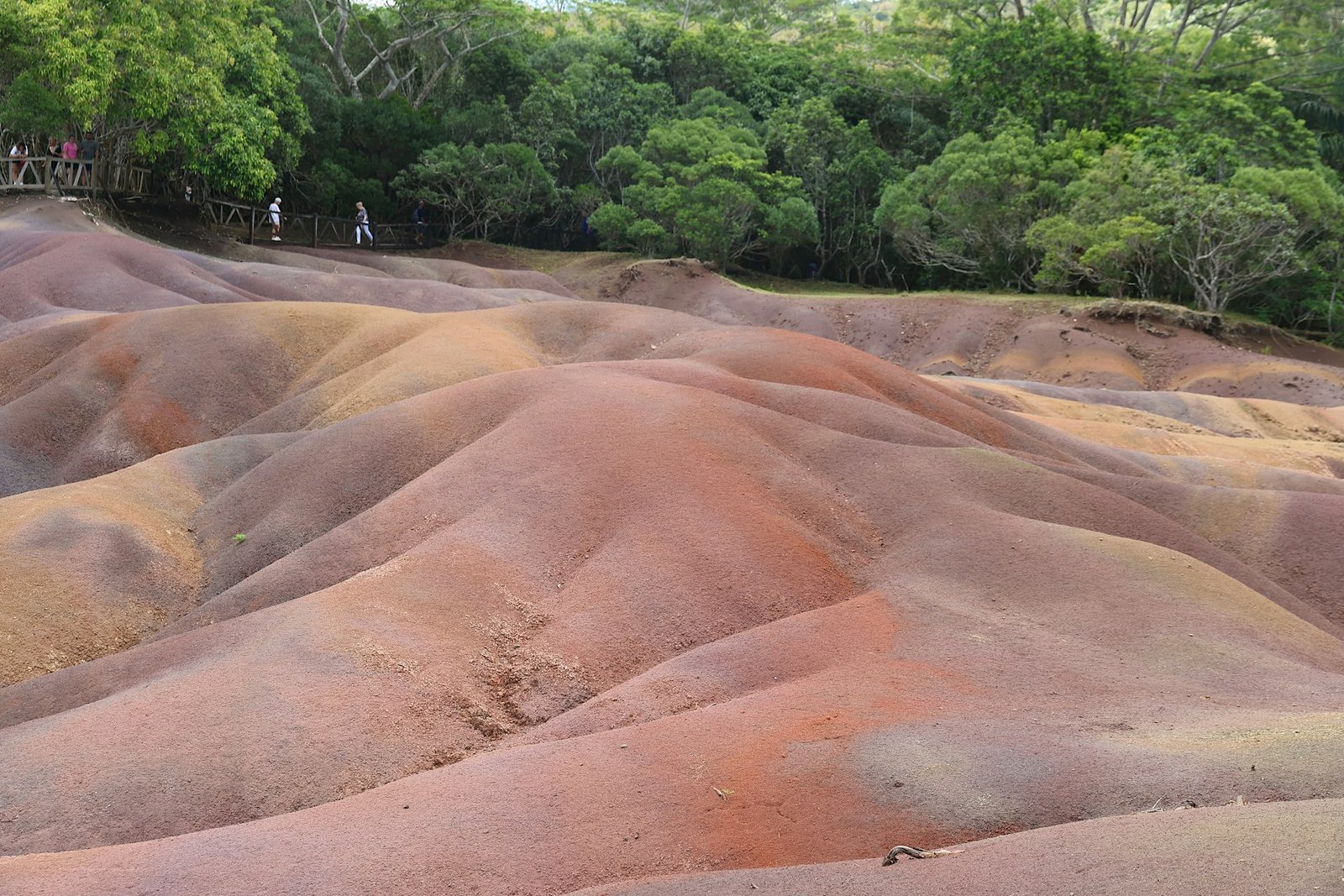
In the green hills of the southwest, the village of Chamarel is home to one of the island’s most famous sights: the Seven Coloured Earth, small dunes of volcanic sand in shades of red, brown, violet, green, blue and yellow. The colours come from minerals in the volcanic rock, and the sand never mixes, even after heavy rain.
The same park has giant tortoises and a viewpoint over the Chamarel Waterfall, which plunges about 100 metres into the forest. Entry costs a small fee. Afterwards, visit the Rhumerie de Chamarel, a rum distillery with tastings, or have lunch at one of the restaurants with views over the hills.
3. Visit Black River Gorges National Park
Black River Gorges National Park protects most of the island’s remaining native forest. It has more than 60 km of trails, from short walks to viewpoints to full-day hikes. Look out for the rare pink pigeon and the Mauritius kestrel, which were both nearly extinct a few decades ago.
The viewpoints at Gorges Viewpoint and Alexandra Falls are easy to reach by car and offer amazing views of the forest and the coast. Entry to the park is free.

4. Sail on a Catamaran to Île aux Cerfs
The classic day trip in Mauritius is a catamaran cruise to Île aux Cerfs, a small island off the east coast with white beaches and a turquoise lagoon. Most tours include snorkelling stops, a barbecue lunch on board and a visit to a waterfall at Grand River South East.
On the west coast, catamaran trips sail along the coast to the Benitiers Island and the Crystal Rock, often with a chance to see dolphins on the way. Shared catamaran trips are mid-range in price and usually include lunch and drinks. Choose a smaller boat if you prefer a calmer atmosphere.

5. Snorkel at Blue Bay Marine Park
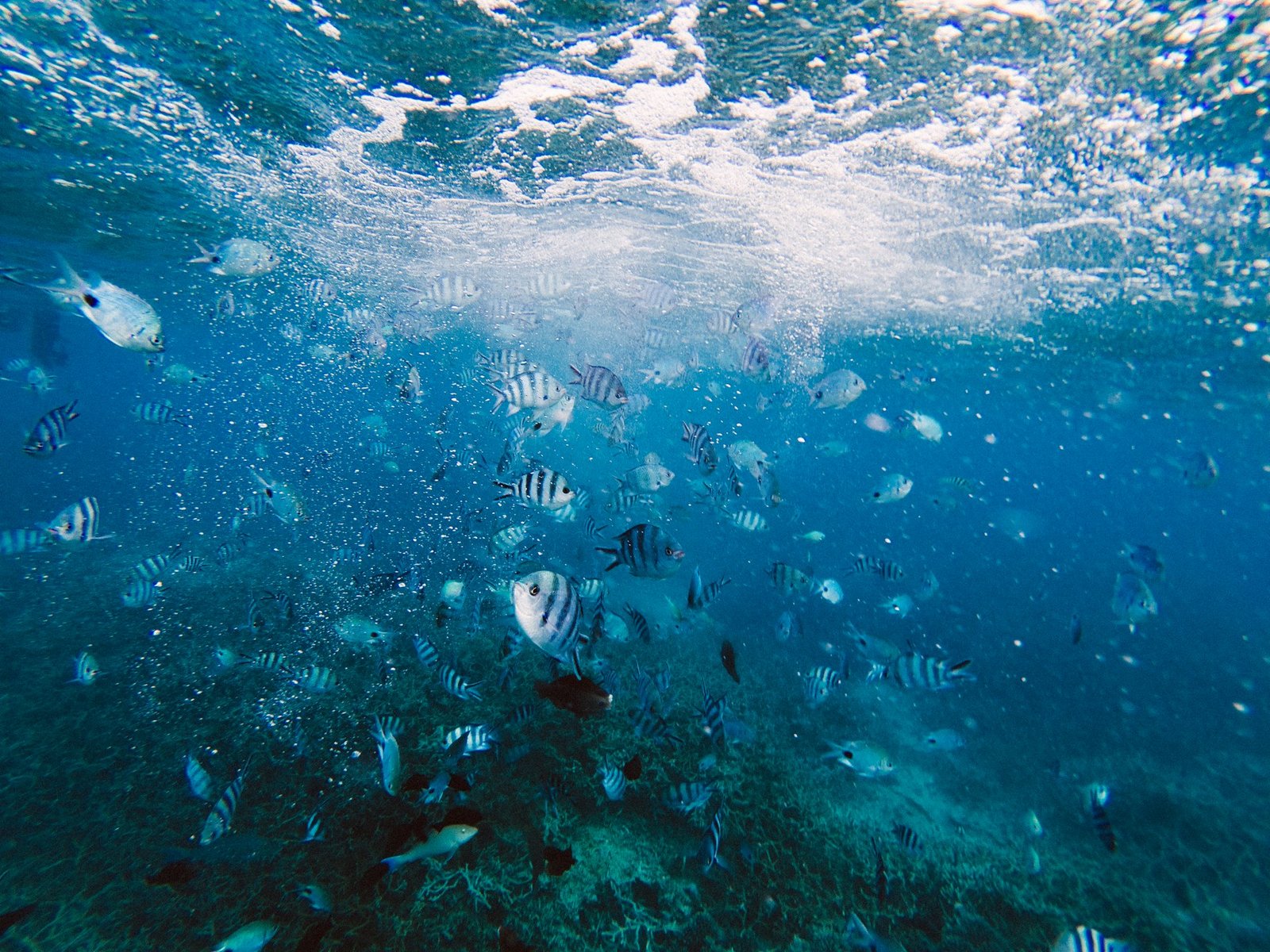
Blue Bay Marine Park in the southeast is the best place for snorkelling in Mauritius. The protected lagoon has clear, shallow water and healthy coral gardens full of colourful fish. You can snorkel from the beach, but a short glass-bottom boat tour takes you to the best spots in the middle of the park.
Please don’t feed the fish, and never stand on or touch the coral. Some boat operators still offer bread to attract fish, but it’s bad for the fish and the reef.
6. Dive the Reefs
Mauritius is surrounded by a coral reef, and there are excellent dive sites all around the island. Highlights include the Cathedral cave near Flic en Flac, with light beams shining through the ceiling, shipwrecks in the north, and the turtles, rays and moray eels of the west coast. Dive centres offer beginner courses and guided dives at mid-range prices.
7. See Dolphins on the West Coast
Wild spinner and bottlenose dolphins live in the bays off Tamarin and Black River on the west coast. Early-morning boat trips take visitors out to see them. Some tours allow you to swim with the dolphins, but this has become controversial, because too many boats and swimmers stress the animals. If you go, choose an operator that keeps its distance, limits the number of boats and doesn’t chase the dolphins. Watching them from the boat is just as magical.
Between July and October, humpback whales also pass the west coast on their migration, and responsible whale-watching trips are available.
8. Kitesurf in Le Morne
The lagoon at Le Morne is one of the most famous kitesurfing spots in the world, with steady trade winds from around May to November. Several schools offer beginner courses, and the shallow water inside the reef makes it a good place to learn. Experienced riders head out to the legendary wave called “One Eye” on the reef.
9. Discover Port Louis
The capital, Port Louis, is busy, chaotic and full of character. Walk through the Central Market, full of tropical fruit, spices and street food stalls, visit the colourful Chinatown and the historic Aapravasi Ghat, a UNESCO site where hundreds of thousands of indentured workers from India first arrived. The modern Caudan Waterfront has shops, cafés and the Blue Penny Museum, home to two of the rarest stamps in the world.
10. Visit the Botanical Garden in Pamplemousses
The Sir Seewoosagur Ramgoolam Botanical Garden in Pamplemousses is one of the oldest botanical gardens in the Southern Hemisphere. Its most famous sight is the pond full of giant Victoria water lilies, whose leaves can grow up to two metres across. You’ll also find spice trees, palms of every kind and giant tortoises. A guide brings the garden to life and is worth the small extra cost.
Eating on a Budget
Mauritian food is one of the great joys of the island, and the best of it is cheap. Look out for:
- Dholl puri: thin flatbreads filled with split peas, served with curry, pickles and chutney. The island’s favourite street food, usually costing just a few rupees
- Gâteaux piments: little chilli and split pea fritters, perfect as a snack
- Mine frite and boulettes: Chinese-Mauritian fried noodles and dumplings
- Rougaille: a tomato-based Creole sauce, served with fish, sausages or chicken
- Fresh seafood and octopus curry in the coastal villages
Look for the street food stalls and small roadside snack shops (called “snacks” locally). A filling lunch can cost just a few dollars. Restaurants in the resorts and tourist areas are much more expensive. Supermarkets are well stocked if you stay in an apartment with a kitchen.
Where to Stay on a Budget
You don’t need to stay in a five-star resort to enjoy Mauritius. Guesthouses and holiday apartments are common, especially in Flic en Flac, Pereybère, Grand Baie and Trou d’Eau Douce. Expect around $40 to $90 a night for a comfortable room or apartment. Mid-range hotels often cost $100 to $200 a night, and luxury resorts start well above that.
Remember that all beaches in Mauritius are public. Even if you stay in a cheap guesthouse, you can swim at the same beaches as the guests of the big resorts.
What It Really Costs
Here’s a realistic daily budget per person for a comfortable mid-range trip, not counting international flights.
- Accommodation: $30 to $70 per person, sharing a guesthouse room or apartment
- Food: $15 to $35 a day, mixing street food with a few restaurant meals
- Transport: $20 to $40 a day on average, for a rental car shared between two people, or less if you use buses
- Activities: many of the best experiences are free or cheap, like hiking, beaches and Black River Gorges. Budget for one or two bigger trips, such as a catamaran cruise or a dive
That works out to around $80 to $170 per person per day. Add the tourist fee of €3 per person per night.
A Sample 10-Day Itinerary
Days 1 to 4: West coast, based in Flic en Flac or Tamarin. Hike Le Morne, visit Chamarel and the Seven Coloured Earth, explore Black River Gorges, and take an early-morning dolphin-watching trip.
Days 5 to 7: North, based in Pereybère or Grand Baie. Visit Port Louis and the Pamplemousses Botanical Garden, and take a catamaran trip along the coast.
Days 8 to 10: East or south coast. Take a catamaran to Île aux Cerfs, snorkel in Blue Bay Marine Park and relax on the beach before your flight.
Practical Tips
- Drive on the left, and watch out for pedestrians, dogs and buses on narrow roads
- Plugs: Mauritius uses both the British three-pin plug (type G) and the European two-pin plug (type C). Bring an adapter
- Sunscreen and reef protection: the sun is very strong. Use reef-safe sunscreen and a rash guard when snorkelling
- Sea urchins: wear water shoes when walking in the lagoon
- Cash: carry some rupees for street food, markets and small shops. Cards are accepted in most hotels and restaurants
Booking Tips
- Airport transfer: the airport is in the southeast, about an hour from Flic en Flac or Grand Baie. Book an airport transfer with Kiwitaxi in advance for a fixed price straight to your guesthouse
- eSIM: install a Yesim eSIM before you fly, so you have data for maps and driving directions in Mauritius from the moment you land
- Tours: popular options include a catamaran cruise to Île aux Cerfs, a dolphin-watching trip from Tamarin, a guided Le Morne hike and a south-west tour to Chamarel. You can compare and book most of them on Klook
Final Thoughts
Mauritius is often treated as a place to lie by the pool for a week. That’s fine, and it’s a great place to relax. But if you leave the resort, you’ll discover a much richer island: mountains with a powerful history, rainforest waterfalls, rainbow-coloured earth, bustling markets and some of the best street food in the Indian Ocean.
Stay in a guesthouse, rent a car, eat dholl puri at a roadside stall and spend your money on one or two great days on the water. You’ll see the real Mauritius, and you might just agree with Mark Twain.
Prices checked in October 2026. Costs and opening times change, so always confirm before you book.
Leave a Reply