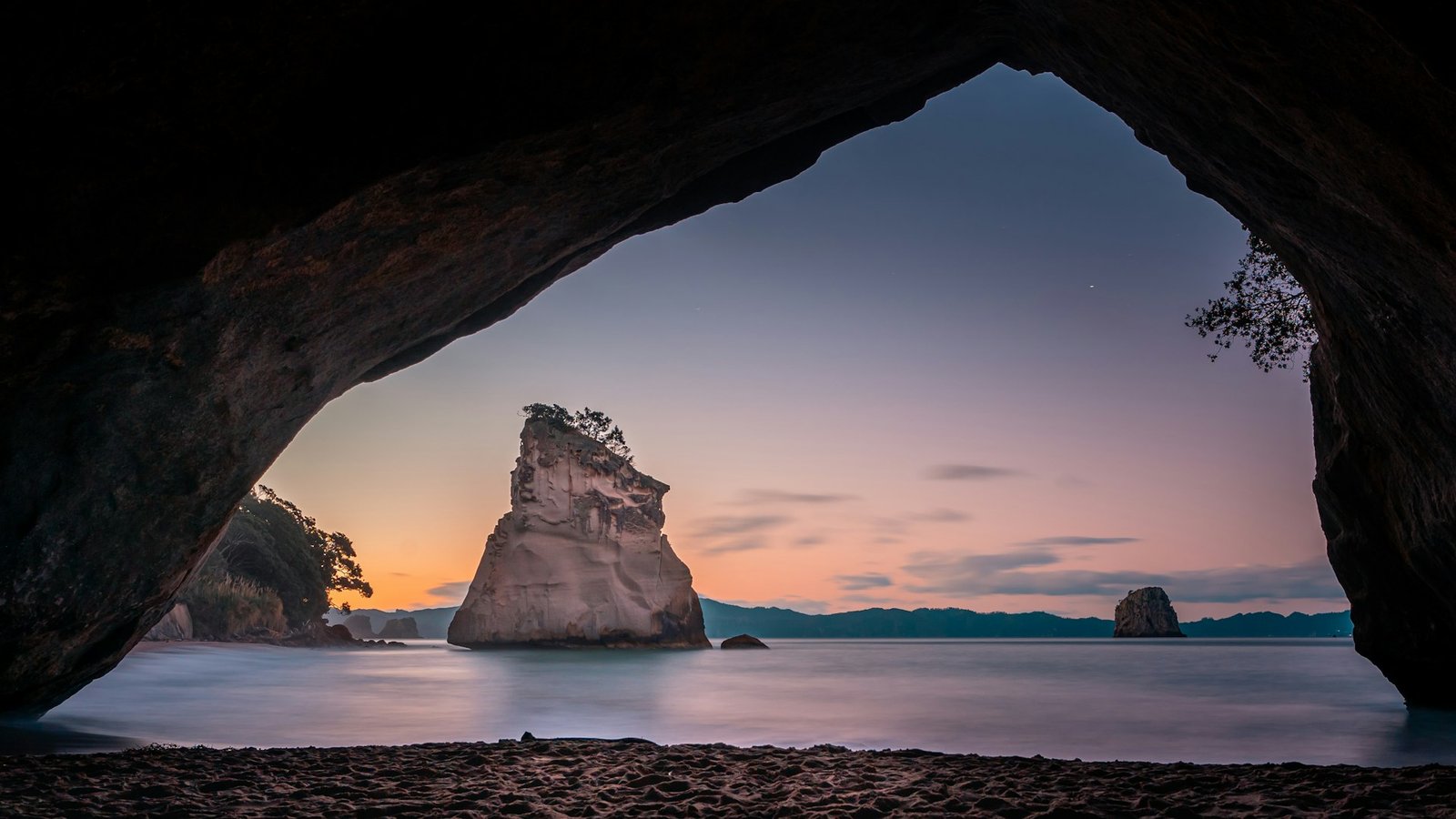
A giant stone arch framing a white beach and turquoise sea, hot springs bubbling up through the sand, glowworms lighting up an underground river like a starry sky, geysers shooting steam into the air and emerald lakes in a volcanic landscape: New Zealand’s North Island is full of surprises.
Many travellers rush through the North Island on their way to the mountains and fjords of the south. That’s a mistake. The north is warmer, with beautiful beaches, subtropical islands, active volcanoes and the strongest connection to Māori culture, the culture of New Zealand’s first people. And yes, it’s also home to the famous Hobbiton movie set.
New Zealand isn’t a cheap destination, but the North Island is easy to explore on a budget. Distances are short, the landscapes are free to enjoy, and with a campervan or rental car, holiday parks and picnic lunches, you can see the highlights without overspending. This guide shows you how.
The North Island at a Glance
- Where: the northern of New Zealand’s two main islands, in the South Pacific
- Main airport: Auckland (AKL), New Zealand’s largest international airport
- Currency: New Zealand dollar (NZD)
- Entry: many visitors can travel visa-free but must apply online for an NZeTA before they travel and pay a tourism levy. Others need a visa. Check the current rules for your passport
- Languages: English and Māori. Learn to say “Kia ora”, the Māori greeting
- Best time: December to March for summer, March to April and November for fewer crowds
- Budget: around $100 to $150 a day for budget travellers, $180 to $300 for a comfortable mid-range trip
When to Go
December to March is summer, the best time for beaches, swimming and hiking. The days are long and warm, usually between 20 and 28°C. January is the busiest month, as New Zealanders take their summer holidays.
March and April are autumn and our favourite time. The weather is often settled and warm, the sea is still pleasant, and the crowds are gone. November is also a good choice, with spring flowers and lower prices.
June to August is winter. It’s cool and rainy, but the geothermal areas of Rotorua are perfect for a warm soak, and there’s skiing on the volcanoes.
Our tip: visit in March for warm weather, calm seas and quiet trails.
How Long Do You Need?
Plan at least ten days for the North Island. That gives you time for Auckland, the Coromandel Peninsula, Rotorua, Hobbiton, Waitomo and the Tongariro Alpine Crossing. With two weeks, you can add the Bay of Islands in the far north.
Getting Around
The best way to explore the North Island is with a rental car or a campervan. Roads are good but often winding, and distances take longer than you’d expect. Driving is on the left.
Campervans are especially popular in New Zealand. You can stay at holiday parks and campsites, cook your own meals and wake up in beautiful places. Only camp in places where it’s allowed.
InterCity buses also connect the main towns, but you’ll need tours to reach many highlights.
Things to Do on New Zealand’s North Island
Here are the experiences we think are worth your time and money.
1. Visit Cathedral Cove
Cathedral Cove, near the village of Hahei on the Coromandel Peninsula, is one of the most famous sights in New Zealand. A huge natural stone arch connects two white sand beaches, with a striking rock pinnacle standing in the turquoise water.
Access to the cove has been affected by storm damage in recent years, so check the latest information from the Department of Conservation before you go. One of the best ways to see it is from the water, on a kayak tour or a boat trip from Hahei, which also visits sea caves and the Te Whanganui-A-Hei Marine Reserve, great for snorkelling.

2. Dig Your Own Hot Pool at Hot Water Beach
Just a few minutes from Hahei, Hot Water Beach is one of the quirkiest places in the country. Hot water from underground springs bubbles up through the sand, and at low tide you can dig your own natural spa pool on the beach.
Come about two hours before or after low tide, rent a spade from a local shop and join the crowds digging in the right spot. The water can be very hot, so be careful. Swimming in the sea here is dangerous because of strong currents, so stay out of the waves.

3. Sail the Bay of Islands
In the far north, the Bay of Islands is a beautiful bay of more than 140 subtropical islands, golden beaches and clear blue water. It’s one of the best places in the country for sailing, kayaking and spotting dolphins.
Join a boat trip to the famous Hole in the Rock, a natural arch at the edge of the bay, and stop on one of the islands for a walk and a swim. Base yourself in Paihia, and take the short ferry to the charming historic town of Russell. Don’t miss the Waitangi Treaty Grounds, where the treaty between the British Crown and Māori chiefs was signed in 1840.
4. See the Glowworms of Waitomo
The Waitomo Caves are home to thousands of tiny glowworms, which light up the ceilings of the caves with a blue-green glow. Floating through the dark on a boat, under what looks like a sky full of stars, is a truly magical experience.
The classic tour of the Waitomo Glowworm Caves is easy and suitable for everyone. For more adventure, try black water rafting, floating through the caves on an inner tube. Tours are on the pricier side, but this is one of New Zealand’s most unique experiences.
5. Step into Hobbiton
Near the town of Matamata, set among rolling green farmland, is the Hobbiton Movie Set, used in the famous fantasy films. More than 40 colourful little houses with round doors are built into the hillsides, surrounded by gardens, a mill and a lake.
Visits are only possible on a guided tour, which takes about two hours and ends with a drink at the village inn. Tickets are expensive, but fans and non-fans alike love the beautiful setting. Book well in advance, especially in summer.

6. Explore the Colourful Pools of Wai-O-Tapu
South of Rotorua, Wai-O-Tapu is one of the most colourful geothermal areas in the world. A walking trail leads past boiling mud pools, steaming craters and bright yellow, orange and green lakes coloured by minerals.
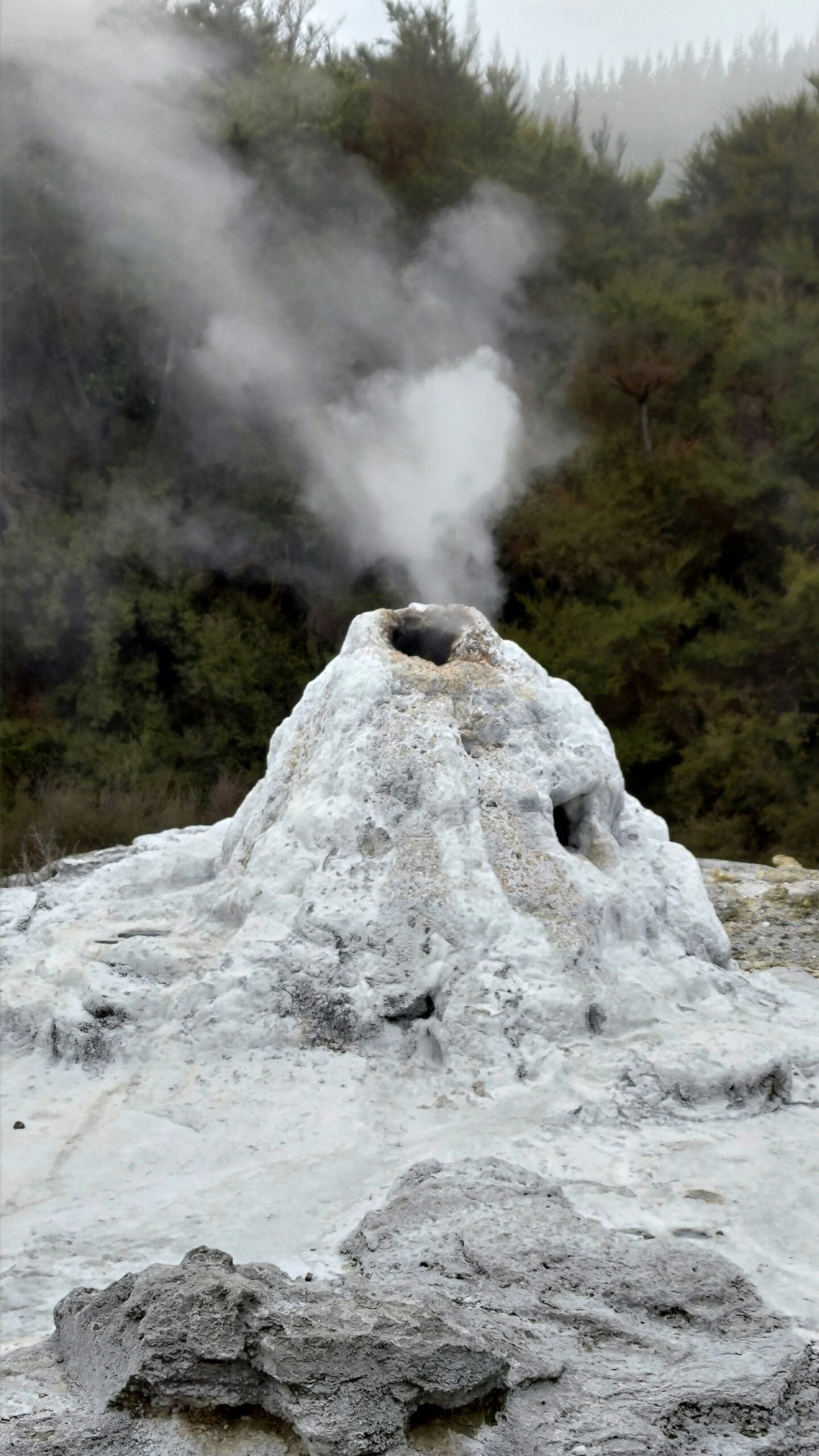
The highlight is the Champagne Pool, a hot spring with bright orange edges and bubbling green-blue water. Arrive in the morning to see the Lady Knox Geyser erupt, which happens once a day at a set time. The smell of sulphur is strong, but you’ll soon get used to it.

7. Discover Rotorua’s Geysers and Māori Culture
Rotorua is the heart of New Zealand’s geothermal region and of Māori culture. Steam rises from parks and gardens all over town, and the air smells of sulphur.
At Te Puia, watch the Pōhutu Geyser, which erupts many times a day, sometimes up to 30 metres high. In the evening, join a Māori cultural experience, with a traditional welcome, songs, the famous haka and a hāngī dinner, cooked in an earth oven. Afterwards, relax in one of the town’s hot pools.
8. Hike the Tongariro Alpine Crossing
The Tongariro Alpine Crossing is often called the best one-day hike in New Zealand. The 19.4 km trail crosses a volcanic landscape of craters, lava flows and steaming vents, past the brilliant green Emerald Lakes and the deep Blue Lake.
The hike takes six to eight hours and climbs steeply, so you need to be fit. The weather in the mountains changes quickly, so bring warm, waterproof clothes. Parking at the start is limited, so book a shuttle. The trail is in Tongariro National Park, a UNESCO World Heritage Site sacred to the Māori.

9. Visit Lake Taupō and Huka Falls
Lake Taupō, the largest lake in New Zealand, fills a huge volcanic crater in the centre of the North Island. Its clear water is perfect for swimming, kayaking and boat trips to see the giant Māori rock carvings at Mine Bay.
Just north of the town, the Huka Falls are a powerful waterfall where the Waikato River squeezes through a narrow gorge and thunders into a turquoise pool. Walk the trails for free, or take a jet boat ride right up to the bottom of the falls.
10. Explore Auckland and Waiheke Island
Auckland, the country’s largest city, is built around two harbours and dozens of volcanic cones. Climb Mount Eden for a view over the city, walk along the waterfront and visit the Auckland Museum for a great introduction to Māori culture.
Take the ferry to Waiheke Island, just 40 minutes away, with its beautiful beaches, vineyards and olive groves. Rent a bike or use the local bus to hop between beaches and wineries, and enjoy a glass of local wine with a view of the sea.
Where to Stay on a Budget
The North Island has great options for every budget:
- Holiday parks: campsites with cabins, kitchens and hot showers, perfect for campervans and budget travellers
- Hostels: found in all the main towns, with dorms and private rooms
- Motels: simple, good-value rooms, often with a small kitchen
- Bed and breakfasts: cosy guesthouses, often run by friendly local hosts
Book early for January and the school holidays, especially in the Coromandel and the Bay of Islands.
Eating on a Budget
New Zealand food is fresh and hearty:
- Fish and chips: a beach classic, best eaten on the sand
- Meat pies: sold at every bakery, a cheap and filling lunch
- Hāngī: meat and vegetables cooked in an earth oven, a traditional Māori meal
- Green-lipped mussels: a local seafood speciality
- Pavlova and hokey pokey ice cream: classic Kiwi desserts
Supermarkets like Pak’nSave and Woolworths are the cheapest places to buy food. Cook your own meals in holiday park kitchens to save money.
What It Really Costs
Here’s a realistic daily budget per person for a comfortable mid-range trip, not counting flights.
- Accommodation: $50 to $120 per person, sharing a motel room, cabin or campervan
- Food: $35 to $60 a day, mixing self-catering, bakeries and restaurant dinners
- Transport: $40 to $70 a day per person, including a rental car or campervan shared by two and fuel
- Activities: budget for the highlights separately: Hobbiton, the Waitomo caves, Wai-O-Tapu, a Māori cultural evening, a Bay of Islands cruise and the Tongariro shuttle
That works out to around $180 to $300 per person per day. Staying in holiday parks, cooking your own meals and enjoying the free hikes and beaches can bring that down noticeably.
A Sample 10-Day Itinerary
Day 1: Arrive in Auckland and climb Mount Eden.
Day 2: Day trip to Waiheke Island.
Day 3: Drive to the Coromandel and dig your own pool at Hot Water Beach.
Day 4: Kayak tour to Cathedral Cove, then drive to Rotorua.
Day 5: Wai-O-Tapu in the morning, Te Puia and a Māori cultural evening.
Day 6: Hobbiton, then the Waitomo Glowworm Caves.
Day 7: Drive to Taupō and visit Huka Falls.
Day 8: Hike the Tongariro Alpine Crossing.
Day 9: Relax at Lake Taupō, then drive back towards Auckland.
Day 10: Fly home from Auckland.
Add three or four days to visit the Bay of Islands if you have more time.
Practical Tips
- Apply for your NZeTA before you travel, if you need one
- Book ahead for Hobbiton, the Tongariro shuttle and campervans in summer
- Pack for four seasons, especially for hikes in the mountains
- Use strong sunscreen: the sun in New Zealand is much stronger than in Europe
- Swim at patrolled beaches, between the flags, as rip currents are common
- Respect Māori culture and nature: follow local customs at cultural sites, stay on the tracks and take your rubbish with you
Booking Tips
- Airport transfer: if you don’t pick up a rental car at the airport, book an airport transfer with Kiwitaxi from Auckland airport to your hotel in the city, with a fixed price and a driver waiting for you
- eSIM: install a Yesim eSIM before you fly, so you have data for maps, road trip planning and tour bookings on the North Island from the moment you land
- Tours: popular options include a Hobbiton movie set tour, the Waitomo glowworm caves, a Bay of Islands cruise and a Māori cultural evening in Rotorua. You can compare and book most of them on Klook
Final Thoughts
New Zealand’s North Island is a land of beaches, volcanoes and living culture. Kayak to Cathedral Cove, dig a hot pool in the sand, float under glowworms, walk through Hobbiton, watch geysers in Rotorua and hike past the Emerald Lakes of Tongariro.
Travel in late summer, rent a car or campervan and take your time. The North Island will show you a side of New Zealand that many travellers miss.
Prices checked in October 2026. Costs and opening times change, so always confirm before you book.
Leave a Reply