Dream destinations, real budgets

Category: Oceania

Australia’s reefs, New Zealand’s mountains and South Sea islands like Bora Bora and Fiji. Bucket-list trips to Oceania on a smarter budget.

  • Melbourne and the Great Ocean Road: The Ultimate Road Trip Guide

    Melbourne and the Great Ocean Road: The Ultimate Road Trip Guide

    The tallest palm trees in the world rising out of misty green hills, colourful colonial streets full of flowers and balconies, a giant rock towering over a lake dotted with islands, coffee farms on steep mountain slopes and wild Caribbean beaches framed by jungle: Colombia is one of the most exciting countries in South America.

    For years, many travellers stayed away. Today, Colombia is one of the most popular destinations on the continent, and it’s easy to see why. The country has two coastlines, the Andes, the Amazon, lively cities and some of the friendliest people you’ll meet anywhere.

    Colombia is also great value. A comfortable guesthouse room, a filling set lunch and a cup of the world’s best coffee cost very little, and domestic flights make it easy to cover long distances. This guide shows you the best places to visit, how to plan your route and what it really costs.

    Colombia at a Glance

    • Where: in the north of South America, with coasts on the Caribbean Sea and the Pacific Ocean
    • Main airports: Bogotá (BOG), Medellín (MDE) and Cartagena (CTG)
    • Currency: Colombian peso (COP)
    • Entry: many visitors can travel visa-free for up to 90 days, but must fill in the online Check-MIG form before arrival. Others need a visa. Check the current rules for your passport
    • Language: Spanish. English is spoken in tourist areas, but learning a few words of Spanish helps a lot
    • Best time: December to March and July to August, the drier months
    • Budget: around $40 to $60 a day for budget travellers, $80 to $150 for a comfortable mid-range trip

    When to Go

    Colombia is close to the equator, so the temperature depends more on altitude than on the season. The Caribbean coast is hot all year, Medellín has a mild spring-like climate, and Bogotá is cool.

    The best time to visit is during the drier months, December to March and July to August. Christmas, New Year and Easter are very busy, especially in Cartagena, so book early.

    April to May and October to November are wetter, with afternoon showers in the mountains. The landscape is greener, prices are lower and there are fewer tourists.

    Our tip: visit in late January to March for dry weather, fewer crowds than at Christmas and perfect beach days.

    How Long Do You Need?

    Plan at least two weeks for Colombia. That gives you time for Cartagena, the coffee region, Medellín and Guatapé, and a few days on the Caribbean coast around Tayrona. With three weeks, you can add Bogotá, the Rosario Islands or the mountain village of Minca.

    Getting Around

    Colombia is big and mountainous, so travel takes longer than you’d expect:

    • Domestic flights: cheap and fast, often the best way to cover long distances between Cartagena, Medellín, Bogotá and the coffee region
    • Buses: comfortable long-distance buses connect all major towns, but journeys through the mountains are slow
    • Local transport: use ride apps in the cities, and the jeeps called Willys in the coffee region
    • Medellín Metro: clean, safe and cheap, with cable cars climbing the hillsides

    Things to Do in Colombia

    Here are the experiences we think are worth your time and money.

    1. Wander the Walled City of Cartagena

    Cartagena is one of the most beautiful colonial cities in the Americas. Inside its old stone walls, a UNESCO World Heritage Site, narrow streets are lined with colourful houses, wooden balconies overflowing with flowers and grand churches and plazas.

    Walk the city walls at sunset, visit the huge Castillo San Felipe de Barajas fortress and explore the old town early in the morning before the heat and the crowds. In the evening, the plazas fill with street performers, food stalls and music.

    A narrow colonial street with a yellow church tower in Cartagena, Colombia

    2. Explore Getsemaní

    Just outside the walls, the neighbourhood of Getsemaní is Cartagena’s creative heart. Its streets are covered with colourful murals and umbrellas hanging above the lanes, and the plazas are full of life after dark.

    Plaza de la Trinidad is the place to be in the evening, with street food, music and locals and travellers mixing together. Getsemaní is also one of the best areas to stay in Cartagena, with good-value hostels and boutique hotels.
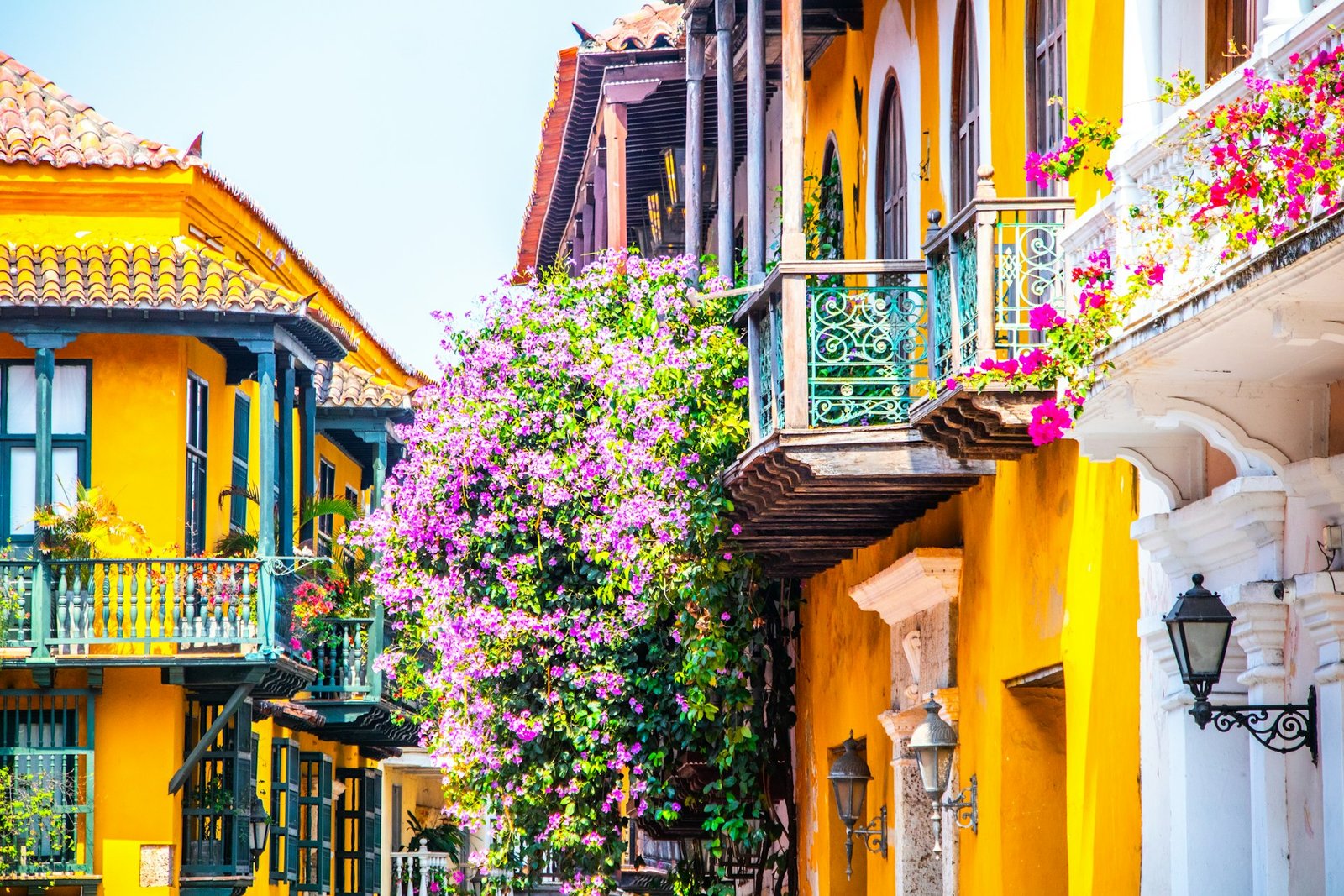
    Colourful houses with flowers on the balconies in Cartagena, Colombia

    3. Island-Hop to the Rosario Islands

    About an hour by boat from Cartagena, the Rosario Islands are a group of small coral islands with white sand beaches and turquoise water, protected as a national park.

    Join a boat trip to snorkel over the reefs, relax on the beach and enjoy fresh fish for lunch. For a quieter experience, stay overnight on one of the islands or visit the beaches of nearby Barú.

    4. Hike Among the Wax Palms of Cocora Valley

    The Cocora Valley near Salento is one of the most magical landscapes in South America. Here, the wax palm, Colombia’s national tree and the tallest palm in the world, grows up to 60 metres high, rising out of rolling green hills and cloud forest.

    The classic loop hike takes about five to six hours, crossing wobbly wooden bridges through the forest before reaching the famous palm-covered hills. If you’re short on time, you can walk straight to the palms and back in two hours. Go early in the morning, when the mist hangs between the palms.
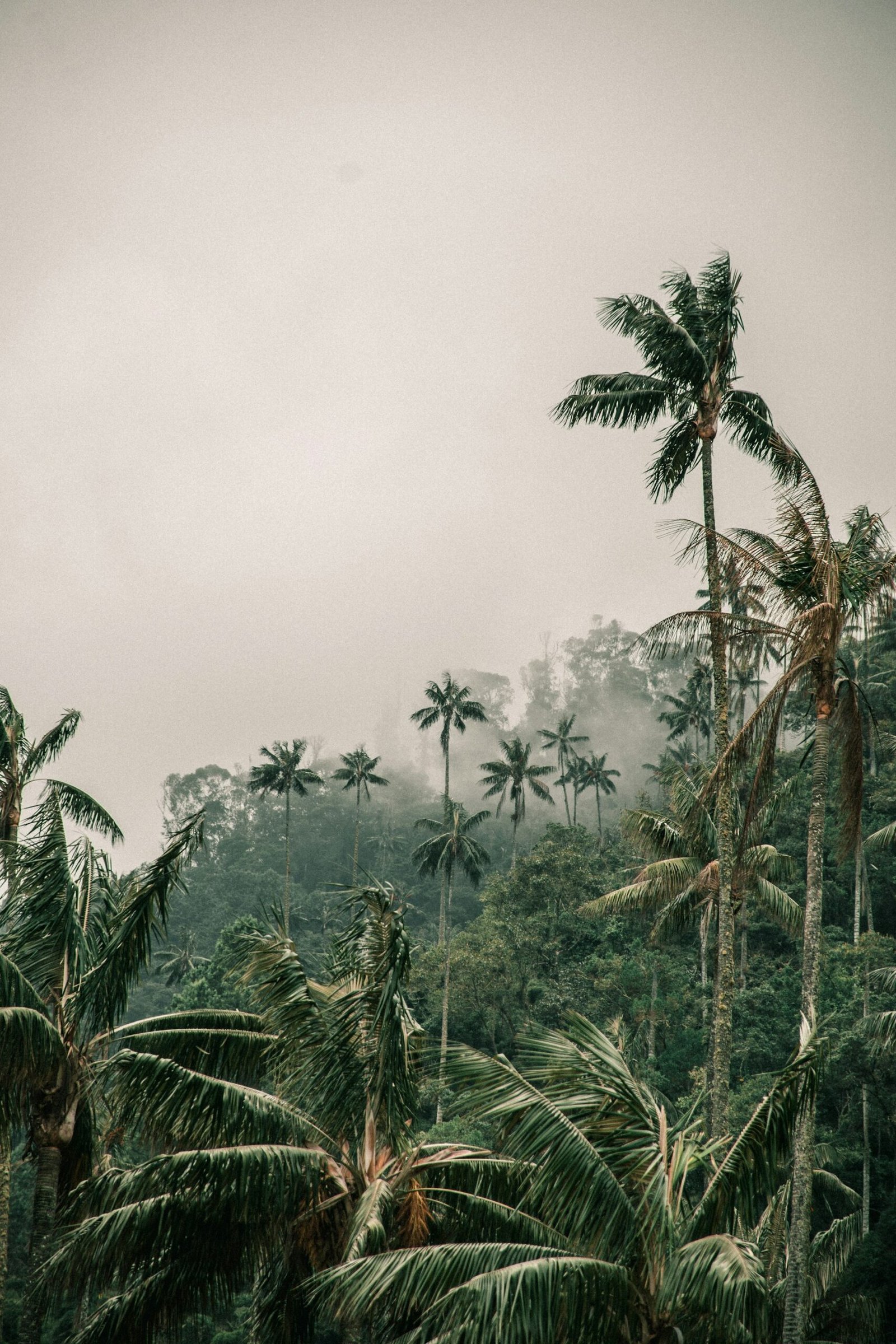
    Tall wax palms rising above the green hills of the Cocora Valley, Salento, Colombia

    5. Tour a Coffee Farm in Salento

    Colombia is famous for its coffee, and the coffee region around Salento is the best place to learn about it. On a coffee farm tour, you’ll walk through the plantations, pick coffee cherries and learn how the beans are dried, roasted and brewed, before tasting a fresh cup.

    Salento itself is a charming little town with colourful houses, craft shops and a viewpoint over the valley. Nearby, the quieter town of Filandia is just as pretty and much less touristy.

    6. Discover Medellín and Comuna 13

    Once known as one of the most dangerous cities in the world, Medellín has transformed itself into a modern, friendly city with a perfect spring-like climate all year round.

    Join a guided tour of Comuna 13, a hillside neighbourhood with colourful street art, outdoor escalators and an inspiring story of change. Ride the Metrocable cable cars for great views over the city, and relax in the parks and cafés of El Poblado and Laureles.

    7. Climb El Peñol

    About two hours from Medellín, El Peñol is a giant granite rock rising more than 200 metres above the surrounding countryside. A staircase of around 700 steps zigzags up the side of the rock.

    The climb is steep, but the view from the top is unforgettable: a maze of blue lakes, green islands and peninsulas stretching to the horizon, created when the valley was flooded for a reservoir. Come in the morning, before the day-trip crowds arrive.
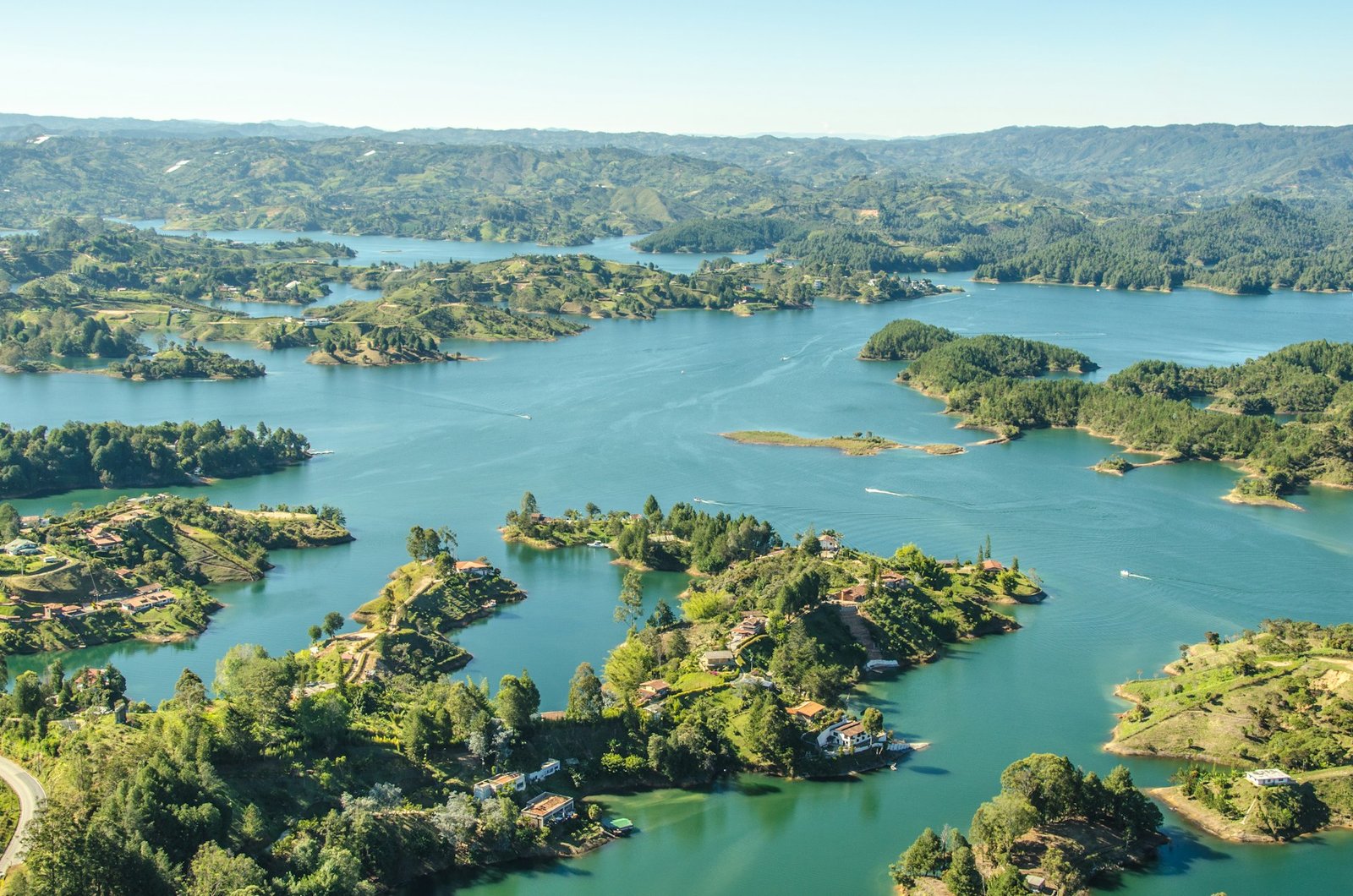
    Aerial view of the islands and lakes of the Guatapé reservoir, Colombia

    8. Stroll the Colourful Streets of Guatapé

    Next to El Peñol, the small town of Guatapé is one of the most colourful places in Colombia. Almost every house is decorated with zócalos, bright painted reliefs along the bottom of the walls showing animals, flowers and scenes from local life.

    Wander the cobbled streets, climb the colourful staircases, have lunch by the lake and take a boat trip on the reservoir. Guatapé is a popular day trip from Medellín, but staying overnight lets you enjoy it when the crowds have gone.
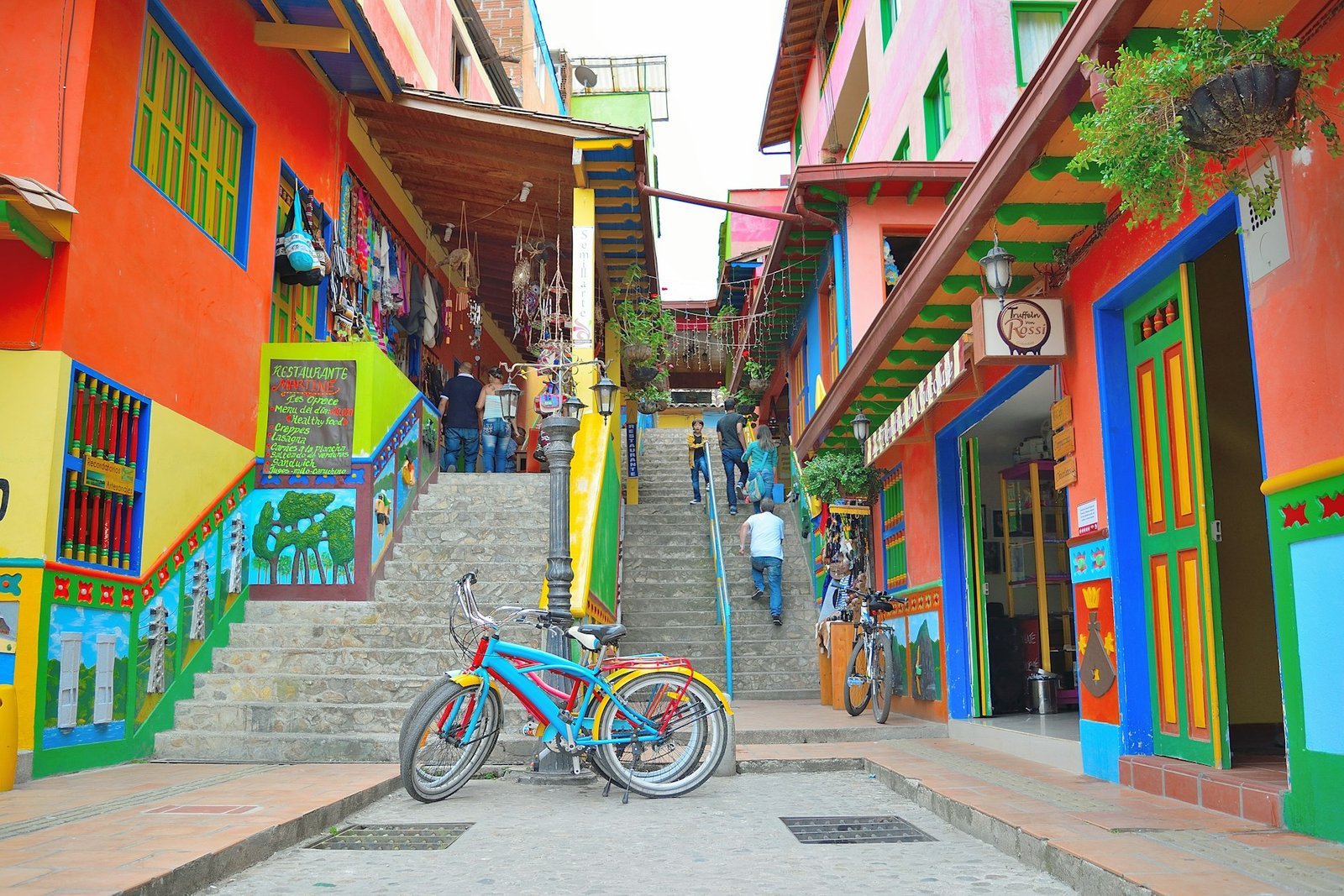
    Colourful buildings along a steep staircase in Guatapé, Colombia

    9. Hike to the Beaches of Tayrona

    On the Caribbean coast near Santa Marta, Tayrona National Park is where the jungle-covered mountains meet the sea. Hiking trails lead through the rainforest, where you might see monkeys, to beautiful beaches with giant boulders and golden sand.

    The most famous beach is Cabo San Juan, with a small hut on a rock overlooking two bays. Many beaches have strong currents, so only swim where it’s marked as safe. The park closes for a few weeks each year to let nature recover, so check the dates before you go.

    A sandy beach with large boulders in Tayrona National Park, Colombia

    10. Explore Bogotá

    Colombia’s capital, Bogotá, sits high in the Andes at 2,600 metres. Its historic centre, La Candelaria, is full of colonial buildings, street art and cosy cafés.

    Don’t miss the Gold Museum, with more than 50,000 pre-Columbian gold objects, and take the cable car or funicular up Monserrate for a view over the huge city. Join a street art tour or a bike tour to see a different side of the capital.

    Booking Tips

    A few things are worth sorting out before you arrive:

    • Airport transfer: book an airport transfer in advance with a service like Kiwitaxi, especially in Medellín, where the airport is about 45 minutes from the city
    • eSIM: install an eSIM from a provider like Yesim before you fly, so you can use maps and ride apps as soon as you land
    • Cartagena tours: popular options include a Cartagena Walled City Walking Tour, a Rosario Islands Boat Trip with Snorkelling and a Cartagena Street Food Tour. You can compare and book most of them on Klook
    • Medellín tours: look for a Comuna 13 Graffiti Tour, a Guatapé and El Peñol Day Trip from Medellín and a Medellín Coffee Farm Tour
    • Coffee region: book a Cocora Valley Hike with Guide or a Coffee Farm Tour in Salento in advance in the busy season

    Booking the big experiences online usually costs about the same as booking locally, and you’ll know exactly what’s included.

    Where to Stay on a Budget

    Colombia has excellent value accommodation:

    • Hostels: found everywhere, many with pools, rooftop bars and private rooms
    • Guesthouses and boutique hotels: stylish small hotels in colonial houses, especially in Cartagena and Salento
    • Coffee farm stays: sleep on a working coffee farm in the coffee region
    • Eco-lodges: simple lodges in the jungle near Tayrona and in Minca

    In Cartagena, stay in Getsemaní for value and atmosphere. In Medellín, El Poblado and Laureles are the most popular areas for travellers.

    Eating on a Budget

    Colombian food is hearty, fresh and full of flavour:

    • Arepas: corn flatbreads, grilled and filled with cheese, eggs or meat
    • Bandeja paisa: a huge plate of beans, rice, meat, sausage, egg, plantain and avocado from the Medellín region
    • Ajiaco: a creamy chicken and potato soup from Bogotá
    • Empanadas: fried pastries filled with meat or potatoes, sold everywhere
    • Fresh fruit juices: made with exotic fruits like lulo, maracuyá and guanábana

    Look for the menú del día, a set lunch with soup, a main course and a drink, served in local restaurants for very little money.

    What It Really Costs

    Here’s a realistic daily budget per person for a comfortable mid-range trip, not counting international flights.

    • Accommodation: $30 to $70 per person, sharing a guesthouse or boutique hotel room
    • Food: $20 to $40 a day, mixing set lunches, street food and restaurant dinners
    • Transport: $15 to $30 a day on average, including ride apps, buses and a few domestic flights
    • Activities: budget for the highlights separately: a Rosario Islands boat trip, Tayrona entry, a coffee farm tour, a Comuna 13 tour and the climb up El Peñol

    That works out to around $80 to $150 per person per day. Staying in hostels, eating set lunches and taking buses can bring that down to $40 to $60.

    A Sample 14-Day Itinerary

    Days 1 to 3: Cartagena’s walled city, Getsemaní and a boat trip to the Rosario Islands.

    Days 4 to 6: Travel to Santa Marta, then hike in Tayrona National Park and relax in Minca.

    Days 7 to 9: Fly to Medellín, take the Comuna 13 tour and ride the Metrocable.

    Day 10: Day trip to Guatapé and El Peñol.

    Days 11 to 13: Travel to Salento, hike in the Cocora Valley and visit a coffee farm.

    Day 14: Fly home via Bogotá, with time for the Gold Museum if your flight allows.

    Practical Tips

    • Fill in the Check-MIG form online before you arrive
    • Use ride apps in the cities instead of hailing taxis on the street
    • Stay alert: keep your phone out of sight in busy streets and don’t carry valuables at night
    • Pack layers: it’s hot on the coast, mild in Medellín and cool in Bogotá and the mountains
    • Carry some cash, as many small shops and buses don’t accept cards
    • Learn some Spanish: a few basic phrases will make your trip much easier

    Final Thoughts

    Colombia is a country full of colour, energy and warmth. Walk the walls of Cartagena at sunset, hike among the giant wax palms of Cocora, sip fresh coffee on a mountain farm, climb El Peñol for one of the best views in South America and finish on the wild beaches of Tayrona.

    Give yourself at least two weeks, fly between the regions and stay curious. Colombia will win your heart.

    Prices checked in October 2026. Costs and opening times change, so always confirm before you book.
  • New Zealand North Island Travel Guide: Beaches, Volcanoes and Hobbiton

    New Zealand North Island Travel Guide: Beaches, Volcanoes and Hobbiton

    A giant stone arch framing a white beach and turquoise sea, hot springs bubbling up through the sand, glowworms lighting up an underground river like a starry sky, geysers shooting steam into the air and emerald lakes in a volcanic landscape: New Zealand’s North Island is full of surprises.

    Many travellers rush through the North Island on their way to the mountains and fjords of the south. That’s a mistake. The north is warmer, with beautiful beaches, subtropical islands, active volcanoes and the strongest connection to Māori culture, the culture of New Zealand’s first people. And yes, it’s also home to the famous Hobbiton movie set.

    New Zealand isn’t a cheap destination, but the North Island is easy to explore on a budget. Distances are short, the landscapes are free to enjoy, and with a campervan or rental car, holiday parks and picnic lunches, you can see the highlights without overspending. This guide shows you how.

    The North Island at a Glance

    • Where: the northern of New Zealand’s two main islands, in the South Pacific
    • Main airport: Auckland (AKL), New Zealand’s largest international airport
    • Currency: New Zealand dollar (NZD)
    • Entry: many visitors can travel visa-free but must apply online for an NZeTA before they travel and pay a tourism levy. Others need a visa. Check the current rules for your passport
    • Languages: English and Māori. Learn to say “Kia ora”, the Māori greeting
    • Best time: December to March for summer, March to April and November for fewer crowds
    • Budget: around $100 to $150 a day for budget travellers, $180 to $300 for a comfortable mid-range trip

    When to Go

    December to March is summer, the best time for beaches, swimming and hiking. The days are long and warm, usually between 20 and 28°C. January is the busiest month, as New Zealanders take their summer holidays.

    March and April are autumn and our favourite time. The weather is often settled and warm, the sea is still pleasant, and the crowds are gone. November is also a good choice, with spring flowers and lower prices.

    June to August is winter. It’s cool and rainy, but the geothermal areas of Rotorua are perfect for a warm soak, and there’s skiing on the volcanoes.

    Our tip: visit in March for warm weather, calm seas and quiet trails.

    How Long Do You Need?

    Plan at least ten days for the North Island. That gives you time for Auckland, the Coromandel Peninsula, Rotorua, Hobbiton, Waitomo and the Tongariro Alpine Crossing. With two weeks, you can add the Bay of Islands in the far north.

    Getting Around

    The best way to explore the North Island is with a rental car or a campervan. Roads are good but often winding, and distances take longer than you’d expect. Driving is on the left.

    Campervans are especially popular in New Zealand. You can stay at holiday parks and campsites, cook your own meals and wake up in beautiful places. Only camp in places where it’s allowed.

    InterCity buses also connect the main towns, but you’ll need tours to reach many highlights.

    Things to Do on New Zealand’s North Island

    Here are the experiences we think are worth your time and money.

    1. Visit Cathedral Cove

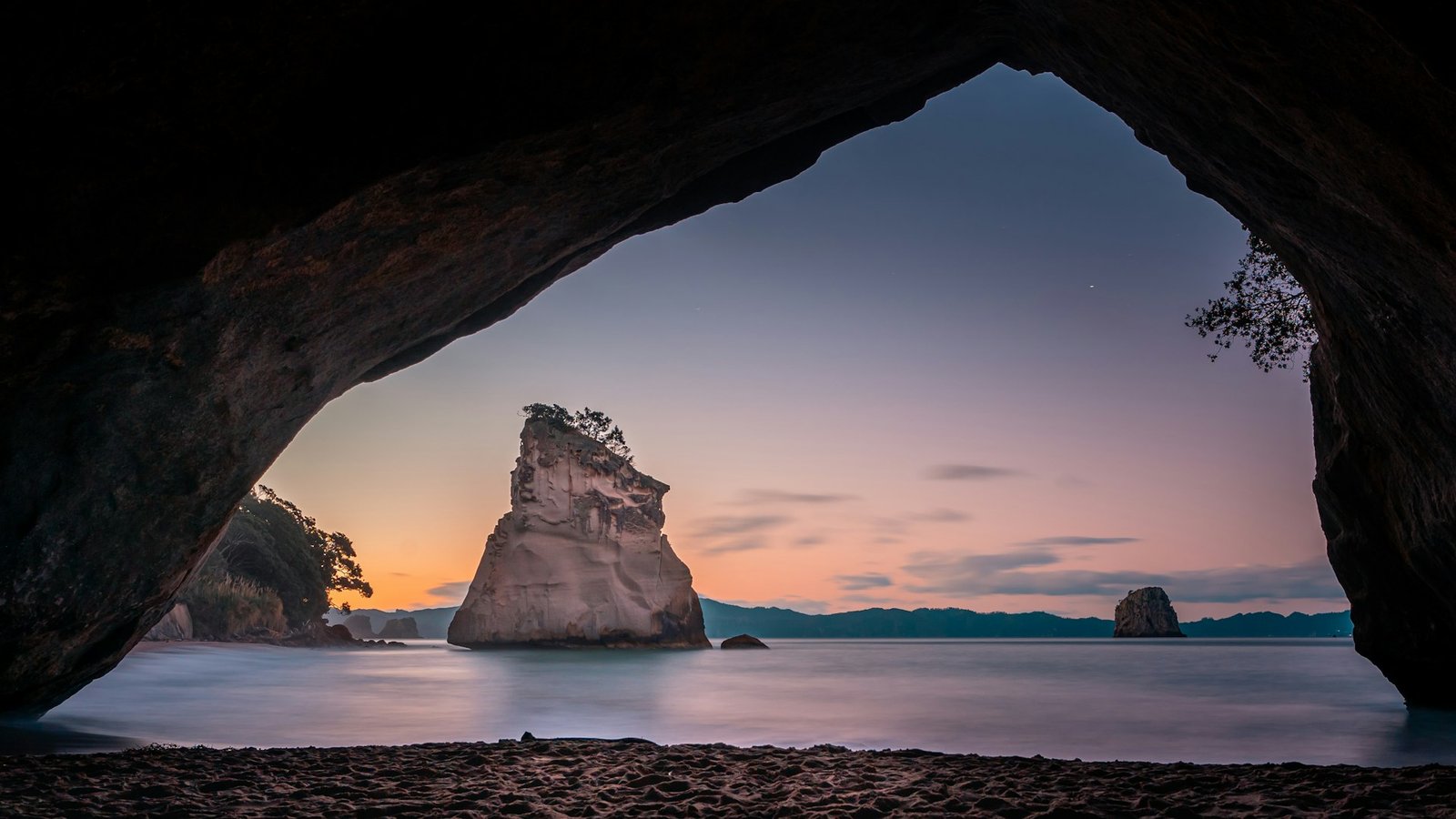
    Cathedral Cove, near the village of Hahei on the Coromandel Peninsula, is one of the most famous sights in New Zealand. A huge natural stone arch connects two white sand beaches, with a striking rock pinnacle standing in the turquoise water.

    Access to the cove has been affected by storm damage in recent years, so check the latest information from the Department of Conservation before you go. One of the best ways to see it is from the water, on a kayak tour or a boat trip from Hahei, which also visits sea caves and the Te Whanganui-A-Hei Marine Reserve, great for snorkelling.

    Sandy beach and rock pinnacle in the water at Cathedral Cove, Coromandel, New Zealand

    2. Dig Your Own Hot Pool at Hot Water Beach

    Just a few minutes from Hahei, Hot Water Beach is one of the quirkiest places in the country. Hot water from underground springs bubbles up through the sand, and at low tide you can dig your own natural spa pool on the beach.

    Come about two hours before or after low tide, rent a spade from a local shop and join the crowds digging in the right spot. The water can be very hot, so be careful. Swimming in the sea here is dangerous because of strong currents, so stay out of the waves.

    People on a beach on the Coromandel Peninsula, New Zealand

    3. Sail the Bay of Islands

    In the far north, the Bay of Islands is a beautiful bay of more than 140 subtropical islands, golden beaches and clear blue water. It’s one of the best places in the country for sailing, kayaking and spotting dolphins.

    Join a boat trip to the famous Hole in the Rock, a natural arch at the edge of the bay, and stop on one of the islands for a walk and a swim. Base yourself in Paihia, and take the short ferry to the charming historic town of Russell. Don’t miss the Waitangi Treaty Grounds, where the treaty between the British Crown and Māori chiefs was signed in 1840.

    4. See the Glowworms of Waitomo

    The Waitomo Caves are home to thousands of tiny glowworms, which light up the ceilings of the caves with a blue-green glow. Floating through the dark on a boat, under what looks like a sky full of stars, is a truly magical experience.

    The classic tour of the Waitomo Glowworm Caves is easy and suitable for everyone. For more adventure, try black water rafting, floating through the caves on an inner tube. Tours are on the pricier side, but this is one of New Zealand’s most unique experiences.

    5. Step into Hobbiton

    Near the town of Matamata, set among rolling green farmland, is the Hobbiton Movie Set, used in the famous fantasy films. More than 40 colourful little houses with round doors are built into the hillsides, surrounded by gardens, a mill and a lake.

    Visits are only possible on a guided tour, which takes about two hours and ends with a drink at the village inn. Tickets are expensive, but fans and non-fans alike love the beautiful setting. Book well in advance, especially in summer.

    A hobbit house with a round door at the Hobbiton Movie Set, New Zealand

    6. Explore the Colourful Pools of Wai-O-Tapu

    South of Rotorua, Wai-O-Tapu is one of the most colourful geothermal areas in the world. A walking trail leads past boiling mud pools, steaming craters and bright yellow, orange and green lakes coloured by minerals.

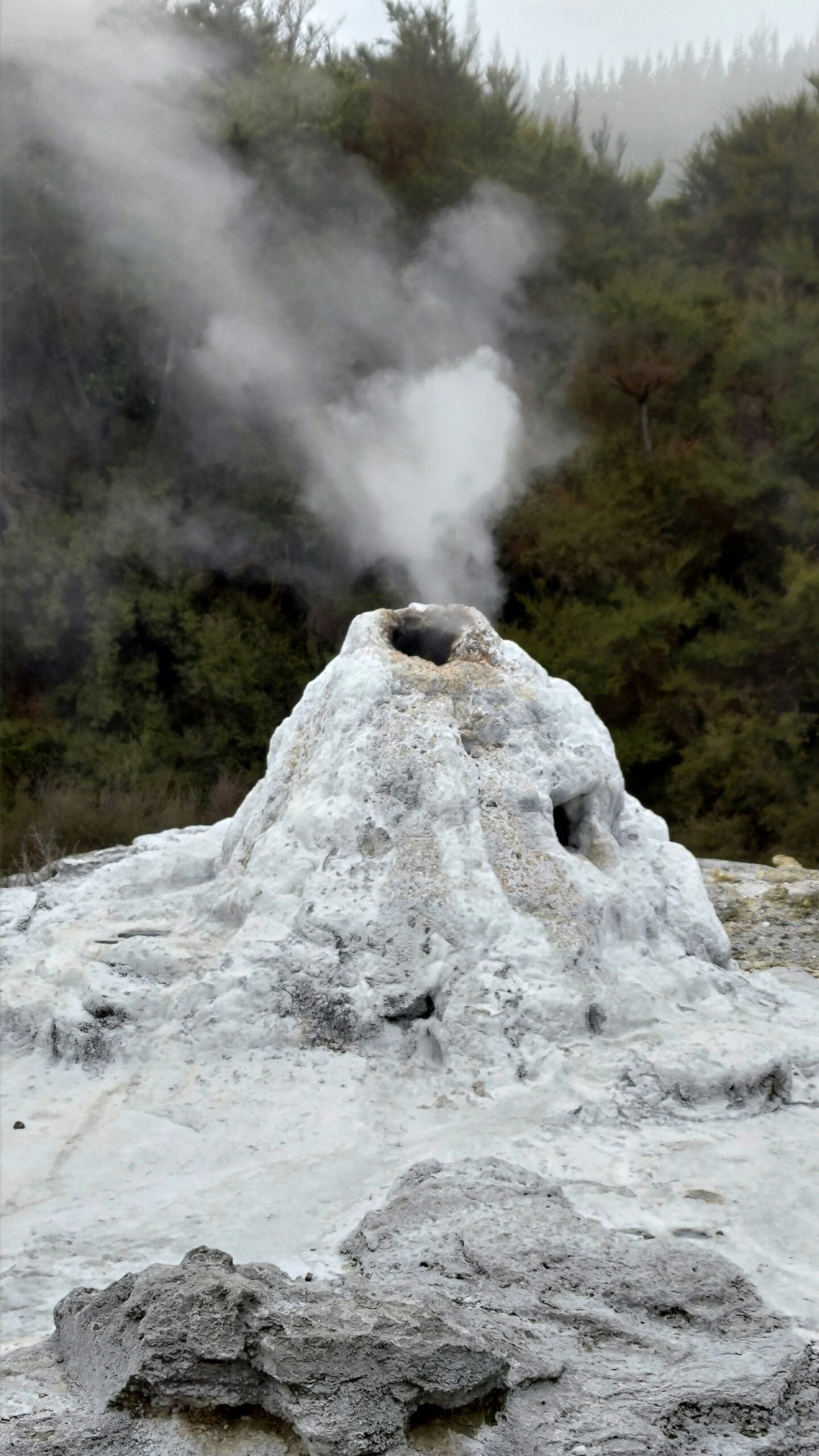
    The highlight is the Champagne Pool, a hot spring with bright orange edges and bubbling green-blue water. Arrive in the morning to see the Lady Knox Geyser erupt, which happens once a day at a set time. The smell of sulphur is strong, but you’ll soon get used to it.

    The colourful Champagne Pool at Wai-O-Tapu near Rotorua, New Zealand

    7. Discover Rotorua’s Geysers and Māori Culture

    Rotorua is the heart of New Zealand’s geothermal region and of Māori culture. Steam rises from parks and gardens all over town, and the air smells of sulphur.

    At Te Puia, watch the Pōhutu Geyser, which erupts many times a day, sometimes up to 30 metres high. In the evening, join a Māori cultural experience, with a traditional welcome, songs, the famous haka and a hāngī dinner, cooked in an earth oven. Afterwards, relax in one of the town’s hot pools.

    Steam rising from a geothermal geyser in Rotorua, New Zealand

    8. Hike the Tongariro Alpine Crossing

    The Tongariro Alpine Crossing is often called the best one-day hike in New Zealand. The 19.4 km trail crosses a volcanic landscape of craters, lava flows and steaming vents, past the brilliant green Emerald Lakes and the deep Blue Lake.

    The hike takes six to eight hours and climbs steeply, so you need to be fit. The weather in the mountains changes quickly, so bring warm, waterproof clothes. Parking at the start is limited, so book a shuttle. The trail is in Tongariro National Park, a UNESCO World Heritage Site sacred to the Māori.

    A green crater lake in the volcanic landscape of Tongariro National Park, New Zealand

    9. Visit Lake Taupō and Huka Falls

    Lake Taupō, the largest lake in New Zealand, fills a huge volcanic crater in the centre of the North Island. Its clear water is perfect for swimming, kayaking and boat trips to see the giant Māori rock carvings at Mine Bay.

    Just north of the town, the Huka Falls are a powerful waterfall where the Waikato River squeezes through a narrow gorge and thunders into a turquoise pool. Walk the trails for free, or take a jet boat ride right up to the bottom of the falls.

    10. Explore Auckland and Waiheke Island

    Auckland, the country’s largest city, is built around two harbours and dozens of volcanic cones. Climb Mount Eden for a view over the city, walk along the waterfront and visit the Auckland Museum for a great introduction to Māori culture.

    Take the ferry to Waiheke Island, just 40 minutes away, with its beautiful beaches, vineyards and olive groves. Rent a bike or use the local bus to hop between beaches and wineries, and enjoy a glass of local wine with a view of the sea.

    Where to Stay on a Budget

    The North Island has great options for every budget:

    • Holiday parks: campsites with cabins, kitchens and hot showers, perfect for campervans and budget travellers
    • Hostels: found in all the main towns, with dorms and private rooms
    • Motels: simple, good-value rooms, often with a small kitchen
    • Bed and breakfasts: cosy guesthouses, often run by friendly local hosts

    Book early for January and the school holidays, especially in the Coromandel and the Bay of Islands.

    Eating on a Budget

    New Zealand food is fresh and hearty:

    • Fish and chips: a beach classic, best eaten on the sand
    • Meat pies: sold at every bakery, a cheap and filling lunch
    • Hāngī: meat and vegetables cooked in an earth oven, a traditional Māori meal
    • Green-lipped mussels: a local seafood speciality
    • Pavlova and hokey pokey ice cream: classic Kiwi desserts

    Supermarkets like Pak’nSave and Woolworths are the cheapest places to buy food. Cook your own meals in holiday park kitchens to save money.

    What It Really Costs

    Here’s a realistic daily budget per person for a comfortable mid-range trip, not counting flights.

    • Accommodation: $50 to $120 per person, sharing a motel room, cabin or campervan
    • Food: $35 to $60 a day, mixing self-catering, bakeries and restaurant dinners
    • Transport: $40 to $70 a day per person, including a rental car or campervan shared by two and fuel
    • Activities: budget for the highlights separately: Hobbiton, the Waitomo caves, Wai-O-Tapu, a Māori cultural evening, a Bay of Islands cruise and the Tongariro shuttle

    That works out to around $180 to $300 per person per day. Staying in holiday parks, cooking your own meals and enjoying the free hikes and beaches can bring that down noticeably.

    A Sample 10-Day Itinerary

    Day 1: Arrive in Auckland and climb Mount Eden.

    Day 2: Day trip to Waiheke Island.

    Day 3: Drive to the Coromandel and dig your own pool at Hot Water Beach.

    Day 4: Kayak tour to Cathedral Cove, then drive to Rotorua.

    Day 5: Wai-O-Tapu in the morning, Te Puia and a Māori cultural evening.

    Day 6: Hobbiton, then the Waitomo Glowworm Caves.

    Day 7: Drive to Taupō and visit Huka Falls.

    Day 8: Hike the Tongariro Alpine Crossing.

    Day 9: Relax at Lake Taupō, then drive back towards Auckland.

    Day 10: Fly home from Auckland.

    Add three or four days to visit the Bay of Islands if you have more time.

    Practical Tips

    • Apply for your NZeTA before you travel, if you need one
    • Book ahead for Hobbiton, the Tongariro shuttle and campervans in summer
    • Pack for four seasons, especially for hikes in the mountains
    • Use strong sunscreen: the sun in New Zealand is much stronger than in Europe
    • Swim at patrolled beaches, between the flags, as rip currents are common
    • Respect Māori culture and nature: follow local customs at cultural sites, stay on the tracks and take your rubbish with you

    Booking Tips

    • Airport transfer: if you don’t pick up a rental car at the airport, book an airport transfer with Kiwitaxi from Auckland airport to your hotel in the city, with a fixed price and a driver waiting for you
    • eSIM: install a Yesim eSIM before you fly, so you have data for maps, road trip planning and tour bookings on the North Island from the moment you land
    • Tours: popular options include a Hobbiton movie set tour, the Waitomo glowworm caves, a Bay of Islands cruise and a Māori cultural evening in Rotorua. You can compare and book most of them on Klook

    Final Thoughts

    New Zealand’s North Island is a land of beaches, volcanoes and living culture. Kayak to Cathedral Cove, dig a hot pool in the sand, float under glowworms, walk through Hobbiton, watch geysers in Rotorua and hike past the Emerald Lakes of Tongariro.

    Travel in late summer, rent a car or campervan and take your time. The North Island will show you a side of New Zealand that many travellers miss.

    Prices checked in October 2026. Costs and opening times change, so always confirm before you book.

  • Cook Islands Travel Guide: Rarotonga, Aitutaki and the Best Lagoons

    Cook Islands Travel Guide: Rarotonga, Aitutaki and the Best Lagoons

    A lagoon so blue it almost glows, tiny white sand islands fringed with palm trees, jungle-covered mountains rising behind quiet beaches and a warm “Kia orana” from everyone you meet: the Cook Islands are the South Pacific the way you always imagined it.

    This small nation of 15 islands lies in the middle of the Pacific Ocean, between Tahiti and Fiji. Most visitors stay on Rarotonga, the main island, which you can drive around in less than an hour, and take a short flight to Aitutaki, home to one of the most beautiful lagoons on earth.

    The Cook Islands offer the same postcard scenery as Bora Bora, but at a much friendlier price. There are no high-rise hotels, no traffic lights and no big crowds, just a relaxed island pace. With self-catering bungalows, the local bus and lots of free beaches, you can enjoy this paradise on a real budget. This guide shows you how.

    The Cook Islands at a Glance

    • Where: in the South Pacific, about 3,000 km northeast of New Zealand
    • Main airport: Rarotonga (RAR), with most flights coming from Auckland
    • Currency: New Zealand dollar (NZD), alongside local Cook Islands coins and notes
    • Entry: most visitors can stay visa-free for up to 31 days with an onward ticket. Check the current rules for your passport
    • Languages: English and Cook Islands Māori. Learn to say “Kia orana”, the local greeting
    • Best time: May to October, the dry season
    • Budget: around $90 to $130 a day for budget travellers, $180 to $300 for a comfortable mid-range trip

    When to Go

    May to October is the dry season and the best time to visit. The weather is sunny and pleasantly warm, usually between 20 and 28°C, with low humidity and calm, clear water. From July to October, humpback whales pass close to the islands.

    November to April is the wet season. It’s hotter and more humid, with heavy tropical showers, and it’s also cyclone season. Prices are lower, and many days are still sunny, but keep your plans flexible.

    The busiest times are the New Zealand and Australian school holidays, especially in July, and the Christmas holidays.

    Our tip: visit in September or October for dry weather, the last whales of the season and fewer crowds than in July.

    How Long Do You Need?

    Plan at least ten days. That gives you a week on Rarotonga to explore the island, the lagoon and the mountains, plus three nights on Aitutaki. With less time, you can visit Aitutaki on a day trip from Rarotonga, but staying overnight is much more relaxed.

    Getting Around

    Rarotonga is small. A single coastal road, about 32 km long, circles the whole island. The local bus runs around the island in both directions, one clockwise and one anticlockwise, which makes it easy to get anywhere.

    Many visitors rent a scooter or a small car. You need a valid driving licence, and helmets are required on scooters. Drive slowly, on the left side of the road, and watch out for dogs and chickens.

    To reach Aitutaki, take a flight of about 50 minutes with Air Rarotonga. On Aitutaki, rent a scooter or a bicycle to explore the island.

    Things to Do in the Cook Islands

    Here are the experiences we think are worth your time and money.

    1. Cruise the Aitutaki Lagoon

    The Aitutaki Lagoon is the highlight of any trip to the Cook Islands. A ring of tiny islands, called motu, surrounds a huge lagoon of turquoise water and white sandbars. It’s often called one of the most beautiful lagoons in the world, and it’s easy to see why.

    Join a full-day lagoon cruise, which usually includes snorkelling with giant clams and colourful fish, a barbecue lunch on a motu and a stop at One Foot Island. Here, you can get a fun stamp in your passport at the tiny post office. You can visit Aitutaki on a day trip from Rarotonga, including the flight and the cruise, but staying a few nights is much better.

    2. Relax on Muri Beach

    On the southeast coast of Rarotonga, Muri Beach is the island’s most popular spot. A calm, shallow lagoon stretches out to four small motu, with soft white sand and palm trees along the shore.

    The water is perfect for swimming, even for children. In the evening, the Muri Night Market offers cheap, delicious food from local stalls. Muri is also the best base on the island, with lots of guesthouses, cafés and restaurants within walking distance.

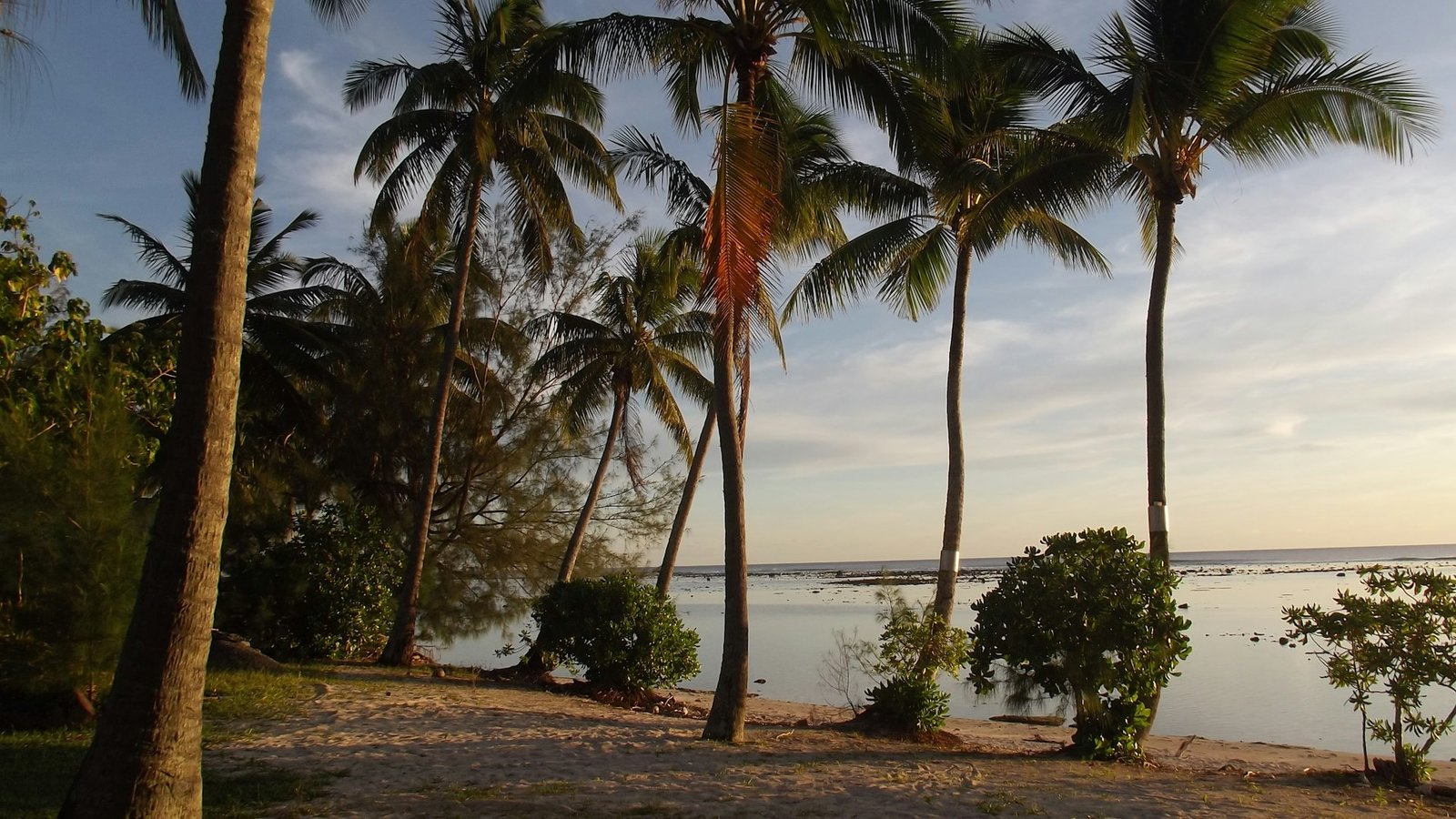
    Tropical beach with palm trees and a hut on Rarotonga, Cook Islands

    3. Snorkel in the Lagoon

    Rarotonga is surrounded by a reef, which creates a calm lagoon around the whole island. In many places, you can walk straight into the water from the beach and snorkel among coral and tropical fish.

    The best spot is the Aroa Marine Reserve on the southwest coast, where the water is clear and full of fish. Fruits of Rarotonga and Titikaveka are also excellent. Bring your own mask and snorkel, or rent one cheaply. Never go beyond the reef, where the currents are strong.

    Person walking through the shallow water of the lagoon on Rarotonga, Cook Islands

    4. Kayak or Paddleboard to the Motu

    From Muri Beach, rent a kayak or a stand-up paddleboard and paddle across the lagoon to the small motu offshore. Each island has its own little beach, and you can often have one almost to yourself.

    You can also join a guided glass-bottom boat tour, which includes snorkelling and a barbecue lunch on a motu. Early mornings and late afternoons are the best times, when the wind is calm and the light is beautiful.

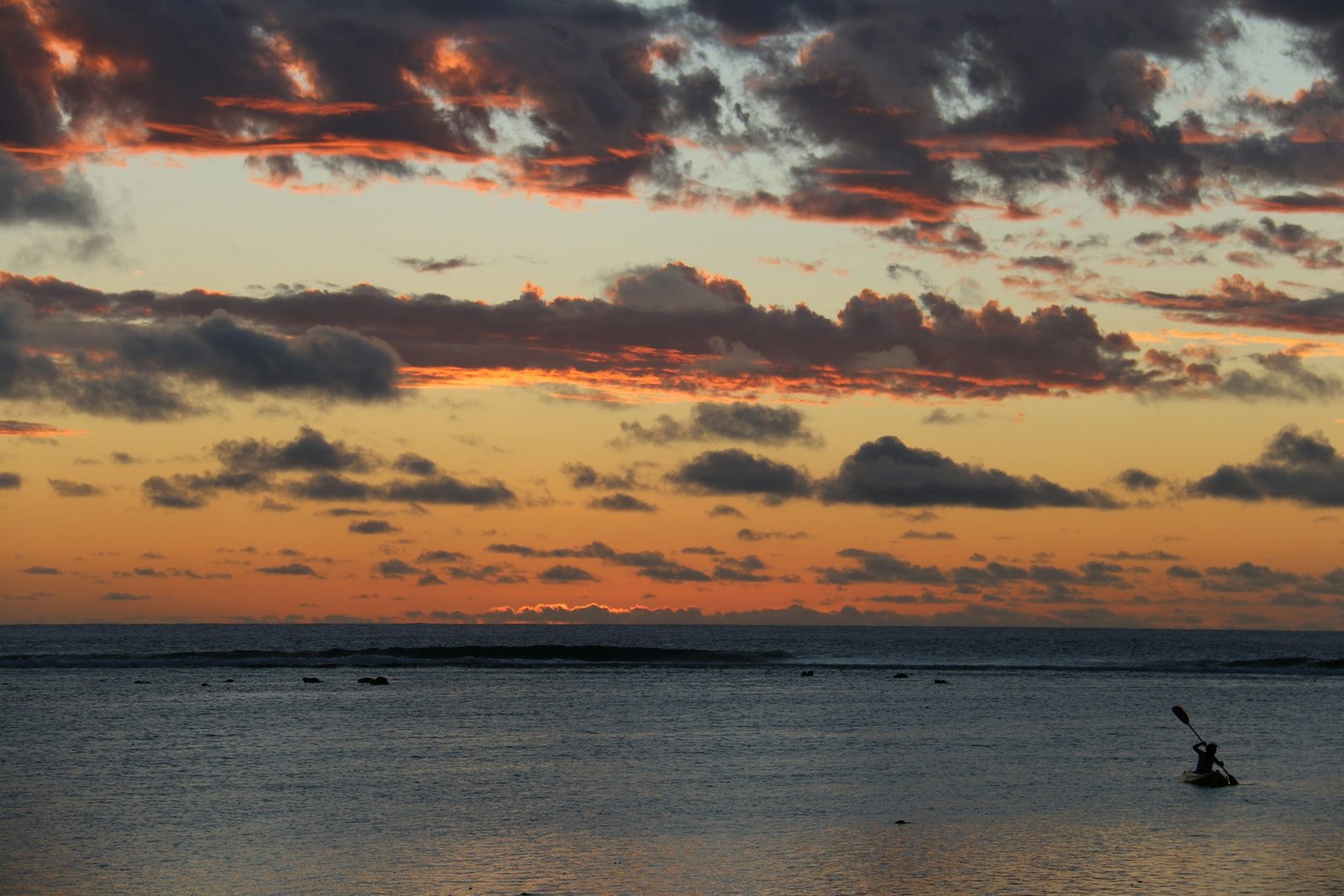
    Person in a kayak on the lagoon at golden hour, Rarotonga, Cook Islands

    5. Hike the Cross-Island Track

    Rarotonga’s interior is a world of steep green mountains, rainforest and waterfalls. The Cross-Island Track crosses the island from north to south and passes the base of Te Rua Manga, a tall rock spire also known as The Needle.

    The hike takes about three to four hours, with steep, muddy sections and tree roots to climb over. It finishes at Wigmore’s Waterfall, where you can cool off in the pool. Go with a local guide if you’re not an experienced hiker, and avoid the trail after heavy rain.

    Lush green mountains of Rarotonga seen from a lookout at sunset, Cook Islands

    6. Experience an Island Night

    Cook Islands dancing is famous across the Pacific, with powerful drumming and fast hip-swaying moves. The best way to see it is at an Island Night, a traditional show with a buffet dinner of local food.

    Several resorts and cultural centres host Island Nights during the week. At Te Vara Nui Village, you can combine the show with a guided cultural tour. It’s a splurge, but a highlight of many trips.

    7. Shop at the Punanga Nui Market

    Every Saturday morning, the Punanga Nui Market in Avarua, the small capital, is the place to be. Locals and visitors come together for fresh fruit, coconuts, handmade crafts, black pearls and island food.

    Arrive early for the best choice, try fresh tropical fruit and local snacks for breakfast, and watch the live music and dance performances. It’s one of the best free experiences on the island.

    8. Ride Around the Island

    One of the best ways to discover Rarotonga is to ride all the way around it by scooter or bicycle. The coastal road passes quiet beaches, small villages, old churches built of coral stone and taro fields at the foot of the mountains.

    Stop for a swim at Titikaveka, one of the most beautiful beaches on the island, and for a fresh juice at a roadside stand. Even with lots of stops, the full loop only takes a few hours.

    Sandy beach with palm trees and people swimming in the lagoon, Rarotonga, Cook Islands

    9. Go Whale Watching

    From July to October, humpback whales migrate past the Cook Islands to give birth and raise their calves in the warm water. Because the reef drops steeply into the deep ocean, you can sometimes see them from the beach.

    For a closer look, join a whale watching boat trip from Rarotonga. Responsible operators keep a respectful distance and limit their time with the whales. Even without a tour, keep an eye on the horizon for their spouts and jumps.

    10. Watch the Sunset on the West Coast

    The west coast of Rarotonga is the best place to watch the sun go down. Head to the beaches around Black Rock or one of the beach bars on the coast, order a cold drink and watch the sky turn gold and pink over the lagoon.

    On Aitutaki, the sunsets over the lagoon are just as unforgettable. It’s the perfect way to end every day in paradise.

    Palm trees along a beach and lagoon on Rarotonga, Cook Islands

    Where to Stay on a Budget

    The Cook Islands have good value options:

    • Self-catering bungalows: the best choice for most travellers, with a kitchen to save money on food
    • Guesthouses and backpackers: simple, friendly places to stay on Rarotonga, some right on the beach
    • Holiday homes: great for families and groups
    • Resorts: for a splurge, beachfront resorts on Rarotonga and Aitutaki, some with private beach villas

    There are no big hotel chains on the islands. Book early for July and the school holidays.

    Eating on a Budget

    Food in the Cook Islands can be expensive, as much of it is imported, but there are good ways to save:

    • Ika mata: raw fish marinated in lime and coconut cream, the national dish
    • Night markets: cheap and delicious food stalls at the Muri Night Market
    • Fresh fruit: papaya, mango, banana and coconut from roadside stands and the market
    • Rukau: taro leaves cooked in coconut cream, often served at Island Nights
    • Self-catering: buy groceries at the supermarkets and cook in your bungalow

    Bring a reusable water bottle, as tap water quality varies, and many places offer free filtered water refills.

    What It Really Costs

    Here’s a realistic daily budget per person for a comfortable mid-range trip, not counting international flights.

    • Accommodation: $60 to $140 per person, sharing a double room in a self-catering bungalow or guesthouse
    • Food: $35 to $60 a day, mixing self-catering, night markets and restaurant dinners
    • Transport: $15 to $30 a day on average, including scooter rental and the bus
    • Activities: budget for the highlights separately: the flight to Aitutaki, a lagoon cruise, an Island Night, whale watching and kayak rental

    That works out to around $180 to $300 per person per day. Cooking your own meals, using the bus and enjoying the free beaches can bring that down noticeably.

    A Sample 10-Day Itinerary

    Day 1: Arrive in Rarotonga and relax on Muri Beach.

    Day 2: Kayak to the motu and snorkel in the lagoon.

    Day 3: Hike the Cross-Island Track to Wigmore’s Waterfall.

    Day 4: Ride around the island and snorkel at the Aroa Marine Reserve.

    Day 5: Punanga Nui Market in the morning, then sunset on the west coast.

    Day 6: Fly to Aitutaki and explore the island by scooter.

    Day 7: Full-day Aitutaki Lagoon cruise and One Foot Island.

    Day 8: A slow day on Aitutaki’s beaches.

    Day 9: Fly back to Rarotonga and enjoy an Island Night.

    Day 10: Whale watching in season, then fly home.

    Practical Tips

    • Book the flight to Aitutaki early, as the planes are small and fill up fast
    • Bring reef shoes to protect your feet from coral and sea urchins
    • Stay inside the reef: the currents beyond it are strong and dangerous
    • Respect Sundays: it’s a day of rest and church, and many shops close
    • Use reef-safe sunscreen and a rash guard for snorkelling
    • Respect local culture: dress modestly away from the beach and ask before taking photos of people

    Booking Tips

    • Airport transfer: book an airport transfer with Kiwitaxi from Rarotonga airport to your hotel or bungalow, with a fixed price and a driver waiting for you
    • eSIM: install a Yesim eSIM before you fly, so you have data for maps, bus times and tour bookings in the Cook Islands from the moment you land
    • Tours: popular options include an Aitutaki lagoon cruise, a glass-bottom boat and snorkel trip at Muri, a guided Cross-Island hike and an Island Night with dinner and a dance show. You can compare and book most of them on Klook

    Final Thoughts

    The Cook Islands are the South Pacific at its most relaxed and authentic. Cruise the lagoon of Aitutaki, swim at Muri Beach, snorkel among the fish, hike to The Needle, dance at an Island Night and watch the sun set over the lagoon.

    Travel in the dry season, rent a scooter and slip into island time. The Cook Islands will make you want to stay forever.

    Prices checked in October 2026. Costs and opening times change, so always confirm before you book.

  • Tasmania Travel Guide: Wild Beaches, Mountains and Wildlife

    Tasmania Travel Guide: Wild Beaches, Mountains and Wildlife

    White sand beaches curving around turquoise bays, granite boulders covered in bright orange lichen, ancient rainforest, rugged mountains reflected in still lakes and wombats grazing in the meadows at sunset: Tasmania is one of the most underrated destinations in the world.

    Australia’s island state lies about 240 km south of the mainland. Almost half of it is protected as national parks and reserves, and a large part is a UNESCO World Heritage Area. It’s also a foodie paradise, with fresh oysters, cool-climate wines, cheese and whisky, plus one of the most unusual art museums on earth.

    Tasmania isn’t the cheapest part of Australia, and you’ll need a car to see it properly. But distances are short, the best experiences are walks and beaches that cost nothing, and with campervans, cabins and picnics you can keep your budget under control. This guide shows you how.

    Tasmania at a Glance

    • Where: an island state off the southeast coast of mainland Australia
    • Main airports: Hobart (HBA) and Launceston (LST), with direct flights from Melbourne, Sydney and Brisbane
    • Currency: Australian dollar (AUD)
    • Entry: almost all visitors need an ETA or an eVisitor visa for Australia, applied for online before you travel. Check the current rules for your passport
    • Language: English
    • Best time: December to March for summer, March to May for autumn colours and fewer crowds
    • Budget: around $100 to $150 a day for budget travellers, $180 to $300 for a comfortable mid-range trip

    When to Go

    December to March is summer, the most popular time to visit. The days are long and mild, usually between 20 and 25°C, and it’s the best season for beaches, hiking and boat trips. School holidays in late December and January are the busiest weeks, so book early.

    March to May is autumn, and our favourite time. The weather is often calm and settled, the crowds thin out and, in late April and early May, the fagus, Australia’s only native deciduous tree, turns gold and red around Cradle Mountain.

    June to August is winter. It’s cold, with snow in the mountains, but also quiet and atmospheric. Hobart’s Dark Mofo festival brings art and music to the city in June.

    September to November is spring, with wildflowers, newborn animals and changeable weather.

    Our tip: visit in March or early April for warm days, calm weather and the best value.

    Getting There and Around

    Most visitors fly into Hobart or Launceston. You can also take your own car across on the Spirit of Tasmania, an overnight car ferry from Geelong, near Melbourne, to Devonport.

    The best way to explore the island is with a rental car or a campervan. Public transport between the main sights is limited, and many trailheads can only be reached by car. Distances are manageable: Hobart to Freycinet takes about two and a half hours, Launceston to Cradle Mountain about two hours.

    Buy a Holiday Pass for Tasmania’s national parks. It covers entry for a vehicle and its passengers for up to eight weeks and is much cheaper than paying for each park separately. Watch out for wildlife on the roads at dusk and avoid driving after dark where you can.

    Things to Do in Tasmania

    Here are the experiences we think are worth your time and money.

    1. Watch the Sunset from kunanyi / Mount Wellington

    Hobart sits at the foot of kunanyi / Mount Wellington, which rises over 1,200 metres above the city. A winding road leads to the summit, where a lookout gives you a sweeping view over Hobart, the Derwent River and the coast. It’s free and especially beautiful at sunset.

    The summit is often windy and much colder than the city, even in summer, so bring a warm jacket. If you don’t have a car, take the bus or a shuttle, or hike up through the forest on one of the many trails.

    View from kunanyi / Mount Wellington over Hobart at sunset, Tasmania

    2. Visit MONA

    The Museum of Old and New Art, better known as MONA, is one of the most talked-about museums in the world. Built into a sandstone cliff on the banks of the Derwent River, it houses a private collection of ancient and modern art, much of it provocative, playful or downright strange.

    Take the ferry from Hobart’s waterfront, about 25 minutes up the river. Entry is on the pricier side for visitors, but the museum easily fills half a day. There’s also a winery, a brewery and a restaurant on site.

    3. Explore Bruny Island

    Just south of Hobart, Bruny Island is a short car ferry ride from Kettering. The island is actually two islands joined by a narrow strip of sand called The Neck. Climb the wooden steps to the lookout for a stunning view over both sides, and watch for little penguins returning to their burrows at dusk.

    Bruny is also a food lover’s dream. Stop for fresh oysters, cheese, berries and whisky at the island’s small producers, and drive to the historic Cape Bruny Lighthouse at the southern tip. A wilderness cruise along the towering sea cliffs is a worthwhile splurge.

    Wooden boardwalk to the lookout at The Neck on Bruny Island, Tasmania

    4. Visit Port Arthur and the Tasman Peninsula

    The Port Arthur Historic Site is Australia’s best-known convict site and part of a UNESCO World Heritage listing. In the 19th century, thousands of convicts were sent here. Today, you can walk among the ruins of the penitentiary, the church and the officers’ houses.

    Entry includes a guided walk and a short harbour cruise. Join an evening ghost tour if you like a good scare. On the way, stop at the dramatic coastal formations of the Tasman Peninsula, such as the Tessellated Pavement, the Tasman Arch and the Devils Kitchen.

    5. Hike to Wineglass Bay

    Wineglass Bay in Freycinet National Park is one of the most famous beaches in Australia, a perfect curve of white sand between the pink granite peaks of the Hazards and the deep blue sea.

    The walk to the Wineglass Bay Lookout takes about one to one and a half hours return, with lots of steps. To swim on the beach itself, continue down the other side, about three hours return in total. If you have more time, the Mount Amos climb offers an even better view, but it’s steep and only for fit and experienced hikers. A scenic cruise or a kayak trip is a great way to see the coast from the water.

    Aerial view of the Freycinet Peninsula with the bay and mountains, Tasmania

    6. Discover the Bay of Fires

    In the northeast, the Bay of Fires stretches for about 50 km of white beaches, clear water and granite boulders covered in bright orange lichen. The name comes from the fires of Aboriginal people that early European explorers saw along the shore.

    The best spots are around Binalong Bay and further north along The Gardens road. Spend the day swimming, exploring the rocks and walking along the empty beaches. There are free and low-cost campgrounds right by the sea.

    Granite boulders covered in orange lichen at the Bay of Fires, Tasmania

    7. Walk Around Dove Lake at Cradle Mountain

    Cradle Mountain is the symbol of Tasmania’s wild heart. Its jagged peaks rise above Dove Lake, surrounded by alpine moorland and ancient rainforest. The Dove Lake Circuit is an easy walk of about 6 km, taking two to three hours, with the classic view of the mountain from the old boatshed.

    In the main season, private cars can’t drive to Dove Lake, so use the free shuttle bus from the visitor centre, included with your park pass. Experienced hikers come for the Overland Track, a famous six-day trek through the wilderness to Lake St Clair. It needs to be booked well in advance.

    Cradle Mountain rising above Dove Lake in Tasmania, Australia

    8. Meet Tasmania’s Wildlife

    Tasmania is one of the best places in Australia to see wildlife in the wild. Around Cradle Mountain, wombats, wallabies and pademelons graze in the open meadows in the late afternoon and at dusk. On Maria Island, a car-free island reached by ferry from Triabunna, wombats wander around the old convict buildings in broad daylight.

    To see the famous Tasmanian devil, visit a wildlife sanctuary such as Bonorong, near Hobart, or Devils@Cradle, near Cradle Mountain. These places care for injured animals and support conservation of the endangered devils. Never feed wild animals, and keep your distance.

    A wombat grazing in a grassy field at Cradle Mountain, Tasmania

    9. Explore Launceston and Cataract Gorge

    Launceston, Tasmania’s second city, is a relaxed place with Victorian architecture and parks. Its highlight is the Cataract Gorge, a rocky river canyon just a short walk from the city centre. Walk along the cliffside paths, swim in the outdoor pool at the First Basin in summer, or ride across the gorge on the chairlift.

    Launceston is also the gateway to the Tamar Valley, one of Tasmania’s best wine regions, known for its sparkling wines and pinot noir.

    10. Taste Tasmania’s Food and Drink

    Tasmania’s clean air, rich soil and cold waters make for some of the best produce in Australia. Visit Hobart’s Salamanca Market, held every Saturday, for local food, crafts and fresh produce, then explore the historic sandstone warehouses and the pretty Battery Point neighbourhood nearby.

    Try fresh oysters, salmon, scallop pies, cheese and berries, and visit a cellar door or a whisky distillery. Tasmanian whisky has won some of the world’s top awards.

    Where to Stay on a Budget

    Accommodation in Tasmania can be pricey in summer, but there are good options:

    • Campervans: combine your transport and accommodation, with lots of campgrounds in beautiful spots
    • Campgrounds: national park campgrounds and free sites along the coast, like at the Bay of Fires
    • Cabins: holiday parks offer simple cabins with kitchens at fair prices
    • Hostels and guesthouses: found in Hobart, Launceston and the main tourist towns

    Book early for December to February, especially at Cradle Mountain and Freycinet, where options are limited.

    Eating on a Budget

    Eating out in Tasmania isn’t cheap, but you can still eat well:

    • Fish and chips: freshly caught and served at harbours all over the island, like at Hobart’s waterfront
    • Scallop pies: a Tasmanian classic, great for a quick lunch
    • Farm gates and markets: buy fresh fruit, cheese and bread directly from the producers
    • Supermarkets: stock up in the towns, as shops are rare near the national parks
    • Picnics and barbecues: many parks and beaches have free public barbecues

    What It Really Costs

    Here’s a realistic daily budget per person for a comfortable mid-range trip, not counting flights.

    • Accommodation: $60 to $130 per person, sharing a double room in a cabin, motel or guesthouse
    • Food: $40 to $70 a day, mixing picnics, fish and chips and restaurant dinners
    • Transport: $40 to $70 a day per person, including a rental car shared by two and fuel
    • Activities: budget for the highlights separately: the national park pass, MONA, Port Arthur, the Bruny Island ferry and a wilderness cruise

    That works out to around $180 to $300 per person per day. Travelling outside the summer holidays, hiring a campervan and cooking your own meals can bring that down noticeably.

    A Sample 8-Day Itinerary

    Day 1: Arrive in Hobart, explore the waterfront and Battery Point, then sunset on kunanyi / Mount Wellington.

    Day 2: MONA in the morning, then Salamanca Market if it’s a Saturday.

    Day 3: Day trip to Bruny Island, with The Neck, oysters and the lighthouse.

    Day 4: Port Arthur and the Tasman Peninsula.

    Day 5: Drive up the east coast to Freycinet and hike to the Wineglass Bay Lookout.

    Day 6: The Bay of Fires, then on to Launceston.

    Day 7: Cataract Gorge in the morning, then drive to Cradle Mountain and watch the wombats at dusk.

    Day 8: The Dove Lake Circuit, then drive back to Launceston or Devonport.

    Practical Tips

    • Buy a Holiday Pass for the national parks before you go
    • Pack for four seasons: the weather changes quickly, even in summer, so bring layers and a rain jacket
    • Avoid driving at dusk and after dark, when wildlife is most active on the roads
    • Fill up the tank before heading into remote areas, where petrol stations are few
    • Book ahead for the Spirit of Tasmania, cruises and accommodation in summer
    • Respect the wilderness: stay on the trails, take your rubbish with you and never feed the animals

    Booking Tips

    • Airport transfer: if you pick up your rental car in town, book an airport transfer with Kiwitaxi from Hobart or Launceston airport to your hotel, with a fixed price and a driver waiting for you
    • eSIM: install a Yesim eSIM before you fly, so you have data for maps and park information in Tasmania from the moment you land. Expect little or no signal in the national parks
    • Tours: popular options include a Wineglass Bay cruise, a Bruny Island day trip, a MONA ferry and entry ticket and a Port Arthur tour from Hobart. You can compare and book most of them on Klook

    Final Thoughts

    Tasmania packs an incredible amount into one small island. Watch the sun set over Hobart, hike to Wineglass Bay, wander along the orange rocks of the Bay of Fires, walk around Dove Lake and spot wombats grazing in the evening light.

    Rent a car, take your time and leave room for long lunches of oysters and local wine. Tasmania is the kind of place that makes you want to come back.

    Prices checked in October 2026. Costs and opening times change, so always confirm before you book.

  • Sydney and Australia’s East Coast: The Ultimate Road Trip on a Real Budget

    Sydney and Australia’s East Coast: The Ultimate Road Trip on a Real Budget

    Australia’s east coast is one of the great road trips of the world. It starts in Sydney, with its famous harbour, sails and beaches, then follows the Pacific Ocean north past surf towns, national parks, rainforest, lighthouses and the largest sand island on earth.

    Along the way, you can walk along clifftops above the ocean, learn to surf, spot koalas in the wild, swim in crystal-clear freshwater lakes and drive a 4WD along a beach that’s also a highway. And because the route is so popular, it’s easy to travel independently, with good roads, campsites, hostels and friendly towns all along the coast.

    Australia isn’t a cheap country, but a road trip is one of the best ways to see it on a budget. This guide shows you the highlights between Sydney and K’gari, the experiences that are really worth it and what the trip will actually cost.

    The East Coast at a Glance

    • Where: the coast of New South Wales and Queensland, from Sydney north to K’gari (Fraser Island)
    • Main airports: Sydney (SYD), Brisbane (BNE), Gold Coast (OOL) and Ballina Byron (BNK)
    • Currency: Australian dollar (AUD). One US dollar is roughly 1.5 Australian dollars
    • Entry: most visitors need an electronic visa before travel. EU citizens can apply for a free eVisitor, while travellers from the US, Canada and some other countries use the ETA app
    • Driving: on the left side of the road
    • Distance: around 1,300 km from Sydney to Hervey Bay, the gateway to K’gari
    • Best time: September to November and March to May
    • Budget: around $80 to $120 a day for budget travellers, $150 to $250 for a comfortable mid-range trip

    When to Go

    September to November is spring. The weather is warm and sunny, the ocean is warming up, and it’s whale-watching season, when humpback whales migrate south along the coast.

    December to February is summer and the main holiday season in Australia. It’s hot and busy, prices are higher and you’ll need to book accommodation well ahead, especially around Christmas and the school holidays.

    March to May is autumn, with warm days, calm seas and fewer crowds. It’s one of the best times for a road trip.

    June to August is winter. Sydney is cool, but the coast further north is mild and sunny, and you can see whales migrating north.

    Our tip: travel in October, November, March or April for great weather, warm water and fair prices.

    Getting Around

    The best way to travel the east coast is by car or campervan. A campervan saves money on accommodation and gives you the freedom to stop at beaches and campsites along the way. Book early for the summer holidays, and check one-way fees if you’re dropping the vehicle off in a different city.

    If you don’t want to drive, Greyhound buses and hop-on hop-off passes connect the main towns along the coast, and domestic flights are quick and often cheap.

    In Sydney, use the Opal system or simply tap on and off with your contactless card for trains, buses and ferries. Travel is capped at a daily and weekly maximum, which makes exploring very affordable.

    Things to Do on Australia’s East Coast

    Here are the experiences we think are worth your time and money.

    1. See the Opera House and Harbour Bridge

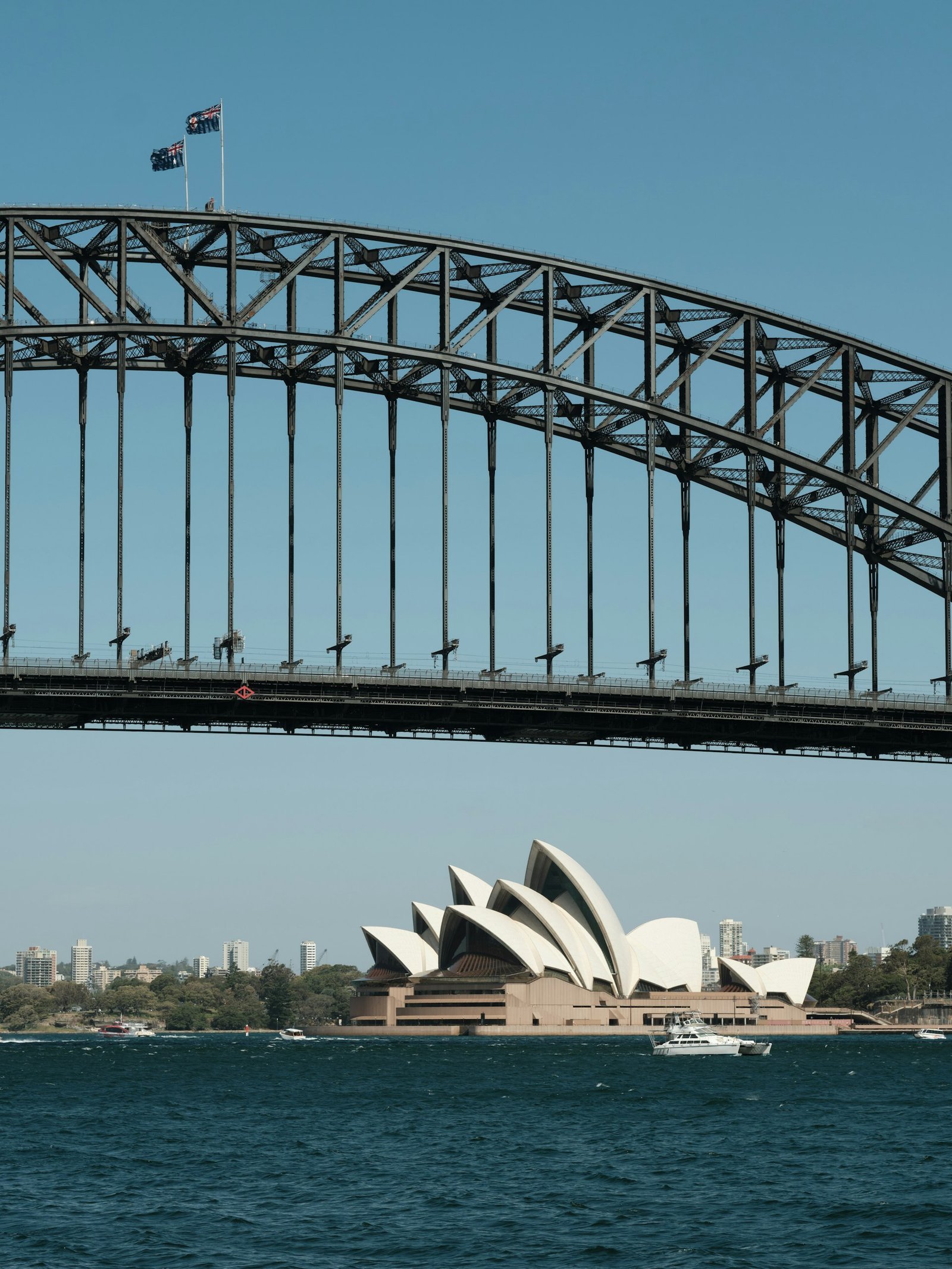
    Sydney’s harbour is one of the most beautiful city settings in the world, and the Sydney Opera House and the Harbour Bridge are its stars. Walk around the Opera House, take a guided tour inside or catch a performance, then stroll through the Royal Botanic Garden to Mrs Macquarie’s Chair for the classic view of both landmarks together.

    You can walk across the Harbour Bridge for free on the pedestrian walkway. For a bird’s-eye view, climb the Pylon Lookout for a small fee, or join the famous BridgeClimb to the top of the arch, a real splurge but an unforgettable experience. In the evening, wander through The Rocks, Sydney’s oldest neighbourhood, with historic pubs and weekend markets.

    2. Take the Ferry to Manly

    One of the best things you can do in Sydney costs only the price of a ferry ticket. The ride from Circular Quay to Manly takes about 30 minutes and crosses the whole harbour, with views of the Opera House, the bridge, the city skyline and the cliffs of the harbour entrance.

    Manly has a long surf beach, a relaxed promenade and the calm swimming spot of Shelly Beach, where you can snorkel with friendly fish. Keen walkers can take the Spit to Manly walk, around 10 km through bushland and past hidden beaches.

    3. Walk from Bondi to Coogee

    Bondi Beach is Australia’s most famous beach, a golden crescent of sand with surfers, lifeguards and beachfront cafés. At its southern end, the Bondi Icebergs pool, filled with seawater, sits right on the rocks, with waves crashing over its edge. A swim here costs only a small fee.

    From Icebergs, the Bondi to Coogee Coastal Walk follows the cliffs for about 6 km, past sandstone cliffs, rock pools and the beaches of Tamarama, Bronte and Clovelly. It’s one of the most beautiful free things to do in Sydney. Go early in the morning, bring your swimmers and stop for a dip along the way.

    Aerial view of the Bondi Icebergs ocean pool with waves breaking over the edge, Sydney

    4. Explore the Blue Mountains

    About two hours west of Sydney, the Blue Mountains are a UNESCO World Heritage Site of deep valleys, sandstone cliffs, waterfalls and eucalyptus forests. The oils from the eucalyptus trees give the air a blue haze, which is how the mountains got their name.

    The most famous sight is the Three Sisters, a group of rock pillars at Echo Point in Katoomba. From there, walking trails lead along the cliffs and down into the valley. Scenic World has a cable car, a skyway and the steepest passenger railway in the world, a fun but pricier option.

    The Blue Mountains are easy to reach by train from Sydney, making them a great budget day trip. Stay overnight to enjoy the sunset and sunrise from the lookouts.

    The Three Sisters rock formation above the valley in the Blue Mountains, Australia

    5. Climb the Sand Dunes of Port Stephens

    About two and a half hours north of Sydney, Port Stephens is a beautiful bay with white beaches and calm water. It’s home to a large population of wild bottlenose dolphins, and dolphin-watching cruises have a very good chance of sightings. In season, the same boats also go whale watching.

    Nearby, the Stockton Bight Sand Dunes are the largest moving sand dunes in the Southern Hemisphere. Join a 4WD tour or try sandboarding down the dunes. It’s a lot of fun and budget-friendly.

    6. Watch the Sunrise in Byron Bay

    Byron Bay is the most famous beach town in Australia, a laid-back place of surfers, yoga studios, cafés and long golden beaches. Walk up to the Cape Byron Lighthouse at sunrise and you’ll be standing at the most easterly point of mainland Australia, among the first to see the sun rise over the continent.

    The Cape Byron Walking Track loops around the headland in about two hours, with views over the beaches and the ocean. Look out for dolphins in the waves and, in season, whales passing by. Byron is popular and can be expensive, so book early or stay in a nearby town like Lennox Head.

    Cape Byron Lighthouse on a hill above the ocean at sunrise, Byron Bay, Australia

    7. Learn to Surf

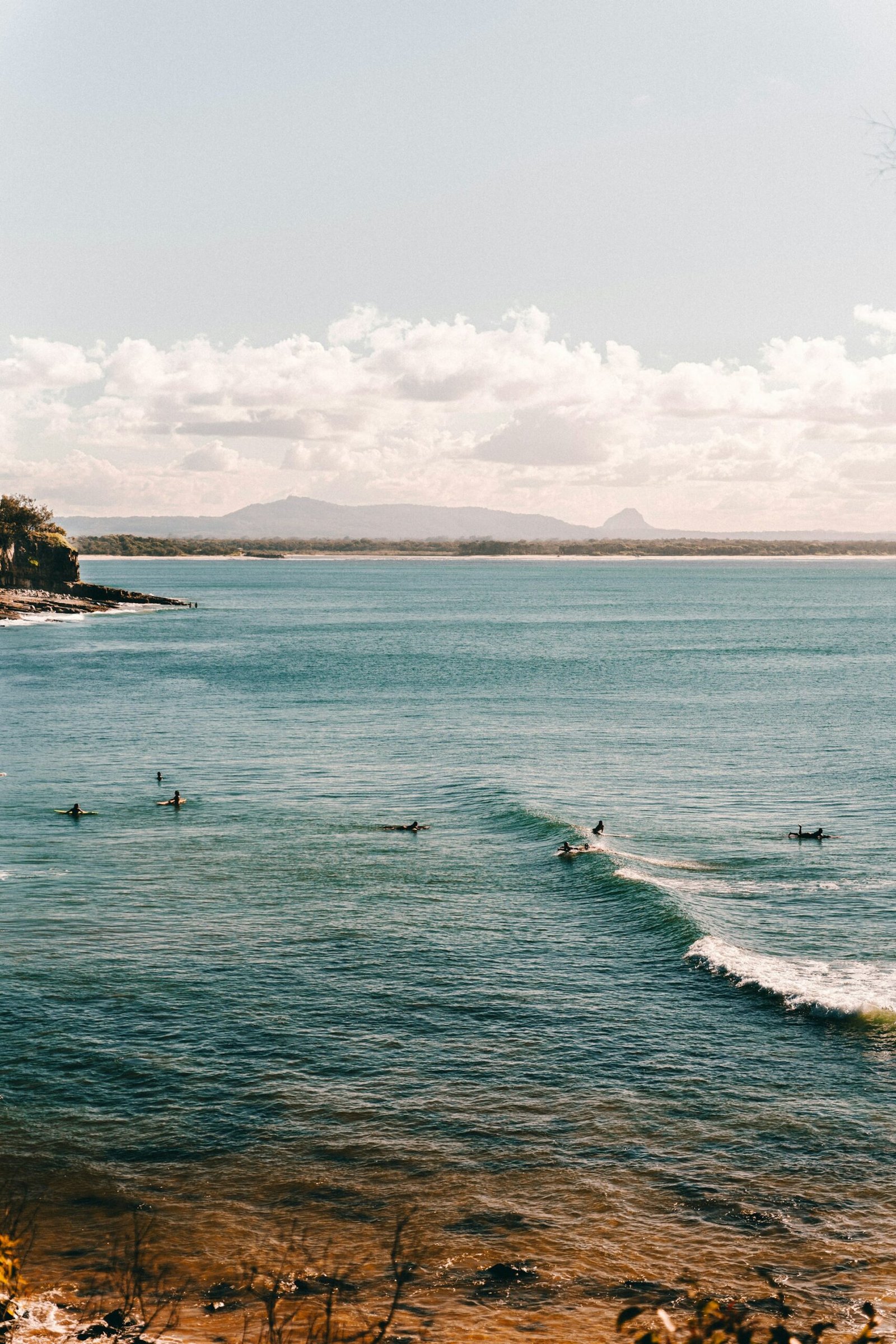
    The east coast is one of the best places in the world to learn to surf, with gentle waves, warm water and surf schools in almost every beach town. Byron Bay, the Gold Coast and Noosa are especially good for beginners. Group lessons are budget-friendly and include a board and wetsuit.

    In Noosa, the long, gentle point breaks of Noosa National Park are perfect for longboarding. Watching the local surfers glide along the waves is a show in itself.

    Surfers riding the waves at Noosa Heads, Queensland, Australia

    8. Spot Koalas in Noosa National Park

    Noosa is one of the most beautiful towns on the coast, with a relaxed beach, a river lined with restaurants and a stunning national park right next to town. The Coastal Walk in Noosa National Park follows the headland past secluded bays, rocky points and lookouts.

    Keep your eyes on the eucalyptus trees above the path: Noosa National Park is one of the best places on the coast to see wild koalas. Rangers and other walkers will often point them out. The walk is free, and you can finish with a swim at Tea Tree Bay.

    9. Swim in the Lakes of K’gari

    K’gari, formerly known as Fraser Island, is the largest sand island in the world and a UNESCO World Heritage Site. Rainforest grows right out of the sand, and there are more than 100 freshwater lakes on the island.

    The most famous is Lake McKenzie, with pure white silica sand and water so clear it looks like a swimming pool. Lake Wabby, at the edge of a giant sand dune, and the crystal-clear Eli Creek, where you can float down a gentle stream, are other highlights.

    The only way to get around K’gari is by 4WD. If you’re not experienced with sand driving, join a guided 4WD tour from Hervey Bay or Rainbow Beach. It’s mid-range in price and takes care of all the planning, permits and driving.

    Clear freshwater lake surrounded by trees on K'gari (Fraser Island), Australia

    10. Drive Along 75 Mile Beach to the Maheno Shipwreck

    On K’gari, the long ocean beach on the eastern side, 75 Mile Beach, is an official highway. Driving along it, with the ocean on one side and the forest on the other, is an unforgettable experience.

    Along the way, you’ll pass the rusty wreck of the SS Maheno, a passenger ship that washed ashore during a cyclone in 1935, and the coloured sand cliffs of The Pinnacles. At Indian Head, a rocky headland in the north, you can look down on sharks, rays and turtles in the clear water below.

    Never swim in the ocean on K’gari, as the currents are dangerous and there are sharks. Also keep your distance from the island’s wild dingoes, and never feed them.

    Aerial view of the rusty Maheno shipwreck on the beach of K'gari (Fraser Island), Australia

    Where to Stay on a Budget

    The east coast has plenty of affordable options:

    • Campervans and campsites: the best value for most travellers. Holiday parks have powered sites, kitchens, pools and clean bathrooms, and national park campsites are often in beautiful locations
    • Hostels: the east coast has some of the best hostels in Australia, with pools, bars and organised trips, and private rooms as well as dorms
    • Motels: simple and affordable, found in every town along the coast
    • Holiday apartments: great for couples and families, with a kitchen to save money on food

    Book early for the summer holidays, especially in Byron Bay and Noosa.

    Eating on a Budget

    Eating out in Australia is expensive, but there are many ways to save:

    • Cook for yourself: supermarkets like Woolworths, Coles and Aldi are everywhere, and most campsites and hostels have kitchens
    • Use the free public barbecues: you’ll find them in parks and on beachfronts all along the coast
    • Try fish and chips on the beach: a classic Australian meal that’s cheap and delicious
    • Look for pub specials: many pubs offer cheap lunch and dinner deals on certain days
    • Taste the local treats: a meat pie, a flat white, a Tim Tam and fresh prawns in Queensland

    What It Really Costs

    Here’s a realistic daily budget per person for a comfortable mid-range trip, not counting international flights.

    • Accommodation: $50 to $100 per person, sharing a motel room, apartment or campervan with campsite fees
    • Food: $30 to $60 a day, mixing self-catering with cafés and pub meals
    • Transport: $30 to $60 a day per person, including a rental car or campervan shared by two and fuel
    • Activities: budget for the highlights separately: an Opera House tour or BridgeClimb, a dolphin cruise, a surf lesson and a 4WD tour on K’gari

    That works out to around $150 to $250 per person per day. Backpackers who stay in hostels and cook for themselves can travel for much less.

    A Sample 14-Day Itinerary

    Days 1 to 3: Sydney. The Opera House, the Harbour Bridge, The Rocks, the ferry to Manly and the Bondi to Coogee walk.

    Day 4: Day trip to the Blue Mountains.

    Day 5: Drive to Port Stephens. Dolphin cruise and the sand dunes.

    Days 6 to 7: Drive north along the coast, with stops at beach towns like Port Macquarie and Coffs Harbour.

    Days 8 to 9: Byron Bay. Sunrise at the lighthouse, a surf lesson and the beaches.

    Day 10: Drive through the Gold Coast to Noosa.

    Days 11 to 12: Noosa. The coastal walk, koalas and the beach.

    Days 13 to 14: K’gari. A two-day 4WD tour from Rainbow Beach or Hervey Bay, then fly home from Brisbane or Hervey Bay.

    Practical Tips

    • Swim between the red and yellow flags: they mark the areas patrolled by lifeguards. Rip currents are a real danger on Australian beaches
    • Use strong sun protection: the Australian sun is very strong, even on cloudy days
    • Watch for wildlife on the roads, especially kangaroos at dawn and dusk
    • Book campsites and tours early in summer and during the school holidays
    • Don’t drive too far in one day: distances are long, and the best moments happen when you stop
    • Respect the dingoes on K’gari and follow all the safety rules

    Booking Tips

    • Airport transfer: book an airport transfer with Kiwitaxi from Sydney airport to your hotel, or from Brisbane at the end of your road trip, with a fixed price and a driver waiting for you
    • eSIM: install a Yesim eSIM before you fly, so you have data for maps, campervan bookings and road updates in Australia from the moment you land
    • Tours: popular options include a Sydney Harbour cruise, a Blue Mountains day trip, a surf lesson in Byron Bay and a 4WD tour of K’gari. You can compare and book most of them on Klook

    Final Thoughts

    A road trip along Australia’s east coast gives you a little of everything that makes Australia special: a world-class city, golden beaches, rainforest-covered mountains, wild dolphins and koalas, and the magical lakes of K’gari.

    Travel in spring or autumn, rent a car or campervan, cook some of your own meals and take your time. The east coast is the kind of trip you’ll talk about for the rest of your life.

    Prices checked in October 2026. Costs and opening times change, so always confirm before you book.
  • Fiji on a Budget: Island Hopping, Manta Rays and Real Fijian Culture

    Fiji on a Budget: Island Hopping, Manta Rays and Real Fijian Culture

    “Bula!” You’ll hear it the moment you step off the plane in Fiji, and you’ll hear it again from every taxi driver, shopkeeper and child you pass for the rest of your trip. It means hello, welcome and good health all at once, and it sums up what makes Fiji so special: some of the warmest, friendliest people on earth.

    The scenery isn’t bad either. Fiji is made up of more than 300 islands in the South Pacific, with white sand beaches, palm trees leaning over turquoise lagoons and coral reefs so colourful that Fiji is often called the soft coral capital of the world.

    Many people think Fiji is only for honeymooners in luxury resorts. In reality, it’s one of the easiest and most affordable island destinations in the South Pacific, with backpacker lodges and family-run resorts on islands just as beautiful as the five-star ones. This guide shows you how to plan the perfect island-hopping trip.

    Fiji at a Glance

    • Where: the South Pacific, about four hours by plane from Sydney and three hours from Auckland
    • Main airport: Nadi (NAN) on the main island of Viti Levu
    • Currency: Fijian dollar (FJD). One US dollar is roughly 2.2 to 2.3 Fijian dollars
    • Entry: visitors from many countries, including the EU, the UK, the US, Canada, Australia and New Zealand, get a free visitor permit on arrival. Your passport must be valid for at least six months. Always check the current rules for your nationality
    • Language: English, Fijian and Fiji Hindi. English is spoken everywhere
    • Best time: May to October, the dry season
    • Budget: around $70 to $110 a day for budget travellers, $150 to $250 for a comfortable mid-range trip

    When to Go

    May to October is the dry season and the best time to visit. Days are sunny and warm, around 25 to 28 degrees Celsius, with lower humidity and calm seas. It’s also the season of the manta rays in the Yasawa Islands. July and the Australian and New Zealand school holidays are the busiest times.

    November to April is the wet season. It’s hotter and more humid, with short, heavy tropical showers. It’s also cyclone season, especially from January to March. Prices are lower, and the underwater visibility is often excellent, but you should keep your plans flexible and buy good travel insurance.

    Our tip: travel in May, June, September or October for great weather, fewer crowds and fair prices.

    Fiji’s Island Groups

    Most visitors fly into Nadi and then head out to the islands. These are the main areas:

    • The Mamanuca Islands: close to Nadi, with small resort islands, calm lagoons and lots of day trips. Perfect for a short stay or for families
    • The Yasawa Islands: a long chain of islands to the north, with dramatic hills, wild beaches and simple, affordable lodges. The best area for island hopping on a budget
    • The Coral Coast: the south coast of Viti Levu, with resorts, villages, rivers and adventure activities
    • Taveuni and the outer islands: quieter, greener and less visited, with some of the best diving in the world
    Aerial view of a small resort island surrounded by turquoise water in Fiji

    Getting Around

    To travel between the Mamanuca and Yasawa Islands, take the big yellow catamaran called the Yasawa Flyer. It leaves Port Denarau near Nadi every morning and stops at the islands along the way, where small boats from the resorts pick you up. You can buy single tickets or a hop-on hop-off pass that lets you travel up and down the chain for a set number of days.

    On Viti Levu, buses are cheap and run along the main coastal roads. Taxis are affordable, but agree on the price before you get in. For Taveuni and other outer islands, you’ll need a domestic flight with Fiji Airways or a ferry.

    Things to Do in Fiji

    Here are the experiences we think are worth your time and money.

    1. Island-Hop Through the Yasawas

    The Yasawa Islands are the Fiji of your dreams. Volcanic hills covered in grass and palms rise above empty white beaches, the water is crystal clear, and the lodges are small, simple and friendly.

    Take the Yasawa Flyer from Nadi and stay two or three nights on a few different islands. Islands like Waya, Naviti, Nacula and Nanuya have lodges for every budget, from backpacker dorms to boutique resorts. Most lodges include meals in a daily meal plan, because there are no shops or restaurants on the islands. Days are spent snorkelling, hiking to viewpoints, visiting villages and watching the sunset.

    On tiny Nanuya Lailai, you’ll find the famous Blue Lagoon, where the 1980 film of the same name was shot.

    Aerial view of a white sand beach and turquoise lagoon in the Fiji islands

    2. Swim with Manta Rays

    From around May to October, large manta rays come to feed in a narrow channel between the islands of Drawaqa and Naviti in the Yasawas. Several nearby resorts offer snorkelling trips when the mantas are spotted, usually early in the morning.

    Swimming next to these gentle giants, with wingspans of up to four metres, is one of the most incredible experiences in the South Pacific. Sightings aren’t guaranteed, so plan at least two nights nearby to give yourself a good chance.

    3. Explore the Sawa-i-Lau Caves

    At the northern end of the Yasawas, the island of Sawa-i-Lau hides a limestone cave filled with clear, cool water. Sunlight falls through an opening in the roof, and you can swim inside. Brave swimmers can dive through a short underwater tunnel into a second, darker chamber with a guide.

    In Fijian legend, the cave is sacred. Trips are organised by the nearby resorts and are budget-friendly. A small fee goes to the local village.

    4. Take a Day Trip in the Mamanucas

    If you’re short on time, a day cruise from Port Denarau to one of the Mamanuca islands is a great way to experience Fiji’s islands. Many trips include lunch, snorkelling gear and time to relax on the beach.

    Popular stops include Beachcomber Island, South Sea Island and Mana Island. You can also visit Cloud 9, a two-storey floating bar and pizza restaurant in the middle of a reef, or sail past Monuriki, the island where the film “Cast Away” was shot. Day trips range from budget to mid-range.

    Boat trip in clear water at South Sea Island in the Mamanuca Islands, Fiji

    5. Snorkel and Dive the Coral Reefs

    Fiji has some of the most colourful coral reefs in the world. You can snorkel straight from the beach on many islands, and most resorts rent masks and fins or include them for free.

    For divers, Fiji is world class. Taveuni and the Somosomo Strait are home to the famous Rainbow Reef and the Great White Wall, a vertical wall covered in pale soft corals that glow in the light. In the Beqa Lagoon on the south coast, divers can see bull sharks up close on guided shark dives. Beginners can take an introductory dive or a full Open Water course at many dive shops.

    Boats anchored in turquoise water off an island in Fiji

    6. Visit a Village and Join a Kava Ceremony

    Fiji’s culture is still very much alive in its villages, and many tours and resorts offer village visits. Visitors usually bring a small gift of kava root, called a sevusevu, for the village chief.

    You’ll probably be invited to drink kava, a traditional drink made from the ground root of a pepper plant, mixed with water and served in a coconut shell. Clap once, say “bula” and drink it in one go. It tastes earthy and makes your lips slightly numb. Dress modestly, with shoulders and knees covered, and remove your hat and sunglasses in the village.

    Many resorts also hold evening performances of traditional meke dances and fire dancing.

    Fijian dancers in grass skirts performing a traditional dance on Beachcomber Island, Fiji

    7. Go White-Water Rafting on the Upper Navua River

    Inland from Pacific Harbour on the south coast, the Upper Navua River flows through a deep gorge with towering cliffs, dozens of waterfalls and thick rainforest. Rafting trips take you through easy rapids and calm stretches past some of the most beautiful scenery in Fiji.

    If you prefer something calmer, take a boat trip or a bamboo raft along the lower Navua River to a village and a waterfall. Pacific Harbour is also Fiji’s adventure capital, with ziplining and shark dives nearby.

    8. Climb the Sigatoka Sand Dunes

    On the Coral Coast, the Sigatoka Sand Dunes National Park protects huge, wind-shaped dunes up to 60 metres high, right next to the ocean. Walking trails lead through the forest and over the dunes to the beach. It’s a surprising landscape on a tropical island and a budget-friendly half-day trip.

    9. Explore the Outer Islands

    If you have more time, leave the main tourist areas behind. Taveuni, known as the Garden Island, is green, wild and quiet. In the Bouma National Heritage Park, a trail leads to the three Tavoro Waterfalls, where you can swim in natural pools. You can also stand with one foot on each side of the 180th meridian, the line that once marked the date line.

    In the Lomaiviti group, the old capital Levuka on the island of Ovalau is a UNESCO World Heritage Site, with wooden colonial buildings along the waterfront. Nearby Makogai is home to a giant clam breeding project. These islands see very few tourists, and that’s exactly their charm.

    Aerial view of the green island of Makogai in the Lomaiviti group, Fiji

    10. Relax in the Sabeto Mud Pool and Garden of the Sleeping Giant

    Just outside Nadi, the Sabeto Hot Springs and Mud Pool is a fun way to spend your first or last day. Cover yourself in warm mud, let it dry in the sun and then wash it off in the natural hot springs. It’s cheap, relaxing and your skin will feel amazing.

    Nearby, the Garden of the Sleeping Giant has a beautiful collection of orchids and a peaceful walk through the rainforest at the foot of the mountains.

    Where to Stay on a Budget

    You don’t need a luxury resort to enjoy Fiji:

    • Backpacker resorts: the Yasawas and Mamanucas have friendly lodges with dorms and private bures (traditional huts), often right on the beach. Meal plans are usually included or required
    • Family-run eco-lodges: small, locally owned places that give you a real feel for island life
    • Mid-range resorts: many islands have comfortable resorts with pools, restaurants and activities at fair prices
    • Hotels in Nadi: cheap and convenient for your first and last night, especially near the airport and Wailoaloa Beach

    On the islands, always check what’s included in the meal plan, as you’ll usually have no other place to eat.

    Eating on a Budget

    Fijian food is a mix of Fijian, Indian and Chinese influences:

    • Try kokoda: raw fish marinated in lime juice and coconut milk, Fiji’s version of ceviche
    • Eat a lovo: a traditional feast cooked in an underground oven, often served at resorts once a week
    • Order a curry: thanks to Fiji’s large Indian community, the curries are excellent and cheap
    • Shop at the markets: the markets in Nadi and Suva are full of tropical fruit, vegetables and snacks at local prices

    In Nadi, eating at local cafés and curry houses is much cheaper than at the resorts.

    What It Really Costs

    Here’s a realistic daily budget per person for a comfortable mid-range trip, not counting international flights.

    • Accommodation with meals: $80 to $160 per person, sharing a bure or room with a meal plan on the islands
    • Food and drink in Nadi: $20 to $40 a day on the days you’re on the main island
    • Transport: $20 to $50 a day on average, including the Yasawa Flyer pass and transfers
    • Activities: budget for the highlights separately: manta ray snorkelling, a Mamanuca day trip, a dive or two and a rafting trip

    That works out to around $150 to $250 per person per day. Backpackers who stay in dorms and choose basic meal plans can travel for much less.

    A Sample 12-Day Itinerary

    Day 1: Arrive in Nadi. Relax at Wailoaloa Beach.

    Day 2: Sabeto Mud Pool and the Garden of the Sleeping Giant.

    Days 3 to 4: Take the Yasawa Flyer to the Mamanucas. Snorkelling, beach time and a visit to Cloud 9.

    Days 5 to 6: Continue to Waya or Naviti in the Yasawas. Hiking and a village visit.

    Days 7 to 8: Drawaqa area for manta rays (in season), then north to Nacula or Nanuya, the Blue Lagoon and the Sawa-i-Lau Caves.

    Day 9: Back to Nadi on the Yasawa Flyer.

    Days 10 to 11: The Coral Coast and Pacific Harbour: the Sigatoka Sand Dunes and rafting on the Upper Navua River.

    Day 12: Back to Nadi and fly home.

    Practical Tips

    • Embrace Fiji Time: life moves slowly here, so be patient and relax
    • Bring cash for the islands. Many small lodges don’t take cards, and there are no ATMs outside the main towns
    • Respect village customs: dress modestly, don’t wear hats and always ask before taking photos of people
    • Use reef-safe sunscreen and never touch or stand on the coral
    • Bring seasickness tablets if you’re sensitive. The boat transfers can be bumpy
    • Tipping isn’t expected, but many resorts have a staff Christmas fund where you can leave a contribution

    Booking Tips

    • Airport transfer: book an airport transfer with Kiwitaxi from Nadi airport to your hotel or to Port Denarau for the island boats, with a fixed price and a driver waiting for you
    • eSIM: install a Yesim eSIM before you fly, so you have data for maps and messages in Fiji from the moment you land. Expect patchy coverage on the outer islands
    • Tours: popular options include a Mamanuca island day cruise, a Cloud 9 trip, a Sabeto Mud Pool tour and white-water rafting on the Upper Navua River. You can compare and book most of them on Klook

    Final Thoughts

    Fiji is far more than a honeymoon destination. It’s a place where you can swim with manta rays in the morning, drink kava with a village chief in the afternoon and watch the sun set over an empty beach in the evening, all without spending a fortune.

    Travel in the dry season, island-hop through the Yasawas and take time to get to know the people. They’re the real reason so many visitors leave Fiji saying “vinaka”, thank you, and promising to come back.

    Prices checked in October 2026. Costs and opening times change, so always confirm before you book.

  • Great Barrier Reef and the Whitsundays: How to See Them on a Budget

    Great Barrier Reef and the Whitsundays: How to See Them on a Budget

    The Great Barrier Reef is so big that astronauts can see it from space. It stretches for more than 2,300 km along the coast of Queensland in northeastern Australia, made up of around 3,000 individual reefs and hundreds of islands. Floating above it with a snorkel, watching turtles glide past and schools of fish flash through the coral, is one of those experiences that stays with you for the rest of your life.

    Just south of the reef’s most famous section lie the Whitsunday Islands, 74 tropical islands with white sand beaches, sailing boats anchored in quiet bays and what is often called the most beautiful beach in Australia.

    Australia isn’t a cheap destination, and reef trips aren’t free. But with the right base, the right season and some smart choices, you can see the best of the reef and the Whitsundays without spending a fortune. This guide shows you how.

    The Great Barrier Reef at a Glance

    • Where: off the coast of Queensland, Australia, from the Torres Strait in the north to near Bundaberg in the south
    • Main gateways: Cairns and Port Douglas in the north, Airlie Beach for the Whitsundays
    • Airports: Cairns (CNS), Proserpine (PPP) near Airlie Beach and Hamilton Island (HTI)
    • Currency: Australian dollar (AUD). One US dollar is roughly 1.5 Australian dollars
    • Entry: most visitors need an electronic visa before travel. EU citizens can apply for a free eVisitor, while travellers from the US, Canada and some other countries use the ETA app
    • Best time: June to October for dry, sunny weather and calm seas
    • Budget: around $80 to $120 a day for budget travellers, $180 to $300 for a comfortable mid-range trip

    An Honest Word About the Reef

    You may have read that the Great Barrier Reef is “dead”. It isn’t. But it is under real pressure. Rising sea temperatures have caused several mass coral bleaching events in recent years, and some areas have been badly damaged. Other parts have recovered well, and many reefs, especially on the outer reef, are still full of colour and life.

    The best thing you can do as a visitor is to choose a responsible tour operator, use reef-safe sunscreen, never touch or stand on the coral, and follow the guides’ instructions. Part of your ticket price goes to the reef’s management and protection, which is one more reason to visit.

    When to Go

    June to October is the best time for most travellers. It’s the dry season, with sunny days, low humidity, calm seas and pleasant temperatures of around 22 to 28 degrees Celsius. Water visibility is often best from around August to November.

    November to May is the wet season. It’s hot, humid and rainy, and January to March can bring tropical cyclones. It’s also stinger season, when dangerous box jellyfish and Irukandji jellyfish can be found in coastal waters. Tour operators provide full-body stinger suits, and you should always wear one when swimming during these months.

    Where to Base Yourself

    Cairns: The Classic Gateway

    Cairns is the main gateway to the northern Great Barrier Reef. It’s a relaxed tropical city with a big choice of accommodation, restaurants and reef tours. There’s no beach in the city itself, but the free Cairns Esplanade Lagoon is a lovely place to swim. From the marina, dozens of boats head out to the reef every morning.

    Port Douglas: Smaller and Closer to Paradise

    About an hour north of Cairns, Port Douglas is a smaller, more upmarket town with the beautiful Four Mile Beach. Boats from here reach the stunning Agincourt Reefs on the outer reef, and it’s the perfect base for the Daintree Rainforest.

    Airlie Beach: Gateway to the Whitsundays

    Airlie Beach is a lively little town with a big swimming lagoon, backpacker bars and the marina where sailing boats leave for the Whitsunday Islands. It’s the best base for island trips and sailing adventures.

    Our tip: if you have two weeks, combine Cairns or Port Douglas with Airlie Beach. Domestic flights or the long drive down the coast connect the two areas.

    Things to Do on the Great Barrier Reef

    Here are the experiences we think are worth your time and money.

    1. Visit Whitehaven Beach and Hill Inlet

    Whitehaven Beach on Whitsunday Island regularly appears on lists of the most beautiful beaches in the world. Its sand is made of almost pure silica, which makes it so fine and white that it squeaks under your feet and stays cool, even in the midday sun.

    At the northern end, the view from the Hill Inlet Lookout is the most famous sight in the Whitsundays. As the tide moves in and out, the white sand and turquoise water create swirling patterns that change every hour. Try to visit at low tide for the best view.

    Day trips from Airlie Beach to Whitehaven Beach are mid-range in price, and most include a stop at the lookout and time for swimming. There are no shops or facilities on the beach, so bring water, sunscreen and a hat.

    White sand and turquoise water at Hill Inlet, Whitehaven Beach, Australia

    2. Sail the Whitsundays

    Sailing between the islands is the best way to experience the Whitsundays. The water is calm, protected by the outer reef, and every day brings a new bay or beach to explore.

    Day sails take you to Whitehaven Beach and a snorkelling spot or two. Overnight sailing trips of two or three nights are even better: you sleep on board, wake up in a quiet bay and have the beaches to yourself before the day-trippers arrive. Overnight trips range from budget backpacker boats to small luxury yachts, so there’s an option for most budgets.

    If you’re an experienced sailor, you can even charter a bareboat yacht and skipper it yourself.

    Boat in clear blue water off Whitehaven Beach in the Whitsundays

    3. Snorkel on the Outer Reef

    The outer reef, far from the coast, usually has the clearest water and the healthiest coral. Full-day tours from Cairns, Port Douglas and Airlie Beach take you out on large, stable boats or to floating pontoons moored at the reef, with snorkelling gear, lunch and guides included.

    You’ll see brain corals, staghorn corals and giant clams, along with parrotfish, clownfish and, often, green sea turtles. Many tours also offer guided snorkel tours with a marine biologist, which are well worth the small extra cost if you want to understand what you’re looking at.

    Full-day reef trips are mid-range to expensive, but they’re the highlight of most trips to Queensland. Choose a smaller boat for a quieter, more personal experience, and check how many reef sites the tour visits.

    Fish swimming over coral on the Great Barrier Reef

    4. Learn to Dive

    The Great Barrier Reef is one of the best places in the world to try scuba diving. Most reef tours offer an introductory dive, where an instructor takes you under the water after a short briefing, with no experience needed.

    If you want to get certified, several dive schools in Cairns offer Open Water courses that combine pool training with dives on the reef. Some even include a few nights on a liveaboard boat, where you can dive several times a day at remote reefs. For certified divers, the Ribbon Reefs and the famous Cod Hole, where huge potato cod swim right up to divers, are bucket-list sites.

    Colourful corals on the Great Barrier Reef, Australia

    5. Take a Scenic Flight

    The Great Barrier Reef is so huge that the best way to understand it is from the air. Scenic flights by plane or helicopter from Airlie Beach and Cairns show you the reef’s endless patterns of blue and turquoise. From Airlie Beach, the most famous sight is Heart Reef, a small reef shaped like a perfect heart.

    Flights are a splurge, but even a short helicopter flight is an unforgettable experience. Some tours combine a flight one way with a boat trip back.

    Aerial view of a coral reef on the Great Barrier Reef

    6. Hike in the Whitsundays

    The islands aren’t just for the beach. The Hill Inlet Lookout walk is short and easy. On Whitsunday Island, the Whitsunday Ngaro Sea Trail combines walking tracks with kayaking routes between campsites. On the mainland, the Honeyeater Lookout near Airlie Beach has wonderful views over the islands at sunset.

    You can even camp on several islands in national park campsites. Book ahead and arrange transport with a water taxi.

    View over the ocean from a hill on Whitsunday Island, Australia

    7. Explore the Daintree Rainforest

    North of Port Douglas, the Daintree Rainforest is one of the oldest rainforests on earth, much older than the Amazon. It’s one of the few places in the world where two World Heritage Sites meet, as the rainforest runs right down to the reef at Cape Tribulation.

    Take a Daintree River cruise to spot crocodiles, walk the boardwalks through the forest and look out for the rare cassowary, a huge, colourful bird. Never swim in rivers or estuaries in tropical Queensland, as saltwater crocodiles live there.

    8. Ride the Kuranda Scenic Railway

    From Cairns, the Kuranda Scenic Railway winds through rainforest and past waterfalls up to the mountain village of Kuranda. Many visitors take the train up and return on the Skyrail Rainforest Cableway, which glides over the treetops. Kuranda itself has markets, a butterfly sanctuary and small cafés.

    9. Visit a Reef Island

    Small coral islands like Green Island and Fitzroy Island near Cairns are easy and cheap to reach by ferry. You can snorkel right from the beach, walk through the rainforest and spend a relaxed day without a big tour. On Fitzroy Island, visit the Cairns Turtle Rehabilitation Centre, where injured sea turtles are cared for.

    10. Swim in the Lagoons

    During stinger season, the safest place for a swim on the mainland is one of the free public lagoons. Both Cairns and Airlie Beach have large, beautifully landscaped saltwater swimming lagoons by the sea, with lifeguards, shade and free barbecues. It’s a typical Australian way to spend an afternoon.

    Where to Stay on a Budget

    Cairns and Airlie Beach have plenty of affordable accommodation:

    • Hostels: dorm beds and private rooms, often with pools and tour desks that offer good deals
    • Motels and apartments: comfortable and often with a kitchen, which helps you save on food
    • Holiday parks: campsites with cabins, pools and barbecue areas, popular with families
    • Island resorts: beautiful but expensive. If you want an island night, consider a sailing trip or camping instead

    Book early for the Australian school holidays, especially in June, July and September.

    Eating on a Budget

    Eating out in Australia is expensive. To save money:

    • Cook for yourself. Supermarkets like Woolworths, Coles and Aldi are everywhere, and most hostels and apartments have kitchens
    • Use the free public barbecues at the lagoons and parks. It’s a very Australian thing to do
    • Eat at the local pubs, many of which offer cheap lunch and dinner specials on certain days
    • Try the seafood. Fresh prawns, barramundi and coral trout are local specialities. Buy them at a fish market for a picnic

    Most reef day tours include lunch, which helps your budget on those days.

    What It Really Costs

    Here’s a realistic daily budget per person for a comfortable mid-range trip, not counting international flights.

    • Accommodation: $50 to $100 per person, sharing a room in a motel or apartment
    • Food: $30 to $60 a day if you cook some meals and eat out sometimes
    • Transport: $15 to $40 a day on average, including a rental car or buses and some domestic flights
    • Activities: budget for the big highlights separately: a full-day outer reef trip, a Whitehaven Beach day trip or overnight sail, and perhaps a scenic flight or dive

    That works out to around $120 to $220 per person per day, plus your reef and sailing trips. A full-day outer reef tour and a Whitsundays day trip are the two things you shouldn’t skip.

    A Sample 12-Day Itinerary

    Days 1 to 2: Cairns. Relax at the Esplanade Lagoon and take a day trip to Green Island or Fitzroy Island.

    Day 3: Kuranda Scenic Railway and Skyrail.

    Days 4 to 6: Port Douglas. Full-day trip to the outer reef, then explore the Daintree Rainforest and Cape Tribulation.

    Day 7: Fly or drive south to Airlie Beach.

    Days 8 to 10: Two-night sailing trip around the Whitsundays, with Whitehaven Beach and Hill Inlet.

    Days 11 to 12: Scenic flight over Heart Reef, a sunset at Honeyeater Lookout and a last swim in the Airlie Beach Lagoon.

    Practical Tips

    • Sun protection: the Australian sun is extremely strong. Use high-factor, reef-safe sunscreen, a hat and a rash guard
    • Stinger suits: always wear one when swimming in the sea between November and May
    • Crocodiles: never swim in rivers, creeks or estuaries in tropical Queensland, and obey all warning signs
    • Seasickness: the boat ride to the outer reef can be rough. Take tablets before you leave if you’re sensitive
    • Book ahead for sailing trips and outer reef tours in the high season

    Booking Tips

    • Airport transfer: book an airport transfer with Kiwitaxi from Cairns airport to your hotel or straight up the coast to Port Douglas, with a fixed price and no waiting
    • eSIM: install a Yesim eSIM before you fly, so you have data for maps, tour bookings and weather updates in Australia from the moment you land
    • Tours: popular options include an outer reef snorkelling trip from Cairns, a Whitehaven Beach day trip, a Heart Reef scenic flight and the Kuranda Scenic Railway. You can compare and book most of them on Klook

    Final Thoughts

    The Great Barrier Reef is one of the natural wonders of the world, and it’s facing a difficult future. That makes seeing it with your own eyes even more special. Whether you’re snorkelling with turtles on the outer reef, sailing between the Whitsunday Islands or standing on Hill Inlet Lookout as the tide paints swirls into the sand, it’s a trip you’ll never forget.

    Travel in the dry season, choose a responsible operator, cook a few of your own meals and spend your money on the experiences that matter: a day on the outer reef and a few days at sea. You’ll come home with memories, and maybe a new love for the ocean.

    Prices checked in October 2026. Costs and opening times change, so always confirm before you book.
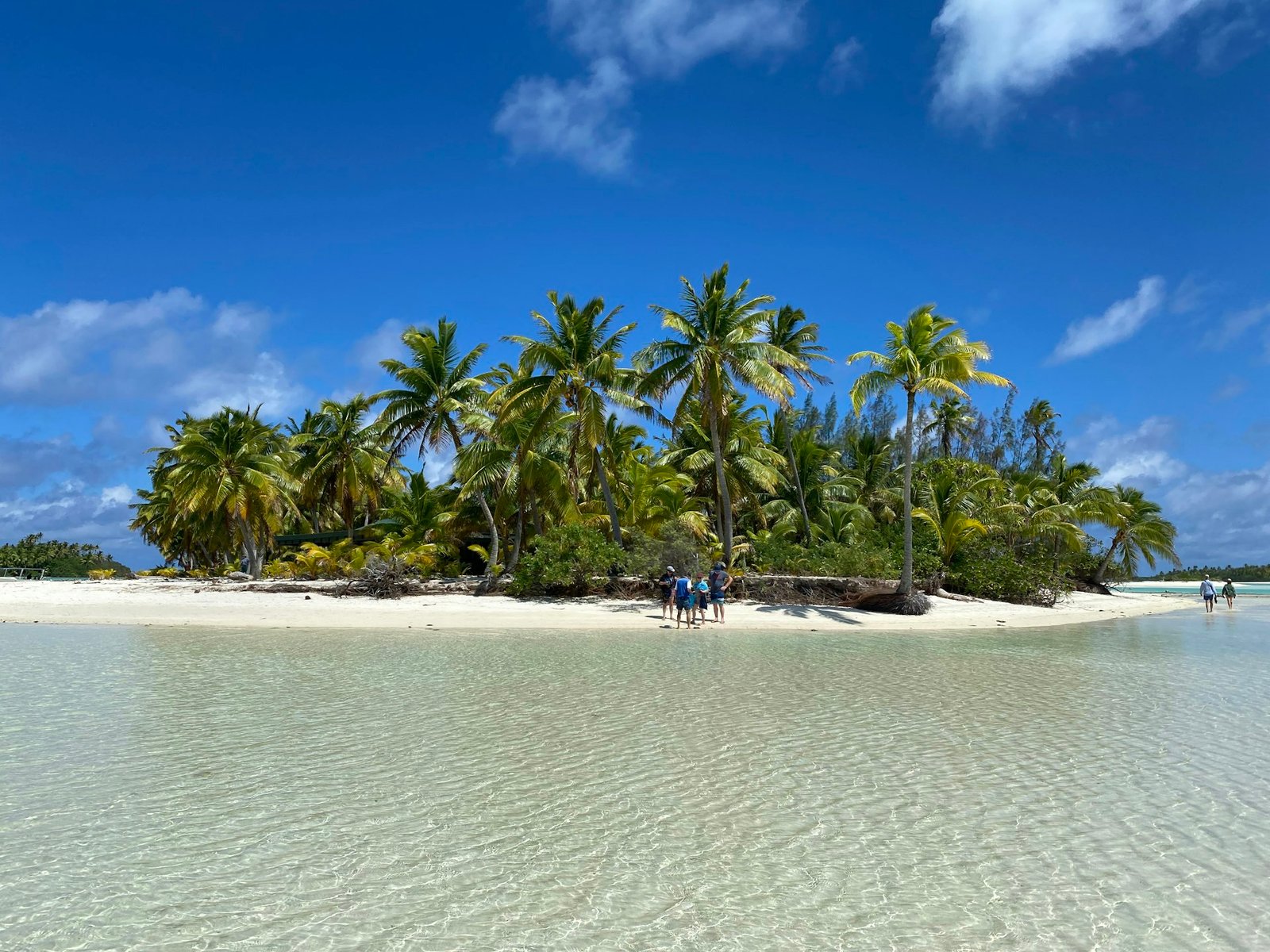
  • New Zealand’s South Island: The Ultimate Road Trip and Best Things to Do

    New Zealand’s South Island: The Ultimate Road Trip and Best Things to Do

    There are places that look beautiful, and then there’s New Zealand’s South Island, where you start to wonder if someone is playing a trick on you. Glaciers slide down to the edge of the rainforest. Turquoise lakes sit at the foot of snowy mountains. Waterfalls pour hundreds of metres straight into a fjord, and on a clear night the sky is so full of stars that it looks like a painting.

    It’s no surprise that so many films were shot here. What surprises most people is how easy it is to explore. The roads are quiet, the hiking trails are some of the best maintained in the world, and around every corner there’s another view that makes you pull over.

    New Zealand isn’t a cheap country. But with a campervan or a small rental car, a mix of free hikes and one or two big adventures, and a bit of planning, the South Island is far more affordable than its reputation. This guide shows you the best route, the most unforgettable things to do and what it all really costs.

    The South Island at a Glance

    • Where: the larger and wilder of New Zealand’s two main islands, in the South Pacific
    • Main airports: Christchurch (CHC) and Queenstown (ZQN)
    • Currency: New Zealand dollar (NZD)
    • Entry: most visitors from visa-waiver countries, including the UK, the EU and the US, need an NZeTA (electronic travel authority) and must pay the International Visitor Levy before arrival
    • Driving: on the left side of the road
    • Best time: December to March for summer, or the shoulder months of November and April
    • Ideal trip length: two to three weeks

    Before You Go: NZeTA and Visitor Levy

    If you come from a visa-waiver country, you’ll need a New Zealand Electronic Travel Authority (NZeTA) before you fly. Apply through the official app or website. It’s a little cheaper through the app. Most travellers also pay the International Visitor Levy of NZD 100 at the same time, which helps fund conservation and tourism infrastructure.

    Apply at least a few days before your trip, and only use the official government channels. There are plenty of websites that charge extra for doing it for you.

    New Zealand is also very strict about biosecurity. Declare all food, plants, hiking boots and camping gear when you arrive. Clean your hiking boots before you pack them. Fines for undeclared items are high.

    When to Go

    Remember that the seasons are reversed in the Southern Hemisphere.

    Summer (December to February) is the most popular time, with long days, warm weather and all hikes and roads open. It’s also the busiest and most expensive season, especially around Christmas and in January, when New Zealanders are on holiday too.

    Autumn (March to May) is wonderful. The crowds thin out, the weather is often stable and calm, and the trees around Arrowtown and Wanaka turn gold. Spring (September to November) brings snowy peaks, waterfalls in full flow and the famous lupins that bloom around Lake Tekapo in November and December.

    Winter (June to August) is ski season in Queenstown and Wanaka. The scenery is spectacular, but some roads and hikes can close because of snow and ice.

    How to Get Around

    The South Island is made for a road trip. Public transport exists, but it doesn’t reach many of the best places, and it’s not flexible.

    Campervan

    A campervan is the classic way to explore, and for good reason. You sleep in the middle of the landscape, cook your own meals and save money on accommodation. Prices vary hugely by season, from very cheap in winter to expensive in January.

    Be aware of the rules for freedom camping. Only certified self-contained vehicles are allowed to camp outside official campgrounds, and even then only in permitted spots. The Department of Conservation (DOC) runs hundreds of campsites in beautiful locations, many of them cheap and some even free.

    Rental Car

    A small rental car combined with motels, holiday parks and hostels is often just as cheap as a campervan, especially for two people, and it’s easier to drive on narrow mountain roads.

    Driving Tips

    • Drive on the left. Take it slow for the first few days
    • Distances look short, but roads are winding. Plan for lower average speeds than at home
    • Many bridges are one lane. Watch the signs to see who has right of way
    • Fill up whenever you can in remote areas. Petrol stations can be far apart, especially on the West Coast
    • Don’t stop on the road for photos. Use the many lay-bys

    Things to Do on the South Island

    The South Island is a playground for anyone who loves nature and adventure. Here are the experiences we think are worth your time and money.

    1. Cruise or Kayak Milford Sound

    Milford Sound in Fiordland National Park is the most famous sight in New Zealand, and it lives up to the hype. Rudyard Kipling called it the “eighth wonder of the world”. Steep cliffs rise straight out of the dark water, waterfalls tumble down from the rainforest, and Mitre Peak stands guard at the entrance.

    The most popular way to see it is on a cruise. Boats sail all the way to the Tasman Sea and back, past seal colonies and right up to the waterfalls, often close enough that you’ll get wet. Cruises last around two hours, and standard adult tickets usually cost around NZD 165 to 180. Choose an early-morning or late-afternoon departure to avoid the big coach groups from Queenstown.

    For a more intimate experience, book a kayak tour. Paddling along the base of the cliffs, with nothing but the sound of waterfalls and birds, is something you’ll never forget. With luck, you’ll see seals and even dolphins.

    Here’s a secret: Milford Sound is even more spectacular in the rain. Hundreds of temporary waterfalls appear on the cliffs, and the whole fjord turns into something from another world. Don’t cancel because of bad weather.

    Good to know:

    • The drive from Te Anau to Milford Sound takes about two hours, but stop often. The Milford Road is one of the most beautiful roads in the world
    • From Queenstown, it’s a very long day trip, around four hours each way. If you can, stay a night in Te Anau
    • Fill up with fuel in Te Anau. There’s no petrol station in Milford Sound
    • Scenic flights from Queenstown or Te Anau are a big splurge, but they show you the fjords and glaciers from above
    Cruise boats in Milford Sound with steep mountains, New Zealand

    2. Hike the Hooker Valley Track

    The Hooker Valley Track in Aoraki/Mount Cook National Park is probably the best short hike in New Zealand, and it’s completely free. The trail follows the Hooker River across three swing bridges, along boardwalks through alpine meadows, all the way to a glacial lake with icebergs floating in it and Aoraki/Mount Cook, the country’s highest mountain, rising directly above.

    The walk is about 10 km return and takes around three hours. It’s mostly flat and suitable for almost everyone. Go early in the morning or late in the afternoon for the best light and fewer people.

    If you want something harder, the Mueller Hut Route is a steep climb with incredible views of glaciers and ice avalanches. The Tasman Glacier viewpoint is a short walk to a view of New Zealand’s longest glacier and its lake.

    Boardwalk on the Hooker Valley Track towards Aoraki Mount Cook

    3. Stargaze at Lake Tekapo

    Lake Tekapo is one of the most photographed places on the South Island. The lake is an unreal milky turquoise, coloured by fine rock flour from the glaciers. On its shore stands the tiny stone Church of the Good Shepherd, built in 1935, with a window behind the altar that frames the lake and mountains.

    Tekapo is part of the Aoraki Mackenzie International Dark Sky Reserve, one of the best places in the world to see the stars. On a clear night, you’ll see the Milky Way, the Magellanic Clouds and, with a lot of luck, the southern lights. You can stargaze for free from the lakeshore, or join a guided stargazing tour with telescopes, which is mid-range in price and well worth it.

    Afterwards, relax in the Tekapo Springs hot pools with a view of the lake.

    In November and December, the shores around Tekapo are covered with colourful lupins, which makes it one of the most beautiful sights in the country.

    Lupins and the Church of the Good Shepherd at Lake Tekapo

    4. Get Your Adrenaline Fix in Queenstown

    Queenstown is the adventure capital of the world, and it takes this title seriously. The town sits on the shores of Lake Wakatipu, surrounded by the jagged peaks of the Remarkables.

    The world’s first commercial bungy jump opened here in 1988 at the Kawarau Bridge, 43 metres above the river. It’s still one of the most popular jumps in the world, and if you’re brave, there are even higher ones near town. Other classics include the Shotover Jet, a jet boat that races through a narrow canyon just centimetres from the rocks, canyon swings, paragliding and skydiving over the lakes and mountains.

    These experiences are mid-range to splurge in price. Pick one or two that really excite you instead of trying to do them all.

    For something calmer, take the Skyline Gondola up Bob’s Peak for the view over the lake, ride the luge at the top, or rent a bike and ride the trails to Arrowtown, a pretty old gold-mining village. And yes, the burgers at Fergburger really are that good. Expect a queue.

    Aerial view of Lake Wakatipu and the mountains around Queenstown

    5. Walk on a Glacier

    On the West Coast, two huge glaciers flow down from the Southern Alps almost to the rainforest: the Franz Josef Glacier and the Fox Glacier. Climate change has made them retreat dramatically, and today you can no longer walk onto them from the valley.

    The only way to stand on the ice is a heli-hike. A helicopter flies you onto the glacier, where a guide leads you through ice caves, crevasses and blue ice formations. It’s an expensive splurge, but for many travellers it’s the experience of a lifetime. Heli-hikes are often cancelled because of the weather, so plan two nights in the area to have a backup day.

    If that’s beyond your budget, the free valley walks to the glacier viewpoints still give you an impressive view. Nearby Lake Matheson is famous for its mirror reflections of Mount Cook and Mount Tasman on calm mornings.

    Hikers climbing on the ice of Franz Josef Glacier

    6. Kayak in Abel Tasman National Park

    In the sunny north of the island, Abel Tasman National Park is a completely different world: golden sand beaches, turquoise bays and lush coastal forest. It’s the perfect place for a few relaxed days by the sea.

    The best way to explore is by sea kayak. Guided tours or rentals take you along the coast, past seal colonies and into quiet bays where you can stop for a swim and a picnic. Many people combine kayaking with a water taxi and a walk along the Abel Tasman Coast Track, one of New Zealand’s Great Walks. You can do a short section in a day or walk the whole track in three to five days.

    Kayak tours here are mid-range in price, and water taxis make it easy to plan a one-way trip.

    Beach with kayaks in Abel Tasman National Park

    7. Hike Roys Peak or Do a Great Walk

    Wanaka, an hour from Queenstown, is calmer and more relaxed, with a beautiful lake and the famous Wanaka Tree growing out of the water. The most famous hike here is Roys Peak, a steep five to six hour climb to one of the most photographed viewpoints in New Zealand. Note that the track is closed every year from early October to around mid-November for the lambing season.

    If you have more time and love hiking, book one of the Great Walks: multi-day trails with huts along the way. The Routeburn Track, the Kepler Track and the legendary Milford Track are all on the South Island. Huts for the summer season are booked months in advance, often within minutes of opening, so plan early.

    8. Watch Wildlife

    The South Island is full of wildlife that you won’t see anywhere else.

    • Kaikōura: whale watching tours to see giant sperm whales, plus dolphins and seals
    • Otago Peninsula near Dunedin: the only mainland breeding colony of royal albatrosses in the world and the rare yellow-eyed penguin
    • Akaroa: swim with tiny Hector’s dolphins, the smallest dolphins in the world
    • Kea: these clever alpine parrots are famous for stealing food and pulling rubber from car windows. Don’t feed them

    9. Soak in Hot Pools

    After a long hike, nothing beats a soak in hot water. Besides Tekapo Springs, try the Hanmer Springs thermal pools north of Christchurch or the Onsen Hot Pools near Queenstown, where private cedar tubs overlook the Shotover River canyon.

    10. Drive the Great Coastal Roads

    On the South Island, the drive itself is a big part of the experience. Don’t miss the Haast Pass between the West Coast and Wanaka, with waterfalls and the turquoise Blue Pools, the coastal road around Kaikōura, and the road from Queenstown to Glenorchy along Lake Wakatipu, which many say is one of the most beautiful drives in the world.

    Where to Stay on a Budget

    New Zealand has excellent budget accommodation:

    • DOC campsites: simple and in amazing locations, from free to cheap
    • Holiday parks: campgrounds with powered sites, cabins and motel units, shared kitchens and hot showers. Great value for families and couples
    • Hostels: clean, well run and social, often with private rooms
    • Motels: most have a small kitchen, which helps you save money on food

    Book ahead for summer, especially in Queenstown, Wanaka, Tekapo and near Milford Sound.

    Eating on a Budget

    Eating out in New Zealand is expensive, so cooking for yourself is the biggest money-saver. Supermarkets like Pak’nSave and Countdown (now often called Woolworths) are cheapest. Almost every holiday park and hostel has a shared kitchen.

    When you do eat out, look for:

    • Fish and chips: a Kiwi classic, best eaten on the beach
    • Meat pies: sold everywhere, from petrol stations to bakeries
    • Green-lipped mussels and crayfish: especially in Kaikōura and on the coast
    • Hokey pokey ice cream: vanilla with crunchy honeycomb
    • Flat white: New Zealanders take their coffee very seriously

    What It Really Costs

    New Zealand is not a budget destination, but you can control your costs. Here’s a realistic daily budget per person for a mid-range trip, not counting flights.

    • Accommodation or campervan: NZD 50 to 120 per person, sharing a room or a van
    • Food: NZD 30 to 60 a day if you cook most meals and eat out sometimes
    • Fuel and transport: NZD 20 to 40 a day on a road trip
    • Activities: many of the best hikes are free. Budget for a few highlights, such as a Milford Sound cruise, a kayak tour and one big adventure

    That works out to around NZD 150 to 300 per person per day. Travelling in shoulder season and cooking your own meals can bring it down a lot.

    A Sample 14-Day Road Trip

    Day 1: Arrive in Christchurch and pick up your car or campervan.

    Days 2 to 3: Drive to Lake Tekapo. Visit the Church of the Good Shepherd, soak in the hot pools and go stargazing.

    Days 4 to 5: Aoraki/Mount Cook. Hike the Hooker Valley Track and visit the Tasman Glacier viewpoint.

    Days 6 to 8: Queenstown. One adventure activity, the gondola, a day trip to Arrowtown and the drive to Glenorchy.

    Days 9 to 10: Te Anau and Milford Sound. Cruise or kayak the fjord.

    Day 11: Wanaka. Relax by the lake or hike Roys Peak (if open).

    Days 12 to 13: Drive over the Haast Pass to Franz Josef. Heli-hike or walk to the glacier viewpoint and Lake Matheson.

    Day 14: Drive back to Christchurch via Arthur’s Pass, or continue north to Abel Tasman if you have more time.

    Practical Tips

    • Weather changes fast. Always carry a warm layer and a rain jacket, even in summer.
    • Sandflies are tiny biting insects found on the West Coast and in Fiordland. Bring strong repellent.
    • Sun: the UV index in New Zealand is very high. Use sunscreen even on cloudy days.
    • Leave no trace. Take all your rubbish with you, and only camp where it’s allowed.
    • Mobile coverage is patchy in remote areas. Download offline maps before you go.

    Booking Tips

    • Airport transfer: if you pick up your car or campervan in town rather than at the airport, book an airport transfer with Kiwitaxi in Christchurch or Queenstown for an easy start
    • eSIM: install a Yesim eSIM before you fly, so you have data for maps, weather and road updates in New Zealand from the moment you land
    • Tours: popular options include a Milford Sound cruise, a Shotover Jet ride, a Tekapo stargazing tour and a kayak trip in Abel Tasman. You can compare and book most of them on Klook

    Final Thoughts

    The South Island is one of those rare places where the reality is even better than the photos. It’s a place where you can kayak a fjord one day, walk on a glacier the next and fall asleep every night under a sky full of stars.

    Rent a car or a campervan, cook your own meals, hike the free trails and save your money for one or two experiences that will stay with you forever. It’s a trip you’ll talk about for the rest of your life.

    Prices checked in October 2026. Costs and opening times change, so always confirm before you book.
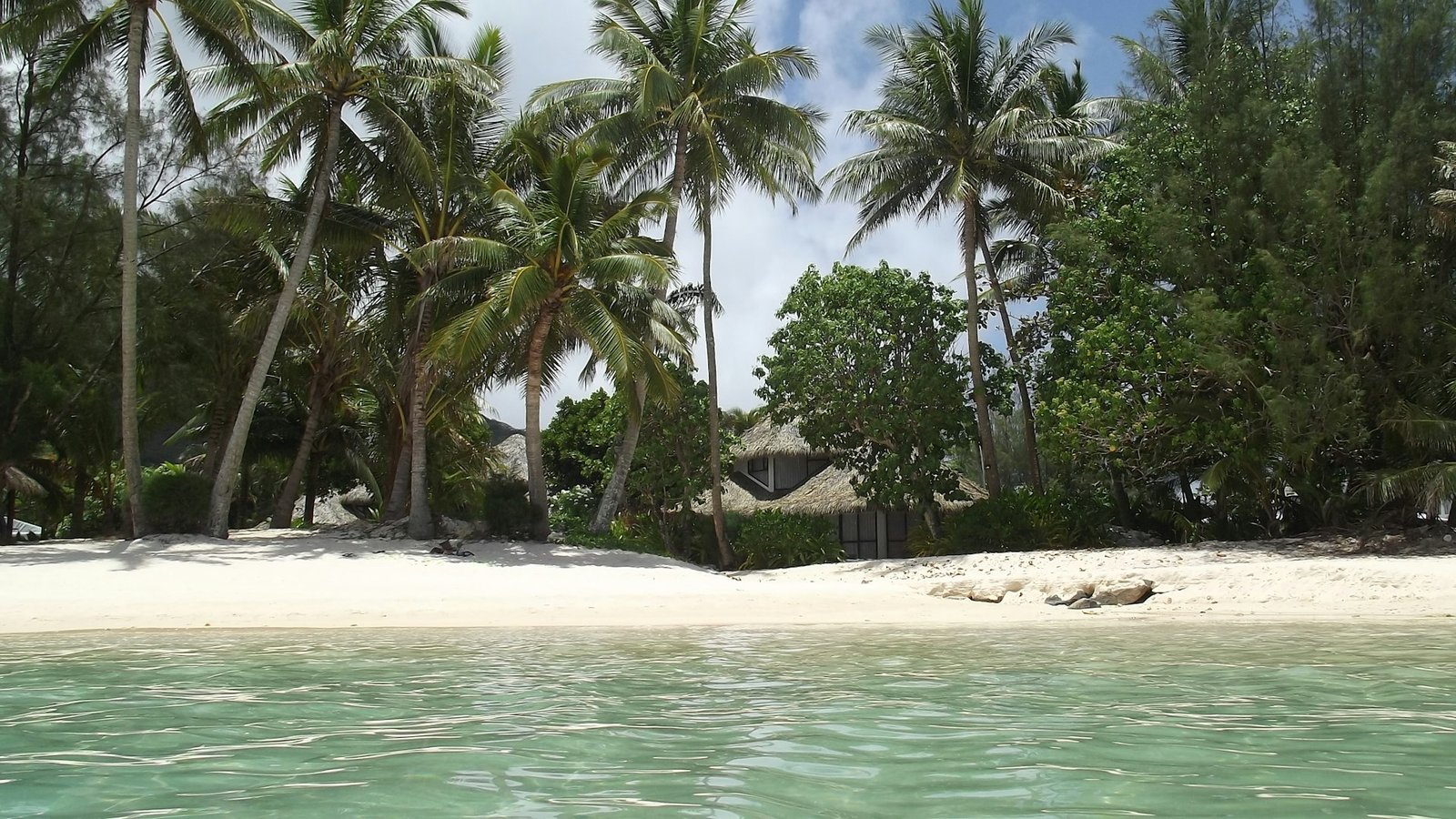
  • Bora Bora Without the Millionaire Price Tag

    Bora Bora Without the Millionaire Price Tag

    Say “Bora Bora” to anyone and watch their face. First comes the dreamy look, then the wince. Everyone has seen the photos of overwater bungalows on a lagoon so blue it looks edited, and everyone has heard the prices that go with them. A thousand euros a night is normal at the big resorts. Two or three thousand is not unusual.

    Here’s what most people don’t know: Bora Bora is not only a resort island. About ten thousand people live here. They shop at supermarkets, eat at food trucks and swim at a public beach that is every bit as beautiful as the one outside a five-star hotel. Once you step off the resort path, the island becomes a very different place, and a far cheaper one.

    This guide shows you how to see Bora Bora on a real budget in 2026: where to sleep, how to get there without paying for a private boat transfer, what to eat, which lagoon tour is worth the money, and what a week really costs.

    Bora Bora at a Glance

    • Where: Leeward Islands of the Society Islands, French Polynesia, about 260 km northwest of Tahiti
    • Currency: CFP franc (XPF), pegged to the euro. 1 euro is always 119.33 XPF, and one US dollar is roughly 100 francs
    • Getting there: international flight to Papeete (Tahiti), then a 50-minute Air Tahiti flight or a ferry
    • Main village: Vaitape, on the west coast of the main island
    • Best time: May to October for dry weather, with May, June, September and October as the sweet spot
    • Budget stay: family guesthouses (pensions) from about €50 to €130 a night

    Why Bora Bora Doesn’t Have to Ruin You

    The trick is simple. Almost all of the famous overwater resorts sit on the motus, the small flat islands on the reef that ring the lagoon. You can only reach them by boat, so once you’re there you pay resort prices for every meal, every drink and every ride back to the main island.

    The main island is different. It has a 32 km coastal road, a couple of small supermarkets, snack bars, a handful of food trucks and a growing number of family-run guesthouses. Stay here and you get the same lagoon, the same mountain and the same sunsets. You just wake up in a garden bungalow instead of hovering over the water.

    And you don’t have to give up the overwater dream completely. Many travellers spend most of their trip in a guesthouse and then book one or two nights in an overwater bungalow at the end. That single splurge often costs less than a “cheap” week at a big resort, and it feels far more special when it’s the grand finale.

    Aerial view of Bora Bora with its turquoise lagoon and reef

    Getting to Bora Bora

    Flying to Tahiti

    Every trip starts at Faa’a International Airport in Papeete on Tahiti. Air Tahiti Nui, Air France, French bee, United and a few others fly in from Los Angeles, San Francisco, Paris, Tokyo, Auckland and Seattle, depending on the season.

    This is where most of your money goes. Return flights from Europe usually run between about $1,200 and $2,800, depending on the month. From the US West Coast you can sometimes find fares well under $1,000 if you book early and stay flexible. French bee is often the cheapest option from Paris and San Francisco, but check what baggage is included before you celebrate.

    A tip that saves real money: fly on a weekday outside school holidays and set price alerts at least four to six months ahead. The difference between a good and a bad fare to Tahiti can easily pay for your entire accommodation.

    From Tahiti to Bora Bora

    You have two options.

    Air Tahiti flies from Papeete to Bora Bora several times a day. The flight takes about 50 minutes, and if you sit on the left side of the plane on the way in, you’ll often get a stunning view of the lagoon before landing. A single return ticket usually costs somewhere around $200 to $350.

    If you want to see more than one island (and you should), look at Air Tahiti’s multi-island passes. The Maeva Pass covers Moorea, Huahine, Raiatea and Bora Bora and starts at around €416 for two islands. The Maupiti Pass adds tiny Maupiti, which many people fall in love with even more than Bora Bora. The passes have strict rules (each island only once, a fixed circuit, no refunds), so plan your route before you buy.

    The Apetahi Express ferry is the slower, cheaper way. It sails from Papeete to Huahine, Raiatea, Taha’a and Bora Bora three times a week, and the trip to Bora Bora takes almost seven hours. A single ticket costs around 7,000 XPF. There’s also the Tuatea Pass for 24,000 XPF, which gives you 30 days of unlimited travel between Tahiti, Moorea, Huahine, Raiatea, Taha’a, Bora Bora and Maupiti. If you’re island-hopping for a few weeks and don’t mind a long day at sea, it’s excellent value.

    From the Airport to Your Guesthouse

    Bora Bora’s airport isn’t on the main island. It sits on Motu Mute, a small islet on the northern reef. The luxury resorts pick up their guests with private boats, and they charge for it.

    If you’re staying on the main island, you take the regular airport shuttle boat across the lagoon to Vaitape. From there, most guesthouses will collect you if you let them know your flight in advance. Ask about this when you book. It’s one of those small things that makes a big difference to your first hour on the island.

    Where to Stay on a Budget

    Family Guesthouses (Pensions)

    This is the heart of budget Bora Bora. A pension is a small, often family-run guesthouse with a few rooms or bungalows. Many include breakfast, some have a shared kitchen, and quite a few lend out kayaks or snorkel gear for free. Expect to pay roughly €50 to €130 a night for two.

    You won’t get a butler or an infinity pool. What you get is a host who knows which food truck grills the best fish tonight, where the rays are feeding this week and which neighbour rents out scooters for less. That local knowledge is worth a lot.

    Where on the Island

    Matira Point in the south is the best area for most visitors. It has the island’s most famous public beach, a few snack bars and supermarkets, and calm, shallow water right in front of you. Several guesthouses sit within walking distance of the sand.

    Vaitape and the west coast are handy if you want to be close to the ferry, the shops and the boat to the airport. The sunsets over the lagoon here are some of the best on the island.

    The east coast is quieter and greener, with fewer tourists and fewer places to eat. It’s lovely if you have a scooter and want peace, less ideal if you want to walk everywhere.

    Mid-Range and the One-Night Splurge

    Between guesthouses and the top resorts sits a small middle ground. Some of the older hotels on the main island offer garden bungalows from around €300 a night and overwater units that are cheaper than on the motus, especially outside peak season.

    If you want to tick off the overwater bungalow, here’s how to keep it sane: choose one night, not five. Pick shoulder season. Book directly and compare with the big booking platforms. And eat your big meal in Vaitape before you check in, not at the resort restaurant.

    Getting Around the Island

    The coastal road around the main island is about 32 km long, flat most of the way and easy to navigate. There’s no need to rent a car.

    • Bicycle: the cheapest option and perfectly doable in a day if you start early. The only real climb is the short hill near Faanui Bay.
    • Scooter: around 5,000 to 7,000 XPF a day. This is the most popular choice and lets you stop at every viewpoint.
    • Small electric cars: fun, but more expensive than a scooter. Worth it for families or if it rains.
    • Taxis: there are no meters and prices for visitors are high. Use them only when you have to, and agree on the fare before you get in.

    Plan at least one day to ride all the way around. You’ll pass old WWII cannons left by the American troops stationed here during the war, quiet churches, fruit stands, and view after view of Mount Otemanu, the jagged black peak that makes Bora Bora look like no other island on earth.

    Mount Otemanu rising above the lagoon in Bora Bora

    The Best Free and Cheap Things to Do

    Matira Beach

    Matira is a public beach, and it’s free. The sand is soft and white, the water is shallow for a long way out, and the colour goes from pale turquoise to deep blue as you look toward the reef. Come early in the morning when it’s almost empty, or late in the afternoon for the sunset. Bring your own snorkel mask. Small fish and the occasional ray pass right by the shore.

    Palm-lined beach with clear turquoise water in Bora Bora

    Kayak or Paddle the Lagoon

    Many guesthouses have free kayaks or paddleboards. Paddling out across the lagoon in the morning, when the water is glassy and the mountain is still clear of clouds, is one of the best experiences on the island. It costs you nothing but a bit of sunscreen.

    Hike Toward the Mountain

    Mount Otemanu itself is too steep and crumbly to climb safely, and the summit is off limits. There are, however, trails on the lower slopes with wonderful views across the lagoon. The paths can be muddy, badly marked and slippery after rain, so a local guide is a good idea. Guided hikes usually cost around €40 to €60 per person.

    Sunset Over the Lagoon

    The west coast between Vaitape and Matira is the place for sunsets. Sit on the sea wall, grab a cold drink from the supermarket and watch the sky turn orange behind Taha’a and Raiatea. It’s the same view the bar at the resort sells for €25 a cocktail.

    The Lagoon Tour: The One Thing You Shouldn’t Skip

    If you only spend money on one activity, make it a shared lagoon tour. These half-day or full-day boat trips are the best way to see the part of Bora Bora that made it famous, and they are far cheaper than you’d think. Expect around €60 to €90 per person.

    A typical tour includes:

    • Snorkelling in a coral garden full of colourful fish
    • Swimming with stingrays in waist-deep water over white sand
    • Snorkelling with blacktip reef sharks, which are small, shy and not dangerous to people
    • A stop at a motu for lunch, often a traditional Polynesian picnic
    • Photo stops with Mount Otemanu in the background

    The sharks sound scary, but most people end up loving this part. The blacktips circle calmly around the group, and in a few minutes the nerves turn into pure excitement. Listen to your guide, keep your hands to yourself, and don’t touch or feed anything.

    Some operators still offer shark and ray feeding. Many travellers now prefer tours that watch the animals without feeding them, and it’s worth asking before you book.

    A private boat tour for two runs about €300 to €500. It’s lovely but not necessary. On a small shared tour you often end up with just a handful of other guests anyway, and the price difference buys you your whole accommodation for two or three nights.

    Blacktip reef shark swimming in the Bora Bora lagoon

    What to Eat Without Paying Resort Prices

    Food is where resort guests spend a fortune and guesthouse guests save the most. A dinner for two at a resort restaurant can easily reach €150. Here’s how locals eat.

    Roulottes (Food Trucks)

    Roulottes are food trucks, and they’re one of the great pleasures of French Polynesia. You’ll find them in Vaitape and around Matira. A big plate of grilled fish, chicken or steak frites costs around 1,200 to 2,000 XPF (about €10 to €17).

    Order the poisson cru at least once. It’s the national dish: raw tuna marinated in lime juice and mixed with coconut milk, cucumber, tomato and onion. Fresh, cold and perfect after a long, hot day in the sun.

    Snack Bars

    “Snack” is what locals call the small cafés that serve simple, filling food. Think sandwiches on fresh baguette, chow mein, fried fish and cold drinks. Prices are fair, portions are big, and you’ll share the tables with people who live on the island.

    Supermarkets

    Groceries are expensive because almost everything is shipped in, but they’re still far cheaper than eating out every meal. A baguette costs around 100 to 150 XPF because the price is regulated. Fresh tropical fruit is great value, especially pineapples, papayas and bananas from local growers at the roadside stands.

    If your guesthouse has a kitchen, make breakfast and lunch yourself and eat out for dinner. That alone can cut your food budget in half.

    Drinks

    Alcohol is heavily taxed and expensive, even in supermarkets. A local Hinano beer at a bar costs far more than you’d pay at home. If you like a drink at sunset, buy it at the supermarket and enjoy it on the beach.

    When to Go

    Bora Bora is warm all year, with air temperatures mostly between 25 and 30 degrees Celsius. The big difference is the rain.

    Dry season (May to October): less rain, lower humidity and the most reliable weather. July and August are the busiest months because of European summer holidays, and prices are at their highest.

    Shoulder season (May, June, September, October): the best time for a budget trip. The weather is just as good as in peak season, but international flights are often a few hundred dollars cheaper and accommodation rates can drop by 20 to 30 percent.

    Wet season (November to April): hotter and more humid, with heavy tropical showers that usually pass quickly. December to March is also cyclone season, although direct hits on Bora Bora are rare. You’ll find the lowest prices now, especially in November and April.

    A Sample 7-Day Budget Itinerary

    Here’s a relaxed week that shows the island without draining your bank account.

    Day 1: Fly from Papeete, take the shuttle boat to Vaitape and check into your guesthouse near Matira. Swim, rest and watch the sunset from the beach.

    Day 2: Rent a scooter or bicycle and ride all the way around the island. Stop at the WWII cannons, the viewpoints over Faanui Bay and a roulotte in Vaitape for lunch.

    Day 3: Full-day shared lagoon tour with coral gardens, stingrays, reef sharks and a motu picnic. This is the highlight of the week.

    Day 4: Slow day. Kayak on the lagoon in the morning, snorkel off Matira in the afternoon, eat at a snack bar in the evening.

    Day 5: Guided hike on the slopes of Mount Otemanu for the views over the lagoon. Evening at the food trucks.

    Day 6: Free day or a day trip. Some travellers take the ferry to Taha’a, the “vanilla island”, or combine Bora Bora with a few days on Maupiti.

    Day 7: If you’ve saved enough, move to an overwater bungalow for your last night. If not, one more lazy morning at Matira before your flight.

    What Does It Really Cost?

    Here’s a realistic daily budget per person, not counting international flights.

    • Accommodation: €25 to €65 per person in a guesthouse (sharing a double room)
    • Food: €15 to €30 if you cook breakfast and lunch and eat at roulottes in the evening
    • Transport: €8 to €15 a day, averaging a scooter day and a few bike days
    • Activities: €20 to €50 a day on average, with one lagoon tour and one guided hike across the week

    That adds up to roughly €130 to €200 per person per day. For a couple spending a week on the island, that’s around €1,800 to €2,800 for everything on the ground, plus the domestic flight or ferry from Tahiti.

    Compare that with a single night at a luxury resort on a motu, and you understand why so many travellers are rethinking Bora Bora.

    Practical Tips Before You Go

    • Entry: French Polynesia is part of France but not part of the Schengen Area. EU citizens can travel freely, and many other nationalities, including travellers from the US, UK, Canada and Australia, can visit visa-free for short stays. Check the current rules for your passport before you book.
    • Money: cards are accepted at most guesthouses, supermarkets and tour operators, but carry some cash for roulottes and roadside fruit stands. There are ATMs in Vaitape.
    • Tourist tax: a small tourist tax is charged per person per night on top of your room rate. Ask your guesthouse how much it is, as it’s often paid on the spot.
    • Book early: the best-value guesthouses on Bora Bora have only a few rooms, and they fill up months ahead for the dry season.
    • Reef-safe sunscreen: the lagoon’s corals are fragile. Use mineral sunscreen and a rash guard for long snorkel sessions.
    • Language: French and Tahitian are the official languages. English is widely spoken in tourism, but a friendly “ia ora na” (hello) and “mauruuru” (thank you) go a long way.

    Booking Tips

    • Airport transfer in Tahiti: if you stay a night in Papeete before or after Bora Bora, book an airport transfer with Kiwitaxi so you don’t have to deal with taxis after a long flight
    • eSIM: install a Yesim eSIM before you fly, so you have data for maps and messages in French Polynesia without expensive roaming
    • Lagoon tours: a shared lagoon tour with snorkelling among stingrays and blacktip reef sharks is the best-value way to see Bora Bora from the water. You can compare and book tours on Klook

    Final Thoughts

    Bora Bora will never be a cheap destination. The flights alone make sure of that. But it doesn’t have to be a once-in-a-lifetime fantasy reserved for honeymooners with unlimited budgets.

    Stay with a local family, eat where the locals eat, ride a scooter around the island and spend your money on one great lagoon tour. You’ll see the same turquoise water and the same dramatic mountain as the people in the thousand-euro bungalows. And if you still want that overwater night at the end, you’ll have earned it, and probably saved enough to pay for it.