
There are places that look beautiful, and then there’s New Zealand’s South Island, where you start to wonder if someone is playing a trick on you. Glaciers slide down to the edge of the rainforest. Turquoise lakes sit at the foot of snowy mountains. Waterfalls pour hundreds of metres straight into a fjord, and on a clear night the sky is so full of stars that it looks like a painting.
It’s no surprise that so many films were shot here. What surprises most people is how easy it is to explore. The roads are quiet, the hiking trails are some of the best maintained in the world, and around every corner there’s another view that makes you pull over.
New Zealand isn’t a cheap country. But with a campervan or a small rental car, a mix of free hikes and one or two big adventures, and a bit of planning, the South Island is far more affordable than its reputation. This guide shows you the best route, the most unforgettable things to do and what it all really costs.
The South Island at a Glance
- Where: the larger and wilder of New Zealand’s two main islands, in the South Pacific
- Main airports: Christchurch (CHC) and Queenstown (ZQN)
- Currency: New Zealand dollar (NZD)
- Entry: most visitors from visa-waiver countries, including the UK, the EU and the US, need an NZeTA (electronic travel authority) and must pay the International Visitor Levy before arrival
- Driving: on the left side of the road
- Best time: December to March for summer, or the shoulder months of November and April
- Ideal trip length: two to three weeks
Before You Go: NZeTA and Visitor Levy
If you come from a visa-waiver country, you’ll need a New Zealand Electronic Travel Authority (NZeTA) before you fly. Apply through the official app or website. It’s a little cheaper through the app. Most travellers also pay the International Visitor Levy of NZD 100 at the same time, which helps fund conservation and tourism infrastructure.
Apply at least a few days before your trip, and only use the official government channels. There are plenty of websites that charge extra for doing it for you.
New Zealand is also very strict about biosecurity. Declare all food, plants, hiking boots and camping gear when you arrive. Clean your hiking boots before you pack them. Fines for undeclared items are high.
When to Go
Remember that the seasons are reversed in the Southern Hemisphere.
Summer (December to February) is the most popular time, with long days, warm weather and all hikes and roads open. It’s also the busiest and most expensive season, especially around Christmas and in January, when New Zealanders are on holiday too.
Autumn (March to May) is wonderful. The crowds thin out, the weather is often stable and calm, and the trees around Arrowtown and Wanaka turn gold. Spring (September to November) brings snowy peaks, waterfalls in full flow and the famous lupins that bloom around Lake Tekapo in November and December.
Winter (June to August) is ski season in Queenstown and Wanaka. The scenery is spectacular, but some roads and hikes can close because of snow and ice.
How to Get Around
The South Island is made for a road trip. Public transport exists, but it doesn’t reach many of the best places, and it’s not flexible.
Campervan
A campervan is the classic way to explore, and for good reason. You sleep in the middle of the landscape, cook your own meals and save money on accommodation. Prices vary hugely by season, from very cheap in winter to expensive in January.
Be aware of the rules for freedom camping. Only certified self-contained vehicles are allowed to camp outside official campgrounds, and even then only in permitted spots. The Department of Conservation (DOC) runs hundreds of campsites in beautiful locations, many of them cheap and some even free.
Rental Car
A small rental car combined with motels, holiday parks and hostels is often just as cheap as a campervan, especially for two people, and it’s easier to drive on narrow mountain roads.
Driving Tips
- Drive on the left. Take it slow for the first few days
- Distances look short, but roads are winding. Plan for lower average speeds than at home
- Many bridges are one lane. Watch the signs to see who has right of way
- Fill up whenever you can in remote areas. Petrol stations can be far apart, especially on the West Coast
- Don’t stop on the road for photos. Use the many lay-bys
Things to Do on the South Island
The South Island is a playground for anyone who loves nature and adventure. Here are the experiences we think are worth your time and money.
1. Cruise or Kayak Milford Sound
Milford Sound in Fiordland National Park is the most famous sight in New Zealand, and it lives up to the hype. Rudyard Kipling called it the “eighth wonder of the world”. Steep cliffs rise straight out of the dark water, waterfalls tumble down from the rainforest, and Mitre Peak stands guard at the entrance.
The most popular way to see it is on a cruise. Boats sail all the way to the Tasman Sea and back, past seal colonies and right up to the waterfalls, often close enough that you’ll get wet. Cruises last around two hours, and standard adult tickets usually cost around NZD 165 to 180. Choose an early-morning or late-afternoon departure to avoid the big coach groups from Queenstown.
For a more intimate experience, book a kayak tour. Paddling along the base of the cliffs, with nothing but the sound of waterfalls and birds, is something you’ll never forget. With luck, you’ll see seals and even dolphins.
Here’s a secret: Milford Sound is even more spectacular in the rain. Hundreds of temporary waterfalls appear on the cliffs, and the whole fjord turns into something from another world. Don’t cancel because of bad weather.
Good to know:
- The drive from Te Anau to Milford Sound takes about two hours, but stop often. The Milford Road is one of the most beautiful roads in the world
- From Queenstown, it’s a very long day trip, around four hours each way. If you can, stay a night in Te Anau
- Fill up with fuel in Te Anau. There’s no petrol station in Milford Sound
- Scenic flights from Queenstown or Te Anau are a big splurge, but they show you the fjords and glaciers from above

2. Hike the Hooker Valley Track
The Hooker Valley Track in Aoraki/Mount Cook National Park is probably the best short hike in New Zealand, and it’s completely free. The trail follows the Hooker River across three swing bridges, along boardwalks through alpine meadows, all the way to a glacial lake with icebergs floating in it and Aoraki/Mount Cook, the country’s highest mountain, rising directly above.
The walk is about 10 km return and takes around three hours. It’s mostly flat and suitable for almost everyone. Go early in the morning or late in the afternoon for the best light and fewer people.
If you want something harder, the Mueller Hut Route is a steep climb with incredible views of glaciers and ice avalanches. The Tasman Glacier viewpoint is a short walk to a view of New Zealand’s longest glacier and its lake.

3. Stargaze at Lake Tekapo
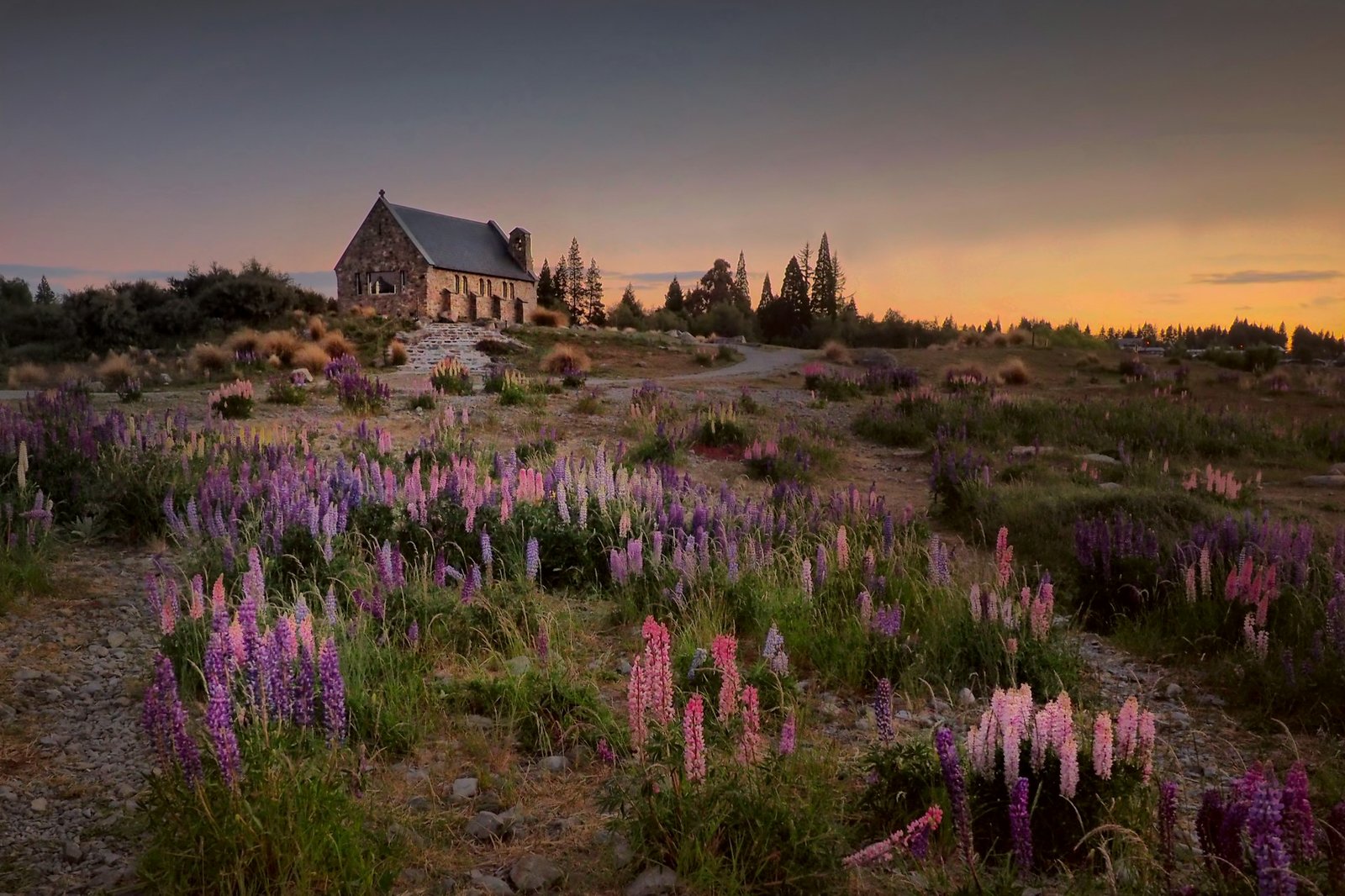
Lake Tekapo is one of the most photographed places on the South Island. The lake is an unreal milky turquoise, coloured by fine rock flour from the glaciers. On its shore stands the tiny stone Church of the Good Shepherd, built in 1935, with a window behind the altar that frames the lake and mountains.
Tekapo is part of the Aoraki Mackenzie International Dark Sky Reserve, one of the best places in the world to see the stars. On a clear night, you’ll see the Milky Way, the Magellanic Clouds and, with a lot of luck, the southern lights. You can stargaze for free from the lakeshore, or join a guided stargazing tour with telescopes, which is mid-range in price and well worth it.
Afterwards, relax in the Tekapo Springs hot pools with a view of the lake.
In November and December, the shores around Tekapo are covered with colourful lupins, which makes it one of the most beautiful sights in the country.
4. Get Your Adrenaline Fix in Queenstown
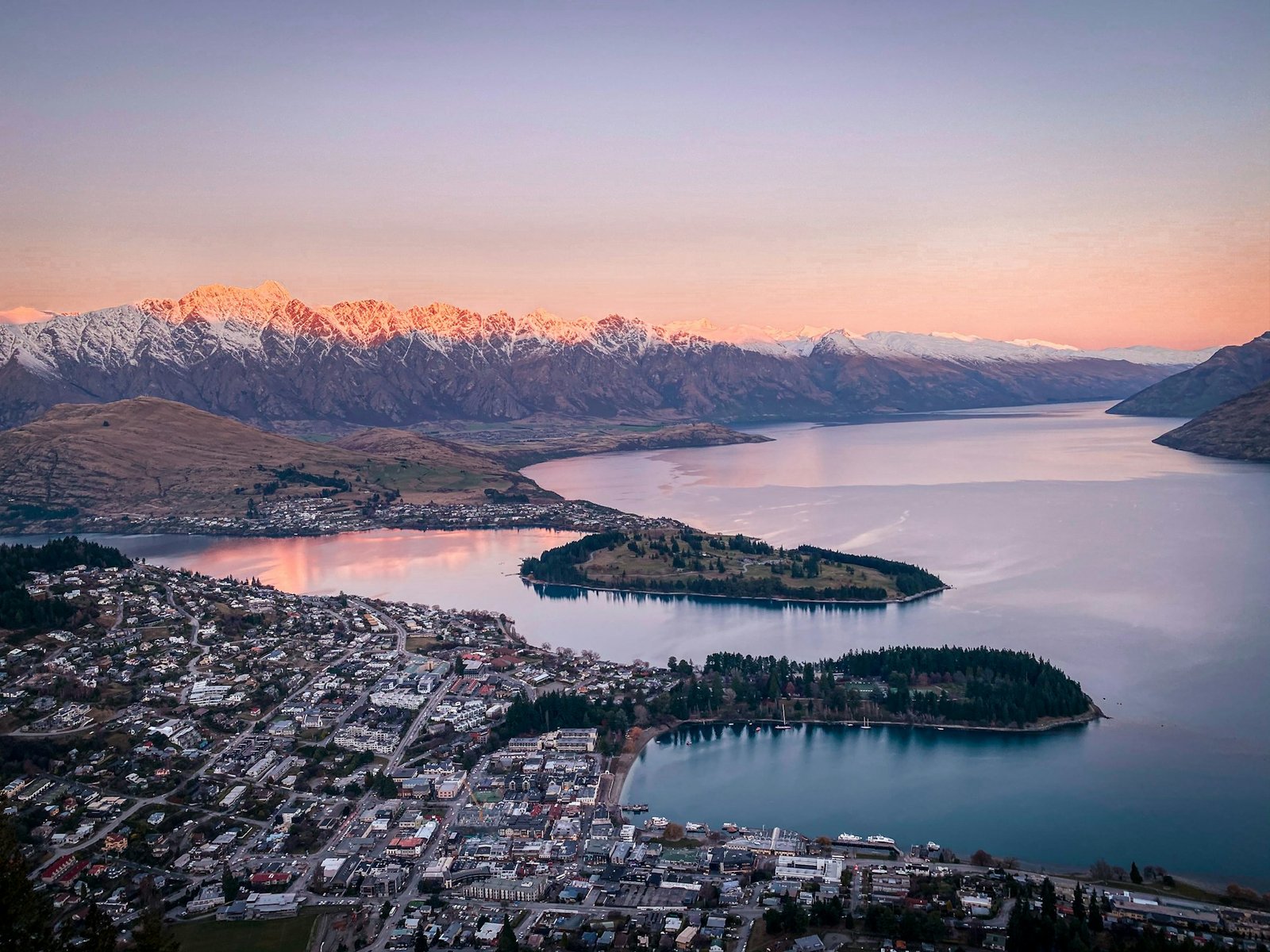
Queenstown is the adventure capital of the world, and it takes this title seriously. The town sits on the shores of Lake Wakatipu, surrounded by the jagged peaks of the Remarkables.
The world’s first commercial bungy jump opened here in 1988 at the Kawarau Bridge, 43 metres above the river. It’s still one of the most popular jumps in the world, and if you’re brave, there are even higher ones near town. Other classics include the Shotover Jet, a jet boat that races through a narrow canyon just centimetres from the rocks, canyon swings, paragliding and skydiving over the lakes and mountains.
These experiences are mid-range to splurge in price. Pick one or two that really excite you instead of trying to do them all.
For something calmer, take the Skyline Gondola up Bob’s Peak for the view over the lake, ride the luge at the top, or rent a bike and ride the trails to Arrowtown, a pretty old gold-mining village. And yes, the burgers at Fergburger really are that good. Expect a queue.
5. Walk on a Glacier
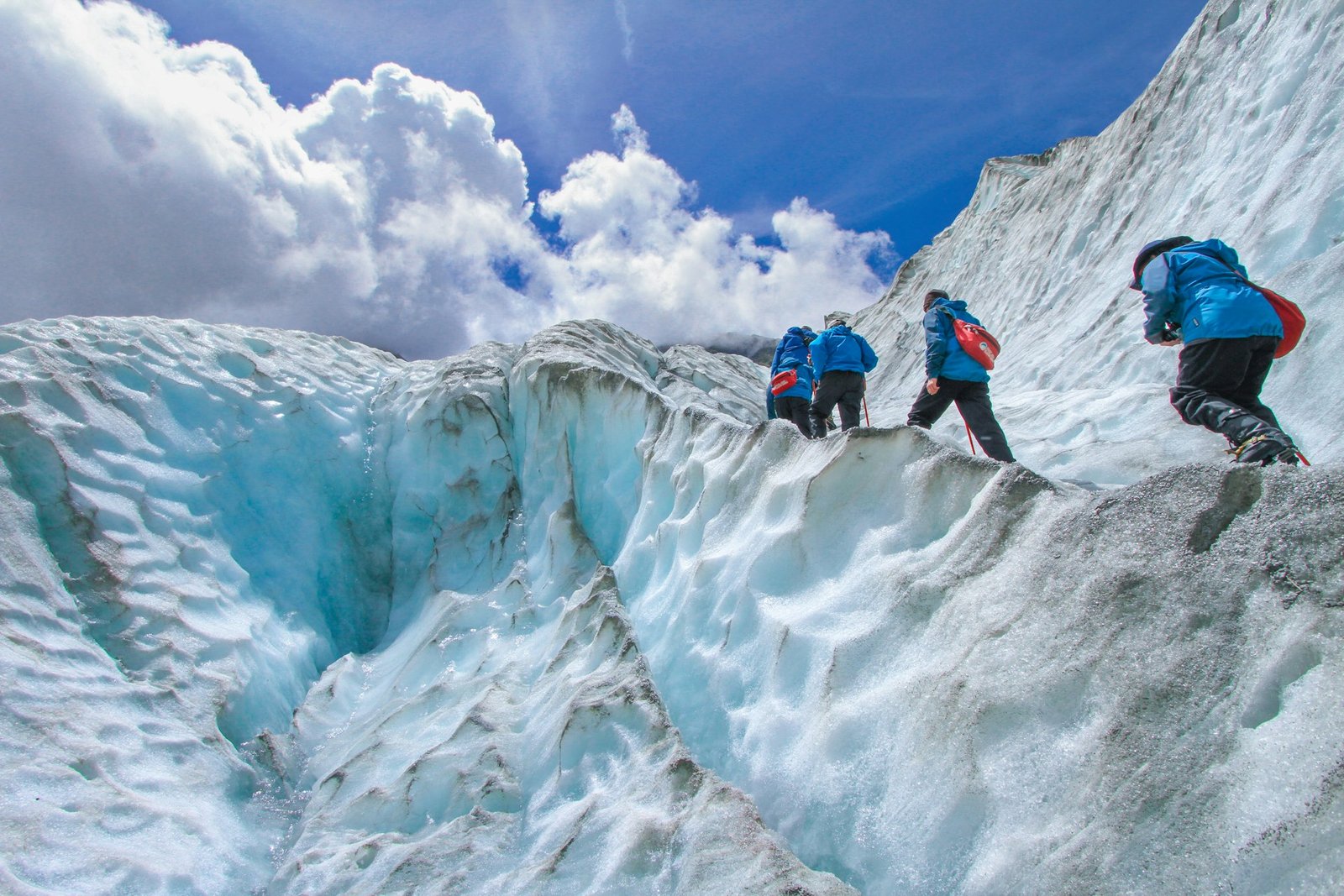
On the West Coast, two huge glaciers flow down from the Southern Alps almost to the rainforest: the Franz Josef Glacier and the Fox Glacier. Climate change has made them retreat dramatically, and today you can no longer walk onto them from the valley.
The only way to stand on the ice is a heli-hike. A helicopter flies you onto the glacier, where a guide leads you through ice caves, crevasses and blue ice formations. It’s an expensive splurge, but for many travellers it’s the experience of a lifetime. Heli-hikes are often cancelled because of the weather, so plan two nights in the area to have a backup day.
If that’s beyond your budget, the free valley walks to the glacier viewpoints still give you an impressive view. Nearby Lake Matheson is famous for its mirror reflections of Mount Cook and Mount Tasman on calm mornings.
6. Kayak in Abel Tasman National Park
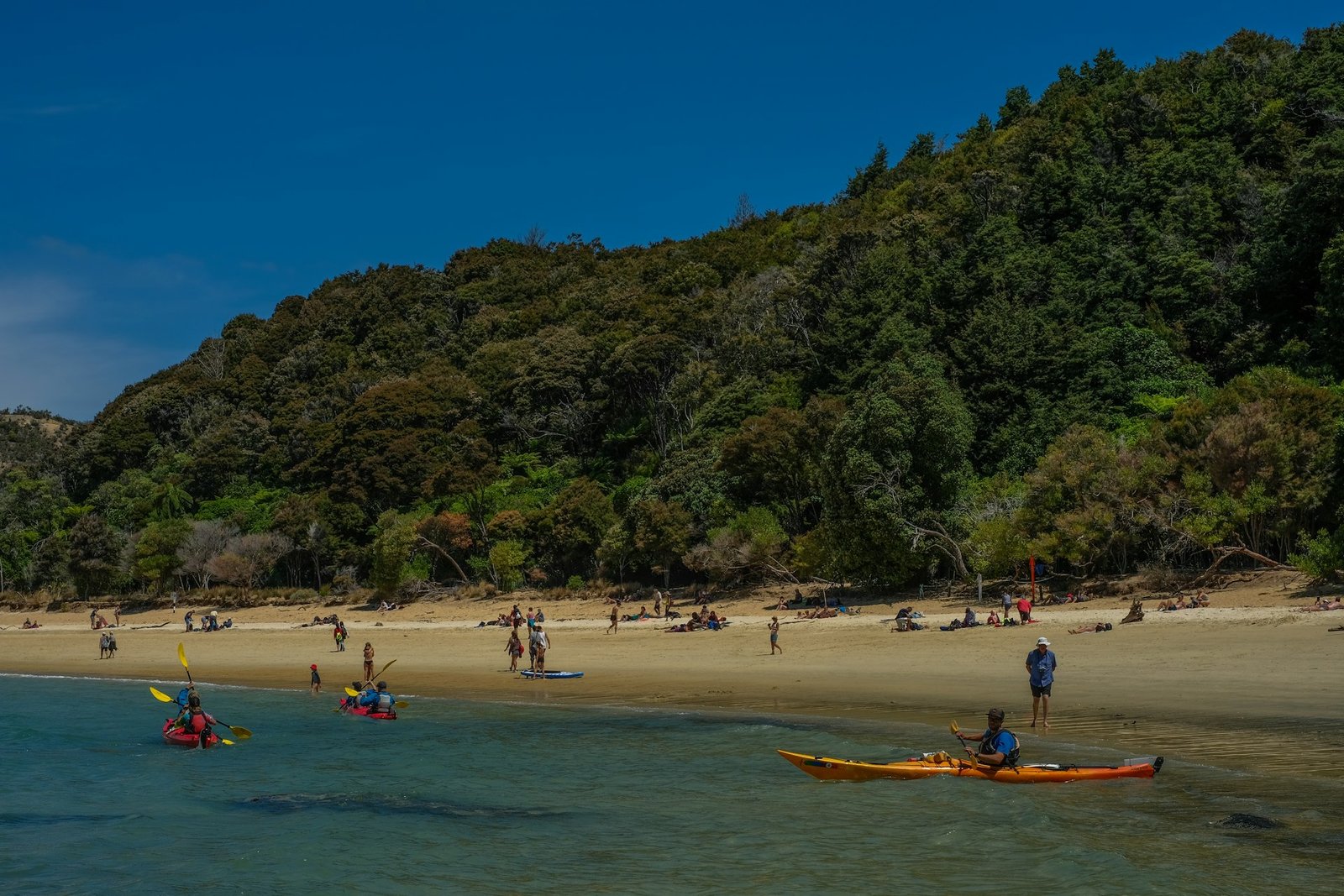
In the sunny north of the island, Abel Tasman National Park is a completely different world: golden sand beaches, turquoise bays and lush coastal forest. It’s the perfect place for a few relaxed days by the sea.
The best way to explore is by sea kayak. Guided tours or rentals take you along the coast, past seal colonies and into quiet bays where you can stop for a swim and a picnic. Many people combine kayaking with a water taxi and a walk along the Abel Tasman Coast Track, one of New Zealand’s Great Walks. You can do a short section in a day or walk the whole track in three to five days.
Kayak tours here are mid-range in price, and water taxis make it easy to plan a one-way trip.
7. Hike Roys Peak or Do a Great Walk
Wanaka, an hour from Queenstown, is calmer and more relaxed, with a beautiful lake and the famous Wanaka Tree growing out of the water. The most famous hike here is Roys Peak, a steep five to six hour climb to one of the most photographed viewpoints in New Zealand. Note that the track is closed every year from early October to around mid-November for the lambing season.
If you have more time and love hiking, book one of the Great Walks: multi-day trails with huts along the way. The Routeburn Track, the Kepler Track and the legendary Milford Track are all on the South Island. Huts for the summer season are booked months in advance, often within minutes of opening, so plan early.
8. Watch Wildlife
The South Island is full of wildlife that you won’t see anywhere else.
- Kaikōura: whale watching tours to see giant sperm whales, plus dolphins and seals
- Otago Peninsula near Dunedin: the only mainland breeding colony of royal albatrosses in the world and the rare yellow-eyed penguin
- Akaroa: swim with tiny Hector’s dolphins, the smallest dolphins in the world
- Kea: these clever alpine parrots are famous for stealing food and pulling rubber from car windows. Don’t feed them
9. Soak in Hot Pools
After a long hike, nothing beats a soak in hot water. Besides Tekapo Springs, try the Hanmer Springs thermal pools north of Christchurch or the Onsen Hot Pools near Queenstown, where private cedar tubs overlook the Shotover River canyon.
10. Drive the Great Coastal Roads
On the South Island, the drive itself is a big part of the experience. Don’t miss the Haast Pass between the West Coast and Wanaka, with waterfalls and the turquoise Blue Pools, the coastal road around Kaikōura, and the road from Queenstown to Glenorchy along Lake Wakatipu, which many say is one of the most beautiful drives in the world.
Where to Stay on a Budget
New Zealand has excellent budget accommodation:
- DOC campsites: simple and in amazing locations, from free to cheap
- Holiday parks: campgrounds with powered sites, cabins and motel units, shared kitchens and hot showers. Great value for families and couples
- Hostels: clean, well run and social, often with private rooms
- Motels: most have a small kitchen, which helps you save money on food
Book ahead for summer, especially in Queenstown, Wanaka, Tekapo and near Milford Sound.
Eating on a Budget
Eating out in New Zealand is expensive, so cooking for yourself is the biggest money-saver. Supermarkets like Pak’nSave and Countdown (now often called Woolworths) are cheapest. Almost every holiday park and hostel has a shared kitchen.
When you do eat out, look for:
- Fish and chips: a Kiwi classic, best eaten on the beach
- Meat pies: sold everywhere, from petrol stations to bakeries
- Green-lipped mussels and crayfish: especially in Kaikōura and on the coast
- Hokey pokey ice cream: vanilla with crunchy honeycomb
- Flat white: New Zealanders take their coffee very seriously
What It Really Costs
New Zealand is not a budget destination, but you can control your costs. Here’s a realistic daily budget per person for a mid-range trip, not counting flights.
- Accommodation or campervan: NZD 50 to 120 per person, sharing a room or a van
- Food: NZD 30 to 60 a day if you cook most meals and eat out sometimes
- Fuel and transport: NZD 20 to 40 a day on a road trip
- Activities: many of the best hikes are free. Budget for a few highlights, such as a Milford Sound cruise, a kayak tour and one big adventure
That works out to around NZD 150 to 300 per person per day. Travelling in shoulder season and cooking your own meals can bring it down a lot.
A Sample 14-Day Road Trip
Day 1: Arrive in Christchurch and pick up your car or campervan.
Days 2 to 3: Drive to Lake Tekapo. Visit the Church of the Good Shepherd, soak in the hot pools and go stargazing.
Days 4 to 5: Aoraki/Mount Cook. Hike the Hooker Valley Track and visit the Tasman Glacier viewpoint.
Days 6 to 8: Queenstown. One adventure activity, the gondola, a day trip to Arrowtown and the drive to Glenorchy.
Days 9 to 10: Te Anau and Milford Sound. Cruise or kayak the fjord.
Day 11: Wanaka. Relax by the lake or hike Roys Peak (if open).
Days 12 to 13: Drive over the Haast Pass to Franz Josef. Heli-hike or walk to the glacier viewpoint and Lake Matheson.
Day 14: Drive back to Christchurch via Arthur’s Pass, or continue north to Abel Tasman if you have more time.
Practical Tips
- Weather changes fast. Always carry a warm layer and a rain jacket, even in summer.
- Sandflies are tiny biting insects found on the West Coast and in Fiordland. Bring strong repellent.
- Sun: the UV index in New Zealand is very high. Use sunscreen even on cloudy days.
- Leave no trace. Take all your rubbish with you, and only camp where it’s allowed.
- Mobile coverage is patchy in remote areas. Download offline maps before you go.
Booking Tips
- Airport transfer: if you pick up your car or campervan in town rather than at the airport, book an airport transfer with Kiwitaxi in Christchurch or Queenstown for an easy start
- eSIM: install a Yesim eSIM before you fly, so you have data for maps, weather and road updates in New Zealand from the moment you land
- Tours: popular options include a Milford Sound cruise, a Shotover Jet ride, a Tekapo stargazing tour and a kayak trip in Abel Tasman. You can compare and book most of them on Klook
Final Thoughts
The South Island is one of those rare places where the reality is even better than the photos. It’s a place where you can kayak a fjord one day, walk on a glacier the next and fall asleep every night under a sky full of stars.
Rent a car or a campervan, cook your own meals, hike the free trails and save your money for one or two experiences that will stay with you forever. It’s a trip you’ll talk about for the rest of your life.
Prices checked in October 2026. Costs and opening times change, so always confirm before you book.
Leave a Reply