
Water so clear that boats seem to float in the air, white pebble coves hidden below limestone cliffs, pink granite rocks, colourful fishing towns and long lunches of fresh pasta and local wine: Sardinia is Italy’s island paradise.
The second-largest island in the Mediterranean has some of the most beautiful beaches in Europe, many of them looking more like the Caribbean than Italy. But Sardinia is much more than beaches. Its wild interior is full of mountains, gorges and mysterious stone towers built more than 3,000 years ago, and its culture, language and food are proudly its own.
Sardinia has a reputation for luxury, thanks to the yachts and celebrity villas of the Costa Smeralda. But away from that small corner, it’s surprisingly affordable. With a rental car, a few nights in family-run B&Bs and picnics on the beach, you can enjoy the island on a real budget. This guide shows you how.
Sardinia at a Glance
- Where: in the Mediterranean Sea, west of mainland Italy and south of Corsica
- Main airports: Cagliari (CAG) in the south, Olbia (OLB) in the northeast and Alghero (AHO) in the northwest
- Currency: euro (EUR)
- Entry: Sardinia is part of Italy and the Schengen Area. Many non-EU visitors can stay up to 90 days without a visa, but will need to register online with ETIAS once it starts. Check the current rules for your passport
- Languages: Italian and Sardinian. English is spoken in tourist areas
- Best time: June and September
- Budget: around $80 to $120 a day for budget travellers, $150 to $250 for a comfortable mid-range trip
When to Go
June and September are the best months to visit. The sea is warm, the weather is sunny and stable, and the beaches are much quieter than in high summer. Prices for hotels and ferries are also lower.
July and August are hot and very busy, especially in August, when many Italians are on holiday. Prices are at their highest, and the most famous beaches fill up early in the morning.
May and October are great for hiking and sightseeing. The sea is cooler, but on sunny days swimming is still possible. From November to April, many beach hotels, restaurants and boat trips close.
Our tip: visit in the first half of September for warm water, sunny days and fewer crowds.
Where to Stay
Sardinia is big, and driving from one end to the other takes about four hours. For a one-week trip, choose one or two bases.
The East Coast
The Gulf of Orosei on the east coast has the most spectacular coves, many of them reachable only by boat or on foot. Cala Gonone and Santa Maria Navarrese are the best bases for boat trips, with plenty of mid-range hotels and B&Bs.
The North and South
In the northeast, Olbia and the small town of Porto San Paolo are good value bases for the Costa Smeralda and the island of Tavolara. In the south, Cagliari, the capital, combines city life with nearby beaches and easy flights.
Getting Around
The best way to explore Sardinia is with a rental car. Public transport is limited, and many beaches and sights are only reachable by car. The roads are generally good, but mountain roads can be narrow and winding.
You can also bring your own car on an overnight ferry from Genoa, Livorno or Civitavecchia on the Italian mainland. In summer, parking at popular beaches is often paid, and some beaches limit the number of daily visitors, so check in advance.
Things to Do in Sardinia
Here are the experiences we think are worth your time and money.
1. Take a Boat Trip Along the Gulf of Orosei
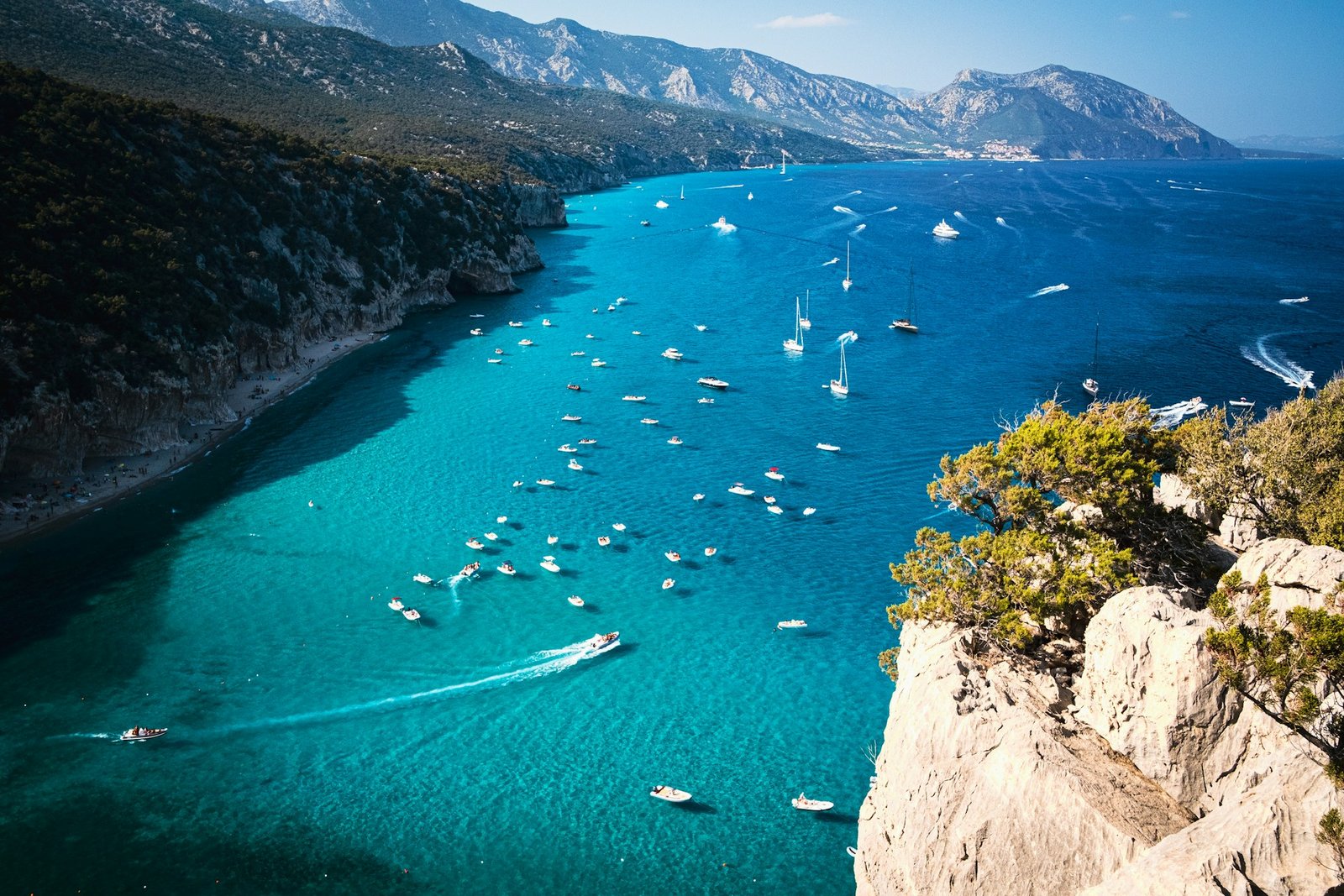
The Gulf of Orosei is one of the most beautiful stretches of coast in the Mediterranean. For about 40 km, white limestone cliffs drop into the sea, with tiny coves, sea caves and natural arches along the way. Most of the coast has no roads, so the best way to see it is from the water.
Boat trips leave from Cala Gonone and Santa Maria Navarrese every morning in summer and stop at famous beaches like Cala Mariolu, with its white pebbles and impossibly blue water, and Cala Biriola. For more freedom, rent a small motorboat, no licence needed for the smaller ones, and explore the coves at your own pace.
2. Hike to Cala Goloritzé
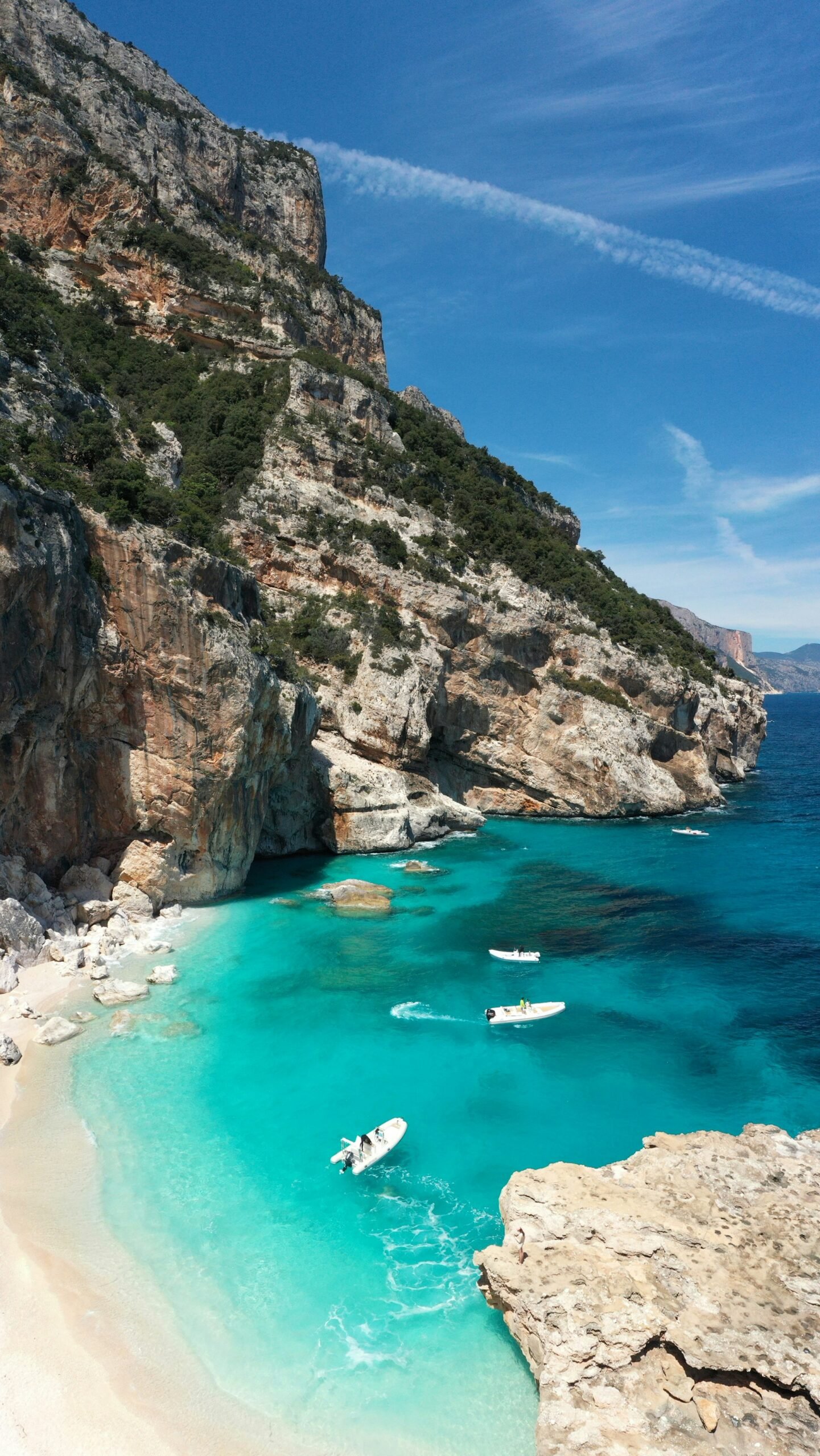
Cala Goloritzé is one of the most famous beaches in Italy, a small cove of white pebbles below a 140-metre limestone spire, with water in every shade of turquoise. It has been named one of the most beautiful beaches in the world.
Boats aren’t allowed to land here, so the only way in is a hike of about one and a half hours each way from the Golgo plateau near Baunei. In summer, there’s a small entry fee and the number of daily visitors is limited, so book online in advance. Bring plenty of water and good shoes, as the walk back up is hot and steep.
3. Explore the Caves of Cala Luna
Cala Luna is a crescent of soft sand between two cliffs, backed by a small river and pink oleander bushes. At the northern end of the beach, huge caves open into the rock, offering shade on hot afternoons and a magical light at sunset.
Reach it on a boat trip from Cala Gonone or on a hiking trail along the coast, about two hours each way. If you arrive by boat, stay until the last departure in the afternoon, when the day crowds have gone.

4. Swim at Cala dei Gabbiani
Further south on the same coast, Cala dei Gabbiani is one of the most beautiful and quiet beaches in Sardinia. Green cliffs covered in Mediterranean scrub rise steeply behind a pebble beach, and the water is so clear you can see every stone on the bottom.
You can reach it by boat from Santa Maria Navarrese or on a challenging hike. Experienced hikers can also tackle sections of the Selvaggio Blu, often called the toughest trek in Italy, which follows this wild coastline over several days.
5. Visit La Pelosa Beach
In the far northwest, near the village of Stintino, La Pelosa is often compared to the Caribbean. Shallow turquoise water stretches far out over white sand, with an old watchtower on a small island just offshore.
To protect the beach, visitors in summer need to book online and pay a small fee, and the number of people is limited. Towels must be placed on a mat, not directly on the sand. Come early in the morning or late in the afternoon for the best light and fewer people.
6. Sail the Maddalena Archipelago
Off the northeast coast, the Maddalena Archipelago is a national park of granite islands with pink rocks, white beaches and crystal-clear water. Highlights include the Cala Coticcio beach and the famous pink sand of Spiaggia Rosa on Budelli, which you can admire from the water but not walk on.
Full-day boat trips leave from Palau and La Maddalena and are one of the best-value activities in the north. Nearby, drive along the Costa Smeralda to see the glamorous resort of Porto Cervo and the beautiful beaches around it.
7. Boat Trip to Tavolara
Rising almost straight out of the sea near Olbia, Isola di Tavolara is a huge limestone island with sheer cliffs and beaches of white sand. The waters around it are a protected marine area, perfect for snorkelling.
Small boats leave from Porto San Paolo for the short ride to the island’s beach, Spalmatore di Terra. Spend the day swimming, then have lunch at one of the two simple restaurants on the island. The view of the island from the mainland at sunset is unforgettable.

8. Discover Cagliari
Cagliari, Sardinia’s capital, is a lively city built on hills above a large bay. Climb up to the old Castello district, with its narrow lanes, cathedral and views over the city, and walk along the grand terrace of the Bastione di Saint Remy.
Spend an afternoon at Poetto, the city’s long sandy beach, or watch the pink flamingos in the lagoons of the Molentargius park on the edge of the city. In the evening, join the locals for an aperitivo in the Marina district.

9. Wander Through Carloforte
On the small island of San Pietro, off the southwest coast, the fishing town of Carloforte is one of the prettiest towns in Sardinia. Its colourful houses, palm-lined waterfront and lanes full of flowers have a charm all their own.
Carloforte was founded by settlers from Liguria in the 18th century, and people here still speak an old Genoese dialect. Take the short ferry from Portovesme or Calasetta, rent a scooter to explore the island’s cliffs and coves, and try the local tuna, the speciality of the island.
10. See the Ancient Nuraghi
Sardinia is dotted with more than 7,000 nuraghi, mysterious stone towers built by the island’s Bronze Age people more than 3,000 years ago. Nobody knows exactly what they were used for, but they’re unique to Sardinia.
The most impressive is Su Nuraxi in Barumini, a UNESCO World Heritage Site with a central tower and the remains of a whole village around it. Guided tours take you inside the tower through narrow stone passages. It’s about an hour’s drive from Cagliari and makes a great day trip combined with the green hills of the interior.
Where to Stay on a Budget
Sardinia has good-value options away from the luxury resorts:
- B&Bs: family-run B&Bs offer clean rooms, a warm welcome and often a homemade breakfast
- Agriturismi: farm stays in the countryside, with rooms and delicious dinners made from their own produce
- Apartments: a great choice for families and longer stays, with a kitchen to save money on food
- Campsites: found near many beaches, some with bungalows and mobile homes
Book early for July and August. Staying a little inland, rather than right on the beach, is often much cheaper.
Eating on a Budget
Sardinian food is hearty, simple and delicious:
- Culurgiones: handmade pasta parcels filled with potato, pecorino and mint
- Malloreddus: small ridged pasta, often served with sausage and tomato sauce
- Pane carasau: thin, crispy flatbread, perfect for picnics
- Seadas: fried pastry filled with cheese and covered in honey, the classic dessert
- Local wine and mirto: try a glass of Cannonau red wine and a shot of mirto, a myrtle-berry liqueur
Shop at local supermarkets and bakeries for picnic food, and eat your main meal at lunchtime, when many restaurants offer a fixed-price menu.
What It Really Costs
Here’s a realistic daily budget per person for a comfortable mid-range trip in June or September, not counting flights.
- Accommodation: $50 to $110 per person, sharing a double room in a B&B or agriturismo
- Food: $35 to $60 a day, mixing picnics, pizza and restaurant dinners
- Transport: $30 to $50 a day per person, including a rental car shared by two, fuel and parking
- Activities: budget for the highlights separately: boat trips, beach fees and bookings, a rented motorboat and entry to Su Nuraxi
That works out to around $150 to $250 per person per day. Avoiding August, staying in agriturismi and eating lunch menus can bring that down noticeably.
A Sample 8-Day Itinerary
Day 1: Arrive in Olbia and watch the sunset over Tavolara from Porto San Paolo.
Day 2: Boat trip to Tavolara for swimming and snorkelling.
Day 3: Full-day boat trip to the Maddalena Archipelago.
Day 4: Drive south to Cala Gonone.
Day 5: Boat trip along the Gulf of Orosei, with Cala Mariolu and Cala Luna.
Day 6: Hike to Cala Goloritzé.
Day 7: Drive to Cagliari, with a stop at Su Nuraxi in Barumini.
Day 8: Explore Cagliari and Poetto beach, then fly home.
Add two days for Carloforte and the southwest coast if you have more time.
Practical Tips
- Book beach access for La Pelosa and Cala Goloritzé in advance in summer
- Don’t take sand, pebbles or shells from the beaches: it’s illegal in Sardinia and can bring heavy fines
- Arrive early at popular beaches for parking and space
- Bring water shoes for pebble beaches and rocky coves
- Check the wind: when the strong mistral blows from the northwest, choose beaches on the east coast
- Respect the coast: take your rubbish with you and don’t anchor on the sea grass
Booking Tips
- Airport transfer: if you don’t rent a car at the airport, book an airport transfer with Kiwitaxi from Olbia, Cagliari or Alghero airport to your hotel or the ferry port, with a fixed price and a driver waiting for you
- eSIM: if you’re coming from outside the EU, install a Yesim eSIM before you fly, so you have data for maps, boat tickets and beach bookings in Sardinia from the moment you land
- Tours: popular options include a Gulf of Orosei boat trip, a Maddalena Archipelago cruise from Palau, a Tavolara boat tour and a Cagliari walking tour. You can compare and book most of them on Klook
Final Thoughts
Sardinia is one of the most beautiful islands in the Mediterranean. Sail along the cliffs of the Gulf of Orosei, hike down to Cala Goloritzé, swim in the turquoise water of Tavolara, explore the old streets of Cagliari and discover the mysterious nuraghi.
Travel in June or September, rent a car and take your time. Sardinia rewards those who slow down and leave room to explore.
Prices checked in October 2026. Costs and opening times change, so always confirm before you book.
Leave a Reply