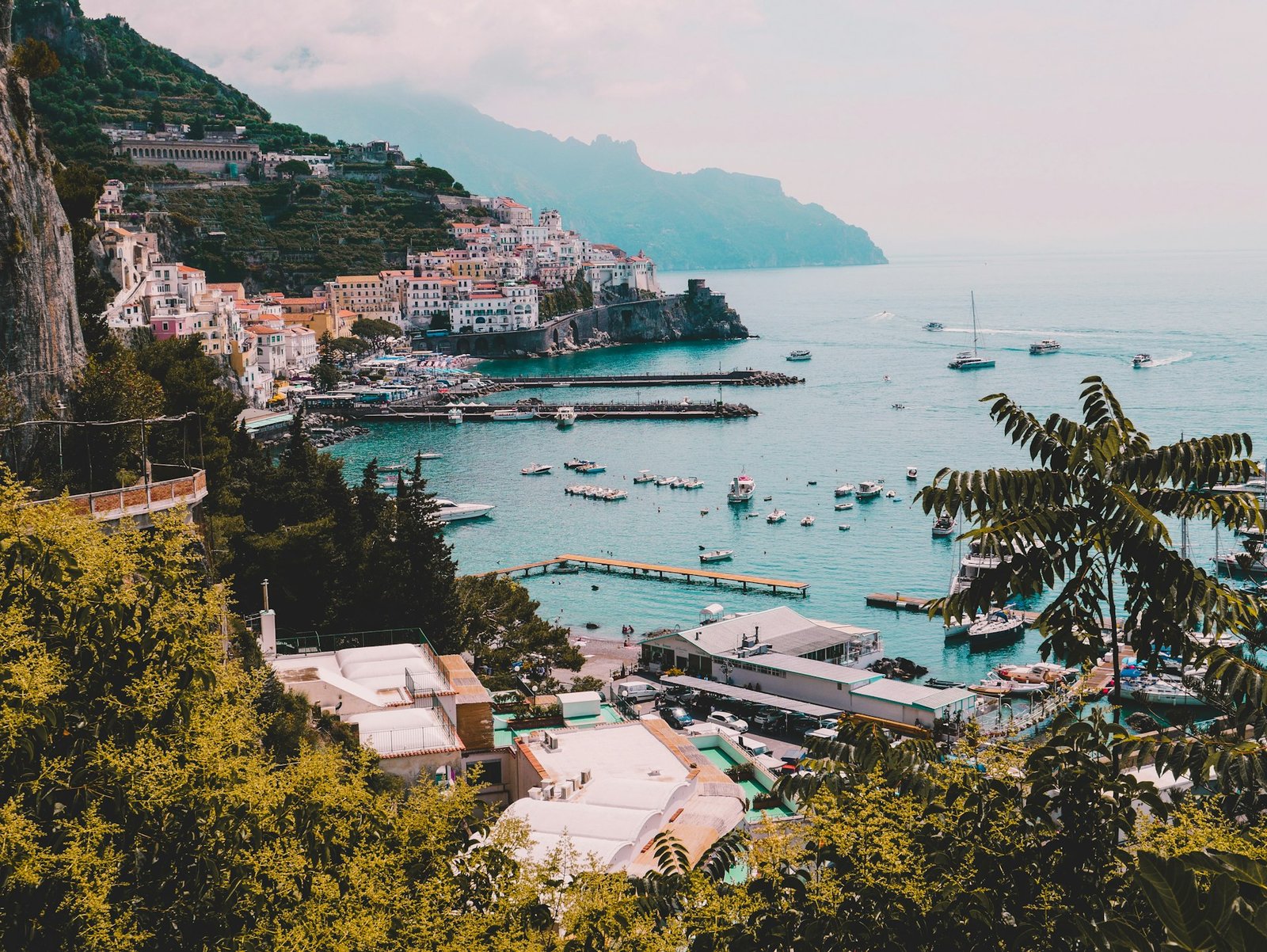
There’s a moment on the Amalfi Coast that almost everybody remembers. You come around one of the hundreds of bends on the coastal road, the bus leans a little too far toward the edge, someone gasps, and then there it is: Positano, a cascade of pink, yellow and white houses tumbling down the cliff into a sea so blue it looks painted.
The Amalfi Coast has that effect on people. It’s dramatic, romantic, a bit chaotic and completely unforgettable. It’s also famous for being expensive, and in July and August it can feel like half of Europe has had the same idea as you.
The good news: with the right timing, the right base and a few local tricks, you can enjoy the Amalfi Coast without spending a fortune and without fighting crowds at every corner. This guide shows you the villages worth your time, how to get around without a car, the best things to do on land and on the water, and what a trip really costs.
The Amalfi Coast at a Glance
- Where: a 50 km stretch of coastline on the Sorrento Peninsula in Campania, southern Italy, south of Naples
- Main villages: Positano, Amalfi, Ravello, Praiano, Atrani, Minori and Maiori
- Nearest airport: Naples (NAP), about 1.5 to 2 hours by road
- Getting around: SITA buses, ferries and your own two feet. A car is more trouble than it’s worth
- Best time: May, June, September and early October
- Budget: around €100 to €150 a day for budget travellers, €200 to €350 for a comfortable mid-range trip
- UNESCO: the whole coast has been a World Heritage Site since 1997
When to Go
Timing is everything here, more than almost anywhere else in Europe.
July and August are the busiest and most expensive months. Hotels are fully booked months ahead, buses are packed, and the narrow streets of Positano can feel like a theme park at midday. If you can avoid these two months, do.
May, June and September are perfect. The sea is warm enough for swimming, the boats and beach clubs are open, the lemon trees are full of fruit, and prices are noticeably lower than in high summer. Early October is also lovely, with fewer people and still pleasant temperatures.
November to March is quiet season. Many hotels, restaurants and ferries close, the weather is mixed, and some villages feel almost empty. It’s cheap and very peaceful, but not the Amalfi Coast you’ve seen in pictures.
Getting There
The easiest way to reach the coast is to fly into Naples. From there, you have several options:
- Bus or shuttle: direct buses run from Naples airport to Sorrento and on to the Amalfi Coast in season. It’s the cheapest option.
- Train and bus: take the Circumvesuviana train from Naples to Sorrento, then the SITA bus along the coast. Cheap, but the Circumvesuviana is crowded and not the most comfortable train in Italy. Watch your bags.
- Ferry: from Naples, fast ferries go to Positano and Amalfi in season. The trip is beautiful and avoids the coastal road completely. Expect around €30 for Naples to Positano.
- Private transfer: the most comfortable option. A car with driver from Naples to Positano or Amalfi usually costs €150 to €220. Split between four people, it’s not a bad deal.
You can also come from the other side via Salerno, which has good train connections and frequent ferries to Amalfi and Positano.
Where to Stay
Choosing your base is the biggest decision you’ll make. Each village has its own character, and the price difference between them is huge.
Positano
The most famous and the most photographed. Positano is stunning, glamorous and lively, with boutiques, beach clubs and restaurants with views you’ll never forget. It’s also the most expensive village on the coast, with mid-range hotels often starting at €300 a night and going much higher in summer. And it’s built almost vertically, so be ready for lots of steps.
Stay here if it’s a special trip and you want the postcard view from your balcony.

Amalfi
The town that gave the coast its name was once the capital of a powerful sea republic. Today it’s the practical heart of the coast: the main bus and ferry hub, with a beautiful cathedral, a lively piazza and plenty of shops and restaurants. Hotels are cheaper than in Positano, and from here you can reach almost everything easily.
Stay here if you want convenience and plan to explore a lot.
Ravello
Perched high above the sea, Ravello is quieter, greener and more elegant. It’s famous for its villas, gardens and a summer music festival. No beach, but views that many people say are the best on the whole coast. Evenings here are peaceful once the day-trippers leave.
Stay here if you want romance and calm.
Minori, Maiori and Praiano: The Smart Budget Choice
This is the real insider tip. Minori and Maiori, east of Amalfi, are real Italian seaside towns with long beaches, good restaurants and much lower prices. You can often find a good room for €100 to €180 a night. Praiano, between Positano and Amalfi, is calm, spread out and has some of the best sunset views on the coast.
All three are well connected by bus and boat, so you’re never more than a short ride from the famous spots.
Getting Around Without a Car
Driving the Amalfi Coast road (the SS163) looks romantic in films. In reality, it’s narrow, winding and packed with buses, scooters and tourists. Parking is rare and very expensive, often €5 to €10 an hour in summer. On some busy days in spring, there are also alternate license plate rules for non-residents, and rental cars aren’t automatically exempt. Our advice: leave the car at home.
SITA Buses
The blue SITA buses are the backbone of public transport on the coast. They connect Sorrento, Positano, Praiano, Amalfi, Ravello, Maiori and Salerno. Single tickets cost around €1.50 to €3.40 depending on the distance, and there’s a 24-hour pass for about €10.
Two important tips: buy your ticket before you board, at tobacco shops, bars or newsstands with the SITA sign, because they’re not sold on the bus. And in summer, buses are often full. If you want a seat, take an early bus or be prepared to wait.
Ferries
Ferries are the most relaxing way to travel, and the view of the villages from the sea is worth the ticket alone. Positano to Amalfi costs about €10, Salerno to Amalfi around €12. Most ferries run from around April to October. Book ahead in summer, or buy your ticket at the pier about 20 minutes before departure.
Things to Do on the Amalfi Coast
This is where the Amalfi Coast really shines. You can spend your days hiking high above the sea, swimming in hidden coves, sailing to Capri or simply sitting in a piazza with a glass of limoncello. Here are the experiences we think are worth your time and money.
1. Hike the Path of the Gods
The Sentiero degli Dei (Path of the Gods) is one of the most beautiful hikes in Europe, and it’s free. The trail runs high above the sea from Bomerano (in the town of Agerola) to Nocelle, a tiny village above Positano. It’s about 7 to 8 km long and takes around three hours at a relaxed pace.
The path isn’t technically difficult, but it’s rocky in places, with some uneven steps and no shade on long stretches. Wear proper shoes, start early in the morning and take plenty of water. Along the way, you’ll walk past terraced vineyards, lemon groves and wild herbs, with Positano and the island of Capri spread out below you.
From Nocelle, you can either take a local bus down to Positano or walk down around 1,700 steps. Your legs will remember the steps for days.
Good to know:
- Getting to the start: take the SITA bus from Amalfi to Bomerano (about 50 minutes)
- Best time: spring and autumn. Summer afternoons are very hot
- Guided hikes: if you’d rather go with a guide and transport, small group tours are mid-range in price and take care of the logistics

2. Take a Boat Trip Along the Coast
If you only book one activity, make it a boat trip. From the water, you see the coast as it was meant to be seen: the villages stacked on the cliffs, hidden coves, sea caves and watchtowers that you can’t reach by road.
Shared boat tours leave from Positano and Amalfi and usually last half a day or a full day. They stop for swimming in turquoise bays, pass the Fiordo di Furore, a narrow fjord with a tiny beach and a bridge high above it, and often visit the Emerald Grotto (Grotta dello Smeraldo) near Conca dei Marini, where light filtering through the water turns everything a bright green.
A shared tour is a good-value way to spend a day on the water. Many include drinks, snacks and snorkelling gear.
Private boat tours are a splurge, but if you’re travelling as a group of four to eight people and split the cost, they can be surprisingly reasonable. You decide where to stop, how long to swim and where to have lunch.

3. Rent Your Own Boat
Here’s a tip many visitors don’t know: in Italy, you can rent small boats with engines up to 40 horsepower without a boating licence. Several rental companies in Positano, Praiano and Amalfi offer these little “gozzo” style boats by the hour, half day or full day. You get a short briefing, a map of the best swimming spots and a cool box, and off you go.
It’s one of the most fun things you can do on the coast. Just make sure the sea is calm, stay close to the coast and listen carefully to the briefing about rocks and restricted areas.
4. Sail to Capri
The island of Capri lies just off the tip of the Sorrento Peninsula, and a day trip there is a highlight of almost every Amalfi Coast holiday.
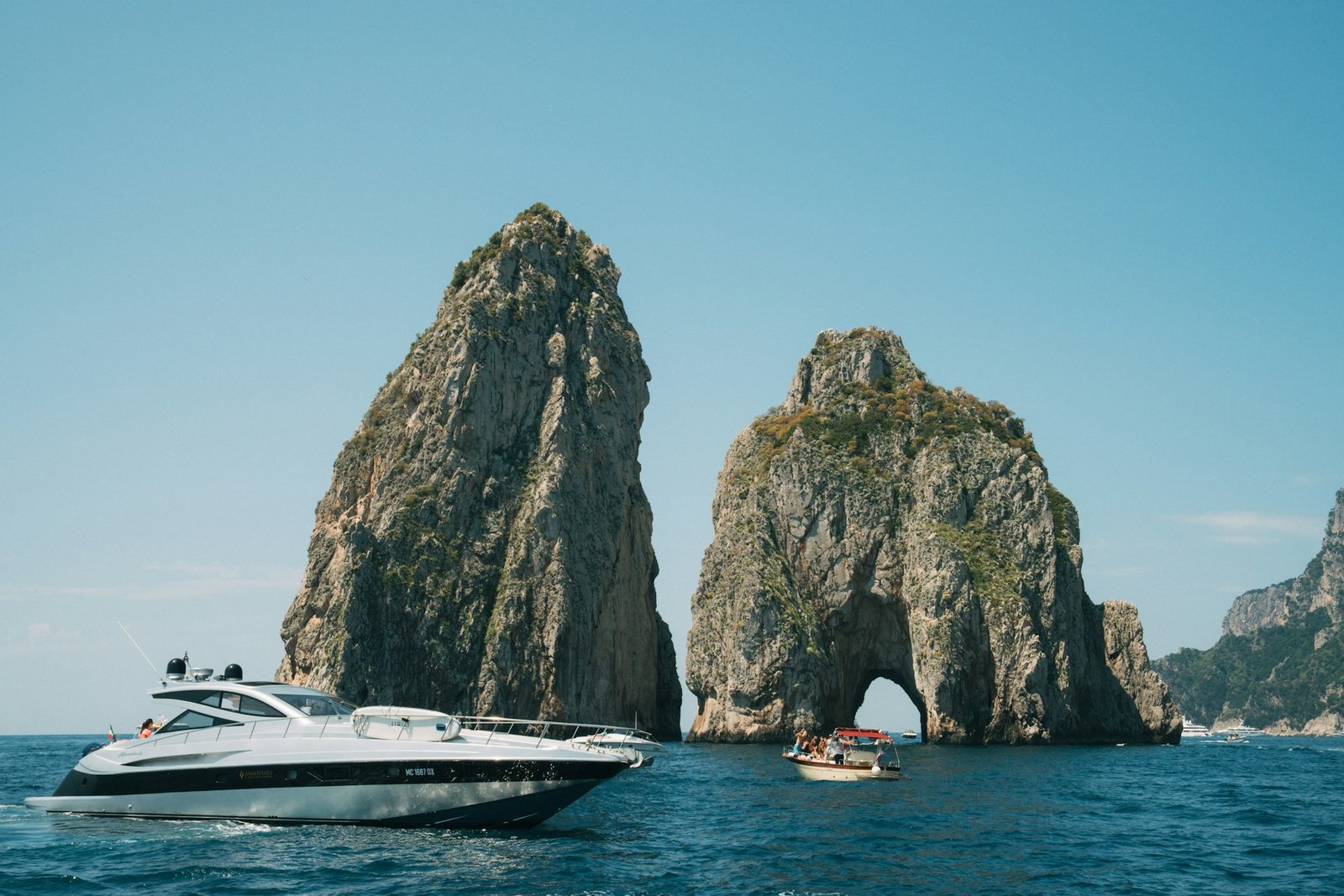
The most beautiful way to visit is by boat. Organised boat tours from Positano or Amalfi usually sail around the island, stop at the famous Faraglioni rocks (and pass through the arch in the middle one), visit the White Grotto and the Green Grotto, and give you a few hours of free time in Capri town or Anacapri. Shared tours are mid-range in price, private ones a real splurge.
If you’d rather do it yourself, take the ferry and explore on foot. Ride the funicular up to the famous Piazzetta, walk to the Gardens of Augustus for the view of the Faraglioni, and take the chairlift up Monte Solaro in Anacapri, the highest point of the island.
And the Blue Grotto? It’s beautiful, but be prepared: in summer you can wait more than an hour in a boat outside the cave for a visit of about two minutes inside, and it’s closed when the sea is rough. You pay for the small rowing boat and the entrance on top of your tour. Go only if it’s a big dream of yours, and try to be there early in the morning.
5. Kayak or Paddleboard
Kayaking is one of the best ways to discover the hidden side of the coast. You can paddle into sea caves, reach tiny beaches you can’t get to on foot and swim off quiet rocks away from the crowds.
Guided kayak tours leave from Positano, Praiano and Amalfi, and also from Capri, where you can paddle right up to the Faraglioni and into small grottos along the cliffs. Most tours last two to four hours and include snorkelling stops. No experience is needed. Prices are in the mid-range, and many travellers say it was the most memorable thing they did.
Stand-up paddleboards can also be rented by the hour at several beaches, which is a cheap way to get out on the water on your own.

6. Snorkel and Dive
The waters around the Amalfi Coast are clear, and the coastline is full of rocks, caves and underwater cliffs. Pack a snorkel mask and you can explore right from the beach in many places, especially in the quieter coves around Praiano and Conca dei Marini.
For scuba diving, there are several dive centres along the coast, especially in Praiano and Positano. Dives explore underwater caves, walls covered with colourful sponges and the protected Punta Campanella Marine Reserve at the tip of the peninsula, where you’ll see octopus, moray eels, groupers and schools of fish. Beginners can do a “try dive” with an instructor, while certified divers can join guided dives. Expect mid-range to higher prices, as with diving almost anywhere in Europe.
7. Visit Ravello’s Gardens
Even if you don’t stay in Ravello, give it at least half a day. Take the bus up from Amalfi (about 25 minutes) and visit its two famous gardens.
Villa Rufolo has terraced gardens full of flowers, an old tower and a view so beautiful that it inspired the composer Richard Wagner. In summer, concerts are held on a stage that seems to float above the sea.
Villa Cimbrone is a little further, a short walk through quiet lanes. Its gardens end at the Terrace of Infinity, a balcony lined with marble busts, hanging high over the coast. It’s one of the most breathtaking viewpoints in all of Italy.
Entry to each villa costs around €10. Go in the morning or late afternoon when it’s quieter.

8. Lemons, Limoncello and a Cooking Class
The Amalfi Coast is famous for its huge, fragrant sfusato amalfitano lemons, grown on terraces held up by old stone walls. You’ll find them everywhere: in limoncello, lemon cakes, lemon granita and lemon-scented soaps.
Several family farms around Amalfi, Minori and Maiori offer lemon tours, where you walk through the groves, learn how the terraces are built and taste homemade limoncello. Some combine this with a cooking class, where you make fresh pasta, a sauce with local tomatoes and a lemon dessert, then eat everything together on a terrace with a view. It’s a fun, hands-on experience and a great break from sightseeing.
Don’t miss the Lemon Path (Sentiero dei Limoni), an easy walk between Minori and Maiori through the lemon groves. It’s free and takes about an hour.
9. Beaches and Swimming
The beaches on the Amalfi Coast are mostly small and pebbly, not sandy. Many are divided between beach clubs, where you rent a sunbed and umbrella (in Positano, often around €35 per person per day or more in summer), and free public sections, where you can lay down your towel for nothing.
Some favourites:
- Spiaggia Grande, Positano: the main beach, lively and right below the village. Busy, but iconic
- Fornillo, Positano: a short walk from the main beach, smaller and more relaxed
- Atrani: a tiny beach in one of the prettiest villages on the coast, just a ten-minute walk from Amalfi
- Marina di Praia, Praiano: a small cove with fishing boats and a couple of good restaurants
- Maiori: the longest beach on the coast, with more space and lower prices
10. Explore the Villages on Foot
Some of the best moments on the Amalfi Coast cost nothing. Get lost in the alleys of Atrani, climb the steps of Amalfi’s cathedral and visit its peaceful Cloister of Paradise, watch the fishermen mend their nets in Praiano, or walk the Valle delle Ferriere above Amalfi, a shady trail through a green valley with waterfalls and old paper mills.
Eating on the Amalfi Coast
Food is one of the great joys of this part of Italy. Look out for:
- Scialatielli ai frutti di mare: thick, fresh pasta with mixed seafood, a local speciality
- Fresh fish of the day, often simply grilled with lemon and olive oil
- Pizza: you’re close to Naples, so the pizza is excellent and cheap
- Delizia al limone: a soft sponge cake filled and covered with lemon cream
- Colatura di alici: an anchovy sauce from the fishing village of Cetara, delicious with spaghetti
To save money, eat your main meal at lunch, when many restaurants offer cheaper menus, and look for places a few streets back from the seafront or in the less famous villages. A pizza and a drink at a simple pizzeria costs around €12 to €20. A dinner with a view in Positano can easily be three or four times that.
For a cheap and delicious lunch, buy a sandwich from a local deli (look for “salumeria”), add some fruit and enjoy it on the beach or a bench with a view.
What It Really Costs
Here’s a realistic daily budget per person for a mid-range trip in shoulder season, not counting flights.
- Accommodation: €60 to €150 per person, sharing a double room. Lower in Minori, Maiori or Praiano, higher in Positano
- Food: €40 to €70 a day if you mix pizzerias, delis and one nicer dinner
- Transport: €10 to €25 a day for buses and the occasional ferry
- Activities: budget for one or two paid highlights, such as a boat tour, a Capri trip or a cooking class, and fill the other days with free hikes and beaches
That adds up to roughly €150 to €300 per person per day. Travelling in summer and staying in Positano can easily double that. Staying in a smaller village and travelling in May or September can bring it down a lot.
A Sample 5-Day Itinerary
Day 1: Arrive and settle in. Walk around your village, have dinner with a sea view and an early night.
Day 2: Hike the Path of the Gods in the morning, walk down to Positano and spend the afternoon on Fornillo beach.
Day 3: Boat day. Take a shared boat tour along the coast with swimming stops, the Fiordo di Furore and the Emerald Grotto. Or rent your own small boat.
Day 4: Morning in Amalfi and Atrani, afternoon in Ravello with Villa Rufolo and Villa Cimbrone. Stay for the sunset.
Day 5: Day trip to Capri by boat, with the Faraglioni, a kayak tour or a ride up Monte Solaro.
If you have more time, add a lemon tour and cooking class, a lazy beach day in Maiori and a day trip to Pompeii.
Practical Tips
- Bring good shoes. The Amalfi Coast is all steps, slopes and stone paths. Sandals are fine for the beach, not for exploring.
- Book early for summer. The best-value places fill up months ahead.
- Carry some cash. Most places take cards, but small shops, buses and beach kiosks sometimes don’t.
- Tourist tax: most villages charge a small city tax per person per night, usually paid at your hotel.
- Avoid midday in Positano. Come in the morning or evening, when the day-trippers and cruise groups are gone.
- Water shoes are a good idea for the pebbly beaches.
Booking Tips
- Airport transfer: the easiest start is a private airport transfer with Kiwitaxi from Naples straight to Positano, Amalfi or your village, with no luggage on crowded buses
- eSIM: install a Yesim eSIM before you fly, so you have data for maps, bus and ferry times in Italy from the moment you land
- Tours: popular options include a boat tour along the coast, a Capri boat trip, a guided Path of the Gods hike and a lemon tour with cooking class. You can compare and book most of them on Klook
Final Thoughts
The Amalfi Coast is one of those places that really does look as good as the photos. But the best moments here aren’t always the famous ones. It’s the quiet morning on the Path of the Gods, the swim in a cove you reached by kayak, the lemon cake on a terrace in Minori or the sunset from a bench in Ravello.
Come in spring or autumn, stay somewhere a little less famous, leave the car behind and spend your money on one or two great experiences on the water. You’ll go home with the same memories as the people in the €800 hotel rooms, and a lot more money left for your next trip.
Prices checked in October 2026. Costs and opening times change, so always confirm before you book.
Leave a Reply