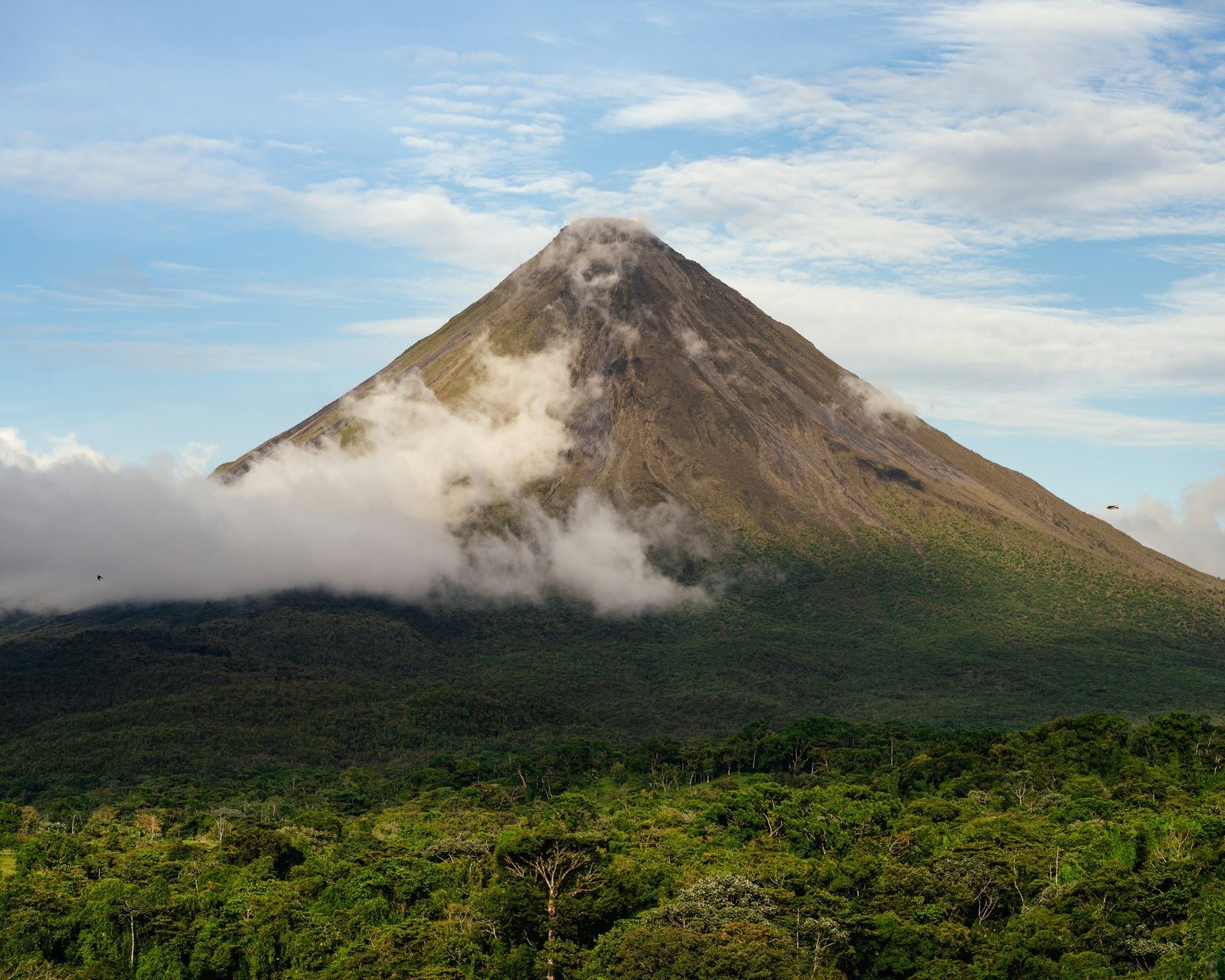
Costa Rica is small. You could drive from one coast to the other in a day. Yet this little country holds around five percent of all the plant and animal species on earth. Sloths hang from roadside trees, howler monkeys wake you up before your alarm does, and on a clear morning an almost perfectly shaped volcano rises above the rainforest.
If you love nature, few places pack so much into such a short distance. This guide shows you the three regions that belong on every first trip, how to put them together into a two-week route, and what it really costs to travel here in 2026.
Costa Rica at a Glance
- Best for: wildlife, rainforest, volcanoes, beaches and adventure
- Currency: Costa Rican colón, but US dollars are accepted almost everywhere
- Main airports: San José (SJO) and Liberia (LIR)
- Entry: most Western visitors can stay up to 180 days without a visa
- Park fees: around $15 to $18 for the most popular national parks
- Best time: December to April for dry weather, May to November for lower prices
Why Costa Rica Is So Special for Nature Lovers
Around a quarter of Costa Rica’s land is protected in national parks and reserves. The country abolished its army in 1948 and has been a pioneer of eco-tourism for decades. The result is a place where nature isn’t something you visit on a day trip. It’s all around you.
Within a few hours you can go from the hot, humid lowlands around the Arenal volcano to the cool, misty cloud forest of Monteverde, and then down to the Pacific coast, where monkeys steal food from beach bags. Every region has its own climate, its own animals and its own atmosphere.
The trade-off is that Costa Rica isn’t a budget destination by Central American standards. Prices for hotels, tours and food are closer to those in the US or Europe than to its neighbours. With a bit of planning, though, it’s absolutely possible to travel here without spending a fortune.
La Fortuna and the Arenal Volcano

La Fortuna is a small town at the foot of the Arenal volcano, and it’s the adventure capital of the country. The volcano itself is no longer actively erupting, but it’s still a dramatic sight, especially early in the morning before the clouds roll in.
What to do in and around La Fortuna:
- La Fortuna Waterfall: a 70-metre waterfall dropping into a green pool in the jungle. It’s about 500 steps down and, unfortunately, the same back up. Swimming is allowed in the calmer area below the falls.
- Arenal Volcano National Park: easy trails across old lava fields with great views of the volcano. The entrance fee is around $15.
- Hot springs: the volcano heats the rivers in the area. Resorts like Tabacón are expensive, but there are simpler hot spring parks and even free spots in warm rivers where locals swim.
- Hanging bridges: a network of suspension bridges through the rainforest canopy. A great way to see birds and monkeys from above.
- Lake Arenal: kayaking, stand-up paddling and one of the prettiest drives in the country along the lakeshore.
Plan at least three nights in La Fortuna. There’s a lot to do, and the weather around the volcano changes quickly, so it’s good to have some flexibility.
Monteverde: Into the Cloud Forest

From the heat of La Fortuna, the road climbs up into the mountains to Monteverde, around 1,400 metres above sea level. The air suddenly turns cool, and the forest is wrapped in drifting mist. It feels like another country.
A cloud forest gets most of its moisture from clouds instead of rain. The trees are covered in moss, orchids and ferns, and everything is incredibly green. This is also home to one of the most famous birds in Central America, the resplendent quetzal, with its long, shimmering green tail feathers.
Don’t miss:
- The cloud forest reserves: Monteverde and Santa Elena have well-marked trails through the forest. Go early in the morning, when the birds are most active.
- A night walk: with a guide and a torch, you’ll see tarantulas, stick insects, sleeping birds, frogs and sometimes sloths or kinkajous. Many visitors say it’s their favourite activity in Costa Rica.
- Hanging bridges and ziplines: Monteverde is where ziplining in Costa Rica was popularised, and some lines here run high above the canopy.
- Hummingbird gardens: dozens of hummingbirds buzz around the feeders, often just a few centimetres from your face.
Bring a warm jacket. Evenings in Monteverde can be surprisingly chilly, especially after a hot week in the lowlands.
Manuel Antonio: Rainforest Meets the Beach

Manuel Antonio is the place where the jungle runs right down to white sand beaches. The national park is small, but it’s one of the best places in Costa Rica to see wildlife up close: sloths, capuchin and squirrel monkeys, iguanas, toucans and colourful crabs, often all in one morning.
A few things to know before you go:
- Book online in advance. Tickets cost around $18 and are only sold through the official park system. There’s no ticket counter at the entrance, and there’s a daily visitor limit.
- The park is closed on Tuesdays. Plan your visit for another day.
- Hire a guide. Guides carry telescopes and spot animals you would walk straight past. Many visitors see three times as much with a guide.
- Don’t feed the monkeys. They’re clever and cheeky, so keep your food in closed bags.
Outside the park, the town of Quepos is cheaper for accommodation and food than the hotels along the hill road to the park.
The Wildlife You Can Expect to See

For many people, the animals are the main reason to come. Here are the stars of the show:
- Sloths: both two-toed and three-toed sloths live in Costa Rica. They’re hard to spot at first, but once your eyes adjust, you’ll see them everywhere.
- Monkeys: howler, capuchin, spider and squirrel monkeys. Howler monkeys are heard long before they’re seen.
- Toucans and scarlet macaws: easy to spot in the lowlands and along the Pacific coast.
- Red-eyed tree frogs: the unofficial mascot of Costa Rica, best seen on night walks.
- Sea turtles: from July to October, green turtles nest on the beaches of Tortuguero on the Caribbean coast.
- Humpback whales: on the southern Pacific coast around Uvita, whales pass by twice a year, roughly from July to October and from December to March.
A pair of binoculars is one of the best things you can bring. Local guides often have telescopes that let you take photos of animals high up in the trees with your phone.
Two Weeks in Costa Rica: A Sample Route
- Day 1: Arrive in San José. Stay near the airport or in the city.
- Days 2 to 4: Drive or take a shuttle to La Fortuna. Waterfall, volcano trails, hot springs and hanging bridges.
- Days 5 to 7: Travel to Monteverde. Cloud forest reserve, night walk, zipline.
- Days 8 to 11: Down to Manuel Antonio. National park, beaches, catamaran tour.
- Days 12 and 13: Continue south to Uvita for whale watching and quieter beaches, or relax longer on the beach.
- Day 14: Back to San José and fly home.
If you have more time, add Tortuguero on the Caribbean side for turtles and canal boat trips, or the Osa Peninsula and Corcovado National Park for the wildest rainforest in the country.
Getting Around Costa Rica
Costa Rica is easiest to explore with a rental car. Roads between the main regions are generally good, but some routes, especially the last stretch to Monteverde, are steep and bumpy, so a small SUV is a good idea.
Be careful when comparing rental prices. Mandatory third-party liability insurance is required by law and often isn’t included in the cheap price you see online. Always check the final price including all required insurance before you book.
If you don’t want to drive, shared shuttle buses connect all the main tourist areas and pick you up at your hotel. Public buses are the cheapest option and reach almost every town, but they’re slower.
Best Time to Visit Costa Rica
- December to April (dry season): sunny days, especially on the Pacific side. This is high season, so prices are higher and popular places are busier.
- May to November (green season): mornings are often sunny, with rain showers in the afternoon. Everything is lush and green, and prices drop noticeably.
- September and October: the wettest months on the Pacific side, but often the driest on the Caribbean coast.
Many experienced travellers love the green season. You get fewer crowds, lower prices and the rainforest at its most alive. Just plan your outdoor activities for the morning.
Entry Requirements
Citizens of the US, Canada, the UK and most EU countries can visit Costa Rica without a visa and stay up to 180 days. You need a valid passport and proof of a return or onward ticket. Rules can change and depend on your nationality, so check the official immigration website before you travel.
What a Trip to Costa Rica Costs
Costa Rica is more expensive than most of Central America. As a rough guide, per person per day:
- Budget: around $60 to $90, staying in hostels or simple cabinas, eating at local sodas and using buses.
- Mid-range: around $150 to $250, with comfortable hotels, a rental car and a few guided tours.
- Comfort and luxury: $300 and more, with eco-lodges, private guides and all the adventure tours you want.
Tours are usually the biggest extra cost. Ziplining, rafting and guided night walks each cost from around $40 to $100 per person.
What to Pack
- A light rain jacket, even in the dry season. Cloud forests are wet all year.
- Good walking shoes that can get muddy.
- A warm layer for Monteverde and early mornings on the volcano.
- Reef-safe sunscreen and insect repellent.
- Binoculars and a waterproof bag for your phone.
How to Save Money in Costa Rica
- Eat at sodas. These small local restaurants serve a casado, a plate of rice, beans, salad, plantains and meat or fish, for a fraction of tourist restaurant prices.
- Travel in the green season. Hotels and car rentals are often much cheaper from May to November.
- Book national parks yourself on the official website instead of through resellers.
- Choose free experiences. Hiking, beaches and warm rivers cost nothing.
- Share tours and shuttles with other travellers to split the cost.
Booking Tips
- Airport transfer: if you’re not picking up a rental car straight away, book an airport transfer with Kiwitaxi from San José or Liberia, so a driver is waiting for you with a fixed price
- eSIM: install a Yesim eSIM before you fly, so you can use maps and Waze on Costa Rica’s winding roads as soon as you land
- Tours: popular options like a Monteverde night walk, an Arenal hanging bridges tour, ziplining or a Manuel Antonio guided wildlife tour fill up in the dry season, so compare and book them early on Klook
Frequently Asked Questions
How many days do you need in Costa Rica?
Ten days is enough for La Fortuna, Monteverde and Manuel Antonio. With two weeks you can add a quieter beach or a second wildlife area like Tortuguero or the Osa Peninsula.
Is Costa Rica expensive?
Yes, compared to its neighbours. But with local restaurants, public transport and travel in the green season, you can keep costs reasonable.
Where can I see sloths in Costa Rica?
Sloths live in many parts of the country. Manuel Antonio National Park and the area around La Fortuna are among the easiest places to see them, especially with a guide.
Do I need a 4×4 in Costa Rica?
Not for the main routes. A small SUV with good ground clearance is recommended for Monteverde and some rural roads, especially in the rainy season.
Is Costa Rica safe for tourists?
Costa Rica is one of the most visited countries in Central America. As anywhere, never leave valuables in your car and keep an eye on your belongings in busy places.
Pura Vida
You’ll hear the phrase “pura vida” everywhere in Costa Rica. It means “pure life”, and after a few days you’ll understand why. Between the volcanoes, the cloud forests and the beaches full of monkeys, this small country gives nature lovers more than almost anywhere else on earth.
Leave a Reply