Dream destinations, real budgets

Author: miaroams_editor

  • Cook Islands Travel Guide: Rarotonga, Aitutaki and the Best Lagoons

    Cook Islands Travel Guide: Rarotonga, Aitutaki and the Best Lagoons

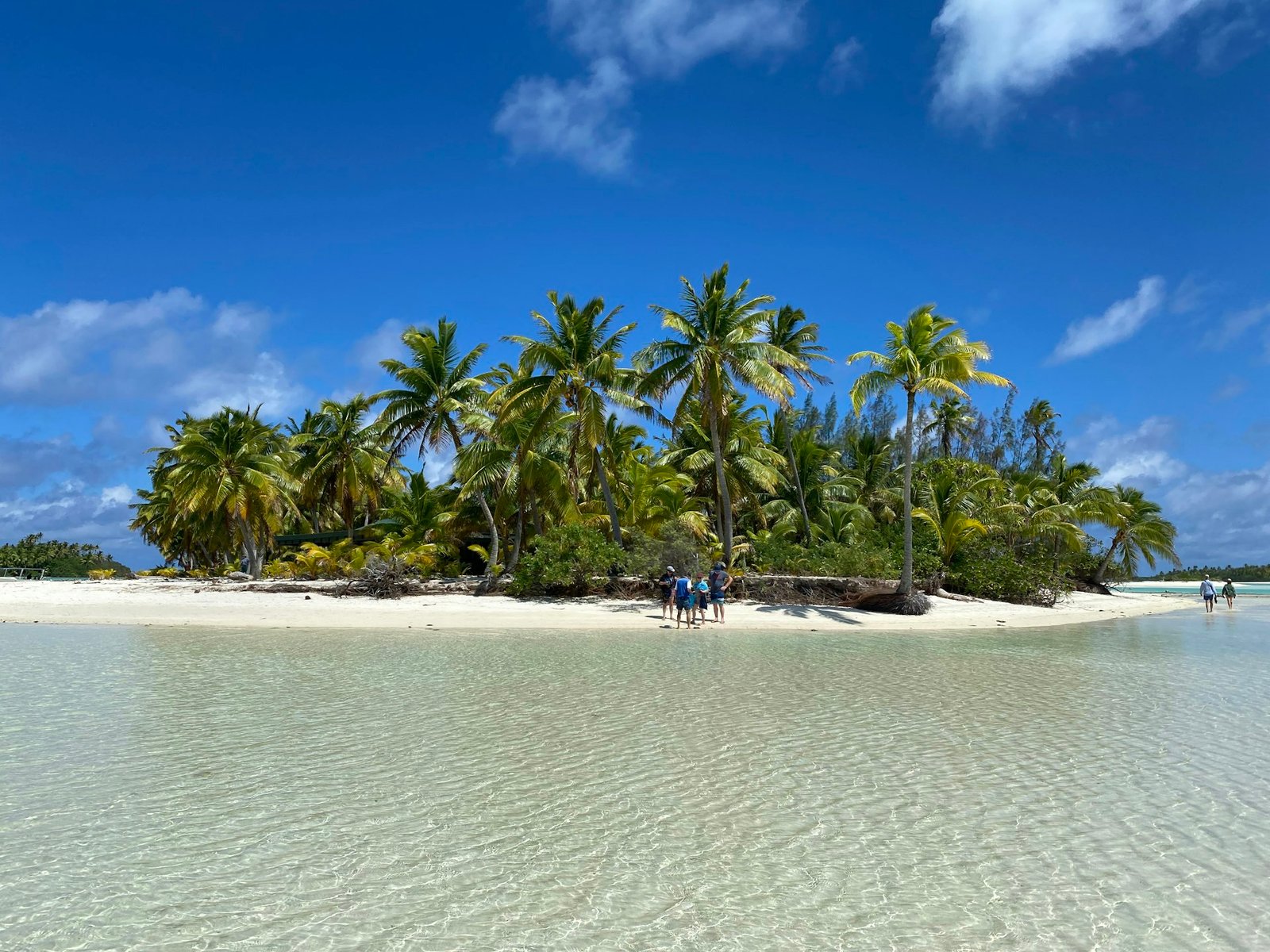
    A lagoon so blue it almost glows, tiny white sand islands fringed with palm trees, jungle-covered mountains rising behind quiet beaches and a warm “Kia orana” from everyone you meet: the Cook Islands are the South Pacific the way you always imagined it.

    This small nation of 15 islands lies in the middle of the Pacific Ocean, between Tahiti and Fiji. Most visitors stay on Rarotonga, the main island, which you can drive around in less than an hour, and take a short flight to Aitutaki, home to one of the most beautiful lagoons on earth.

    The Cook Islands offer the same postcard scenery as Bora Bora, but at a much friendlier price. There are no high-rise hotels, no traffic lights and no big crowds, just a relaxed island pace. With self-catering bungalows, the local bus and lots of free beaches, you can enjoy this paradise on a real budget. This guide shows you how.

    The Cook Islands at a Glance

    • Where: in the South Pacific, about 3,000 km northeast of New Zealand
    • Main airport: Rarotonga (RAR), with most flights coming from Auckland
    • Currency: New Zealand dollar (NZD), alongside local Cook Islands coins and notes
    • Entry: most visitors can stay visa-free for up to 31 days with an onward ticket. Check the current rules for your passport
    • Languages: English and Cook Islands Māori. Learn to say “Kia orana”, the local greeting
    • Best time: May to October, the dry season
    • Budget: around $90 to $130 a day for budget travellers, $180 to $300 for a comfortable mid-range trip

    When to Go

    May to October is the dry season and the best time to visit. The weather is sunny and pleasantly warm, usually between 20 and 28°C, with low humidity and calm, clear water. From July to October, humpback whales pass close to the islands.

    November to April is the wet season. It’s hotter and more humid, with heavy tropical showers, and it’s also cyclone season. Prices are lower, and many days are still sunny, but keep your plans flexible.

    The busiest times are the New Zealand and Australian school holidays, especially in July, and the Christmas holidays.

    Our tip: visit in September or October for dry weather, the last whales of the season and fewer crowds than in July.

    How Long Do You Need?

    Plan at least ten days. That gives you a week on Rarotonga to explore the island, the lagoon and the mountains, plus three nights on Aitutaki. With less time, you can visit Aitutaki on a day trip from Rarotonga, but staying overnight is much more relaxed.

    Getting Around

    Rarotonga is small. A single coastal road, about 32 km long, circles the whole island. The local bus runs around the island in both directions, one clockwise and one anticlockwise, which makes it easy to get anywhere.

    Many visitors rent a scooter or a small car. You need a valid driving licence, and helmets are required on scooters. Drive slowly, on the left side of the road, and watch out for dogs and chickens.

    To reach Aitutaki, take a flight of about 50 minutes with Air Rarotonga. On Aitutaki, rent a scooter or a bicycle to explore the island.

    Things to Do in the Cook Islands

    Here are the experiences we think are worth your time and money.

    1. Cruise the Aitutaki Lagoon

    The Aitutaki Lagoon is the highlight of any trip to the Cook Islands. A ring of tiny islands, called motu, surrounds a huge lagoon of turquoise water and white sandbars. It’s often called one of the most beautiful lagoons in the world, and it’s easy to see why.

    Join a full-day lagoon cruise, which usually includes snorkelling with giant clams and colourful fish, a barbecue lunch on a motu and a stop at One Foot Island. Here, you can get a fun stamp in your passport at the tiny post office. You can visit Aitutaki on a day trip from Rarotonga, including the flight and the cruise, but staying a few nights is much better.

    2. Relax on Muri Beach

    On the southeast coast of Rarotonga, Muri Beach is the island’s most popular spot. A calm, shallow lagoon stretches out to four small motu, with soft white sand and palm trees along the shore.

    The water is perfect for swimming, even for children. In the evening, the Muri Night Market offers cheap, delicious food from local stalls. Muri is also the best base on the island, with lots of guesthouses, cafés and restaurants within walking distance.
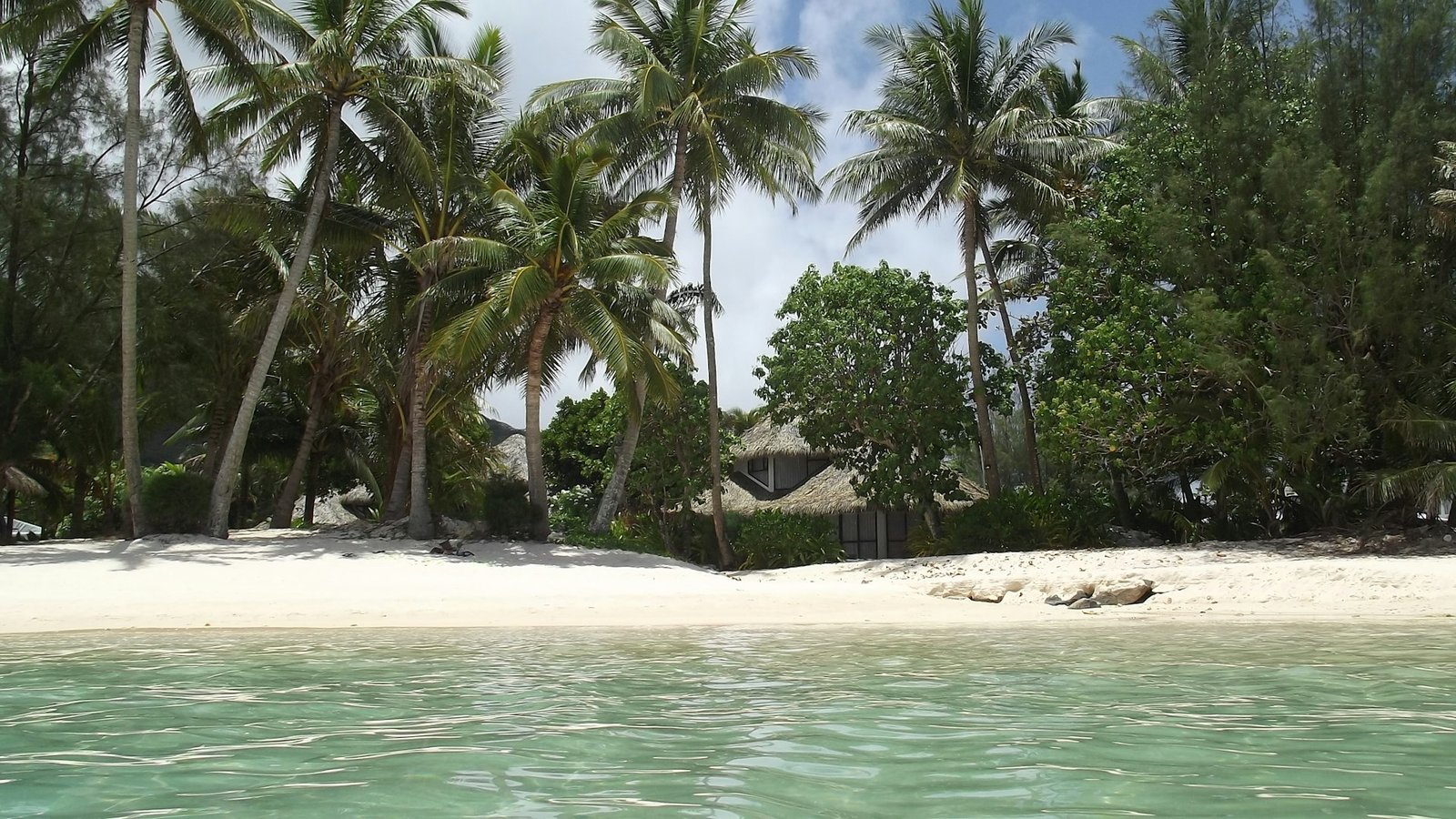
    Tropical beach with palm trees and a hut on Rarotonga, Cook Islands

    3. Snorkel in the Lagoon

    Rarotonga is surrounded by a reef, which creates a calm lagoon around the whole island. In many places, you can walk straight into the water from the beach and snorkel among coral and tropical fish.

    The best spot is the Aroa Marine Reserve on the southwest coast, where the water is clear and full of fish. Fruits of Rarotonga and Titikaveka are also excellent. Bring your own mask and snorkel, or rent one cheaply. Never go beyond the reef, where the currents are strong.

    Person walking through the shallow water of the lagoon on Rarotonga, Cook Islands

    4. Kayak or Paddleboard to the Motu

    From Muri Beach, rent a kayak or a stand-up paddleboard and paddle across the lagoon to the small motu offshore. Each island has its own little beach, and you can often have one almost to yourself.

    You can also join a guided glass-bottom boat tour, which includes snorkelling and a barbecue lunch on a motu. Early mornings and late afternoons are the best times, when the wind is calm and the light is beautiful.
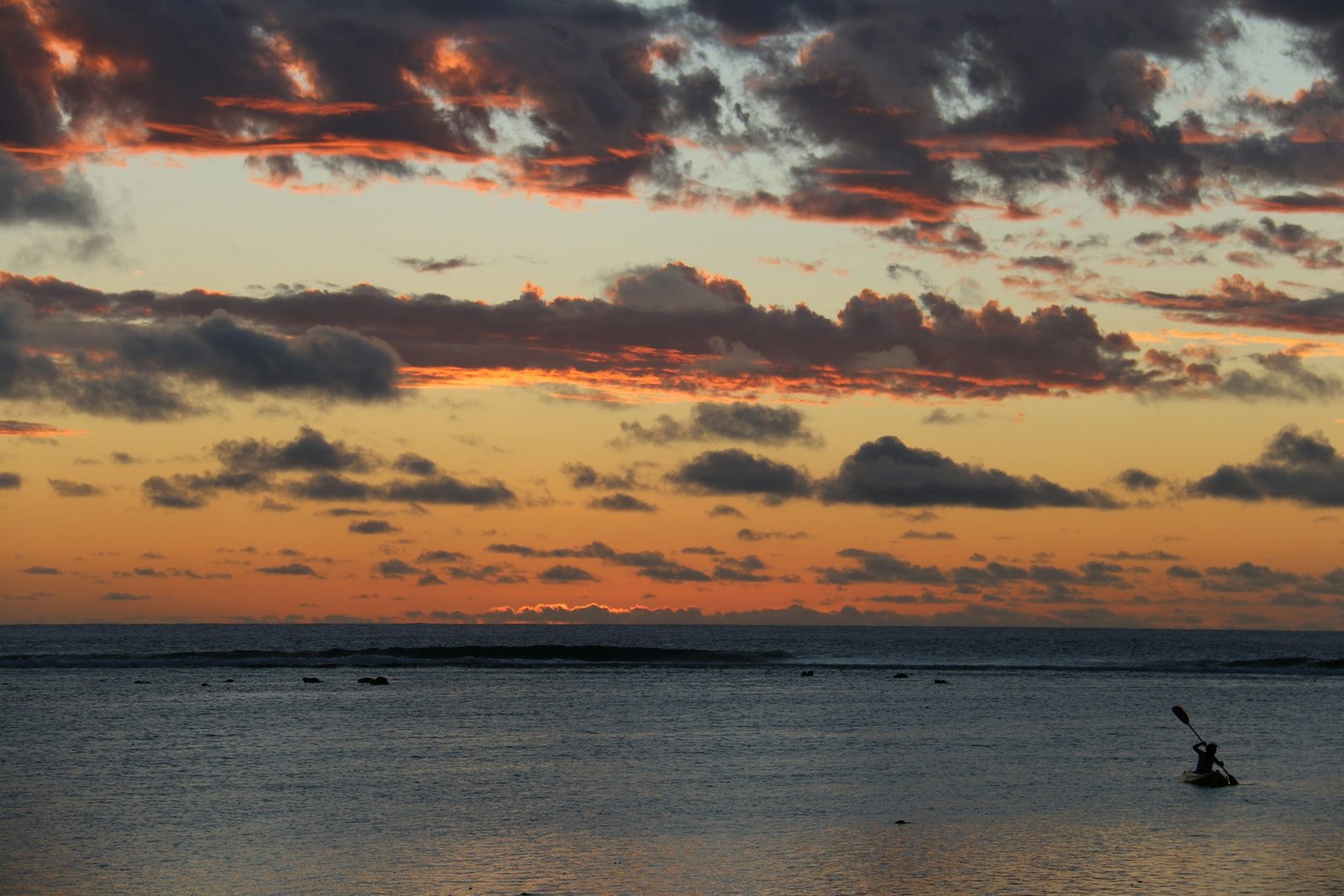
    Person in a kayak on the lagoon at golden hour, Rarotonga, Cook Islands

    5. Hike the Cross-Island Track

    Rarotonga’s interior is a world of steep green mountains, rainforest and waterfalls. The Cross-Island Track crosses the island from north to south and passes the base of Te Rua Manga, a tall rock spire also known as The Needle.

    The hike takes about three to four hours, with steep, muddy sections and tree roots to climb over. It finishes at Wigmore’s Waterfall, where you can cool off in the pool. Go with a local guide if you’re not an experienced hiker, and avoid the trail after heavy rain.

    Lush green mountains of Rarotonga seen from a lookout at sunset, Cook Islands

    6. Experience an Island Night

    Cook Islands dancing is famous across the Pacific, with powerful drumming and fast hip-swaying moves. The best way to see it is at an Island Night, a traditional show with a buffet dinner of local food.

    Several resorts and cultural centres host Island Nights during the week. At Te Vara Nui Village, you can combine the show with a guided cultural tour. It’s a splurge, but a highlight of many trips.

    7. Shop at the Punanga Nui Market

    Every Saturday morning, the Punanga Nui Market in Avarua, the small capital, is the place to be. Locals and visitors come together for fresh fruit, coconuts, handmade crafts, black pearls and island food.

    Arrive early for the best choice, try fresh tropical fruit and local snacks for breakfast, and watch the live music and dance performances. It’s one of the best free experiences on the island.

    8. Ride Around the Island

    One of the best ways to discover Rarotonga is to ride all the way around it by scooter or bicycle. The coastal road passes quiet beaches, small villages, old churches built of coral stone and taro fields at the foot of the mountains.

    Stop for a swim at Titikaveka, one of the most beautiful beaches on the island, and for a fresh juice at a roadside stand. Even with lots of stops, the full loop only takes a few hours.

    Sandy beach with palm trees and people swimming in the lagoon, Rarotonga, Cook Islands

    9. Go Whale Watching

    From July to October, humpback whales migrate past the Cook Islands to give birth and raise their calves in the warm water. Because the reef drops steeply into the deep ocean, you can sometimes see them from the beach.

    For a closer look, join a whale watching boat trip from Rarotonga. Responsible operators keep a respectful distance and limit their time with the whales. Even without a tour, keep an eye on the horizon for their spouts and jumps.

    10. Watch the Sunset on the West Coast

    The west coast of Rarotonga is the best place to watch the sun go down. Head to the beaches around Black Rock or one of the beach bars on the coast, order a cold drink and watch the sky turn gold and pink over the lagoon.

    On Aitutaki, the sunsets over the lagoon are just as unforgettable. It’s the perfect way to end every day in paradise.
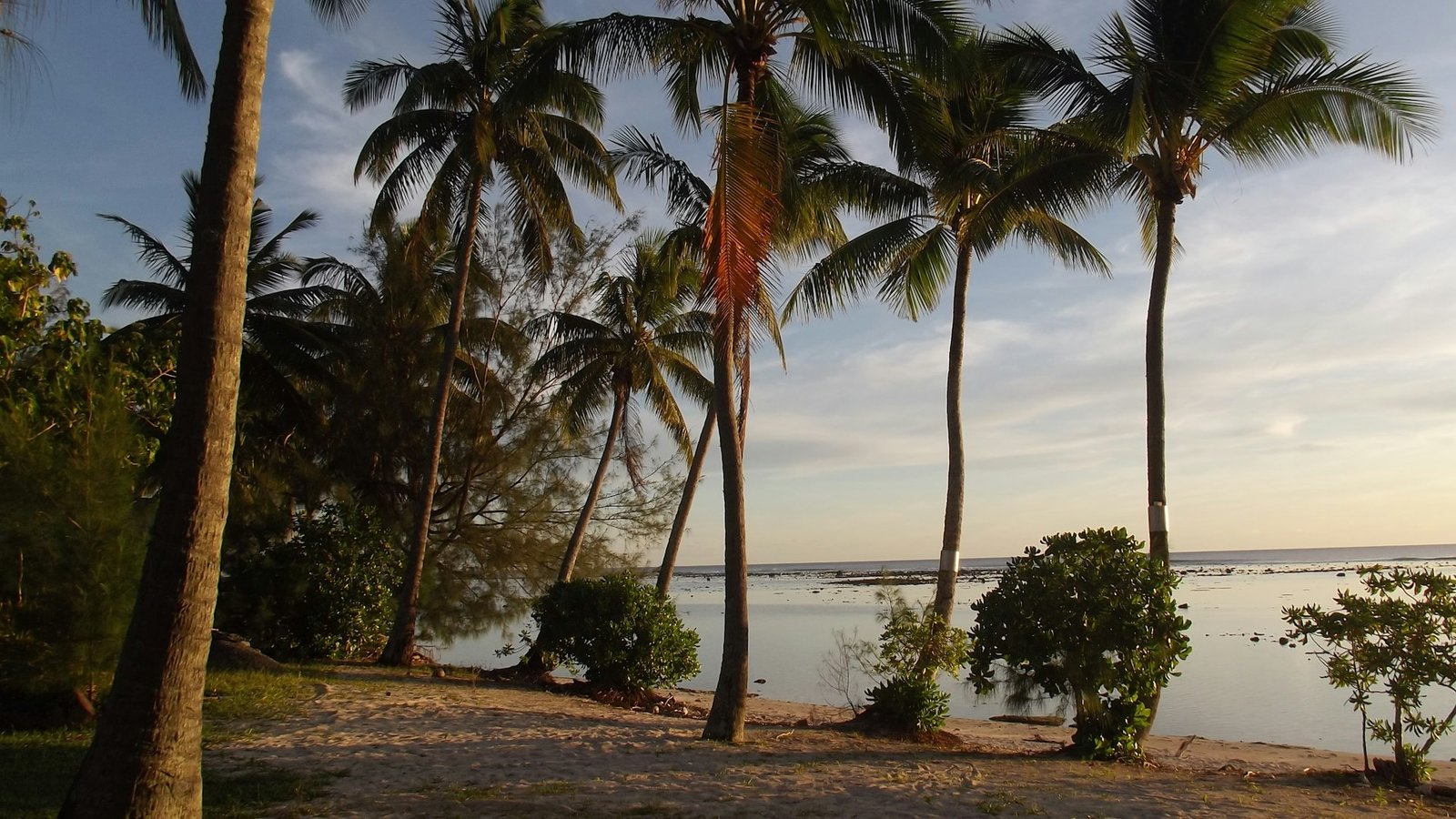
    Palm trees along a beach and lagoon on Rarotonga, Cook Islands

    Where to Stay on a Budget

    The Cook Islands have good value options:

    • Self-catering bungalows: the best choice for most travellers, with a kitchen to save money on food
    • Guesthouses and backpackers: simple, friendly places to stay on Rarotonga, some right on the beach
    • Holiday homes: great for families and groups
    • Resorts: for a splurge, beachfront resorts on Rarotonga and Aitutaki, some with private beach villas

    There are no big hotel chains on the islands. Book early for July and the school holidays.

    Eating on a Budget

    Food in the Cook Islands can be expensive, as much of it is imported, but there are good ways to save:

    • Ika mata: raw fish marinated in lime and coconut cream, the national dish
    • Night markets: cheap and delicious food stalls at the Muri Night Market
    • Fresh fruit: papaya, mango, banana and coconut from roadside stands and the market
    • Rukau: taro leaves cooked in coconut cream, often served at Island Nights
    • Self-catering: buy groceries at the supermarkets and cook in your bungalow

    Bring a reusable water bottle, as tap water quality varies, and many places offer free filtered water refills.

    What It Really Costs

    Here’s a realistic daily budget per person for a comfortable mid-range trip, not counting international flights.

    • Accommodation: $60 to $140 per person, sharing a double room in a self-catering bungalow or guesthouse
    • Food: $35 to $60 a day, mixing self-catering, night markets and restaurant dinners
    • Transport: $15 to $30 a day on average, including scooter rental and the bus
    • Activities: budget for the highlights separately: the flight to Aitutaki, a lagoon cruise, an Island Night, whale watching and kayak rental

    That works out to around $180 to $300 per person per day. Cooking your own meals, using the bus and enjoying the free beaches can bring that down noticeably.

    A Sample 10-Day Itinerary

    Day 1: Arrive in Rarotonga and relax on Muri Beach.

    Day 2: Kayak to the motu and snorkel in the lagoon.

    Day 3: Hike the Cross-Island Track to Wigmore’s Waterfall.

    Day 4: Ride around the island and snorkel at the Aroa Marine Reserve.

    Day 5: Punanga Nui Market in the morning, then sunset on the west coast.

    Day 6: Fly to Aitutaki and explore the island by scooter.

    Day 7: Full-day Aitutaki Lagoon cruise and One Foot Island.

    Day 8: A slow day on Aitutaki’s beaches.

    Day 9: Fly back to Rarotonga and enjoy an Island Night.

    Day 10: Whale watching in season, then fly home.

    Practical Tips

    • Book the flight to Aitutaki early, as the planes are small and fill up fast
    • Bring reef shoes to protect your feet from coral and sea urchins
    • Stay inside the reef: the currents beyond it are strong and dangerous
    • Respect Sundays: it’s a day of rest and church, and many shops close
    • Use reef-safe sunscreen and a rash guard for snorkelling
    • Respect local culture: dress modestly away from the beach and ask before taking photos of people

    Booking Tips

    • Airport transfer: book an airport transfer with Kiwitaxi from Rarotonga airport to your hotel or bungalow, with a fixed price and a driver waiting for you
    • eSIM: install a Yesim eSIM before you fly, so you have data for maps, bus times and tour bookings in the Cook Islands from the moment you land
    • Tours: popular options include an Aitutaki lagoon cruise, a glass-bottom boat and snorkel trip at Muri, a guided Cross-Island hike and an Island Night with dinner and a dance show. You can compare and book most of them on Klook

    Final Thoughts

    The Cook Islands are the South Pacific at its most relaxed and authentic. Cruise the lagoon of Aitutaki, swim at Muri Beach, snorkel among the fish, hike to The Needle, dance at an Island Night and watch the sun set over the lagoon.

    Travel in the dry season, rent a scooter and slip into island time. The Cook Islands will make you want to stay forever.

    Prices checked in October 2026. Costs and opening times change, so always confirm before you book.
  • Belize Travel Guide: The Great Blue Hole, Caye Caulker and the Jungle

    Belize Travel Guide: The Great Blue Hole, Caye Caulker and the Jungle

    A perfect circle of deep blue in the middle of a turquoise sea, sandy island lanes where nobody wears shoes, nurse sharks and stingrays gliding below your snorkel, ancient Maya temples rising out of the jungle and waterfalls tumbling into clear green pools: Belize packs an amazing amount into one small country.

    Squeezed between Mexico, Guatemala and the Caribbean Sea, Belize is home to the second-largest barrier reef in the world, more than 200 islands called cayes, and a wild interior of rainforest, caves and Maya ruins. It’s also the only country in Central America where English is the official language, which makes travelling here easy.

    Belize isn’t the cheapest country in the region, as many goods are imported. But with a few nights on laid-back Caye Caulker, local food stands and shared tours, you can enjoy both the reef and the jungle without overspending. This guide shows you how.

    Belize at a Glance

    • Where: on the Caribbean coast of Central America, between Mexico and Guatemala
    • Main airport: Philip Goldson International Airport near Belize City (BZE), with direct flights from the US and Canada
    • Currency: Belize dollar (BZD), fixed at two Belize dollars to one US dollar. US dollars are accepted almost everywhere
    • Entry: many nationalities can visit visa-free for up to 30 days. Check the current rules for your passport
    • Languages: English, plus Spanish and Kriol
    • Best time: December to April, the dry season
    • Budget: around $60 to $90 a day for budget travellers, $150 to $250 for a comfortable mid-range trip

    When to Go

    December to April is the dry season and the best time to visit. The weather is sunny and warm, the sea is calm and clear for snorkelling and diving, and the jungle roads are in good shape. It’s also the busiest and most expensive time, especially around Christmas, New Year and Easter.

    May is hot but still mostly dry, and a good-value month. From March to June, whale sharks gather near Placencia around the full moon.

    June to November is the rainy season. Showers are often short, and prices are lower, but this is also hurricane season, with the highest risk from August to October. Some hotels and tours close in September and October.

    Our tip: visit in late February to April for dry weather, calm seas and fewer crowds than at Christmas.

    How Long Do You Need?

    Plan at least ten days to combine the islands with the jungle. That gives you four or five days on the cayes, three days around San Ignacio in the west and a few days on the beaches of Placencia. With only a week, choose Caye Caulker and San Ignacio.

    Getting Around

    Belize is small, and getting around is easy. Water taxis connect Belize City with Caye Caulker in about 45 minutes and San Pedro on Ambergris Caye in about an hour and a half. Small planes also fly between the airport, the islands and Placencia, which is quick and offers amazing views of the reef.

    On the mainland, you can travel by rental car, by shared shuttle or on local buses, which are cheap but slow. On the islands, people get around on foot, by bike or by golf cart.

    Things to Do in Belize

    Here are the experiences we think are worth your time and money.

    1. See the Great Blue Hole

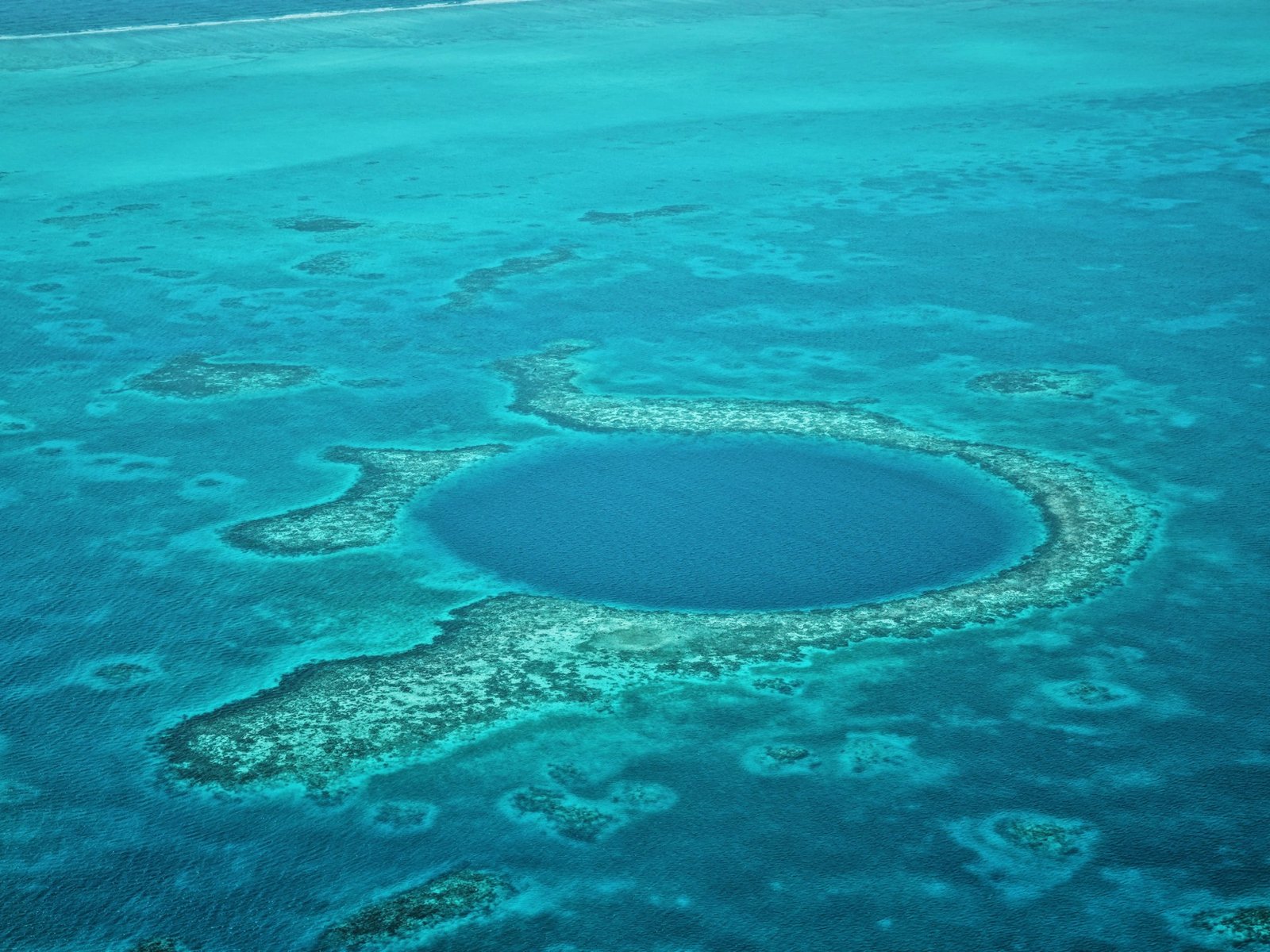
    The Great Blue Hole is one of the most famous sights in the Caribbean: a giant circular sinkhole about 300 metres wide and more than 120 metres deep, in the middle of Lighthouse Reef. It was formed during the last Ice Age, when sea levels were much lower, and was made famous by the explorer Jacques Cousteau.

    The best way to see its perfect shape is on a scenic flight from San Pedro or Caye Caulker. Certified divers with some experience can join a full-day dive trip, which usually includes two more dives on the reef and a stop at Half Moon Caye, a bird sanctuary with a beautiful beach. Both options are a splurge, but unforgettable.

    2. Go Slow on Caye Caulker

    Caye Caulker is a tiny island with sandy streets, colourful wooden houses and a relaxed motto: “Go Slow”. There are no cars, just bikes and golf carts, and life revolves around the sea.

    Spend your days swimming at The Split, a channel at the north end of the village, eating fresh lobster and fish at beach grills and watching the sunset from a dock. Caye Caulker is cheaper and more laid-back than Ambergris Caye, and it’s the best base for snorkelling trips on a budget.

    Boats docked next to a blue wooden house on the water in Caye Caulker, Belize

    3. Snorkel with Sharks and Rays

    The Belize Barrier Reef is a UNESCO World Heritage Site, and the snorkelling here is world-class. The most popular trip goes to the Hol Chan Marine Reserve, where you’ll see coral gardens, turtles and colourful fish, and to Shark Ray Alley, where harmless nurse sharks and stingrays swim right around you.

    Many tours from Caye Caulker travel by sailing boat, with snacks, rum punch and several snorkel stops along the way. Choose an operator that keeps groups small and doesn’t feed the animals, and always use reef-safe sunscreen.

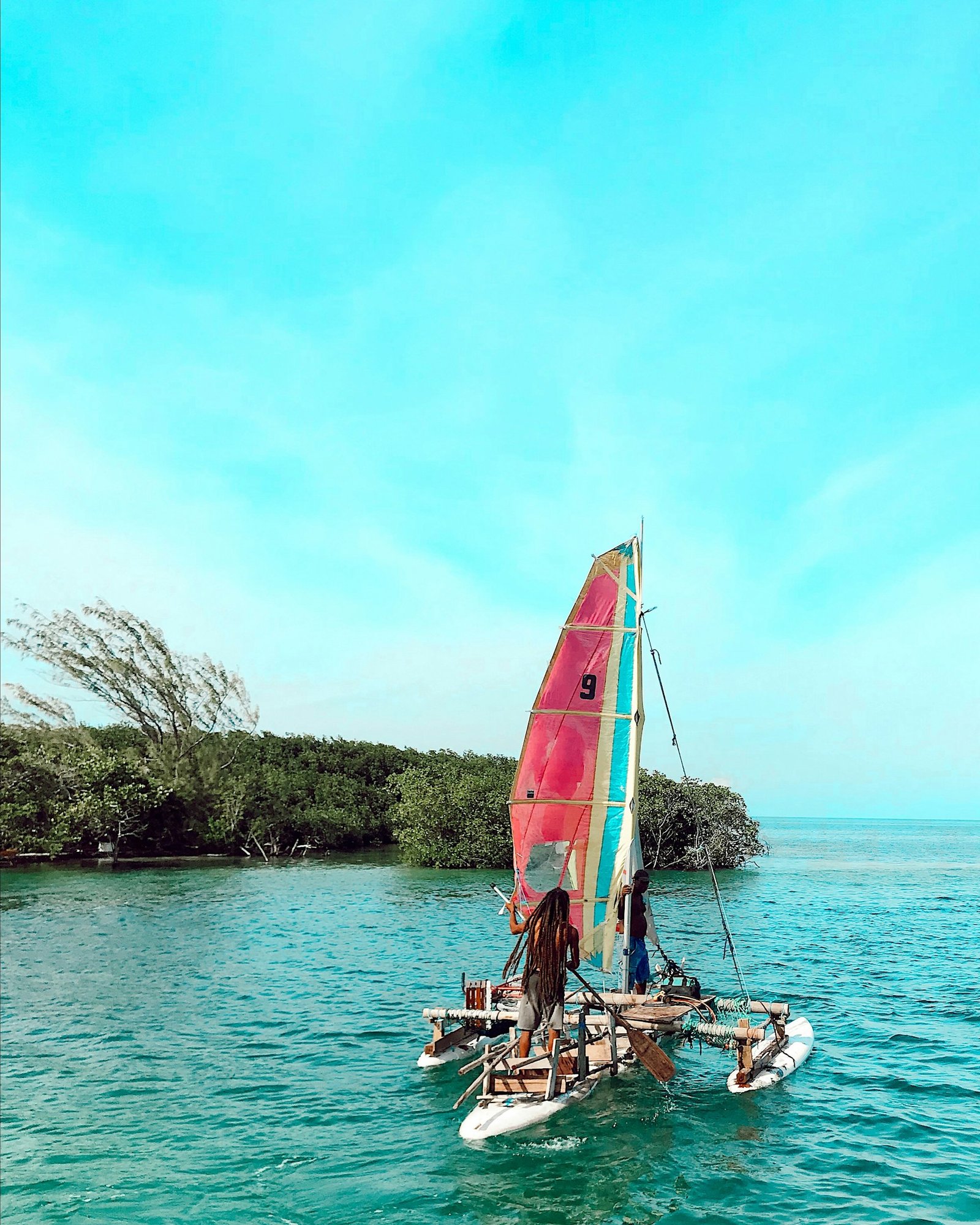
    People on a sailing boat trip on turquoise water off Caye Caulker, Belize

    4. Explore Ambergris Caye

    Ambergris Caye is Belize’s largest island and its most popular holiday spot. Its main town, San Pedro, is livelier than Caye Caulker, with more restaurants, bars and beach hotels.

    Rent a golf cart to explore the island, from quiet beaches in the north to the busy waterfront in town. Ambergris Caye is also a great base for diving, fishing trips and day trips to the reef. Expect higher prices here than on Caye Caulker.

    5. Relax on the Beaches of Placencia

    In the south, the Placencia Peninsula has some of the best beaches on Belize’s mainland. Long stretches of soft sand, palm trees and calm water make it the perfect place to relax for a few days.

    Walk along the famous Placencia Sidewalk, a narrow path through the village, and take a boat trip to the tiny islands offshore for snorkelling. From March to June, you can join a tour to swim with whale sharks at Gladden Spit. Placencia is also a good base for the jungle and the Cockscomb reserve.

    White wooden gazebo on a palm-lined Caribbean beach in Belize

    6. Climb the Maya Temple of Xunantunich

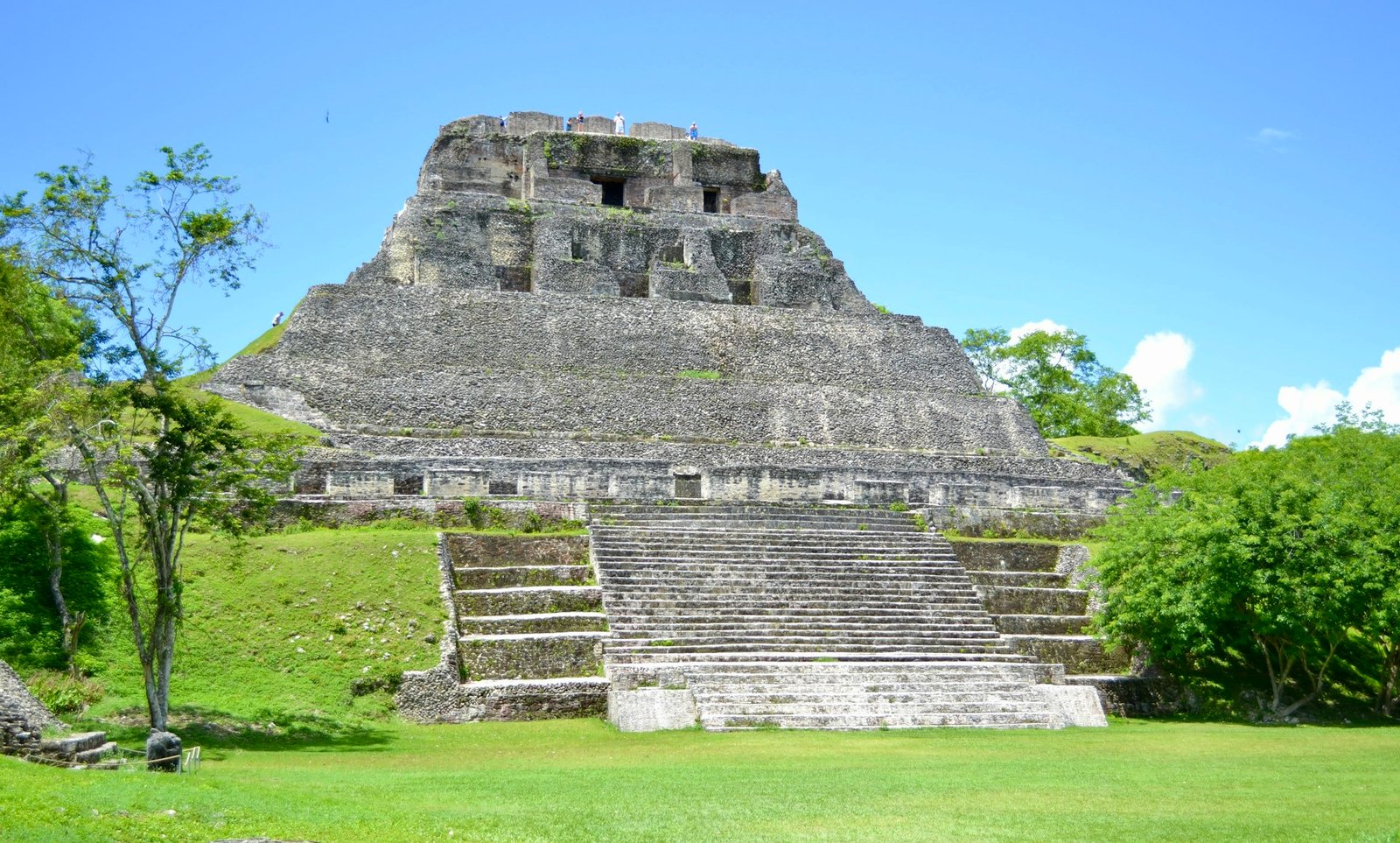
    Near the town of San Ignacio, close to the border with Guatemala, the ancient Maya city of Xunantunich sits on a hill above the jungle. Its main pyramid, El Castillo, rises about 40 metres, and from the top you can see far into Guatemala.

    You reach the site by crossing the Mopan River on a small hand-cranked ferry, which is part of the fun. Entry is cheap, and the site is much quieter than the famous ruins in Mexico. Look out for howler monkeys in the trees.

    Ancient Maya stone temple on a green lawn in the jungle of Belize

    7. Explore the ATM Cave

    Actun Tunichil Muknal, better known as the ATM Cave, is one of the most incredible adventures in Central America. You swim into the cave entrance, wade through underground rivers and climb over rocks to a huge chamber where the ancient Maya held ceremonies.

    Inside, you’ll see pottery and the remains of people sacrificed more than a thousand years ago, including the famous Crystal Maiden, a skeleton that sparkles with minerals. Visits are only possible with a licensed guide, and cameras are not allowed. It’s a full, physical day, so you need to be fit and comfortable in water.

    8. Swim Below the Waterfalls of Mountain Pine Ridge

    South of San Ignacio, the Mountain Pine Ridge is a cool upland area of pine forest, rivers and waterfalls. Swim in the natural pools of Rio On Pools, jump into the water at Big Rock Falls and admire Butterfly Falls in the Hidden Valley Reserve.

    Look out from the viewpoint at Thousand Foot Falls, one of the highest waterfalls in Central America. The roads are rough, so join a tour or rent a 4×4. Many day trips also stop at the Rio Frio Cave.

    Butterfly Falls in the Hidden Valley Reserve, Mountain Pine Ridge, Belize

    9. Hike in the Cockscomb Basin

    The Cockscomb Basin Wildlife Sanctuary was the world’s first reserve created to protect the jaguar. You probably won’t see one, as they’re shy and mostly active at night, but the rainforest is full of birds, butterflies and tracks.

    Well-marked trails lead to waterfalls and swimming holes, including the beautiful Tiger Fern Falls. You can also go tubing down the river. Stay overnight in the simple cabins inside the park for the best chance to hear the jungle come alive at night.

    10. Watch the Sunset on the Cayes

    The sunsets on the west side of the cayes are some of the best in the Caribbean. On Caye Caulker, people gather on the docks every evening, drink in hand, to watch the sky turn orange and pink over the calm water.

    For a special evening, join a sunset sailing trip or rent a kayak and paddle out as the sun goes down. Afterwards, enjoy fresh grilled seafood at one of the beach grills on the main street.

    Silhouette of two people in a boat at sunset off Caye Caulker, Belize

    Where to Stay on a Budget

    Belize has good options for every budget:

    • Guesthouses: simple family-run guesthouses on Caye Caulker and in San Ignacio offer good value
    • Hostels: found on Caye Caulker, in San Ignacio and in Placencia, with dorms and private rooms
    • Cabanas: wooden cabins on the beach or in the jungle, often with a hammock on the porch
    • Jungle lodges: a great splurge near San Ignacio, with rainforest views and nature right outside your door

    Book early for December to April. Caye Caulker is generally cheaper than Ambergris Caye.

    Eating on a Budget

    Belizean food is a delicious mix of Caribbean, Maya and Mexican cooking:

    • Rice and beans: cooked in coconut milk and served with stewed chicken, the national dish
    • Fry jacks: puffy fried dough, eaten for breakfast with beans, eggs and cheese
    • Salbutes and garnaches: small fried tortillas with toppings, the best cheap street food
    • Lobster and conch: fresh on the cayes, with lobster in season from mid-June to mid-February
    • Marie Sharp’s: the famous local hot sauce, on every table

    Eat at small local restaurants and street stands for the cheapest meals, and look out for daily lunch specials.

    What It Really Costs

    Here’s a realistic daily budget per person for a comfortable mid-range trip, not counting international flights.

    • Accommodation: $50 to $120 per person, sharing a double room in a good guesthouse or small hotel
    • Food: $30 to $50 a day, mixing local food stands and restaurants
    • Transport: $15 to $40 a day on average, including water taxis, shuttles and bikes
    • Activities: budget for the highlights separately: snorkel trips, the ATM Cave, a Blue Hole flight or dive, Xunantunich and park fees

    That works out to around $150 to $250 per person per day. Staying on Caye Caulker, eating local food and choosing a few key tours can bring that down noticeably.

    A Sample 10-Day Itinerary

    Day 1: Arrive in Belize City and take the water taxi to Caye Caulker.

    Day 2: Sailing and snorkelling trip to Hol Chan and Shark Ray Alley.

    Day 3: Scenic flight over the Great Blue Hole, or a dive trip if you’re certified.

    Day 4: Relax at The Split, then sunset on the docks.

    Day 5: Water taxi back to the mainland and shuttle to San Ignacio.

    Day 6: Xunantunich in the morning, then the town’s market and restaurants.

    Day 7: The ATM Cave.

    Day 8: Waterfalls and pools of the Mountain Pine Ridge.

    Day 9: Drive or fly to Placencia and relax on the beach.

    Day 10: Boat trip to the islands, then fly home.

    Practical Tips

    • Use US dollars: they’re accepted almost everywhere, and change is often given in Belize dollars
    • Bring reef-safe sunscreen and a rash guard for snorkelling
    • Use insect repellent in the jungle, especially at dawn and dusk
    • Book the ATM Cave and Blue Hole trips in advance in high season
    • Watch the weather in hurricane season and keep your plans flexible
    • Respect the reef: never touch coral, don’t feed the animals and take your rubbish with you

    Booking Tips

    • Airport transfer: book an airport transfer with Kiwitaxi from Belize City airport to the water taxi terminal or your hotel, with a fixed price and a driver waiting for you
    • eSIM: install a Yesim eSIM before you fly, so you have data for maps, water taxi times and tour bookings in Belize from the moment you land
    • Tours: popular options include a Great Blue Hole trip, snorkelling at Hol Chan and Shark Ray Alley, a tour of the ATM Cave and a visit to Xunantunich. You can compare and book most of them on Klook

    Final Thoughts

    Belize is small, but it’s full of adventure. Fly over the Great Blue Hole, swim with sharks and rays, go slow on Caye Caulker, climb a Maya temple, explore a sacred cave and cool off below jungle waterfalls.

    Travel in the dry season, mix the islands with the jungle and leave time to do nothing at all on a dock at sunset. Belize will stay with you long after you leave.

    Prices checked in October 2026. Costs and opening times change, so always confirm before you book.
  • Sardinia Travel Guide: The Best Beaches, Boat Trips and Things to Do

    Sardinia Travel Guide: The Best Beaches, Boat Trips and Things to Do

    Water so clear that boats seem to float in the air, white pebble coves hidden below limestone cliffs, pink granite rocks, colourful fishing towns and long lunches of fresh pasta and local wine: Sardinia is Italy’s island paradise.

    The second-largest island in the Mediterranean has some of the most beautiful beaches in Europe, many of them looking more like the Caribbean than Italy. But Sardinia is much more than beaches. Its wild interior is full of mountains, gorges and mysterious stone towers built more than 3,000 years ago, and its culture, language and food are proudly its own.

    Sardinia has a reputation for luxury, thanks to the yachts and celebrity villas of the Costa Smeralda. But away from that small corner, it’s surprisingly affordable. With a rental car, a few nights in family-run B&Bs and picnics on the beach, you can enjoy the island on a real budget. This guide shows you how.

    Sardinia at a Glance

    • Where: in the Mediterranean Sea, west of mainland Italy and south of Corsica
    • Main airports: Cagliari (CAG) in the south, Olbia (OLB) in the northeast and Alghero (AHO) in the northwest
    • Currency: euro (EUR)
    • Entry: Sardinia is part of Italy and the Schengen Area. Many non-EU visitors can stay up to 90 days without a visa, but will need to register online with ETIAS once it starts. Check the current rules for your passport
    • Languages: Italian and Sardinian. English is spoken in tourist areas
    • Best time: June and September
    • Budget: around $80 to $120 a day for budget travellers, $150 to $250 for a comfortable mid-range trip

    When to Go

    June and September are the best months to visit. The sea is warm, the weather is sunny and stable, and the beaches are much quieter than in high summer. Prices for hotels and ferries are also lower.

    July and August are hot and very busy, especially in August, when many Italians are on holiday. Prices are at their highest, and the most famous beaches fill up early in the morning.

    May and October are great for hiking and sightseeing. The sea is cooler, but on sunny days swimming is still possible. From November to April, many beach hotels, restaurants and boat trips close.

    Our tip: visit in the first half of September for warm water, sunny days and fewer crowds.

    Where to Stay

    Sardinia is big, and driving from one end to the other takes about four hours. For a one-week trip, choose one or two bases.

    The East Coast

    The Gulf of Orosei on the east coast has the most spectacular coves, many of them reachable only by boat or on foot. Cala Gonone and Santa Maria Navarrese are the best bases for boat trips, with plenty of mid-range hotels and B&Bs.

    The North and South

    In the northeast, Olbia and the small town of Porto San Paolo are good value bases for the Costa Smeralda and the island of Tavolara. In the south, Cagliari, the capital, combines city life with nearby beaches and easy flights.

    Getting Around

    The best way to explore Sardinia is with a rental car. Public transport is limited, and many beaches and sights are only reachable by car. The roads are generally good, but mountain roads can be narrow and winding.

    You can also bring your own car on an overnight ferry from Genoa, Livorno or Civitavecchia on the Italian mainland. In summer, parking at popular beaches is often paid, and some beaches limit the number of daily visitors, so check in advance.

    Things to Do in Sardinia

    Here are the experiences we think are worth your time and money.

    1. Take a Boat Trip Along the Gulf of Orosei

    The Gulf of Orosei is one of the most beautiful stretches of coast in the Mediterranean. For about 40 km, white limestone cliffs drop into the sea, with tiny coves, sea caves and natural arches along the way. Most of the coast has no roads, so the best way to see it is from the water.

    Boat trips leave from Cala Gonone and Santa Maria Navarrese every morning in summer and stop at famous beaches like Cala Mariolu, with its white pebbles and impossibly blue water, and Cala Biriola. For more freedom, rent a small motorboat, no licence needed for the smaller ones, and explore the coves at your own pace.

    Boats anchored in turquoise water at Cala Luna in the Gulf of Orosei, Sardinia

    2. Hike to Cala Goloritzé

    Cala Goloritzé is one of the most famous beaches in Italy, a small cove of white pebbles below a 140-metre limestone spire, with water in every shade of turquoise. It has been named one of the most beautiful beaches in the world.

    Boats aren’t allowed to land here, so the only way in is a hike of about one and a half hours each way from the Golgo plateau near Baunei. In summer, there’s a small entry fee and the number of daily visitors is limited, so book online in advance. Bring plenty of water and good shoes, as the walk back up is hot and steep.

    3. Explore the Caves of Cala Luna

    Cala Luna is a crescent of soft sand between two cliffs, backed by a small river and pink oleander bushes. At the northern end of the beach, huge caves open into the rock, offering shade on hot afternoons and a magical light at sunset.

    Reach it on a boat trip from Cala Gonone or on a hiking trail along the coast, about two hours each way. If you arrive by boat, stay until the last departure in the afternoon, when the day crowds have gone.

    Sunset seen from a cave on the beach of Cala Luna, Sardinia

    4. Swim at Cala dei Gabbiani

    Further south on the same coast, Cala dei Gabbiani is one of the most beautiful and quiet beaches in Sardinia. Green cliffs covered in Mediterranean scrub rise steeply behind a pebble beach, and the water is so clear you can see every stone on the bottom.

    You can reach it by boat from Santa Maria Navarrese or on a challenging hike. Experienced hikers can also tackle sections of the Selvaggio Blu, often called the toughest trek in Italy, which follows this wild coastline over several days.

    Green cliffs above the clear water of Cala dei Gabbiani, Sardinia, Italy

    5. Visit La Pelosa Beach

    In the far northwest, near the village of Stintino, La Pelosa is often compared to the Caribbean. Shallow turquoise water stretches far out over white sand, with an old watchtower on a small island just offshore.

    To protect the beach, visitors in summer need to book online and pay a small fee, and the number of people is limited. Towels must be placed on a mat, not directly on the sand. Come early in the morning or late in the afternoon for the best light and fewer people.

    6. Sail the Maddalena Archipelago

    Off the northeast coast, the Maddalena Archipelago is a national park of granite islands with pink rocks, white beaches and crystal-clear water. Highlights include the Cala Coticcio beach and the famous pink sand of Spiaggia Rosa on Budelli, which you can admire from the water but not walk on.

    Full-day boat trips leave from Palau and La Maddalena and are one of the best-value activities in the north. Nearby, drive along the Costa Smeralda to see the glamorous resort of Porto Cervo and the beautiful beaches around it.

    7. Boat Trip to Tavolara

    Rising almost straight out of the sea near Olbia, Isola di Tavolara is a huge limestone island with sheer cliffs and beaches of white sand. The waters around it are a protected marine area, perfect for snorkelling.

    Small boats leave from Porto San Paolo for the short ride to the island’s beach, Spalmatore di Terra. Spend the day swimming, then have lunch at one of the two simple restaurants on the island. The view of the island from the mainland at sunset is unforgettable.

    Turquoise water and trees near the island of Tavolara, Sardinia

    8. Discover Cagliari

    Cagliari, Sardinia’s capital, is a lively city built on hills above a large bay. Climb up to the old Castello district, with its narrow lanes, cathedral and views over the city, and walk along the grand terrace of the Bastione di Saint Remy.

    Spend an afternoon at Poetto, the city’s long sandy beach, or watch the pink flamingos in the lagoons of the Molentargius park on the edge of the city. In the evening, join the locals for an aperitivo in the Marina district.

    People walking under the arch of the Bastione di Saint Remy in Cagliari, Sardinia

    9. Wander Through Carloforte

    On the small island of San Pietro, off the southwest coast, the fishing town of Carloforte is one of the prettiest towns in Sardinia. Its colourful houses, palm-lined waterfront and lanes full of flowers have a charm all their own.

    Carloforte was founded by settlers from Liguria in the 18th century, and people here still speak an old Genoese dialect. Take the short ferry from Portovesme or Calasetta, rent a scooter to explore the island’s cliffs and coves, and try the local tuna, the speciality of the island.

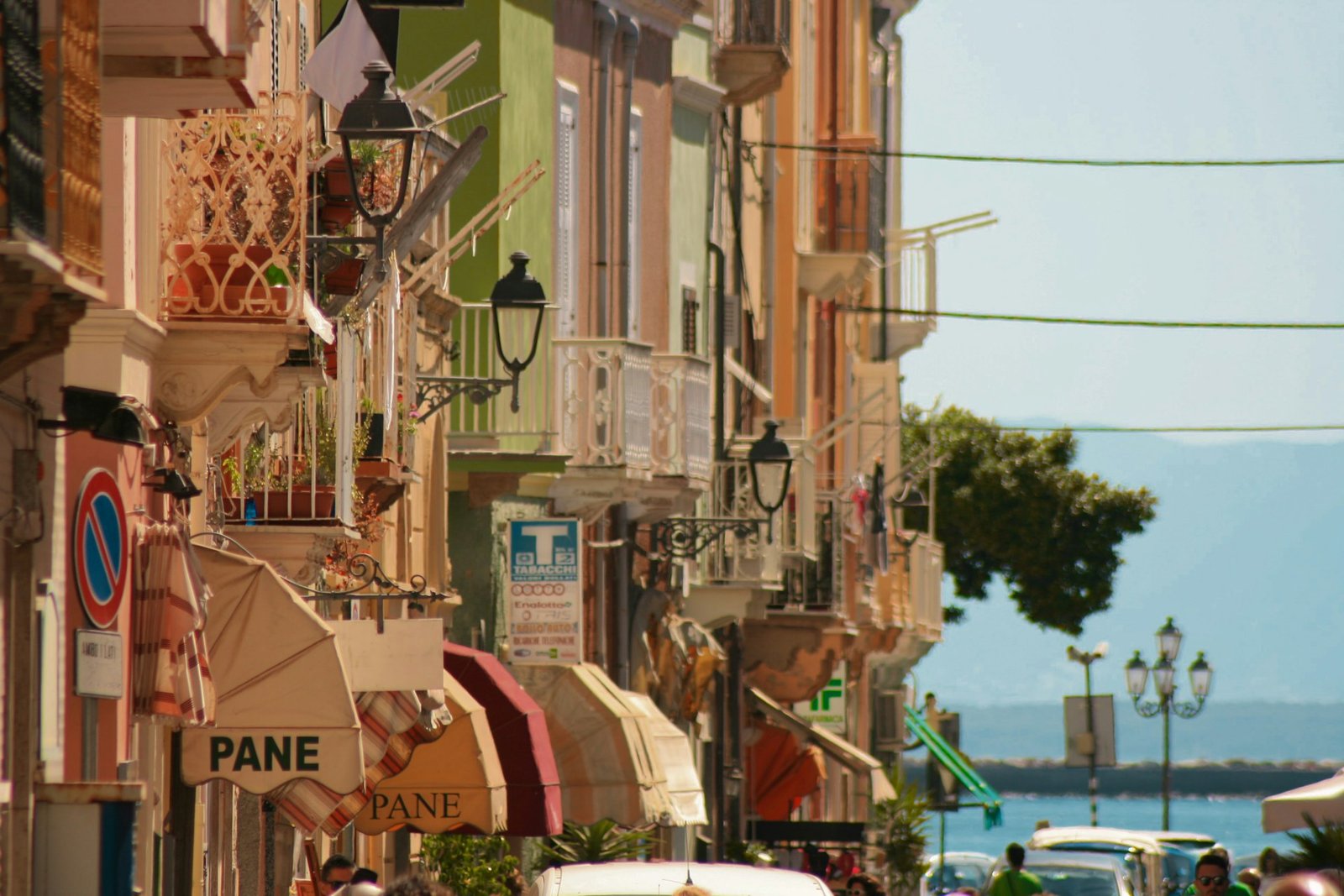
    Colourful houses along a street in Carloforte on San Pietro island, Sardinia

    10. See the Ancient Nuraghi

    Sardinia is dotted with more than 7,000 nuraghi, mysterious stone towers built by the island’s Bronze Age people more than 3,000 years ago. Nobody knows exactly what they were used for, but they’re unique to Sardinia.

    The most impressive is Su Nuraxi in Barumini, a UNESCO World Heritage Site with a central tower and the remains of a whole village around it. Guided tours take you inside the tower through narrow stone passages. It’s about an hour’s drive from Cagliari and makes a great day trip combined with the green hills of the interior.

    Where to Stay on a Budget

    Sardinia has good-value options away from the luxury resorts:

    • B&Bs: family-run B&Bs offer clean rooms, a warm welcome and often a homemade breakfast
    • Agriturismi: farm stays in the countryside, with rooms and delicious dinners made from their own produce
    • Apartments: a great choice for families and longer stays, with a kitchen to save money on food
    • Campsites: found near many beaches, some with bungalows and mobile homes

    Book early for July and August. Staying a little inland, rather than right on the beach, is often much cheaper.

    Eating on a Budget

    Sardinian food is hearty, simple and delicious:

    • Culurgiones: handmade pasta parcels filled with potato, pecorino and mint
    • Malloreddus: small ridged pasta, often served with sausage and tomato sauce
    • Pane carasau: thin, crispy flatbread, perfect for picnics
    • Seadas: fried pastry filled with cheese and covered in honey, the classic dessert
    • Local wine and mirto: try a glass of Cannonau red wine and a shot of mirto, a myrtle-berry liqueur

    Shop at local supermarkets and bakeries for picnic food, and eat your main meal at lunchtime, when many restaurants offer a fixed-price menu.

    What It Really Costs

    Here’s a realistic daily budget per person for a comfortable mid-range trip in June or September, not counting flights.

    • Accommodation: $50 to $110 per person, sharing a double room in a B&B or agriturismo
    • Food: $35 to $60 a day, mixing picnics, pizza and restaurant dinners
    • Transport: $30 to $50 a day per person, including a rental car shared by two, fuel and parking
    • Activities: budget for the highlights separately: boat trips, beach fees and bookings, a rented motorboat and entry to Su Nuraxi

    That works out to around $150 to $250 per person per day. Avoiding August, staying in agriturismi and eating lunch menus can bring that down noticeably.

    A Sample 8-Day Itinerary

    Day 1: Arrive in Olbia and watch the sunset over Tavolara from Porto San Paolo.

    Day 2: Boat trip to Tavolara for swimming and snorkelling.

    Day 3: Full-day boat trip to the Maddalena Archipelago.

    Day 4: Drive south to Cala Gonone.

    Day 5: Boat trip along the Gulf of Orosei, with Cala Mariolu and Cala Luna.

    Day 6: Hike to Cala Goloritzé.

    Day 7: Drive to Cagliari, with a stop at Su Nuraxi in Barumini.

    Day 8: Explore Cagliari and Poetto beach, then fly home.

    Add two days for Carloforte and the southwest coast if you have more time.

    Practical Tips

    • Book beach access for La Pelosa and Cala Goloritzé in advance in summer
    • Don’t take sand, pebbles or shells from the beaches: it’s illegal in Sardinia and can bring heavy fines
    • Arrive early at popular beaches for parking and space
    • Bring water shoes for pebble beaches and rocky coves
    • Check the wind: when the strong mistral blows from the northwest, choose beaches on the east coast
    • Respect the coast: take your rubbish with you and don’t anchor on the sea grass

    Booking Tips

    • Airport transfer: if you don’t rent a car at the airport, book an airport transfer with Kiwitaxi from Olbia, Cagliari or Alghero airport to your hotel or the ferry port, with a fixed price and a driver waiting for you
    • eSIM: if you’re coming from outside the EU, install a Yesim eSIM before you fly, so you have data for maps, boat tickets and beach bookings in Sardinia from the moment you land
    • Tours: popular options include a Gulf of Orosei boat trip, a Maddalena Archipelago cruise from Palau, a Tavolara boat tour and a Cagliari walking tour. You can compare and book most of them on Klook

    Final Thoughts

    Sardinia is one of the most beautiful islands in the Mediterranean. Sail along the cliffs of the Gulf of Orosei, hike down to Cala Goloritzé, swim in the turquoise water of Tavolara, explore the old streets of Cagliari and discover the mysterious nuraghi.

    Travel in June or September, rent a car and take your time. Sardinia rewards those who slow down and leave room to explore.

    Prices checked in October 2026. Costs and opening times change, so always confirm before you book.

  • Madagascar Travel Guide: Nosy Be Beaches, Lemurs and Baobabs

    Madagascar Travel Guide: Nosy Be Beaches, Lemurs and Baobabs

    A white sandbar curving through turquoise water to a tiny tropical island, lemurs leaping through misty rainforest, giant baobab trees glowing red at sunset and wooden sailing boats gliding home at dusk: Madagascar feels like a world of its own.

    The fourth-largest island on earth broke away from Africa millions of years ago, and life here went its own way. Around 90 percent of its plants and animals live nowhere else, from more than a hundred kinds of lemurs to chameleons the size of a fingernail. Add palm-lined beaches, coral reefs and some of the friendliest people you’ll ever meet, and you have one of the most unique destinations in the world.

    Madagascar isn’t a polished resort destination. Roads are slow, things don’t always run on time and you’ll need patience. But that’s part of its charm, and day-to-day costs are low. Combine a few days on the beaches of Nosy Be with the rainforest and the baobabs, and you’ll have a trip you’ll never forget. This guide shows you how.

    Madagascar at a Glance

    • Where: in the Indian Ocean, about 400 km off the southeast coast of Africa
    • Main airports: Antananarivo (TNR), the capital, and Nosy Be (NOS) for the beaches
    • Currency: Malagasy ariary (MGA). Euros are widely accepted for larger payments
    • Entry: most visitors need a visa, available online or on arrival for a fee. Check the current rules for your passport
    • Languages: Malagasy and French. English is spoken in hotels and by many guides
    • Best time: April to November, the dry season
    • Budget: around $50 to $80 a day for budget travellers, $120 to $220 for a comfortable mid-range trip

    When to Go

    April to November is the dry season and the best time to visit. The days are sunny, the roads are in better shape and the national parks are easy to explore. September to November is especially good: it’s warm, and around Nosy Be it’s the season for whale sharks.

    July to September is the season for humpback whales, which come to the waters off the east coast to give birth. The highlands, including Antananarivo and Andasibe, can be surprisingly cool at night in these months, so bring a warm layer.

    December to March is the rainy season. It’s hot and humid, and cyclones can hit, especially from January to March. Some roads become impassable and a few parks close.

    Our tip: visit in October or early November for warm weather, calm seas and the best chance to swim with whale sharks.

    How Long Do You Need?

    Madagascar is huge, and getting around takes time. Plan at least two weeks to combine the beaches of Nosy Be with the rainforest and the baobabs. With only one week, choose one region: either the beaches and islands of the north, or the rainforest and highlands around Andasibe.

    Getting Around

    Distances are long and many roads are rough, so domestic flights save a lot of time. Flights link Antananarivo with Nosy Be, Morondava and other regions, but schedules change often, so stay flexible.

    On land, the most common way to travel is with a rental car and driver, which is affordable and much safer than driving yourself. Local minibuses called taxi-brousse are very cheap but slow, crowded and best avoided on long trips.

    Around Nosy Be, everything happens by boat. Day trips to the nearby islands leave every morning from the main beaches and from the port of Hell-Ville.

    Things to Do in Madagascar

    Here are the experiences we think are worth your time and money.

    1. Walk the Sandbar to Nosy Iranja

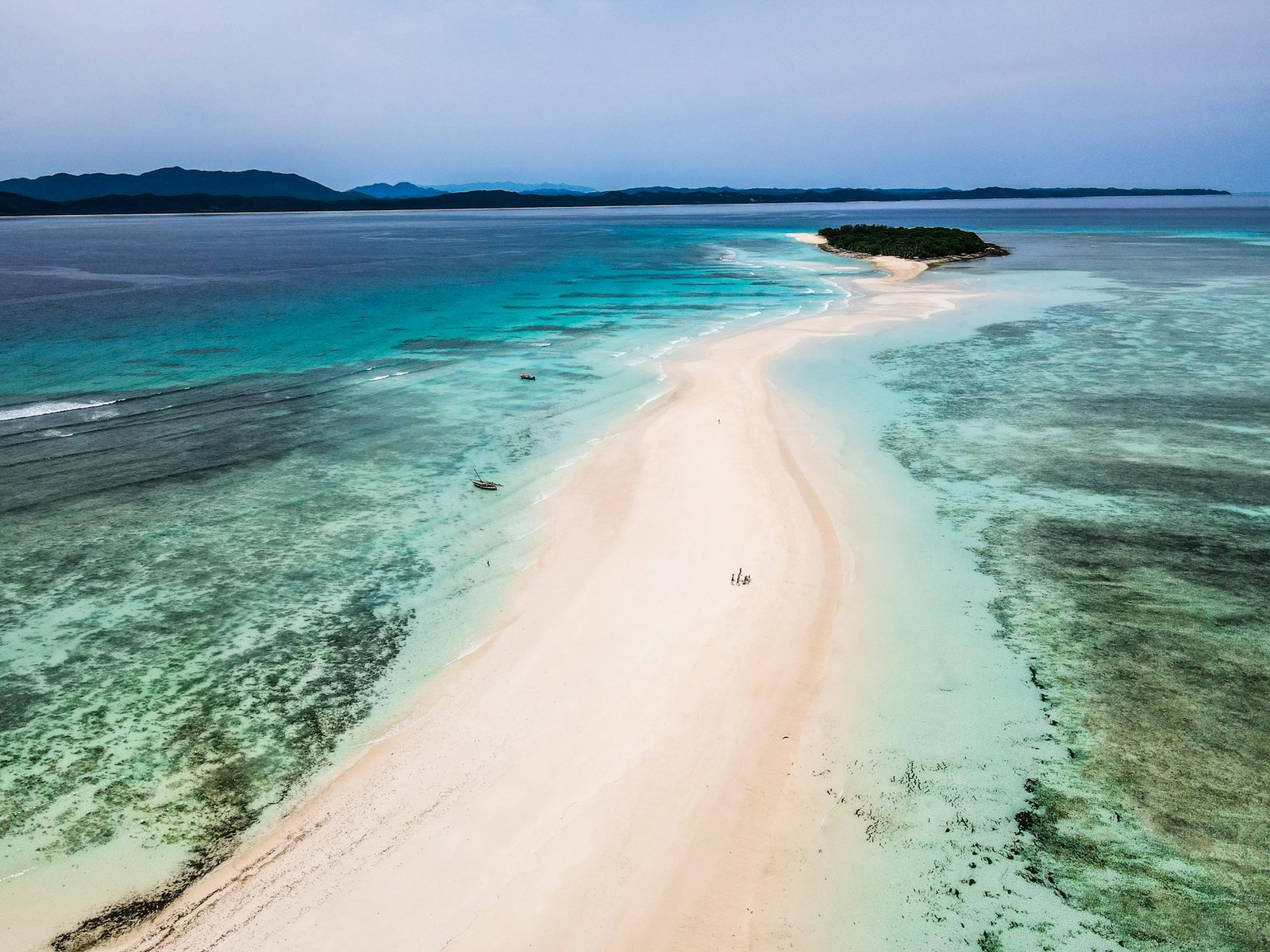
    Nosy Iranja is one of the most beautiful places in the Indian Ocean. It’s actually two small islands, connected by a long white sandbar that appears at low tide. Walking across it, with turquoise water on both sides, feels like a dream.

    Day trips by speedboat leave from Nosy Be in the morning and take about an hour and a half each way. A grilled seafood lunch on the beach is usually included. Bring reef-safe sunscreen and a hat, as there’s very little shade on the sandbar.

    White sand beach with turquoise water and trees on Nosy Iranja, Madagascar

    2. Spend a Night on Nosy Iranja

    Most visitors only see Nosy Iranja on a day trip. If you stay overnight at the island’s small lodge, you’ll have the beaches almost to yourself once the day boats have gone.

    Climb the hill to the old lighthouse for a sweeping view over the sandbar and the sea, especially at sunset. The island is also an important nesting site for sea turtles, and in season you may see them come ashore at night. Staying here is a splurge, but it’s one of the most magical nights you’ll ever spend on a beach.

    View from the hill over the beach and turquoise sea of Nosy Iranja, Madagascar

    3. Snorkel at Nosy Tanikely

    Just off the coast of Nosy Be, Nosy Tanikely is a small protected marine reserve with some of the best snorkelling in Madagascar. The coral reef around the island is full of colourful fish, and you’ll often see sea turtles grazing on the sea grass.

    Most day trips combine Nosy Tanikely with Nosy Komba, a nearby island where you can walk through a village and see black lemurs up close. Pay the small marine park fee, and never stand on the coral.

    4. Swim with Whale Sharks

    From around September to December, whale sharks, the largest fish in the world, come to feed in the waters around Nosy Be. Swimming next to one of these gentle giants is a once-in-a-lifetime experience.

    Join a small-group boat trip with an operator that follows responsible guidelines: only a few swimmers in the water at a time, no touching and keeping a safe distance. Tours are on the pricier side, but they often include snorkelling, dolphins and a beach lunch. In other months, these trips focus on manta rays, dolphins and turtles.

    People on a boat trip on the sea near Nosy Be, Madagascar

    5. Relax on Nosy Be’s Beaches

    Nosy Be is Madagascar’s main beach island, with a relaxed island feel, ylang-ylang plantations and a scent of vanilla in the air. Andilana Beach in the north is the most beautiful, with soft white sand, calm water and amazing sunsets.

    In the evening, head up Mont Passot, the highest point of the island, for a view over the crater lakes and the islands at sunset. You can explore Nosy Be by scooter or quad bike, or hire a driver for the day.

    6. Meet the Lemurs of Andasibe

    About four hours east of Antananarivo, Andasibe-Mantadia National Park is the best place to see lemurs in the wild. The rainforest here is home to the indri, the largest living lemur, whose haunting call echoes through the trees every morning.

    Visit with a local guide, which is required in all national parks. A morning walk usually brings you close to indri families and other lemurs. A night walk is a great way to see chameleons, frogs and tiny mouse lemurs. Bring rain gear, as it can rain at any time of year.

    A lemur on a branch in the rainforest of Andasibe, Madagascar

    7. Explore Lokobe and Nosy Komba

    You don’t have to leave Nosy Be to see lemurs. Lokobe National Park, on the southeast tip of the island, protects the last patch of original rainforest on Nosy Be. You reach it by pirogue, a traditional outrigger canoe, and walk through the forest with a guide.

    Look for black lemurs, sleepy owls, snakes and colourful chameleons, including the tiny panther chameleon. Many tours end with a traditional lunch in a village on the coast.

    8. Watch the Sunset at the Avenue of the Baobabs

    The Avenue of the Baobabs, near Morondava on the west coast, is Madagascar’s most famous sight. A dusty road is lined with giant baobab trees, some of them hundreds of years old and up to 30 metres tall.

    Come at sunset, when the trees turn into dark silhouettes against a glowing sky, or at sunrise, when it’s quieter. Entry is cheap. Nearby, look for the Baobabs Amoureux, two baobabs twisted around each other. Morondava is best reached by a domestic flight from Antananarivo.

    Giant baobab trees along the Avenue of the Baobabs near Morondava, Madagascar

    9. Discover the Tsingy de Bemaraha

    North of Morondava, the Tsingy de Bemaraha National Park is a UNESCO World Heritage Site and one of the strangest landscapes on earth. Its name means “where one cannot walk barefoot”, and it’s a forest of razor-sharp limestone needles.

    Guided routes lead over suspension bridges, ladders and narrow ledges high above the forest. It’s an adventure, but you’ll need a harness and a head for heights. The park can only be reached in the dry season, usually from around May to November, and the drive from Morondava is long and rough.

    10. Sail a Traditional Boat at Sunset

    Madagascar’s coast is still sailed by traditional wooden boats: pirogues and dhow-style sailing boats used by fishermen and traders for centuries. Watching them glide home at sunset is one of the most beautiful sights in the country.

    Join a sunset sail around Nosy Be, or a longer sailing trip to the islands of the north, sleeping on the boat or in beach camps. On the west coast, the waterfront of Mahajanga is famous for its sunsets over the sea and the boats in the bay.

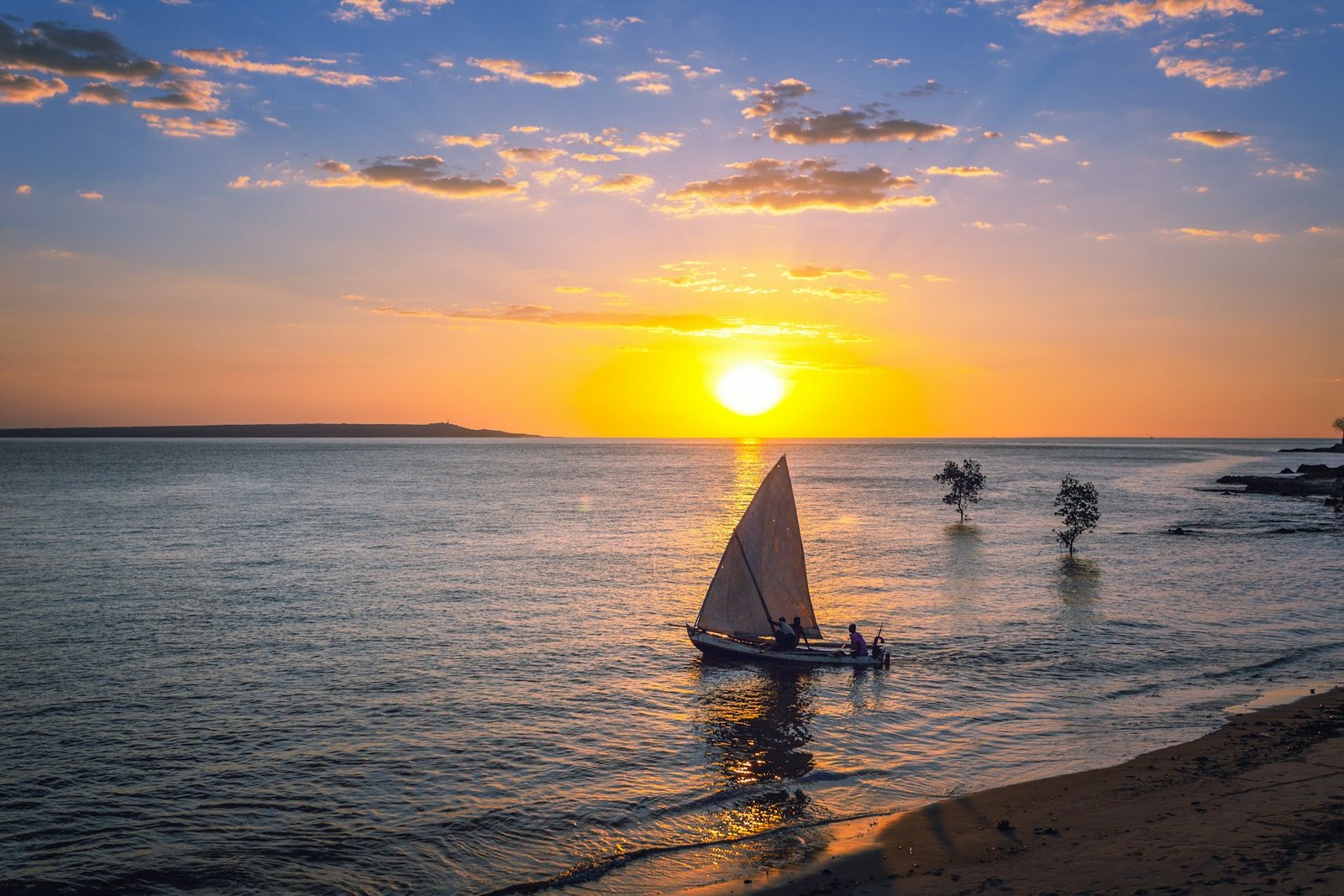
    Silhouette of a traditional sailing boat at sunset in Mahajanga, Madagascar

    Where to Stay on a Budget

    Madagascar offers good value for money:

    • Guesthouses: simple family-run guesthouses in towns and villages, often with breakfast
    • Beach bungalows: wooden bungalows on Nosy Be, just steps from the sand
    • Eco-lodges: near the national parks, like Andasibe, with rooms close to the forest
    • Hotels: comfortable hotels in Antananarivo for your first and last night

    Book early for July, August and the Christmas holidays, especially on Nosy Be. Smaller places may only take cash.

    Eating on a Budget

    Malagasy food is simple, fresh and inexpensive:

    • Romazava: a beef and leafy greens stew, the national dish
    • Zebu: the local humped cattle, served grilled or as steak
    • Seafood: fresh fish, prawns, crab and octopus on the coast
    • Mofo gasy: small, slightly sweet rice cakes for breakfast
    • Fresh fruit and vanilla: mangoes, lychees and the world-famous Madagascar vanilla

    Eat at small local restaurants called hotely for the cheapest meals. A plate of rice with zebu or chicken costs very little.

    What It Really Costs

    Here’s a realistic daily budget per person for a comfortable mid-range trip, not counting international flights.

    • Accommodation: $35 to $90 per person, sharing a double room in a good guesthouse or beach bungalow
    • Food: $15 to $35 a day, mixing local restaurants and tourist spots
    • Transport: $30 to $70 a day on average, including a car with driver and boat transfers
    • Activities: budget for the highlights separately: domestic flights, park entry and guides, island day trips, whale shark tours and a night on Nosy Iranja

    That works out to around $120 to $220 per person per day. Travelling in a small group to share a driver, staying in guesthouses and eating local food can bring that down noticeably.

    A Sample 12-Day Itinerary

    Day 1: Arrive in Antananarivo and rest.

    Day 2: Drive to Andasibe and take a night walk.

    Day 3: Lemur walk in Andasibe-Mantadia, then drive back to Antananarivo.

    Day 4: Fly to Morondava and watch the sunset at the Avenue of the Baobabs.

    Day 5: Sunrise at the baobabs, then fly back to Antananarivo.

    Day 6: Fly to Nosy Be and relax on Andilana Beach.

    Day 7: Day trip to Nosy Tanikely and Nosy Komba.

    Day 8: Lokobe National Park by pirogue, then sunset on Mont Passot.

    Day 9: Boat trip to Nosy Iranja and a night on the island.

    Day 10: Morning on Nosy Iranja, then back to Nosy Be.

    Day 11: Whale shark tour in season, or a sunset sail.

    Day 12: Fly home from Nosy Be.

    Practical Tips

    • Talk to your doctor about malaria protection and vaccinations well before you travel
    • Carry cash: ATMs are only found in larger towns, and cards are rarely accepted outside hotels
    • Plan for delays: domestic flights and roads are unpredictable, so leave a buffer day before your flight home
    • Always use a licensed guide in national parks
    • Bring a warm layer for the highlands and rain gear for the rainforest
    • Respect the wildlife: never feed or touch lemurs, and don’t buy products made from protected plants or animals

    Booking Tips

    • Airport transfer: book an airport transfer with Kiwitaxi from Antananarivo or Nosy Be airport to your hotel, with a fixed price and a driver waiting for you, especially useful if you land late at night
    • eSIM: install a Yesim eSIM before you fly, so you have data for maps and messages in Madagascar from the moment you land. Expect weak or no signal in the national parks and on the small islands
    • Tours: popular options include a Nosy Iranja day trip, snorkelling at Nosy Tanikely, a Lokobe and Nosy Komba lemur tour and whale shark trips from Nosy Be. You can compare and book most of them on Klook

    Final Thoughts

    Madagascar is unlike anywhere else on earth. Walk the sandbar to Nosy Iranja, snorkel with turtles, swim with whale sharks, listen to the call of the indri in the rainforest and watch the sun set behind the giant baobabs.

    Bring patience, travel in the dry season and let the island surprise you. Madagascar is the kind of adventure you’ll be talking about for years.

    Prices checked in October 2026. Costs and opening times change, so always confirm before you book.
  • Palawan Travel Guide: El Nido, Coron and the Best Island Hopping

    Palawan Travel Guide: El Nido, Coron and the Best Island Hopping

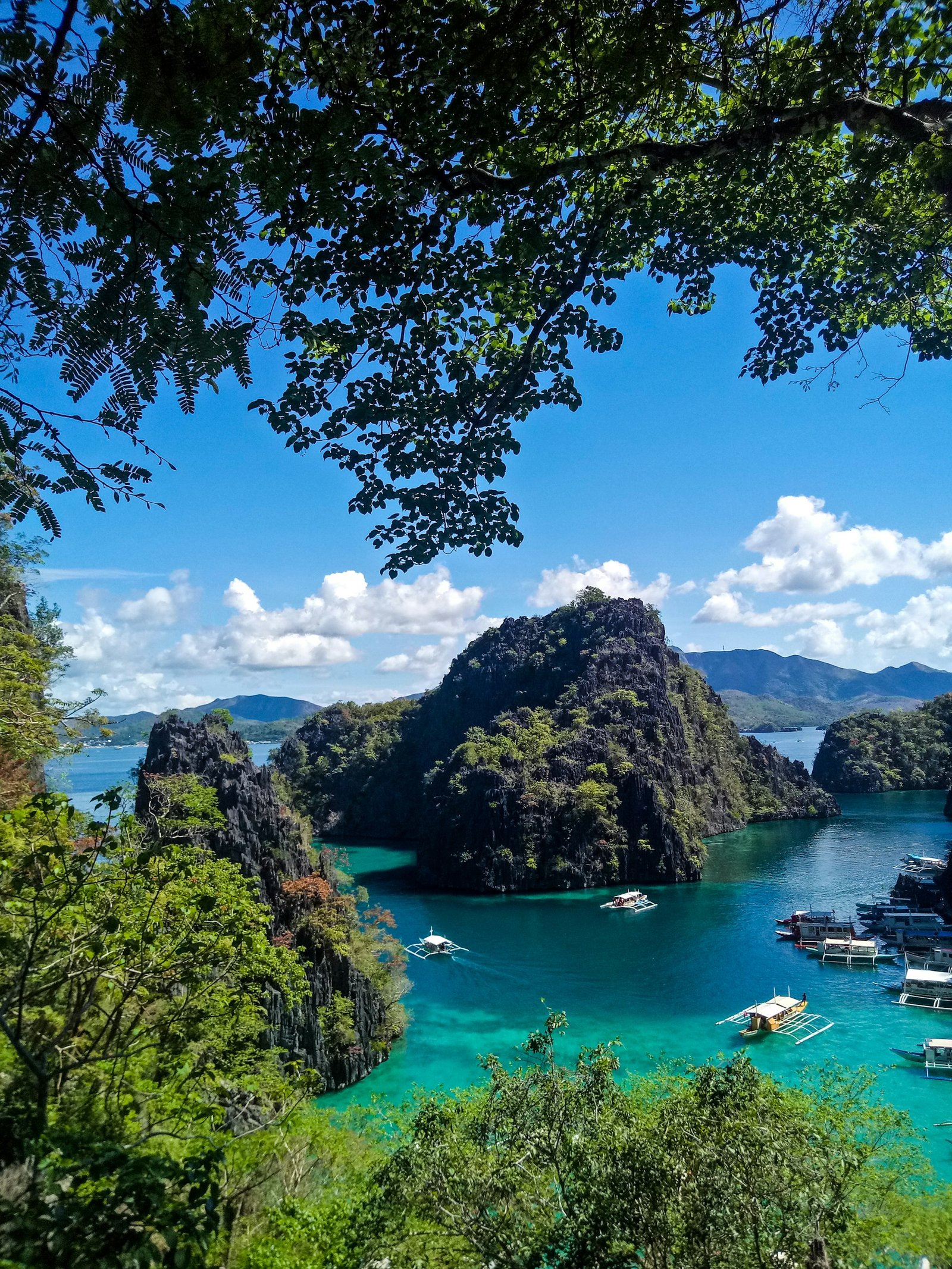
    Limestone cliffs rising straight out of turquoise lagoons, hidden beaches you can only reach by swimming through a gap in the rock, wooden outrigger boats bobbing in crystal-clear water and a river that flows for kilometres through a cave: Palawan is the kind of place that looks too beautiful to be real.

    This long, thin island in the west of the Philippines has topped lists of the world’s best islands again and again. Most travellers come for El Nido and Coron, two of the most stunning island-hopping destinations in Asia, and for the Puerto Princesa Underground River, a UNESCO World Heritage Site.

    The good news: Palawan is still affordable. Island-hopping tours, simple guesthouses and fresh grilled fish cost far less than in most beach destinations around the world. With a little planning, you can see the best of it on a real budget. This guide shows you how.

    Palawan at a Glance

    • Where: the western Philippines, between the South China Sea and the Sulu Sea
    • Main airports: Puerto Princesa (PPS), Busuanga for Coron (USU) and the small El Nido airport (ENI), usually reached via Manila or Cebu
    • Currency: Philippine peso (PHP)
    • Entry: many nationalities can visit visa-free for up to 30 days. All travellers must register online with eTravel before arrival. Check the current rules for your passport
    • Languages: Filipino and English, which is widely spoken
    • Best time: December to May, the dry season
    • Budget: around $50 to $80 a day for budget travellers, $100 to $180 for a comfortable mid-range trip

    When to Go

    December to May is the dry season and the best time to visit. The sea is calm, the water is clear and the boat tours run every day. December to February is a little cooler and very pleasant. March to May is hot, but the sea is at its calmest and clearest.

    June to November is the rainy season. Many days still have sunny spells, but heavy rain and rough seas can cancel boat tours, and typhoons are possible, especially from August to October. Prices are lower and the islands are quieter.

    The busiest times are Christmas and New Year and Holy Week before Easter, when many Filipinos travel too. Book early for those dates.

    Our tip: visit in February or March for calm seas, sunny days and fewer crowds than at Christmas.

    How Long Do You Need?

    Plan at least seven to ten days for Palawan. That gives you three or four days in El Nido, three days in Coron and a day for the Underground River. With two weeks, you can add the quiet village of Port Barton and slow down.

    Getting There and Around

    Most international travellers fly into Manila or Cebu, then take a domestic flight to Puerto Princesa or Busuanga (for Coron). There are also a few small flights direct to El Nido, which are convenient but more expensive.

    From Puerto Princesa, shared vans run north to El Nido in about five to six hours, with stops in Port Barton and Sabang on request. Between El Nido and Coron, fast ferries take about four hours. The sea can be rough, so take seasickness tablets if you need them.

    In town, you’ll get around by tricycle, a motorbike with a sidecar. Agree on the price before you get in. Renting a scooter is a great way to explore the beaches around El Nido, but only if you’re an experienced rider.

    Things to Do in Palawan

    Here are the experiences we think are worth your time and money.

    1. Go Island Hopping in El Nido

    Island hopping is the main reason to come to El Nido. Every morning, dozens of wooden bangka boats leave the beach for the limestone islands of Bacuit Bay. Tours are named A, B, C and D, and each one visits a different set of lagoons, beaches and snorkelling spots. A beach lunch of grilled fish and fruit is included.

    Tour A is the most popular, with the famous Big Lagoon, where you paddle a kayak between towering cliffs, and the Small Lagoon. Tour C is our favourite, with hidden beaches and some of the best snorkelling. Prices are low, but you also need to pay a small eco-tourism fee, valid for several days. The Big Lagoon has limited daily slots, so book with a reliable operator a day ahead.

    Kayaking through turquoise water between limestone cliffs in El Nido, Palawan, Philippines

    2. Swim into Secret Beaches

    Some of El Nido’s most magical spots are hidden behind the rocks. At Secret Beach on Matinloc Island, part of Tour C, you swim or squeeze through a narrow gap in the cliff and find a small beach enclosed by limestone walls.

    At the Secret Lagoon on Tour A, you crawl through a small hole in the rock into a pool surrounded by cliffs. Go at low tide if you can, as the entrances are easier to reach. Bring water shoes, as the rocks are sharp.

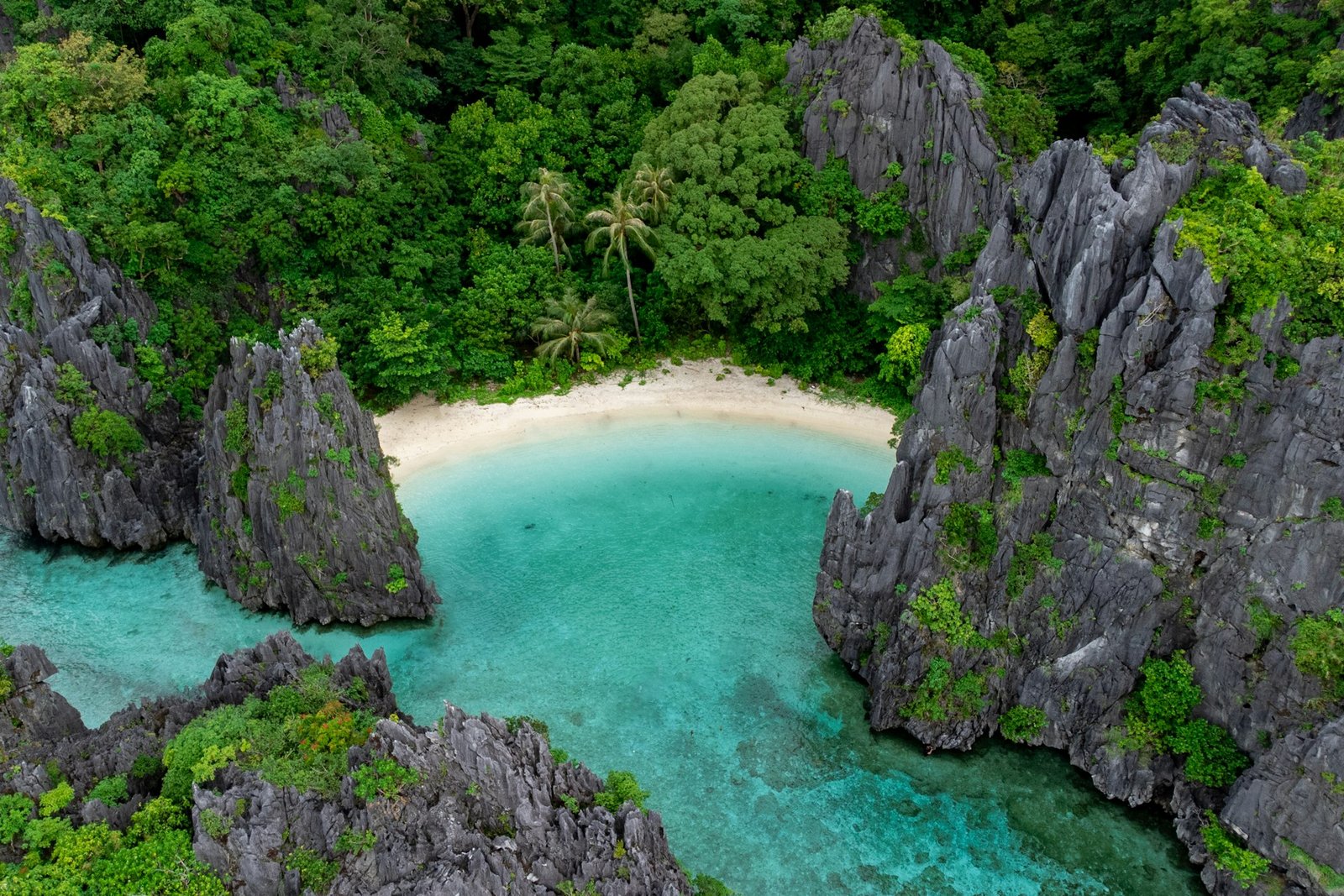
    Aerial view of Secret Beach surrounded by cliffs and trees in El Nido, Palawan

    3. Relax on Nacpan Beach

    About 45 minutes north of El Nido town, Nacpan Beach is a long, golden curve of sand lined with palm trees. It’s often called one of the best beaches in the Philippines, and it’s never really crowded.

    Get there by scooter or tricycle. Climb the small hill at the end of the beach for a view of the twin beaches, Nacpan and Calitang, side by side. There are a few simple bars and restaurants on the sand for a fresh coconut or a cold drink.

    4. Kayak to Cadlao Lagoon

    Just across the bay from El Nido town, Cadlao Island is the largest island in Bacuit Bay. Its quiet lagoon, with clear green water below forested cliffs, is one of the most peaceful places in the area.

    You can visit on some island-hopping tours or rent a kayak and paddle there yourself on a calm morning. Rentals are cheap, but only go if the sea is flat and you’re a confident paddler. Bring water, sunscreen and a dry bag.

    Clear water of Cadlao Lagoon below forested cliffs in El Nido, Palawan

    5. Watch the Sunset at Las Cabanas

    Las Cabanas Beach, about 15 minutes south of El Nido town, is the best place for sunset. Beach bars line the sand, and the sun sinks behind the islands of the bay in a blaze of orange and pink.

    For a thrill, ride the zipline from the hill to a small island just offshore. It’s not cheap, but the view over the beach is amazing. Afterwards, enjoy a cocktail with your feet in the sand.

    6. Visit Kayangan Lake in Coron

    Coron, in the north of Palawan, is just as beautiful as El Nido, with a slightly different feel. Its sharp black limestone cliffs rise from the sea around lakes and lagoons of incredible clarity.

    The highlight is Kayangan Lake, often called one of the cleanest lakes in Asia. A steep path of around 300 steps leads to a famous viewpoint over the coves, then down to the lake itself, where you can swim between the cliffs. Visit on a Coron island tour, which usually includes several lakes, beaches and snorkelling spots.

    Limestone cliffs and turquoise sea in Coron, Palawan, Philippines

    7. Swim in the Twin Lagoon and Barracuda Lake

    On the same tour, the Twin Lagoon is made up of two lagoons separated by a rock wall. At low tide, you swim through a small gap, and at high tide you climb a wooden ladder to get across. The water changes temperature where salt water from the sea meets fresh water from the land.

    Nearby, Barracuda Lake is famous among divers for its strange layers of warm and cold water. Even if you only snorkel, the underwater cliffs are spectacular. Book the tour with a life jacket if you’re not a strong swimmer.

    Boats floating in a lagoon surrounded by trees near Coron, Palawan

    8. Dive the Shipwrecks of Coron

    Coron Bay is one of the best wreck diving spots in the world. In September 1944, during World War II, a group of Japanese supply ships was sunk here in an air attack. Today, more than ten wrecks lie at depths of about 10 to 40 metres, covered in coral and full of fish.

    Some wrecks are shallow enough to see while snorkelling, but the best way to explore them is on a dive trip. Dive centres in Coron town offer courses for beginners and trips for experienced divers. Diving is one of the more expensive activities here, but still good value compared with other places.

    In the evening, climb the roughly 700 steps of Mount Tapyas for a sunset view over Coron town, then soak in the warm saltwater of the Maquinit Hot Spring.

    9. Explore the Puerto Princesa Underground River

    The Puerto Princesa Underground River is one of the most unusual sights in Asia. The river flows for more than 8 km through a cave under the mountains before reaching the sea. It’s a UNESCO World Heritage Site and was named one of the New 7 Wonders of Nature.

    From the village of Sabang, a short boat ride brings you to the entrance. Then you board a small paddle boat for a tour of about 45 minutes into the cave, past huge rock formations and bats. Visits need a permit, which you should book in advance, or join a day trip from Puerto Princesa.

    Visitors in a boat by the cliffs of the Puerto Princesa Subterranean River National Park, Palawan

    10. Slow Down in Port Barton

    Halfway between Puerto Princesa and El Nido, the little village of Port Barton feels like El Nido did twenty years ago. There are no big hotels and no traffic, just a sandy beach, a few guesthouses and a bay full of small islands.

    Join a relaxed island-hopping tour to snorkel with sea turtles, visit empty white-sand beaches and see the starfish on a sandbar. It’s the perfect place to spend a few slow days between the busier towns.

    Where to Stay on a Budget

    Palawan has accommodation for every budget:

    • Hostels: El Nido and Coron have social hostels with dorms and private rooms
    • Guesthouses: simple family-run guesthouses offer clean rooms at low prices
    • Beach bungalows: in Port Barton and around El Nido, you can stay in a simple bungalow close to the sea
    • Resorts: if you want a splurge, island resorts in Bacuit Bay offer the full luxury experience

    Book early for December to April. In El Nido, staying a little outside the main town, for example in Corong Corong, can be quieter and better value.

    Eating on a Budget

    Filipino food is filling, tasty and cheap:

    • Adobo: chicken or pork stewed in vinegar, soy sauce and garlic, the national dish
    • Grilled seafood: fresh fish, squid and prawns are on every menu
    • Kinilaw: raw fish marinated in vinegar and citrus, similar to ceviche
    • Fresh fruit: mango shakes and coconuts are a must
    • Carinderias: small local eateries where you choose from dishes on display, the cheapest way to eat

    The lunch on island-hopping tours is included in the price, which saves you money every day you’re on the water.

    What It Really Costs

    Here’s a realistic daily budget per person for a comfortable mid-range trip, not counting flights.

    • Accommodation: $30 to $80 per person, sharing a double room in a good guesthouse or small hotel
    • Food: $15 to $35 a day, mixing local eateries and tourist restaurants
    • Transport: $10 to $25 a day on average, including vans, ferries and tricycles
    • Activities: budget for the highlights separately: island-hopping tours, eco-tourism fees, the Underground River permit, a dive trip and the zipline

    That works out to around $100 to $180 per person per day. Staying in guesthouses, eating local food and choosing a few key tours can bring that down noticeably.

    A Sample 10-Day Itinerary

    Day 1: Fly to Puerto Princesa and settle in.

    Day 2: Day trip to the Underground River.

    Day 3: Van to Port Barton for a relaxed afternoon on the beach.

    Day 4: Island hopping and snorkelling with turtles in Port Barton.

    Day 5: Van to El Nido and sunset at Las Cabanas.

    Day 6: El Nido Tour A, with the Big Lagoon and the Secret Lagoon.

    Day 7: El Nido Tour C, with Secret Beach and hidden coves.

    Day 8: Nacpan Beach by scooter.

    Day 9: Fast ferry to Coron, then sunset on Mount Tapyas and the Maquinit Hot Spring.

    Day 10: Coron island tour: Kayangan Lake, Twin Lagoon and Barracuda Lake.

    Add a day for wreck diving before you fly home from Busuanga.

    Practical Tips

    • Carry cash: ATMs in El Nido and Port Barton often run out of money, and many places don’t take cards
    • Bring reef-safe sunscreen, a dry bag and water shoes for the boat tours
    • Expect slow Wi-Fi and power cuts in smaller places
    • Book the Underground River permit and the Big Lagoon slot in advance
    • Check the weather before boat trips, and don’t go out if the sea is rough
    • Respect the reefs: don’t stand on coral, don’t touch marine life and take your rubbish with you

    Booking Tips

    • Airport transfer: book an airport transfer with Kiwitaxi from Puerto Princesa, El Nido or Busuanga airport to your hotel, or for the long van ride between Puerto Princesa and El Nido, with a fixed price and no haggling
    • eSIM: install a Yesim eSIM before you fly, so you have data for maps, ferry tickets and messages in the Philippines from the moment you land. Expect weak signal on the remote islands
    • Tours: popular options include El Nido island-hopping Tours A and C, a Coron Ultimate Tour and the Underground River tour from Puerto Princesa. You can compare and book most of them on Klook

    Final Thoughts

    Palawan is one of the most beautiful places on earth. Paddle a kayak into the Big Lagoon, swim through a gap in the rock to Secret Beach, gaze down on Kayangan Lake, float through the Underground River and watch the sun set over the islands of Bacuit Bay.

    Travel in the dry season, carry cash, choose your tours well and leave time to do nothing at all on an empty beach. Palawan will steal your heart.

    Prices checked in October 2026. Costs and opening times change, so always confirm before you book.

  • Tasmania Travel Guide: Wild Beaches, Mountains and Wildlife

    Tasmania Travel Guide: Wild Beaches, Mountains and Wildlife

    White sand beaches curving around turquoise bays, granite boulders covered in bright orange lichen, ancient rainforest, rugged mountains reflected in still lakes and wombats grazing in the meadows at sunset: Tasmania is one of the most underrated destinations in the world.

    Australia’s island state lies about 240 km south of the mainland. Almost half of it is protected as national parks and reserves, and a large part is a UNESCO World Heritage Area. It’s also a foodie paradise, with fresh oysters, cool-climate wines, cheese and whisky, plus one of the most unusual art museums on earth.

    Tasmania isn’t the cheapest part of Australia, and you’ll need a car to see it properly. But distances are short, the best experiences are walks and beaches that cost nothing, and with campervans, cabins and picnics you can keep your budget under control. This guide shows you how.

    Tasmania at a Glance

    • Where: an island state off the southeast coast of mainland Australia
    • Main airports: Hobart (HBA) and Launceston (LST), with direct flights from Melbourne, Sydney and Brisbane
    • Currency: Australian dollar (AUD)
    • Entry: almost all visitors need an ETA or an eVisitor visa for Australia, applied for online before you travel. Check the current rules for your passport
    • Language: English
    • Best time: December to March for summer, March to May for autumn colours and fewer crowds
    • Budget: around $100 to $150 a day for budget travellers, $180 to $300 for a comfortable mid-range trip

    When to Go

    December to March is summer, the most popular time to visit. The days are long and mild, usually between 20 and 25°C, and it’s the best season for beaches, hiking and boat trips. School holidays in late December and January are the busiest weeks, so book early.

    March to May is autumn, and our favourite time. The weather is often calm and settled, the crowds thin out and, in late April and early May, the fagus, Australia’s only native deciduous tree, turns gold and red around Cradle Mountain.

    June to August is winter. It’s cold, with snow in the mountains, but also quiet and atmospheric. Hobart’s Dark Mofo festival brings art and music to the city in June.

    September to November is spring, with wildflowers, newborn animals and changeable weather.

    Our tip: visit in March or early April for warm days, calm weather and the best value.

    Getting There and Around

    Most visitors fly into Hobart or Launceston. You can also take your own car across on the Spirit of Tasmania, an overnight car ferry from Geelong, near Melbourne, to Devonport.

    The best way to explore the island is with a rental car or a campervan. Public transport between the main sights is limited, and many trailheads can only be reached by car. Distances are manageable: Hobart to Freycinet takes about two and a half hours, Launceston to Cradle Mountain about two hours.

    Buy a Holiday Pass for Tasmania’s national parks. It covers entry for a vehicle and its passengers for up to eight weeks and is much cheaper than paying for each park separately. Watch out for wildlife on the roads at dusk and avoid driving after dark where you can.

    Things to Do in Tasmania

    Here are the experiences we think are worth your time and money.

    1. Watch the Sunset from kunanyi / Mount Wellington

    Hobart sits at the foot of kunanyi / Mount Wellington, which rises over 1,200 metres above the city. A winding road leads to the summit, where a lookout gives you a sweeping view over Hobart, the Derwent River and the coast. It’s free and especially beautiful at sunset.

    The summit is often windy and much colder than the city, even in summer, so bring a warm jacket. If you don’t have a car, take the bus or a shuttle, or hike up through the forest on one of the many trails.

    View from kunanyi / Mount Wellington over Hobart at sunset, Tasmania

    2. Visit MONA

    The Museum of Old and New Art, better known as MONA, is one of the most talked-about museums in the world. Built into a sandstone cliff on the banks of the Derwent River, it houses a private collection of ancient and modern art, much of it provocative, playful or downright strange.

    Take the ferry from Hobart’s waterfront, about 25 minutes up the river. Entry is on the pricier side for visitors, but the museum easily fills half a day. There’s also a winery, a brewery and a restaurant on site.

    3. Explore Bruny Island

    Just south of Hobart, Bruny Island is a short car ferry ride from Kettering. The island is actually two islands joined by a narrow strip of sand called The Neck. Climb the wooden steps to the lookout for a stunning view over both sides, and watch for little penguins returning to their burrows at dusk.

    Bruny is also a food lover’s dream. Stop for fresh oysters, cheese, berries and whisky at the island’s small producers, and drive to the historic Cape Bruny Lighthouse at the southern tip. A wilderness cruise along the towering sea cliffs is a worthwhile splurge.

    Wooden boardwalk to the lookout at The Neck on Bruny Island, Tasmania

    4. Visit Port Arthur and the Tasman Peninsula

    The Port Arthur Historic Site is Australia’s best-known convict site and part of a UNESCO World Heritage listing. In the 19th century, thousands of convicts were sent here. Today, you can walk among the ruins of the penitentiary, the church and the officers’ houses.

    Entry includes a guided walk and a short harbour cruise. Join an evening ghost tour if you like a good scare. On the way, stop at the dramatic coastal formations of the Tasman Peninsula, such as the Tessellated Pavement, the Tasman Arch and the Devils Kitchen.

    5. Hike to Wineglass Bay

    Wineglass Bay in Freycinet National Park is one of the most famous beaches in Australia, a perfect curve of white sand between the pink granite peaks of the Hazards and the deep blue sea.

    The walk to the Wineglass Bay Lookout takes about one to one and a half hours return, with lots of steps. To swim on the beach itself, continue down the other side, about three hours return in total. If you have more time, the Mount Amos climb offers an even better view, but it’s steep and only for fit and experienced hikers. A scenic cruise or a kayak trip is a great way to see the coast from the water.

    Aerial view of the Freycinet Peninsula with the bay and mountains, Tasmania

    6. Discover the Bay of Fires

    In the northeast, the Bay of Fires stretches for about 50 km of white beaches, clear water and granite boulders covered in bright orange lichen. The name comes from the fires of Aboriginal people that early European explorers saw along the shore.

    The best spots are around Binalong Bay and further north along The Gardens road. Spend the day swimming, exploring the rocks and walking along the empty beaches. There are free and low-cost campgrounds right by the sea.

    Granite boulders covered in orange lichen at the Bay of Fires, Tasmania

    7. Walk Around Dove Lake at Cradle Mountain

    Cradle Mountain is the symbol of Tasmania’s wild heart. Its jagged peaks rise above Dove Lake, surrounded by alpine moorland and ancient rainforest. The Dove Lake Circuit is an easy walk of about 6 km, taking two to three hours, with the classic view of the mountain from the old boatshed.

    In the main season, private cars can’t drive to Dove Lake, so use the free shuttle bus from the visitor centre, included with your park pass. Experienced hikers come for the Overland Track, a famous six-day trek through the wilderness to Lake St Clair. It needs to be booked well in advance.

    Cradle Mountain rising above Dove Lake in Tasmania, Australia

    8. Meet Tasmania’s Wildlife

    Tasmania is one of the best places in Australia to see wildlife in the wild. Around Cradle Mountain, wombats, wallabies and pademelons graze in the open meadows in the late afternoon and at dusk. On Maria Island, a car-free island reached by ferry from Triabunna, wombats wander around the old convict buildings in broad daylight.

    To see the famous Tasmanian devil, visit a wildlife sanctuary such as Bonorong, near Hobart, or Devils@Cradle, near Cradle Mountain. These places care for injured animals and support conservation of the endangered devils. Never feed wild animals, and keep your distance.

    A wombat grazing in a grassy field at Cradle Mountain, Tasmania

    9. Explore Launceston and Cataract Gorge

    Launceston, Tasmania’s second city, is a relaxed place with Victorian architecture and parks. Its highlight is the Cataract Gorge, a rocky river canyon just a short walk from the city centre. Walk along the cliffside paths, swim in the outdoor pool at the First Basin in summer, or ride across the gorge on the chairlift.

    Launceston is also the gateway to the Tamar Valley, one of Tasmania’s best wine regions, known for its sparkling wines and pinot noir.

    10. Taste Tasmania’s Food and Drink

    Tasmania’s clean air, rich soil and cold waters make for some of the best produce in Australia. Visit Hobart’s Salamanca Market, held every Saturday, for local food, crafts and fresh produce, then explore the historic sandstone warehouses and the pretty Battery Point neighbourhood nearby.

    Try fresh oysters, salmon, scallop pies, cheese and berries, and visit a cellar door or a whisky distillery. Tasmanian whisky has won some of the world’s top awards.

    Where to Stay on a Budget

    Accommodation in Tasmania can be pricey in summer, but there are good options:

    • Campervans: combine your transport and accommodation, with lots of campgrounds in beautiful spots
    • Campgrounds: national park campgrounds and free sites along the coast, like at the Bay of Fires
    • Cabins: holiday parks offer simple cabins with kitchens at fair prices
    • Hostels and guesthouses: found in Hobart, Launceston and the main tourist towns

    Book early for December to February, especially at Cradle Mountain and Freycinet, where options are limited.

    Eating on a Budget

    Eating out in Tasmania isn’t cheap, but you can still eat well:

    • Fish and chips: freshly caught and served at harbours all over the island, like at Hobart’s waterfront
    • Scallop pies: a Tasmanian classic, great for a quick lunch
    • Farm gates and markets: buy fresh fruit, cheese and bread directly from the producers
    • Supermarkets: stock up in the towns, as shops are rare near the national parks
    • Picnics and barbecues: many parks and beaches have free public barbecues

    What It Really Costs

    Here’s a realistic daily budget per person for a comfortable mid-range trip, not counting flights.

    • Accommodation: $60 to $130 per person, sharing a double room in a cabin, motel or guesthouse
    • Food: $40 to $70 a day, mixing picnics, fish and chips and restaurant dinners
    • Transport: $40 to $70 a day per person, including a rental car shared by two and fuel
    • Activities: budget for the highlights separately: the national park pass, MONA, Port Arthur, the Bruny Island ferry and a wilderness cruise

    That works out to around $180 to $300 per person per day. Travelling outside the summer holidays, hiring a campervan and cooking your own meals can bring that down noticeably.

    A Sample 8-Day Itinerary

    Day 1: Arrive in Hobart, explore the waterfront and Battery Point, then sunset on kunanyi / Mount Wellington.

    Day 2: MONA in the morning, then Salamanca Market if it’s a Saturday.

    Day 3: Day trip to Bruny Island, with The Neck, oysters and the lighthouse.

    Day 4: Port Arthur and the Tasman Peninsula.

    Day 5: Drive up the east coast to Freycinet and hike to the Wineglass Bay Lookout.

    Day 6: The Bay of Fires, then on to Launceston.

    Day 7: Cataract Gorge in the morning, then drive to Cradle Mountain and watch the wombats at dusk.

    Day 8: The Dove Lake Circuit, then drive back to Launceston or Devonport.

    Practical Tips

    • Buy a Holiday Pass for the national parks before you go
    • Pack for four seasons: the weather changes quickly, even in summer, so bring layers and a rain jacket
    • Avoid driving at dusk and after dark, when wildlife is most active on the roads
    • Fill up the tank before heading into remote areas, where petrol stations are few
    • Book ahead for the Spirit of Tasmania, cruises and accommodation in summer
    • Respect the wilderness: stay on the trails, take your rubbish with you and never feed the animals

    Booking Tips

    • Airport transfer: if you pick up your rental car in town, book an airport transfer with Kiwitaxi from Hobart or Launceston airport to your hotel, with a fixed price and a driver waiting for you
    • eSIM: install a Yesim eSIM before you fly, so you have data for maps and park information in Tasmania from the moment you land. Expect little or no signal in the national parks
    • Tours: popular options include a Wineglass Bay cruise, a Bruny Island day trip, a MONA ferry and entry ticket and a Port Arthur tour from Hobart. You can compare and book most of them on Klook

    Final Thoughts

    Tasmania packs an incredible amount into one small island. Watch the sun set over Hobart, hike to Wineglass Bay, wander along the orange rocks of the Bay of Fires, walk around Dove Lake and spot wombats grazing in the evening light.

    Rent a car, take your time and leave room for long lunches of oysters and local wine. Tasmania is the kind of place that makes you want to come back.

    Prices checked in October 2026. Costs and opening times change, so always confirm before you book.
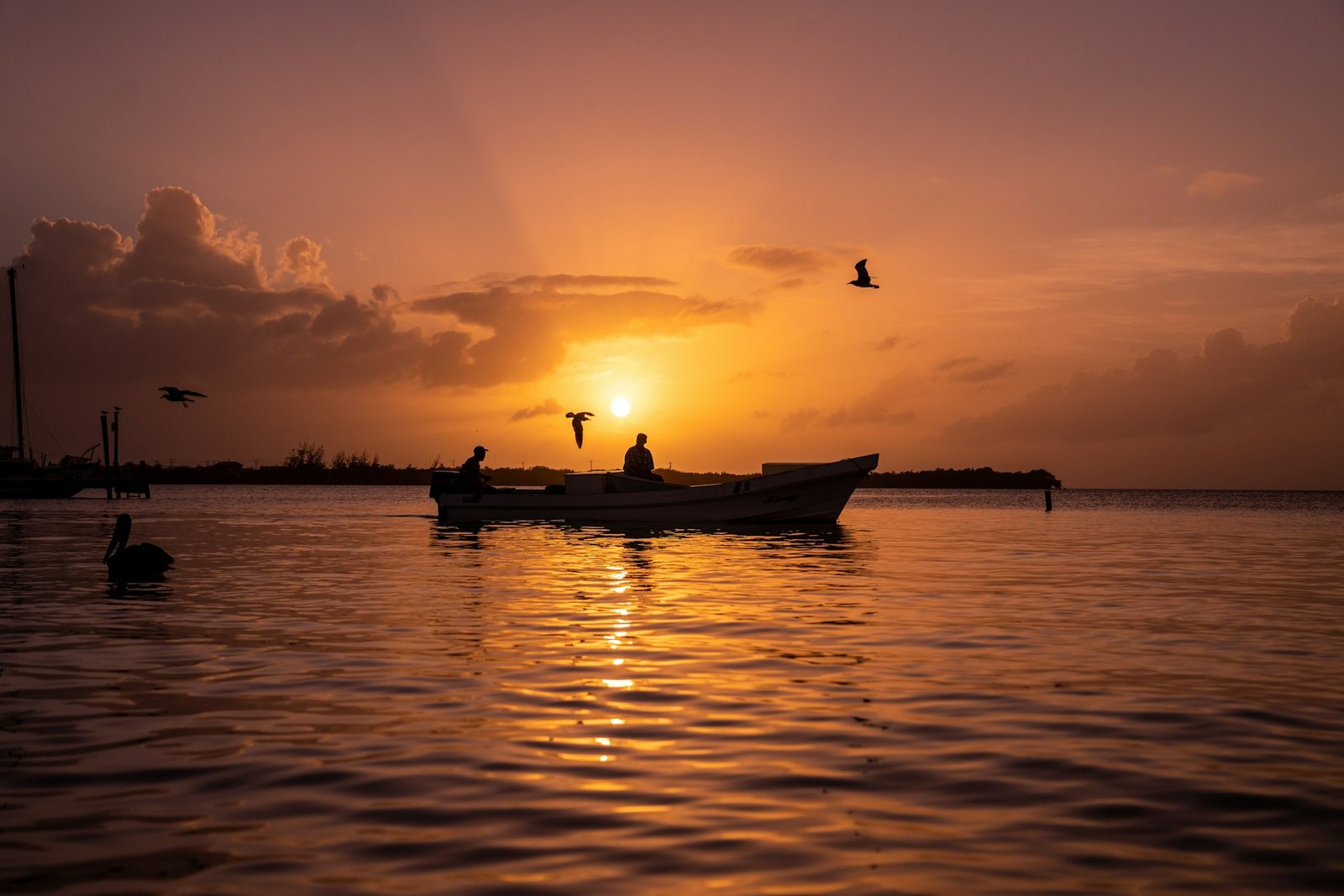
  • California’s Highway 1: The Ultimate Pacific Coast Road Trip

    California’s Highway 1: The Ultimate Pacific Coast Road Trip

    Jagged pink and grey peaks rising straight out of green meadows, turquoise lakes surrounded by forest, wooden huts serving apple strudel on sunny terraces and tiny chapels in front of towering rock walls: the Dolomites in northern Italy look like a fairytale come to life.

    These mountains are a UNESCO World Heritage Site and one of the most beautiful hiking regions in the world. They’re also a cultural crossroads, where Italian, German and the ancient Ladin language are spoken side by side, and where you can eat pasta for lunch and dumplings for dinner.

    The Dolomites aren’t the cheapest part of Italy, especially in summer. But with good planning, a few nights in mountain huts and some picnics with a view, you can see the very best of them without overspending. This guide shows you how.

    The Dolomites at a Glance

    • Where: northeastern Italy, in the regions of South Tyrol, Trentino and Veneto
    • Main airports: Venice (VCE), Verona (VRN) and Innsbruck (INN) in Austria. Bolzano has a small airport with limited flights
    • Currency: euro (EUR)
    • Entry: Italy is part of the Schengen Area. Many non-EU visitors can stay up to 90 days without a visa, but will need to register online with ETIAS once it starts. Check the current rules before you travel
    • Languages: Italian, German and Ladin. English is widely spoken in tourist areas
    • Best time: late June to September for hiking, December to March for skiing
    • Budget: around $90 to $130 a day for budget travellers, $150 to $250 for a comfortable mid-range trip

    When to Go

    Late June to mid-September is the main hiking season. The cable cars and mountain huts are open, the meadows are full of wildflowers in early summer and the weather is warm. July and August are the busiest months, especially in August, when Italians are on holiday.

    September is our favourite month. The crowds thin out, the weather is often stable and clear, and the larch forests start to turn gold towards the end of the month. Note that many cable cars and huts close from mid to late September.

    October and November are quiet and beautiful, but many lifts, huts and hotels are closed between seasons.

    December to March is ski season. The Dolomiti Superski area is one of the largest ski areas in the world, with around 1,200 km of slopes on a single pass. The region also hosted events of the 2026 Winter Olympics in Cortina d’Ampezzo.

    Our tip: travel in the first half of September for good weather, open huts and lifts and fewer crowds.

    Where to Stay

    The Dolomites are spread across several valleys, and driving between them takes time. If you have a week or more, split your stay between two bases.

    Val Gardena

    Val Gardena, with the villages of Ortisei, Santa Cristina and Selva, is the most popular base in the western Dolomites. It’s close to Seceda, the Alpe di Siusi and the Sella Pass, and has lots of cable cars and hotels.

    Cortina d’Ampezzo and Alta Badia

    Cortina d’Ampezzo is the most famous town in the eastern Dolomites, elegant and lively but expensive. Nearby Alta Badia is quieter and close to some of the best hikes. For the Tre Cime and Lago di Braies, consider staying in the smaller villages of the Puster Valley, which are often cheaper.

    Getting Around

    The best way to explore the Dolomites is with a rental car. The mountain roads are spectacular, but they’re narrow and winding, and parking at popular spots is limited and often expensive. Some roads are closed or restricted to private cars in summer, so check the latest rules before you go.

    Public transport is surprisingly good. Buses connect most villages and trailheads, and in South Tyrol the Guest Pass offered by many hotels includes free public transport. A lift pass, such as the Dolomiti Supersummer card, can save money if you plan to use a lot of cable cars.

    Things to Do in the Dolomites

    Here are the experiences we think are worth your time and money.

    1. Hike Around the Tre Cime di Lavaredo

    The three giant rock towers of the Tre Cime di Lavaredo (Drei Zinnen in German) are the symbol of the Dolomites. The classic loop around them is about 10 km long and fairly easy, with little climbing, and it takes three to four hours.

    The walk starts at the Rifugio Auronzo, reached by a toll road that is expensive for cars, or by bus in summer. Along the way, you’ll pass the Rifugio Lavaredo and the Rifugio Locatelli, where you’ll have the most famous view of the three peaks. Start early in the morning to avoid the crowds and find parking.

    The three peaks of the Tre Cime di Lavaredo in the Dolomites, Italy

    2. Walk Along the Seceda Ridgeline

    Above Ortisei in Val Gardena, the Seceda ridgeline is one of the most photographed views in the Alps. The meadows rise gently on one side, then drop away in a dramatic wall of sharp peaks on the other.

    Take the cable car from Ortisei up to Seceda, at around 2,500 metres, then walk along the ridge and down through the meadows past mountain huts. The cable car is on the pricier side, but the view is unforgettable. Because of the huge number of visitors, local landowners now charge a small fee on some paths.

    3. Row a Boat on Lago di Braies

    Lago di Braies (Pragser Wildsee) is often called the pearl of the Dolomites. Its emerald water is surrounded by forest and the steep walls of the Seekofel mountain. Wooden rowing boats moored at an old boathouse make it one of the most romantic places in the Alps.

    Rent a rowing boat for half an hour, a small splurge, or walk the easy path around the lake in about an hour. The lake is extremely popular, and in summer access by car is restricted during the day and needs to be booked in advance. Come early in the morning, or take the bus.

    Wooden rowing boats on the turquoise water of Lago di Braies, Dolomites, Italy

    4. Explore the Alpe di Siusi

    The Alpe di Siusi (Seiser Alm) is the largest high-altitude alpine meadow in Europe. Gentle green hills dotted with wooden huts stretch towards the jagged peaks of the Sassolungo and the Sciliar, especially beautiful at sunrise and sunset.

    The meadow is perfect for easy walks and family hikes, and in winter for cross-country skiing. In summer, the road onto the plateau is closed to private cars during the day, so take the cable car from Siusi or Ortisei, or the bus. Stop for lunch on the terrace of one of the huts.

    Sunset over the mountains with wildflowers on the Alpe di Siusi, Dolomites, Italy

    5. Spend a Night in a Mountain Hut

    One of the best experiences in the Dolomites is a night in a rifugio, a mountain hut. Many are perched in spectacular locations, high above the valleys. You’ll sleep in a simple dorm or private room, enjoy a hearty dinner, and wake up to watch the sunrise over the peaks.

    Most rifugios offer half board, which includes dinner and breakfast, at fair prices. Book well in advance for July and August. Experienced hikers can link several huts on a multi-day trek, like the famous Alta Via 1, which crosses the Dolomites from north to south.

    Wooden mountain hut on a green meadow below rocky peaks on the Seiser Alm, Dolomites

    6. Visit the Churches of Val di Funes

    The quiet Val di Funes (Villnöss) is one of the most beautiful valleys in the Dolomites. Its famous view is the small church of St. Magdalena in front of the jagged Odle (Geisler) peaks, especially at sunset or in autumn.

    A short walk away, the tiny chapel of St. John in Ranui stands alone in a meadow below the mountains. The best viewpoint is on private land, and a small fee is charged. For a longer hike, walk the Adolf Munkel Trail along the base of the Odle peaks.

    The village of St. Magdalena in Val di Funes below the Dolomite peaks at dusk, Italy

    7. Hike to Lago di Sorapis

    Lago di Sorapis is one of the most beautiful lakes in the Dolomites, with milky turquoise water below the towering cliffs of the Sorapis massif. The colour comes from fine rock dust carried in by glacial meltwater.

    The hike from Passo Tre Croci near Cortina takes about two hours each way. It’s moderate, with a few exposed sections with metal cables, so it’s not ideal for people with a fear of heights. Start early, as parking at the pass fills up quickly.

    Turquoise water of Lago di Sorapis below rocky cliffs near Cortina d'Ampezzo, Italy

    8. Try a Via Ferrata

    The Dolomites are the birthplace of the via ferrata, “iron paths” with steel cables, ladders and bridges fixed to the rock, which let non-climbers reach dramatic places safely. Many were first built during World War I.

    There are routes for every level, from easy beginner routes to long, exposed climbs. You’ll need a helmet, a harness and a via ferrata set, which you can rent in most villages. If you’re new to it, hire a mountain guide for your first route. It’s a splurge, but a safe and unforgettable way to experience the mountains.

    9. Drive the Great Dolomite Road and the Mountain Passes

    The Great Dolomite Road connects Bolzano and Cortina d’Ampezzo over a series of spectacular mountain passes. Along the way, you’ll pass the Lago di Carezza, a small lake famous for its rainbow colours, and the Passo Pordoi.

    Other passes worth driving are the Sella Pass, with views of the Sassolungo, and the Passo Giau, one of the most beautiful passes in the Alps. Stop at the top for a coffee and a short walk. Watch out for cyclists and motorcyclists on the bends.

    10. Discover World War I History on Lagazuoi

    During World War I, the front line between Italy and Austria-Hungary ran right through the Dolomites. Soldiers dug tunnels into the mountains and fought at altitudes of over 3,000 metres.

    At Lagazuoi, near Cortina, you can take a cable car to the top and walk down through restored tunnels and trenches, part of a large open-air museum. Bring a head torch for the tunnels. Nearby, the strange rock towers of the Cinque Torri are also full of wartime trenches and make a great short hike.

    Where to Stay on a Budget

    Accommodation in the Dolomites can be expensive, but there are good-value options:

    • Mountain huts (rifugios): simple but spectacular, often including dinner and breakfast
    • Farm stays: called Roter Hahn farms in South Tyrol, these are family-run farms with rooms and apartments, often with fresh breakfast from the farm
    • Guesthouses and B&Bs: found in every village, often cheaper than hotels
    • Apartments: great value for families and longer stays, with a kitchen to save money on food

    Book early for July, August and the ski season. Many hotels have a minimum stay in high season.

    Eating on a Budget

    The food in the Dolomites is a delicious mix of Italian and Austrian cooking:

    • Canederli (Knödel): bread dumplings with speck, cheese or spinach, served in broth or with butter
    • Speck: smoked ham from South Tyrol, perfect for a picnic
    • Kaiserschmarrn: a fluffy shredded pancake with powdered sugar and jam, the classic hut dessert
    • Apple strudel: a must with coffee on a sunny terrace
    • Picnics: buy bread, cheese, speck and fruit in the village shops and eat with a view

    Lunch at a mountain hut is usually cheaper than dinner in town, and the portions are big.

    What It Really Costs

    Here’s a realistic daily budget per person for a comfortable mid-range trip in summer, not counting flights.

    • Accommodation: $60 to $120 per person, sharing a double room in a guesthouse or farm stay, with a night or two in a rifugio
    • Food: $30 to $60 a day, mixing picnics, hut lunches and restaurant dinners
    • Transport: $30 to $50 a day per person, including a rental car shared by two, fuel, tolls and parking
    • Activities: budget for the highlights separately: cable cars, the Tre Cime toll road, a rowing boat on Lago di Braies and a via ferrata with a guide

    That works out to around $150 to $250 per person per day. Travelling in September, staying on farms and buying a lift pass can bring that down noticeably.

    A Sample 8-Day Itinerary

    Day 1: Arrive in Venice or Innsbruck and drive to Val Gardena.

    Day 2: Seceda in the morning, then a walk through the meadows down to Ortisei.

    Day 3: The Alpe di Siusi, with lunch at a mountain hut and sunset on the meadow.

    Day 4: Val di Funes and the churches of St. Magdalena and St. John.

    Day 5: Drive the Sella Pass and the Passo Giau to Cortina d’Ampezzo.

    Day 6: Hike to Lago di Sorapis, or Lagazuoi and the Cinque Torri.

    Day 7: The Tre Cime di Lavaredo loop, with a night in a rifugio.

    Day 8: Early morning at Lago di Braies, then drive back to the airport.

    Practical Tips

    • Start early: the best light, the emptiest trails and the easiest parking are all in the early morning
    • Check the weather: afternoon thunderstorms are common in summer, so plan to be off exposed ridges by early afternoon
    • Bring good hiking boots, layers, a rain jacket and sun protection
    • Check lift opening times before you go, especially at the start and end of the season
    • Carry cash for mountain huts, where cards aren’t always accepted
    • Respect the mountains: stay on the marked trails, take your rubbish with you and never pick the wildflowers

    Booking Tips

    • Airport transfer: if you don’t rent a car, book an airport transfer with Kiwitaxi from Venice, Verona or Innsbruck airport straight to Val Gardena or Cortina, with a fixed price and no changing between trains and buses with your luggage
    • eSIM: if you’re coming from outside the EU, install a Yesim eSIM before you fly, so you have data for maps, bus times and weather updates in the mountains from the moment you land
    • Tours: popular options include a Dolomites day trip from Venice or Bolzano, a guided Tre Cime hike and a beginner via ferrata with a mountain guide. You can compare and book most of them on Klook

    Final Thoughts

    The Dolomites are one of the most beautiful mountain ranges on earth. Walk along the Seceda ridge, circle the Tre Cime, row a boat on Lago di Braies, watch the sun set over the Alpe di Siusi and fall asleep in a mountain hut high above the valleys.

    Travel in early September, start your days early, eat in the huts and take your time. The Dolomites will reward you with views and memories that last a lifetime.

    Prices checked in October 2026. Costs and opening times change, so always confirm before you book.

  • The Dolomites on a Budget: Italy’s Most Spectacular Mountains

    The Dolomites on a Budget: Italy’s Most Spectacular Mountains

    Jagged pink and grey peaks rising straight out of green meadows, turquoise lakes surrounded by forest, wooden huts serving apple strudel on sunny terraces and tiny chapels in front of towering rock walls: the Dolomites in northern Italy look like a fairytale come to life.

    These mountains are a UNESCO World Heritage Site and one of the most beautiful hiking regions in the world. They’re also a cultural crossroads, where Italian, German and the ancient Ladin language are spoken side by side, and where you can eat pasta for lunch and dumplings for dinner.

    The Dolomites aren’t the cheapest part of Italy, especially in summer. But with good planning, a few nights in mountain huts and some picnics with a view, you can see the very best of them without overspending. This guide shows you how.

    The Dolomites at a Glance

    • Where: northeastern Italy, in the regions of South Tyrol, Trentino and Veneto
    • Main airports: Venice (VCE), Verona (VRN) and Innsbruck (INN) in Austria. Bolzano has a small airport with limited flights
    • Currency: euro (EUR)
    • Entry: Italy is part of the Schengen Area. Many non-EU visitors can stay up to 90 days without a visa, but will need to register online with ETIAS once it starts. Check the current rules before you travel
    • Languages: Italian, German and Ladin. English is widely spoken in tourist areas
    • Best time: late June to September for hiking, December to March for skiing
    • Budget: around $90 to $130 a day for budget travellers, $150 to $250 for a comfortable mid-range trip

    When to Go

    Late June to mid-September is the main hiking season. The cable cars and mountain huts are open, the meadows are full of wildflowers in early summer and the weather is warm. July and August are the busiest months, especially in August, when Italians are on holiday.

    September is our favourite month. The crowds thin out, the weather is often stable and clear, and the larch forests start to turn gold towards the end of the month. Note that many cable cars and huts close from mid to late September.

    October and November are quiet and beautiful, but many lifts, huts and hotels are closed between seasons.

    December to March is ski season. The Dolomiti Superski area is one of the largest ski areas in the world, with around 1,200 km of slopes on a single pass. The region also hosted events of the 2026 Winter Olympics in Cortina d’Ampezzo.

    Our tip: travel in the first half of September for good weather, open huts and lifts and fewer crowds.

    Where to Stay

    The Dolomites are spread across several valleys, and driving between them takes time. If you have a week or more, split your stay between two bases.

    Val Gardena

    Val Gardena, with the villages of Ortisei, Santa Cristina and Selva, is the most popular base in the western Dolomites. It’s close to Seceda, the Alpe di Siusi and the Sella Pass, and has lots of cable cars and hotels.

    Cortina d’Ampezzo and Alta Badia

    Cortina d’Ampezzo is the most famous town in the eastern Dolomites, elegant and lively but expensive. Nearby Alta Badia is quieter and close to some of the best hikes. For the Tre Cime and Lago di Braies, consider staying in the smaller villages of the Puster Valley, which are often cheaper.

    Getting Around

    The best way to explore the Dolomites is with a rental car. The mountain roads are spectacular, but they’re narrow and winding, and parking at popular spots is limited and often expensive. Some roads are closed or restricted to private cars in summer, so check the latest rules before you go.

    Public transport is surprisingly good. Buses connect most villages and trailheads, and in South Tyrol the Guest Pass offered by many hotels includes free public transport. A lift pass, such as the Dolomiti Supersummer card, can save money if you plan to use a lot of cable cars.

    Things to Do in the Dolomites

    Here are the experiences we think are worth your time and money.

    1. Hike Around the Tre Cime di Lavaredo

    The three giant rock towers of the Tre Cime di Lavaredo (Drei Zinnen in German) are the symbol of the Dolomites. The classic loop around them is about 10 km long and fairly easy, with little climbing, and it takes three to four hours.

    The walk starts at the Rifugio Auronzo, reached by a toll road that is expensive for cars, or by bus in summer. Along the way, you’ll pass the Rifugio Lavaredo and the Rifugio Locatelli, where you’ll have the most famous view of the three peaks. Start early in the morning to avoid the crowds and find parking.

    The three peaks of the Tre Cime di Lavaredo in the Dolomites, Italy

    2. Walk Along the Seceda Ridgeline

    Above Ortisei in Val Gardena, the Seceda ridgeline is one of the most photographed views in the Alps. The meadows rise gently on one side, then drop away in a dramatic wall of sharp peaks on the other.

    Take the cable car from Ortisei up to Seceda, at around 2,500 metres, then walk along the ridge and down through the meadows past mountain huts. The cable car is on the pricier side, but the view is unforgettable. Because of the huge number of visitors, local landowners now charge a small fee on some paths.

    3. Row a Boat on Lago di Braies

    Lago di Braies (Pragser Wildsee) is often called the pearl of the Dolomites. Its emerald water is surrounded by forest and the steep walls of the Seekofel mountain. Wooden rowing boats moored at an old boathouse make it one of the most romantic places in the Alps.

    Rent a rowing boat for half an hour, a small splurge, or walk the easy path around the lake in about an hour. The lake is extremely popular, and in summer access by car is restricted during the day and needs to be booked in advance. Come early in the morning, or take the bus.

    Wooden rowing boats on the turquoise water of Lago di Braies, Dolomites, Italy

    4. Explore the Alpe di Siusi

    The Alpe di Siusi (Seiser Alm) is the largest high-altitude alpine meadow in Europe. Gentle green hills dotted with wooden huts stretch towards the jagged peaks of the Sassolungo and the Sciliar, especially beautiful at sunrise and sunset.

    The meadow is perfect for easy walks and family hikes, and in winter for cross-country skiing. In summer, the road onto the plateau is closed to private cars during the day, so take the cable car from Siusi or Ortisei, or the bus. Stop for lunch on the terrace of one of the huts.

    Sunset over the mountains with wildflowers on the Alpe di Siusi, Dolomites, Italy

    5. Spend a Night in a Mountain Hut

    One of the best experiences in the Dolomites is a night in a rifugio, a mountain hut. Many are perched in spectacular locations, high above the valleys. You’ll sleep in a simple dorm or private room, enjoy a hearty dinner, and wake up to watch the sunrise over the peaks.

    Most rifugios offer half board, which includes dinner and breakfast, at fair prices. Book well in advance for July and August. Experienced hikers can link several huts on a multi-day trek, like the famous Alta Via 1, which crosses the Dolomites from north to south.

    Wooden mountain hut on a green meadow below rocky peaks on the Seiser Alm, Dolomites

    6. Visit the Churches of Val di Funes

    The quiet Val di Funes (Villnöss) is one of the most beautiful valleys in the Dolomites. Its famous view is the small church of St. Magdalena in front of the jagged Odle (Geisler) peaks, especially at sunset or in autumn.

    A short walk away, the tiny chapel of St. John in Ranui stands alone in a meadow below the mountains. The best viewpoint is on private land, and a small fee is charged. For a longer hike, walk the Adolf Munkel Trail along the base of the Odle peaks.

    The village of St. Magdalena in Val di Funes below the Dolomite peaks at dusk, Italy

    7. Hike to Lago di Sorapis

    Lago di Sorapis is one of the most beautiful lakes in the Dolomites, with milky turquoise water below the towering cliffs of the Sorapis massif. The colour comes from fine rock dust carried in by glacial meltwater.

    The hike from Passo Tre Croci near Cortina takes about two hours each way. It’s moderate, with a few exposed sections with metal cables, so it’s not ideal for people with a fear of heights. Start early, as parking at the pass fills up quickly.

    Turquoise water of Lago di Sorapis below rocky cliffs near Cortina d'Ampezzo, Italy

    8. Try a Via Ferrata

    The Dolomites are the birthplace of the via ferrata, “iron paths” with steel cables, ladders and bridges fixed to the rock, which let non-climbers reach dramatic places safely. Many were first built during World War I.

    There are routes for every level, from easy beginner routes to long, exposed climbs. You’ll need a helmet, a harness and a via ferrata set, which you can rent in most villages. If you’re new to it, hire a mountain guide for your first route. It’s a splurge, but a safe and unforgettable way to experience the mountains.

    9. Drive the Great Dolomite Road and the Mountain Passes

    The Great Dolomite Road connects Bolzano and Cortina d’Ampezzo over a series of spectacular mountain passes. Along the way, you’ll pass the Lago di Carezza, a small lake famous for its rainbow colours, and the Passo Pordoi.

    Other passes worth driving are the Sella Pass, with views of the Sassolungo, and the Passo Giau, one of the most beautiful passes in the Alps. Stop at the top for a coffee and a short walk. Watch out for cyclists and motorcyclists on the bends.

    10. Discover World War I History on Lagazuoi

    During World War I, the front line between Italy and Austria-Hungary ran right through the Dolomites. Soldiers dug tunnels into the mountains and fought at altitudes of over 3,000 metres.

    At Lagazuoi, near Cortina, you can take a cable car to the top and walk down through restored tunnels and trenches, part of a large open-air museum. Bring a head torch for the tunnels. Nearby, the strange rock towers of the Cinque Torri are also full of wartime trenches and make a great short hike.

    Where to Stay on a Budget

    Accommodation in the Dolomites can be expensive, but there are good-value options:

    • Mountain huts (rifugios): simple but spectacular, often including dinner and breakfast
    • Farm stays: called Roter Hahn farms in South Tyrol, these are family-run farms with rooms and apartments, often with fresh breakfast from the farm
    • Guesthouses and B&Bs: found in every village, often cheaper than hotels
    • Apartments: great value for families and longer stays, with a kitchen to save money on food

    Book early for July, August and the ski season. Many hotels have a minimum stay in high season.

    Eating on a Budget

    The food in the Dolomites is a delicious mix of Italian and Austrian cooking:

    • Canederli (Knödel): bread dumplings with speck, cheese or spinach, served in broth or with butter
    • Speck: smoked ham from South Tyrol, perfect for a picnic
    • Kaiserschmarrn: a fluffy shredded pancake with powdered sugar and jam, the classic hut dessert
    • Apple strudel: a must with coffee on a sunny terrace
    • Picnics: buy bread, cheese, speck and fruit in the village shops and eat with a view

    Lunch at a mountain hut is usually cheaper than dinner in town, and the portions are big.

    What It Really Costs

    Here’s a realistic daily budget per person for a comfortable mid-range trip in summer, not counting flights.

    • Accommodation: $60 to $120 per person, sharing a double room in a guesthouse or farm stay, with a night or two in a rifugio
    • Food: $30 to $60 a day, mixing picnics, hut lunches and restaurant dinners
    • Transport: $30 to $50 a day per person, including a rental car shared by two, fuel, tolls and parking
    • Activities: budget for the highlights separately: cable cars, the Tre Cime toll road, a rowing boat on Lago di Braies and a via ferrata with a guide

    That works out to around $150 to $250 per person per day. Travelling in September, staying on farms and buying a lift pass can bring that down noticeably.

    A Sample 8-Day Itinerary

    Day 1: Arrive in Venice or Innsbruck and drive to Val Gardena.

    Day 2: Seceda in the morning, then a walk through the meadows down to Ortisei.

    Day 3: The Alpe di Siusi, with lunch at a mountain hut and sunset on the meadow.

    Day 4: Val di Funes and the churches of St. Magdalena and St. John.

    Day 5: Drive the Sella Pass and the Passo Giau to Cortina d’Ampezzo.

    Day 6: Hike to Lago di Sorapis, or Lagazuoi and the Cinque Torri.

    Day 7: The Tre Cime di Lavaredo loop, with a night in a rifugio.

    Day 8: Early morning at Lago di Braies, then drive back to the airport.

    Practical Tips

    • Start early: the best light, the emptiest trails and the easiest parking are all in the early morning
    • Check the weather: afternoon thunderstorms are common in summer, so plan to be off exposed ridges by early afternoon
    • Bring good hiking boots, layers, a rain jacket and sun protection
    • Check lift opening times before you go, especially at the start and end of the season
    • Carry cash for mountain huts, where cards aren’t always accepted
    • Respect the mountains: stay on the marked trails, take your rubbish with you and never pick the wildflowers

    Booking Tips

    • Airport transfer: if you don’t rent a car, book an airport transfer with Kiwitaxi from Venice, Verona or Innsbruck airport straight to Val Gardena or Cortina, with a fixed price and no changing between trains and buses with your luggage
    • eSIM: if you’re coming from outside the EU, install a Yesim eSIM before you fly, so you have data for maps, bus times and weather updates in the mountains from the moment you land
    • Tours: popular options include a Dolomites day trip from Venice or Bolzano, a guided Tre Cime hike and a beginner via ferrata with a mountain guide. You can compare and book most of them on Klook

    Final Thoughts

    The Dolomites are one of the most beautiful mountain ranges on earth. Walk along the Seceda ridge, circle the Tre Cime, row a boat on Lago di Braies, watch the sun set over the Alpe di Siusi and fall asleep in a mountain hut high above the valleys.

    Travel in early September, start your days early, eat in the huts and take your time. The Dolomites will reward you with views and memories that last a lifetime.

    Prices checked in October 2026. Costs and opening times change, so always confirm before you book.
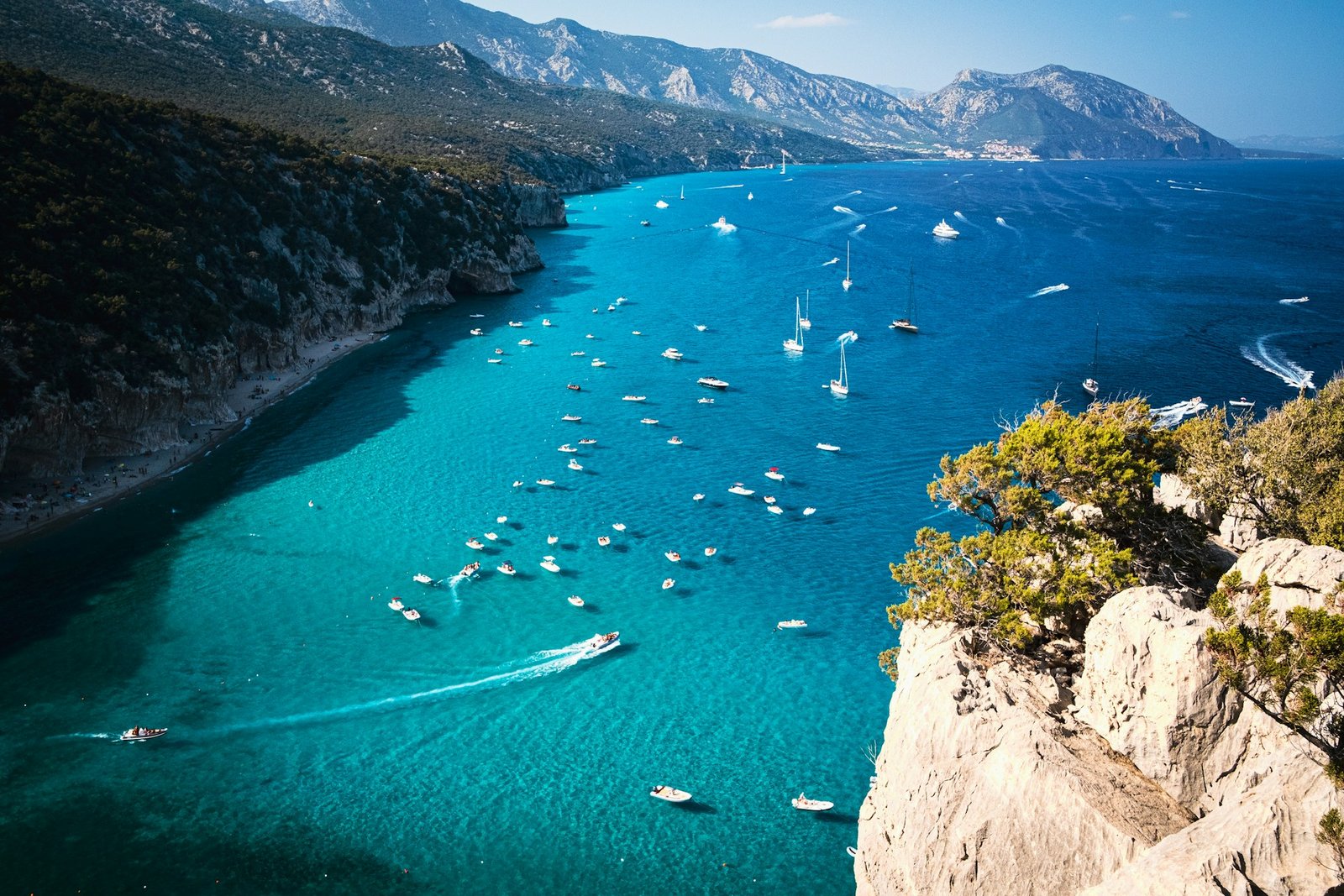
  • Morocco on a Budget: Marrakech, the Sahara and the Blue City

    Morocco on a Budget: Marrakech, the Sahara and the Blue City

    Just a short flight from Europe, Morocco feels like another world. Snake charmers and storytellers fill the great square of Marrakech, donkeys carry goods through the thousand-year-old alleys of Fes, a whole town is painted in shades of blue in the Rif Mountains, and beyond the snowy peaks of the Atlas lie the golden dunes of the Sahara.

    It’s a country that awakens all your senses: the smell of spices and mint tea, the call to prayer echoing over the rooftops, the colours of the souks and the silence of the desert at night. It can be overwhelming at times, but it’s also incredibly rewarding, and the hospitality of Moroccan people is legendary.

    Morocco is also great value. A night in a beautiful traditional riad often costs less than a basic hotel in Europe, and a delicious tagine costs only a few dollars. This guide shows you the best route, the experiences that are really worth it and what a trip will actually cost.

    Morocco at a Glance

    • Where: northwest Africa, just across the Strait of Gibraltar from Spain
    • Main airports: Marrakech (RAK), Fes (FEZ), Casablanca (CMN) and Tangier (TNG)
    • Currency: Moroccan dirham (MAD). One US dollar is roughly 9 to 10 dirhams
    • Entry: citizens of the EU, the UK, the US, Canada, Australia and many other countries can visit without a visa for up to 90 days. Always check the current rules for your passport
    • Languages: Arabic and Berber (Tamazight). French is widely spoken, and English is common in tourist areas
    • Best time: March to May and September to November
    • Budget: around $40 to $60 a day for budget travellers, $70 to $130 for a comfortable mid-range trip

    When to Go

    Spring (March to May) and autumn (September to November) are the best times to visit. The weather is warm and sunny, but not too hot, and it’s perfect for exploring the cities, hiking in the mountains and visiting the desert.

    Summer (June to August) is very hot in Marrakech, Fes and especially the Sahara, where temperatures can reach 45 degrees Celsius. The coast, including Essaouira, stays pleasantly cool.

    Winter (December to February) is mild and sunny in the cities during the day, but nights are cold, especially in the desert and the mountains. The High Atlas is often covered in snow.

    The dates of Ramadan change every year. Travelling during Ramadan is possible and can be a special experience, but some restaurants close during the day and opening hours change.

    Our tip: travel in April, May, October or early November for the best weather across the whole country.

    Getting Around

    • Trains: Morocco has a good rail network, including Africa’s first high-speed train, Al Boraq, between Tangier and Casablanca. Trains connect Marrakech, Casablanca, Rabat, Fes and Tangier
    • Buses: CTM and Supratours run comfortable, reliable long-distance buses to places the train doesn’t reach, like Chefchaouen and Essaouira
    • Grand taxis: shared taxis that travel between towns and leave when they’re full
    • Tours: the easiest way to visit the Sahara is on a multi-day tour from Marrakech or Fes
    • Private driver: a comfortable option for the desert and mountain roads if you’re travelling as a couple or a group

    Things to Do in Morocco

    Here are the experiences we think are worth your time and money.

    1. Get Lost in the Souks of Marrakech

    Marrakech is a city that never seems to sleep. Its heart is Jemaa el-Fnaa, a huge square that changes throughout the day. In the morning, it’s full of orange juice stalls and snake charmers. In the evening, dozens of food stalls fill the air with smoke, and musicians, storytellers and acrobats draw crowds until late at night.

    From the square, the souks spread out in a maze of narrow alleys, where you can buy spices, lanterns, carpets, leather and ceramics. Bargaining is expected, so start at around a third to a half of the first price and stay friendly. Also visit the Bahia Palace, the Koutoubia Mosque (from the outside) and the beautiful blue Jardin Majorelle, which is on the pricier side but very beautiful.

    Aerial view of the lively market square of Jemaa el-Fnaa at night in Marrakech, Morocco

    2. Stay in a Riad and Visit a Hammam

    A riad is a traditional Moroccan house built around a peaceful inner courtyard, often with a fountain, orange trees and a rooftop terrace. Staying in one is a highlight of any trip, and many riads are surprisingly affordable.

    After a day in the souks, relax in a hammam, a traditional steam bath. Local public hammams are very cheap and a real cultural experience. Spa hammams in riads and hotels are more expensive but more comfortable, with a full scrub and massage using black soap and argan oil.

    3. Hike in the High Atlas Mountains

    Less than two hours from Marrakech, the High Atlas Mountains are home to Berber villages, terraced fields and snowy peaks. The village of Imlil is the base for day hikes and for climbing Jebel Toubkal, North Africa’s highest mountain at 4,167 metres, usually done in two days with a guide.

    For an easier day trip, walk through the Ourika Valley to its waterfalls, or join a guided hike between villages with lunch in a local home. The region was hit by an earthquake in 2023, and many villages have been rebuilding since. Visiting with local guides is a great way to support them.

    4. Explore the Kasbah of Aït Benhaddou

    On the old caravan route between the Sahara and Marrakech, Aït Benhaddou is a fortified village of clay houses climbing up a hill. It’s a UNESCO World Heritage Site and one of the most photographed places in Morocco. You may recognise it from films like “Gladiator” and the series “Game of Thrones”.

    Walk across the river, wander through the narrow lanes and climb up to the old granary at the top for a wonderful view, especially at sunset. Most desert tours from Marrakech stop here on the way, after crossing the High Atlas on the spectacular Tizi n’Tichka Pass.

    Aerial view of the clay kasbah of Aït Benhaddou, Morocco

    5. Ride a Camel into the Sahara

    For many travellers, a night in the Sahara is the highlight of their trip. Near the village of Merzouga, the golden dunes of Erg Chebbi rise up to 150 metres high, glowing orange and red at sunrise and sunset.

    Ride a camel into the dunes in the late afternoon, watch the sun set from the top of a dune and spend the night in a desert camp. Camps range from simple tents to luxury camps with private bathrooms. After dinner, local Berber musicians play drums around the fire under a sky full of stars.

    The most common way to get there is a three-day tour from Marrakech or Fes. It’s a long drive, but the scenery along the way is spectacular. Tours range from budget to mid-range in price, depending on the camp.

    Golden sunset over the sand dunes of Erg Chebbi near Merzouga, Morocco

    6. Walk the Dunes and Watch the Stars

    Don’t just ride through the desert. Get up early and climb a dune for the sunrise, when the silence is total and the sand changes colour by the minute. Try sandboarding down the dunes, or take a 4×4 tour around Erg Chebbi to visit nomad families and the small village of Khamlia, known for its Gnawa music.

    At night, the desert is one of the best places in the world for stargazing, far from any city lights. Bring warm clothes, as the desert gets surprisingly cold after dark.

    Person walking across the Sahara sand dunes near Merzouga, Morocco

    7. Drive Through the Todra and Dades Gorges

    On the way to or from the Sahara, the road passes some of Morocco’s most dramatic landscapes. In the Todra Gorge, red rock walls rise up to 300 metres high on both sides of a narrow river canyon. You can walk through the gorge and hike up into the surrounding hills.

    Nearby, the Dades Valley is known for its strange rock formations and the famous winding road of switchbacks that climbs up the side of the valley. Many desert tours stop here for the night.

    8. Explore the Ancient Medina of Fes

    Fes el-Bali, the old medina of Fes, is one of the largest car-free urban areas in the world and a UNESCO World Heritage Site. Its around 9,000 narrow alleys are a living medieval city, where craftsmen still work as they have for centuries and donkeys carry goods through the streets.

    The most famous sight is the Chouara Tannery, where leather is dyed in huge stone vats of colour. You’ll watch it from the terraces of the surrounding leather shops, which will hand you a sprig of mint for the smell. Also visit the Al-Qarawiyyin mosque and university, one of the oldest in the world (from the outside), and the beautiful Bou Inania Madrasa.

    The medina is easy to get lost in, so consider hiring an official guide for your first half-day.

    9. Wander Through the Blue Streets of Chefchaouen

    High in the Rif Mountains, Chefchaouen is one of the most beautiful towns in Morocco. Almost every wall, door and staircase in its old medina is painted in shades of blue, creating a dreamlike atmosphere. It’s also much calmer and more relaxed than the big cities.

    Wander through the blue alleys, sit in the main square, Plaza Uta el-Hammam, and walk up to the Spanish Mosque on the hill for a view over the town at sunset. For a day trip, hike to the waterfalls and natural pools of Akchour.

    Blue courtyard with potted plants in the medina of Chefchaouen, Morocco

    10. Relax by the Sea in Essaouira

    On the Atlantic coast, about three hours from Marrakech, Essaouira is a breezy, laid-back town with whitewashed houses, blue shutters and thick sea walls. It’s the perfect place to slow down after the busy cities.

    Walk along the ramparts, watch the fishermen bring in their catch in the harbour, full of blue wooden boats, and eat freshly grilled fish at the port. The constant wind makes Essaouira one of the best places in Morocco for kitesurfing and windsurfing, with lessons for beginners at fair prices.

    Fishing boats in the harbour of Essaouira, Morocco

    Where to Stay on a Budget

    Morocco has wonderful accommodation at very fair prices:

    • Riads: traditional houses with a courtyard, ranging from simple and affordable to luxurious. The best choice in Marrakech, Fes and Chefchaouen
    • Hostels: found in all the main cities, often in beautiful old riads with rooftop terraces
    • Guesthouses (maisons d’hôtes): family-run places in the mountains and smaller towns
    • Desert camps: booked as part of a tour, from simple to luxury

    Many riads include a delicious Moroccan breakfast in the price.

    Eating on a Budget

    Moroccan food is one of the best things about the country:

    • Tagine: meat or vegetables slow-cooked in a clay pot with spices, olives and preserved lemon
    • Couscous: traditionally served on Fridays, steamed and topped with vegetables and meat
    • Harira: a hearty soup of tomatoes, lentils and chickpeas, especially popular during Ramadan
    • Street food: try the food stalls on Jemaa el-Fnaa, fresh msemen (flaky pancakes) for breakfast and grilled meat sandwiches
    • Mint tea: sweet green tea with fresh mint, served everywhere as a sign of hospitality

    Local restaurants and food stalls are much cheaper than tourist restaurants. Alcohol is only available in some hotels, bars and shops.

    What It Really Costs

    Here’s a realistic daily budget per person for a comfortable mid-range trip, not counting flights.

    • Accommodation: $25 to $60 per person, sharing a double room in a good riad
    • Food: $15 to $30 a day, eating mostly local food with the occasional nicer restaurant
    • Transport: $10 to $25 a day on average, including trains, buses and taxis
    • Activities: budget for the highlights separately: a three-day Sahara tour, a hammam, a guided tour of the Fes medina and entrance fees to palaces and gardens

    That works out to around $70 to $130 per person per day. Backpackers can travel comfortably for much less.

    A Sample 12-Day Itinerary

    Days 1 to 3: Marrakech. Jemaa el-Fnaa, the souks, the Bahia Palace, the Jardin Majorelle and a hammam.

    Day 4: Day trip to the High Atlas and Imlil.

    Days 5 to 7: Three-day desert tour: the Tizi n’Tichka Pass, Aït Benhaddou, the Dades Valley, the Todra Gorge and a night in a desert camp in Merzouga, ending in Fes.

    Days 8 to 9: Fes. The medina, the tanneries and the madrasas.

    Days 10 to 11: Chefchaouen. The blue medina, the Spanish Mosque and a day trip to Akchour.

    Day 12: Travel to Tangier and fly home, or take the ferry to Spain.

    If you have more time, add two or three days in Essaouira at the start or end of your trip.

    Practical Tips

    • Dress modestly: cover your shoulders and knees, especially in the medinas and rural areas
    • Watch out for fake guides: politely say no to people who offer to show you the way, and use official guides or ask your riad for directions
    • Always ask before taking photos of people, and expect to give a small tip if they agree
    • Bargain with a smile in the souks, but not in shops with fixed prices
    • Carry cash: many small shops, taxis and restaurants don’t take cards
    • Drink bottled water and be careful with salads and unpeeled fruit in the first few days

    Booking Tips

    • Airport transfer: book an airport transfer with Kiwitaxi from Marrakech airport to your riad, with a fixed price and a driver who knows where to drop you, as cars can’t enter the narrow lanes of the medina
    • eSIM: install a Yesim eSIM before you fly, so you have data for maps in the maze of the medina and messages in Morocco from the moment you land
    • Tours: popular options include a Sahara desert tour from Marrakech, an Atlas Mountains day trip, a Marrakech food tour and a day trip to Essaouira. You can compare and book most of them on Klook

    Final Thoughts

    Morocco is a country of colours, flavours and contrasts. Lose yourself in the souks of Marrakech, sleep under the stars in the Sahara, wander through the blue alleys of Chefchaouen and drink mint tea on a rooftop as the call to prayer echoes over the medina.

    Travel in spring or autumn, stay in riads, eat where the locals eat and keep a sense of humour when the medina gets overwhelming. Morocco will stay with you long after you’ve gone home.

    Prices checked in October 2026. Costs and opening times change, so always confirm before you book.

  • Japan in Two Weeks: Tokyo, Kyoto and Beyond on a Real Budget

    Japan in Two Weeks: Tokyo, Kyoto and Beyond on a Real Budget

    There’s no place quite like Japan. In the morning, you can cross the busiest intersection in the world under a sea of neon screens. By lunchtime, a bullet train has carried you to a quiet temple garden where monks rake the gravel. In the evening, you’re soaking in a hot spring with a view of Mount Fuji, before a dinner of a dozen tiny, perfect dishes.

    Japan is a country of contrasts: ultra-modern and deeply traditional, crowded and peaceful, efficient and wonderfully strange. It’s also one of the safest and cleanest countries on earth, and easier to travel than most first-time visitors expect.

    Japan has a reputation for being expensive, but that’s no longer really true. With a favourable exchange rate, cheap and delicious food everywhere and excellent public transport, it’s now one of the best-value destinations in Asia for what you get. This guide shows you the classic two-week route, the experiences that are really worth it and what the trip will actually cost.

    Japan at a Glance

    • Where: an island country in East Asia, off the coast of China and Korea
    • Main airports: Tokyo Narita (NRT) and Haneda (HND), and Osaka Kansai (KIX)
    • Currency: Japanese yen (JPY). One US dollar is roughly 145 to 155 yen
    • Entry: citizens of the EU, the UK, the US, Canada, Australia and many other countries can visit without a visa for up to 90 days. Japan is planning to introduce an online travel authorisation, so check the current rules before you go
    • Language: Japanese. English signs are common in cities and train stations, but English is less widely spoken than you might expect
    • Best time: late March to early April for cherry blossoms, October to November for autumn colours
    • Budget: around $70 to $100 a day for budget travellers, $120 to $200 for a comfortable mid-range trip

    When to Go

    Spring (March to May) is the most famous season. The cherry blossoms usually bloom from late March to early April in Tokyo and Kyoto, and the whole country celebrates with picnics under the trees. It’s beautiful, but also the busiest and most expensive time of year. Avoid Golden Week in early May, when the whole country is on holiday.

    Summer (June to August) starts with the rainy season in June, followed by hot and very humid weather. It’s festival season, with fireworks and street parties, and the only time to climb Mount Fuji.

    Autumn (October and November) is our favourite. The weather is mild and dry, the skies are clear, and the maple trees turn the temples and mountains red and gold.

    Winter (December to February) is cold, but sunny in Tokyo and Kyoto, with fewer crowds and the clearest views of Mount Fuji. It’s also the season for skiing and snow festivals in the north.

    Our tip: travel in late October or November for great weather, autumn colours and fewer crowds than in cherry blossom season.

    Getting Around

    Japan’s public transport is fast, punctual and spotlessly clean.

    • Shinkansen (bullet train): connects Tokyo, Kyoto, Osaka and Hiroshima at speeds of up to 300 km/h. Tokyo to Kyoto takes just over two hours
    • Japan Rail Pass: gives unlimited travel on most JR trains, including most bullet trains. After a big price increase, it’s no longer worth it for every trip, so compare the cost of the pass with individual tickets for your route
    • IC cards: get a Suica or Pasmo card, or add one to your phone, and simply tap in and out on local trains, subways and buses. You can also use it in convenience stores
    • Luggage forwarding: send your big suitcase ahead to your next hotel for a small fee and travel light on the trains

    Things to Do in Japan

    Here are the experiences we think are worth your time and money.

    1. Explore Tokyo’s Neighbourhoods

    Tokyo is not one city but dozens of neighbourhoods, each with its own personality. Start at the Shibuya Crossing, where up to 3,000 people cross the street at once when the lights turn green. Watch it from above at the Shibuya Sky observation deck, a splurge with a spectacular view, especially at sunset.

    Then explore the narrow lanes of Harajuku and the peaceful forest around Meiji Shrine, the neon-lit bars of Shinjuku’s Golden Gai, and Asakusa, home to Senso-ji, Tokyo’s oldest temple. For a night out, eat and drink with the locals in a tiny izakaya, a Japanese pub, under the railway tracks of Yurakucho.

    Aerial view of the Shibuya Crossing in Tokyo, Japan

    2. See Mount Fuji from the Chureito Pagoda

    Mount Fuji, Japan’s highest mountain at 3,776 metres, is the symbol of the country. On a clear day, you can see it from Tokyo, but the best views are from the Fuji Five Lakes area, about two hours away by bus or train.

    The most famous viewpoint is the Chureito Pagoda in Fujiyoshida, where a red five-storey pagoda stands on a hillside with Fuji rising behind it. It’s about 400 steps up from the station. Nearby, Lake Kawaguchiko has lovely lakeside walks and views of the mountain. Fuji is often hidden by clouds, so go early in the morning and keep your plans flexible.

    From July to early September, you can climb Mount Fuji. Climbers on the popular Yoshida Trail now need to book in advance and pay a fee.

    3. Stay in a Ryokan and Soak in an Onsen

    A night in a ryokan, a traditional Japanese inn, is one of the most memorable experiences of any trip to Japan. You’ll sleep on a futon on tatami mats, wear a cotton yukata robe, and enjoy a kaiseki dinner of many beautiful small dishes.

    Many ryokan have their own onsen, natural hot spring baths. Hakone, near Mount Fuji, is the most popular onsen town close to Tokyo. A ryokan night is a splurge, but even one night is worth it. Remember to wash thoroughly before getting into the bath, and note that some onsen don’t allow tattoos.

    4. Walk Through the Torii Gates of Fushimi Inari

    In Kyoto, the Fushimi Inari Shrine is famous for its thousands of bright orange torii gates, which form tunnels that wind up the forested mountain behind the shrine. Each gate was donated by a person or company hoping for good luck in business.

    The full walk to the top takes about two to three hours, but most visitors only walk the first section. Go early in the morning or in the evening, when the gates are lit and the crowds are gone. Best of all, it’s free and open 24 hours.

    Rows of orange torii gates at the Fushimi Inari Shrine in Kyoto, Japan

    5. Visit the Arashiyama Bamboo Grove

    On the western edge of Kyoto, Arashiyama is famous for its bamboo grove, where a path leads through towering green stalks that sway and creak in the wind. It’s one of the most photographed places in Japan, so go right at sunrise for a quieter experience.

    Nearby, visit the Tenryu-ji temple and its beautiful garden, walk across the Togetsukyo Bridge, and take the short hike up to the Iwatayama Monkey Park for a view over the city with wild macaques all around you.

    Visitors walking through the Arashiyama Bamboo Grove in Kyoto, Japan

    6. Discover the Temples and Teahouses of Kyoto

    Kyoto was Japan’s capital for more than 1,000 years, and it’s home to around 1,600 temples and 17 UNESCO World Heritage Sites. Don’t miss Kinkaku-ji, the Golden Pavilion, shining over its pond, and Kiyomizu-dera, a wooden temple on a hillside with views over the city.

    In the evening, walk through Gion, Kyoto’s historic geisha district, with its wooden teahouses and lantern-lit streets. You might see a geiko or maiko hurrying to an appointment. Be respectful: don’t block their way or take photos without permission, and note that some private lanes in Gion are now closed to tourists. For a deeper look at Japanese culture, join a tea ceremony, which is budget to mid-range in price.

    7. Meet the Bowing Deer of Nara

    Less than an hour from Kyoto, Nara was Japan’s first permanent capital. Today, it’s famous for the more than 1,000 wild deer that roam freely in Nara Park. You can buy special deer crackers, and some deer will even bow to you before taking one. Be careful, as they can get pushy when they know you have food.

    Nara is also home to Todai-ji, a huge wooden temple that houses one of the largest bronze Buddha statues in Japan. Nara is an easy and budget-friendly half-day or day trip from Kyoto or Osaka.

    Visitor feeding the wild deer in Nara Park, Japan

    8. Eat Your Way Through Osaka

    Osaka is Japan’s kitchen, and its motto is kuidaore, which means to eat until you drop. The best place to do it is Dotonbori, a canal-side street lit up by giant neon signs, mechanical crabs and the famous running man of Glico.

    Try takoyaki, crispy balls of batter filled with octopus, and okonomiyaki, a savoury pancake cooked in front of you on a hot plate. Kuromon Market is great for fresh seafood and snacks. Street food in Osaka is cheap, delicious and one of the highlights of a trip to Japan.

    Neon signs lighting up the street at night in Dotonbori, Osaka, Japan

    9. Visit Hiroshima and Miyajima

    Hiroshima is one of the most moving places you’ll ever visit. The Peace Memorial Park and Museum tell the story of the atomic bomb that destroyed the city in 1945, and the ruined Atomic Bomb Dome still stands as a reminder. Today, Hiroshima is a lively, friendly city, famous for its own style of okonomiyaki.

    A short train and ferry ride away, the island of Miyajima is home to the Itsukushima Shrine and its famous floating torii gate, which seems to rise out of the sea at high tide. At low tide, you can walk right up to it. A small visitor tax is charged on arrival. Wild deer roam the streets here too, and you can hike or take the ropeway up Mount Misen for great views.

    The floating torii gate of Itsukushima Shrine on Miyajima at high tide, Japan

    10. Ride the Shinkansen

    Riding the Shinkansen, Japan’s famous bullet train, is an experience in itself. The trains are fast, quiet and incredibly punctual, and the seats are spacious and comfortable.

    Buy an ekiben, a beautifully packed lunch box sold at stations, and enjoy it on the way. Between Tokyo and Kyoto, sit on the right-hand side of the train (seat E on most trains) for a chance to see Mount Fuji out of the window on a clear day.

    Where to Stay on a Budget

    Japan has accommodation for every budget:

    • Business hotels: small but spotless rooms with everything you need, often surprisingly cheap. Chains like Toyoko Inn, Dormy Inn and APA are found everywhere
    • Hostels and capsule hotels: modern, clean and social. Sleeping in a capsule is a fun experience for a night or two
    • Ryokan and minshuku: traditional inns. Minshuku are family-run and cheaper than ryokan
    • Apartments: a good choice for families and longer stays

    Book early for cherry blossom season, Golden Week and the autumn colours in Kyoto.

    Eating on a Budget

    Eating in Japan is one of the great pleasures of travel, and it doesn’t have to be expensive:

    • Convenience stores: 7-Eleven, Lawson and FamilyMart sell surprisingly good food, from rice balls (onigiri) to sandwiches and hot meals
    • Ramen, udon and soba shops: a filling bowl of noodles costs very little, and many shops have ticket machines, so you don’t need to speak Japanese
    • Conveyor-belt sushi: fresh, fun and cheap
    • Set lunches: many restaurants offer a set lunch called teishoku at a much lower price than dinner
    • Department store food halls: the basements, called depachika, are full of amazing food, and prices drop in the evening

    Tipping is not part of Japanese culture and can even cause confusion, so don’t tip.

    What It Really Costs

    Here’s a realistic daily budget per person for a comfortable mid-range trip, not counting international flights.

    • Accommodation: $50 to $100 per person, sharing a double room in a business hotel, plus one or two ryokan nights
    • Food: $30 to $50 a day, mixing convenience stores, noodle shops and restaurant meals
    • Transport: $20 to $45 a day on average, including the Shinkansen between cities and local trains
    • Activities: budget for the highlights separately: Shibuya Sky, temple entrance fees, a tea ceremony and a ryokan night with dinner

    That works out to around $120 to $200 per person per day. Backpackers who stay in hostels and eat at convenience stores and noodle shops can travel for much less.

    A Sample 14-Day Itinerary

    Days 1 to 4: Tokyo. Shibuya, Harajuku and Meiji Shrine, Shinjuku, Asakusa and a day trip to the Fuji Five Lakes and the Chureito Pagoda.

    Day 5: Hakone. A ryokan night with an onsen.

    Days 6 to 9: Kyoto. Fushimi Inari, Arashiyama, Kinkaku-ji, Kiyomizu-dera and an evening in Gion.

    Day 10: Day trip to Nara.

    Days 11 to 12: Osaka. Dotonbori, street food and Osaka Castle.

    Day 13: Hiroshima and Miyajima.

    Day 14: Back to Osaka and fly home from Kansai Airport, or take the Shinkansen back to Tokyo.

    Practical Tips

    • Carry cash: cards are now widely accepted, but many small restaurants, temples and shops still prefer cash
    • Get a pocket Wi-Fi or eSIM for maps and train timetables
    • Learn a few words: “arigatou gozaimasu” (thank you) and “sumimasen” (excuse me) go a long way
    • Take your shoes off when entering homes, ryokan, some restaurants and temple halls
    • Keep quiet on trains and don’t talk on your phone
    • Carry your rubbish: public bins are rare, so take a small bag for your rubbish

    Booking Tips

    • Airport transfer: after a long flight, book an airport transfer with Kiwitaxi from Narita, Haneda or Kansai airport straight to your hotel, with a fixed price and no need to find your way through the train system with luggage
    • eSIM: install a Yesim eSIM before you fly, so you have data for maps, train times and translation apps in Japan from the moment you land
    • Tours: popular options include a Mount Fuji day trip, a Tokyo food tour, a Kyoto and Nara guided tour and a Hiroshima and Miyajima day trip. You can compare and book most of them on Klook

    Final Thoughts

    Japan is one of those rare countries that feels like nowhere else on earth. Cross the Shibuya Crossing, walk through a tunnel of torii gates, sleep on a futon in a ryokan, bow to the deer of Nara and eat your way through the neon streets of Osaka.

    Travel in autumn or spring, use the trains, eat where the locals eat and leave room for surprises. Japan will win your heart, and you’ll start planning your next trip before you’ve even left.

    Prices checked in October 2026. Costs and opening times change, so always confirm before you book.
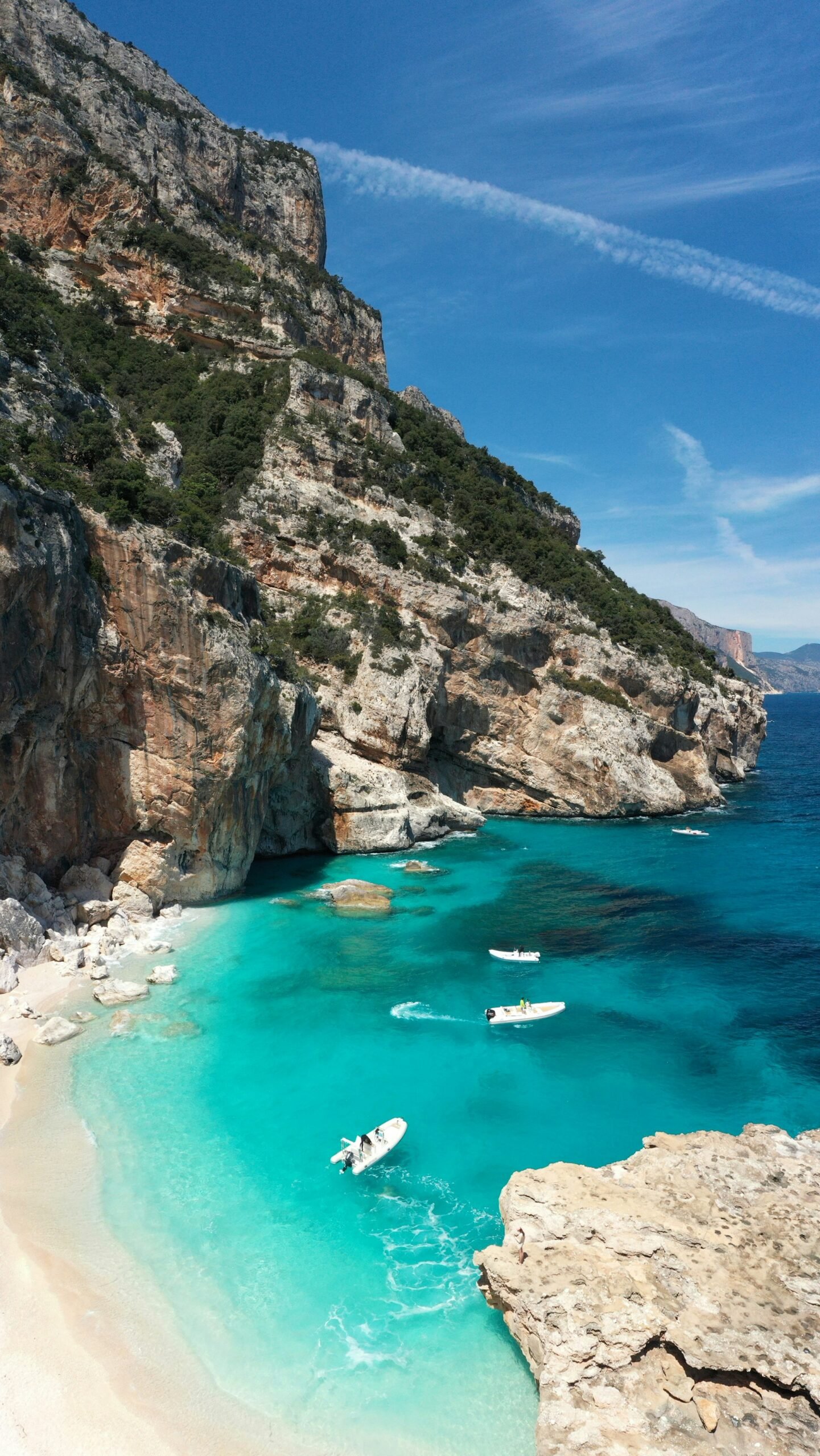
  • Sydney and Australia’s East Coast: The Ultimate Road Trip on a Real Budget

    Sydney and Australia’s East Coast: The Ultimate Road Trip on a Real Budget

    Australia’s east coast is one of the great road trips of the world. It starts in Sydney, with its famous harbour, sails and beaches, then follows the Pacific Ocean north past surf towns, national parks, rainforest, lighthouses and the largest sand island on earth.

    Along the way, you can walk along clifftops above the ocean, learn to surf, spot koalas in the wild, swim in crystal-clear freshwater lakes and drive a 4WD along a beach that’s also a highway. And because the route is so popular, it’s easy to travel independently, with good roads, campsites, hostels and friendly towns all along the coast.

    Australia isn’t a cheap country, but a road trip is one of the best ways to see it on a budget. This guide shows you the highlights between Sydney and K’gari, the experiences that are really worth it and what the trip will actually cost.

    The East Coast at a Glance

    • Where: the coast of New South Wales and Queensland, from Sydney north to K’gari (Fraser Island)
    • Main airports: Sydney (SYD), Brisbane (BNE), Gold Coast (OOL) and Ballina Byron (BNK)
    • Currency: Australian dollar (AUD). One US dollar is roughly 1.5 Australian dollars
    • Entry: most visitors need an electronic visa before travel. EU citizens can apply for a free eVisitor, while travellers from the US, Canada and some other countries use the ETA app
    • Driving: on the left side of the road
    • Distance: around 1,300 km from Sydney to Hervey Bay, the gateway to K’gari
    • Best time: September to November and March to May
    • Budget: around $80 to $120 a day for budget travellers, $150 to $250 for a comfortable mid-range trip

    When to Go

    September to November is spring. The weather is warm and sunny, the ocean is warming up, and it’s whale-watching season, when humpback whales migrate south along the coast.

    December to February is summer and the main holiday season in Australia. It’s hot and busy, prices are higher and you’ll need to book accommodation well ahead, especially around Christmas and the school holidays.

    March to May is autumn, with warm days, calm seas and fewer crowds. It’s one of the best times for a road trip.

    June to August is winter. Sydney is cool, but the coast further north is mild and sunny, and you can see whales migrating north.

    Our tip: travel in October, November, March or April for great weather, warm water and fair prices.

    Getting Around

    The best way to travel the east coast is by car or campervan. A campervan saves money on accommodation and gives you the freedom to stop at beaches and campsites along the way. Book early for the summer holidays, and check one-way fees if you’re dropping the vehicle off in a different city.

    If you don’t want to drive, Greyhound buses and hop-on hop-off passes connect the main towns along the coast, and domestic flights are quick and often cheap.

    In Sydney, use the Opal system or simply tap on and off with your contactless card for trains, buses and ferries. Travel is capped at a daily and weekly maximum, which makes exploring very affordable.

    Things to Do on Australia’s East Coast

    Here are the experiences we think are worth your time and money.

    1. See the Opera House and Harbour Bridge

    Sydney’s harbour is one of the most beautiful city settings in the world, and the Sydney Opera House and the Harbour Bridge are its stars. Walk around the Opera House, take a guided tour inside or catch a performance, then stroll through the Royal Botanic Garden to Mrs Macquarie’s Chair for the classic view of both landmarks together.

    You can walk across the Harbour Bridge for free on the pedestrian walkway. For a bird’s-eye view, climb the Pylon Lookout for a small fee, or join the famous BridgeClimb to the top of the arch, a real splurge but an unforgettable experience. In the evening, wander through The Rocks, Sydney’s oldest neighbourhood, with historic pubs and weekend markets.

    2. Take the Ferry to Manly

    One of the best things you can do in Sydney costs only the price of a ferry ticket. The ride from Circular Quay to Manly takes about 30 minutes and crosses the whole harbour, with views of the Opera House, the bridge, the city skyline and the cliffs of the harbour entrance.

    Manly has a long surf beach, a relaxed promenade and the calm swimming spot of Shelly Beach, where you can snorkel with friendly fish. Keen walkers can take the Spit to Manly walk, around 10 km through bushland and past hidden beaches.

    3. Walk from Bondi to Coogee

    Bondi Beach is Australia’s most famous beach, a golden crescent of sand with surfers, lifeguards and beachfront cafés. At its southern end, the Bondi Icebergs pool, filled with seawater, sits right on the rocks, with waves crashing over its edge. A swim here costs only a small fee.

    From Icebergs, the Bondi to Coogee Coastal Walk follows the cliffs for about 6 km, past sandstone cliffs, rock pools and the beaches of Tamarama, Bronte and Clovelly. It’s one of the most beautiful free things to do in Sydney. Go early in the morning, bring your swimmers and stop for a dip along the way.

    Aerial view of the Bondi Icebergs ocean pool with waves breaking over the edge, Sydney

    4. Explore the Blue Mountains

    About two hours west of Sydney, the Blue Mountains are a UNESCO World Heritage Site of deep valleys, sandstone cliffs, waterfalls and eucalyptus forests. The oils from the eucalyptus trees give the air a blue haze, which is how the mountains got their name.

    The most famous sight is the Three Sisters, a group of rock pillars at Echo Point in Katoomba. From there, walking trails lead along the cliffs and down into the valley. Scenic World has a cable car, a skyway and the steepest passenger railway in the world, a fun but pricier option.

    The Blue Mountains are easy to reach by train from Sydney, making them a great budget day trip. Stay overnight to enjoy the sunset and sunrise from the lookouts.

    The Three Sisters rock formation above the valley in the Blue Mountains, Australia

    5. Climb the Sand Dunes of Port Stephens

    About two and a half hours north of Sydney, Port Stephens is a beautiful bay with white beaches and calm water. It’s home to a large population of wild bottlenose dolphins, and dolphin-watching cruises have a very good chance of sightings. In season, the same boats also go whale watching.

    Nearby, the Stockton Bight Sand Dunes are the largest moving sand dunes in the Southern Hemisphere. Join a 4WD tour or try sandboarding down the dunes. It’s a lot of fun and budget-friendly.

    6. Watch the Sunrise in Byron Bay

    Byron Bay is the most famous beach town in Australia, a laid-back place of surfers, yoga studios, cafés and long golden beaches. Walk up to the Cape Byron Lighthouse at sunrise and you’ll be standing at the most easterly point of mainland Australia, among the first to see the sun rise over the continent.

    The Cape Byron Walking Track loops around the headland in about two hours, with views over the beaches and the ocean. Look out for dolphins in the waves and, in season, whales passing by. Byron is popular and can be expensive, so book early or stay in a nearby town like Lennox Head.

    Cape Byron Lighthouse on a hill above the ocean at sunrise, Byron Bay, Australia

    7. Learn to Surf

    The east coast is one of the best places in the world to learn to surf, with gentle waves, warm water and surf schools in almost every beach town. Byron Bay, the Gold Coast and Noosa are especially good for beginners. Group lessons are budget-friendly and include a board and wetsuit.

    In Noosa, the long, gentle point breaks of Noosa National Park are perfect for longboarding. Watching the local surfers glide along the waves is a show in itself.

    Surfers riding the waves at Noosa Heads, Queensland, Australia

    8. Spot Koalas in Noosa National Park

    Noosa is one of the most beautiful towns on the coast, with a relaxed beach, a river lined with restaurants and a stunning national park right next to town. The Coastal Walk in Noosa National Park follows the headland past secluded bays, rocky points and lookouts.

    Keep your eyes on the eucalyptus trees above the path: Noosa National Park is one of the best places on the coast to see wild koalas. Rangers and other walkers will often point them out. The walk is free, and you can finish with a swim at Tea Tree Bay.

    9. Swim in the Lakes of K’gari

    K’gari, formerly known as Fraser Island, is the largest sand island in the world and a UNESCO World Heritage Site. Rainforest grows right out of the sand, and there are more than 100 freshwater lakes on the island.

    The most famous is Lake McKenzie, with pure white silica sand and water so clear it looks like a swimming pool. Lake Wabby, at the edge of a giant sand dune, and the crystal-clear Eli Creek, where you can float down a gentle stream, are other highlights.

    The only way to get around K’gari is by 4WD. If you’re not experienced with sand driving, join a guided 4WD tour from Hervey Bay or Rainbow Beach. It’s mid-range in price and takes care of all the planning, permits and driving.

    Clear freshwater lake surrounded by trees on K'gari (Fraser Island), Australia

    10. Drive Along 75 Mile Beach to the Maheno Shipwreck

    On K’gari, the long ocean beach on the eastern side, 75 Mile Beach, is an official highway. Driving along it, with the ocean on one side and the forest on the other, is an unforgettable experience.

    Along the way, you’ll pass the rusty wreck of the SS Maheno, a passenger ship that washed ashore during a cyclone in 1935, and the coloured sand cliffs of The Pinnacles. At Indian Head, a rocky headland in the north, you can look down on sharks, rays and turtles in the clear water below.

    Never swim in the ocean on K’gari, as the currents are dangerous and there are sharks. Also keep your distance from the island’s wild dingoes, and never feed them.

    Aerial view of the rusty Maheno shipwreck on the beach of K'gari (Fraser Island), Australia

    Where to Stay on a Budget

    The east coast has plenty of affordable options:

    • Campervans and campsites: the best value for most travellers. Holiday parks have powered sites, kitchens, pools and clean bathrooms, and national park campsites are often in beautiful locations
    • Hostels: the east coast has some of the best hostels in Australia, with pools, bars and organised trips, and private rooms as well as dorms
    • Motels: simple and affordable, found in every town along the coast
    • Holiday apartments: great for couples and families, with a kitchen to save money on food

    Book early for the summer holidays, especially in Byron Bay and Noosa.

    Eating on a Budget

    Eating out in Australia is expensive, but there are many ways to save:

    • Cook for yourself: supermarkets like Woolworths, Coles and Aldi are everywhere, and most campsites and hostels have kitchens
    • Use the free public barbecues: you’ll find them in parks and on beachfronts all along the coast
    • Try fish and chips on the beach: a classic Australian meal that’s cheap and delicious
    • Look for pub specials: many pubs offer cheap lunch and dinner deals on certain days
    • Taste the local treats: a meat pie, a flat white, a Tim Tam and fresh prawns in Queensland

    What It Really Costs

    Here’s a realistic daily budget per person for a comfortable mid-range trip, not counting international flights.

    • Accommodation: $50 to $100 per person, sharing a motel room, apartment or campervan with campsite fees
    • Food: $30 to $60 a day, mixing self-catering with cafés and pub meals
    • Transport: $30 to $60 a day per person, including a rental car or campervan shared by two and fuel
    • Activities: budget for the highlights separately: an Opera House tour or BridgeClimb, a dolphin cruise, a surf lesson and a 4WD tour on K’gari

    That works out to around $150 to $250 per person per day. Backpackers who stay in hostels and cook for themselves can travel for much less.

    A Sample 14-Day Itinerary

    Days 1 to 3: Sydney. The Opera House, the Harbour Bridge, The Rocks, the ferry to Manly and the Bondi to Coogee walk.

    Day 4: Day trip to the Blue Mountains.

    Day 5: Drive to Port Stephens. Dolphin cruise and the sand dunes.

    Days 6 to 7: Drive north along the coast, with stops at beach towns like Port Macquarie and Coffs Harbour.

    Days 8 to 9: Byron Bay. Sunrise at the lighthouse, a surf lesson and the beaches.

    Day 10: Drive through the Gold Coast to Noosa.

    Days 11 to 12: Noosa. The coastal walk, koalas and the beach.

    Days 13 to 14: K’gari. A two-day 4WD tour from Rainbow Beach or Hervey Bay, then fly home from Brisbane or Hervey Bay.

    Practical Tips

    • Swim between the red and yellow flags: they mark the areas patrolled by lifeguards. Rip currents are a real danger on Australian beaches
    • Use strong sun protection: the Australian sun is very strong, even on cloudy days
    • Watch for wildlife on the roads, especially kangaroos at dawn and dusk
    • Book campsites and tours early in summer and during the school holidays
    • Don’t drive too far in one day: distances are long, and the best moments happen when you stop
    • Respect the dingoes on K’gari and follow all the safety rules

    Booking Tips

    • Airport transfer: book an airport transfer with Kiwitaxi from Sydney airport to your hotel, or from Brisbane at the end of your road trip, with a fixed price and a driver waiting for you
    • eSIM: install a Yesim eSIM before you fly, so you have data for maps, campervan bookings and road updates in Australia from the moment you land
    • Tours: popular options include a Sydney Harbour cruise, a Blue Mountains day trip, a surf lesson in Byron Bay and a 4WD tour of K’gari. You can compare and book most of them on Klook

    Final Thoughts

    A road trip along Australia’s east coast gives you a little of everything that makes Australia special: a world-class city, golden beaches, rainforest-covered mountains, wild dolphins and koalas, and the magical lakes of K’gari.

    Travel in spring or autumn, rent a car or campervan, cook some of your own meals and take your time. The east coast is the kind of trip you’ll talk about for the rest of your life.

    Prices checked in October 2026. Costs and opening times change, so always confirm before you book.

  • Patagonia on a Budget: Torres del Paine, Fitz Roy and the End of the World

    Patagonia on a Budget: Torres del Paine, Fitz Roy and the End of the World

    At the southern tip of South America, the land breaks into jagged granite towers, endless windswept plains and glaciers that crash into turquoise lakes. This is Patagonia, one of the last great wildernesses on earth, shared between Chile and Argentina.

    It’s a place for hikers, photographers and anyone who loves wild nature. Condors circle above the peaks, guanacos graze on the steppe, and the wind is so strong that it bends the trees sideways. The distances are huge and the weather can change four times in an hour, but the rewards are unforgettable.

    Patagonia has a reputation for being expensive, and parts of it are. But with good planning, the right season and a few smart choices, you can see the highlights without spending a fortune. This guide shows you how.

    Patagonia at a Glance

    • Where: the southern end of South America, shared between Chile and Argentina
    • Main airports: Punta Arenas (PUQ) and Puerto Natales (PNT) in Chile, El Calafate (FTE) and Ushuaia (USH) in Argentina
    • Currencies: Chilean peso (CLP) and Argentine peso (ARS). The Argentine exchange rate changes quickly, so check the latest rates and the best way to pay before you go
    • Entry: citizens of the EU, the UK, the US, Canada, Australia and many other countries can visit both Chile and Argentina without a visa for up to 90 days. Always check the current rules for your passport
    • Language: Spanish. English is spoken in tourist areas, but less so in small towns
    • Best time: November to March, the southern summer
    • Budget: around $70 to $110 a day for budget travellers, $150 to $250 for a comfortable mid-range trip

    When to Go

    November to March is the main season. The days are long, with up to 17 hours of daylight, the trails and boat trips are open, and temperatures range from about 5 to 20 degrees Celsius. December to February is the busiest time, and also the windiest.

    October and April are quieter and often less windy, with beautiful spring flowers or autumn colours. Some services may not be running yet, and the weather can be colder.

    May to September is winter. Many hotels, trails and boat trips close, and snow can block roads. It’s beautiful and empty, but only for experienced travellers.

    Our tip: travel in November, March or early April for fewer crowds, lower prices and often calmer weather.

    Getting Around

    Patagonia is huge, so plan your route carefully. The classic trip combines Torres del Paine in Chile with El Calafate and El Chaltén in Argentina, often with a flight south to Ushuaia at the end.

    • Buses: comfortable long-distance buses connect Puerto Natales, El Calafate and El Chaltén. The ride between Puerto Natales and El Calafate takes around five to six hours, including the border crossing
    • Flights: domestic flights save a lot of time, for example from El Calafate to Ushuaia or from Santiago and Buenos Aires to the south
    • Rental car: gives you freedom, but crossing the border with a rental car needs special paperwork and costs extra. Many roads are gravel
    • Tours: organised day trips are the easiest way to reach Torres del Paine and the Perito Moreno Glacier without a car

    Things to Do in Patagonia

    Here are the experiences we think are worth your time and money.

    1. Hike to the Base of the Towers

    The three granite towers of Torres del Paine are the symbol of Patagonia, and hiking to their base is one of the great day hikes of the world. The trail climbs through a windy valley and a beech forest, then up a steep moraine of boulders to a glacial lake right below the towers.

    The hike is around 20 km return and takes eight to ten hours. It’s tough, but most fit hikers can do it. Start early, ideally to see the first light turn the towers orange at sunrise, and bring layers, as the weather at the top can be cold and windy.

    A park entrance ticket is required and must be bought online in advance. Check the latest rules before you go.

    2. Trek the W Circuit

    The W Trek is the most famous multi-day hike in Torres del Paine. Over four or five days, it takes you to the three highlights of the park: the Base of the Towers, the French Valley, with hanging glaciers all around you, and Grey Glacier.

    You’ll sleep in refugios (mountain lodges with dorm beds and meals) or in campsites along the way. All accommodation on the trail must be booked well in advance, often months ahead for the peak season. Refugios are expensive, so camping with your own gear is the best way to save money.

    Lake and mountains under a cloudy sky in Torres del Paine National Park, Chile

    3. See Grey Glacier by Boat or Kayak

    Grey Glacier is a huge wall of blue ice at the end of Lake Grey, where icebergs float in the grey-blue water. You can see it from the hiking trail, but the best view is from the water.

    Boat trips cross the lake to the face of the glacier, and kayak tours let you paddle between the icebergs, an unforgettable experience. Both are mid-range to expensive in price. Kayaking depends on the weather, so keep your plans flexible.

    4. Spot Wildlife on the Patagonian Steppe

    Patagonia is a fantastic place to see wildlife. Herds of guanacos, the wild relatives of the llama, graze on the grasslands of Torres del Paine, often right next to the road. You’ll also see rheas (ostrich-like birds), foxes, flamingos on the lagoons and huge Andean condors soaring above the cliffs.

    Torres del Paine is also one of the best places in the world to see wild pumas. Specialist puma-tracking tours with expert guides have a good chance of sightings, especially in autumn and winter. They’re a splurge, but seeing a puma in the wild is a once-in-a-lifetime moment.

    Guanacos grazing in a grassy field below snowy mountains in Torres del Paine, Chile

    5. Hike to Laguna de los Tres Below Fitz Roy

    Across the border in Argentina, the small mountain village of El Chaltén calls itself the trekking capital of Argentina. And best of all, the trails in this part of Los Glaciares National Park are free.

    The most famous hike leads to Laguna de los Tres, a glacial lake right below the jagged peak of Mount Fitz Roy. The trail is around 20 to 22 km return and takes eight to ten hours. The last kilometre is a very steep climb, but the view is one of the most spectacular in South America. Many hikers start in the dark to see Fitz Roy glow red at sunrise.

    Mount Fitz Roy at sunrise with a pink sky in Patagonia, Argentina

    6. Walk to Laguna Torre and Explore El Chaltén

    The second classic hike from El Chaltén goes to Laguna Torre, a lake with floating icebergs below the needle-sharp peak of Cerro Torre. It’s easier than Laguna de los Tres, around 18 km return, with less climbing.

    For a shorter walk, hike up to the Mirador de los Cóndores above town, where you can watch condors and enjoy a great view of Fitz Roy at sunset. El Chaltén itself is a friendly little place with cosy cafés, craft beer pubs and bakeries where hikers swap stories at the end of the day.

    Snow-covered Mount Fitz Roy reflected in a lake near El Chaltén, Argentina

    7. Watch the Perito Moreno Glacier

    Near El Calafate, the Perito Moreno Glacier is one of the few glaciers in the world that isn’t shrinking. Its front is 5 km wide and up to 70 metres high, and huge blocks of ice regularly break off and crash into the lake with a sound like thunder.

    A network of walkways on the Magallanes Peninsula lets you watch the glacier from just a few hundred metres away. Spend a few hours there and you’ll almost certainly see ice falling. For a closer look, take a boat trip to the face of the glacier or join a guided ice trek with crampons on the glacier itself. The ice trek is a splurge and has age limits, but it’s unforgettable.

    The blue ice of the Perito Moreno Glacier with mountains behind, Argentina

    8. Cruise the Beagle Channel from Ushuaia

    Ushuaia, on the island of Tierra del Fuego, is often called the southernmost city in the world. It sits between snowy mountains and the Beagle Channel, named after the ship that carried Charles Darwin.

    Boat trips on the Beagle Channel pass islands covered in sea lions and cormorants and sail to the famous red and white Les Eclaireurs Lighthouse, often called the lighthouse at the end of the world. Trips are mid-range in price and range from a few hours to a full day.

    Red and white Les Eclaireurs Lighthouse in the Beagle Channel near Ushuaia, Argentina

    9. Walk with Penguins on Isla Martillo

    From around October to March, thousands of Magellanic and Gentoo penguins nest on Isla Martillo in the Beagle Channel, east of Ushuaia. Most boat trips sail past the island, but one licensed operator offers small-group walks on the island itself, where you can stand just a few metres from the penguins.

    Places on the walking tour are limited and sell out quickly, so book as early as you can.

    10. Explore Tierra del Fuego National Park

    Just outside Ushuaia, Tierra del Fuego National Park is where the famous Pan-American Highway finally ends. Easy hiking trails lead along the coast, through southern beech forests and past lakes and peat bogs.

    Get there on the End of the World Train, a historic steam train that once carried prisoners to cut wood in the forest. It’s touristy, but fun. The Coastal Path (Senda Costera) is one of the most beautiful walks in the park.
    Where to Stay on a Budget

    Accommodation is one of the biggest costs in Patagonia, especially in Chile:

    • Hostels: Puerto Natales, El Calafate, El Chaltén and Ushuaia all have good hostels with private rooms
    • Guesthouses and cabins: called hospedajes or cabañas, these family-run places are often great value
    • Campsites: the cheapest way to stay in the national parks, with or without your own tent
    • Refugios and hotels in Torres del Paine: convenient but expensive. Staying in Puerto Natales and doing day trips is much cheaper

    Book early for December to February, especially in El Chaltén and Torres del Paine.

    Eating on a Budget

    Patagonian food is hearty and perfect after a long hike:

    • Try Patagonian lamb: slow-roasted over an open fire, it’s the region’s signature dish
    • Eat an asado: in Argentina, a traditional barbecue of beef and sausages is a must
    • Order empanadas: cheap, filling pastries that make a perfect lunch on the trail
    • Taste calafate berries: according to legend, anyone who eats them will return to Patagonia
    • Self-cater: supermarkets in the towns are the best way to save money, especially before multi-day hikes

    Prices in remote places like Torres del Paine are much higher, so stock up in town before you go.

    What It Really Costs

    Here’s a realistic daily budget per person for a comfortable mid-range trip, not counting international flights.

    • Accommodation: $50 to $110 per person, sharing a double room in a guesthouse or small hotel
    • Food: $25 to $50 a day, mixing self-catering with restaurant meals
    • Transport: $20 to $50 a day on average, including long-distance buses and one domestic flight
    • Activities: budget for the highlights separately: Torres del Paine entrance and refugio or campsite fees, a Grey Glacier boat or kayak trip, a Perito Moreno boat trip or ice trek and a Beagle Channel cruise

    That works out to around $150 to $250 per person per day. Hikers who camp and cook for themselves can travel for much less.

    A Sample 14-Day Itinerary

    Day 1: Fly to Punta Arenas and take the bus to Puerto Natales.

    Days 2 to 6: Torres del Paine. Trek the W Circuit, or do day trips to the Base of the Towers and Grey Glacier.

    Day 7: Bus from Puerto Natales to El Calafate.

    Day 8: The Perito Moreno Glacier, with a boat trip or an ice trek.

    Day 9: Bus to El Chaltén. Short walk to the Mirador de los Cóndores.

    Days 10 to 11: Hike to Laguna de los Tres and Laguna Torre.

    Day 12: Back to El Calafate and fly to Ushuaia.

    Days 13 to 14: Beagle Channel cruise, the penguins of Isla Martillo and Tierra del Fuego National Park, then fly home.

    Practical Tips

    • Book early: refugios and campsites in Torres del Paine, the penguin walk and buses in peak season sell out fast
    • Pack for all weather: a windproof and waterproof jacket, warm layers, a hat, gloves and sunglasses, even in summer
    • Bring good hiking boots that are already broken in
    • Use strong sun protection: the UV levels in Patagonia are very high
    • Carry cash and a card: check the latest advice on paying in Argentina before you travel, as it changes often
    • Leave no trace: fires are strictly forbidden in Torres del Paine, and serious wildfires have been caused by careless visitors

    Booking Tips

    • Airport transfer: book an airport transfer with Kiwitaxi from El Calafate, Punta Arenas or Ushuaia airport to your hotel, with a fixed price and a driver waiting for you after the long flight south
    • eSIM: install a Yesim eSIM before you fly, so you have data for maps and bus tickets in both Chile and Argentina. Expect little or no signal on the trails and in the national parks
    • Tours: popular options include a Torres del Paine full-day tour, a Perito Moreno Glacier boat trip, a glacier mini-trekking tour and a Beagle Channel cruise from Ushuaia. You can compare and book most of them on Klook

    Final Thoughts

    Patagonia is not an easy destination. The wind will push you around, the weather will surprise you and the distances will test your patience. But when the clouds clear and the towers of Torres del Paine or the peak of Fitz Roy glow red in the first light of the day, you’ll understand why people travel from all over the world to be here.

    Travel in the shoulder season, book early, pack well and spend your money on the experiences that matter most. Patagonia will reward you with some of the most spectacular days of your life.

    Prices checked in October 2026. Costs and opening times change, so always confirm before you book.